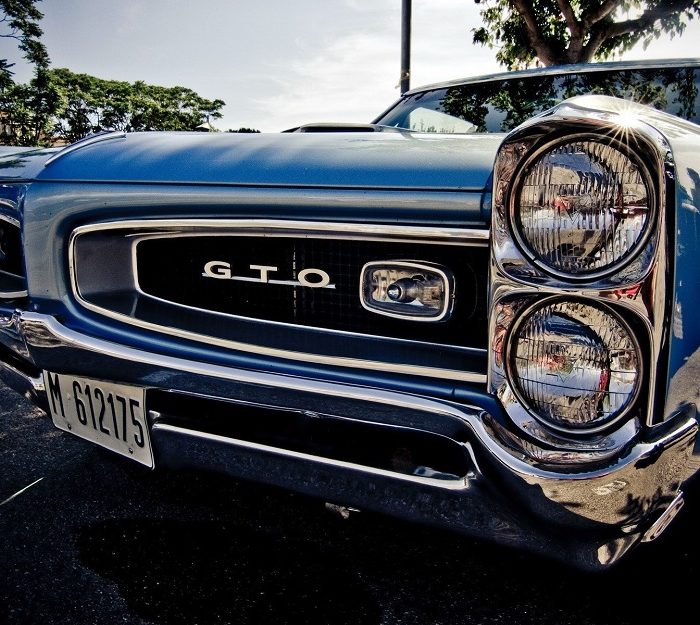


The large luxury SUV segment has always been dominated by diesel powertrains — and the numbers back it up. Diesel variants account for 85% of BMW X7 sales, 86% of Mercedes-Benz GLS sales, and 80% of Range Rover sales in this market. The Lexus LX 450d is the outlier, chosen by only one in three LX buyers. Those three — the X7, the GLS, and the Range Rover — top the diesel sales chart, and they’re the ones we put to the test. The Lexus LX, still riding its aging body-on-frame platform (a new generation was expected soon), sits this one out.
Which Engine and Trim Level Do Most Buyers Choose?
In this segment, entry-level engines are consistently the best sellers — and not by accident. Buyers are well aware of the luxury car tax surcharge that kicks in above certain power thresholds. The previous GLS (X166) was most popular in the 249 hp 350d specification. The new X167 generation opens with the GLS 400d: a 330 hp, 700 Nm inline six-cylinder diesel that’s now the most affordable entry point into the lineup.
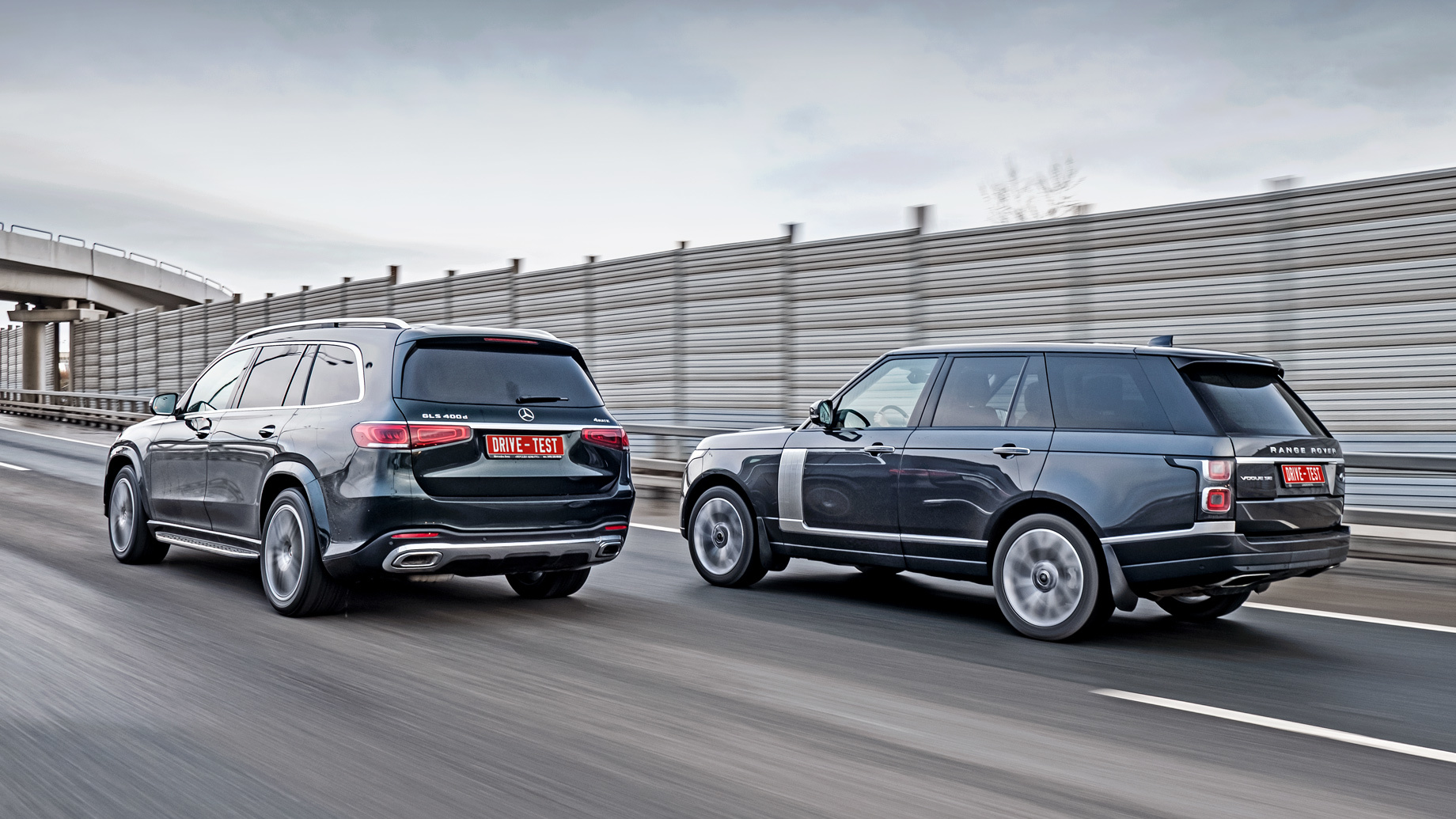
Standard Equipment and Pricing: Who Offers the Best Value?
The Mercedes GLS comes generously equipped from the factory. The base BMW X7 xDrive30d (249 hp, 620 Nm) isn’t far behind in terms of kit, yet carries a lower price tag — it trails the GLS mainly in certain active safety systems, while keeping the tax hit more manageable. The entry-level Range Rover TDV6 (249 hp, 600 Nm) is comparable to the BMW in standard spec, but options can push its price well above both German rivals. Our test car was a prime example of that.
Here’s what sets the Range Rover’s rear cabin apart when optioned up:
- Luxury rear seat row with multiple electric adjustments
- Extendable ottoman and heated footrest for the right rear passenger
- Motorized central armrest separating individual second-row seats
Separate second-row seats are available on the BMW too — either as a paid option or as part of the Exclusive package — but they lack the Range Rover’s level of pampering. We’ve tested that version and can confirm the difference is noticeable.
The Mercedes, meanwhile, comes with a bench seat as standard. Individual rear seats are reserved exclusively for the First Class configuration, which is also the only trim that allows full freedom in the online configurator. All other GLS variants come with fixed equipment packages. BMW buyers enjoy more flexibility in building their car, though some features remain tied to specific trim levels. Range Rover offers the widest scope for customization — but that freedom carries a significant price premium.
Off-Road Credentials: True SUV or Dressed-Up Crossover?
Only the Range Rover earns a true SUV classification here, despite its monocoque body. Beyond the air suspension shared with its rivals, the Vogue adds a low-range transfer case and electronic locking for both differentials. Its suspension travel is in a class of its own.
The BMW X7 is impossible to mistake on the road — the oversized kidney grille and widely spaced, narrow headlights make it unmistakable in traffic. It works well in person. One persistent gripe, however: BMW continues to leave the sill area exposed between the doors, meaning a muddy road quickly coats them. The Mercedes sidesteps that issue, but its standard running board is too narrow to be practical and just gets in the way.
The Range Rover keeps its sills clean thanks to how the doors wrap around them — a genuine advantage for shorter drivers who already have to make a significant climb to get in. The driver can grab the steering wheel to pull themselves up; rear passengers have no such option, and the rear door aperture isn’t especially generous either.
Interior Space and Passenger Comfort
If you plan to use the Range Rover as a chauffeur-driven car, the long-wheelbase version (LWB, extended by 7.8 inches) is a must. In standard form, rear knee room is tight, and bulky winter footwear won’t slide under the front seats. Headroom is ample, and the rear seat cushion is the softest of the three — but legroom lags behind both Germans.
Neither the BMW nor the Mercedes is available without a third row. The folding mechanism works similarly in both:
- An electric motor slides part of the second-row seat forward to open a passage to the back
- Slightly above-average adults can fit in the third row of both cars
- The X7 feels marginally more spacious and better equipped back there
- The GLS offers cup holders and individual USB-C ports in the third row, but only the X7 has a dedicated climate control panel for the fifth zone
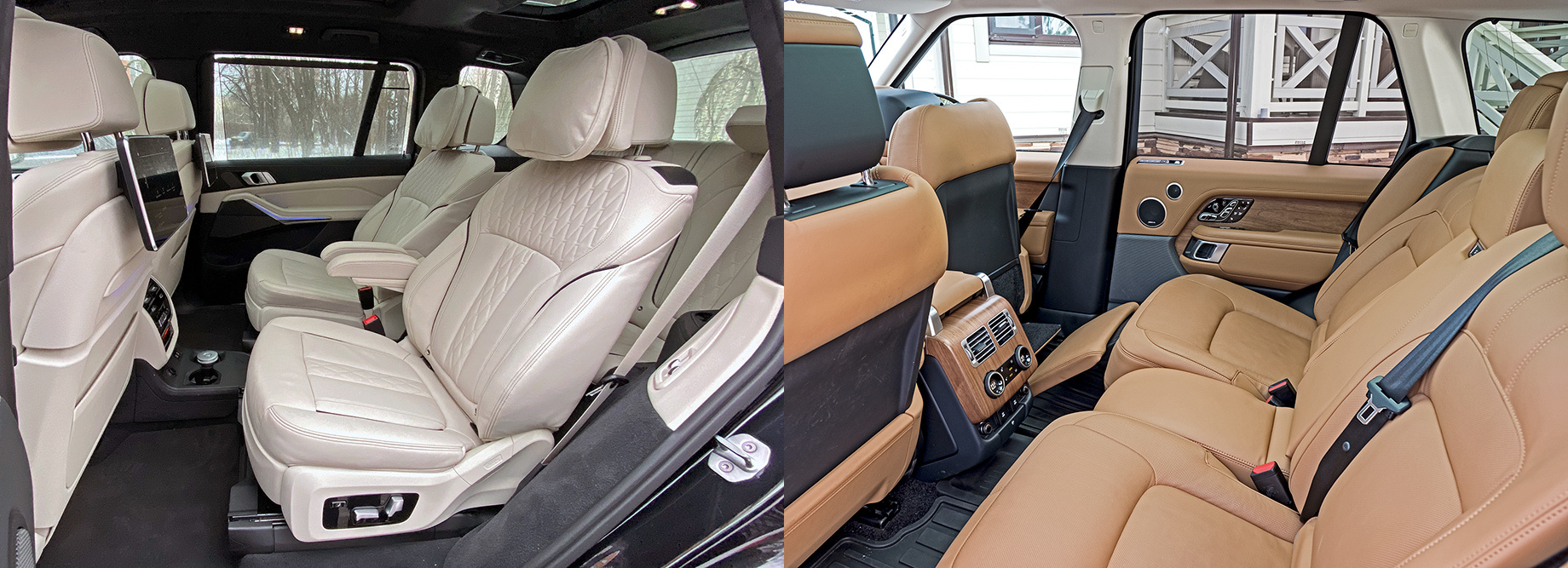
In the second row, the BMW’s bench seat is more comfortable than the Mercedes equivalent — both are electrically adjustable and offer similar legroom (both noticeably more generous than the Range Rover). The GLS cushion is on the firm side and wears you down on longer journeys. The center tunnel in the Mercedes is also more intrusive. That said, all three cabins are wide enough for two comfortable passengers — the middle seat in any of them is a concession.
Boot Space and Practicality
In a five-seat layout, the Mercedes offers the largest boot, with the BMW close behind. Both fold their second and third rows electrically to create a flat load floor. The Range Rover is the weakest here:
- The sophisticated rear seat cannot fold flat
- The side-hinged tailgate forces you to reach deep into the boot for items near the back
- The BMW shares this tailgate inconvenience
- The Mercedes’ tailgate design makes loading noticeably easier
Interior Quality and Infotainment
Front seat ergonomics are solid in both German cars — wide adjustment ranges for seat and steering wheel, good driving position flexibility. The optional BMW seat backrest has a more complex articulation that gives better lateral support than the Mercedes equivalent. The Range Rover’s front seats are the softest, best suited to slimmer drivers; the side bolsters are too aggressive and, frustratingly, not adjustable.
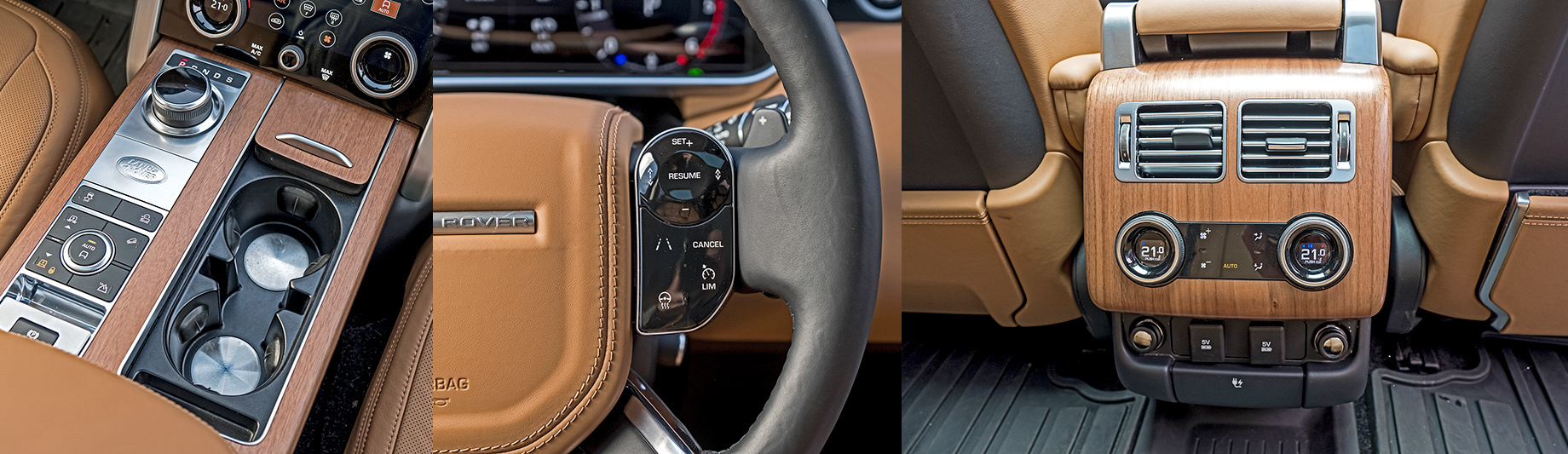
Where the Range Rover clearly leads is interior ambiance:
- Light wood trim creates a warm, genuinely upscale atmosphere — the dark wood in both Germans disappears into the background
- Leather quality is noticeably superior, covering almost every surface
- Plastic is difficult to find inside the cabin
- Post-facelift details add a polished, contemporary feel
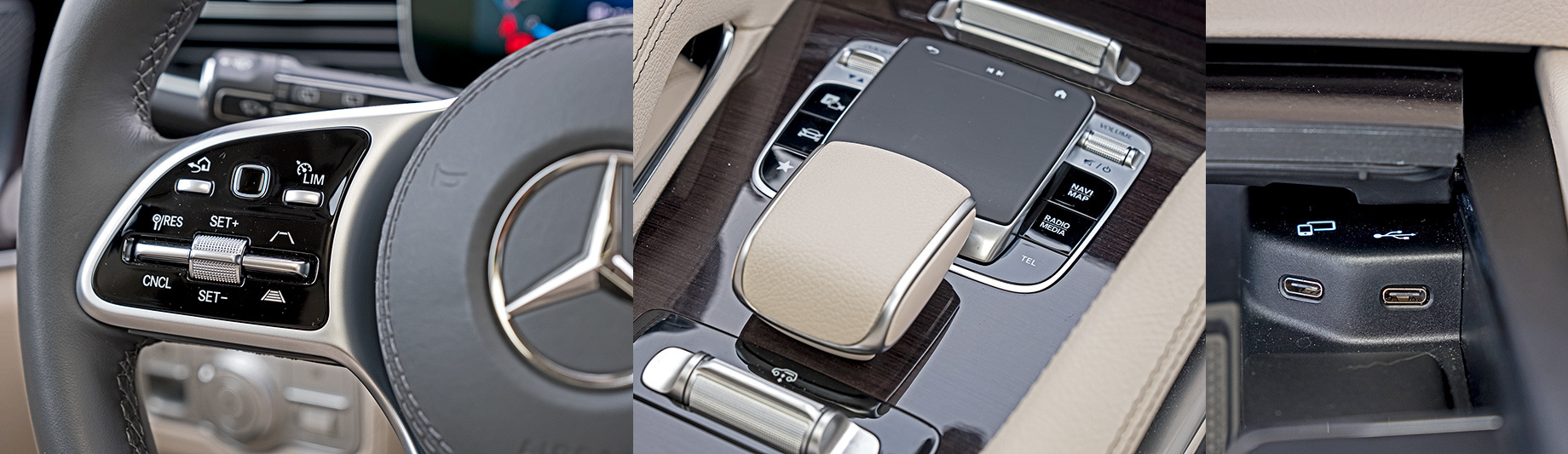
The BMW’s slightly driver-focused dashboard has a bold architectural presence, though the leather on the seats feels harder than expected at this price point. The GLS, assembled in Alabama, has its own quality concerns: some panel gaps are inconsistent, and the materials in places feel more like leatherette than genuine hide. The simple rocker switches — borrowed from the A-Class — feel out of place in a flagship SUV, and the aluminum-look buttons are noticeably plasticky to the touch.
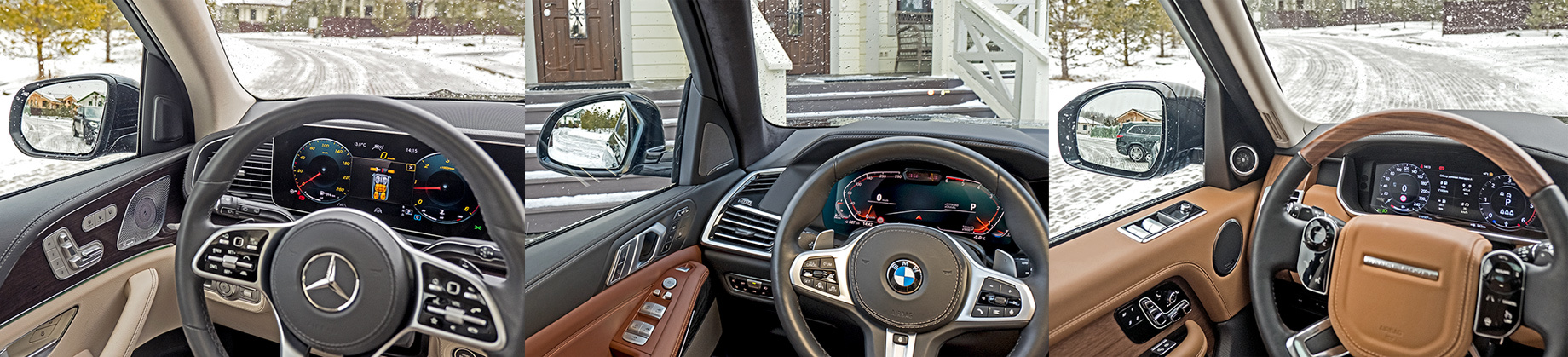
The GLS infotainment system is comparable to the BMW’s in terms of interface clarity and graphic quality. The key difference: the Mercedes relies on a touchpad on the center console rather than the BMW’s rotary selector. It does add a touch-sensitive strip on the right steering wheel spoke for menu navigation, and a sensor on the left spoke for the instrument cluster. These are genuinely useful for keeping your hands on the wheel, though accidental tab-switching when rotating your grip is an occasional annoyance.
The Range Rover’s infotainment — shared with the Velar — is the weak link here. Its dual touchscreens are driven by a single processor and suffer from noticeable lag; the Germans simply don’t have this problem. The main touchscreen is also a couple of inches smaller than either German rival, which becomes frustrating when using the surround-view cameras.
Driving Dynamics: On-Road Performance Compared
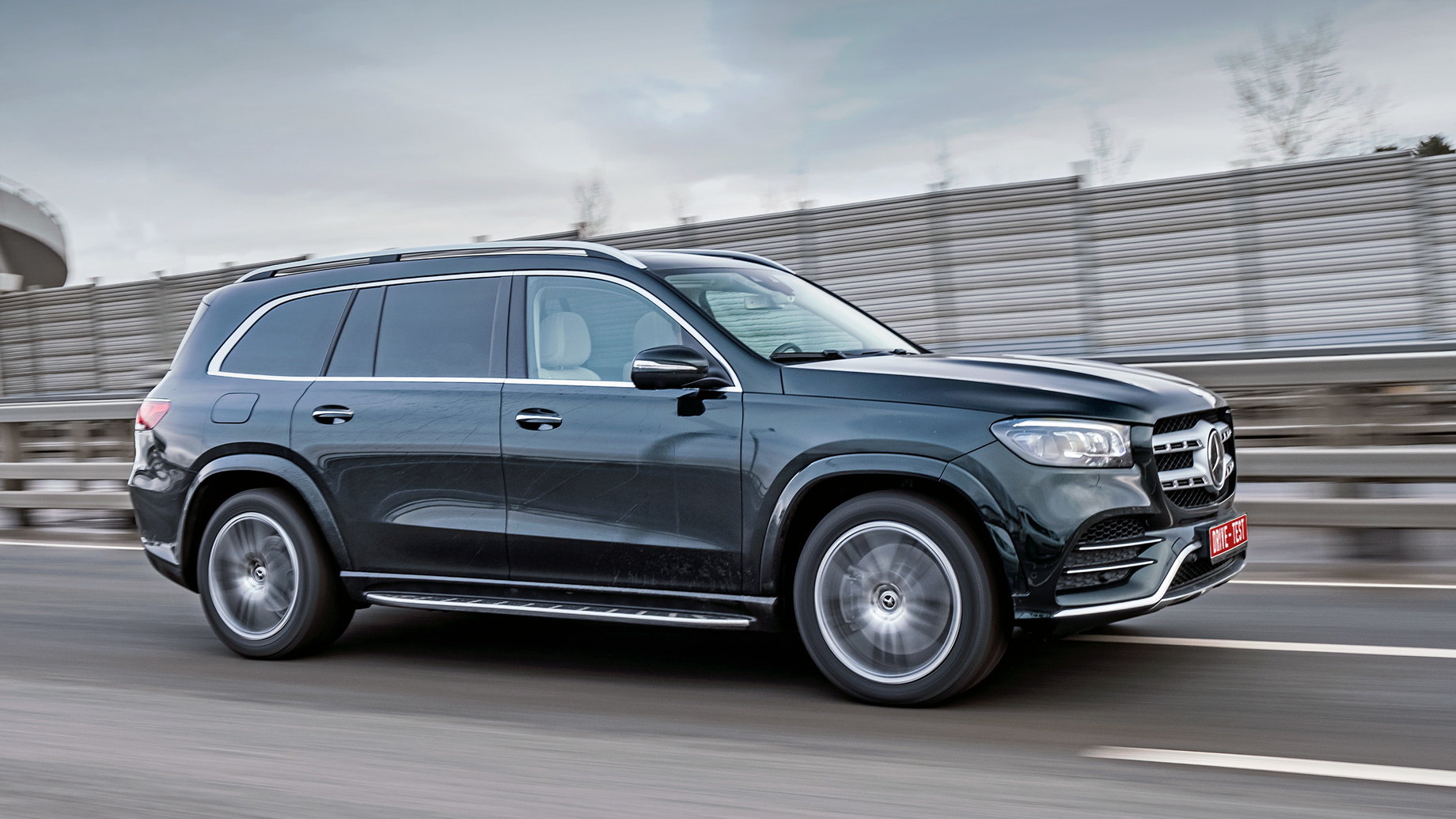
From the driver’s seat, these three feel very different despite their similar footprints. The GLS feels enormous — the view through the interior mirror of the seemingly endless cabin gives you the distinct feeling of piloting an airport shuttle. The Range Rover sits you high with a large steering wheel, giving a sense of weight and occasion even if the cabin isn’t quite as vast as the Mercedes. The BMW is the surprise.
Despite similar exterior dimensions to the GLS, the X7 never feels unwieldy. You develop a feel for its size quickly — about as fast as you would in an X5 — and urban maneuvering is genuinely easy, even spirited. The inline six-cylinder diesel is a big part of that: it’s responsive to throttle input, delivers traction willingly, and makes the X7 feel alive. Gear changes are slightly abrupt under hard acceleration, but the engine’s eagerness more than compensates.
On paper, the BMW loses to the more powerful Mercedes from 0 to 60 mph (7.0 seconds vs 6.3), but in urban conditions the gap is largely academic. The GLS 400d is reluctant to deploy its full 330 hp from low speeds — it requires revving the 2.9-litre diesel harder than feels natural to access its potential. The advantage becomes clear from higher speeds, where the Mercedes pulls strongly.
A quick comparison of the transmission character in each car:
- BMW X7 — ZF 8HP eight-speed, fast to kick down (up to five ratios at once), responsive and well-matched to the engine
- Mercedes GLS — Daimler nine-speed in-house unit, slightly busier in its shift logic, less decisive in kickdown response
- Range Rover — Same ZF 8HP unit, tuned for a softer, more relaxed character; slower to respond than in the BMW
The Range Rover’s performance tells a similar story to its transmission tuning. Despite a laden weight only 46 lbs greater than the X7’s, it lags behind both rivals in acceleration — on paper and in practice. The throttle response at low pedal inputs is frustratingly vague: small inputs produce small lurches rather than smooth progress. At cruising speeds, however, the Range settles into a sedate, dignified pace that feels entirely in keeping with its character.
Steering Feel and Handling
The Range Rover’s steering (3.1 turns lock-to-lock) is tuned for relaxed motoring. Self-centering is minimal at parking speeds, and the car responds to direction changes with a slight pause and gentle body sway before committing to a new line. It won’t frighten you, but it doesn’t encourage enthusiasm either. Body roll builds to uncomfortable levels long before the tires approach their limit, and understeer is the only dynamic outcome available. In snow, the winter tires — Continental ContiCrossContact Winters — struggled to maintain grip effectively.
The Mercedes (2.75 turns lock-to-lock) is more composed, with a linear build of steering force that inspires some confidence. Its stability control system is calibrated to intervene early and firmly — useful in most situations, but it also suppresses any mild playfulness when carrying too much speed into a corner.
The BMW is clearly the driver’s choice of the three:
- Optional active steering reduces lock-to-lock to just 2.25 turns for sharper responses
- Active rear-wheel steering improves agility at speed without drawing attention to itself
- Stability control is present but more permissive, and can be fully disabled
- The X7 feels willing to change direction quickly and holds a line with confidence
Ride Comfort and Noise Insulation
The X7 leads in ride quality overall, smoothing out the widest range of surface imperfections. Its one weakness is sensitivity to very fine road texture — the Bridgestone Blizzak LM001 run-flat tires likely contribute to this, transmitting more road noise and vibration through their stiffened sidewalls than conventional tires would.
The Range Rover handles small and medium bumps graciously and has a pleasing, yacht-like composure over gentle undulations — though rear passengers have occasionally reported motion sickness on winding roads. Sharp-edged potholes and expansion joints interrupt the otherwise smooth ride more than they should.
The Mercedes rides at a similar overall level to the Range Rover: composed over small and medium bumps, but caught out by large impacts that shake the whole body. Noise insulation compares as follows:
- BMW X7 — Best overall, thanks to standard double glazing; the inline-six diesel is the quietest of the three engines
- Range Rover — Laminated glass manages wind noise well, but aerodynamic disturbances appear at relatively modest highway speeds
- Mercedes GLS — No double glazing, but the Nokian Hakka R3 SUV winter tires fitted to our test car generate surprisingly little road roar despite their more aggressive tread pattern
All three brake effectively and consistently on dry roads, without any quirks in pedal feel or ABS behavior.

Off-Road Testing: How Do They Handle Rough Terrain?
A frozen quarry limited our off-road evaluation — even the Range Rover struggled to find purchase on the solid ground with its continental winter tires. What we could properly assess was geometry and the behavior of each traction control system.
The Range Rover’s advantages in this environment are structural:
- Greater suspension travel keeps all four wheels in contact with uneven ground far longer
- A shorter wheelbase reduces the chance of the car becoming high-centered
- Low-range transfer case and locking differentials provide genuine capability the Germans can’t replicate
The BMW and Mercedes can raise their air suspension to a useful ride height, but the GLS is held back by its longer wheelbase — the largest in the test — and the low-hanging running boards that ground on obstacles quickly. Somewhat surprisingly, both crossovers’ electronic traction control systems managed wheel slip more effectively than the Range Rover’s Terrain Response II in the frozen conditions we encountered. The top-spec GLS First Class can also be ordered with an optional Offroad Pack, adding a low-range gear and raising maximum ground clearance to 11.4 inches.
Final Verdict: BMW X7, Mercedes-Benz GLS or Range Rover?
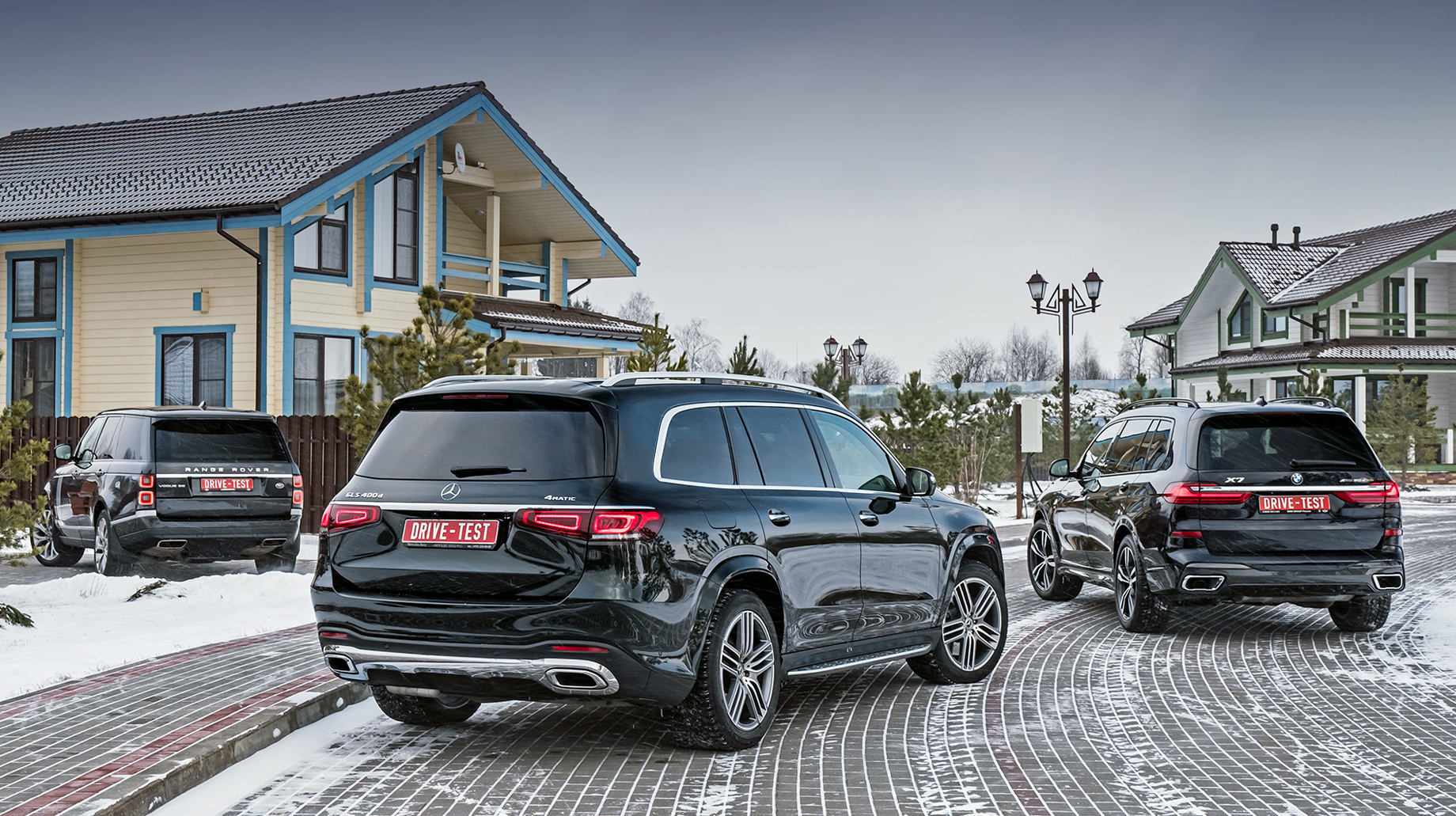
The BMW X7’s market success is well earned. It’s a genuinely balanced machine — better to drive than the Mercedes, better insulated, and more affordable in its base configuration. The 30d engine covers everyday needs almost as effectively as the GLS 400d, while keeping running costs and tax liability lower. In some ways, the X7 is a more convincing case for a Maybach-like flagship experience than the GLS itself — calmer, smoother, and more refined than its sibling.
The Mercedes GLS has grown more expensive and more constrained with this generation. Fixed configurations leave buyers with limited choice, and the quality of the assembly in Alabama is a step below what you’d expect at this price. It hasn’t moved the needle far enough in dynamics or comfort to reclaim the top of this segment.
The Range Rover occupies its own space entirely. It’s slower, less precise to drive, and will depreciate sharply — yet 2,713 buyers chose one in 2019 alone, not far behind the X7’s 3,019 or the GLS’s 2,843. The reason is simple: it delivers a sense of presence, craftsmanship, and sheer occasion that neither German rival quite manages. If that’s what you’re paying for, the premium is arguably justified — even knowing what the resale figures will look like.
- Choose the BMW X7 if you want the best all-round package: dynamics, refinement, value, and everyday usability
- Choose the Mercedes-Benz GLS if you prioritize interior space, highway performance, and the three-pointed star on the hood
- Choose the Range Rover if interior craftsmanship, genuine off-road ability, and a distinctive road presence matter more than running costs or resale value
This is a translation. You can read the original here: https://www.drive.ru/test-drive/bmw/mercedes/landrover/5e343cfaec05c4c15f000008.html

Published February 16, 2023 • 13m to read