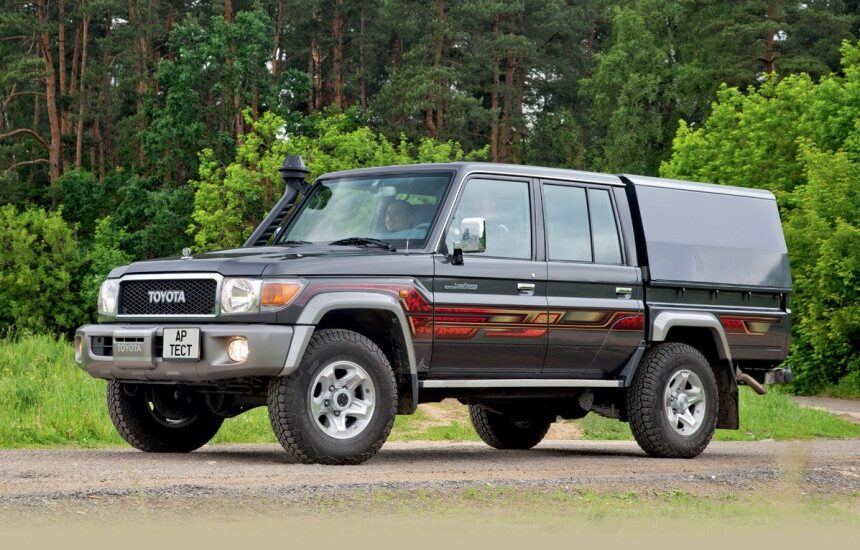

The Toyota Land Cruiser 70 has never appeared in an Autoreview test, for the simple reason that it was never officially sold in Russia. Our reader Pavel decided to put that right by handing us the keys to his 2021 pickup, imported through unofficial channels. To say I enjoyed driving this new old car would be an understatement. It was thrilling.
Forty Years in Production, and Still Going
This year the Toyota Land Cruiser 70 reaches a milestone: 40 years in production. Hunter and Niva may scoff at that, but for Toyota it is a remarkable run. Over the years, these vehicles have been produced in Colombia, Venezuela, Bangladesh, Kenya, and Portugal, but the main production has always been in Japan, where it continues to this day.
That such a vehicle exists at all in 2024 is remarkable. Newer Land Cruisers — the 80, the 100 — have left the market for good, and the “70” is still standing. Its sales geography is peculiar: officially, you can buy such a Toyota in Africa, South America, Australia, and all the oil-rich countries of the Middle East. Near the equator it is the utilitarian qualities that count, and the Troop Carrier is still regarded as the best vehicle there is for a safari. In the other markets it is mostly a matter of style and that infamous brand loyalty.
Designing a Successor to the Land Cruiser 40
Masaomi Yoshii, the chief designer handed the Land Cruiser 70 project in the mid-1970s, had a hard brief. He had to follow the ageing but hugely successful Land Cruiser 40 — a vehicle famous for durability, and cramped and only conditionally comfortable with it. So the “70” was drawn generously, with far better visibility and cabin space thanks to large glass areas. Its place in the range, as a Heavy Duty model, meant the components had to stay every bit as tough.
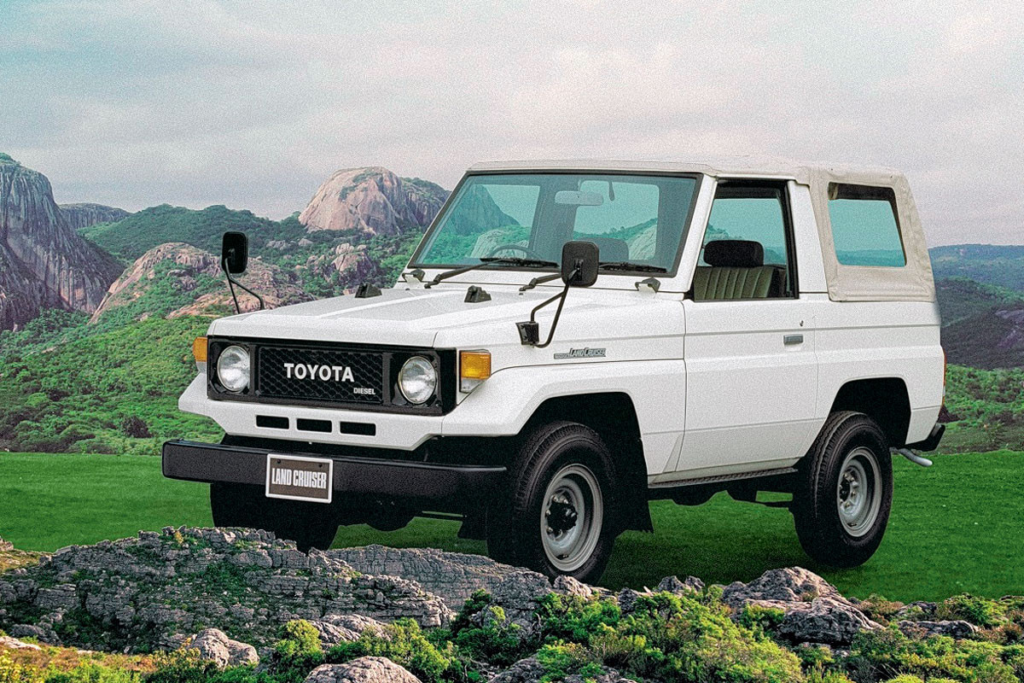
The chief designer took no risks, reusing solutions proven on the “40” series: a closed-section ladder frame, solid axles, dependent spring suspension on all four wheels, a part-time transmission. Even the engines were slightly antiquated at first, with gear-driven valve trains and mechanical fuel systems.
Fifteen Engines in Forty Years
Across its forty-year history the “70” has carried about fifteen different engines — petrol and diesel, familiar and exotic. Some vehicles assembled in Portugal for the South African market ran Atlantis diesel engines made in South Africa; in Portugal itself and in neighbouring Italy, Cruisers were sold with five-cylinder VM Motori diesels.
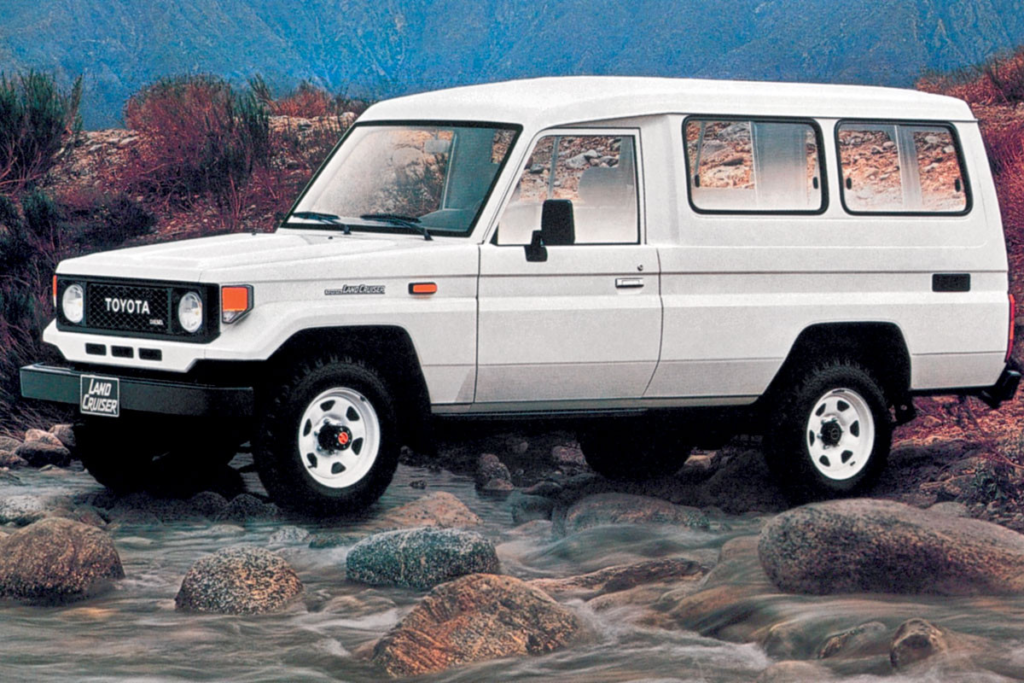
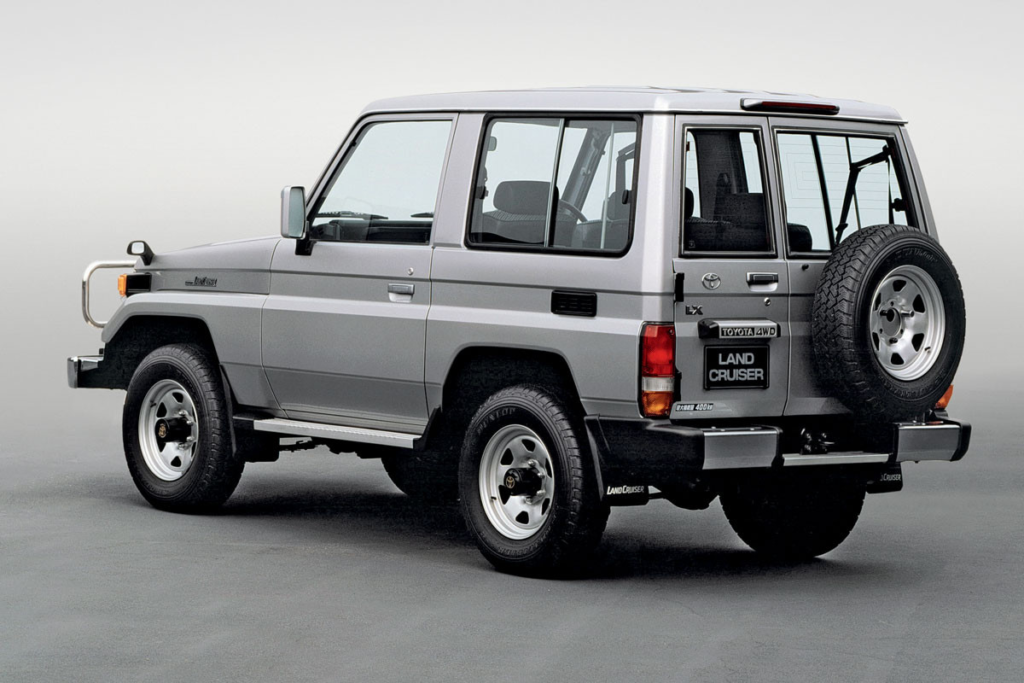
The Troop Carrier version has a rear compartment with benches along the sides that can accommodate eight passengers.
One Chassis, Every Body Style
When sales opened in 1984 the marketing department went all in. Buyers could choose from:
- five wheelbase options
- open and enclosed bodies
- passenger vehicles
- bare chassis, for mounting whatever equipment the job called for
And every one of those modifications shared the same door openings and panels — a monument to standardisation.
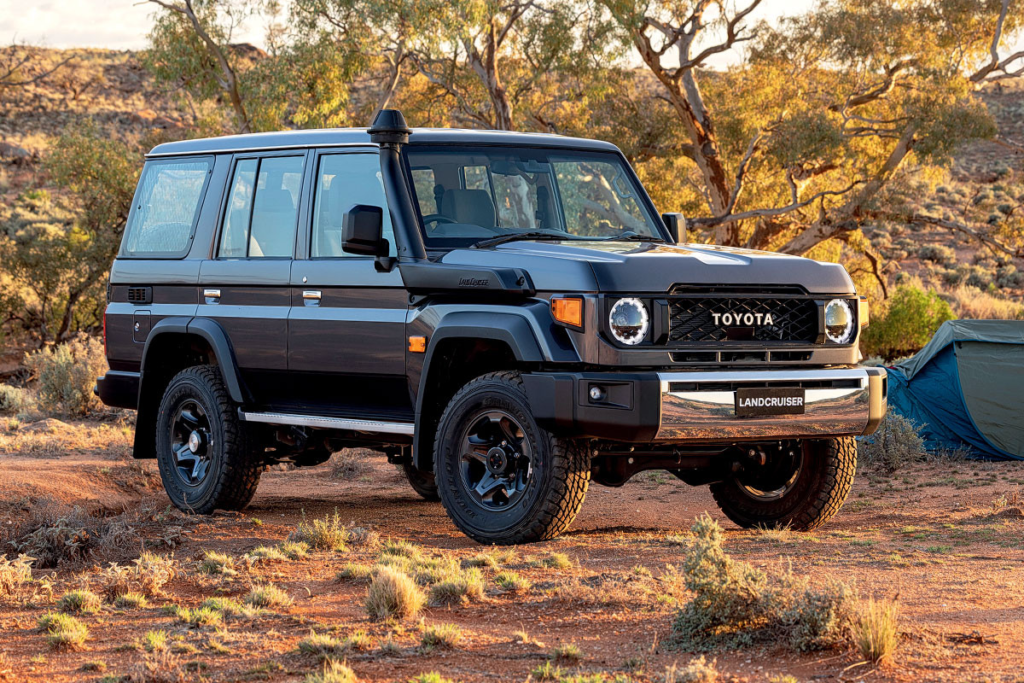
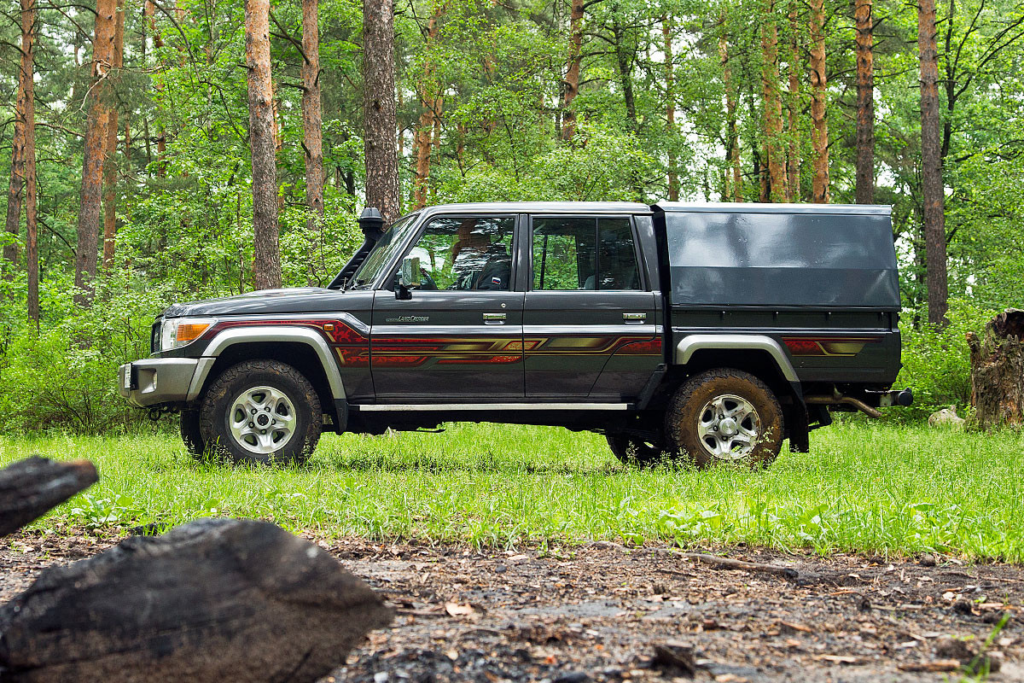
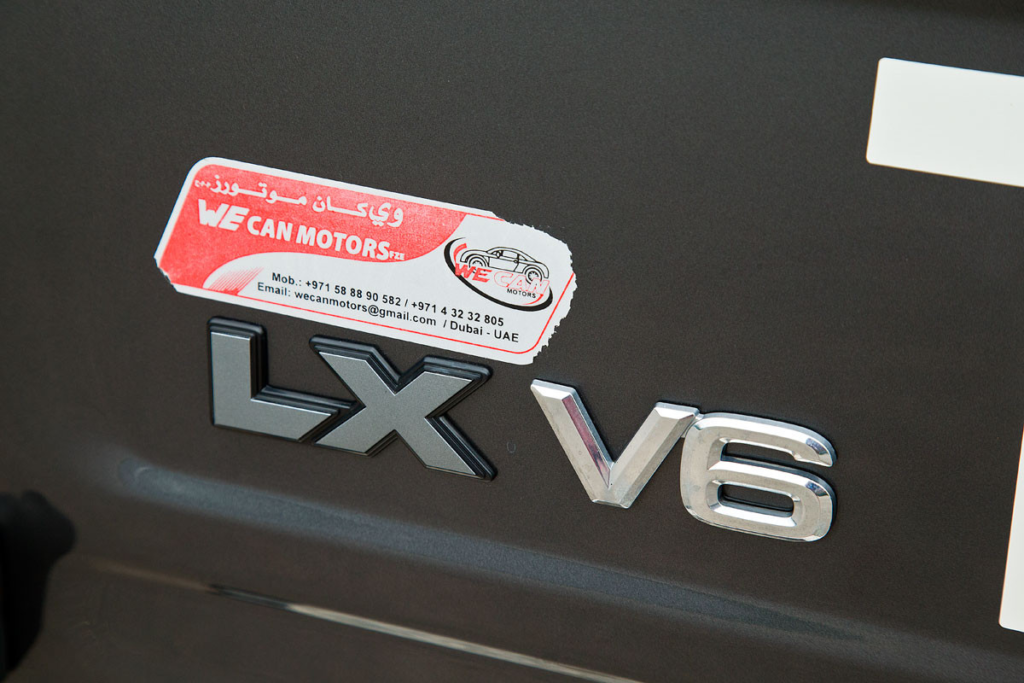
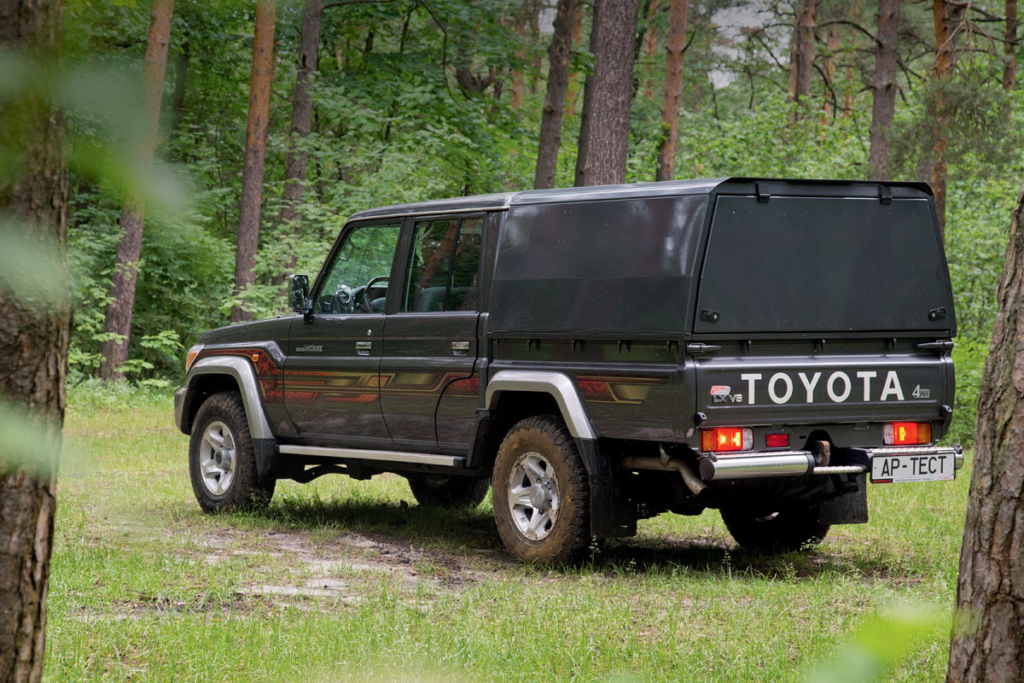
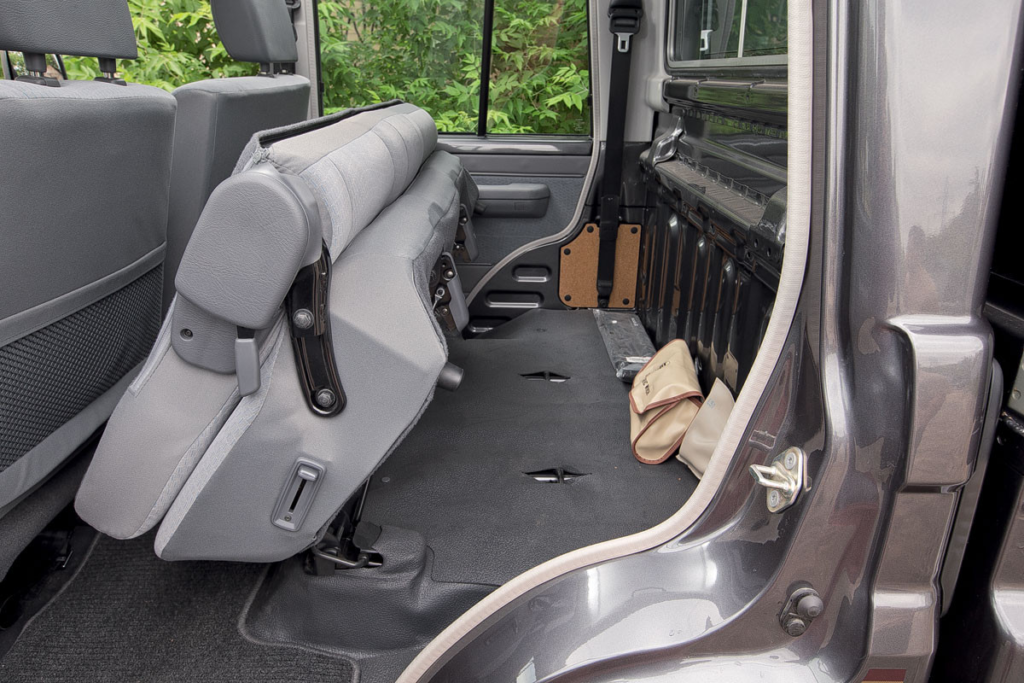
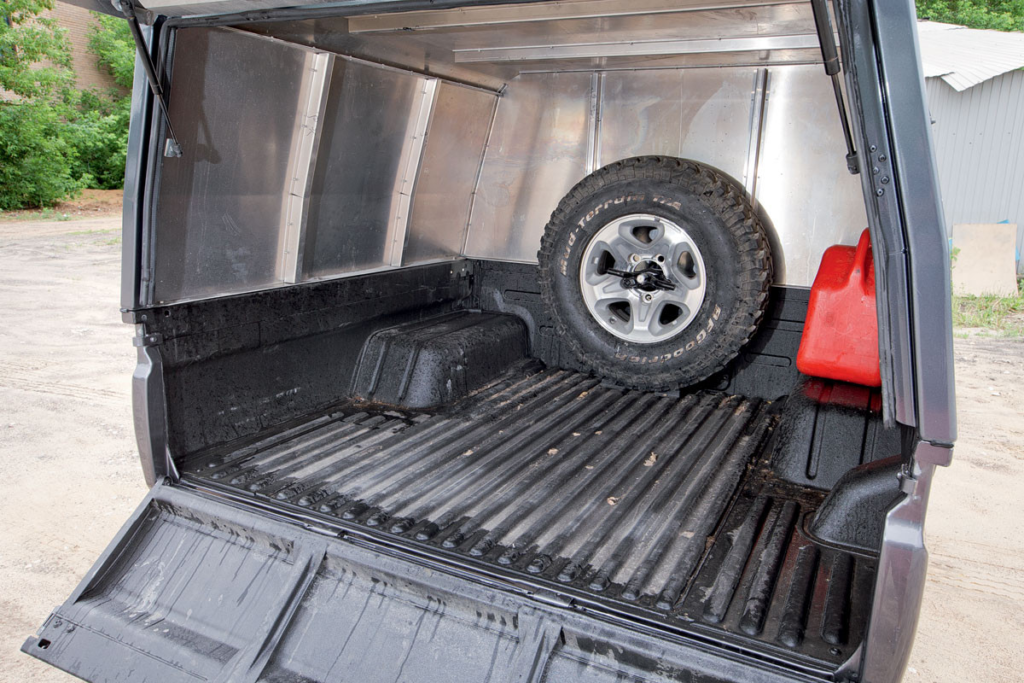
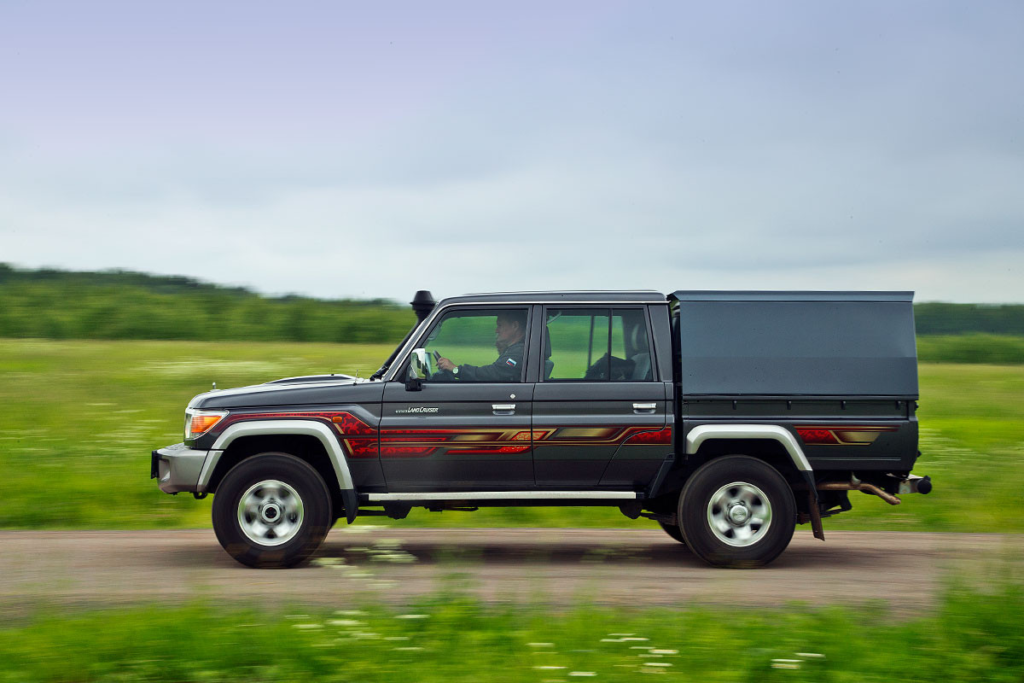
Pickups on the “70” chassis were built from the very beginning, but at first only with a single-row cab and a large cargo box. The four-door version arrived much later, in 2012. It was one of those — a Toyota Land Cruiser 79 — that Pavel bought in 2021 for 5.5 million rubles. It was made in Japan but built for the Emirates market, as the aesthetically questionable appliqué along the sides, the excess of chrome and the “sight” on the hood all make clear.
A Truck From a Past Life
The truck is enormously stylish and looks like a vehicle from a past life. You glance at it and feel thirty years younger. In an age when cars are chosen by the size of the screen in the dashboard, buying one of these is a bold and unconventional act. Yet Pavel — whose motoring biography takes in an old Land Rover, a Mitsubishi L200 and a Pajero Sport — says he chose with a cool head. He simply needed a long time to prepare his wife for it. Understandable.
Inside the Retro Cabin
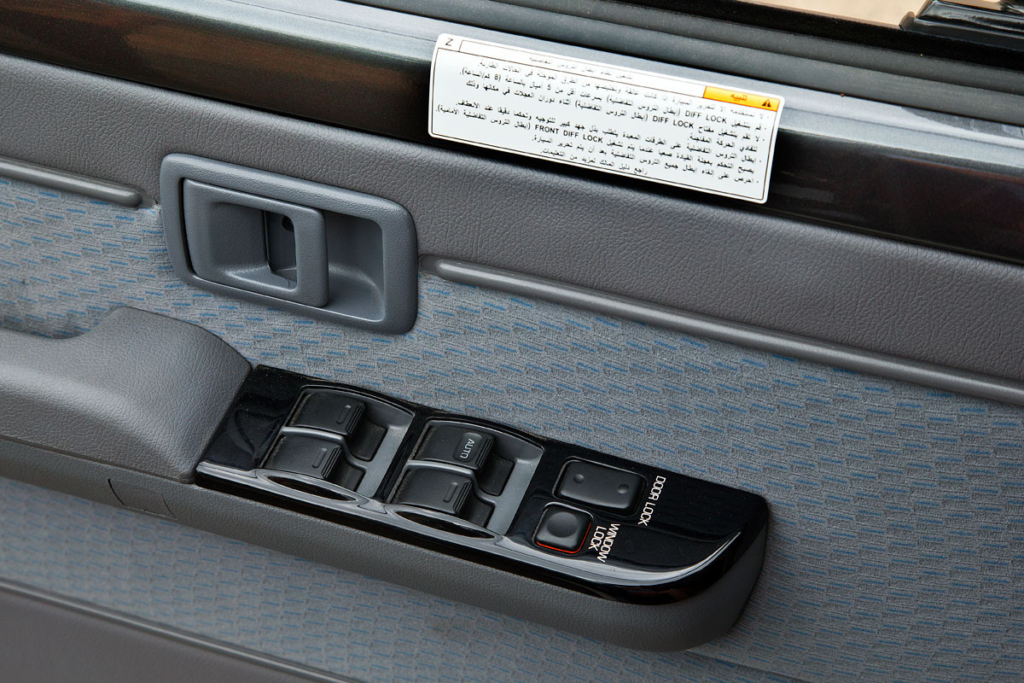
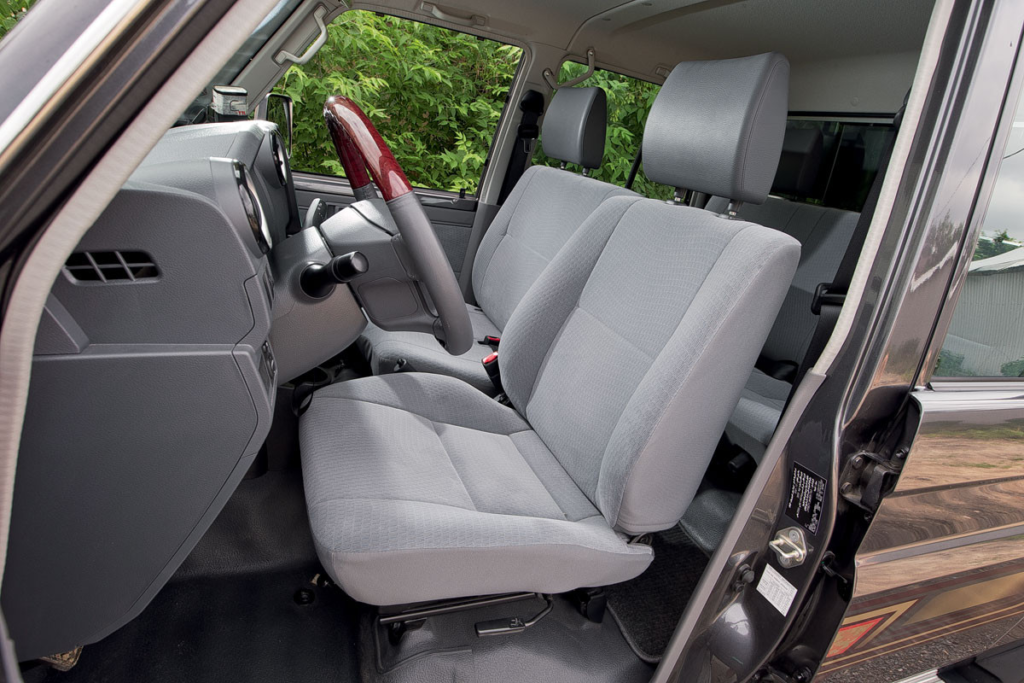
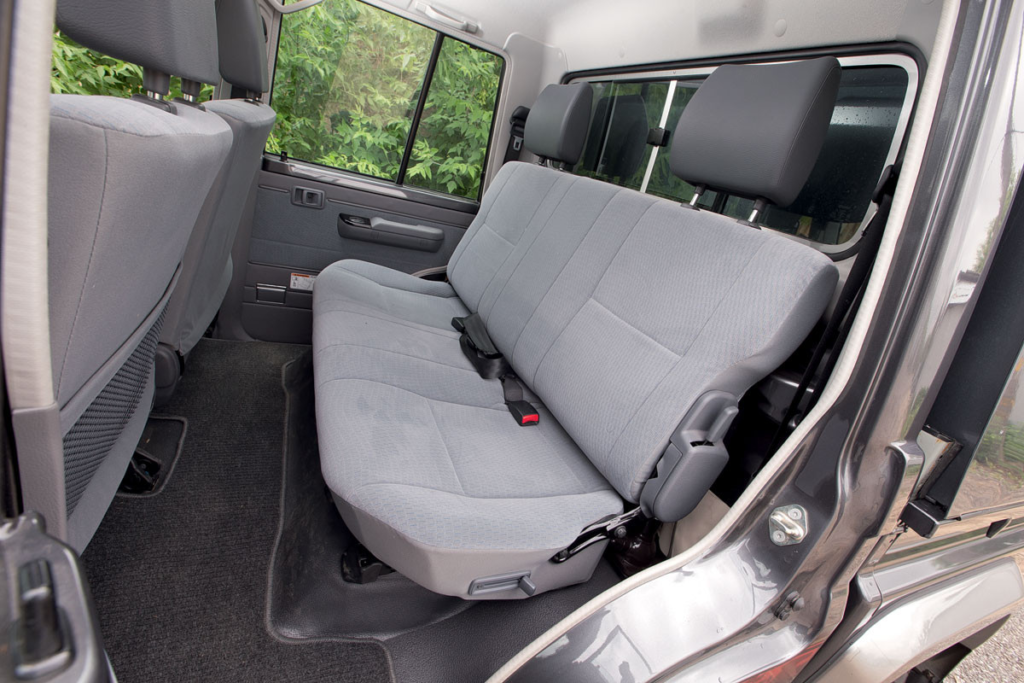
And then the aesthetics of that retro cabin — “wood” plastic and touching velour on the seats. There is a cup holder, a microscopic glove compartment and a small armrest. Slide the horizontal control for the climate across and you tactilely feel the flaps closing somewhere inside. Nostalgic bliss. The air conditioning works beautifully in summer and rather less well in winter: Pavel says the fan blows warm air reliably enough, but the flow mixes unevenly and heats the cabin selectively. And there is a draught from the door frames.
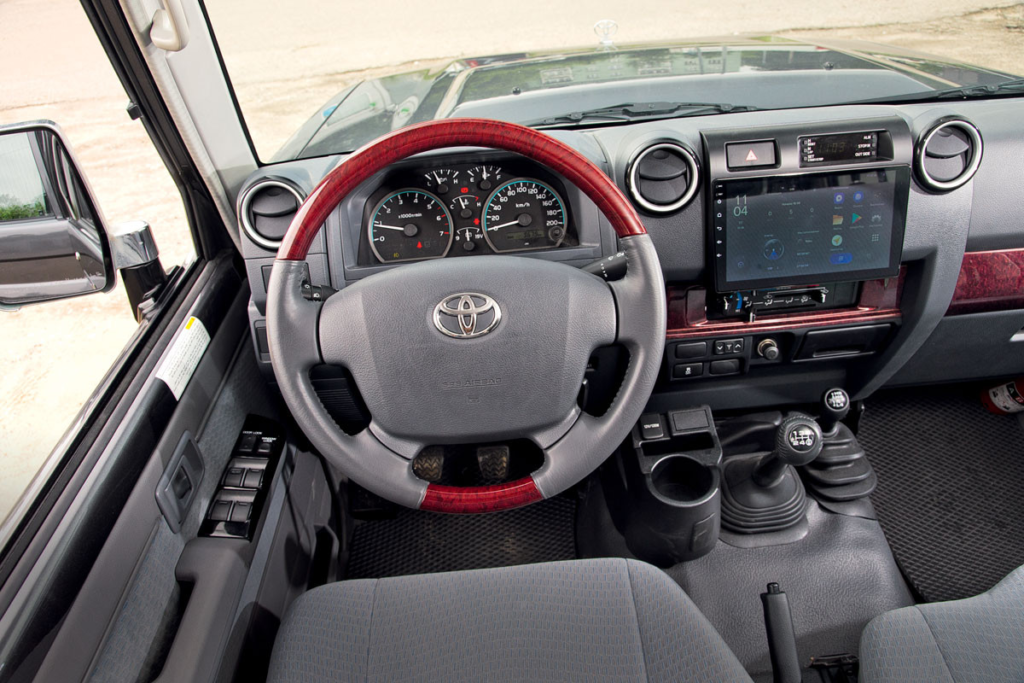
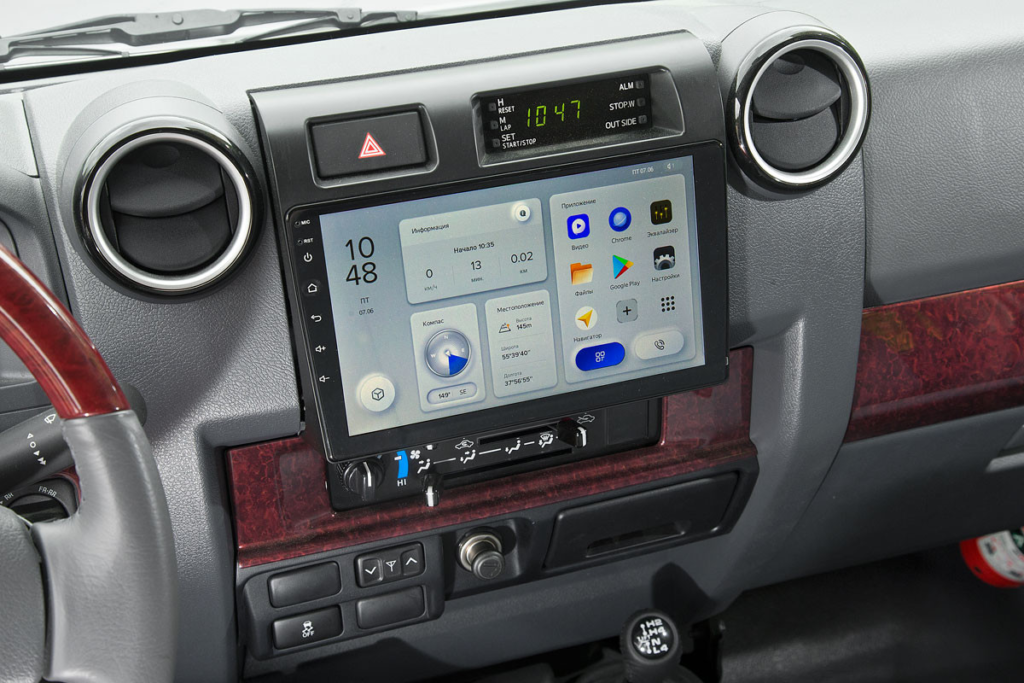
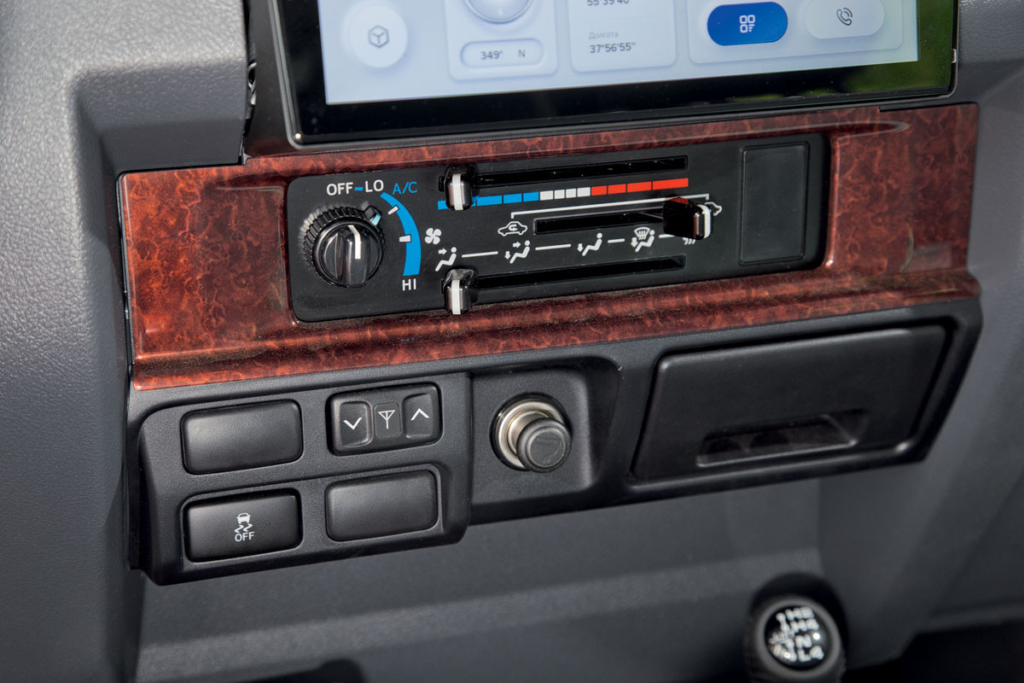

Sitting behind the wheel felt like climbing into a museum exhibit. Fabulous visibility, a towering command driving position — and, unexpectedly, plenty of room between your left shoulder and the door. In Mitsubishi and Land Rover off-roaders of those years the door presses in on you more, and in some, the G-class among them, it is easy to catch an elbow. Set the driver’s seat against commercial vehicles of its own era or of ours, and I think the “70” would lose very little ground. If any.
The 4.0 V6 and the Part-Time Transmission
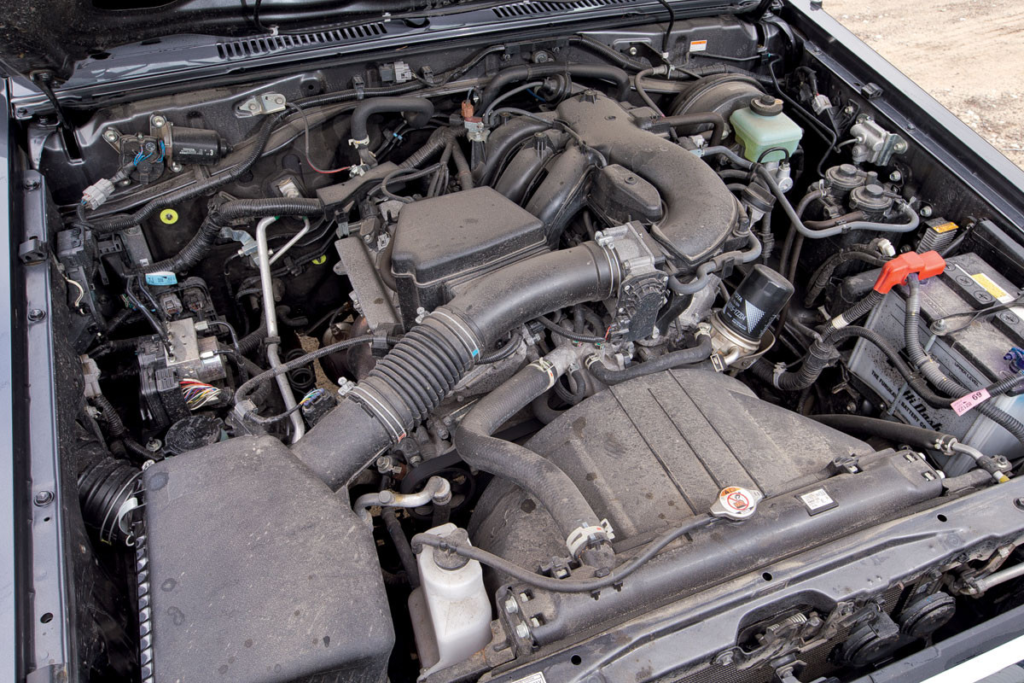
Under the hood of this pickup sits a 1GR-FE petrol engine — a 4.0-litre V6 producing 221 hp and 351 Nm in the snorkel-equipped version. These engines went into the “70” from 2009, with port injection and even VVT-i variable timing on the intake cam. The transmission is classic part-time: a rigidly connectable front axle, no centre differential, and a low range.
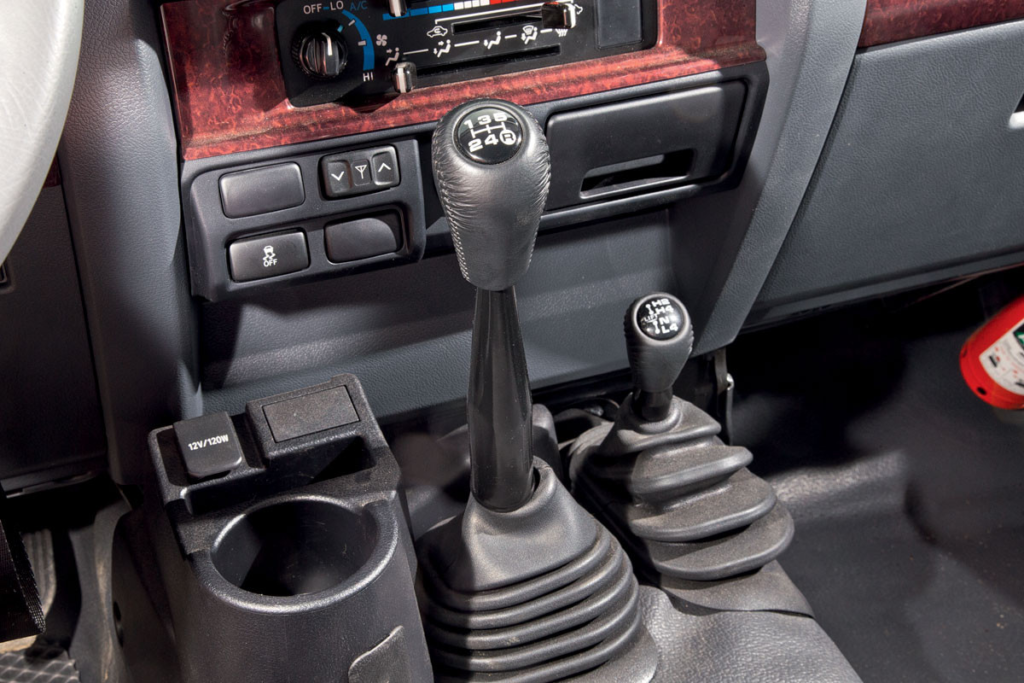
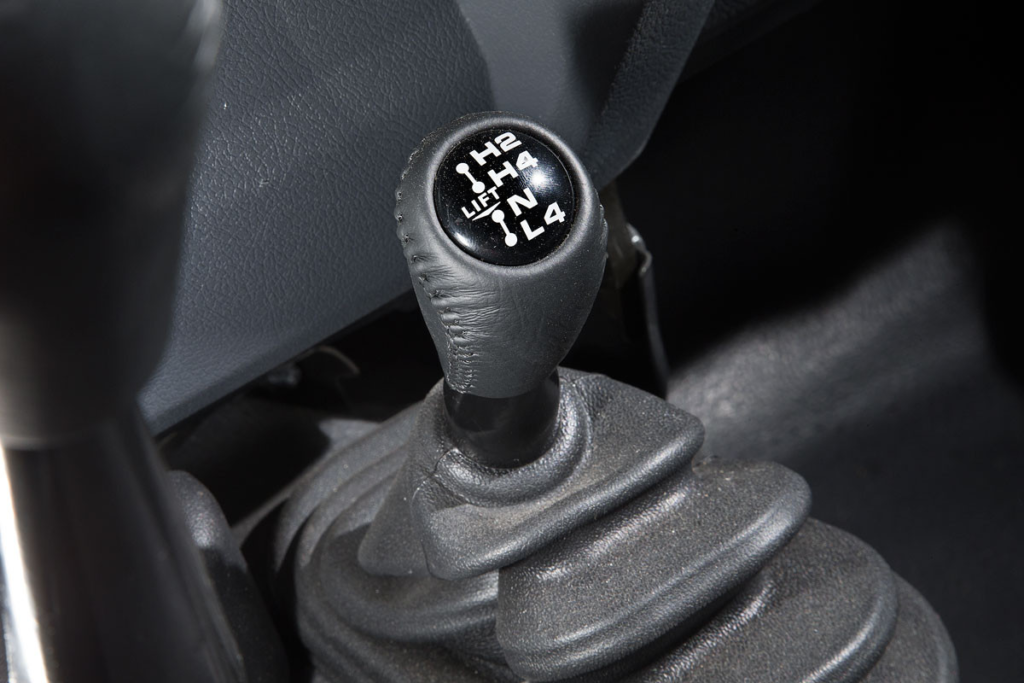
Control of this system is via a separate lever, although the “70” family also used button-controlled four-wheel drive, allowing the driver to sequentially engage the hubs and then the front axle.
Hubs, and an Argument That Never Ends
The free-wheeling hub couplings varied in design too — exactly which you got depended on the modification, the year and the market, and some versions had fixed hubs with no couplings at all. Pavel’s car has mechanical hubs that engage as soon as torque is transmitted. Disengaging them means stopping, putting the transfer lever in 2H and reversing a few metres. If you cannot be bothered, it is permissible to leave the hubs engaged permanently — but then the front driveshaft and the transfer case output shaft turn all the time. Which is the right approach? Fans of the “70” have been arguing about it for forty years.
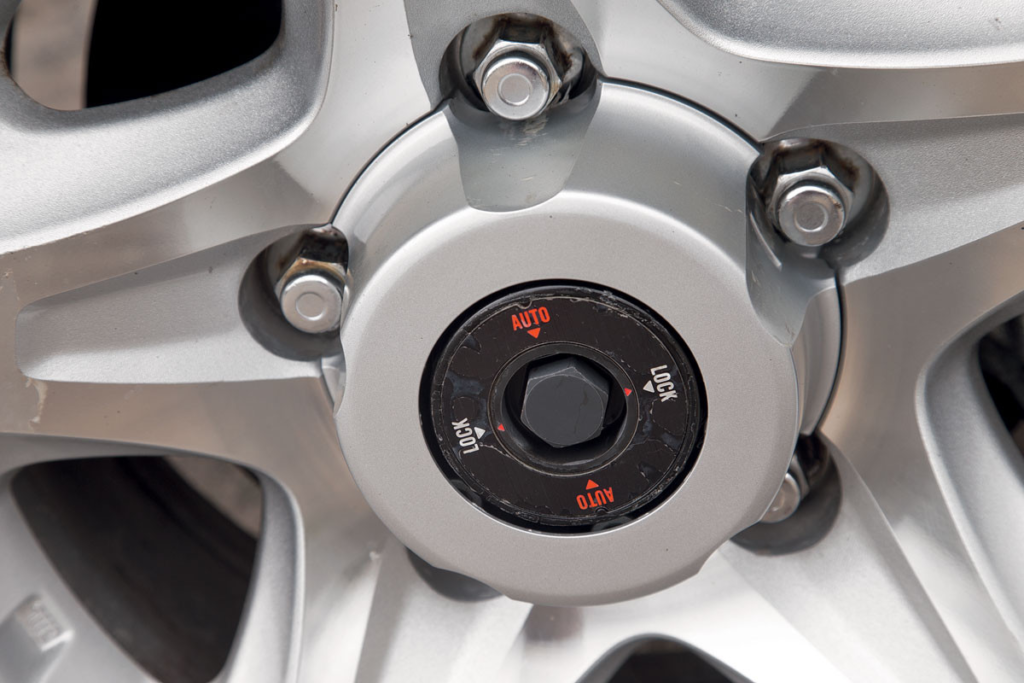
The front wheel hubs have mechanical overrunning clutches. And the wheels are secured with five nuts. On cars produced before 1999, there were six of them.
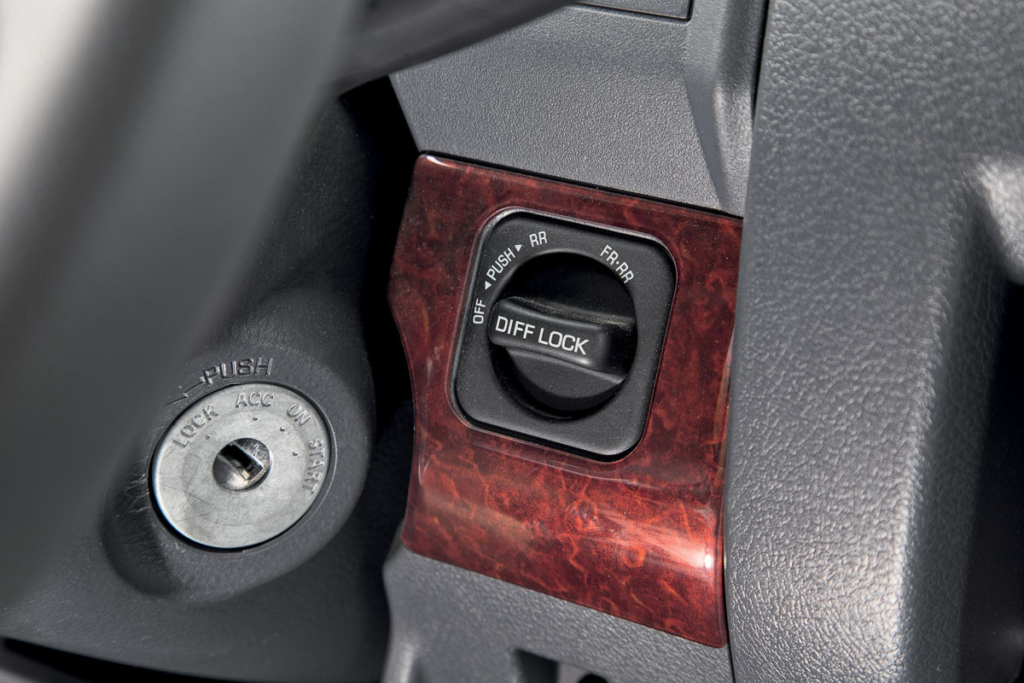
And then the icing on the cake: a pair of fully rigid inter-wheel lockers. They are worked by an ergonomically ideal joystick to the right of the steering wheel, with a foolproofing built in — the front locker will only engage after the rear one, and the rear cannot be released while the front is still locked. Safety, in every sense of the word.
How It Drives
The strongest impression of all came from that super-elastic petrol six. It is a remarkably compliant engine: the truck pulls away confidently from as little as 1000 rpm, so there is never any need to chase the tachometer needle towards the red. It gathers revs with deliberate sophistication and a bassy intake note that many people adore, and if you ask it to sprint, it can. The gear ratios of the five-speed manual are close to ideal; even a hurried, sloppy shift will not drop you out of the juicy part of the torque curve. Delightful. The fuel consumption is another matter: on relatively calm motorway running the Land Cruiser 79 drinks far more than the official figure — about 17 litres of 92-octane per 100 kilometres. It does at least have a large tank, at 130 litres.
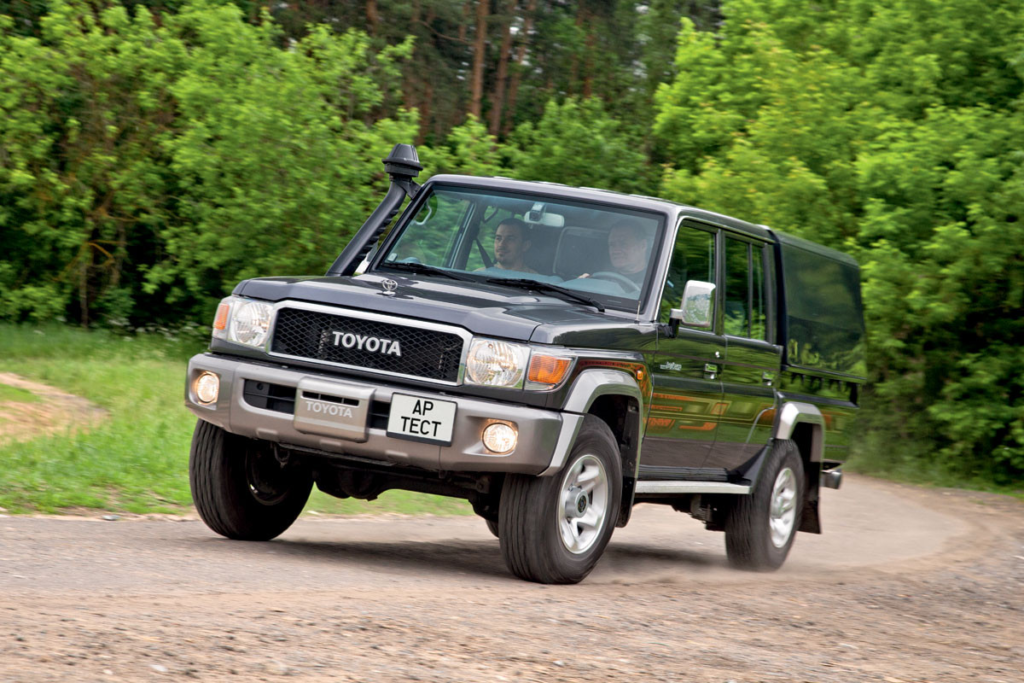
The “70” gained front coil springs in 1999, but it still runs traditional leaf springs at the rear, with Toyota’s characteristic lower attachment of the spring pack to the axle beam. That is not considered the best arrangement off-road — the springs and their hangers catch on the terrain — but it lowers the centre of mass and keeps the loading height down. The lower mounting also allows a longer main leaf, which helps both ride comfort and axle articulation.
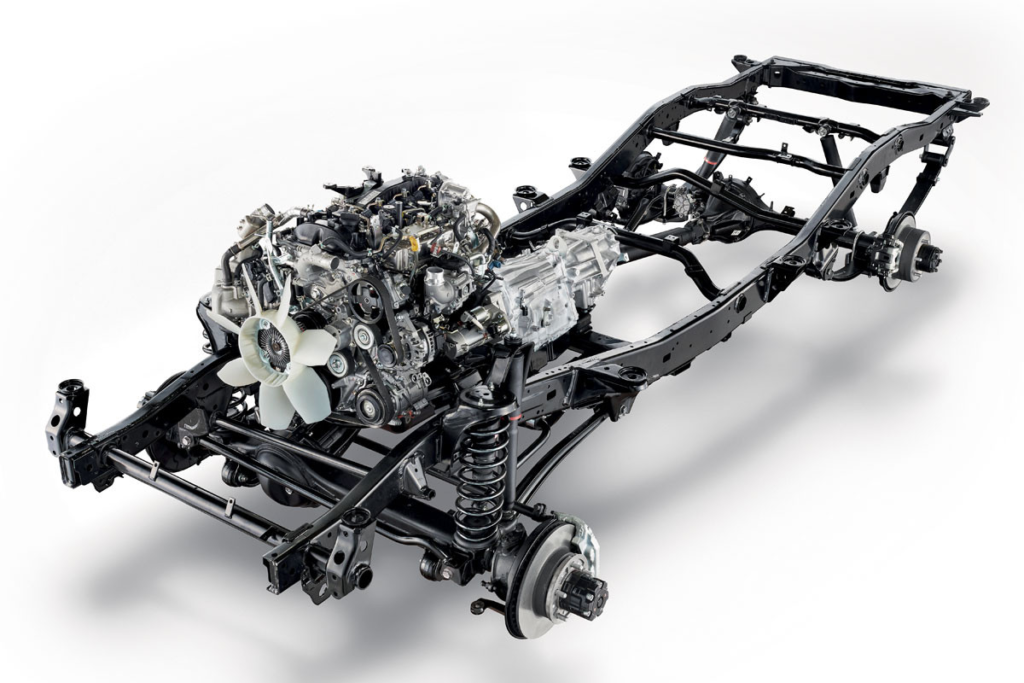
The ride is better than that of most modern pickups, and it shows over every kind of surface — the long leaf springs and the substantial 3180 mm wheelbase see to that. The same wheelbase, combined with small steering angles and a very long steering rack (over four turns lock to lock), also limits manoeuvrability severely, and that is worth bearing in mind. Before you commit to a dead end, think twice or get out and walk it. I speak from experience: I got lazy, and the Land Cruiser got stuck. The right rear wheel dropped into a hole while both front wheels ran up against a high ridge of dirt.
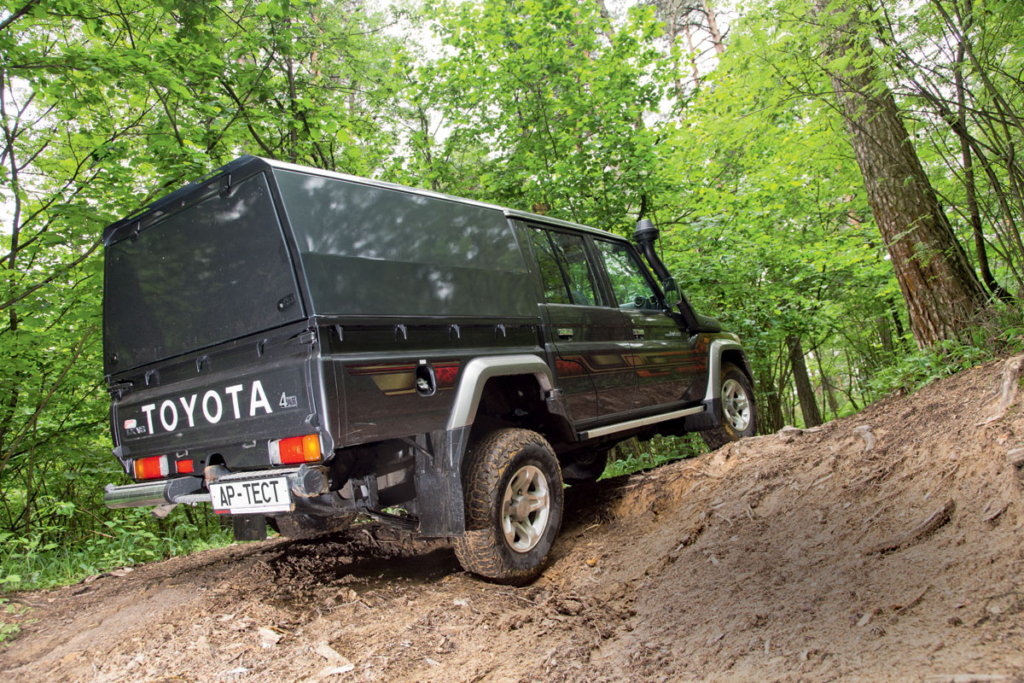
Stuck in a Hole, and Out Again
The sensible thing in that situation is to reverse out, and I admit I only pressed on out of curiosity. First I engaged the rear locker: the pickup pushed its nose harder into the ridge and stayed put. Then I locked the front differential, touched the accelerator gently and — goodness gracious — with apparently nothing to grip at all, the truck climbed straight out. I am not sure how a modern digital off-roader would manage the same trap, but I suspect even the cleverest of them would be let down by its body geometry.
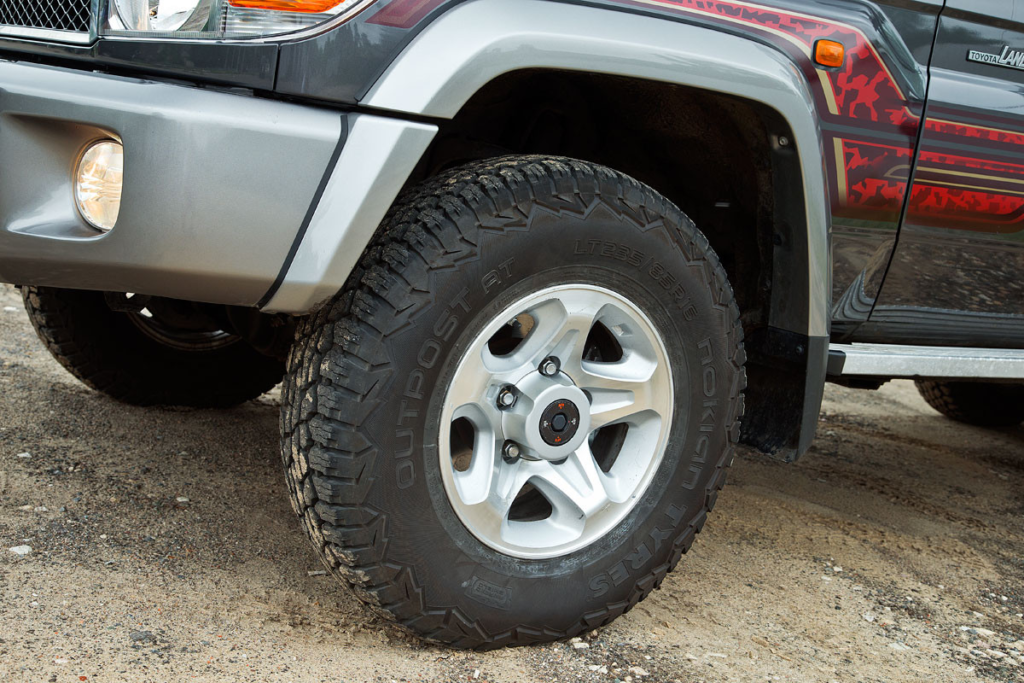
The Land Cruiser 79 does have some electronics, as it happens. There is a stability system you can switch off, and an anti-slip system that simulates soft inter-wheel locks and works excellently off-road, even in rear-wheel drive. But engage the low range and all of it goes to sleep — at which point the Land Cruiser becomes fully analogue. The Nokian Outpost AT-pattern tyres turned out to be surprisingly grippy: the pickup not only ploughed confidently through mud in a straight line but made successful attempts to climb out of a rut.

Why the “70” Is Loved — and Where It Goes Next
However, I won’t idealise this vehicle. I will only say that what draws me to the Land Cruiser 70 series is its structural simplicity and its ideological stubbornness. Not one update, not one change in its design has ever contradicted the canons of the classic off-road school. That, I think, is why it is loved — kept in garages, and rebuilt into seriously capable machines for trophy raids.
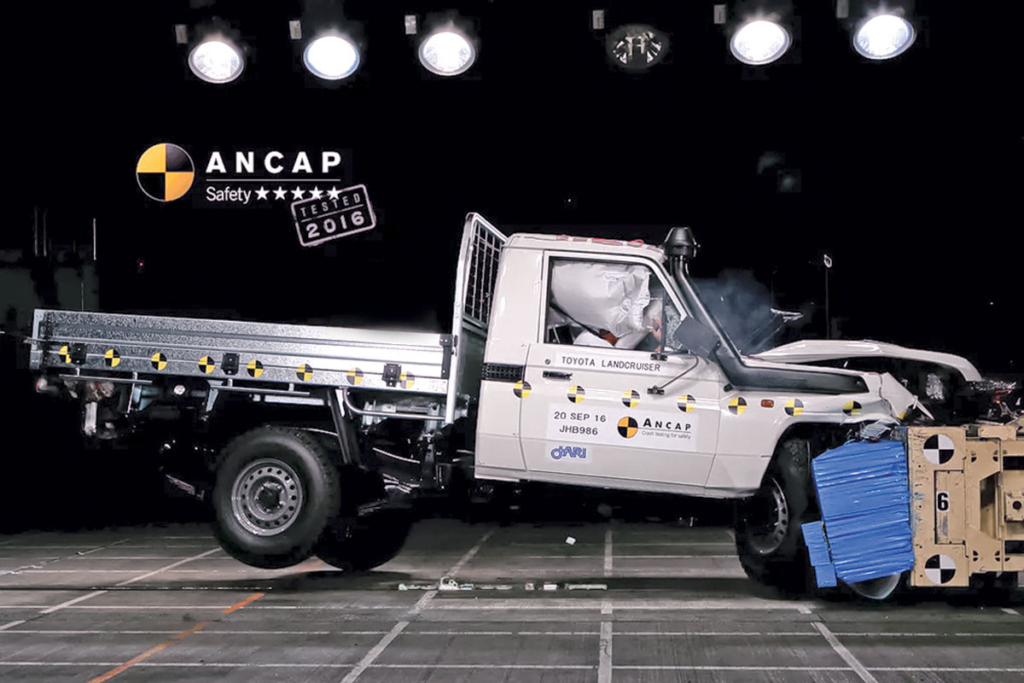
And the “70” still has a future. In 2016, its passive safety was upgraded, earning it a maximum five stars in the Australian ANCAP crash test. Last year it went through a major modernisation, and there are even plans for a mild-hybrid version, for those markets where emissions rules are tightening on commercial vehicles too.
A Crash on the Ice at Lake Baikal
Speaking of crash tests. The Toyota Land Cruiser 70 was involved in one of the most tragically comic accidents I have ever seen. It happened in winter at Lake Baikal, in the delta of the Selenga River. Coming out of the tall reeds, I found myself looking at the aftermath of a paradoxical crash: an immaculately kept — and now damaged — Toyota Land Cruiser 70 in plush off-road tuning, and a badly wrecked, brand-new Oka still wearing the dealership’s plastic on its seats. The fatal bang on the bare ice was apparently a matter of mutual fault, but how the two drivers contrived to meet each other on Lake Baikal is something only the local shamans could explain.
Talking to me, the men did not go into the details of the incident, but they cursed the traffic police roundly. The officers had already been out to the scene and refused to process the accident, on the grounds that by every map this was not a road but water — go and ask the emergency services. The naive owner of the Oka lamented that he would never afford a new car again, while the Cruiser’s owner was coming to terms with the likelihood that his collectible off-roader would not be covered by insurance. It was funny and sad at the same time.
Life Begins at 40
The “70” will live on for a long while yet. As a famous film heroine once said, “Life begins at 40.” And thanks to grey importers, a Toyota like this can even be bought here. The prices are eye-watering, of course — from 6 to 10 million rubles — but that is what exclusivity costs.
Photo: Dmitry Piterskiy | Toyota Company
This is a translation. You can read the original article here: Винтаж: новый старый пикап Toyota Land Cruiser 70

Published October 24, 2024 • 10m to read