
The combination of “Jeep” and “pickup” may sound like an innovation today, with the upcoming truck based on the Jeep Wrangler SUV heralded as a leap into a new class. However, this venture is in fact a return to old traditions, from which the Jeep brand strayed only a quarter of a century ago and for entirely understandable reasons. From 1947 to 1992, pickups were a regular part of its production lineup.
Where it started: the Willys Jeep Truck
Production of pickups under the Willys Jeep double brand began just two years after the launch of the first “civilian Jeep” in 1945. Developed alongside the Willys Jeep Station Wagon, the vehicle bore the simple name Willys Jeep Truck, and the professional designer Brooks Stevens contributed to the appearance of the duo. Despite sharing components with the Willys-Overland CJ-2A SUV, such as the engine, the pickup and the wagon had distinct features, including different fenders and even unique stampings on the doors.
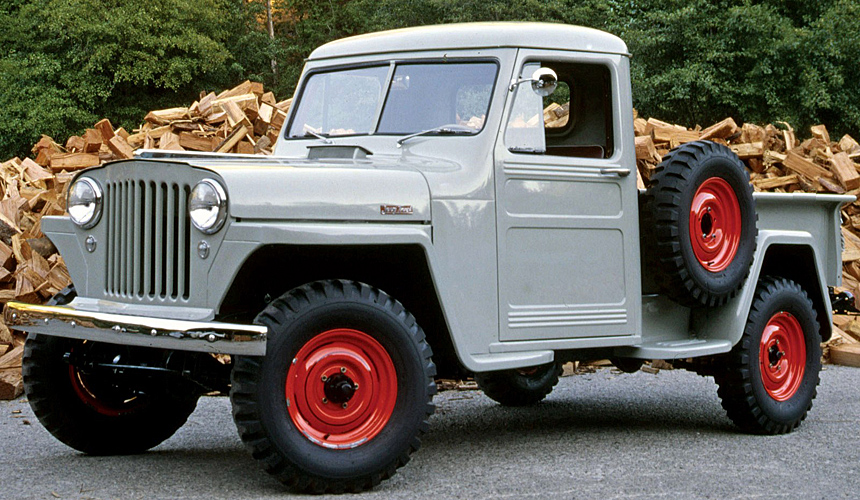
Willys Jeep Truck
Following the norm of the time for most American passenger cars, the pickup had a body-on-frame construction, and it carried the longest wheelbase in the family: 2997 mm, against the station wagon’s 2642 mm and the base Jeep’s 2032 mm. It came with an all-metal cabin and the standard four-cylinder Go-Devil engine (2.2 liters, 60 hp), was offered with rear or all-wheel drive, and could carry a one-ton payload.
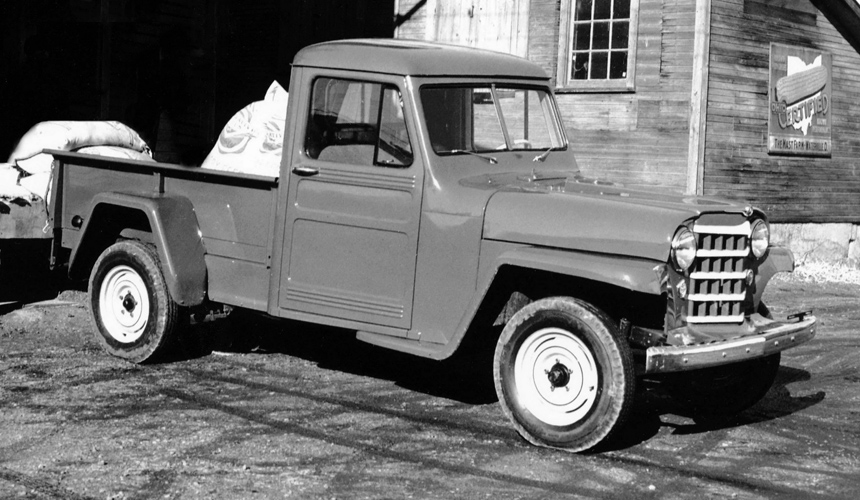
Willys Jeep Truck
In 1950 both the pickup and the station wagon received a new V-shaped front end design, and a lightweight truck with a half-ton payload joined them. From 1954, inline six-cylinder engines ranging from 3.7 to 3.8 liters were available as options. This iteration of the pickup remained in production until 1965, with total production exceeding 200,000 units.
The Gladiator and the J-series, 1962-1988
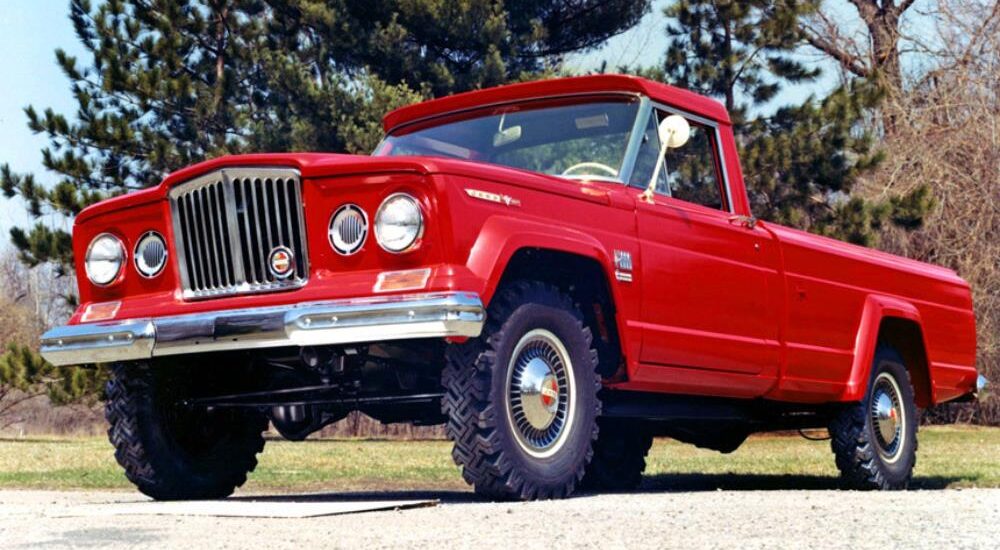
The next pickup, the Jeep Gladiator, had an impressive production run of over 26 years. It was launched in 1962 alongside the civilian SUV Jeep Wagoneer, and both models were designed by the renowned Brooks Stevens.
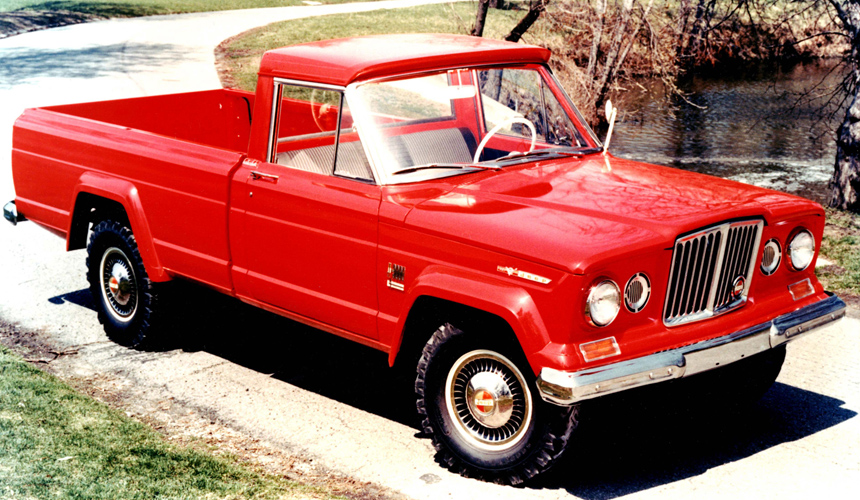
Jeep Gladiator
The Gladiator introduced numerous innovations to the pickup segment. It was the first to offer an automatic transmission, power brakes and power steering. Some of the lighter versions also had independent front suspension, although that was short-lived because of reliability problems.
Gladiator pickups had a body-on-frame construction, came in three wheelbase sizes, and could be configured with rear or all-wheel drive. The cabin, however, was limited to two seats, and at first the only engine available was the overhead inline six-cylinder Tornado (3.8 liters, 142 hp). In 1965 Kaiser Jeep adopted AMC engines, including similar inline-sixes and V8s (5.4 liters, 253 hp).
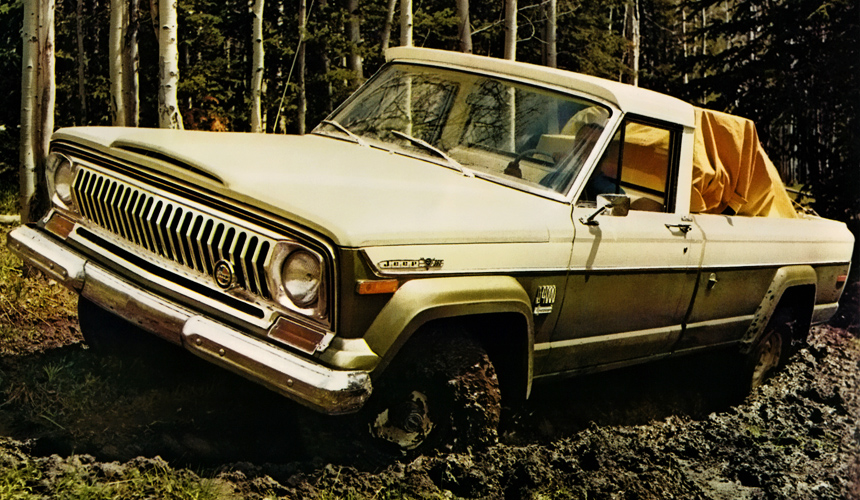
Jeep J4000
Renamed, and renamed again: J2000, J4000, J10, J20
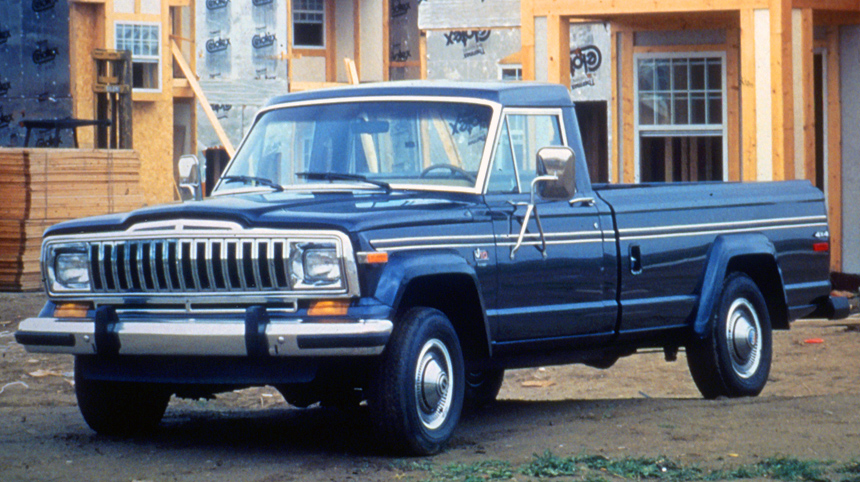
Despite a series of rebranding exercises — name changes to J2000 and J4000, and later to J10 and J20 — the pickups continued to evolve alongside the passenger Wagoneer. Notable upgrades included changes to the front end and the interior design, new engines, and the adoption of a full-time four-wheel-drive system in 1983.
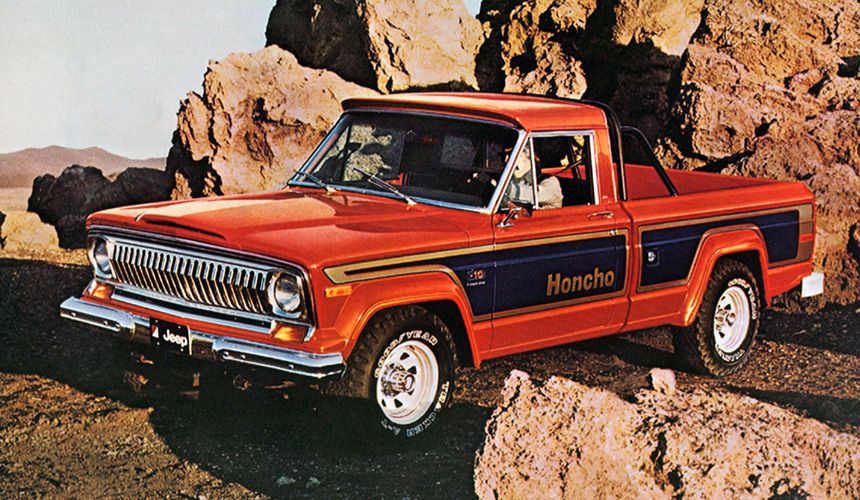
Jeep J10
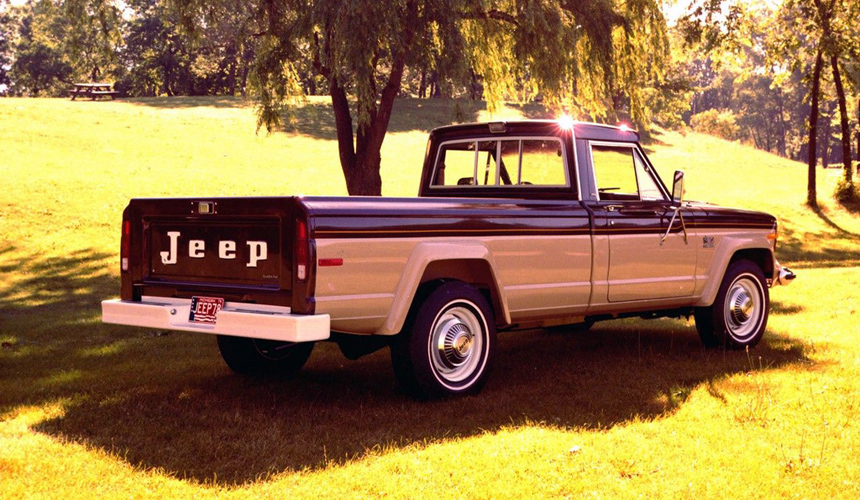
Jeep J20
CJ-10: a Jeep pickup built for Australia
From 1981 to 1985 the production program also included the Jeep CJ-10 pickup, with a gross weight of up to three tons, which combined the frame and chassis of the J10 with the cabin and exterior elements of the classic CJ-7 SUV. These cars were produced in the USA and Mexico but were mainly exported, primarily to Australia. The target markets called for inexpensive machinery, so there were no V8s under the hood: the CJ-10 was offered with AMC gasoline engines, four or six cylinders, and with a straight-six diesel from Nissan of 3.2 liters. Production ended after a jump in the Australian dollar made imported cars unreasonably expensive.
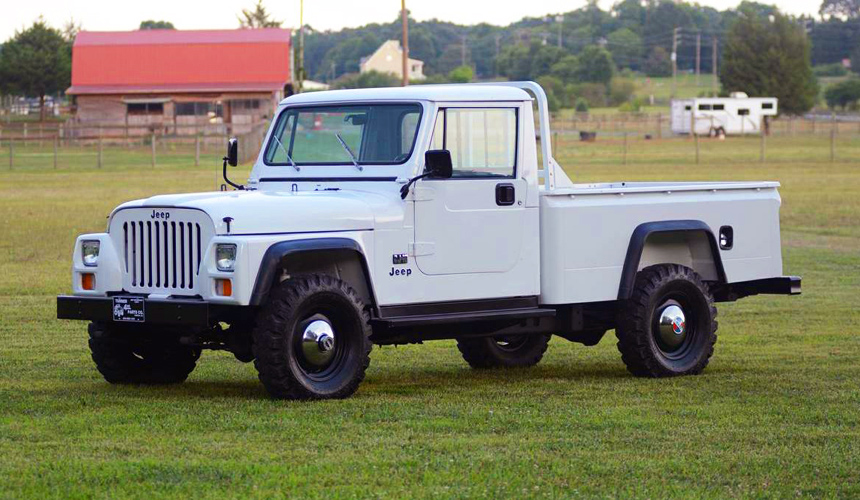
Jeep CJ-10
Why the J-series went first
In 1988 production of the J-series pickups ceased, while the Wagoneer — by then the Grand — continued for another three years. The premature retirement of the pickup was largely a consequence of Chrysler’s acquisition of AMC in 1987, with the more modern Dodge Ram serving as the focal point of Chrysler’s full-size pickup segment.
The small ones: Jeepster Commando, Commando and CJ-8
Alongside its full-size pickups, Jeep also dabbled in lighter trucks. The Jeepster Commando family, introduced in 1966, included a pickup variant with a two-seater cabin. Despite sharing a body with the other Jeepster Commando versions, these pickups failed to gain traction in the market, with only 57,000 units produced by 1971. They were offered with engines of 2.2 (75 hp) or V6 3.7 (160 hp) and could carry only 450 kg.
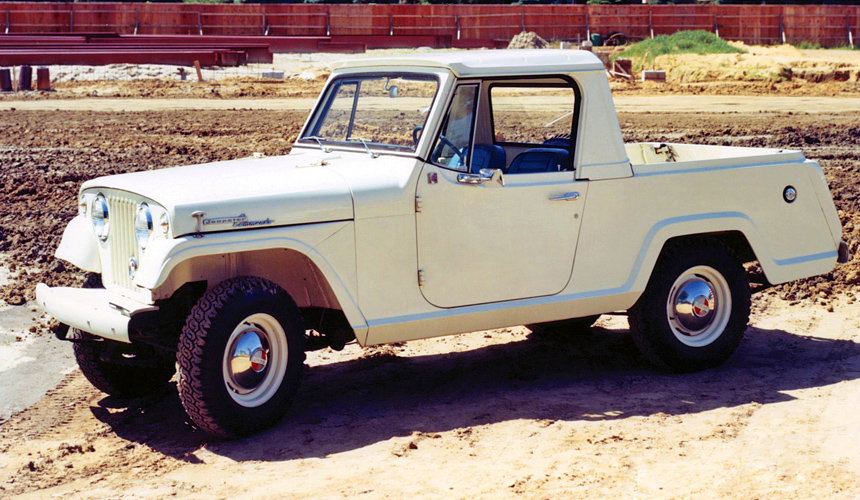
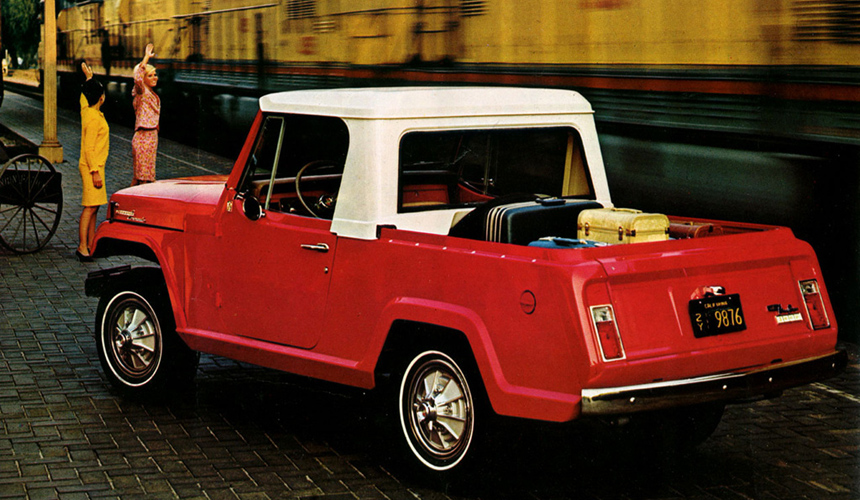
In 1972 AMC, the new owner of the Jeep brand, made a pivotal decision and reintroduced the junior model as the Jeep Commando. These off-road vehicles had a fresh front end design, uncharacteristic for Jeeps, along with revamped interiors and a revised engine lineup: inline-sixes of 3.8 and 4.2 liters (100 and 110 hp respectively), plus a potent five-liter V8 (210 hp). Demand nevertheless remained stagnant. Over two years only 20,000 Commandos found buyers, and production was discontinued in 1973.
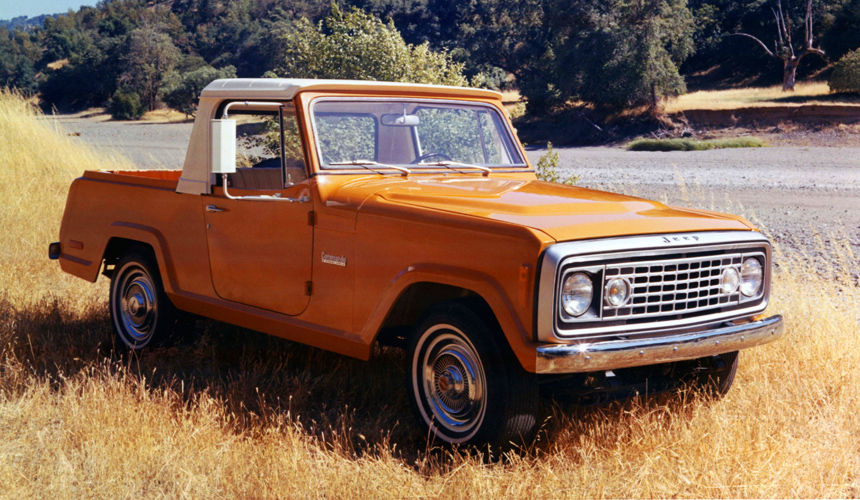
Jeep Commando
CJ-8, better known as the Scrambler
The concept resurfaced in 1981 with the Jeep CJ-8, an elongated version of the CJ-7 with a stretched wheelbase (2630 mm against 2370 mm) and a longer rear overhang. The standard configuration mirrored its donor model — a single open cabin, with the option of additional benches for passengers behind the front seats — but a full pickup variant was also introduced, its cargo bed separated from the two-seater cabin by a metal partition.
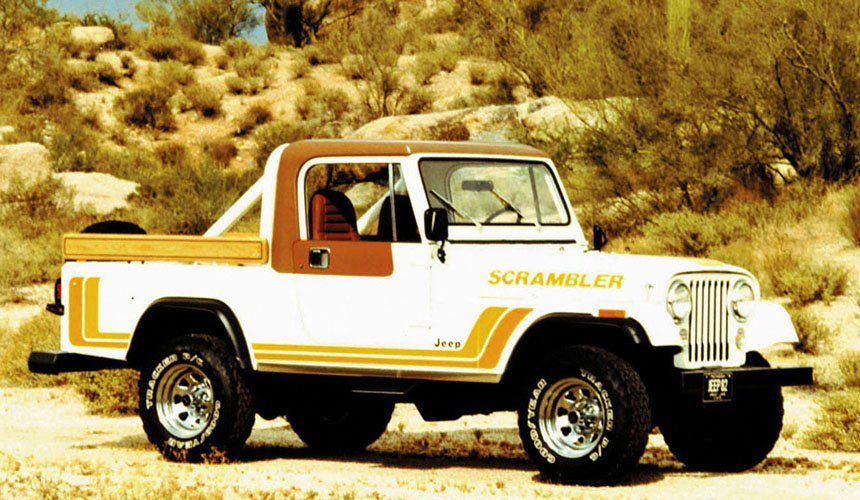
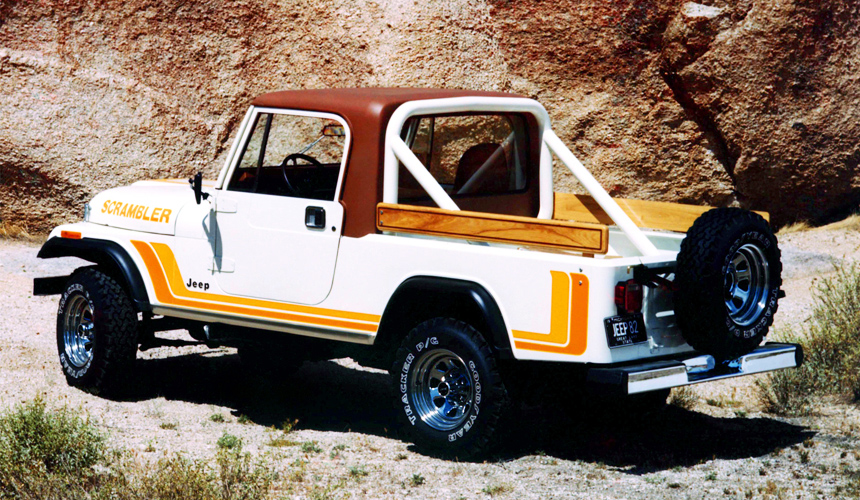
Even in pickup form the CJ-8 offered both hard and soft top cabins. Engines ran from gasoline units of 2.5 (93 hp) to 4.2 liters (114 hp), plus an Isuzu 2.4 diesel (66 hp). These four-wheel-drive vehicles had a modest cargo capacity of only 400 kg, however, which limited the popularity of the base models. Buyers gravitated towards the stylish Scrambler trim, with its large wheels, body decals and other enhancements, and the CJ-8 became so closely associated with that name that the two are now used interchangeably. Demand still remained tepid: just 28,000 units were sold across all configurations over five years.
Comanche: the compact pickup, 1985-1992
The American compact pickup truck market was on the rise during this period, which prompted AMC to reassess its truck concept. The result was a new model based on the then-fresh 1983 Jeep Cherokee off-roader: the Jeep Comanche pickup truck, which debuted in 1985 and, like its base model, was named after a Native American tribe.
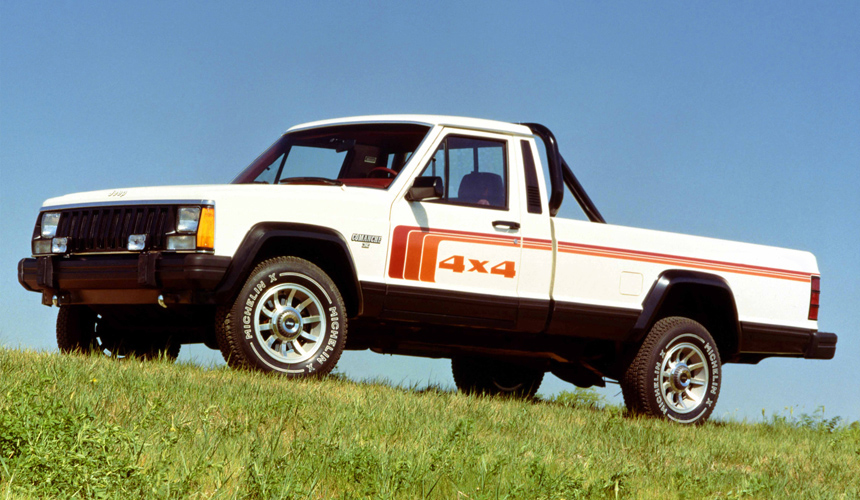
While the Cherokee had a unibody construction, the Comanche used a semi-frame design, with a unibody front end and a rear frame onto which the cargo compartment was mounted. The base version had a payload capacity of 635 kg, which could be raised to one ton with a factory suspension reinforcement package. Engines ranged from four to six cylinders (2.1 to 4.0 liters), with a choice of full or rear-wheel drive and manual or automatic transmissions, though the cabin was strictly a two-seater.
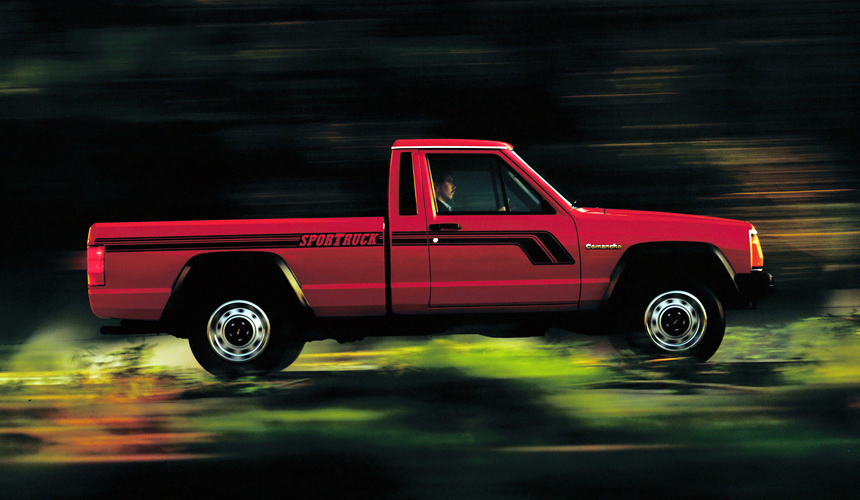
The Comanche enjoyed a promising start, with 29,000 units sold in 1985 and a peak of 43,000 in 1987. Subsequent years saw a sharp decline in demand, and dealers urged Chrysler to discontinue the model and leave the Dodge Dakota as the sole compact pickup truck in the lineup. The request was granted in the summer of 1992, after a total production of 190,000 Comanches. From then on, the exclusive right to produce pickup trucks within the Chrysler corporation was retained solely by the Dodge brand.
Twelve years of concepts, and one conversion kit
Twelve years later that policy was reconsidered. The new thinking was that heavy-duty pickups and workhorses belonged under Dodge, later Ram, while a stylish pickup truck for active leisure would befit the Jeep brand. To assess how the market would react, the Jeep Gladiator concept, based on the Wrangler, made its debut at the Detroit Auto Show in January 2005.
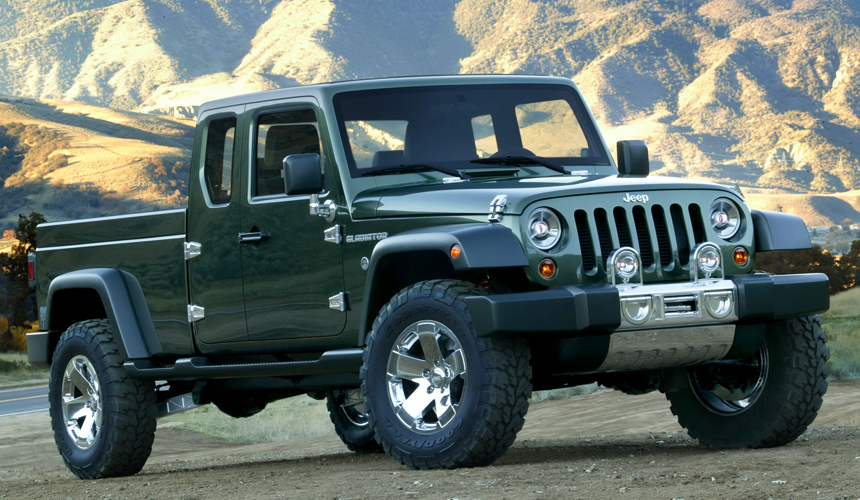
Concept of Jeep Gladiator (2005)
Despite intermittent revisitations, including various concept designs inspired by the old Gladiator, the market remained void of a production Jeep pickup truck for the next 13 years.
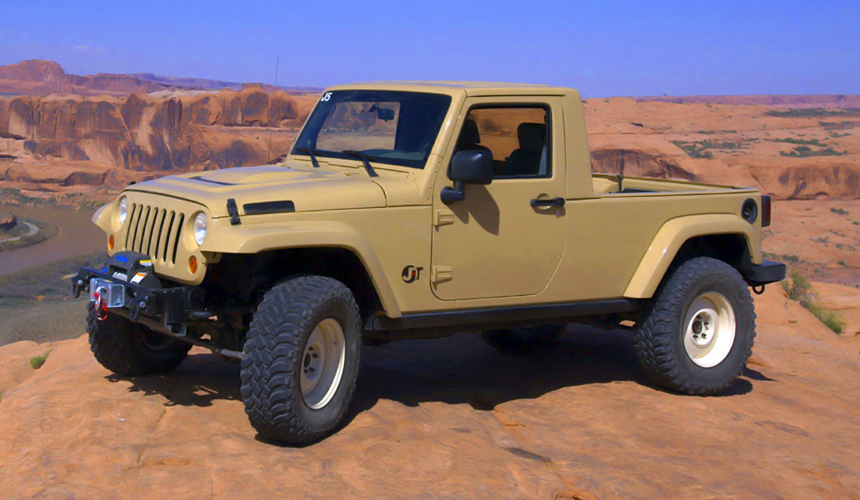
2007: Jeep Wrangler JT
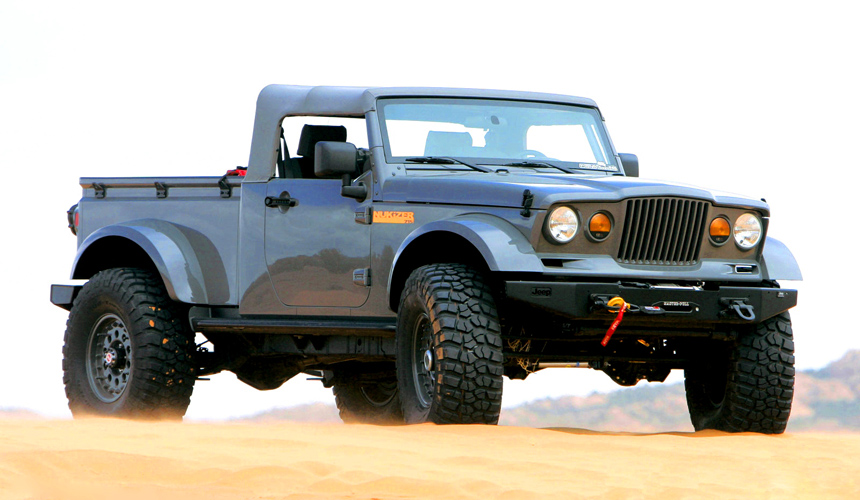
2010: Jeep Nukizer 715
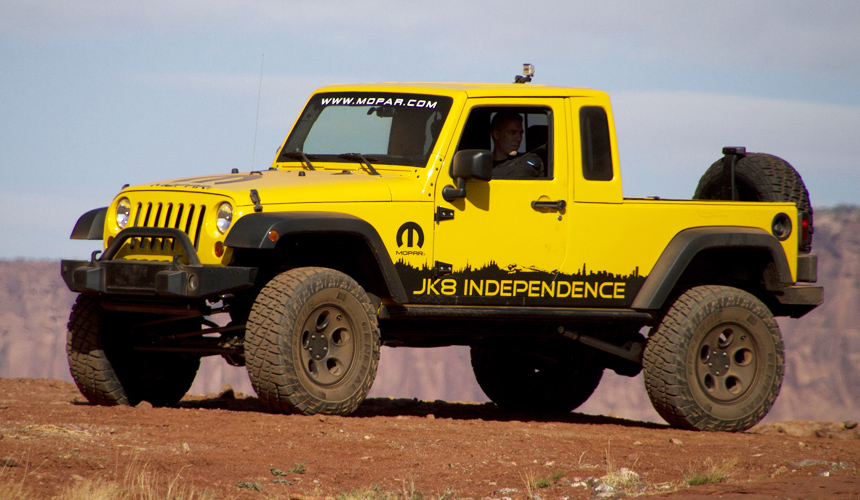
2011: Jeep Wrangler JK-8 Independence
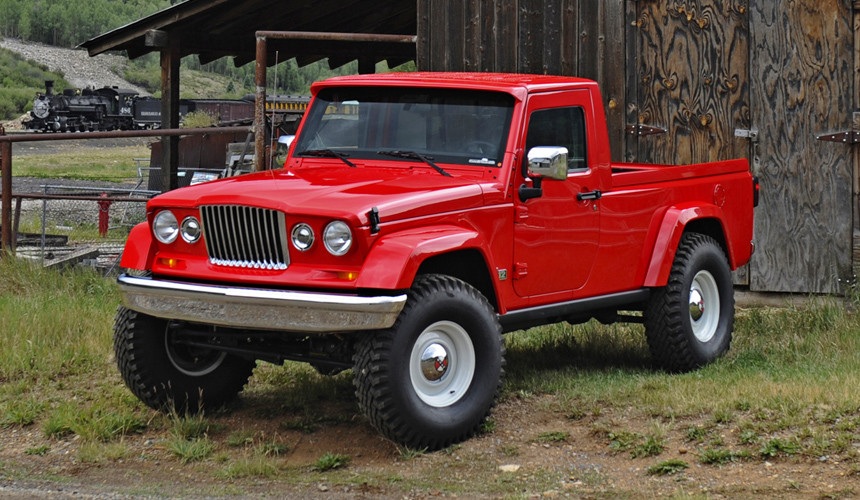
2012: Jeep J12
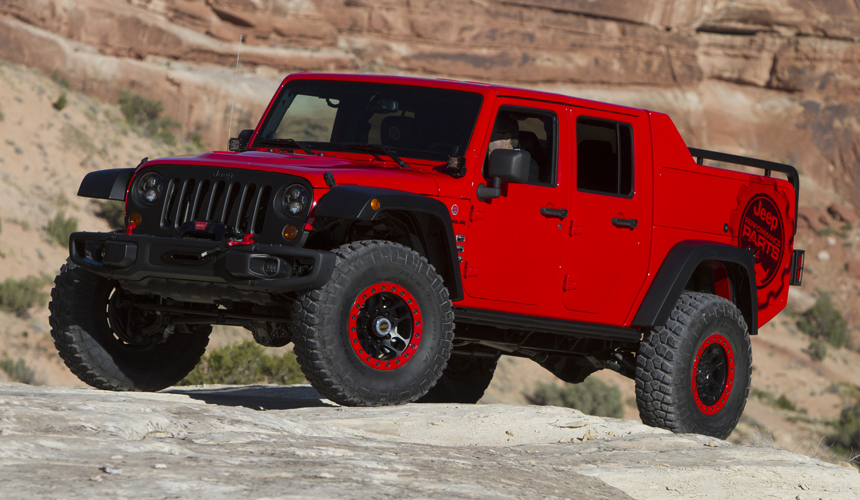
2015: Jeep Wrangler Red Rock Responder
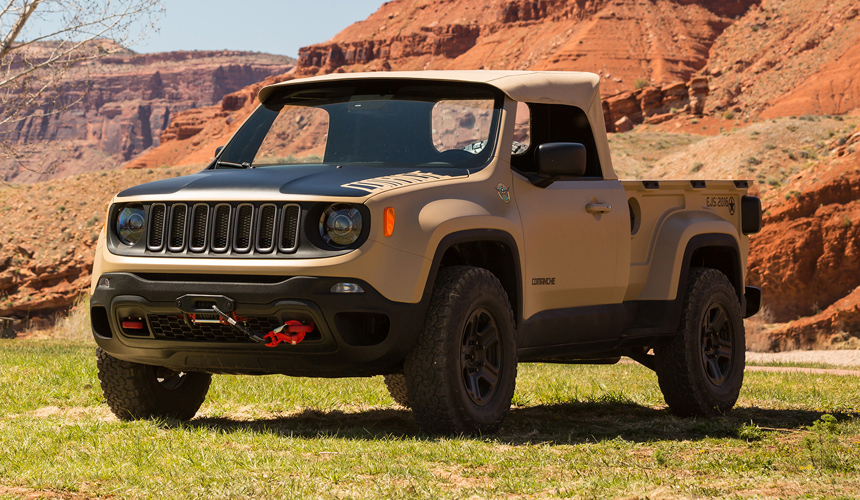
2016: Jeep Comanche
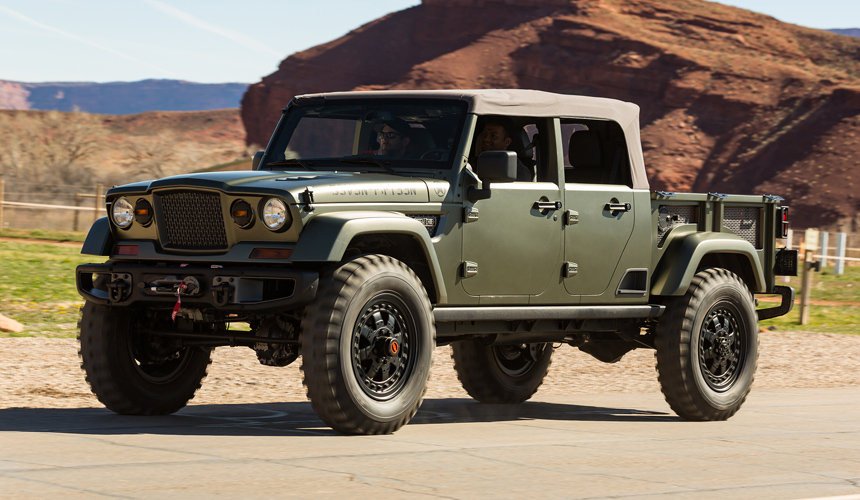
2016: Jeep Crew Chief 715
The one exception came in 2012, when the Mopar division unveiled an official JK-8 kit for converting the long-wheelbase Wrangler into a pickup truck. The factory warranty remained intact after installation.
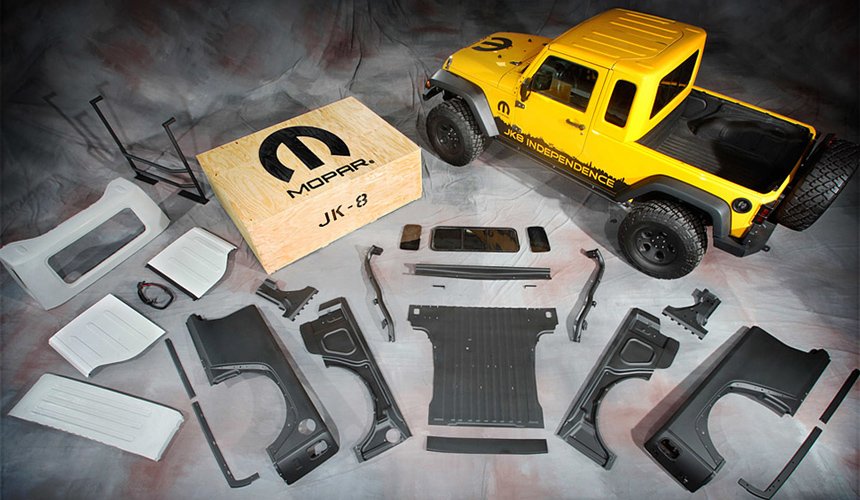
JK-8 kit
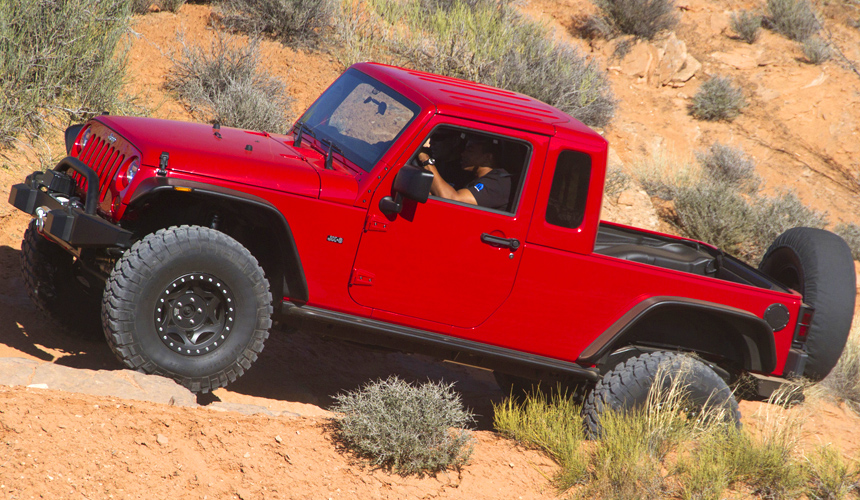
Jeep Wrangler JK-8 kit
The Gladiator returns
Finally the wait is over, with the highly anticipated premiere of the Jeep Gladiator set to take place at the Los Angeles Auto Show in late November. It marks the brand’s return to the pickup truck segment, and it offers a full two-row cabin for the first time in its production history.
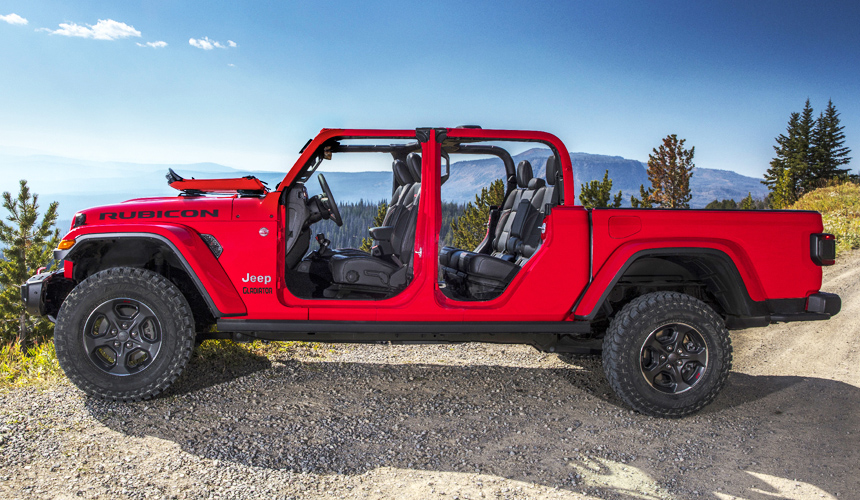
Photo: autowp.ru | Jeep
This is a translation. You can read the original article here: Гладиаторы и Команчи: история пикапов марки Jeep

Published April 04, 2024 • 7m to read