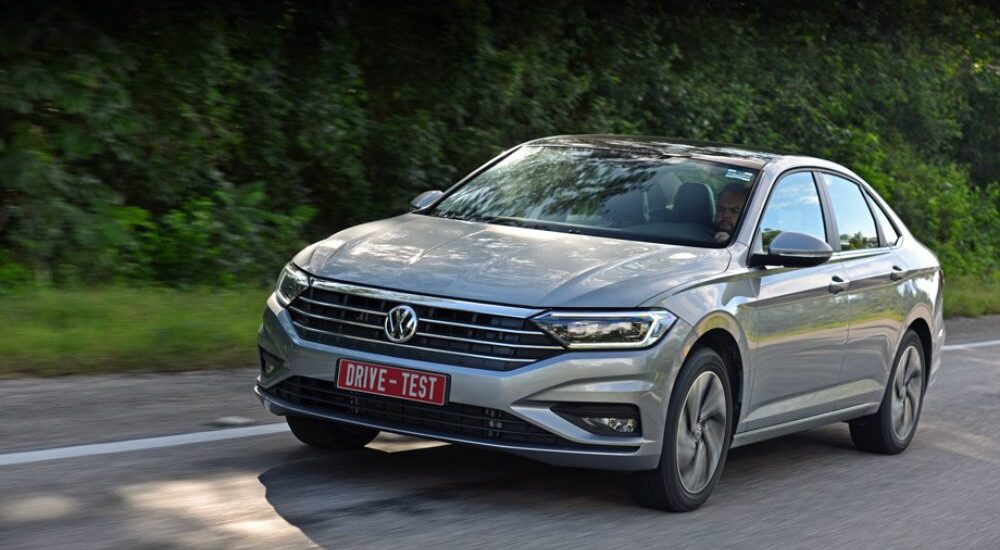

The seventh-generation Volkswagen Jetta brings a new platform, a refreshed interior, and updated tech features like Apple CarPlay and Android Auto. But does it drive better than the model it replaces? We took the redesigned Jetta for a test drive in Mexico to find out how it stacks up on engine performance, ride comfort, handling, and interior quality.
Production and Engine: A Global Supply Chain
The most interesting thing about the seventh-generation Volkswagen Jetta sedan, at first glance, is the production logistics. Volkswagen chose not to localize the model in Nizhny Novgorod, which means Mexican-built cars powered by Russian-made engines. Atmospheric four-cylinder 1.6 MPI (CWVA) engines from the EA211 family, produced in Kaluga since fall 2015, are shipped across the ocean to the assembly plant in Puebla, Mexico. From there, they return home under the hoods of brand-new sedans.
Our test cars were equipped with the 150-horsepower 1.4 TSI (CZDA) turbo engine. Transmission availability varies by market:
- Russia: six-speed automatic transmission only
- Other markets: eight-speed automatic or DSG dual-clutch
- No robotic (DSG) transmissions will be offered in Russia
The target audience will likely welcome the switch to traditional hydromechanics, viewing it as more durable. For me, though, it’s a step backward — years of development have made DSG gearboxes reliable and largely eliminated the roughness that once plagued them.
Engine Performance: Smooth but Less Exciting
I remember well how fun it was to drive the old Jetta with this turbo engine. Driving the new car, I don’t get that same feeling. The 1.4-liter “four” pulls normally, even well, but paired with the automatic transmission, its character feels toned down. Power builds so smoothly and calmly — almost boringly — that the turbocharged engine can easily be mistaken for a naturally aspirated two-liter. Still, it’s easy to manage acceleration if you can look past the throttle lag. That lag shrinks slightly in Sport mode, but never fully disappears.
Ride Quality and Suspension Tuning
In the suspension settings, you can feel Volkswagen searching for a balance between smoothness and efficiency — a priority for both the Mexican and Russian markets. The car sometimes reproduces small road imperfections in too much detail, and it can shudder over short, sharp bumps. Transverse irregularities produce parasitic vibrations from the 17-inch wheels. On the plus side, the Jetta handles unmarked speed bumps without drama.
Cabin Noise: Quiet in the City, Louder on the Highway
In measured city traffic, interior noise stays within reasonable limits. Engine sound is well muffled, and the suspension is quiet over bumps. On the highway, though, things change. Road noise from the Bridgestone Ecopia EP422 tires becomes noticeable at 43-49 mph and grows louder as speed increases, eventually taking center stage. Wind noise joins in too, but you need to reach at least 75 mph before aerodynamic disturbances become noticeable.
How the Jetta’s Global Positioning Has Changed
Before discussing handling, it’s worth revisiting how Volkswagen has repositioned the Jetta worldwide. The sixth-generation car came in two distinct tiers:
- Europe (top tier): its own engine lineup, multi-link rear suspension, advanced electronics, and upscale interior trim
- America (entry tier): simplified sedans with a torsion beam rear, a single CAN bus instead of two, and harder plastics
- China: a separate lineup entirely, developed and sold independently
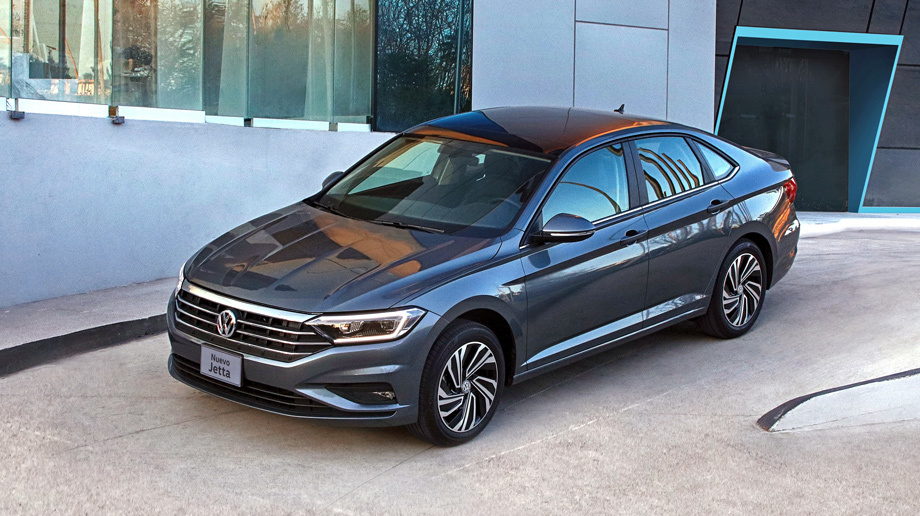
The new generation keeps this two-tier approach. Now it’s the top-spec Jetta GLI that goes to the USA, built with components borrowed from higher-performance Golf models: a rear multi-link suspension from the hatchback, a serious GTI engine, and R-line brakes. Standard cars, while sold alongside the GLI in the States, are aimed mainly at budget-conscious markets. At one point earlier in the decade, the Jetta was positioned as the potential foundation for its own vehicle family — but the Dieselgate scandal ended those plans. While that branch never grew in the West, it took root elsewhere: a new standalone Jetta brand has since launched successfully in China.
Handling: Predictable, but Not Exciting
The pre-crisis Jetta, with its multi-link rear suspension, handled nicely. The switch to a budget MQB torsion-beam setup isn’t ideal, but it hasn’t gotten worse either. Steering accuracy and predictability remain consistent with what you’d expect: a light, moderately quick steering wheel, a clearly defined center point, and a logical build-up of resistance as you turn away from it. The Jetta responds the way you’d expect from a Volkswagen. Still, this “progress” doesn’t feel like an improvement given what led to it.
The rare curves connecting the straight roads of the Yucatan Peninsula don’t exactly invite you to seek out a more interesting route. The sedan simply turns obediently, straightening its line under acceleration. It transitions smoothly into a controllable outward drift, but don’t expect the thrill of balancing right on the edge. The brakes, at least, perform well, with deceleration that’s fully satisfactory.
Interior Upgrades and New Tech Features
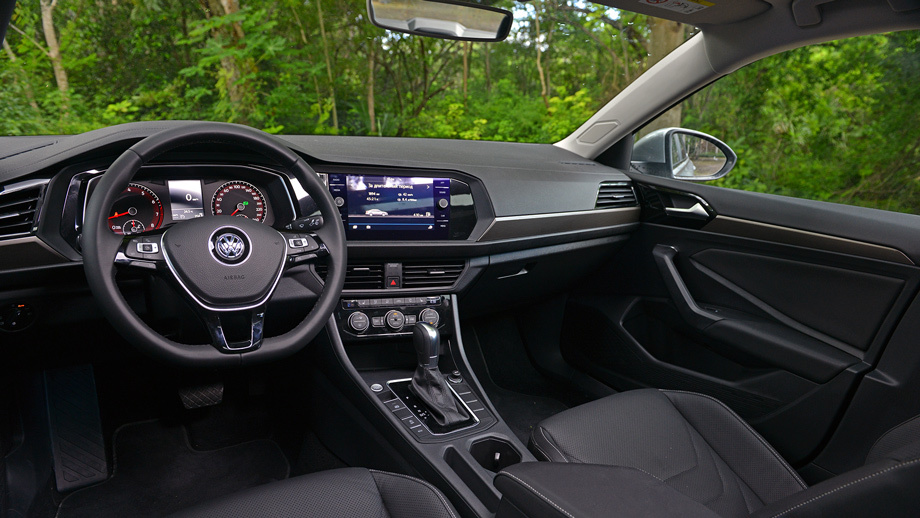
Test-driving the Jetta in Mexico leaves you with a sense of unfulfilled expectations. That said, some consumer-facing upgrades are genuinely improved:
- Upgraded interior trim quality
- Improved multimedia system functionality
- New support for Apple CarPlay and Android Auto
- Optional heated steering wheel (select trims)
- Optional heated rear seats (select trims)
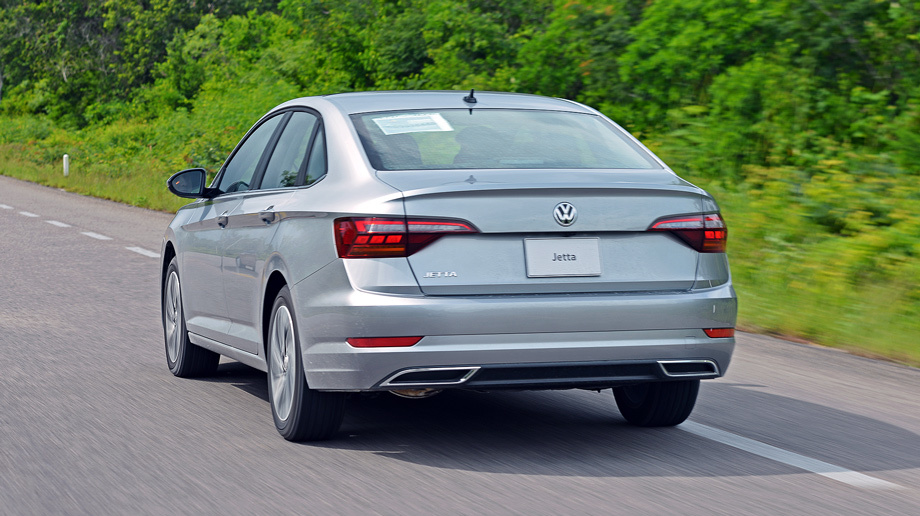
What’s Missing: A Few Steps Back
Unlike the previous generation, which felt like an entirely new model when it launched in 2011 despite not being structurally new, this successor doesn’t feel especially fresh. And a few details have actually gotten worse:
- The central air vents have disappeared, offsetting the benefit of more rear legroom
- Rear headrests now sit permanently raised, blocking the view through the rearview mirror
- Trunk capacity hasn’t increased, and it feels less carefully finished than before
Sales Performance: Can the New Jetta Compete?
The outgoing Jetta was never a segment leader, and the sales numbers back that up. In 2018, only 3,813 units were sold — nearly three times fewer than the 11,068 Kia Cerato sedans sold over the same period. It also trailed the locally built Hyundai Elantra (5,344 units) and Ford Focus (4,743 units), as well as the imported Toyota Corolla (5,199 units):
- Kia Cerato: 11,068 units
- Hyundai Elantra: 5,344 units
- Toyota Corolla: 5,199 units
- Ford Focus: 4,743 units
- Volkswagen Jetta: 3,813 units
Despite the new platform, I doubt this generation of Jetta will outsell its predecessor. Buyers who genuinely need a sedan are more likely to look toward a more affordable class of vehicle altogether.
Jetta vs. Skoda Octavia: How Does It Compare?
In the golf-class segment, the sales leader still isn’t a sedan — it’s the Skoda Octavia liftback. As it happens, right after this Mexican test drive of the Jetta, I attended the static presentation of the new-generation Octavia in Prague. My takeaway: even if the Czech five-door ends up pricier than the platform-mate Jetta, I still can’t find a single argument in the Volkswagen’s favor. Next to the Octavia, the Jetta simply looks pale by comparison.
Final Verdict
The redesigned Volkswagen Jetta brings real improvements in interior tech and materials, but its driving character has lost some of the spark that made the previous generation enjoyable. Combined with weak sales performance against rivals like the Kia Cerato, Hyundai Elantra, and Toyota Corolla, the new Jetta faces an uphill battle — especially with the Skoda Octavia setting a higher bar in the same class.
This is a translation. You can read the original here: https://www.drive.ru/test-drive/volkswagen/5dd665a8ec05c46e190000ee.html

Published May 11, 2023 • 7m to read