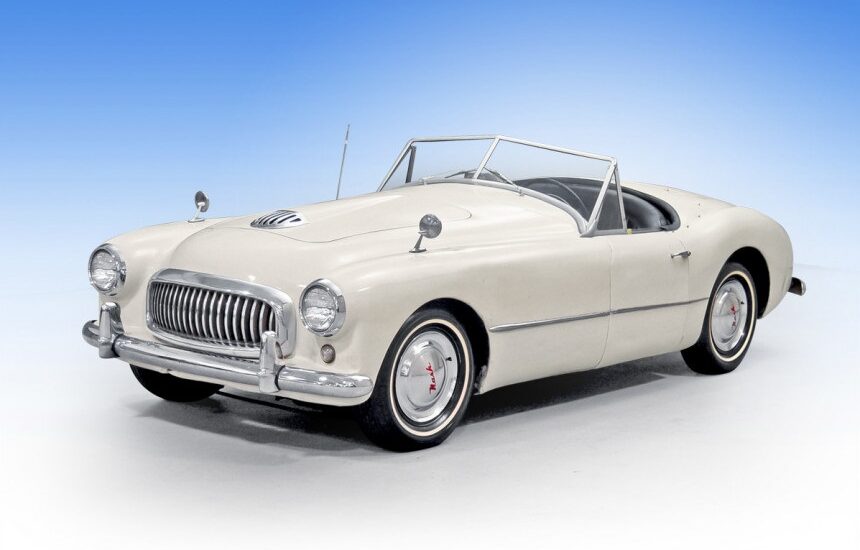

Our long-standing readers might recall that we discussed this vehicle in issue #6 of 2004. That article, though, was about a later variant; today we look at an earlier one.
A Meeting on the Queen Elizabeth
The tale began aboard the ocean liner Queen Elizabeth, on a voyage from the New World to the Old. On the promenade deck two gentlemen met face to face, both passionate about photography and about building cars: George Walter Mason, the tall, burly American who ran Nash-Kelvinator Corporation, and the slender Briton Donald Mitchell Healey, founder and owner of the small English firm Donald Healey Motor Company Ltd.
Mason was carrying an unusual camera with twin lenses side by side, and Healey asked about it. It was a stereoscopic camera, Mason explained with a friendly smile, able to take two slides from a single exposure and so produce a stereo pair. The conversation that followed revealed that both men made cars for a living. Over dinner Healey mentioned that he had come to the States on business and was going home empty-handed.
The Engine Problem
Donald Healey Motor Company Ltd., established in 1945, had always bought its engines in — mostly from Riley, with twin carburettors. Healey described a recent experience: an American sports car racer had pulled the British engine out of one of his two-seater Silverstone sports cars and dropped in a new overhead-valve V8 from a Cadillac. The improvement was striking, and Healey had gone looking for a similar supply arrangement, only to be turned away by suppliers who were not interested.
Mason, who was enjoying his dinner, was unfazed and proposed something simpler. He had no V8s to spare at that moment, but he did have a reliable, durable, large-displacement inline six that might do. Once they docked, he said, he would come and see Healey’s works and find out whether a Nash engine would marry to a Healey drivetrain — and make Cadillac’s unnecessary.
Turning a Silverstone into a Nash-Healey
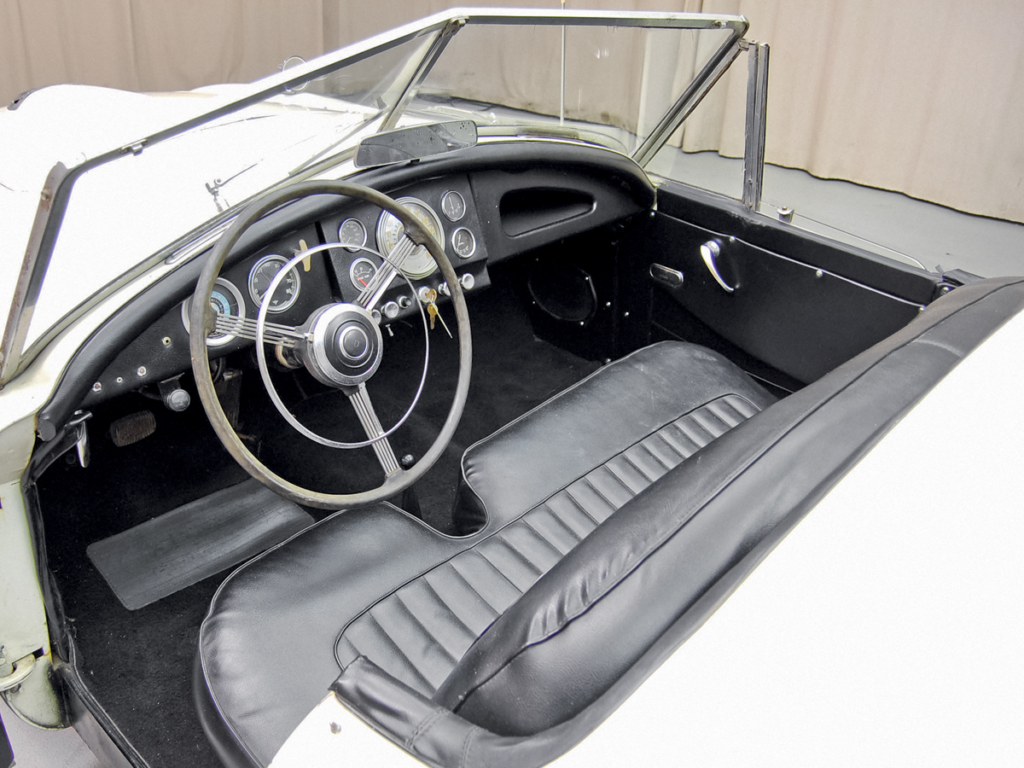
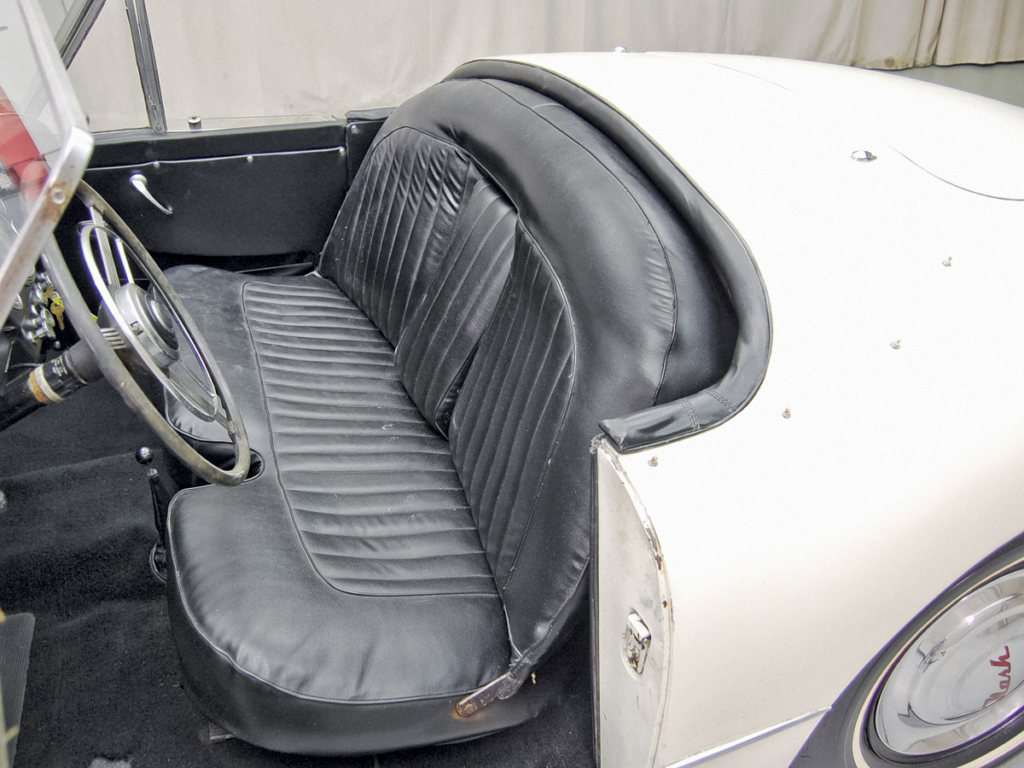
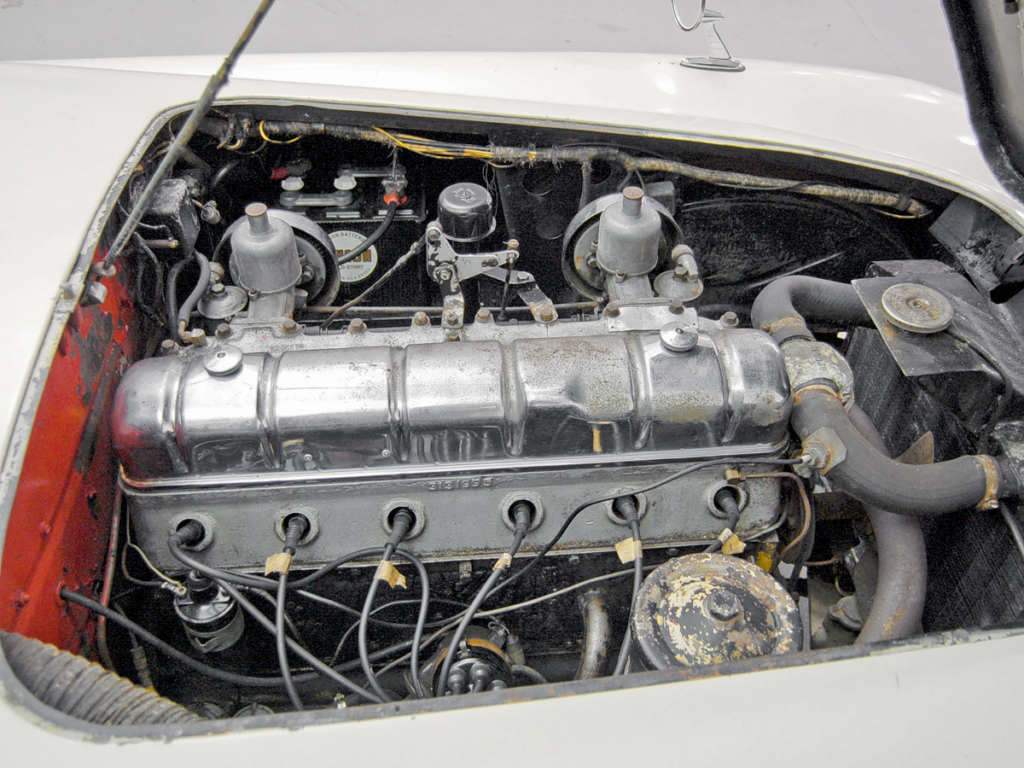
The Healey Silverstone was a somewhat primitive machine: headlights hidden behind a grille reminiscent of pre-war Peugeots, “motorcycle-style” detachable mudguards, a spare wheel on the tail, and a flimsy canvas top. Its engine bay, however, was roomy enough for the inline engine from the Nash Ambassador and a three-speed Borg-Warner manual gearbox with overdrive. A high-compression aluminium cylinder head and twin SU carburettors lifted the output from 112 to 125 horsepower. The front suspension stayed as it was; the rear axle came from the Nash Ambassador, springs and Panhard rod included, though the Silverstone kept its traditional longitudinal leaf springs at the back.
Panelcraft, Warwick and Petula Clark
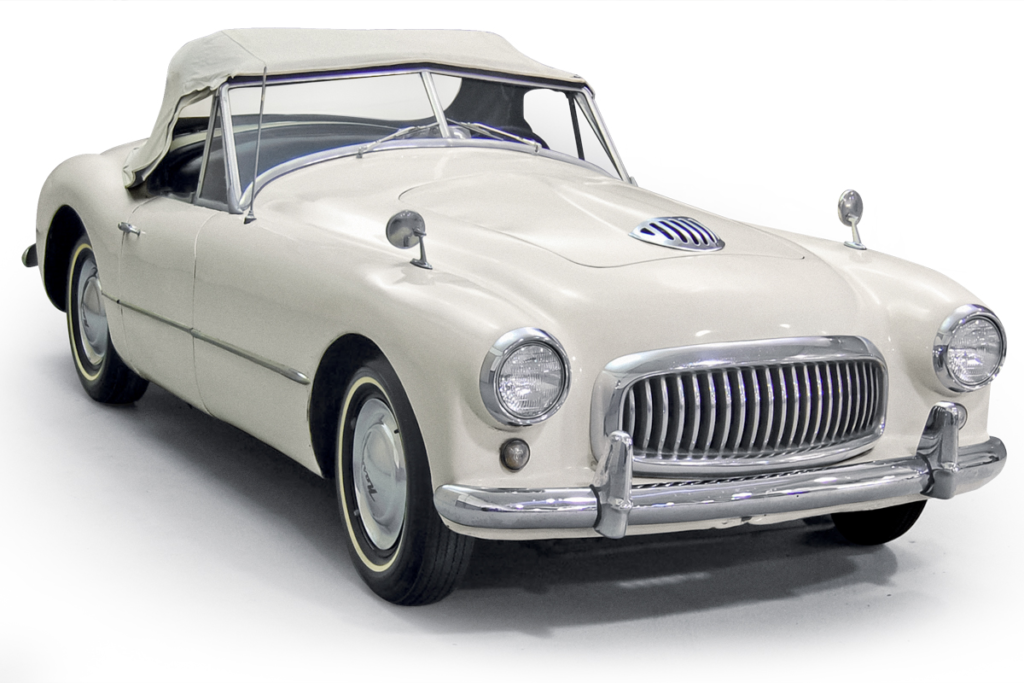
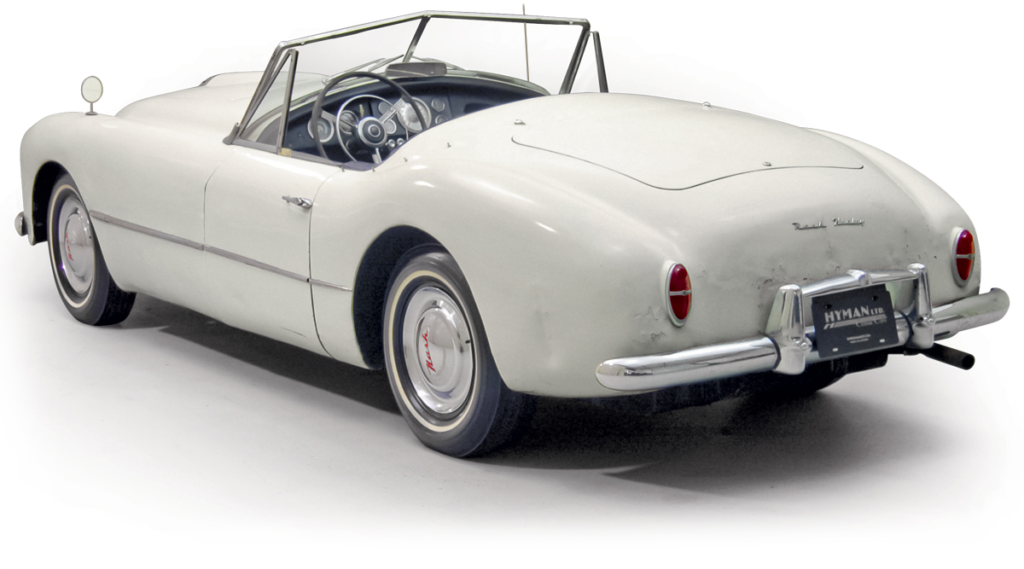
Healey designed the new two-seater body himself, and apart from Nash’s distinctive front-end styling it was thoroughly British. Panelcraft Sheet Metal in Birmingham built the bodies: every panel was beaten from aluminium sheet and sent to the Healey plant in Warwick for final assembly. A hand-built prototype appeared in public in September 1950 at the Paris Motor Show, and the first production car followed in February 1951 at the Chicago Auto Show, where Healey handed it personally to the singer Petula Clark, complete with a custom “PET 1” licence plate. Through 1951, around one hundred fifty Nash-Healeys were built in this style.
Then Pininfarina Took Over
Later Nash-Healeys looked entirely different. By then Mason had built a close partnership with the Italian coachbuilder Pininfarina, who quickly drew a new body and took on both its production and the assembly. Nearly four hundred of those later cars were made, racing versions for Le Mans and the Mille Miglia among them. Of the early style only 104 were built, and not all of them survive — which makes this a genuine rarity.
Nash-Healey Panelcraft: The Key Facts
- How it started: a chance meeting between George Walter Mason and Donald Mitchell Healey aboard the Queen Elizabeth
- Base car: the Healey Silverstone, whose engine bay took the Nash unit
- Engine: the Nash Ambassador inline six, raised from 112 to 125 horsepower by an aluminium head and twin SU carburettors
- Transmission: three-speed Borg-Warner manual with overdrive
- Bodies: aluminium, by Panelcraft Sheet Metal of Birmingham, assembled at Warwick
- Debut: prototype at the Paris Motor Show, September 1950; production car at the Chicago Auto Show, February 1951
- What replaced it: a Pininfarina body, in nearly four hundred later cars
Frequently Asked Questions
What makes the Panelcraft cars different? They are the first style, with a body designed by Healey himself and built in Birmingham. Everything after them wears Pininfarina’s design.
Why an American engine in a British car? Healey bought his engines in and wanted something stronger than the Riley units. Mason offered the Nash Ambassador six, and it fitted.
How rare is it? Very. The Panelcraft-bodied cars were built for a single year before Pininfarina’s design replaced them, and not all of them survive.
Who was the first customer? The singer Petula Clark, handed the first production car by Healey at the Chicago Auto Show in February 1951, with a “PET 1” plate.
Photo: Sean Dugan, Hyman Ltd.
This is a translation. You can read the original article here: Редкий Nash-Healey Panelcraft 1951 года в рассказе Андрея Хрисанфова

Published January 23, 2025 • 5m to read