
As the years go by, nostalgia grows, but memories sometimes begin to fade. In this chapter, we delve deeper into the stories that some of our authors can recall about the French 80s legends – Citroën BX vs Peugeot 405. These iconic vehicles from the golden era of French automotive engineering continue to captivate enthusiasts with their unique charm, innovative features, and timeless design.
Mikhail Podorozhansky
My First Foreign Car
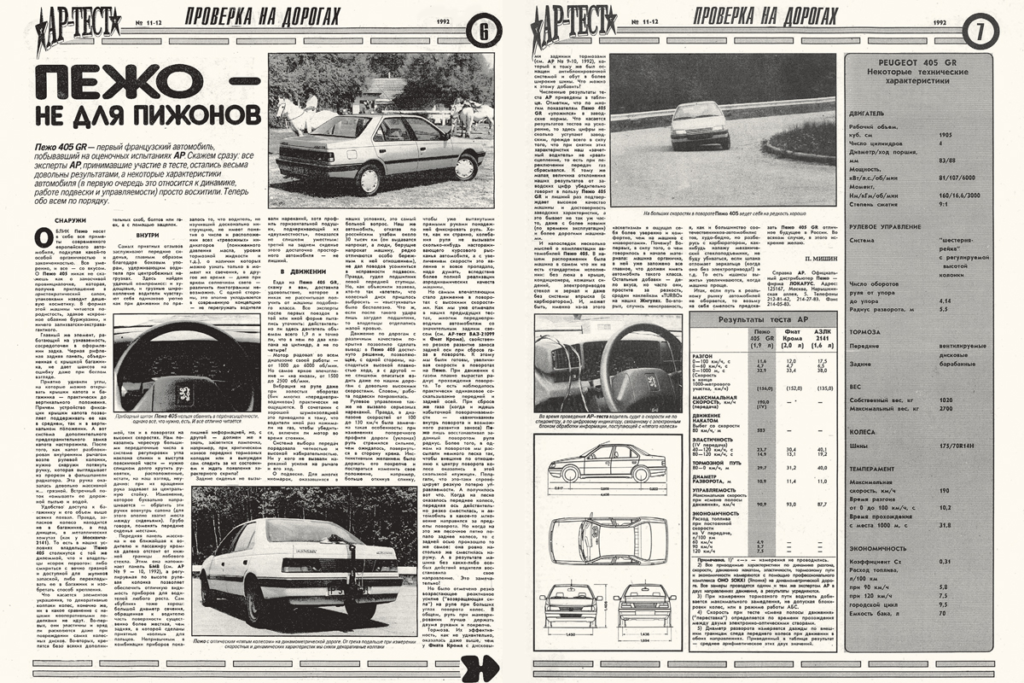
A landmark car, especially for me: my first foreign car, and completely new in every sense — just after the facelift. Paying around 14 thousand dollars for it in Moscow, and deeply immersed in the hustle and bustle, I asked Sergei Voskresensky — a bright memory! — to bring the car from Minsk. Yes, “self-pickup” was common practice for the first official dealers in those years. And you know what determined the choice? Also a common practice of those years: an article in my favourite AvtoReview. It hardly mattered that I had written that article myself, on the strength of my first “business trip” to France. So when Znaemsky offered me a ride a couple of weeks ago, to refresh my impressions, I naturally declined: “No!” There are no former lovers in the world, just as there is no force that would make me down a bottle of Agdam in a hallway with two or three others — even though I am still ready to sing a simple D-major country song from the late seventies about being forty-seven rubles better off.
The Ideal, Without ABS — Let Alone ESP
It was cool. Absolutely. Without ABS, let alone ESP. From Divakov and the same Voskresensky I greedily absorbed everything about handling; I did not miss a single outing to the test track, and suddenly — there it was, the ideal. What feedback through the steering wheel, what an intoxicating feeling of confidence, and how easily, under the whistle of the tires, that confidence slips into recklessness. Yet in five whole years — not a single screw-up, not a single unintentional spin, not a scratch.
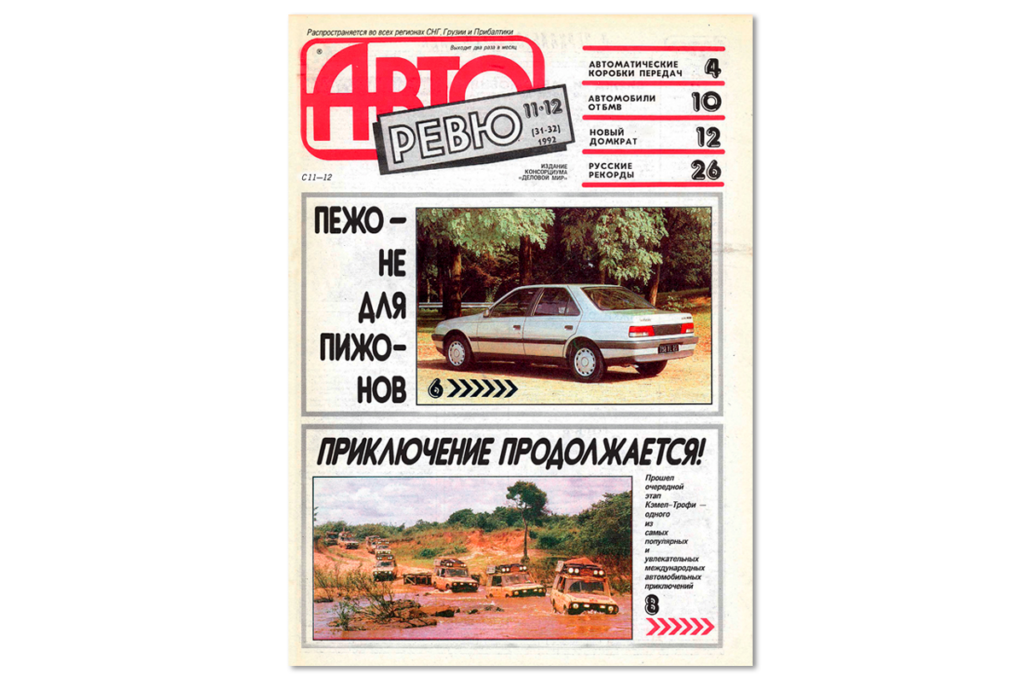
Autoreview cover (1992)
Elastokinematics Was the Revelation
The main revelation is, of course, elastokinematics: fantastically accurate, often lifesaving reactions to a change in fuel delivery mid-corner — read, to a change in vertical load on the rear wheels and the deflection that follows. Yes, later there was the 306, and the 407, but by then elastokinematic tuning had turned into an obvious value available to many, whereas in the Peugeot 405 it worked quietly and precisely when it was needed most.
Why the Bigger 605 Was Worse
The bigger Peugeot 605 of the same period fared worse: with its greater moment of inertia the car could slide into oversteer in an instant when you lifted off, and a couple of times, before I could blink, I found myself facing backwards. I deserved it, too — both times I was showing off. With the Peugeot 405 it was intimate, strictly between us. And the size, incidentally, was mine.
Colleagues Who Got There First
More experienced journalist colleagues from friendly Western countries said at the time that they had felt that joy earlier: some with the legendary Peugeot 205, which heralded the beginning of the triumph of French suspensions, some with the Peugeot 309. But this was a time when the most daring dream around here was a VAZ-2108.
Never a Used Car Again
And it was with the Peugeot 405 that I stopped even considering used cars. Let them be cheaper, let them be simpler — but only if they are new, only if they are yours, charged, even infected, by you alone. And if I let someone else drive, it is less about how reliable the car is than about how much they enjoy it. Which is why I asked Voskresensky to bring the Peugeot from Belarus. Although it could hardly have been more reliable. Perhaps that is why we went so fast and so happily.
One Thing I Would Still Look For
I am afraid to read what Znaemsky and his friends will write about the Peugeot 405. And still I am curious: will they notice that on gentle waves at around 140-145 km/h the suspension and the steering still work slightly out of step, and the car sways a little? Though, as I suspected even then, that is a consequence of the “front adaptation” — an extra inch of ground clearance. Of course I will read it. But get behind the wheel a quarter of a century later? No chance.
Andrey Mokhov
The Citroën That Could Have Been Built in Moscow
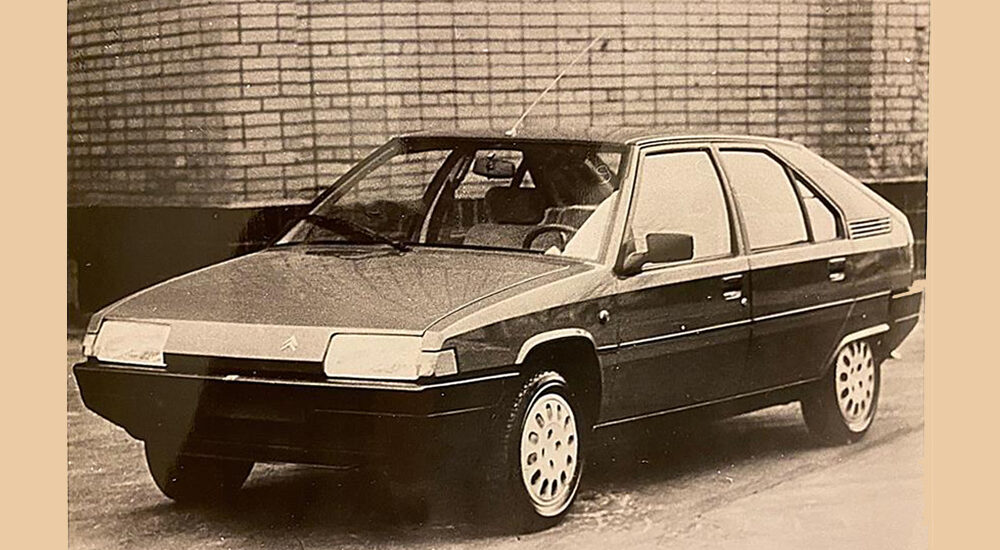
Citroen could have been produced in Moscow. Even before the car’s global debut the French brought the future BX to AZLK and proposed launching production of a simplified version with spring suspension, but the parties did not agree on terms at the time. The BX still ended up at the Moscow plant later: in 1983 one was bought for comparative tests with the new model 2141 — and to get acquainted with the features of French engineering thinking.
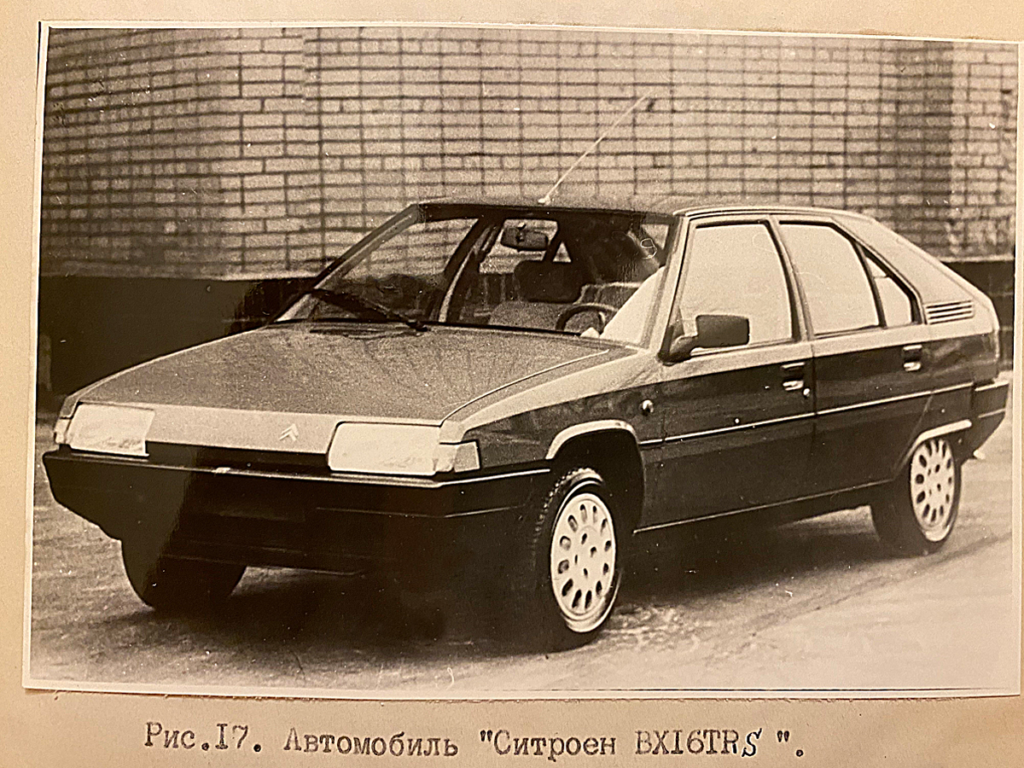
Photo 17. Automobile “Citroen BX 16 TRS”
What Arrived at AZLK
What AZLK received was a hatchback in the form of a 1983 BX 16 TRS — a modification from the earliest period, with a 1.6-liter engine. It had a dual-chamber Weber 32/34 DRTC carburetor, so power came to 90 hp. The Citroen at AZLK had rack-and-pinion steering without power assistance, but disc brakes on all four wheels. Besides the hydropneumatic suspension, the BX surprised its new owners with an instrument pack combining a drum-style speedometer and an electronic tachometer. And it rode on rare “metric” Michelin TRX tires.
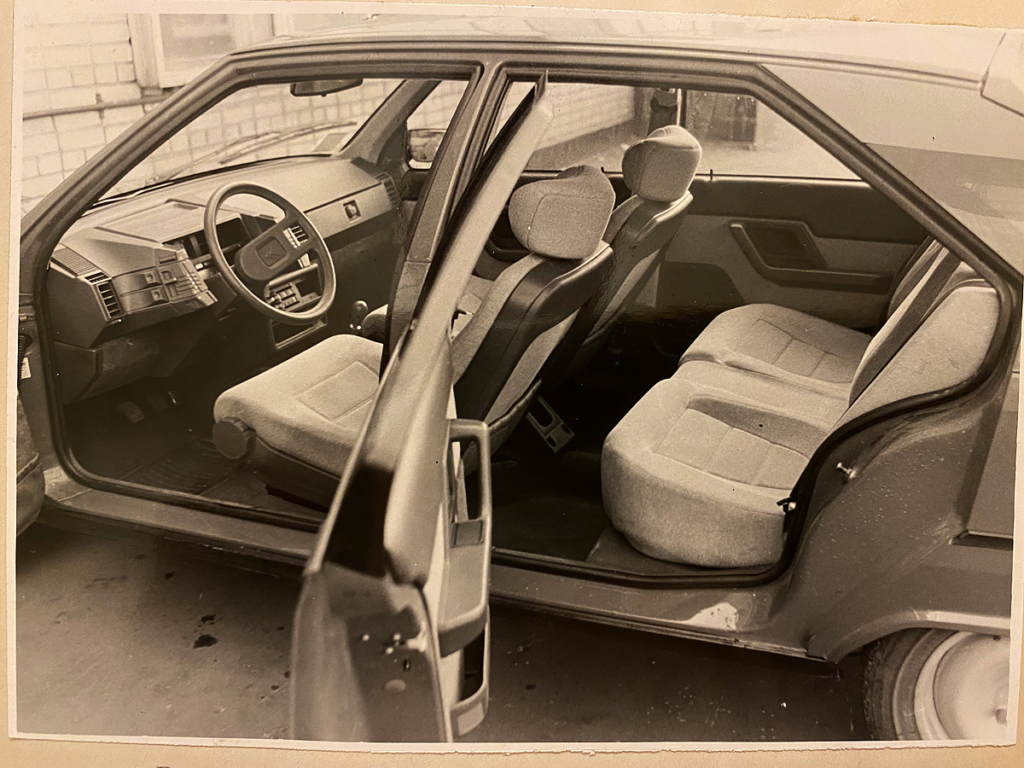
Michelin’s Metric Tires
In the 70s these were among the first low-profile radials, but they differed sharply from ordinary radial tires in the construction of the sidewall and could not be mounted on traditional wheels. To avoid confusion Michelin produced TRX tires in metric sizes, to be fitted only to special “metric” wheels. Our Citroen ran tires sized 170/65 R365.
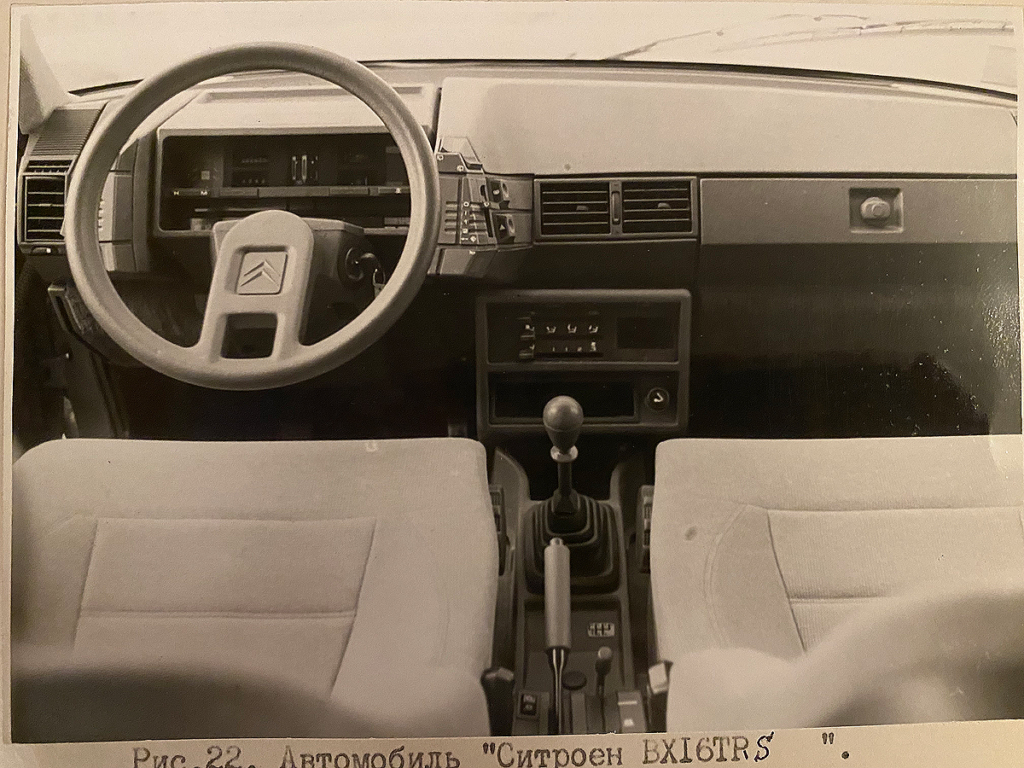
Photo 22. Automobile “Citroen BX 16 TRS”
Tested at Dmitrov, in Full
The tests at Dmitrov were conducted in full: acceleration, braking, fuel consumption, external and internal noise, toxicity, visibility and much else. Among other things it was established that the swept area of the Citroen’s single wiper did not meet GOST requirements, and that emissions of harmful substances exceeded the norms of the day by one and a half times. It was still a car from another universe.
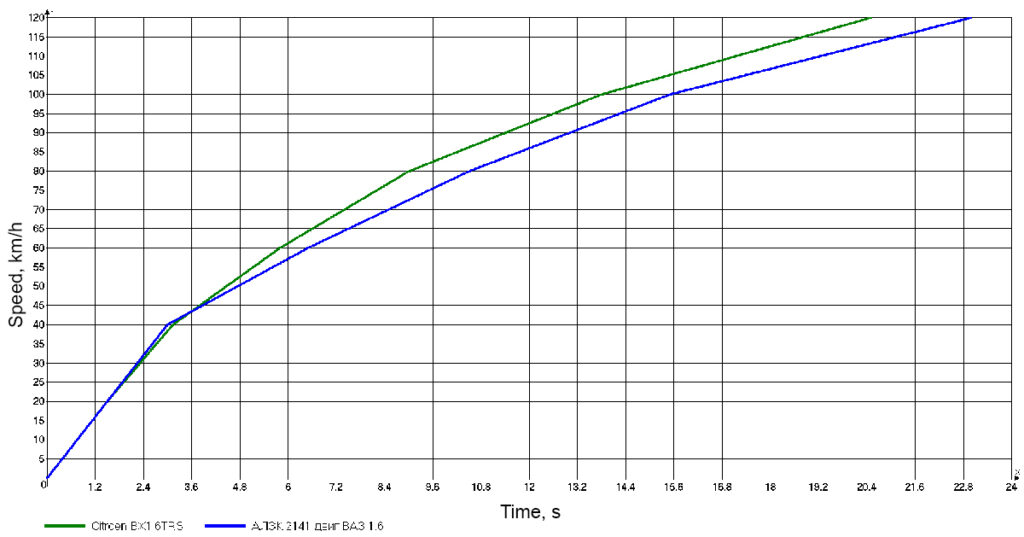
13.8 Seconds to 100 — Against the Moskvich’s 21
The “Frenchman” with its 1600cc engine accelerated to 100 km/h in 13.8 seconds and managed to reach 167.5 km/h. Unattainable figures for the Moskvich: the “Forty-first” with the Ufa engine barely reached “a hundred” in 21 — twenty-one! — seconds.
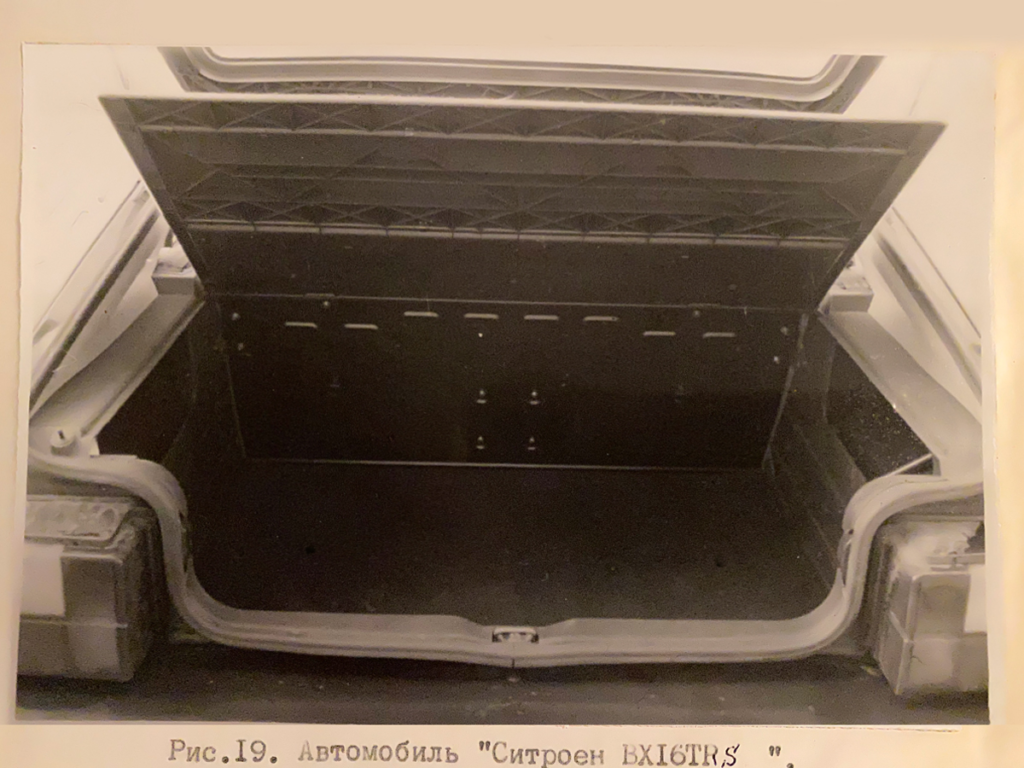
Photo 19. Automobile “Citroen BX 16 TRS”
Measured With a Fifth Wheel and a Ruler
The measurements of dynamic characteristics and fuel economy, however, were taken with outdated equipment of NAAMI manufacture, whose accuracy was not beyond dispute. An electromechanical device of the “fifth wheel” type recorded the data on a long paper tape, after which the engineers had to arm themselves with a ruler and translate the curve of the graph by hand into comprehensible kilometres, seconds and metres.
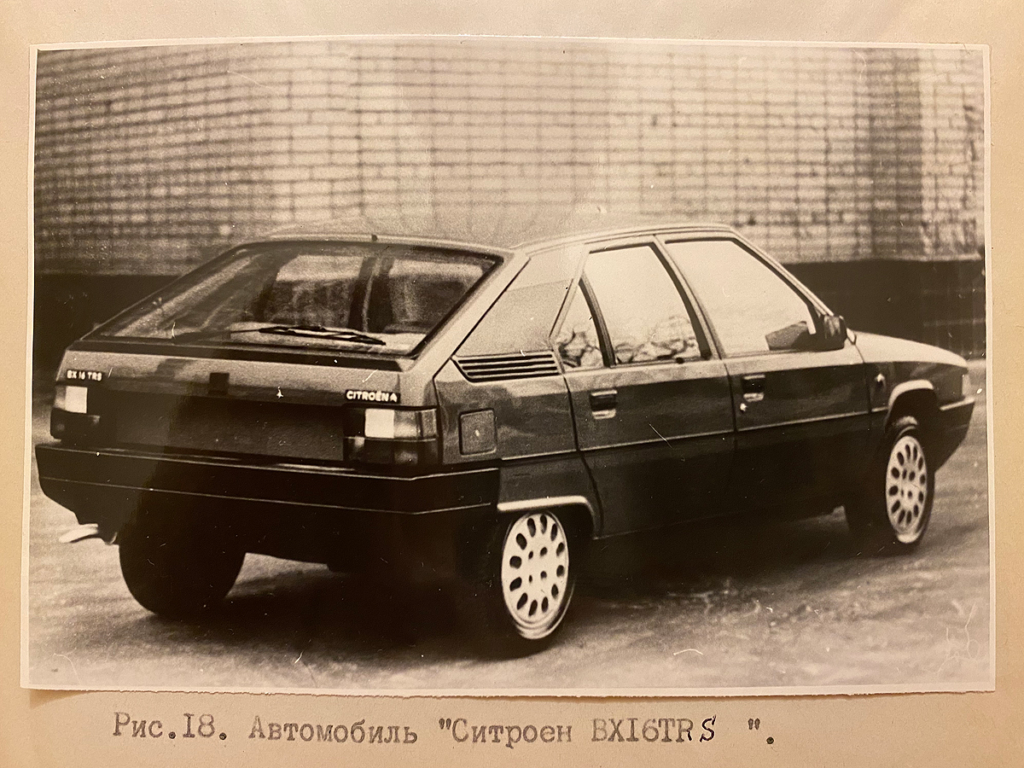
Photo 18. Automobile “Citroen BX 16 TRS”
How It Ended: Fluid From a ZIL
After the tests the Citroen stood in the garage of the AZLK Design and Experimental Works — until the technical director needed to travel to a neighbouring plant, took the Citroen, and never brought it back. He drove it without ever getting out, turning it into his personal car, until, closer to the beginning of the 90s, the suspension sank onto the buffers during one of those trips. The hydropneumatics had deflated and the Citroen simply fell. The cause of the failure was never reliably established, but it was clear the BX had lost a great deal of working fluid. At the time that fluid could only be bought abroad — theoretically it was possible, through the Finnish company Konela, for instance. Instead it was decided to fill the Citroen with fluid taken from a ZIL. The result was not long in coming: the BX finally became a joke.
Sergey Znaemsky
Photos by PSA Peugeot Citroen, Iran Khodro, Reliant, and Bertone
Shared Platforms, Shared Design
Technical standardization? What about shared design? The Citroen BX and the Peugeot 405 experienced that too.
A Citroën Without a Chief Designer
Work on the BX project — the pre-production BX — began in 1977. Citroen had no chief designer at the time: the previous head stylist, Robert Opron, had declined to work under Peugeot’s leadership and moved to Renault as early as 1974, and the new management was in no hurry to find a replacement. Only in 1982 was an American, Karl Olsen, appointed to the post. So in 1977 the in-house designers set to work using Opron’s ideas.
Gandini’s Origami
The initial mock-ups already featured a hatchback with a long nose and a pyramidal silhouette. The conglomerate’s management, however, preferred to hand the design to Bertone’s studio and its brilliant Marcello Gandini. Gandini was in no hurry to invent an original image for Citroen. By then he was fascinated by the geometric “origami” style, which he had first embodied in the Jaguar Ascot concept car and then in the large Reliant FW11 hatchback. In essence, for the French the maestro compiled the solutions of those two cars into a new image — avant-garde in Citroen’s manner, but stylistically a small five-door Lamborghini.
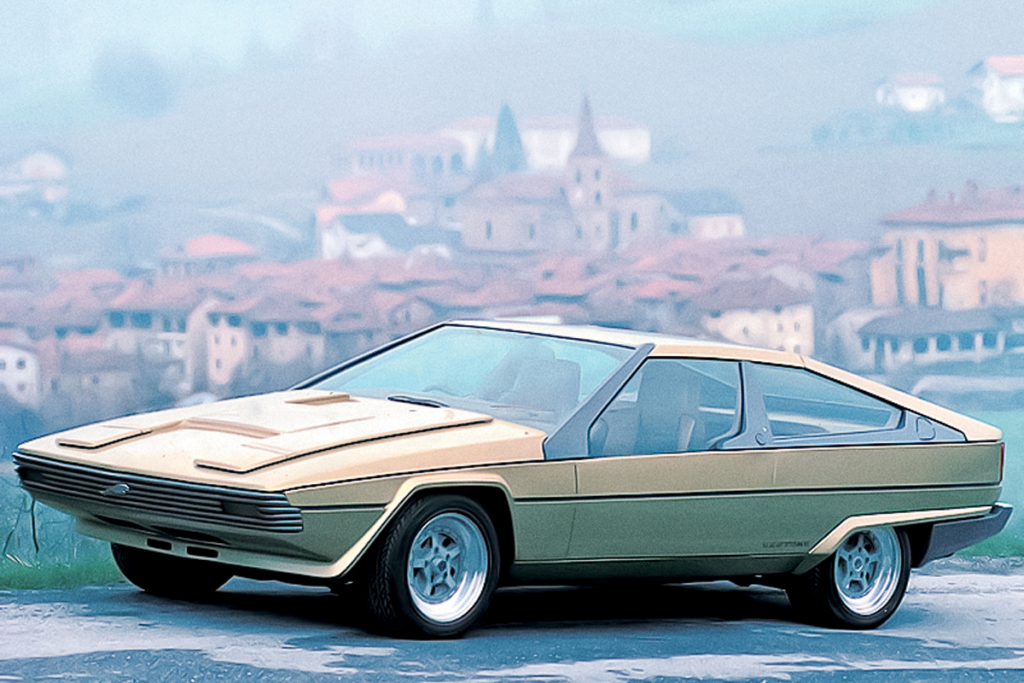
Jaguar Ascot appeared in 1977 based on the XI-5 coupe
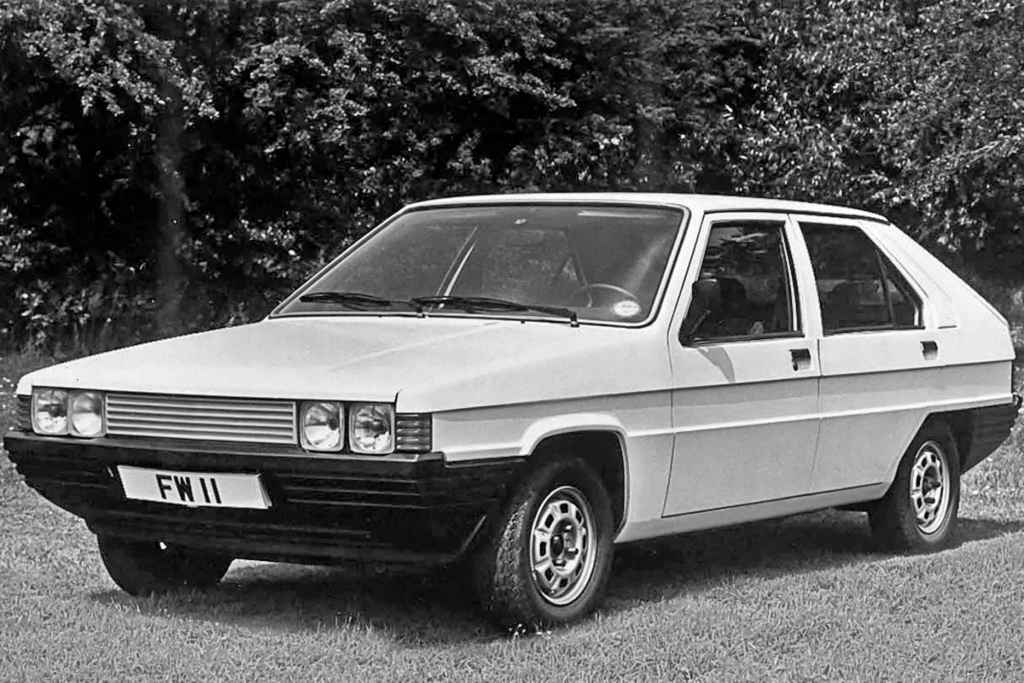
Reliant made the FW11 rear-wheel drive hatchback for the Turkish brand Otosan
Angular Shapes, Worse Drag
Interestingly, angular shapes did not suit Citroen’s signature streamlining, and the drag coefficient came out higher than that of the old GS the BX was meant to replace: 0.35 against 0.318.
And Then the Siblings Appeared
That was not all. Gandini did not stop there, and after the XB design project had been approved Bertone presented its Fiat X1/10 and Volvo Tundra concept cars, which looked like natural siblings of the Citroen. All of them were unveiled before the BX was shown to the world, so the French found themselves with a newest car that was not only half Peugeot inside but slightly Volvo outside.
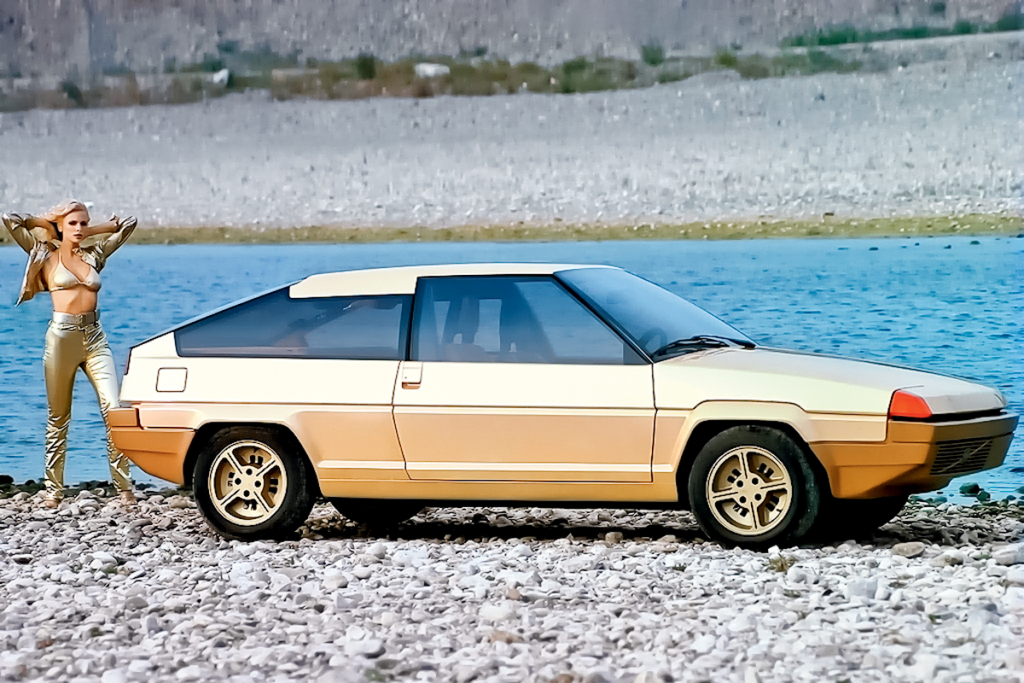
Volvo Tundra concept based on the Volvo 343
Under the Eiffel Tower, September 1982
Fortunately none of this bothered real buyers, especially since the Citroen was the only production car of that group. The finished BX was announced in June 1982 and shown live on September 23 beneath the Eiffel Tower. By the end of 1983 it had stormed into the top 10 of the French market, and by the end of 1985 it stood third at home, behind only the very small Peugeot 205 and Renault 5.
120,000 a Year, and Three Countries
In the mid-80s normal sales for the model ran at 120,000-125,000 cars a year — in France alone. The BX was also built in Spain and Yugoslavia, and the station wagons were made at a separate French factory belonging to Heuliez.
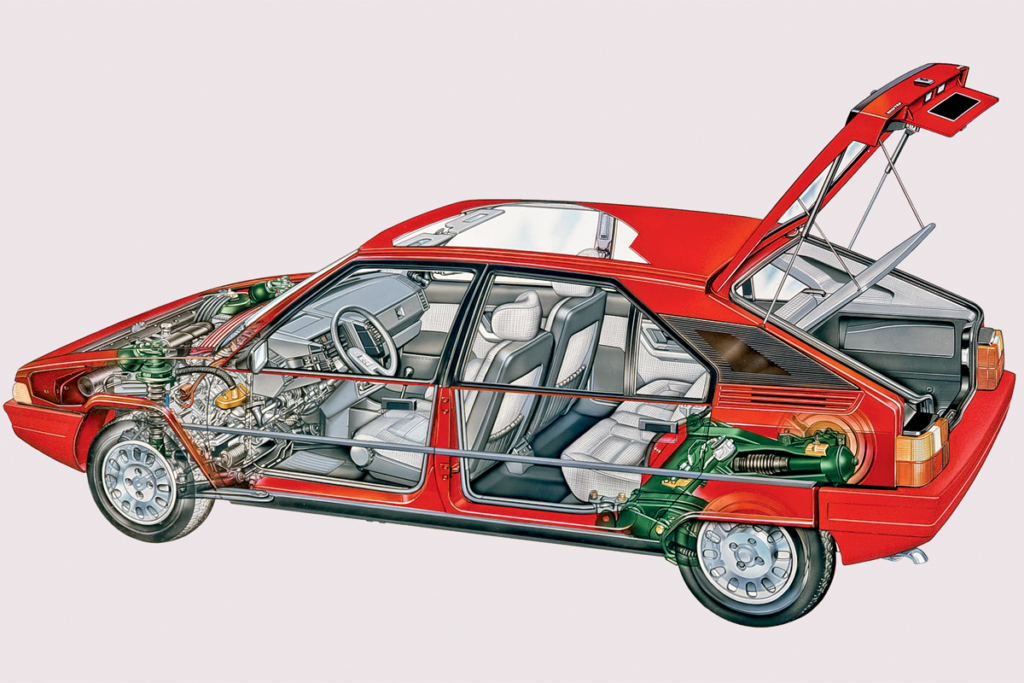
To lighten the body, Citroen used a plastic hood and trunk door. True, it was on the budget version of the BX 15 TGE that for some reason the hood was made of steel. However, even in this case, the curb weight is only 950 kg
Nine Engines, and a 200-hp Rally Car
Different countries got BX models with petrol engines from 1.1 to 1.9 liters and diesels of 1.8 and 1.9 liters — nine different units in total, from 54 to 160 hp. And that is without the 4TC rally version and its 200-horsepower Simca turbo engine.
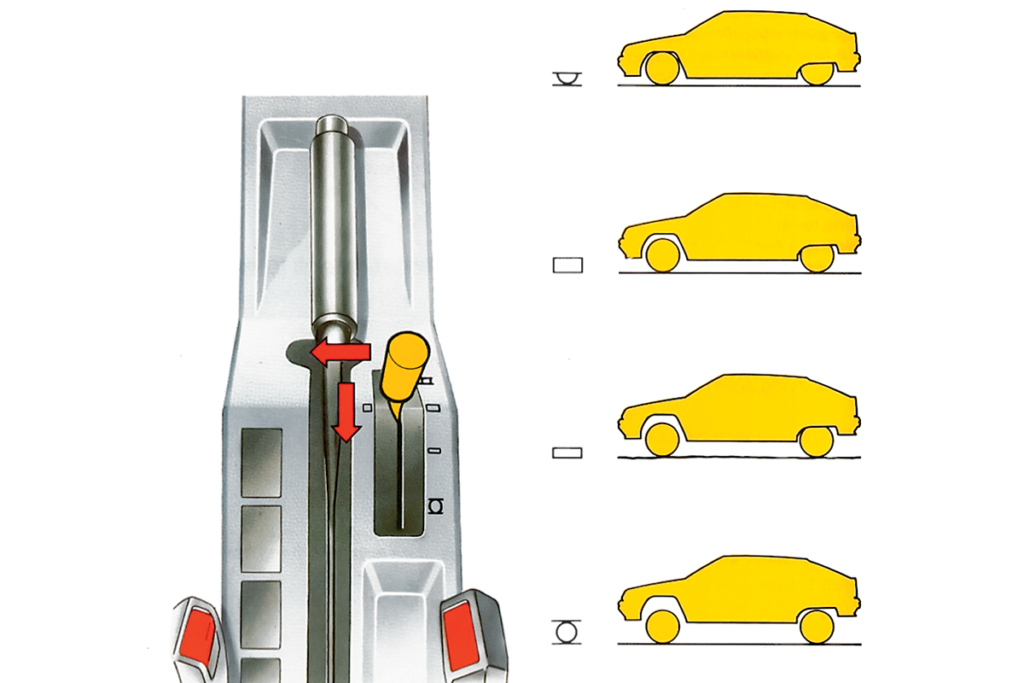
This is how Citroen’s instructions explained the use of four suspension levels. Minimum ground clearance is for parking and servicing only. Normal position (160 mm) – for everyday driving. The middle position (190 mm) is for bad roads. Upper position (235 mm) – for changing wheels and slowly passing extreme obstacles
Four Ride Heights, and Four-Wheel Drive
Regular versions were offered with manual and automatic transmissions, and from 1988 there was a four-wheel-drive BX 4×4 with a mechanical centre differential and a self-locking rear differential. That transmission was compatible both with the standard 107 hp engine in the wagons and with the 160 hp engine of the GTI. The suspension, though, was always the same — the BX played the part of the junior hydropneumatic Citroen.
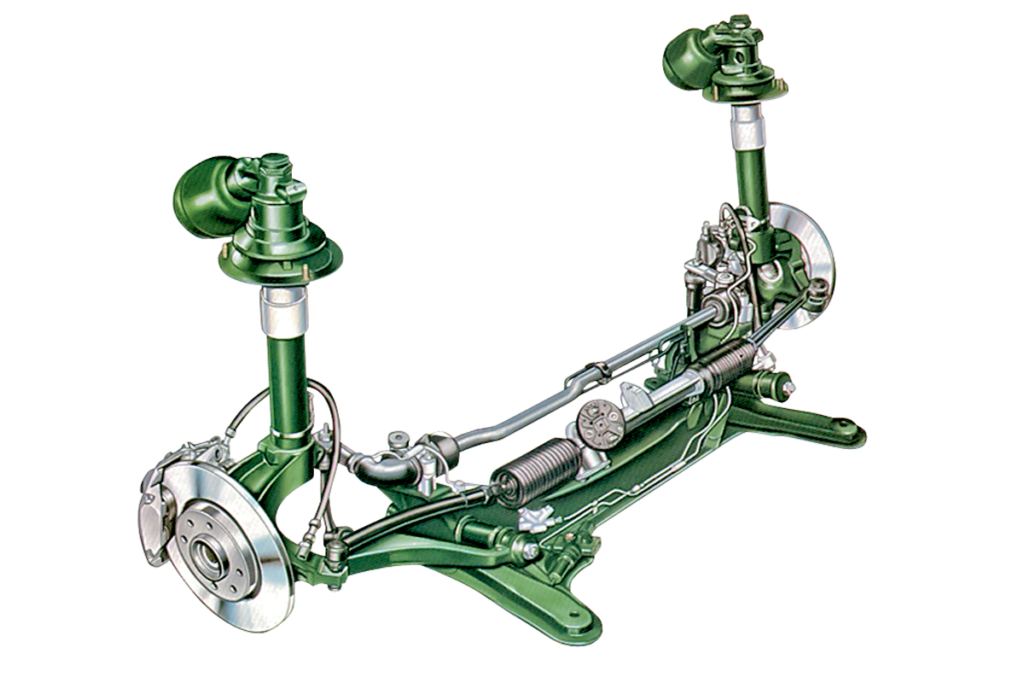
A special feature of the front suspension is elastic rubber supports, which instead of bearings ensure the rotation of the struts. To combat nose-up during acceleration, the struts are installed with a ten-degree forward tilt (positive caster – 2°351)
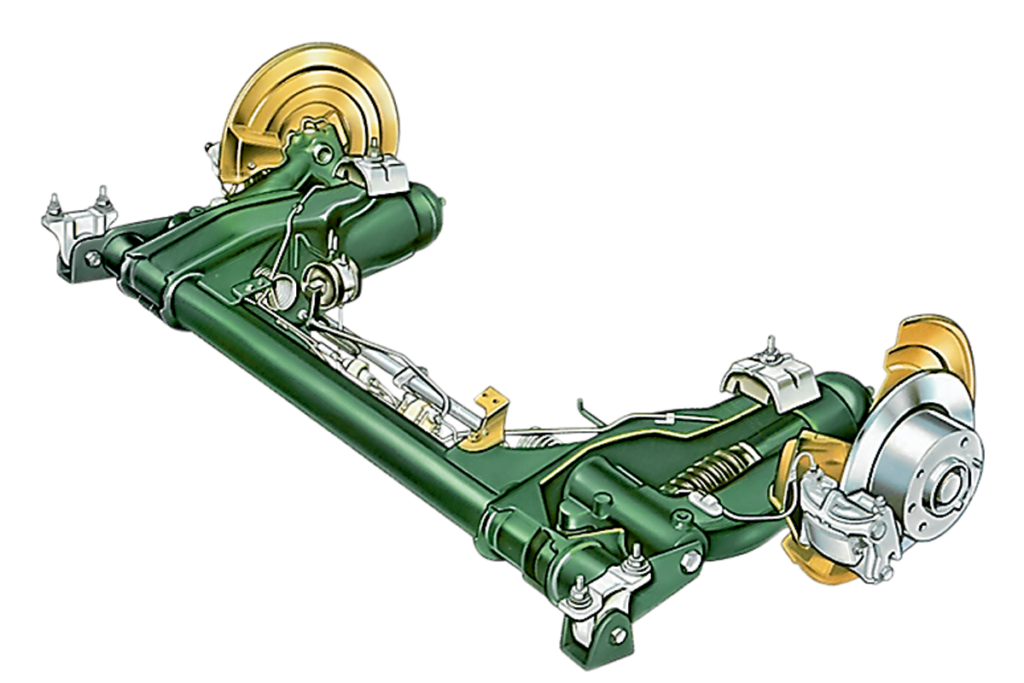
The rear spheres and hydraulic cylinders are located horizontally and act on independent trailing arms on each side. The gas pressure in the rear spheres is lower than in the front ones –
• 40 bar versus 55 bar. Any BX, unlike the Peugeot 405, was equipped with rear disc brakes
The One Serious Restyling
The only serious restyling came in 1987. The changes barely touched the exterior but transformed the interior, and the ancient X-series engines disappeared from the range. Those engines combined engine and transmission in a single crankcase, as in the Mini, and were installed almost horizontally, at a tilt of 72 degrees.
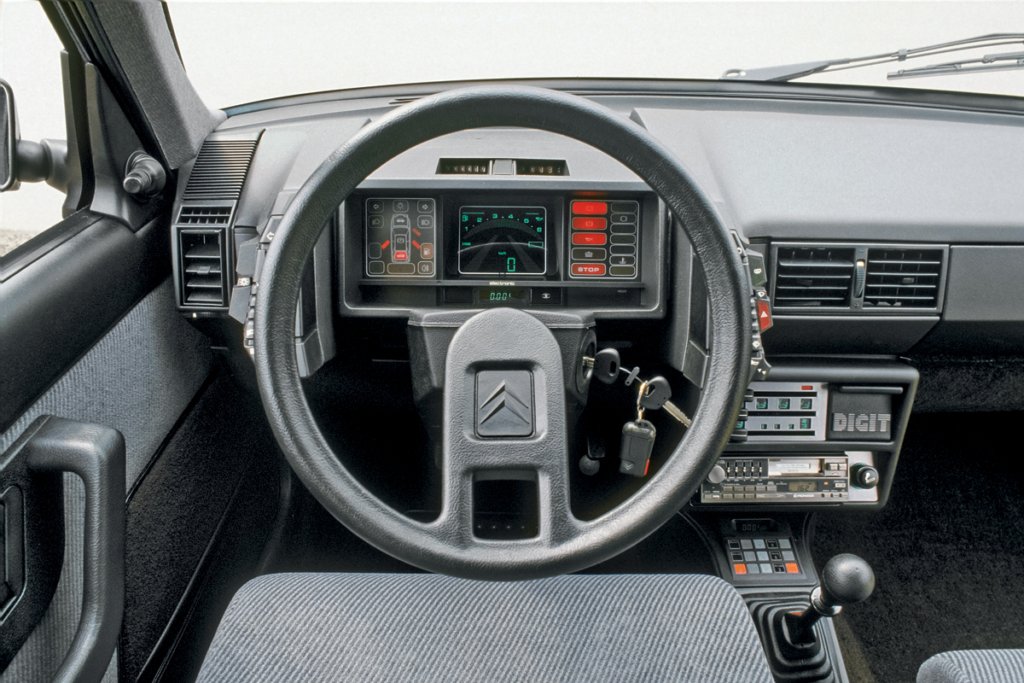
This is what the “electronic” interior of the limited version of BX Digit looked like. In 1985, Citroen produced only 3,000 of these cars.
2.3 Million in Twelve Years
Hatchback production was phased out in 1993 with the arrival of the Xantia, though station wagons were built until 1994. In total 2.3 million cars were produced over 12 years, an average of almost 200,000 a year, which makes the BX one of the most mass-produced Citroens in history.
The Award It Never Won
There was one thing it never achieved: the European Car of the Year award. In the year of its debut the BX ran into premieres like the Audi 100, the Ford Sierra and the Volvo 760, and stayed in their PR shadow. The platform-sharing Peugeot 405 was far luckier — in 1988 it took the COTY title against the Citroen AX and the Honda Prelude.
The Sedan That Came Second and Won
Contrary to the logic of platform-sharing projects, development of the Peugeot 405 began only when the BX was already on the assembly line. The conglomerate set the task of developing the “perfect sedan”, with advanced fuel efficiency and dynamics.
Welter, VERA and Pininfarina
Peugeot had a powerful design team of its own, including the outstanding exterior designer Gerard Welter, the future author of the 205’s appearance. The key to the shape of the new sedan was found by Peugeot’s stylists through the VERA series of aerodynamic concept cars, which began in 1980. But the design competition for the production version was won by the Pininfarina studio, with which Peugeot had been collaborating regularly for almost 25 years. And the mishap with “shared” design repeated itself.
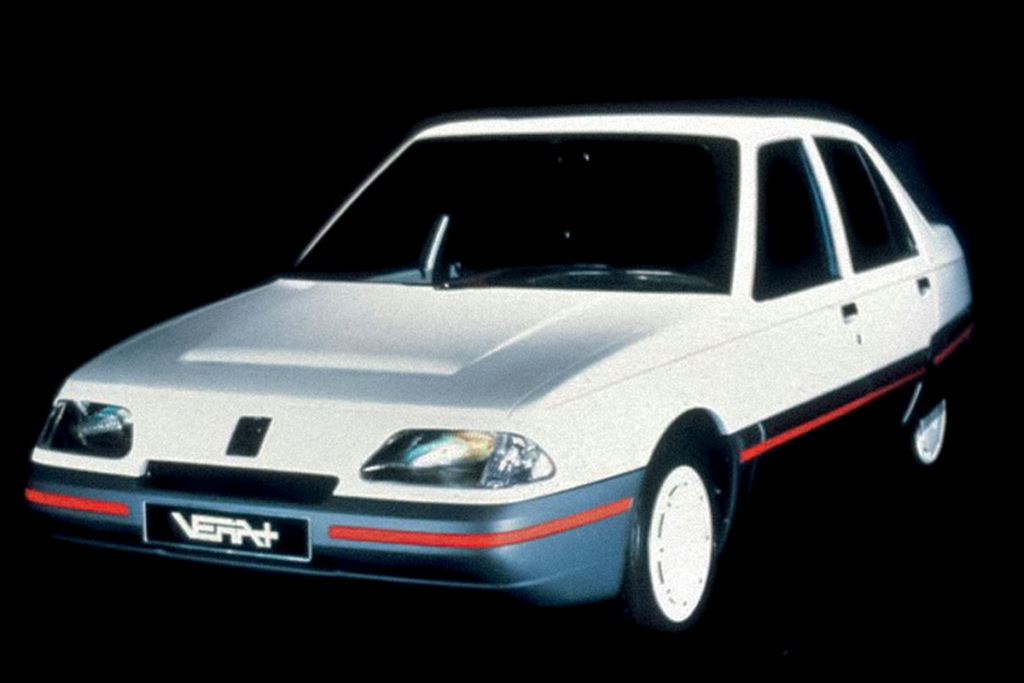
1983 VERA+ concept based on the Peugeot 309
The Alfa 164 Problem
In 1987 the finished Peugeot 405 was presented to the public just a few months before the Alfa Romeo 164 sedan, which also came from Pininfarina and looked in profile like an enlarged clone of the “four hundred and fifth”. Alfa enthusiasts still believe theirs was the original design and the French got the copy. Judging by the VERA+ of 1983, though, the origin of the Peugeot leaves no doubt — even if the Alfa’s design was ready by then too. In short, Pininfarina was working on two projects at once and, apparently, unified the creative process slightly. Or not so slightly, considering that two years later the Italians drew the 605 sedan for the French along the same lines. But does any of that diminish the beauty of the Peugeot 405?
A Record 464 Points
The car reached the market with petrol engines of 1.6 and 1.9 liters and a four-door body only, and none of that stopped it gathering accolades from the European press and winning the COTY competition outright, with a result that stands as a record to this day: 464 points.
Torsion Bars, and Why They Mattered
Peugeot’s driving talents came as no surprise, since the “two hundred and fifth” was already roaring around Europe and the 405 used a similar rear suspension. The layout itself, with trailing arms, dated back to the 305 wagon, where the springs were horizontal; for the 205 and the 405 they were replaced by torsion bars. That recipe served the compact models right up to the 307 family, but the 405 was the last torsion-bar midsize Peugeot — the 406 moved to a multilink layout and coil springs.
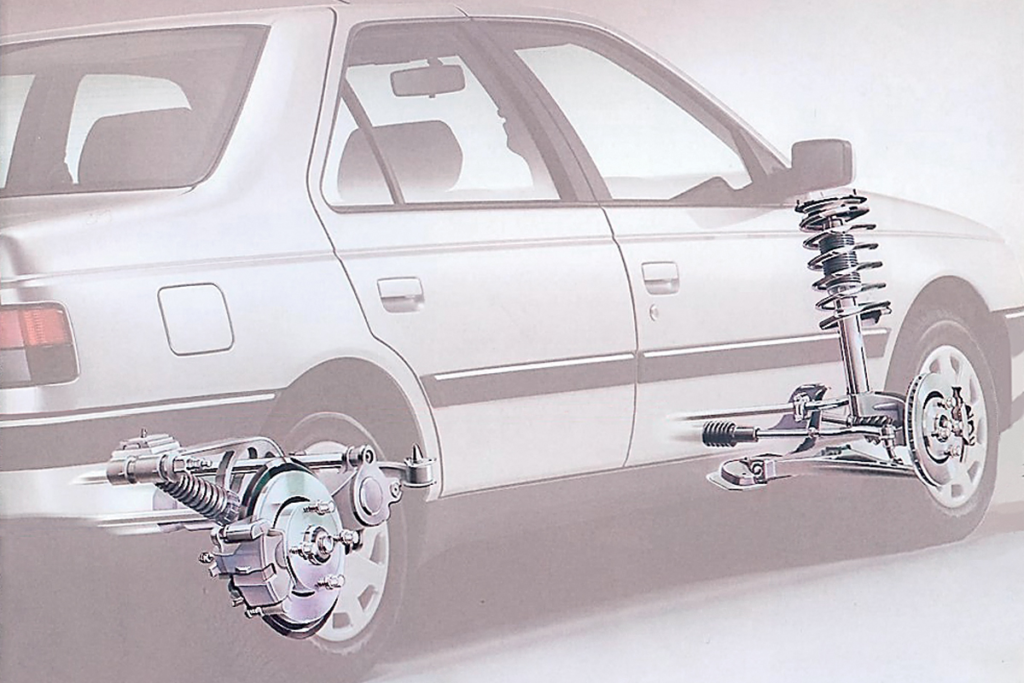
The secret to Peugeot’s handling is an independent rear suspension with trailing arms, torsion bars and almost horizontal shock absorbers
Twelve Engines
The total number of different engines fitted to the “four hundred and fifth” came out even higher than the Citroen’s: 12. Among them were the TU series, with which the French were first to master production of petrol engines and diesels sharing a common cylinder block.
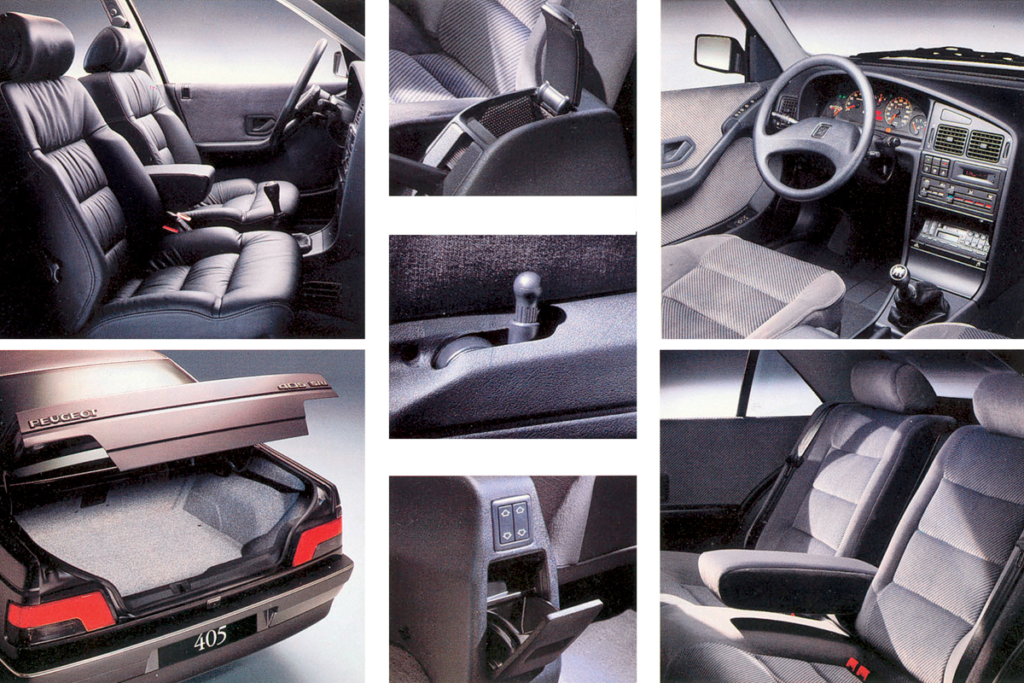
After restyling in 1992, the Peugeot 405 received a new interior, front armrest, rear armrest and three-belt sofa. The rear optics received tinted sections. The rigidity of the body has increased, and it has become possible to lower the trunk threshold to the bumper
France, Britain, America
The new Peugeot sold best in France, naturally. It never made the top three bestsellers, but average sales in the late 80s ran higher than the Citroen BX’s, at 130,000-145,000 cars a year. The UK was the second most important market, at 40,000-50,000 cars a year, and the Peugeot 405 was still being exported to the US until 1991.
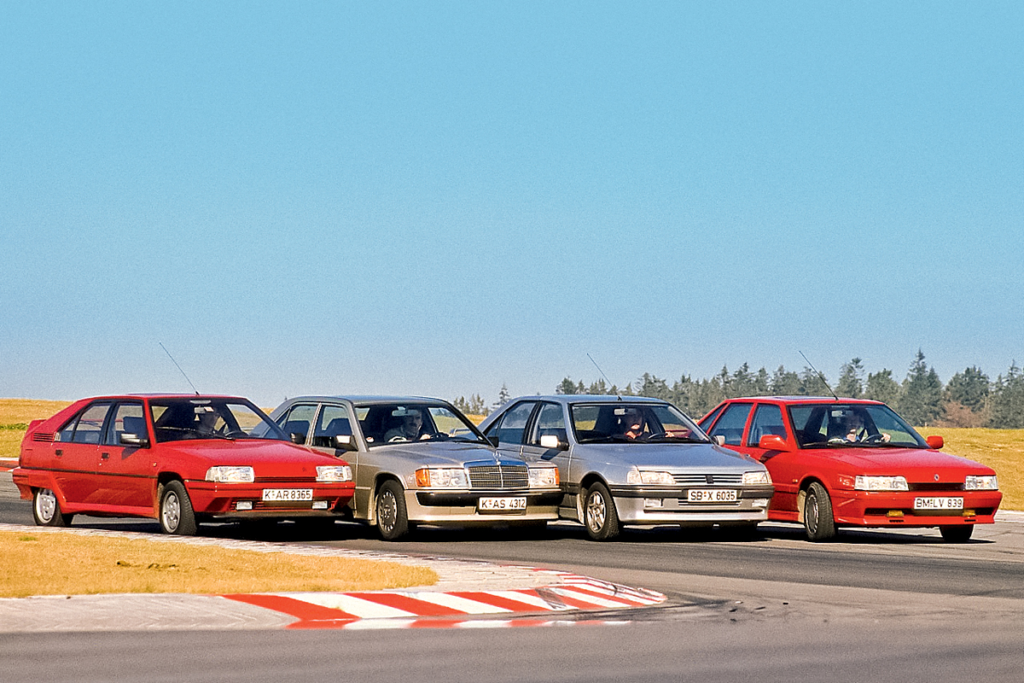
In the late 80s, European journalists seriously compared the “hot” driver’s cars Citroen BX GTI, Peugeot 405 Mi-16, Renault 21 Turbo and Mercedes-Benz 190E 2.3-16
Still in Production, in Iran
In the 90s its popularity began to decline even in Europe, despite a series of facelifts. Even so, 2.5 million “four hundred and fifths” were built over 11 years. And in reality the story of this car continues to this day: Iran Khodro bought a licence from the French in the 90s and today offers both the Peugeot 405 in almost its original form and numerous proprietary models based on the sedan, under the names Samand, Soren and Dena.
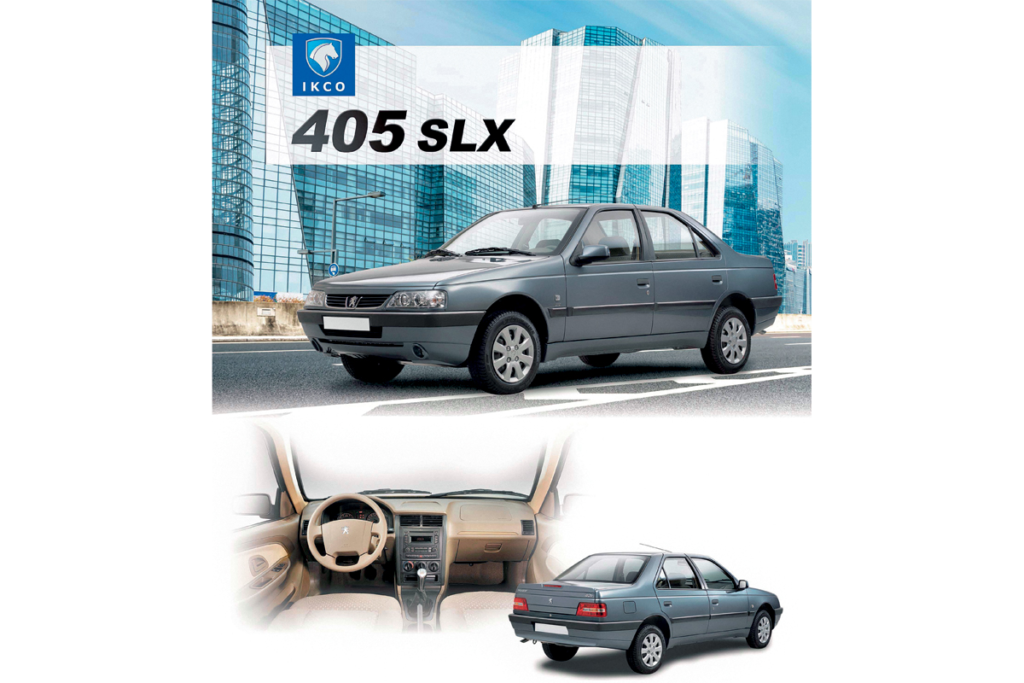
A modern booklet from Iran Khodro offers to purchase a brand new Peugeot 405 SLX with a TU5 engine (1.6 l, 105 hp), ABS and two airbags
Photo: Dmitry Pitersky
This is a translation. You can read an original article here: Экономагия: Citroen BX против Peugeot 405 (+ воспоминания Подорожанского и Мохова)

Published March 07, 2024 • 14m to read