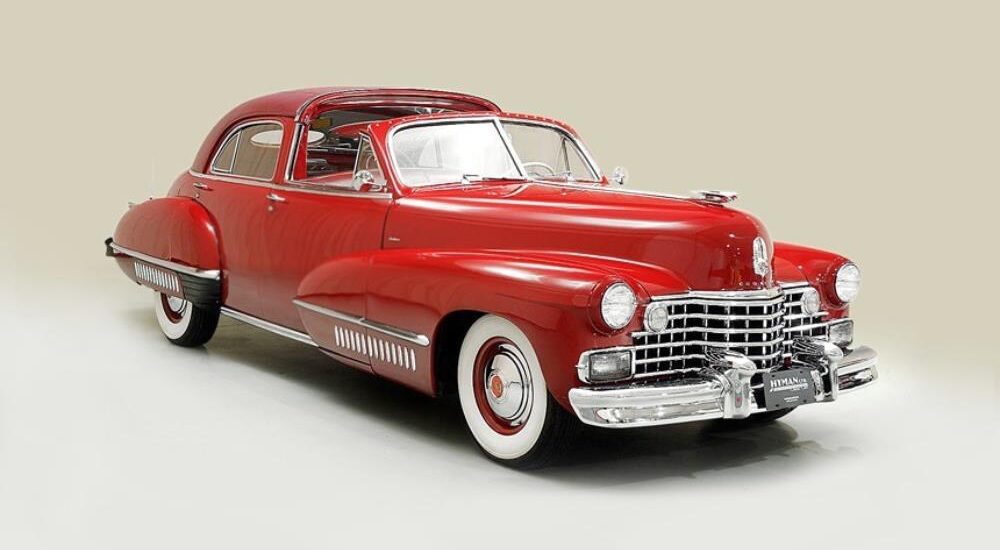

The 1942 model year was cut short for American automakers by the onset of war. Cadillac managed to produce only 16,511 cars before switching to military work. Among them, only two resembling the one in these photographs were built — half the number originally planned.
A Wedding Gift, Not a Car for Himself
One of those two cars was commissioned by a well-to-do lawyer and public figure — a descendant, through his mother’s line, of William Deering, the “founding father” of the largest agricultural machinery corporation in the U.S.
Although the family’s wealth was substantial, he acquired the car not for himself but as a wedding gift for his bride. After divorcing his first wife in 1941 he was in a hurry to remarry, all the more so because his prospective bride came from a prominent family of lumber magnates in the northwest. In that social milieu, a standard wedding gift or an off-the-shelf luxury car would not do. Something exceptional was called for.
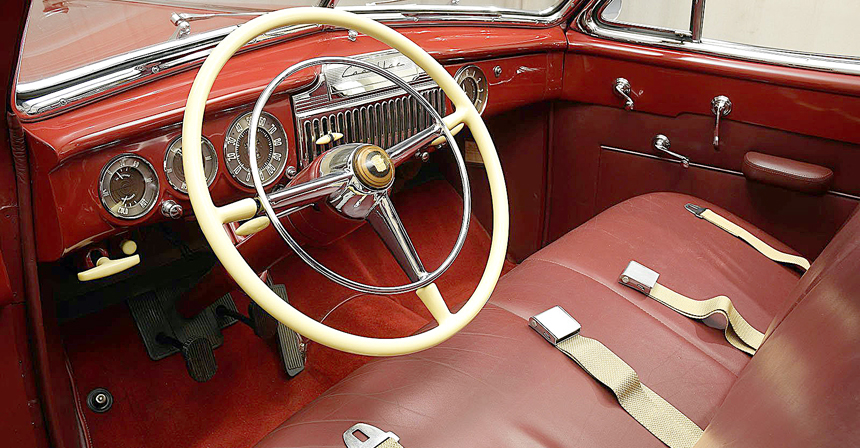
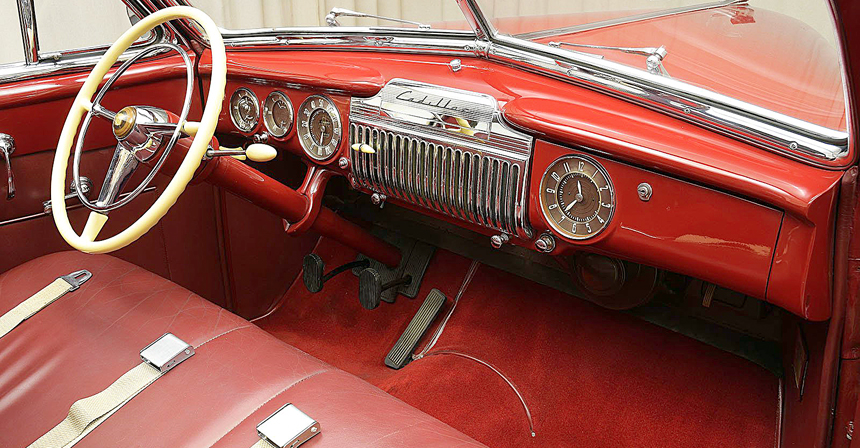
Judging by the presence of three pedals instead of two, the car is equipped with a manual transmission rather than an automatic one. Presumably, it was intended that the car with a “town car” body would be driven not by its owner but by a hired professional chauffeur, making the process of shifting gears unnecessary.
Derham of Rosemont, Pennsylvania
Fortunately the Derham coachbuilding firm, in Rosemont, Pennsylvania, was still in business. Founded in 1887, Derham had moved with the times and specialised in upholstery and interior work. Custom bodywork was in decline, but the firm kept its commitment to quality and to the customer — a legacy exemplified in this commission.
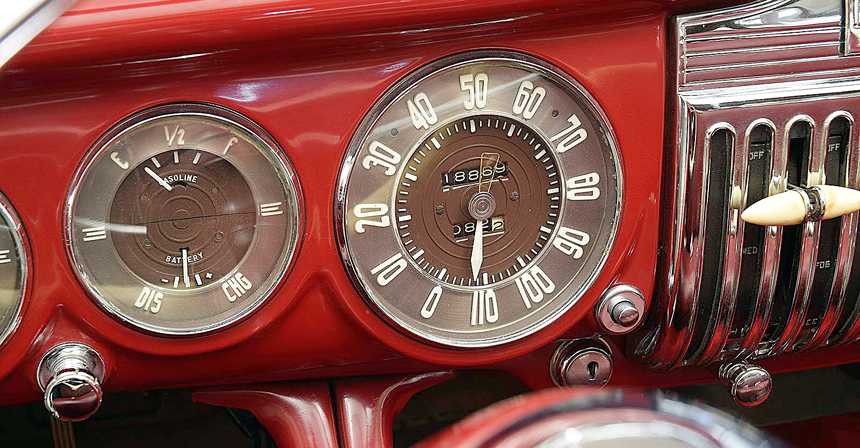
The front panel. There is no radio receiver on it, although its presence was specified when ordering.
Why the Fleetwood 60 Special
For his distinctive Cadillac, the customer bypassed the conventional options and chose the Fleetwood 60 Special. That series had stood apart for its design from 1938 to 1941, but by 1942 its distinguishing features had spread to every Cadillac except the Series 75. Even so, the 60 Special kept its appeal through subtle enhancements and opulent detailing — to excess, some might argue.
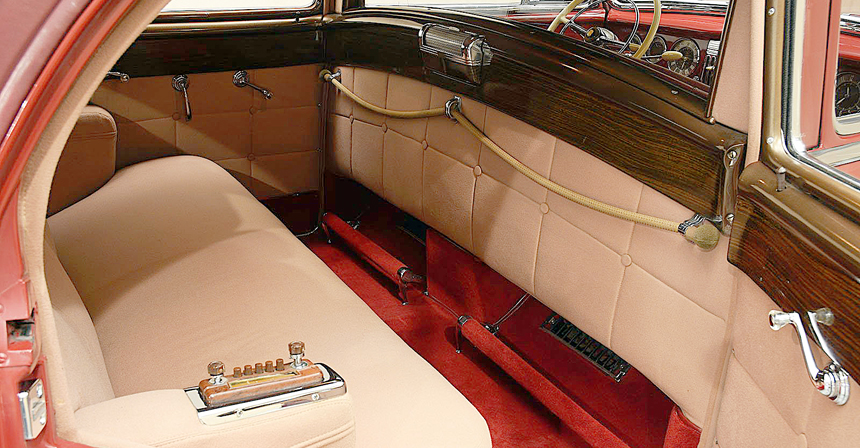
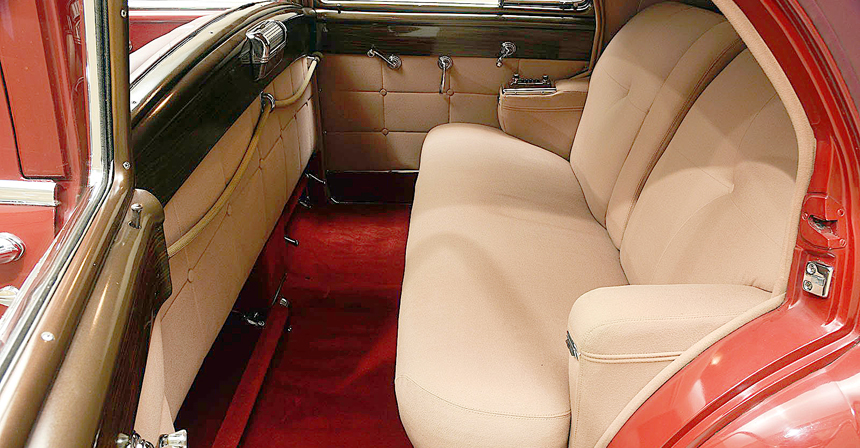
For the comfort of rear passengers, there are folding footrests and air ducts from the heater located directly under the front seats. In the foreground is a radio receiver, the same as that installed in the Series 67 and 75 limousines; like these cars, it is mounted in the right rear armrest, and the button on the left rear armrest raises and lowers the glass partition.
Turning a Sedan into a Town Car
The artisans at Derham left the car’s lavish adornments alone. What they did instead was remove the steel roof above the driver’s seat, turning the sedan into a true town car.
- To keep the structure sound they reinforced the X-shaped frame with a thick overlay, colloquially known as the “wolf’s skin” — which got in the way whenever the transmission had to come out for repairs
- The rear portion of the steel roof was left in place and upholstered in leather
- The expansive three-section rear window was cut down to a characteristic tiny oval
- A retractable fabric top went in where the roof section had been, which meant reworking the upper part of the front doors
The oval window cost a great deal of rearward visibility, but it made the interior more intimate and cosy — which is exactly the town car aesthetic.
From Fleetwood 60 Special to Derham 60 Special
Derham’s craftsmen were zealous about the badging. They concealed the “Fleetwood” emblems on the body sills under stainless steel overlays, removed the matching emblem from the trunk lid, and carefully puttied the remaining fastening holes. Their own logo went on the rear part of the hood, completing the car’s transformation from the Fleetwood 60 Special into the Derham 60 Special.
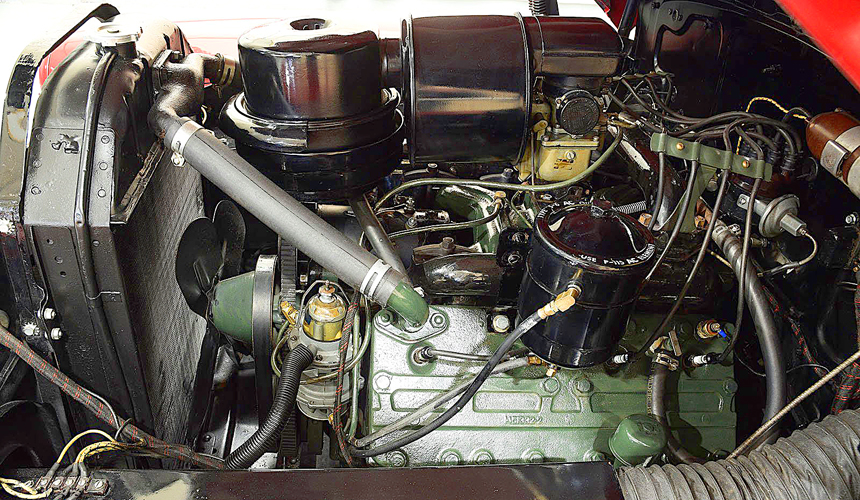
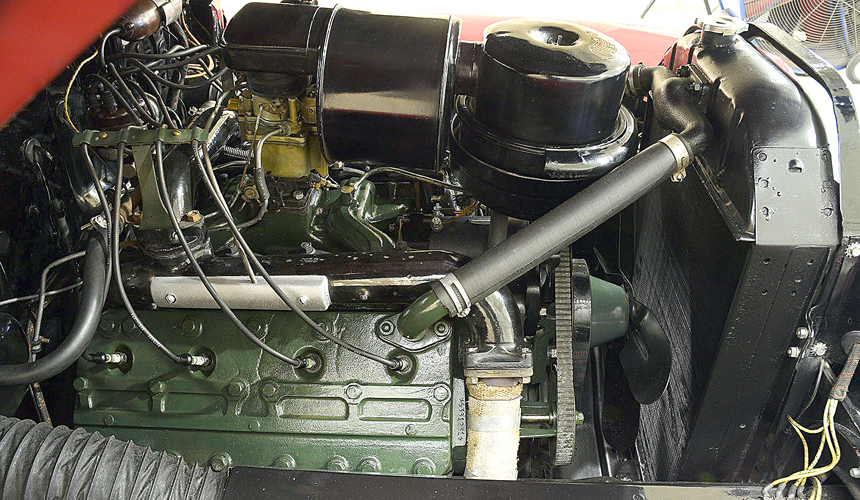
Under the hood is the standard V8 engine (5.7 liters, 150 hp) for all 1942 Cadillac models.
A Year’s Wait for the Groom
When it was finished the car went from Pennsylvania to New York, back to the agency the order had come from. The order had been placed on 17 December 1941 — and the outbreak of war in early February the following year brought strict limits on passenger car sales in the United States. So the eager groom, by then a contented husband, waited nearly a year for his car, and finally took delivery of it as a military man, serving in the U.S. Air Force.
What Became of the Car
The matrimonial bliss of William Deering’s affluent descendant did not last. In 1948 he died at the age of forty-eight, of a heart attack, while swimming at the Cuban beach of Varadero.
His widow used his wedding gift for a while, then remarried in 1951 — for the third time — and traded the unique car for a used closed Rolls-Royce. It has changed hands many times since, and was completely restored in 1974, which is when it acquired the dark red colour scheme it wears today.
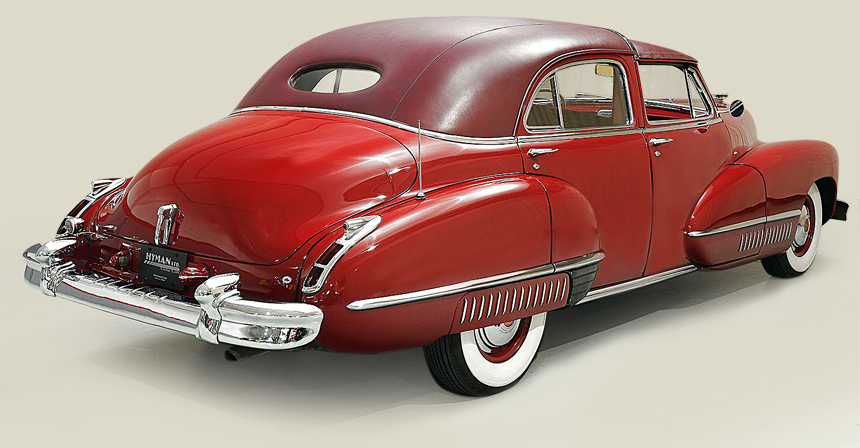
The body has serial number 84 – in total, there were 190 such bodies produced. The body type code 6069F indicates the presence of an internal partition with an electric window regulator; notably, the window regulators in the doors are manual, not electric. The original body color, judging by the “3” color code, is dark green, almost black, Cavern Green.
Derham 60 Special: The Key Facts
- Base car: Cadillac Fleetwood 60 Special, 1942 model year
- Coachbuilder: Derham, Rosemont, Pennsylvania, founded 1887
- Engine: the standard 1942 Cadillac V8 — 5.7 liters, 150 hp
- Transmission: manual, three pedals — the car was meant for a hired chauffeur
- Body: type code 6069F, serial number 84 of 190 bodies built
- Original colour: Cavern Green, code “3” — dark green, almost black
- Ordered: 17 December 1941 · delivered: nearly a year later
- 1942 Cadillac production: 16,511 cars before the switch to military work
Frequently Asked Questions
What is a town car? A body style in which the driver’s compartment is open to the sky while the rear passenger compartment stays enclosed. Derham created this one by cutting away the steel roof above the driver’s seat and fitting a retractable fabric top in its place.
How many were built? Only two cars like this one, although twice that number had been planned. Cadillac built 16,511 cars in total for the shortened 1942 model year.
Why did the owner have to wait a year? He ordered the car on 17 December 1941. War broke out in early February 1942 and passenger car sales in the United States were strictly limited, so delivery took nearly a year.
Why does it say Derham rather than Fleetwood? Derham covered the “Fleetwood” sill emblems with stainless steel overlays, removed the one on the trunk lid, and fitted its own logo to the rear of the hood.
Is it still dark green? No. The original colour was Cavern Green, but the car was restored in 1974 and has worn dark red ever since.
Photo: Sean Dugan, www.hymanltd.com
This is a translation. You can read the original article here: Конверсия: Cadillac Sixty Special Style 42-6069F Town Car by Derham 1942 года

Published April 11, 2024 • 6m to read