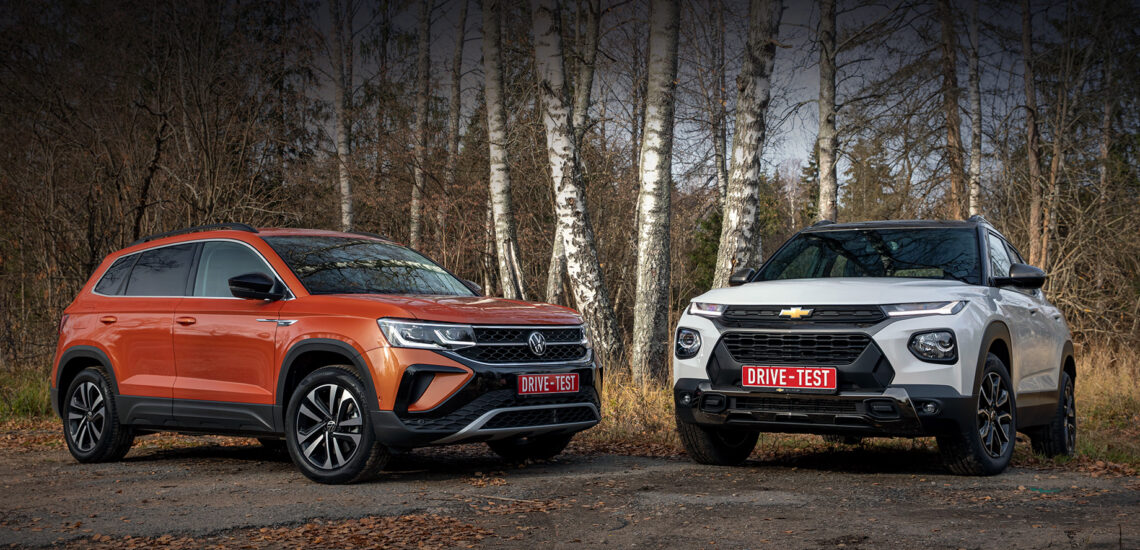

The Volkswagen Taos and Chevrolet Trailblazer are two of the closest rivals in the B+ crossover segment. Nearly identical in body length and wheelbase, both sport turbocharged gasoline engines producing around 150 hp. But when you dig into the details, one clearly pulls ahead. Let’s break down the full comparison.
Exterior Design: Bold vs. Rugged
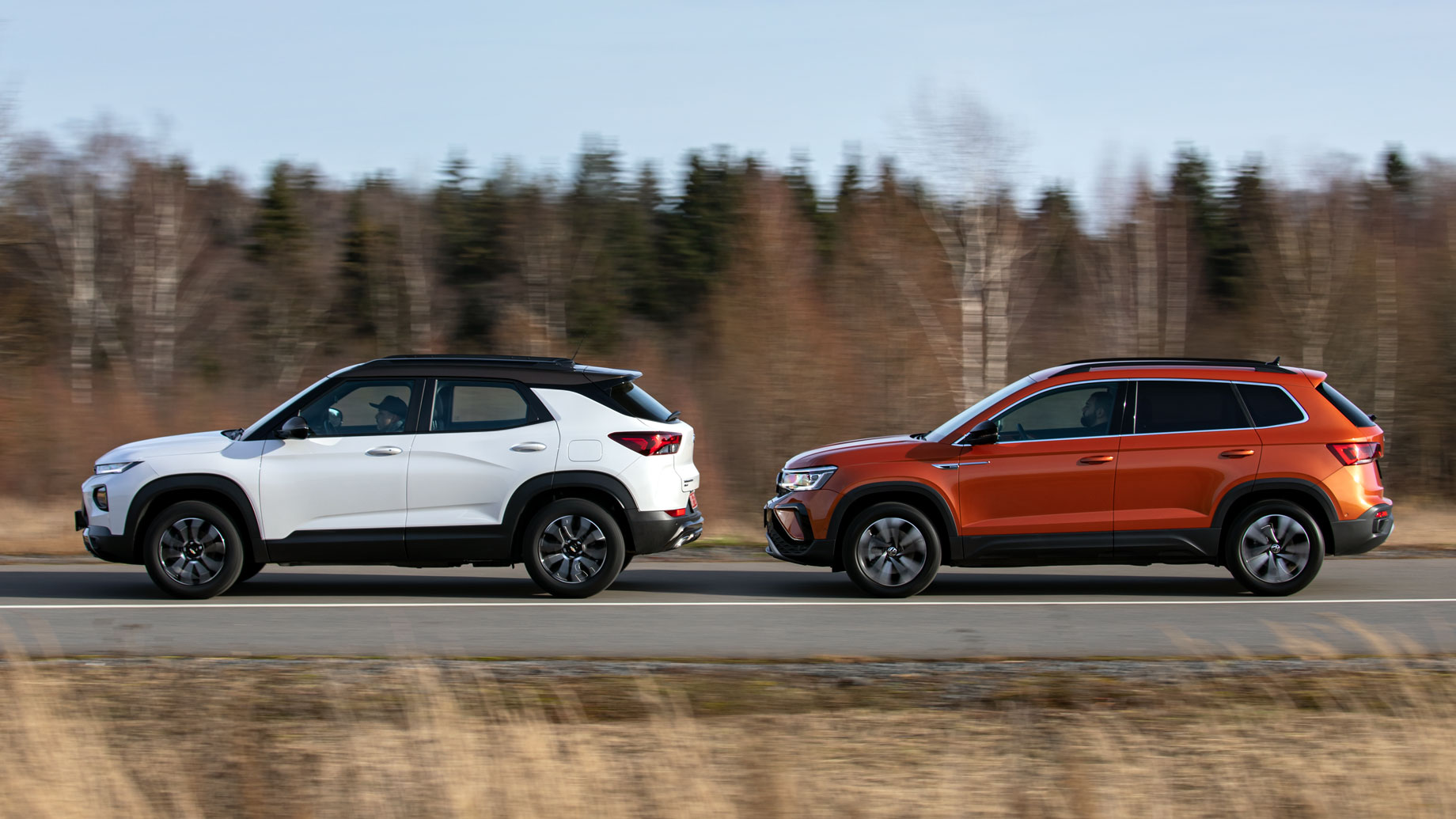
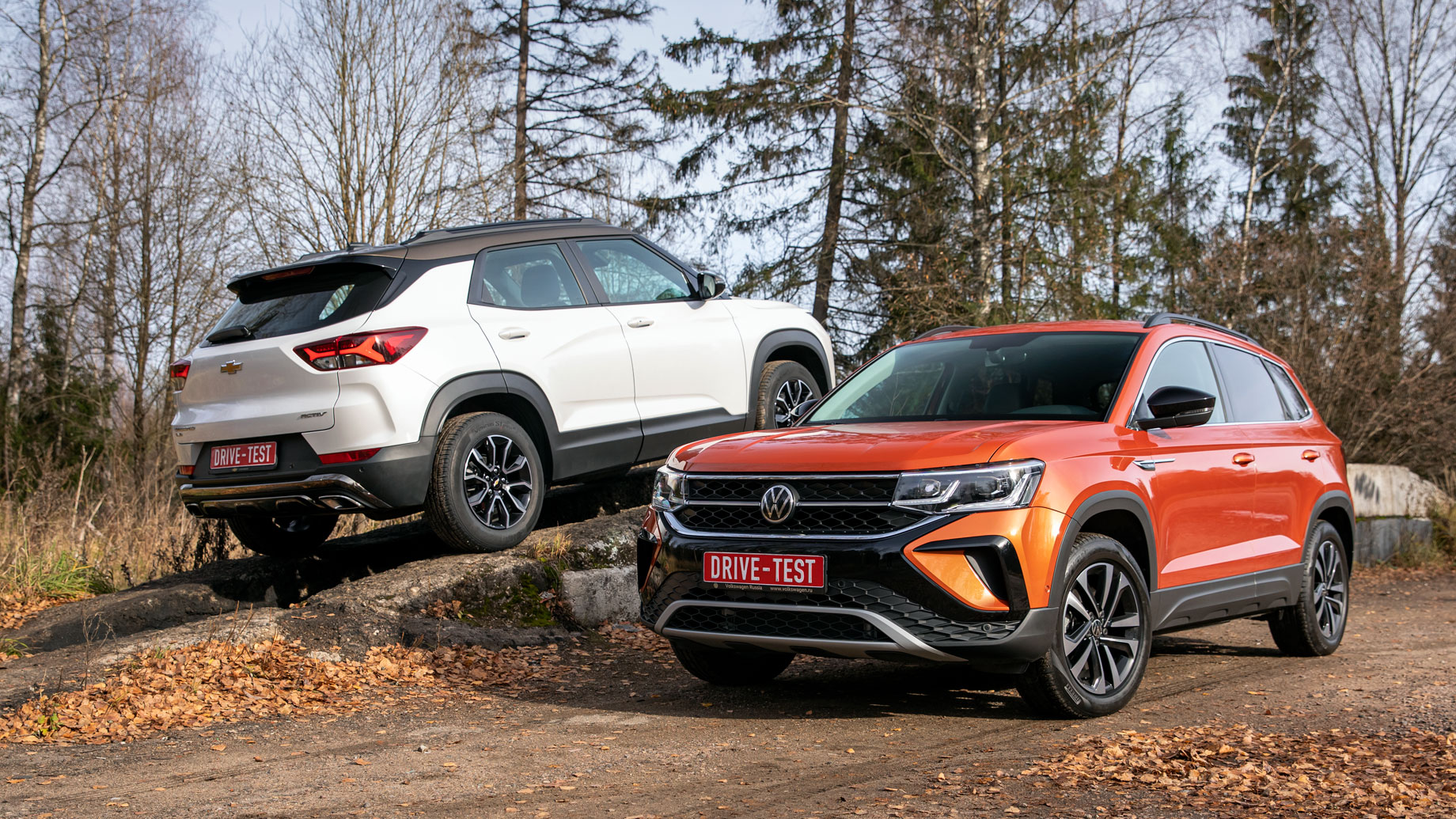
The Taos sits between the Karoq and Tiguan in the Volkswagen lineup, sharing a platform with both. Its design is restrained and clean — the standout orange paint option being its most eye-catching feature. The Trailblazer, on the other hand, is noticeably taller and more SUV-like, sitting on a plastic body kit with bumper protectors that give it a more commanding presence.
The Trailblazer also offers more visual variety depending on the trim level:
- Activ — a pseudo-off-road variant with rugged styling cues
- RS — a sporty option available with the striking Cayman Blue paint and a contrasting black roof
Even without the contrasting roof, the RS keeps black inserts on the rear pillars, adding a sleek finish to the transition between the side panels and the sculpted rear door.
Getting In and Out: Sills, Doors, and Entry Ease
Both crossovers feature narrow sills fully covered by the doors, though weatherstrips still let in dirt during off-road use. Key differences in entry and egress include:
- The Taos has a lower sill, making it easier to step in and out
- The Trailblazer offers a taller and wider front door opening, though some drivers bump their heads on the A-pillar when settling into the driver’s seat
Front Seat Comfort and Driver Ergonomics
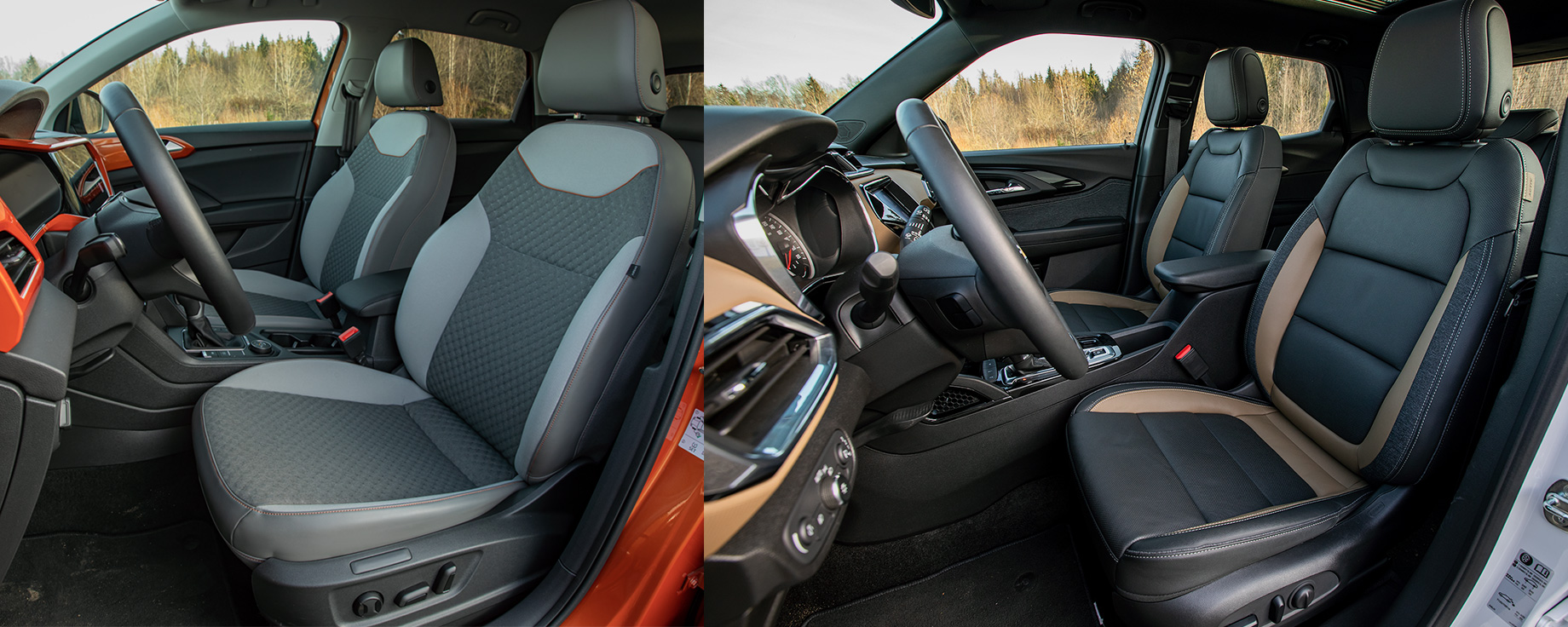
Sitting in the Taos feels like dropping into a passenger car — the seat position is lower and more reclined. A driver standing 5’11” won’t see the hood, and the window rail sits higher than in the Trailblazer. However, the Taos compensates with a generous steering wheel adjustment range in all directions, allowing you to sit further back and stretch out comfortably. Headroom is plentiful.
The Trailblazer’s ceiling feels closer, though headroom is adequate for most drivers. The bigger drawback is the limited steering column reach adjustment, which forces you to sit closer to the wheel with more bent knees — even though the seat itself slides further back than the Taos’s.
Both seats offer solid support for everyday driving:
- Adequate cushion length in both vehicles
- Well-positioned and widely adjustable backrest bolsters
- Good overall pressure distribution on the seatback
- The Taos’s fabric upholstery is softer and more comfortable, with better body hold — though shoulder blade support is slightly lacking
Interior Quality and Ergonomics
The Taos interior is modest in trim materials, but everything is well-assembled and logically laid out. Highlights include:
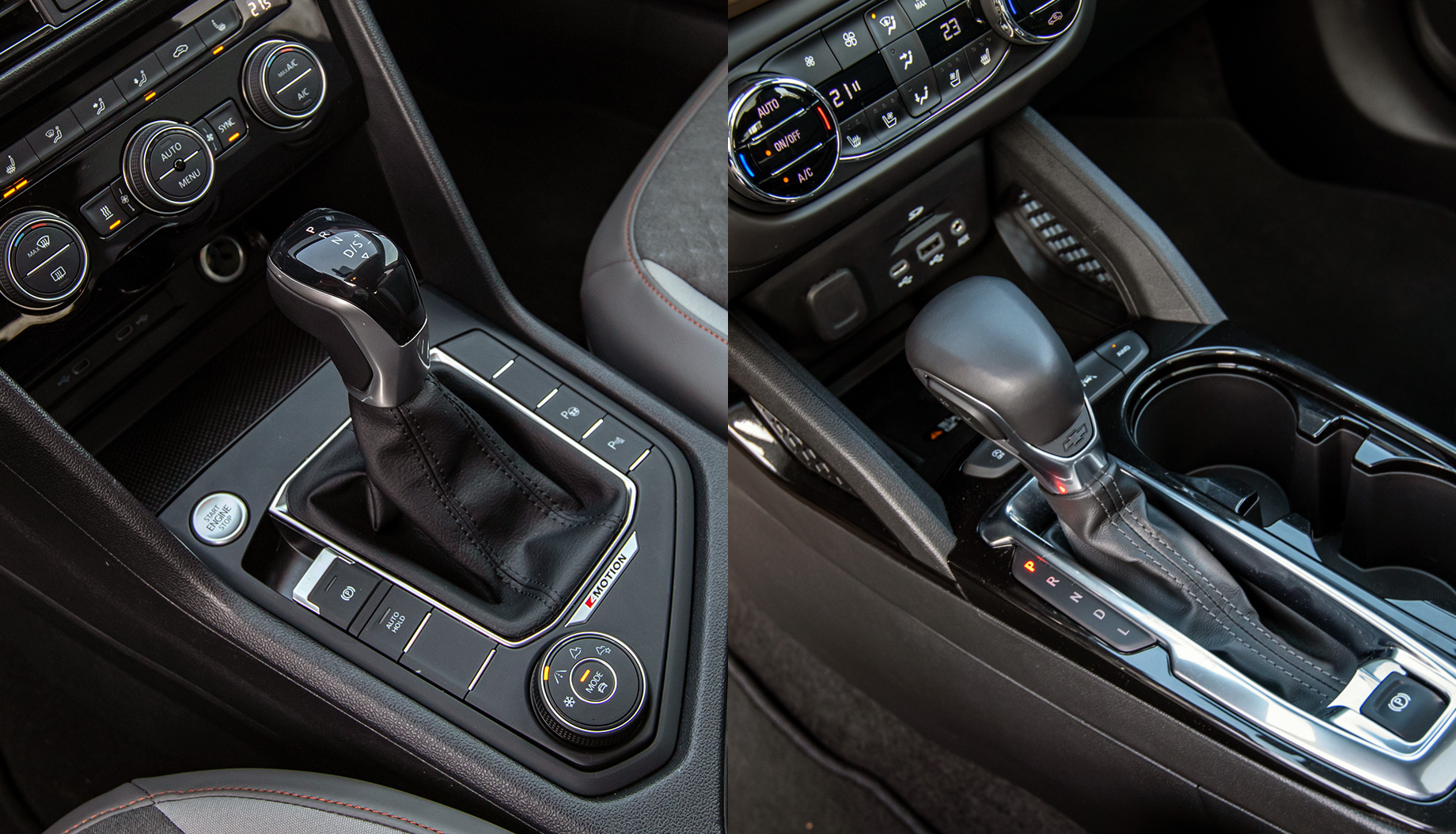
- Physical push-button climate controls (not touch-sensitive like in the Tiguan)
- A central armrest that doesn’t interfere with the gearbox, tunnel buttons, or rotary drive selector
- One minor quirk: releasing the wiper stalk after a single sweep causes it to spring forward into the interval wiping position
The Trailblazer goes for a more adventurous interior design, but the material mix is inconsistent. You’ll find several types of black plastic (matte, rubberized, and piano-lacquer gloss), fabric door inserts, and a soft brown faux veneer with stitching on the dashboard. The materials themselves are arguably pricier than the Volkswagen’s — but the mismatched combination undermines the overall feel.
The Trailblazer’s biggest interior flaw is its non-adjustable central armrest. Positioned too high, it consistently blocks the driver’s right arm when turning the wheel. On the way down, the elbow nearly always hits the center box lid — making this not just an annoyance, but a potential safety concern.
Visibility is also a weak point for the Trailblazer:
- Thick A-pillars can hide large obstacles while turning
- Oversized rear pillars limit rearward visibility
- Glass areas have been trimmed for aesthetics, making parking maneuvers harder than in the Taos
- Only the Taos’s side mirrors are smaller, which is a minor disadvantage
Rear Seat Space and Passenger Comfort
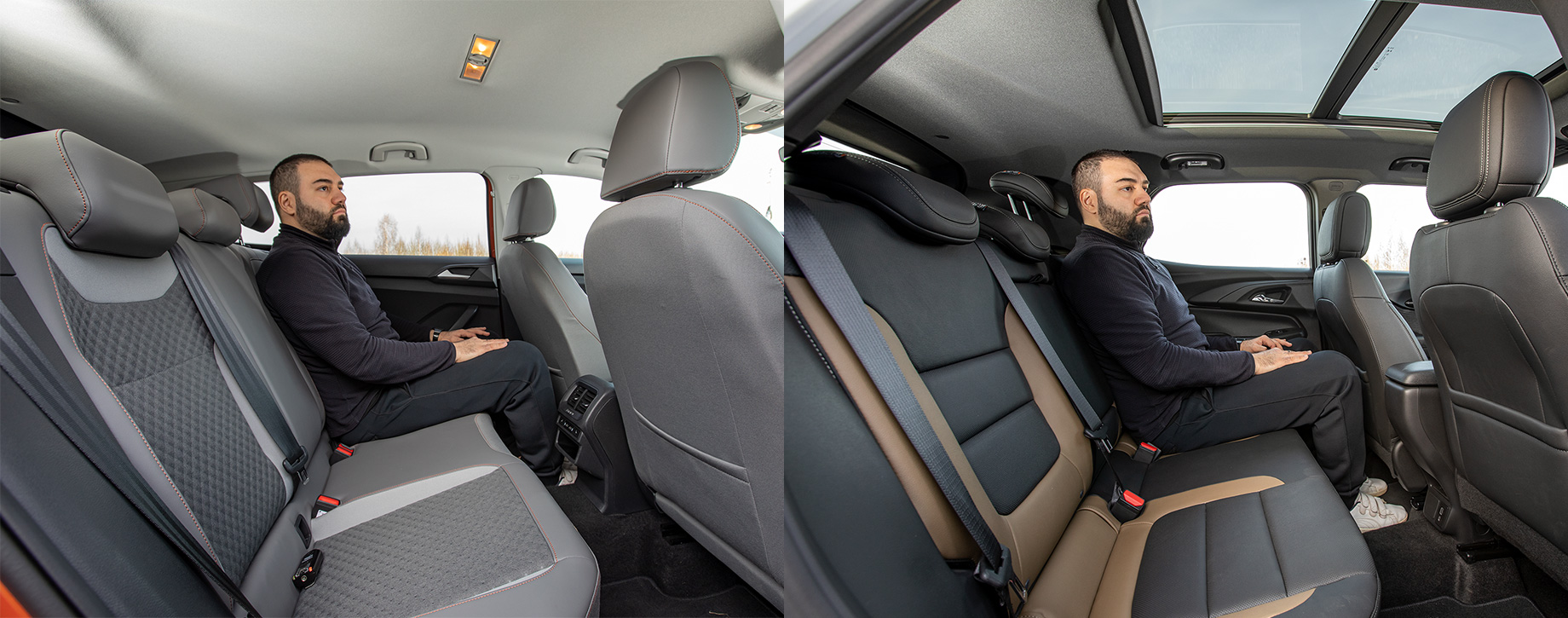
The Taos is the better choice for rear-seat passengers in most respects:
- More knee room and headroom
- Roughly three times more ceiling-to-head clearance than the Trailblazer
- Easier ISOFIX child seat installation via accessible plugs on the seatback
The Trailblazer has its own advantages in the rear:
- Taller and wider rear door openings for easier boarding
- Better baby carrier placement due to the wider entry
- A lower center tunnel, making it more comfortable for a middle passenger to rest their feet
- The Taos’s large center console box blocks foot placement for a third passenger
Note: the Trailblazer’s ISOFIX brackets are wedged between the backrest and cushion, making child seat installation more time-consuming.
Engine and Powertrain Performance
The Trailblazer runs a three-cylinder turbocharged engine — the only option available. It produces 236 N·m of torque from 1,600 to 4,000 rpm, offering strong pull across a wide rev range. In testing, it hit 0–60 mph in 9.9 seconds, beating the manufacturer’s claim of 10.5 seconds. The nine-speed automatic shifts quickly and decisively during hard acceleration.
However, everyday drivability is where the Trailblazer struggles:
- No selectable driving modes
- Overly sharp throttle response makes smooth progress in traffic a challenge
- Passengers frequently notice jerks during low-speed maneuvering
- The gearbox becomes unpredictable when given time to decide — it may downshift one, two, or zero gears unexpectedly
- Large multi-gear downshifts are always sluggish
- The transmission favors higher gears even in urban conditions
The Taos uses Volkswagen’s DSG DQ381 dual-clutch transmission paired with a 1.4 TSI engine producing 250 N·m from 1,500 rpm. In standard mode, the gearbox prioritizes fuel efficiency — shifting into seventh gear at speeds as low as 80 km/h — and the throttle response in that mode is very relaxed. Below a third of pedal travel, almost nothing happens, which suits city stop-and-go driving well.
To unlock the Taos’s real potential, Sport mode is essential:
- Sharper, more responsive throttle mapping
- Quicker DSG shift timing
- Launch Control becomes available, enabling the certified 8.9-second 0–100 km/h sprint
- Even without Launch Control, the Taos clocks 10.0 seconds to 100 km/h vs. the Trailblazer’s 10.6 seconds
Ride Quality and Handling
The Taos delivers a near-benchmark balance of comfort and agility:
- Communicative, well-weighted steering
- Precise and powerful brakes
- A suspension setup that feels borrowed from a hot hatch — responsive, focused, and playful in corners
- Composed and smooth over rough surfaces and mid-sized bumps
- Handles patchy road repairs without drama
- Best to slow down to around 12 mph over speed bumps and avoid deep potholes
The Trailblazer lags behind noticeably on paved roads:
- Reacts sharply to potholes and surface changes of all sizes
- Transmits vibrations and road noise into the cabin even on smooth tarmac
- More pronounced body roll in corners
- Steering feel is vague and inconsistent, making it a poor communication channel between driver and road
- Engine noise and tire roar are more intrusive than in the Taos
Off-Road Capability
This is where the Trailblazer makes up ground. On broken dirt roads and washed-out uphill tracks, it performs more confidently:
- Better ride compliance on rough terrain — higher speeds, more comfort, less body damage risk
- All-wheel-drive electronics that transfer torque to the right wheels faster during diagonal axle articulation
- More confident traction on loose, rutted climbs
- Comes with metal underside protection for the powertrain
The Taos can handle muddy sections and rough tracks as well, especially with its dedicated off-road mode activated — which also helps when wheels lose traction on an axle. However, it is held back by:
- About 2 cm less ground clearance than the Trailblazer
- Inferior geometric approach and departure angles
- Poor ride comfort on rutted dirt surfaces
Verdict: Volkswagen Taos vs Chevrolet Trailblazer
The Trailblazer is worth considering if you regularly venture off-road or simply prefer its more expressive styling. Its rugged capability and aggressive looks are genuine advantages. But outside of those scenarios, the Chevrolet feels like a car that was rushed to market — the design team delivered, but the driving dynamics and cabin ergonomics needed more polish. The combination of a premium price tag and budget-grade driving sensations is its fundamental problem.
The Volkswagen Taos may not dazzle with its cabin materials either, and it isn’t exactly cheap — but it undercuts the Trailblazer at comparable equipment levels. More importantly, it offers:
- A quicker 0–100 km/h time
- More interior space for all passengers
- Better ergonomics and daily usability
- Refined on-road handling and ride quality
- Equal appeal for both comfort-focused drivers and driving enthusiasts
In the real market, the Taos will compete less with the Trailblazer and more with its platform sibling, the Škoda Karoq — which offers comparable value at a lower price. That said, history suggests VW badge appeal tends to win out: the Polo outsells the Rapid, the Tiguan leads the Kodiaq. Don’t be surprised to see the same dynamic play out with the Taos and Karoq.
This is a translation. You can read the original here: https://www.drive.ru/test-drive/chevrolet/volkswagen/61a8f7379bf2ef1fc46f8e5a.html

Published March 17, 2022 • 8m to read