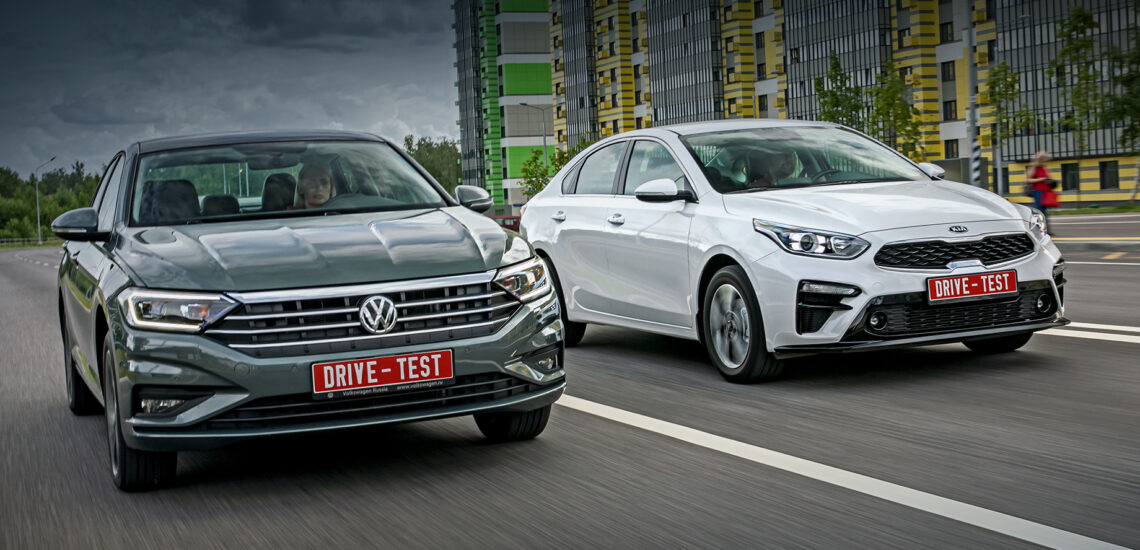

We didn’t expect any breakthrough from the new-generation Volkswagen Jetta sedan — and even before the prices were announced, we already viewed it as a compromise. Now that the numbers are in, the picture is even less flattering. Without local production and with costly logistics, the Jetta can only realistically compete on price with the Mazda 3 sedan. Every other rival in the segment comes in cheaper. So we put the most affordable Jetta — equipped with the base 1.6-liter engine — to the test.
Sales data from the previous generation reveals that two-thirds of Jetta buyers opt for the 110-horsepower entry version. The Kia Cerato, the segment’s best-selling sedan, tells a very different story: most buyers go for the 150-horsepower two-liter engine. So we lined up exactly that Cerato for this comparison — and chose to overlook the price gap, because the more powerful Kia is actually the cheaper car.
Exterior Design: Chrome vs Simplicity
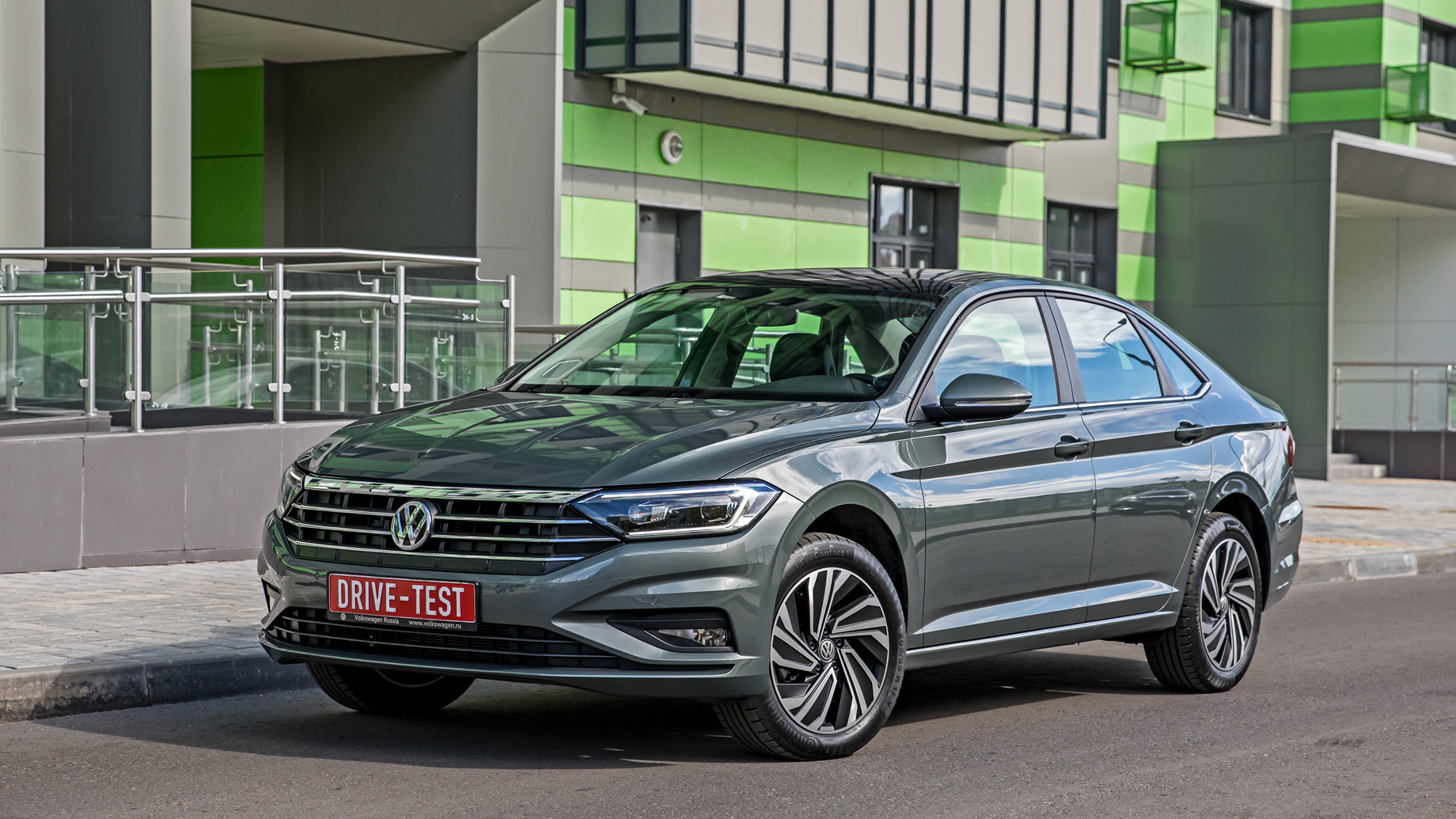
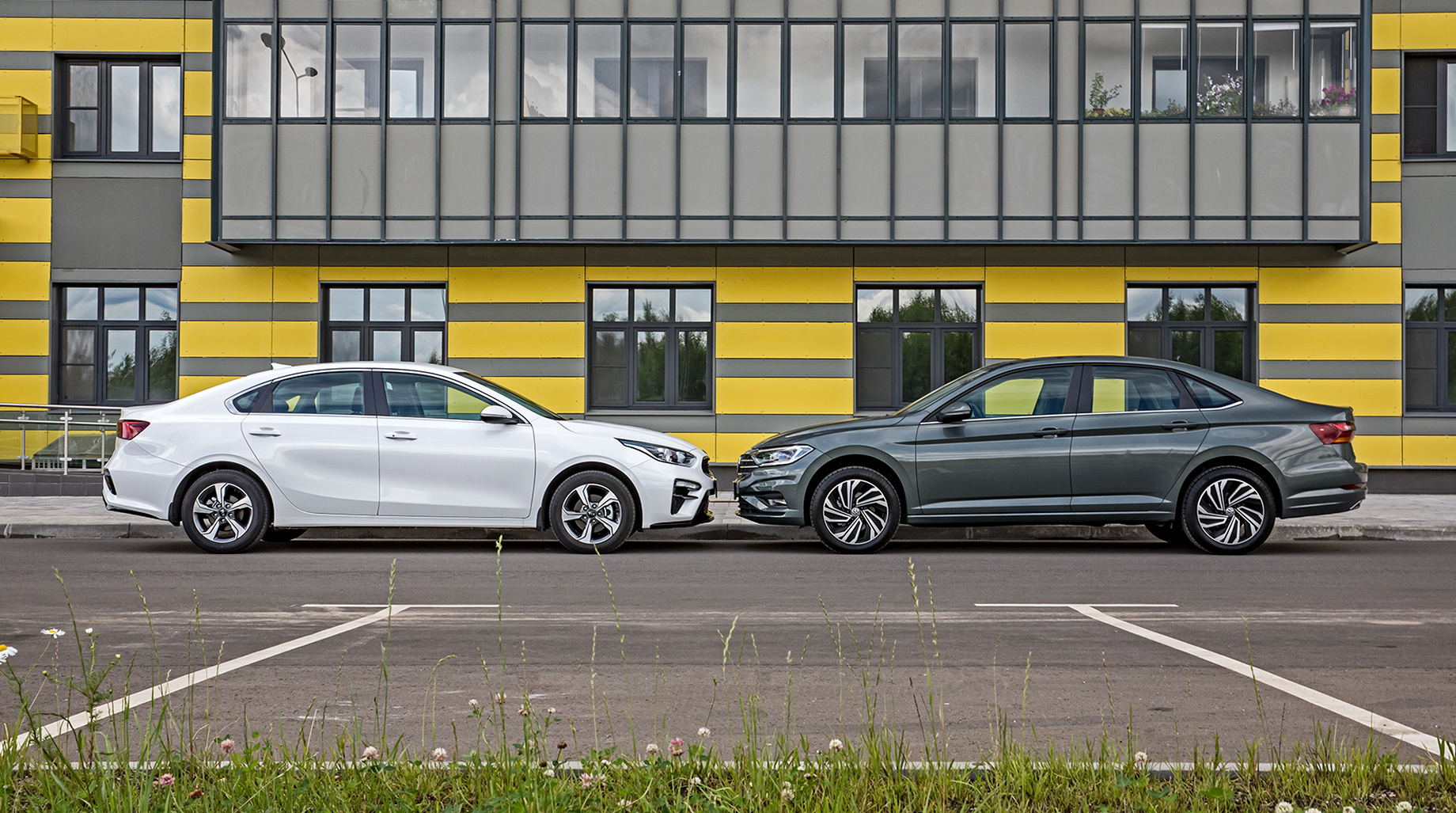
The Volkswagen cuts a more premium figure at first glance, thanks to its bold front end loaded with chrome trim. But look closer, and the wheels seem to hang awkwardly low in the arches — as though the 6.1-inch ground clearance (confirmed by our own measurements) was an afterthought added after the body lines were already finalized. The plastic cladding on the sills does give a sense of robustness, but it only draws attention to uneven body panel gaps. The Cerato’s design is simpler, yet its assembly quality is noticeably more consistent.
Interior Quality & Technology Features
The Jetta’s door handles fall naturally into your grip, and Volkswagen’s well-practiced ergonomics — the relationship between steering wheel, pedals, and seat — remain intact. The dashboard makes a strong first impression:
- An 8-inch touchscreen media system sits front and centre
- A digital instrument cluster adds a modern, tech-forward feel
- Three configurable display layouts plus a dozen ambient lighting colours
- Display modes toggled via a dedicated View button on the steering wheel
That said, some of the tech is more show than substance. Pressing the button marked with driver-assistance icons brings up a blunt on-screen message: “The key doesn’t work.” The base 1.6 Jetta doesn’t include adaptive cruise control or any radar-based systems — and Volkswagen seemingly couldn’t be bothered to remove the button.
The corners cut elsewhere are harder to ignore:
- No glovebox illumination
- No rear-seat air vents
- Trunk lid only half-lined, with exposed wiring on display
- Sharp metal edges visible through the pass-through opening to the boot
The Kia handles all of these details better. Plastic covers the metal, and none of the above issues arise. The Cerato’s interior is less elaborate in its styling, but the layout is just as well thought-out. Its physical media system buttons are more intuitive than the Jetta’s touch controls, and the built-in navigator — accessible via smartphone hotspot — is a genuine bonus for city driving, even if its menu integration isn’t seamless and there’s no cabin clock to be found. The Jetta’s own navigation system, meanwhile, has no traffic data. And to connect your phone via cable, you’ll need a USB-C lead — still far from standard kit.
Boot Space, Rear Comfort & Practicality
Both sedans offer comparable luggage capacity, with similar boot volumes, load heights, and fold-down flexibility. The liners are basic in both cases, with flimsy shelves and bare metal beneath. The Cerato’s boot lid opens about three centimetres lower, but it compensates with a full-size spare wheel and a sidewall strap for securing smaller bags.
In the rear cabin, the pricier Jetta is the more comfortable place to be:
- Taller passengers have more knee clearance against the front seatback
- A well-positioned door grab handle supports a natural arm position
- Three adults can sit across without it feeling cramped
- Full heated seating — both seat and backrest — front and rear
The Cerato trails by a couple of centimetres of knee room and only heats the seat cushion, not the backrest. The firmer seat backs make the difference more noticeable on longer journeys.
Ride Quality & Suspension Comparison
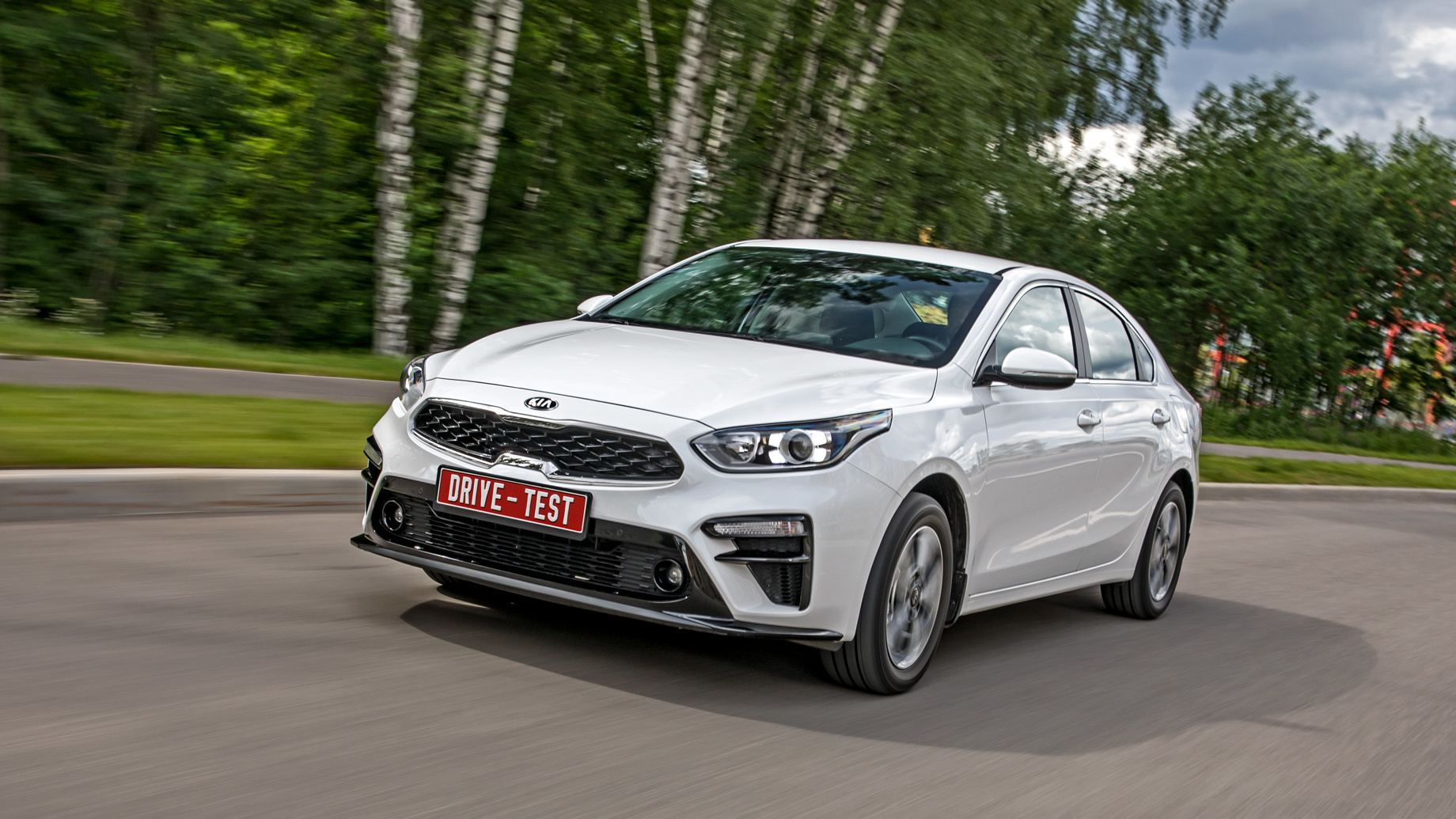
The two-litre Cerato has featured in our comparison tests before, and ride comfort was already a talking point alongside the Hyundai Elantra and Toyota Corolla. With 16-inch wheels this time around, things have evened out somewhat — but not dramatically improved. On smooth roads, the Kia rides with genuine composure and absorbs large impacts effectively. Where it struggles is with surface texture: short, choppy waves are amplified by the suspension, particularly at higher speeds, and high-frequency vibration over rough asphalt is more intrusive than it should be.
The Jetta feels more refined on a smooth motorway — there’s even a faint hint of the premium float you’d expect from a larger Volkswagen, and it deals with minor road imperfections more elastically. But venture off that highway and things change quickly. Sharp-edged potholes produce loud, jarring impacts. Both cars earn the same verdict on rough roads: stiff. Acoustic comfort is broadly on par too — the Cerato’s tyres are noisier, but road and wind noise are better suppressed in the Jetta. What the Volkswagen can’t mask is its own engine: a droning, characterless rasp that wears on you quickly.
Engine Performance: 1.6 Jetta vs 2.0 Cerato
The Jetta’s 110 hp and 155 Nm simply aren’t enough for a car this size. Routine acceleration from a traffic light means spinning to 3,500–4,000 rpm in second gear — yet the cabin starts getting loud past 2,000–2,500 rpm. Any meaningful overtake requires the six-speed automatic to kick down two, three, or even four gears, and those shifts are anything but smooth. The end result is an experience that’s jerky, noisy, and slow. The brakes at least deserve credit: pedal feel and response are predictably good, unlike the Cerato’s which demands more effort than expected.
The Cerato’s two-litre engine, by contrast, pulls willingly from low revs and has no trouble mustering passing power at highway speeds. Its six-speed automatic shifts less frequently and with marginally less drama. The drive modes are also better thought-out:
- Sport — sharpens throttle response while still allowing the gearbox to shift up; activated via the gear selector
- Eco & Comfort — accessible via a dedicated button
- Smart — an adaptive mode that adjusts to driving style, though the benefit in practice is hard to detect
Handling & Driving Dynamics
On a winding road, the Jetta is the more rewarding drive. It rolls through corners but stays predictable, and the steering offers clear, natural feedback. There’s none of the precision you’d find in a European-market Volkswagen, but it still inspires confidence.
The Cerato’s steering is its weakest point dynamically. It feels over-assisted and artificially self-centering — even at parking speeds, there’s a noticeably deliberate return-to-centre action, and steering effort at low speed is higher than it ought to be. You’ll adapt, but it detracts from what could otherwise be an enjoyable drive.
Verdict: Which Sedan Should You Buy?
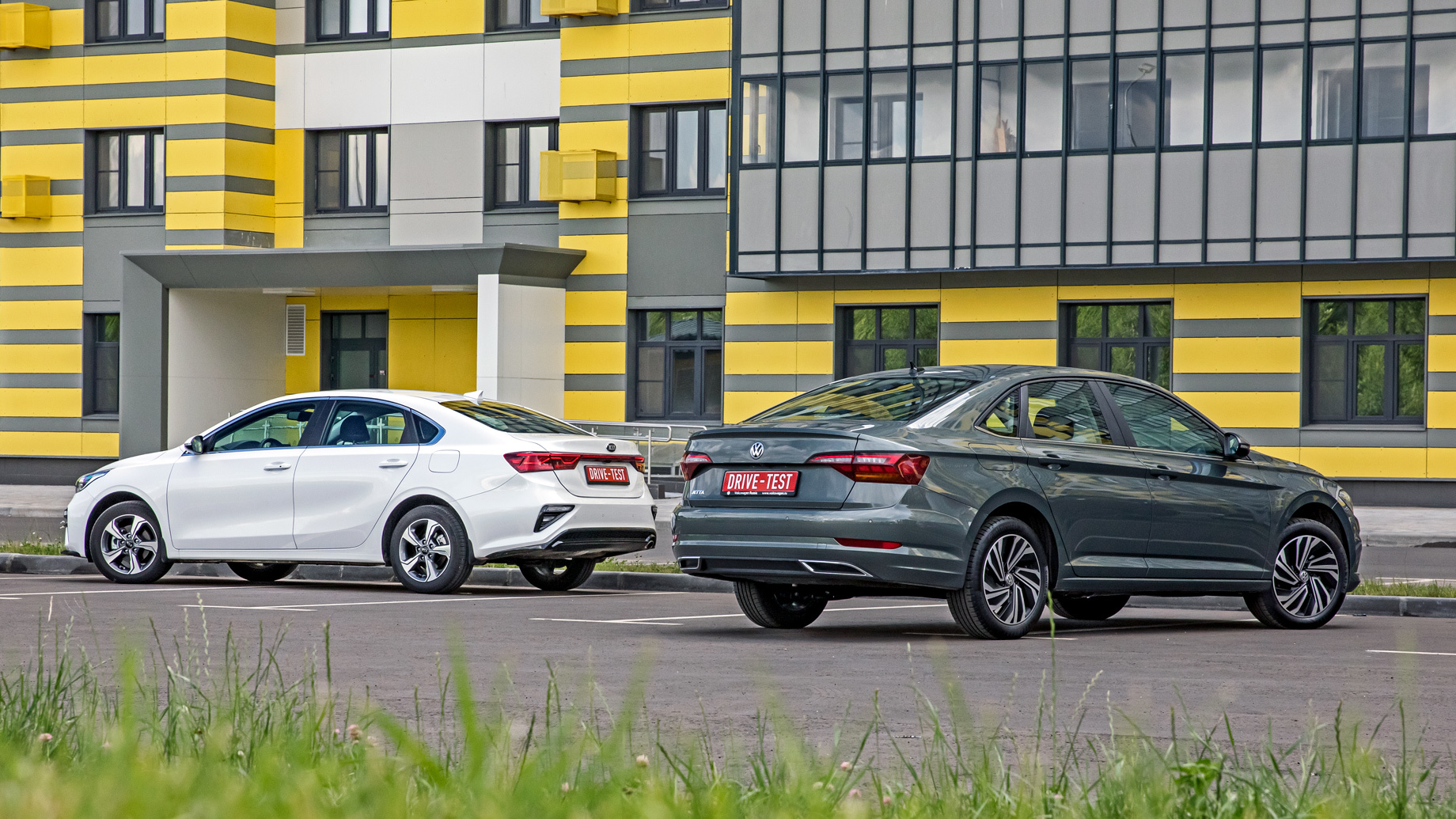
The Jetta’s problem isn’t any single flaw — it’s that its strengths and weaknesses are so poorly balanced. The sharp exterior is undermined by an underpowered engine. The comfortable interior is let down by a stiff ride and intrusive engine noise. Want the far more capable 1.4 TSI? That costs significantly more. And if you spec our Kia up to match the Jetta’s kit — adding leather seats with electric adjustment, LED headlights, and 17-inch wheels — you end up at the Cerato GT Line+, which still comes in cheaper. Checkmate, Jetta.
The Jetta’s most realistic home is in a corporate fleet where the brand carries weight by tradition. Think of it this way: the Audi A8 goes to top management, the A6 to department heads, Passats to mid-level managers, and Polo or Rapid models to regional reps. The Jetta fills the gap for office professionals who aren’t quite at Passat grade. Beyond that narrow niche, it’s genuinely difficult to make a case for the Mexican-built Volkswagen over the Kia.
This is a translation. You can read the original here: https://www.drive.ru/test-drive/kia/volkswagen/5f105d4dec05c4147d0000e7.html

Published October 27, 2022 • 7m to read