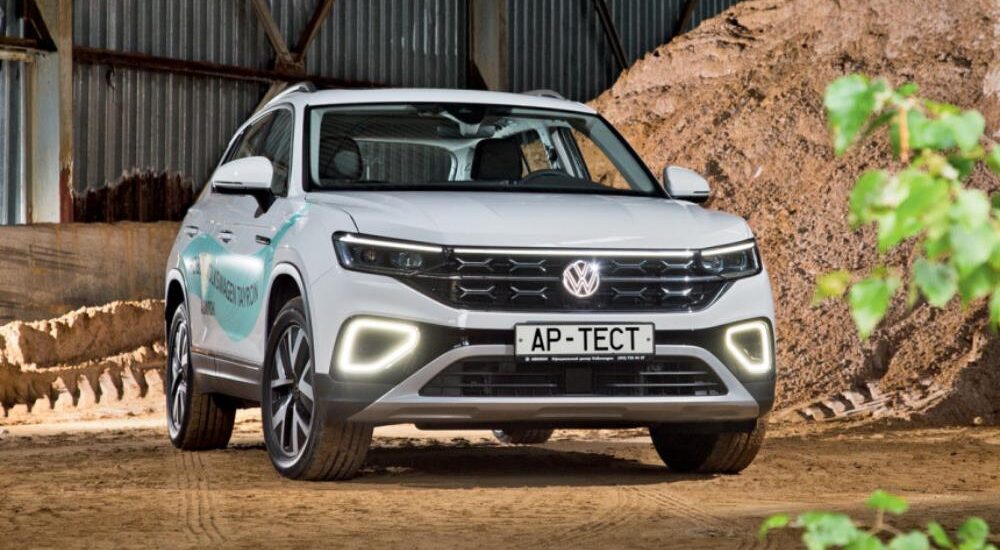

Volkswagen is expanding manufacturing in China while reshaping its model lineup. In this Volkswagen Tayron review, we test whether the brand’s legendary build quality survives the move — and whether the Tayron can truly replace the Tiguan.
Volkswagen’s Growing Manufacturing Footprint in China
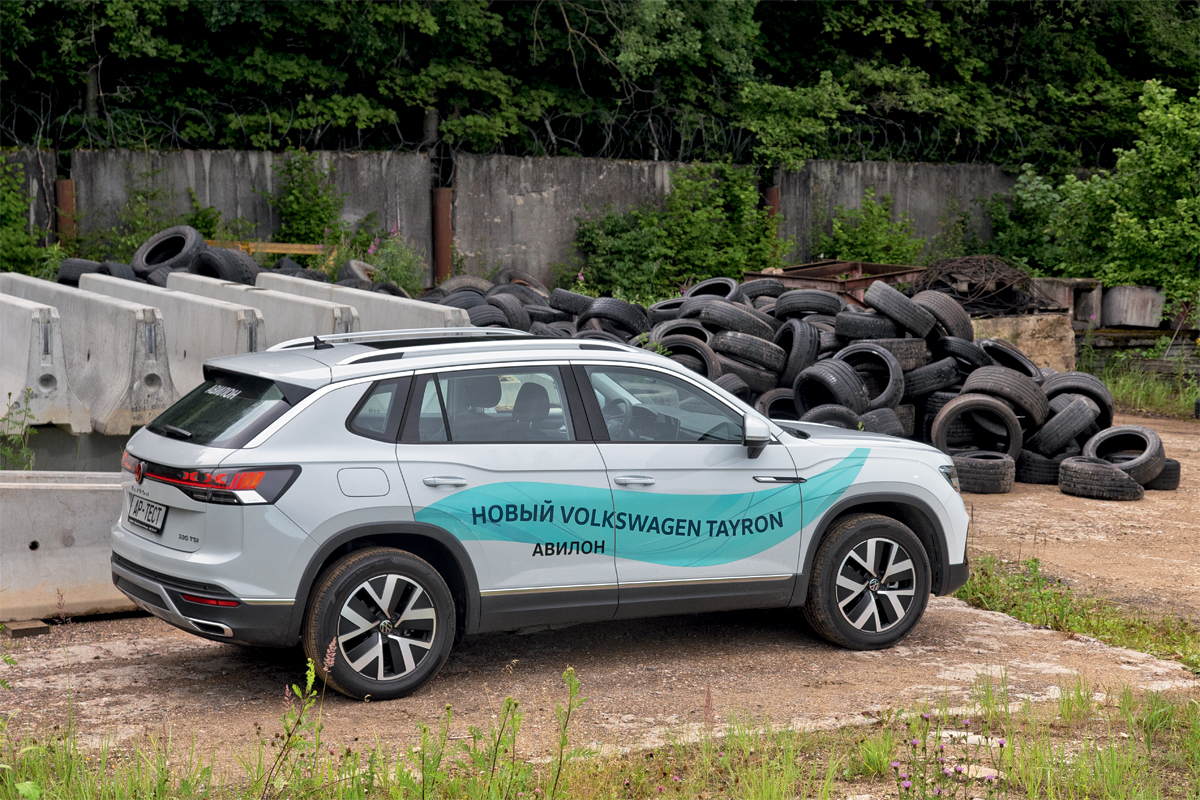
China now hosts 17 operational Volkswagen factories — just one fewer than Germany itself. In 2022, Volkswagen Group brands sold 3,184,500 vehicles in China, only slightly behind total sales across Europe, including Eastern Europe. Where the Volkswagen Tiguan was once assembled in Kaluga, the Volkswagen Tayron now rolls off the line at the FAW-Volkswagen plant in Tianjin. Beyond its expansive DRL (Daytime Running Light) lenses, the Tayron features luminous strips running between the headlights and taillights, connecting both emblems.

Tayron vs. Tiguan: Size, Platform, and Engine Lineup
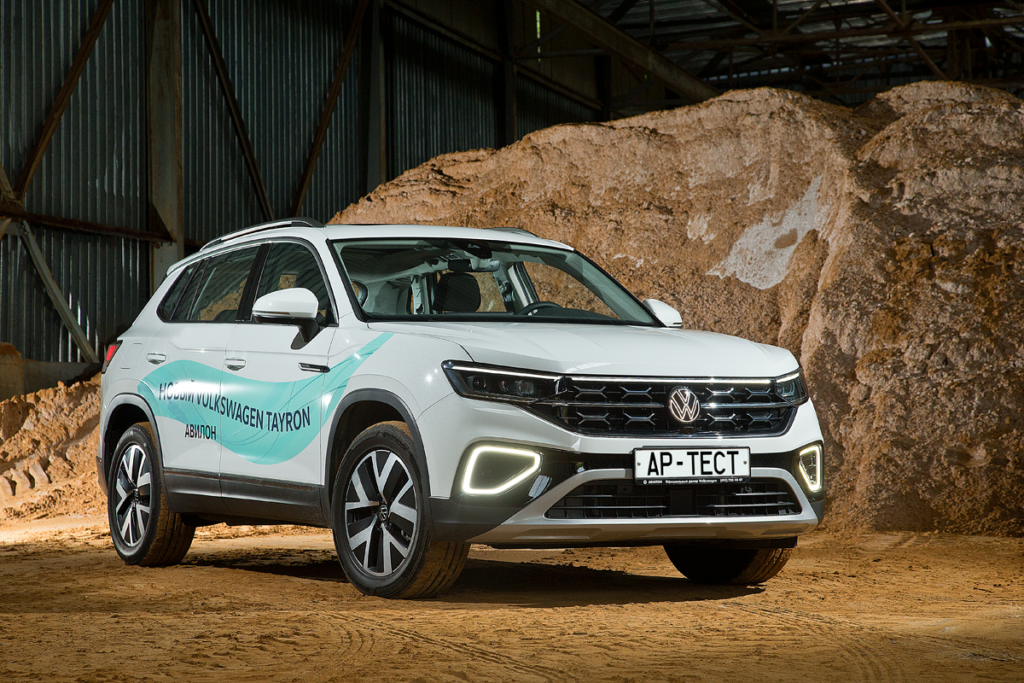
In terms of size, the Tayron sits between the regular Tiguan and the longer Tiguan Allspace.
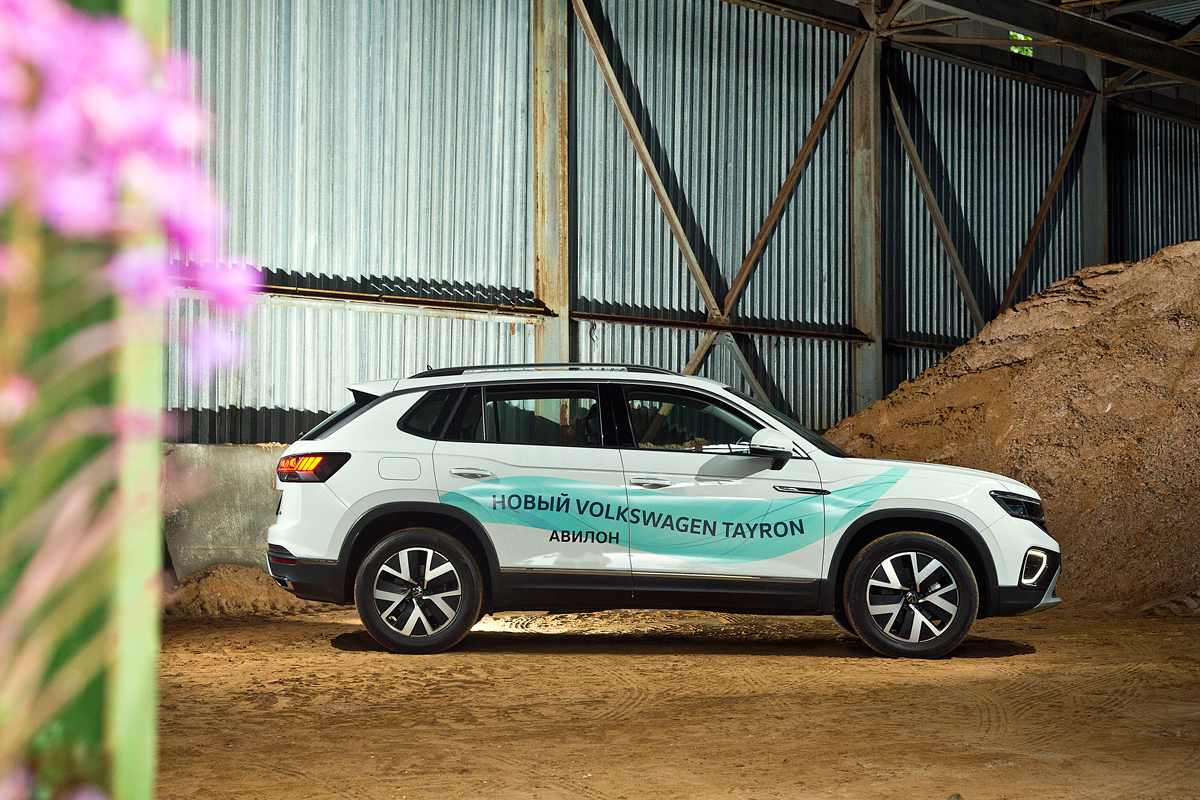
The Tayron is 8 cm longer than the Tiguan, with a wheelbase stretched by 52 mm — so body panels aren’t interchangeable between the two in the event of an accident. The suspension, engine, and gearbox, however, remain shared. Key specs for the lineup:
- 330 TSI (test car): 2.0-liter turbo EA888 engine, 186 hp, front-wheel drive. Despite the “330” badge, this refers to torque, not displacement, following Chinese naming convention.
- 380 TSI: same 2.0-liter engine tuned to 220 hp, all-wheel drive — the range-topping option available at Avilon dealerships.
- 280 TSI: 1.4-liter TSI engine (EA211 series), 150 hp, front-wheel drive.
- Transmission: seven-speed DSG preselective gearbox across the range.
All engines and gearboxes for Chinese-market Volkswagens are locally produced.
Interior and Standard Equipment
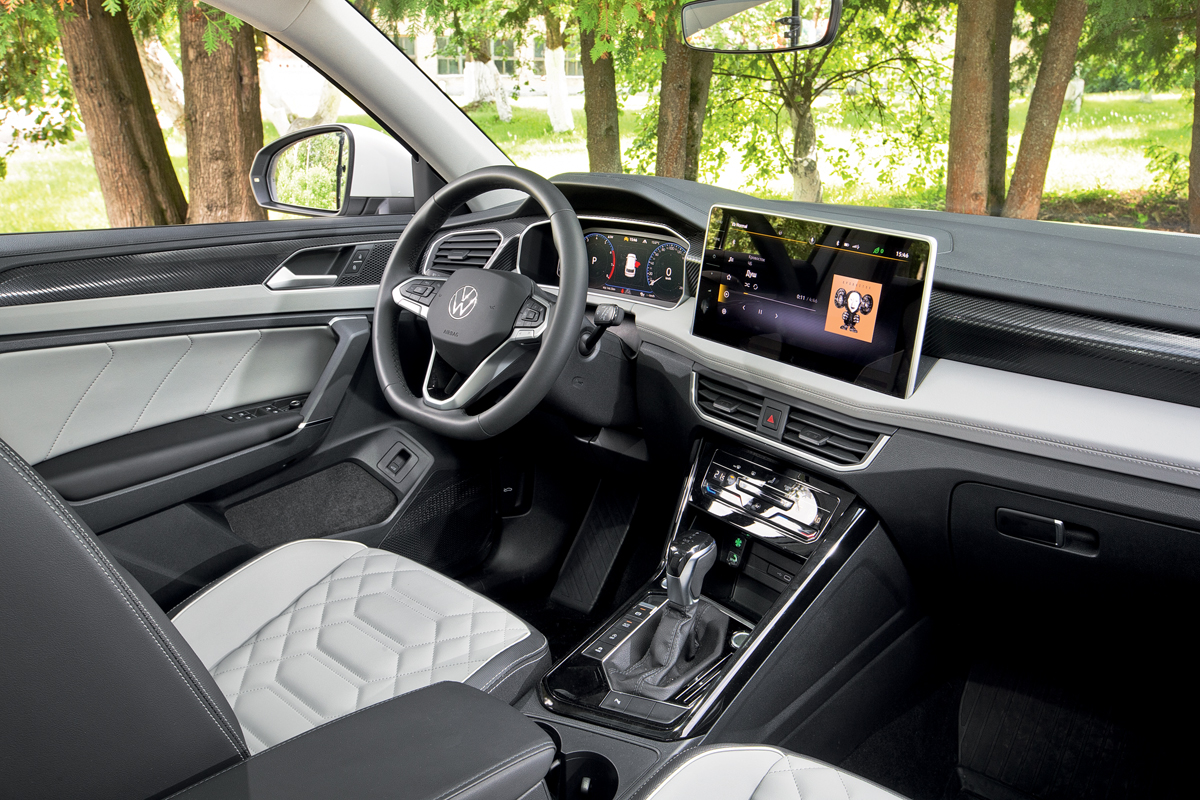
The mid-tier 330 TSI trim is generously equipped, though it comes with a few surprising omissions typical of the Chinese market. Standard features include:
- 18-inch alloy wheels
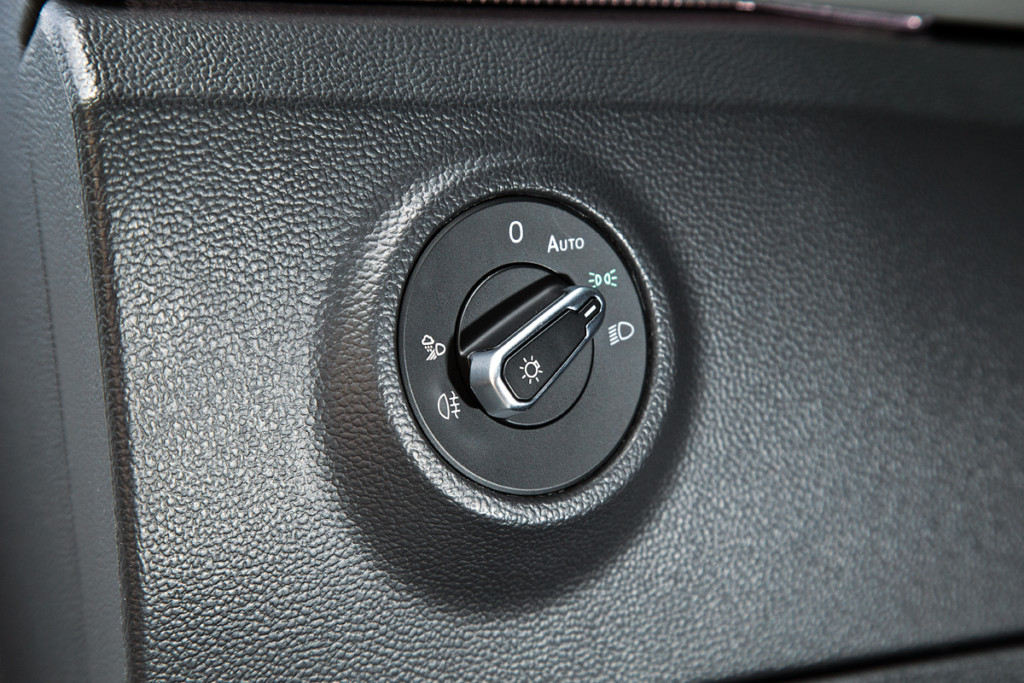
- Full LED exterior lighting
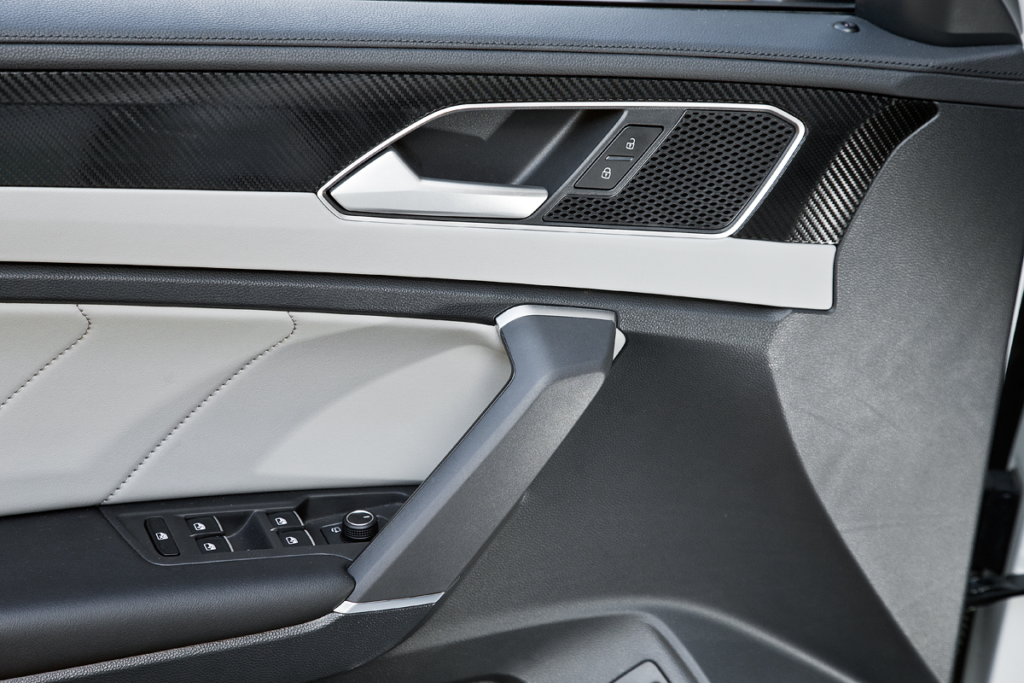
- Keyless entry with sensors on both front doors
- Panoramic sliding sunroof
- Seven airbags
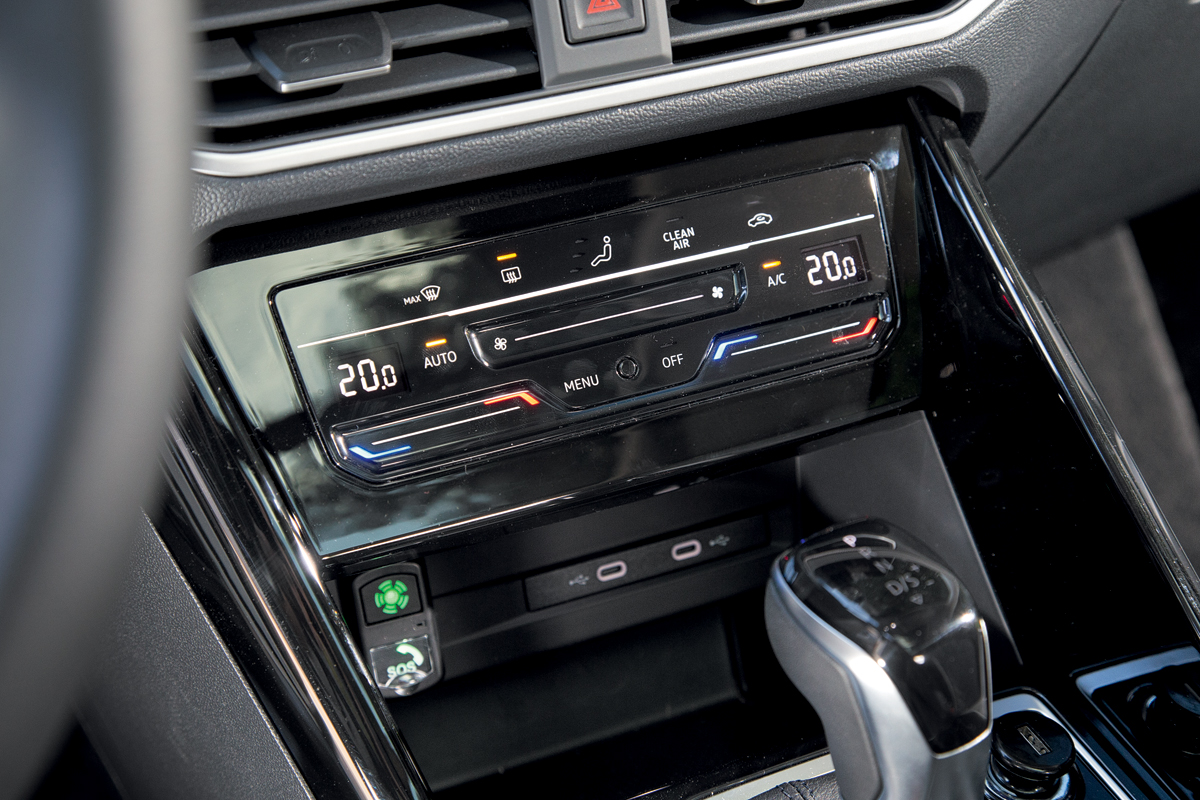
- Three-zone climate control
- Power-adjustable front seats
- Digital instrument cluster
- 12-inch multimedia touchscreen
- Electrically heated steering wheel
Notably absent: heated front seats and a heated windshield — both offered only as options in China, which makes their exclusion on a test car of this specification somewhat puzzling.
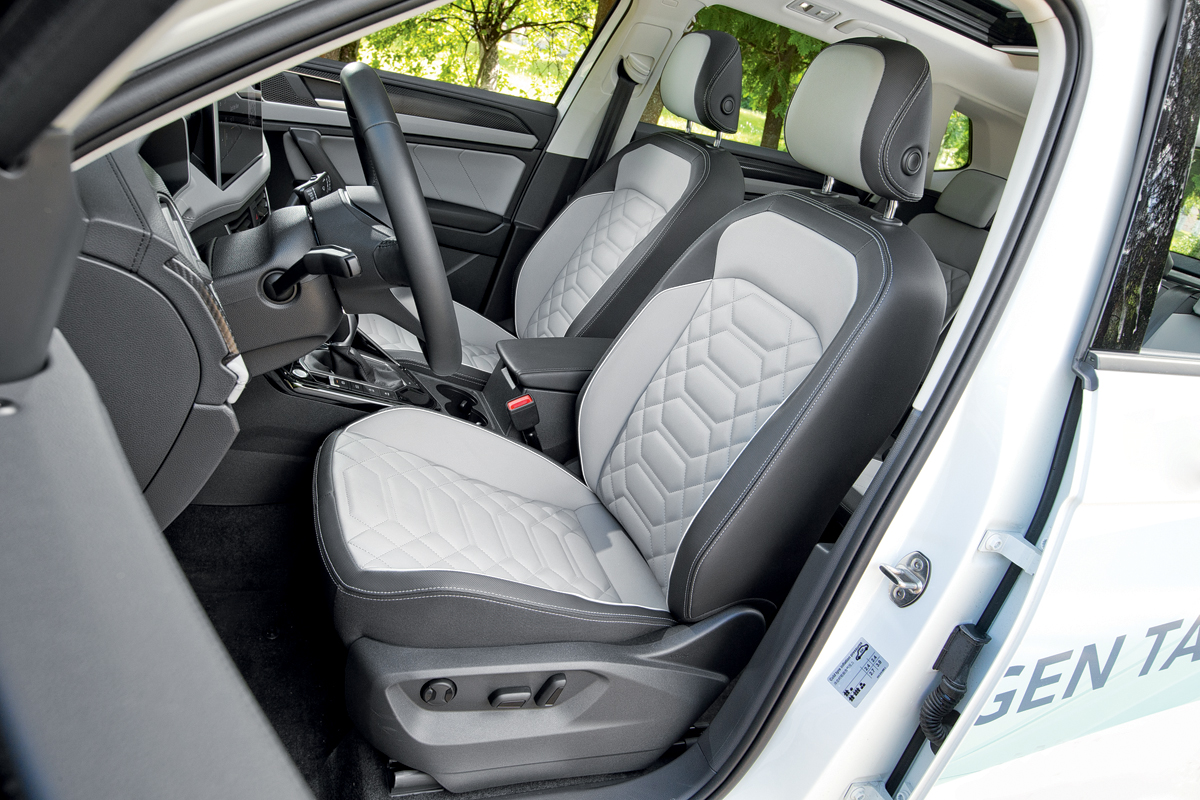
Compared with other Chinese-built vehicles we’ve tested, the Tayron’s seating geometry stands out. The seats have long cushions with adjustable angle, well-placed lateral bolsters, and dense padding — though the faux-leather upholstery doesn’t quite pass for the real thing.
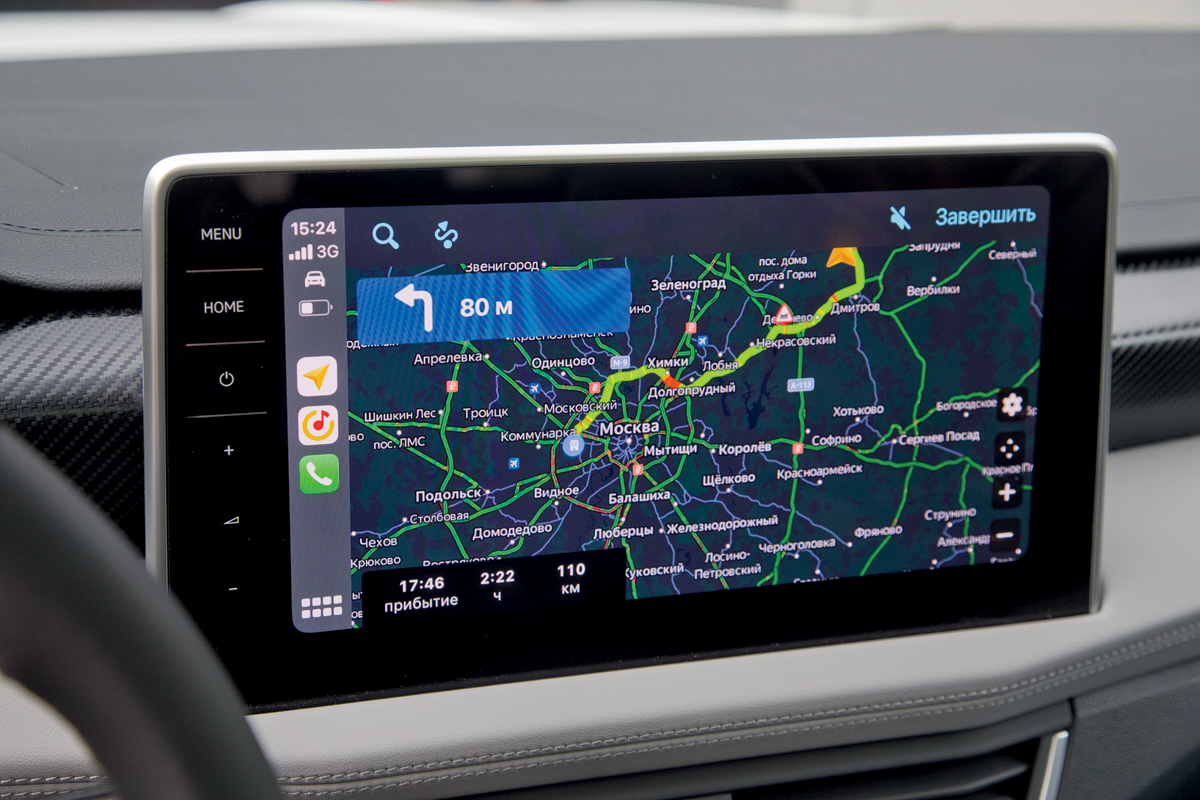
Infotainment System: English Menus and Wireless Apple CarPlay
Concerns that the display would default to Chinese characters proved unfounded. All menus appear in clear, large English text. The only quirk: every startup prompts you to register with a Chinese ID, but tapping “Remind later” unlocks nearly full functionality. Settings, FM radio, and Bluetooth phone pairing are all fast and intuitive.
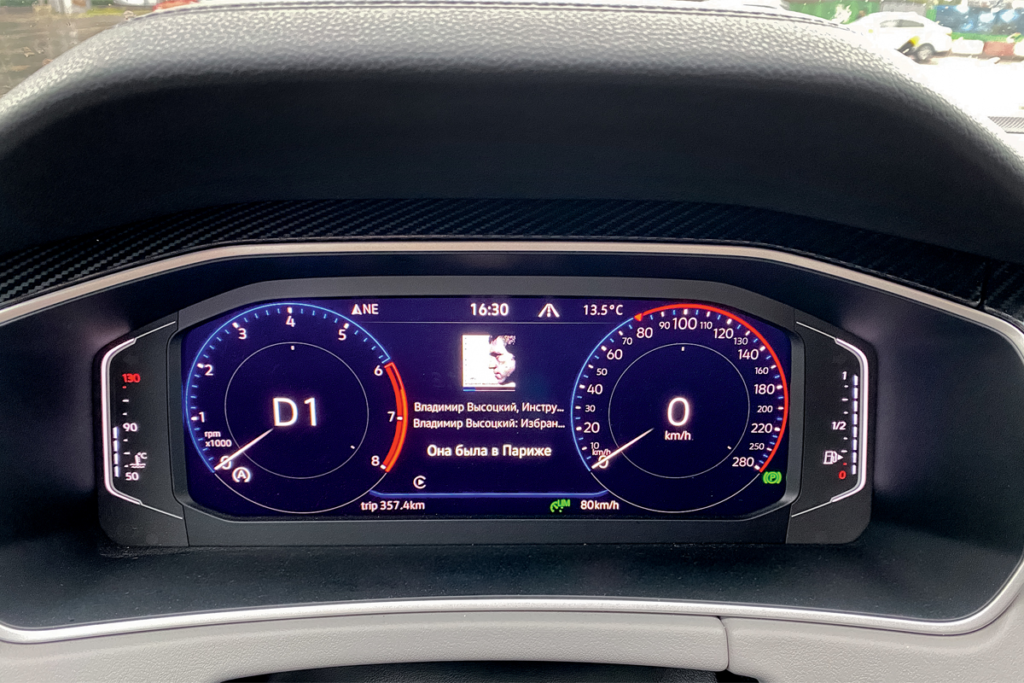
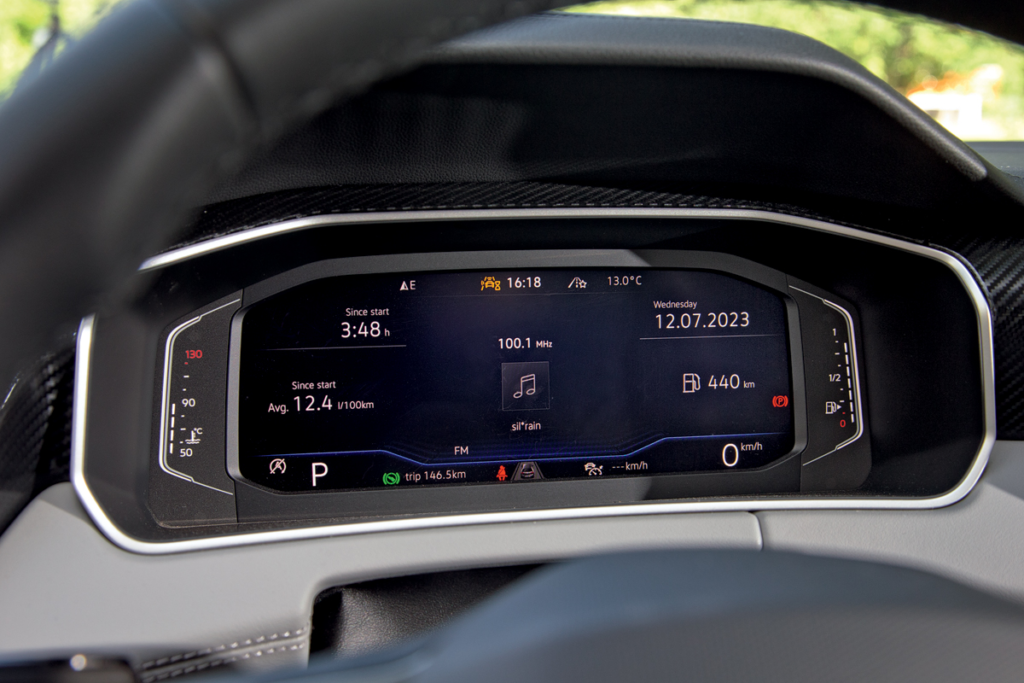
Best of all, iPhone users get full wireless Apple CarPlay support — not just on the central display, but mirrored on the digital instrument cluster too. Chinese characters only appeared occasionally, showing up as hieroglyphs in the RDS line of certain radio stations.
Rear Seat Space and Cargo Practicality
Rear-seat space is generous, with 5-6 cm of knee clearance even behind a taller driver. Familiar Tiguan-style conveniences carry over, including:
- Dedicated rear climate control unit
- Ceiling and center-pillar clothing hooks
- Generous, soft-lined door pockets
- Fully descending rear power windows
- Rear seats that slide up to 18 cm to balance passenger and cargo space
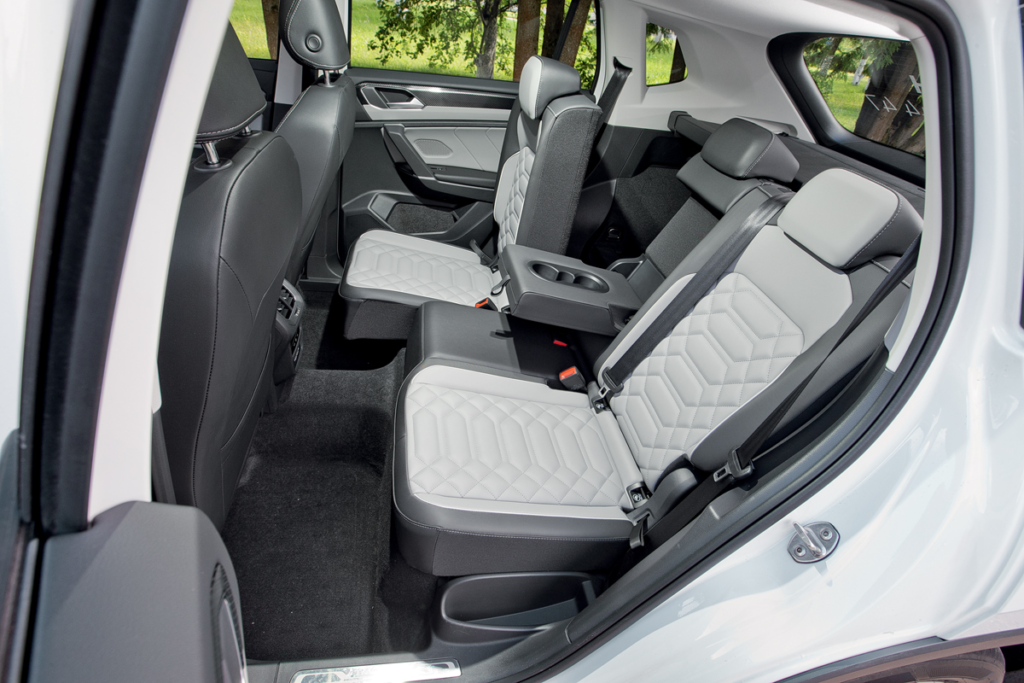

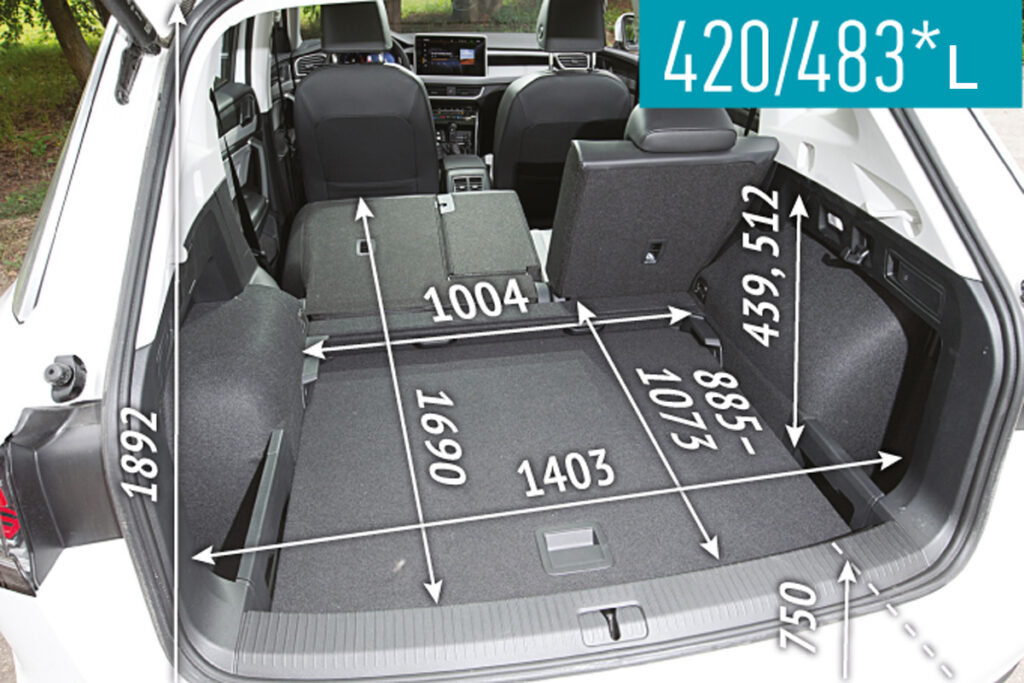
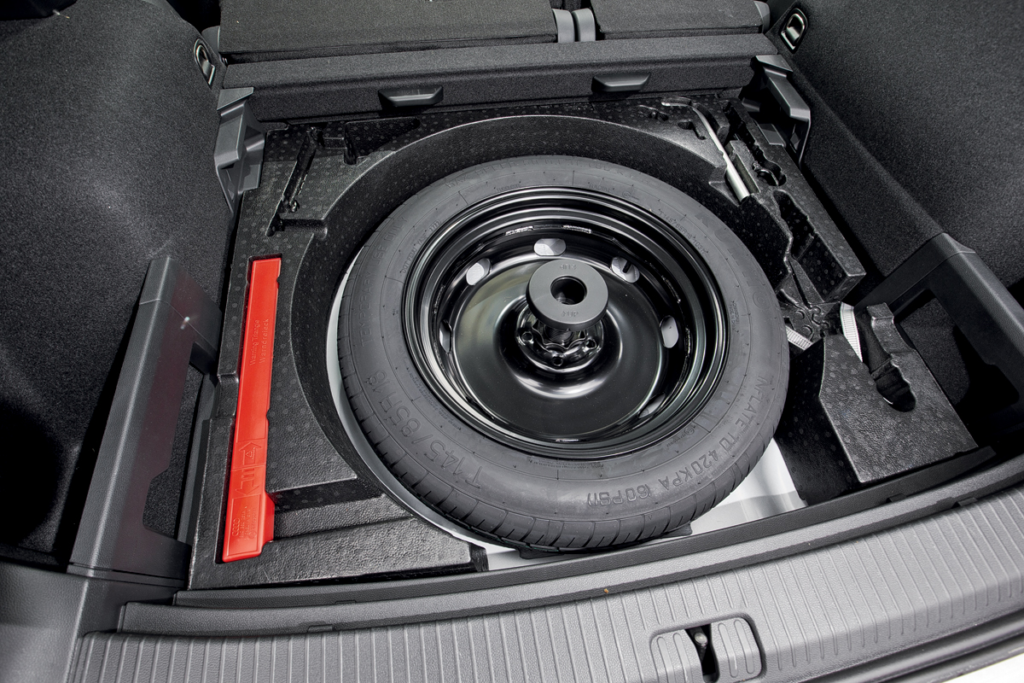
The trunk is slightly larger than the Tiguan’s, with no compromises. Handy touches include seat-folding handles, a two-level adjustable floor, cargo-securing hooks, dedicated cutouts in the side panels for a cargo curtain, and fleece-lined upholstery throughout instead of bare plastic.
Driving Experience: Engine, Gearbox, and Drive Modes
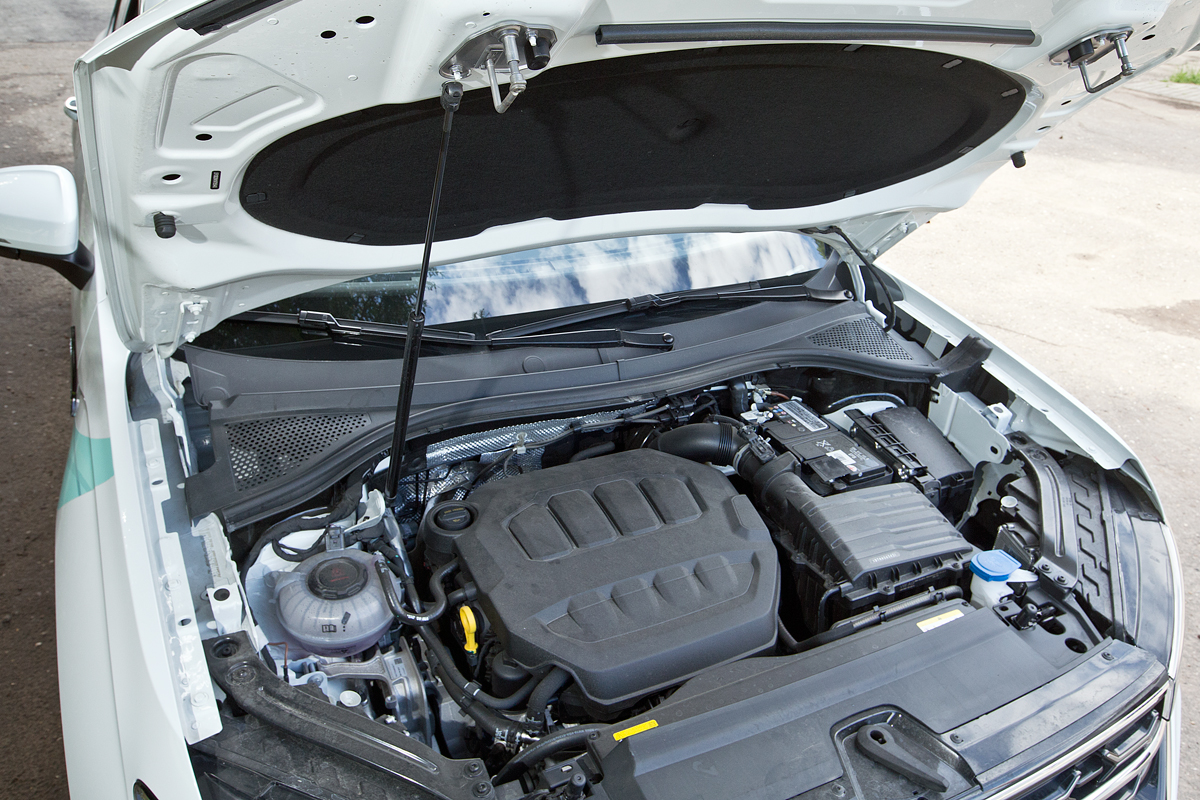
The pairing of the 2.0-liter turbo EA288 engine with the “wet” seven-speed DQ381 preselective gearbox will feel familiar to Tiguan and Kodiaq owners. Shifts stay quick and smooth for economical low-speed driving, the engine responds without lag, and city driving feels comfortable thanks to a gentle accelerator response.
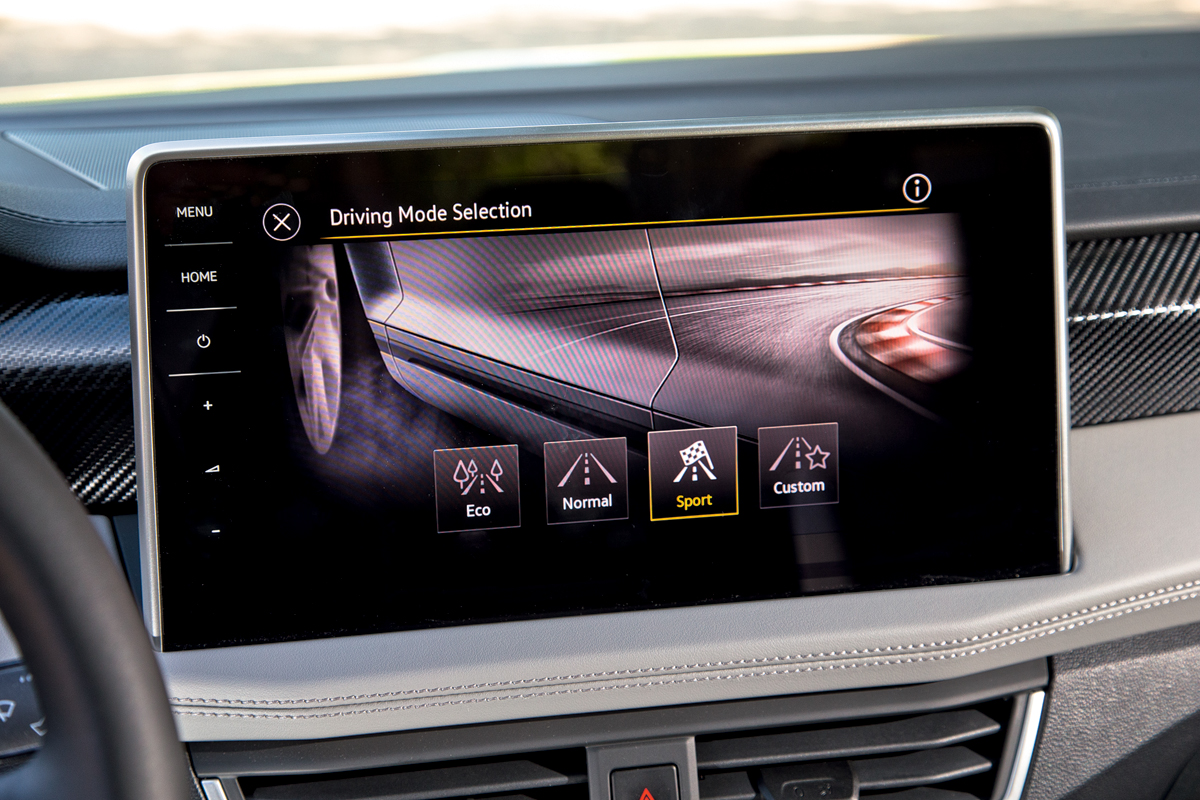
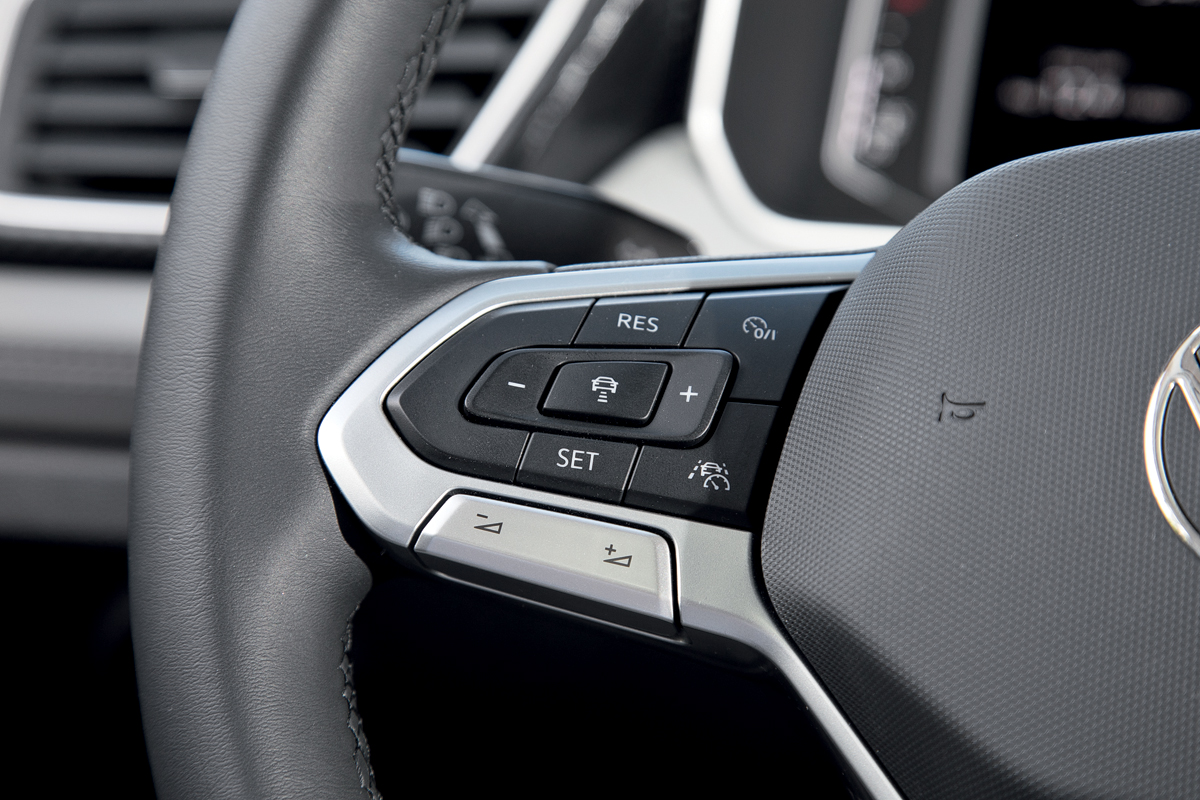
For a sportier feel, Sport or Custom mode lets you independently adjust the powertrain, steering weight, and active cruise control. The cruise control itself works well and can easily switch to a speed-limiter function for city driving.
Volkswagen Tayron 330 TSI: Acceleration and Performance Test Results
Volkswagen enthusiasts always want to know: do the official numbers hold up? For the 330 TSI, Volkswagen claims 0-100 km/h in 8.7 seconds. Chinese-market performance figures don’t always match real-world testing, so we measured it ourselves.
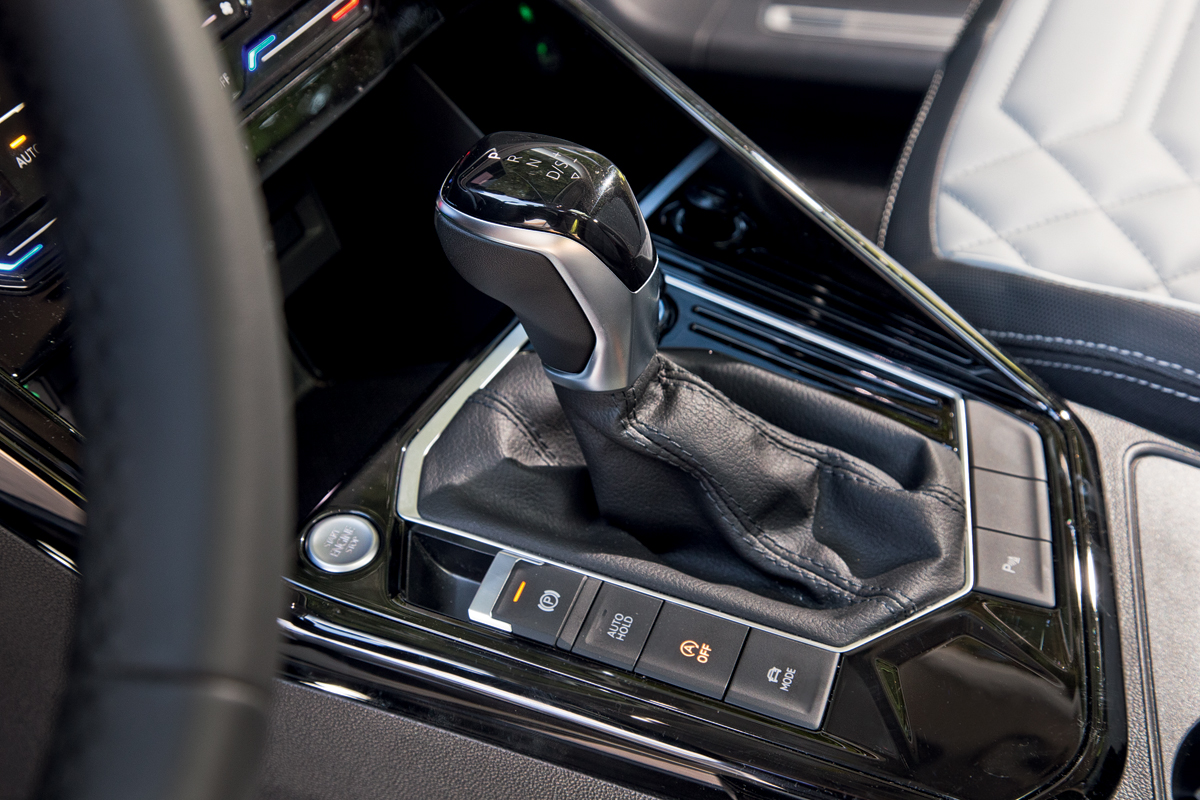
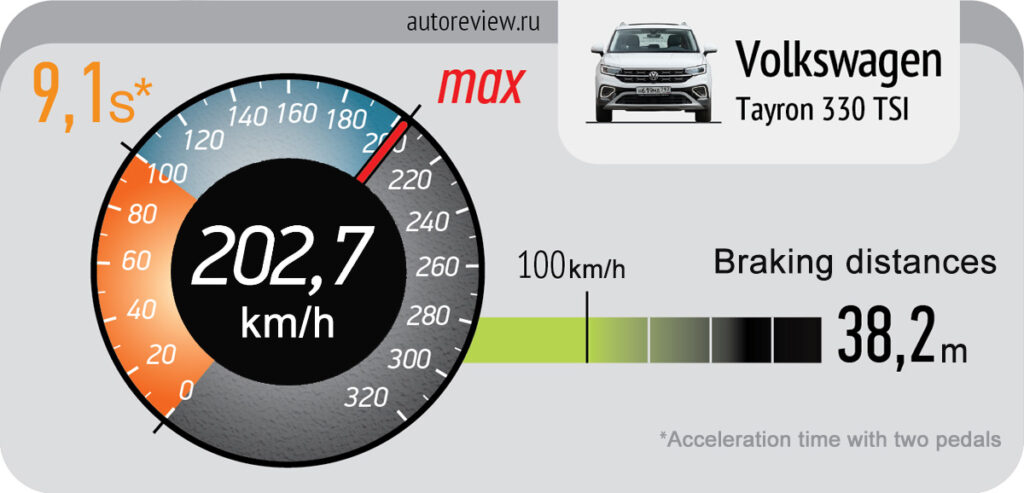
With traction control (“ASR”) switched off, pressing both pedals triggers “Launch control activated” on the display. The engine revs to 3,300 rpm, and releasing the brake sends the Tayron forward with squealing front tires — though the electronics intervene somewhat abruptly, cutting fuel supply as the yellow traction-control light flashes. Even with a couple of tenths lost to this intervention, the Tayron came close to its official claim, hitting 100 km/h in 9.1 seconds. Without launch control, a standard start consistently lands around 10 seconds. Top speed, limited electronically, reached 202.7 km/h (212 km/h on the speedometer) — plenty for a family crossover, with Stage 1 and Stage 2 tuning available for those wanting more.
Key Test Results at a Glance
- Top speed: 202.7 km/h
- 0-50 km/h: 3.6 s
- 0-100 km/h: 9.1 s (with launch control) / 9.7 s (standard start)
- 0-150 km/h: 19.4 s
- 0-200 km/h: 48.1 s
- Standing 400 m: 16.6 s
- Standing 1,000 m: 29.9 s
- 60-100 km/h (D): 4.9 s
- 80-120 km/h (D): 6.1 s
- Braking distance from 100 km/h (cold brakes): 38.2 m, deceleration 10.1 m/s²
- Roll-out from 50 km/h: 831 m
- Roll-out 130-80 km/h: 1,169 m
- Roll-out 160-80 km/h: 1,765 m
Braking and Tires: Room for Improvement
One area worth watching is the factory-fitted tires: the Tayron rides on Korean-branded Hankook Ventus S1 evo3 SUV tires, but their “Made in China” origin suggests a simplified rubber compound. Initial wheel spin, and more notably, underwhelming braking performance, support this impression. The braking distance from 100 km/h came out at just over 38 meters, compared with just over 35 meters for the Tiguan and Kodiaq on Continental and Pirelli tires, respectively. A tire upgrade would be our top recommendation.
On a brighter note, the ABS performs flawlessly, and braking in normal driving conditions feels natural and predictable. The brake pedal is responsive, with a nearly linear relationship between pedal pressure and deceleration.
Steering and Handling: Where the Tayron Differs from the Tiguan
What makes any Volkswagen enjoyable to drive is well-tuned steering, and the Tayron doesn’t disappoint here: responsive, precise, and free of unnecessary abruptness. The steering wheel communicates clearly what the front wheels and the car as a whole are doing.
In everyday driving, the handling matches the benchmark for the crossover class. But push it near the limit, and the Tiguan’s trademark playfulness is missing. Where a Tiguan can carve mountain roads quickly and sharply with controlled slip, even with stability control fully active, the Tayron loses momentum through its steering instead. A sharp steering input near the cornering limit noticeably cuts speed, and simulating a routine lane change produced an unexpected veer paired with abrupt braking. Rather than gently slowing a single wheel, the stability system engages two or three wheels at once, cutting speed by as much as half.
The suspension holds no surprises: pleasant damping over asphalt undulations, with an overall average comfort level typical of the segment. Vibrations do come through on seams and joints, and rough, uneven dirt roads aren’t a place to rush — much like any Tiguan.
Volkswagen Tayron Price and Trim Lineup
- Tayron 280 TSI (150 hp, front-wheel drive): from 3.6 million rubles
- Tayron 330 TSI (186 hp, front-wheel drive, as tested): from over 4 million rubles
- Tayron 380 TSI (220 hp, all-wheel drive): over 5 million rubles
Verdict: Is the Volkswagen Tayron a Worthy Tiguan Substitute?
Overall, the Volkswagen Tayron holds up as a genuinely worthy Tiguan substitute — offering more interior and cargo space, familiar Volkswagen driving manners, a well-equipped cabin, and full English-language infotainment with wireless Apple CarPlay. Its weak points are minor: unconvincing faux leather, a few missing comfort options, so-so factory tires, and slightly less playful handling at the limit. For buyers who want Tiguan-like practicality with extra room, it’s a compelling choice.
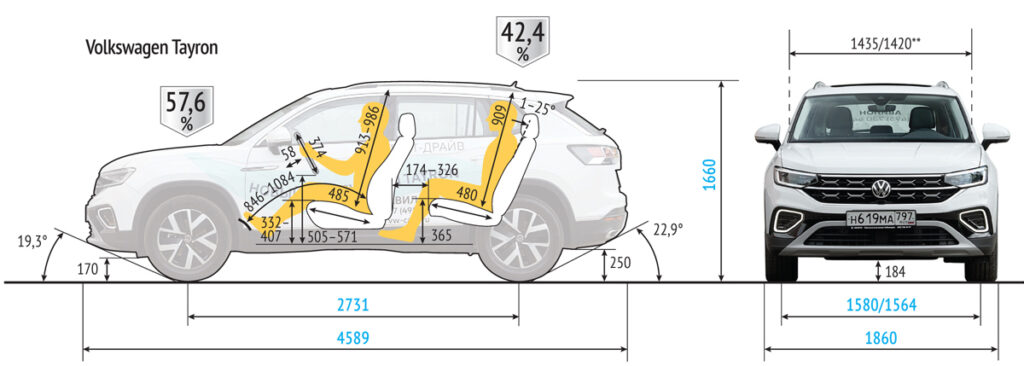
Manufacturers’ data are highlighted in blue/Autoreview measurements are highlighted in black. Dimensions are in millimeters.
*Actual vehicle weight without driver, with full fuel tank and full process fluids
**Interior width at shoulder level in the first/second row of seats.
Volkswagen Tayron 330 TSI: Full Specifications
- Body type: Five-door station wagon
- Seats: 5
- Trunk volume: 506-1,590 l (with 2nd row seats folded)
- Curb weight: 1,730 kg
- Engine: Gasoline, direct injection, turbocharged
- Engine location: Front, transverse
- Cylinders: 4, in-line
- Displacement: 1,984 cm³
- Valves: 16
- Max. power: 186 hp / 137 kW at 4,100-6,000 rpm
- Max. torque: 320 Nm at 1,500-4,050 rpm
- Transmission: 7-speed preselective robotic (DSG)
- Drive: Front-wheel drive
- Front suspension: Independent, spring, McPherson
- Rear suspension: Independent, spring, multi-link
- Front brakes: Ventilated discs
- Rear brakes: Discs
- Tires: 235/55 R18
- Top speed: 210 km/h (claimed)
- 0-100 km/h: 8.7 s (claimed)
- Fuel consumption: 9.3 l/100 km (urban) / 6.2 l/100 km (suburban) / 7.3 l/100 km (mixed)
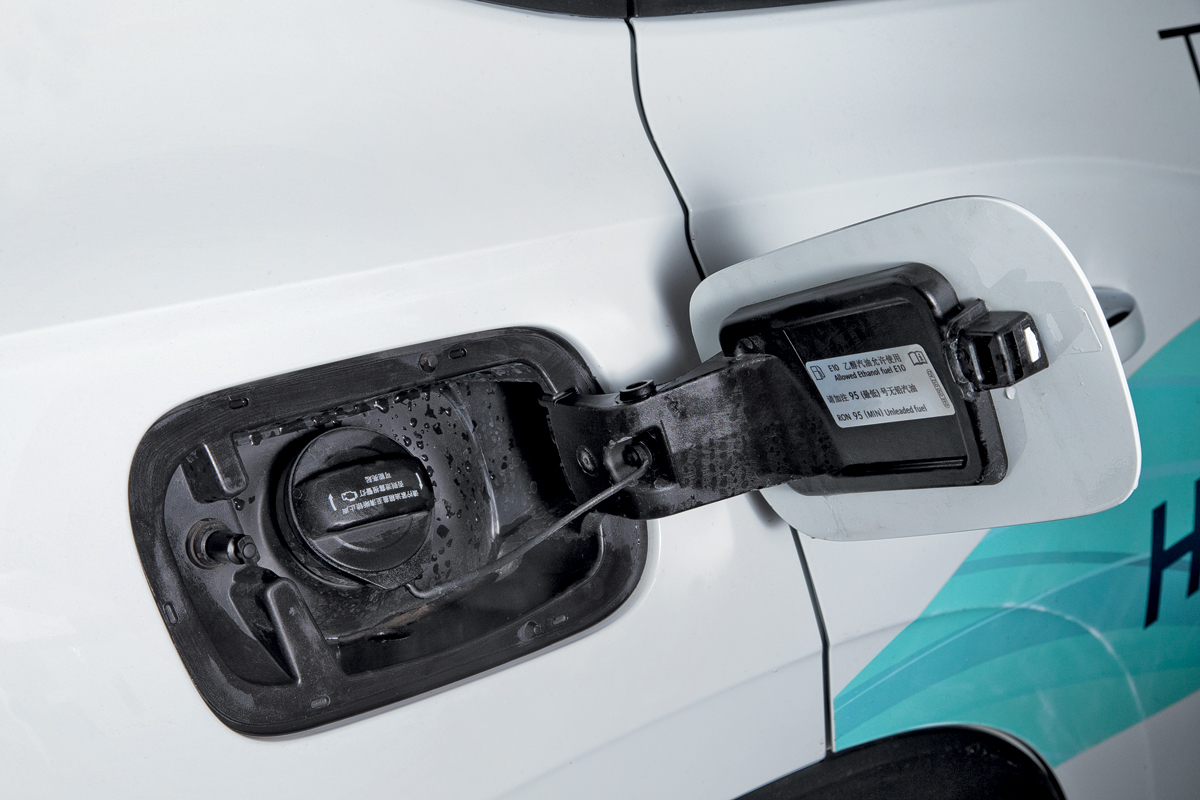
- Fuel tank capacity: 63 l
- Fuel type: Gasoline, AI-95
Photo: Dmitry Pitersky
This is a translation, you can read an original article here: Тигуанозамещение: наши испытания кроссовера Volkswagen Tayron

Published September 27, 2023 • 10m to read