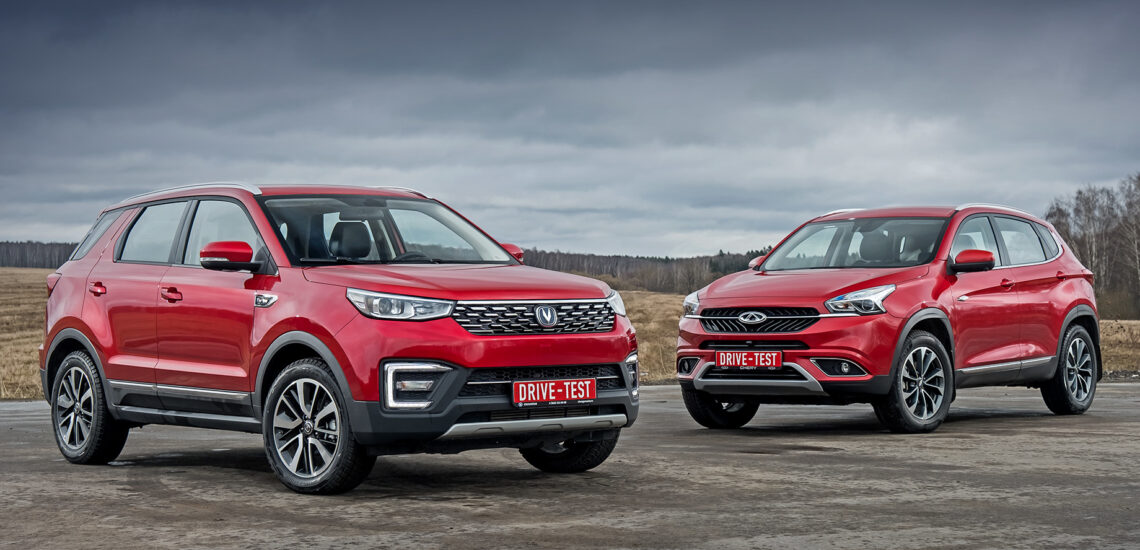

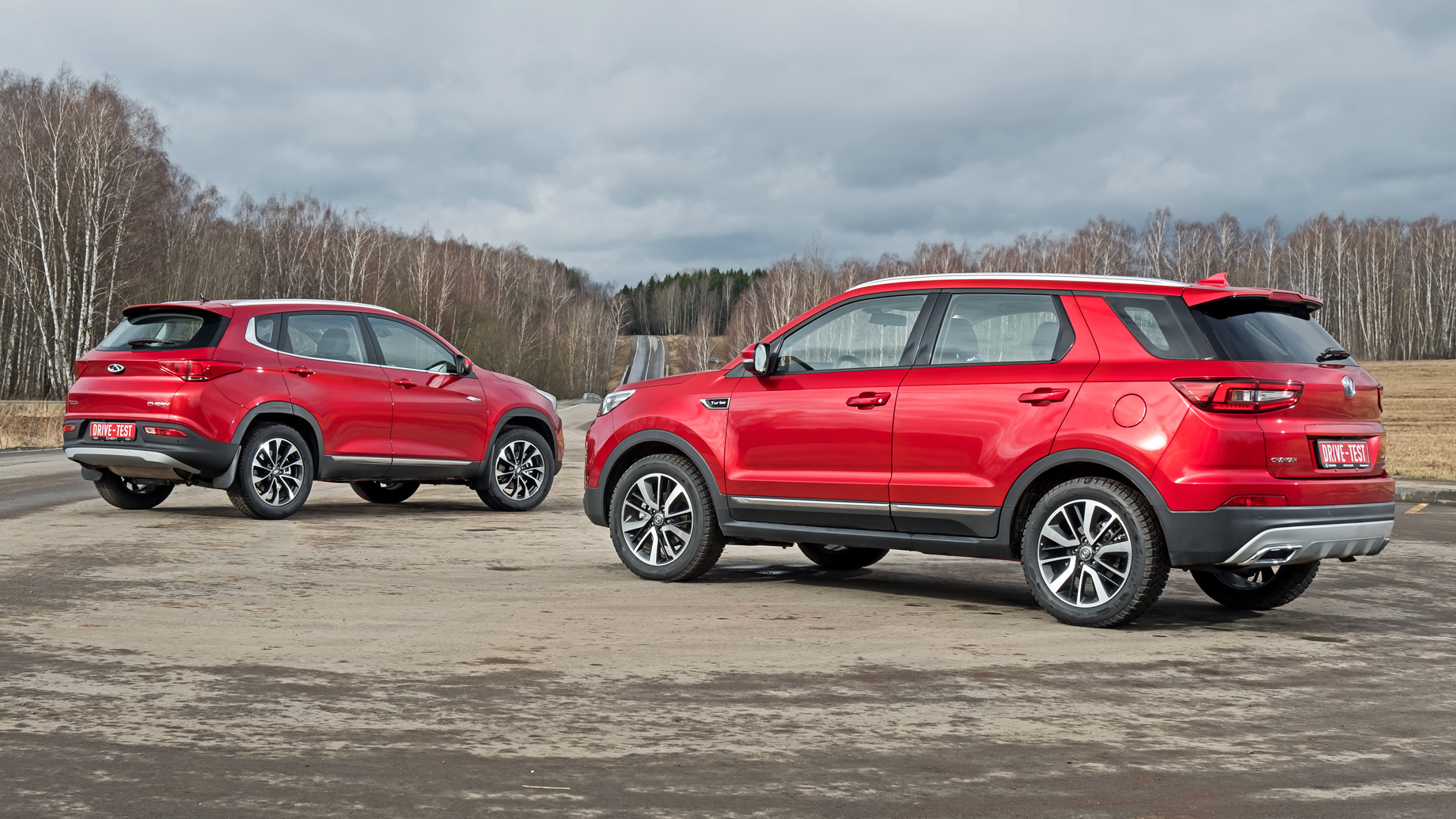
At first glance, the Changan CS55 and Chery Tiggo 7 look like they rolled out of the same factory. Similar dimensions, near-identical paint options, and matching plastic trim along the lower perimeter — yet the Chery comes in at a noticeably lower price. This comparison focuses on the top-spec, two-pedal versions of each model, reflecting real-world buyer behaviour: statistics show that buyers of Chinese vehicles overwhelmingly opt for higher trim levels over base configurations.
Exterior Design: Familiar Silhouettes, Different Execution
Cover the badge on the CS55’s grille and it could easily pass for a SsangYong or even a Kia. The sloping C-pillar gives the Changan a profile reminiscent of the Land Rover Discovery Sport. These aren’t direct copies — more like well-integrated nods to the broader language of the modern compact SUV. Not groundbreaking, but not dishonest either.
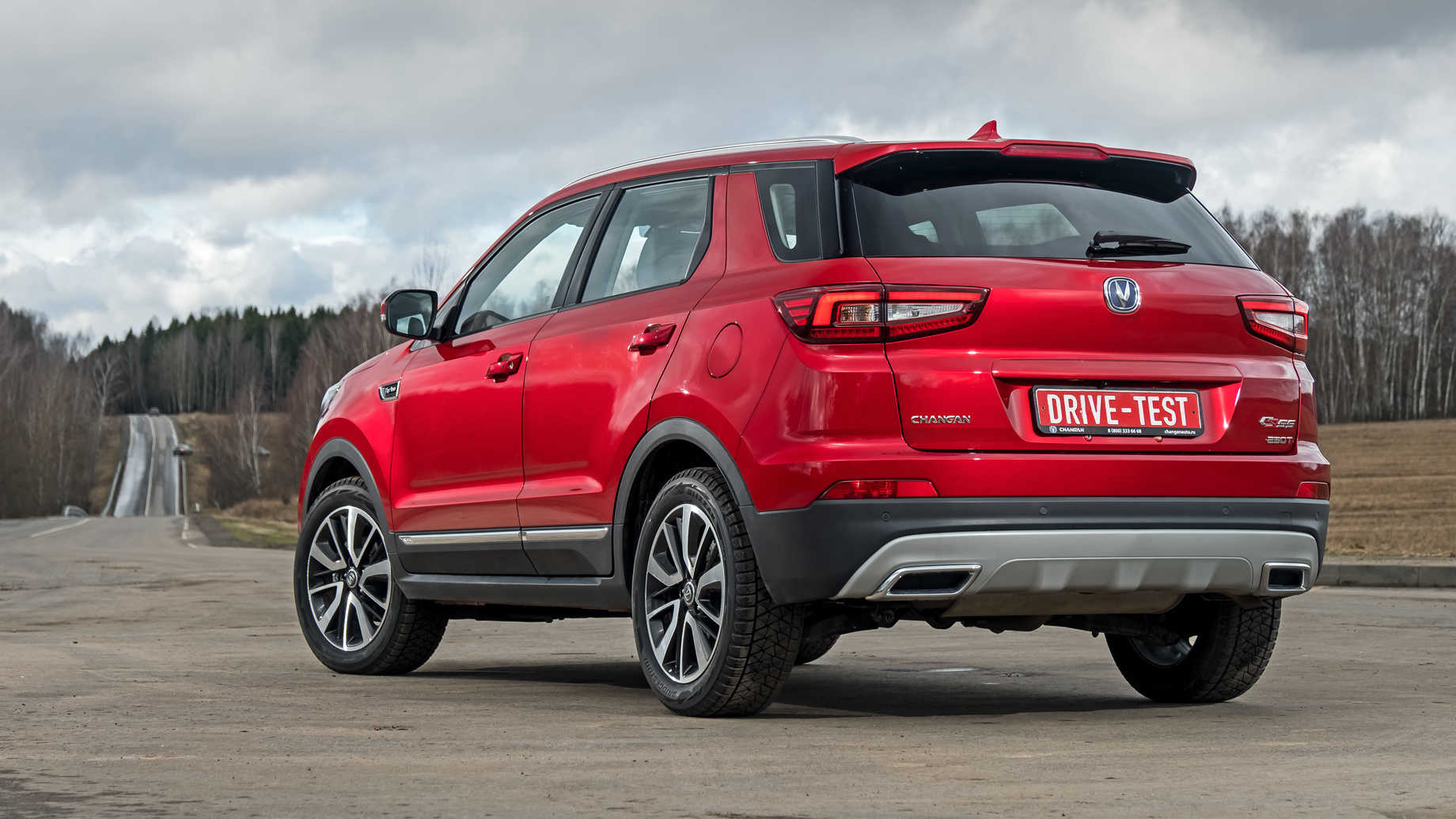
Where the two diverge is in build quality. The Tiggo 7, styled by former Chery designer James Hope, holds its own against Korean competitors in terms of fit and finish. The CS55, however, shows its shortcomings up close:
- Uneven gaps between doors and a slightly warped trunk lid
- Patchy pearl metallic paint with visible bald spots on body panels
- Unpainted inner edges on the bodywork — a telling sign of cost-cutting
Interior Quality and Ergonomics
The two cabins take noticeably different approaches to materials and layout. The CS55 interior features no fewer than seven distinct types of plastic on the front panel alone — ranging from reasonably premium to outright cheap. It’s part of why Changan refreshed the interior at home just 18 months after the model’s debut. That said, ergonomics are generally well thought out: the angled infotainment screen resists glare, and dual-zone climate control is logically organised — though the system tends to overcool on longer trips and takes a long time to warm the cabin after an overnight park.
The Tiggo 7 presents a more cohesive and consistently finished cabin. Highlights include:
- Higher and more consistent quality finishing materials throughout
- A large, well-integrated digital display flanked by analogue dials
- Auto mode available on all four power windows
- Front and side panel ambient lighting for night driving
- A more stable semi-automatic air conditioning system
However, the Tiggo 7 isn’t without its frustrations. The main USB port is buried in an awkward, hard-to-reach niche beneath the centre console — connecting a phone feels like a puzzle. And the glove compartment is left without any interior lighting.
Front Seat Comfort: Two Very Different Feels
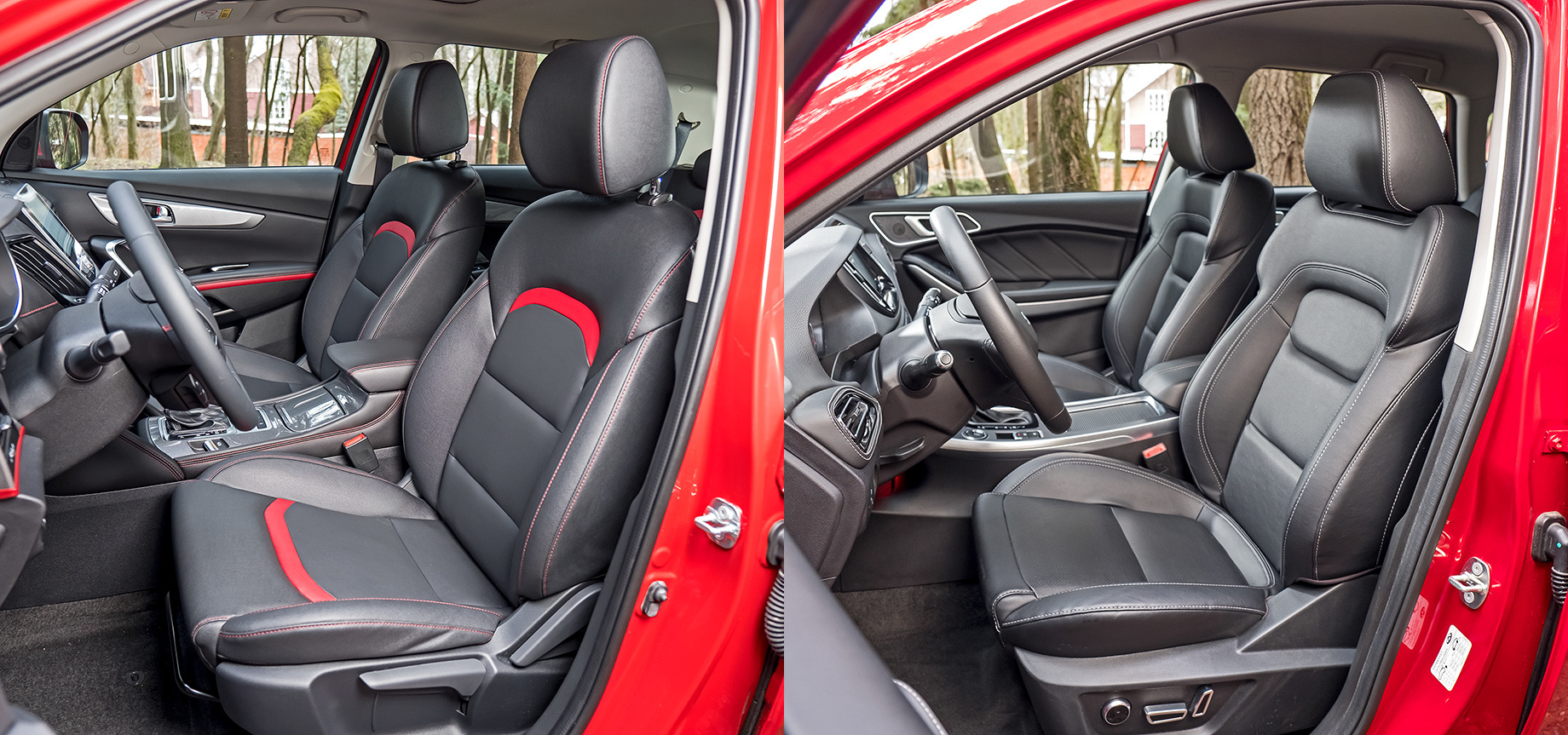
Seat character is one of the clearest dividing lines between these two crossovers. The CS55 front seats have denser foam, a longer cushion, and a better-contoured backrest — making them genuinely comfortable for longer drives. They also benefit from a steering column that adjusts for reach. On the downside, the upholstery is assembled from leather-look pieces of noticeably different shades, stitched together with inconsistent seams.
The Tiggo 7’s leather-trimmed seats in Elite and Elite Plus trims offer electric adjustment — a clear advantage — but the comfort story is more complicated:
- Padding is too soft and lacks proper lateral support
- The seat cushion is short, reducing under-thigh support
- The backrest has an arched shape that doesn’t suit all body types
- The steering column has no reach adjustment, limiting driving position options
- Wide A-pillars reduce forward visibility
Rear Passenger Space and Practicality
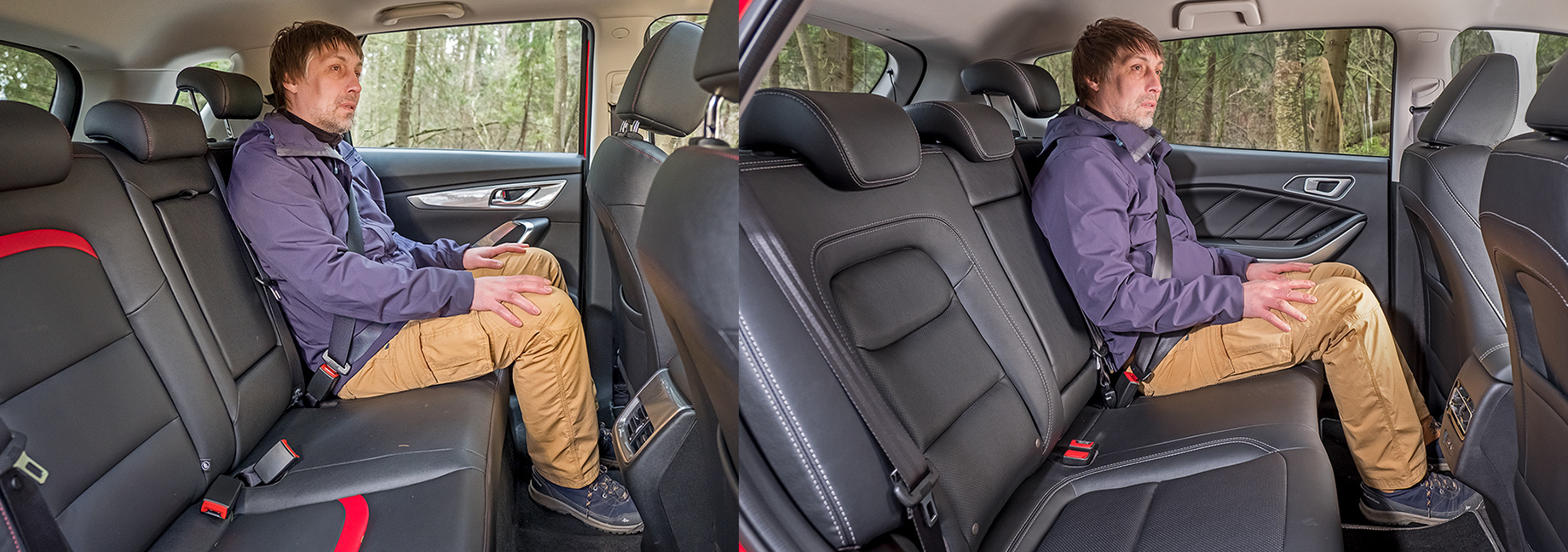
Both crossovers share an identical wheelbase, yet rear-seat space favours the Tiggo 7. In the CS55, the panoramic sunroof eats into headroom significantly — passengers above average height will notice. The rear bench also uses the same firm foam as the front seats, which is less welcoming for longer journeys.
Here’s how the rear experience compares:
- Changan CS55: USB port in the rear, less knee room, no seat heating, low ceiling due to sunroof
- Chery Tiggo 7: More headroom, two-stage rear seat heating (from Elite trim upward), no rear USB connector
Driver Assistance and Safety Technology
Both crossovers offer a respectable suite of tech features, but the Tiggo 7 has the broader package in this department.
Chery Tiggo 7 driver assistance features:
- 360-degree surround view system with blind spot monitoring near the front wheels
- Mirror-mounted cameras that activate automatically with the turn signal
- Cornering illumination that activates at night when the steering wheel is turned
- Both fog lights flash simultaneously to illuminate the full sector ahead of the bonnet
Changan CS55 driver assistance features:
- Single right-side camera, activated manually via a button near the gear selector
- Thinner A-pillars for better natural visibility
- Wider side mirror coverage
The Tiggo’s surround view system is a genuine asset in tight urban parking, even if picture quality is merely adequate. The CS55’s manual camera activation feels like an afterthought by comparison — but its naturally better visibility through the pillars partially compensates.
Engine and Transmission Performance
This is where the Changan CS55 establishes a clear edge. Its turbocharged engine is 21 hp and 30 N·m ahead of the Tiggo 7’s naturally aspirated unit, and that advantage is felt from partial throttle all the way to full acceleration. The automatic gearbox complements the engine well — gear changes are smooth and barely perceptible in normal driving, though kickdown responses come with a 2-second lag while the gearbox makes up its mind.
The Tiggo 7’s powertrain situation is, frankly, puzzling. The entry-level model with a manual gearbox uses a modern 1.5-litre turbo producing 152 hp — but the pricier CVT-equipped versions revert to an older 2.0-litre naturally aspirated engine developing just 122 hp. Buyers paying more get less performance.
The CVT itself has a split personality:
- Eco mode under hard acceleration: The engine drones at a fixed rev, sapping any sense of urgency
- Sport mode: Reduces throttle-to-acceleration lag and suits overtaking, but feels harsh in stop-start traffic
- Standard mode at a relaxed pace: Smooth and unobtrusive — the Tiggo 7 shines when driven calmly
- Low-rev crawl: The transmission shudders slightly, as if the torque converter clutch is misbehaving
Ride Quality and Handling
The CS55 delivers one of the biggest surprises of this comparison: its suspension is simply excellent. Potholes, tram tracks, broken asphalt — the Changan absorbs them with a composure that makes the road surface feel almost irrelevant. Only the largest obstacles require active avoidance. The trade-off is handling: in dynamic cornering, the CS55 rolls heavily and understeers early, with the stability system intervening quite aggressively.
The Tiggo 7’s chassis was developed with input from a Lotus-affiliated engineering firm — and the influence is detectable in the graduated body roll and progressively weighted steering. But the execution is unfinished in places:
- The electric power steering is inconsistent at small angles — sometimes too heavy, sometimes too light
- The ride on rough roads is notably harsh, particularly over transverse bumps and tram tracks
- Standard 18-inch wheels on all trims (including the base Sport) amplify road noise and impacts
What the Upcoming CS55 Update Changes — and What It Doesn’t
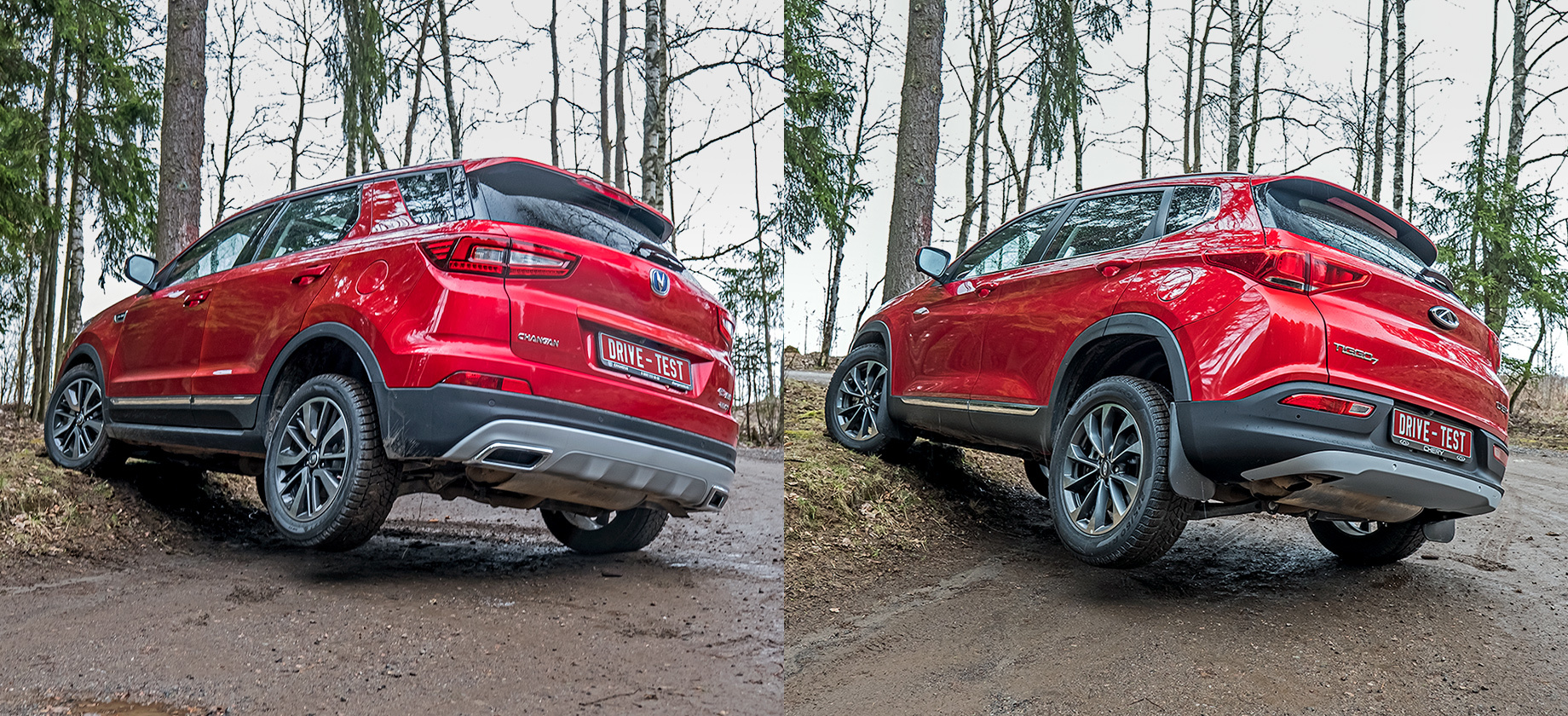
A refreshed version of the CS55 was on the horizon at the time of this test, but official details were thin. Changan confirmed changes to the exterior, interior, and the addition of the all-electric E-Rock variant. No chassis improvements were announced — meaning the restyled CS55 will carry forward both the excellent ride quality and the uninspiring handling dynamics of the outgoing model. Restyled units were not expected to reach the market before winter, leaving the tested specification on sale until year’s end.
Verdict: Which Chinese Crossover Should You Choose?
Both crossovers have genuine strengths, but they suit different priorities. Here’s a quick summary of what each does best:
Choose the Changan CS55 if you want:
- Superior ride comfort on imperfect roads
- A more powerful and responsive engine
- Better front seat support and driving position
- Stronger overall driving dynamics (within their modest limits)
Choose the Chery Tiggo 7 if you want:
- Better build quality and more consistent interior materials
- A more comprehensive driver assistance package
- Rear seat heating and more rear headroom
- A lower purchase price for comparable equipment levels
- Winter essentials (heated steering wheel, heated windshield, heated rear seats) included from Elite trim
The Tiggo 7’s Luxury trim offers equipment broadly comparable to the top CS55 at roughly $4,000 less. That gap is hard to justify unless you specifically value the Changan’s ride comfort and engine performance — which, to be fair, are genuinely impressive for the segment. But until Changan addresses the paint and assembly issues on the CS55, and adds a heated steering wheel and windshield to the top trim, the value equation remains tilted toward Chery.
This is a translation. You can read the original here: https://www.drive.ru/test-drive/changan/chery/5e7b50fcec05c4fa45000014.html

Published January 12, 2023 • 8m to read