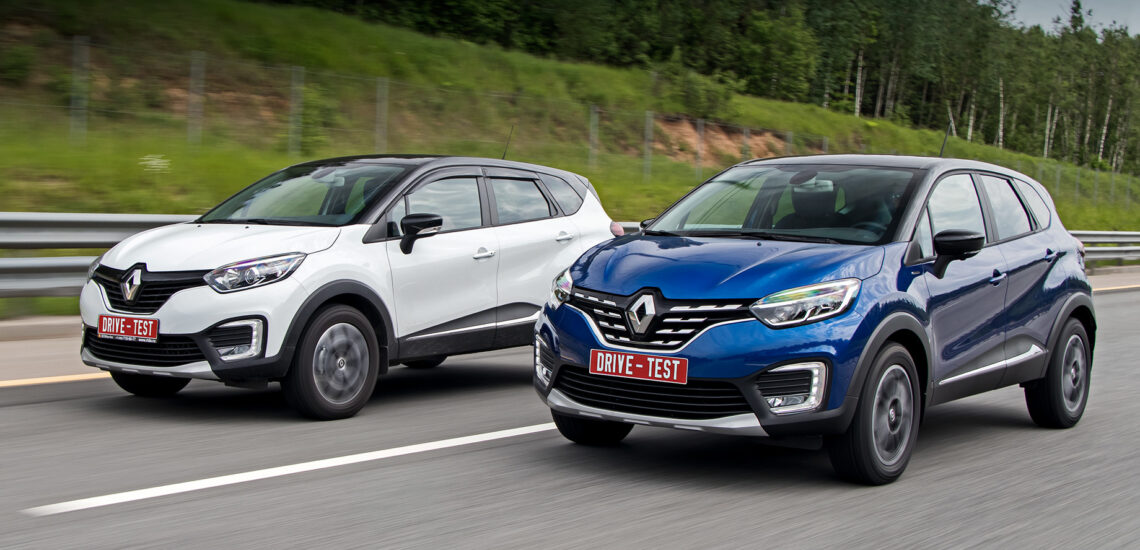

When the Renault Arkana launched, it was already clear that the Kaptur would soon follow with an upgraded platform — one that ties it to the next-generation Duster. The restyled Kaptur’s adapted chassis retains its signature smoothness, and we put it to the test side by side with the pre-facelift model. To keep things honest, I brought along a colleague with hands-on engineering experience at Renault, plus a camera crew to document everything.
What Owners Are Saying About the New 150 TCe Engine
Before publishing, we opened up the floor to audience questions to build a more complete picture. Instead of questions, we got an earful — commenters were overwhelmingly critical of the new 150-horsepower 1.33 turbocharged engine paired with a CVT (continuously variable transmission). The core concern: will this combination hold up as reliably as the naturally aspirated 2.0-litre engine with its conventional automatic gearbox?
Long-Term Test: Can the CVT Prove Its Critics Wrong?
We’ll have a definitive answer after completing a full-year test — the longest we’ve ever had with a single car. A year in our hands is worth at least three in those of a careful private owner, possibly five. If the CVT really is a weak point, it won’t take long to find out. For now, the immediate impression is clear: the updated Kaptur is simply easier and more pleasant to drive.
Engine and Transmission: 2.0 Automatic vs 1.33 Turbo CVT
The pre-facelift 2.0 arrived a couple of days before the comparison drive, giving me time to reacquaint myself with it over a full tank. The verdict on its four-speed automatic: it’s neither fast-shifting nor particularly linear in its responses. The modern CVT in the updated Kaptur delivers far more precise traction control. Key differences in performance figures:
- Torque: 250 N·m on the 150 TCe vs 195 N·m on the 2.0 atmospheric
- The turbo’s power band is significantly wider, making overtaking far less of an event
- 0–60 mph: the updated Kaptur is about two seconds quicker — but the real-world advantage is even more pronounced in rolling acceleration
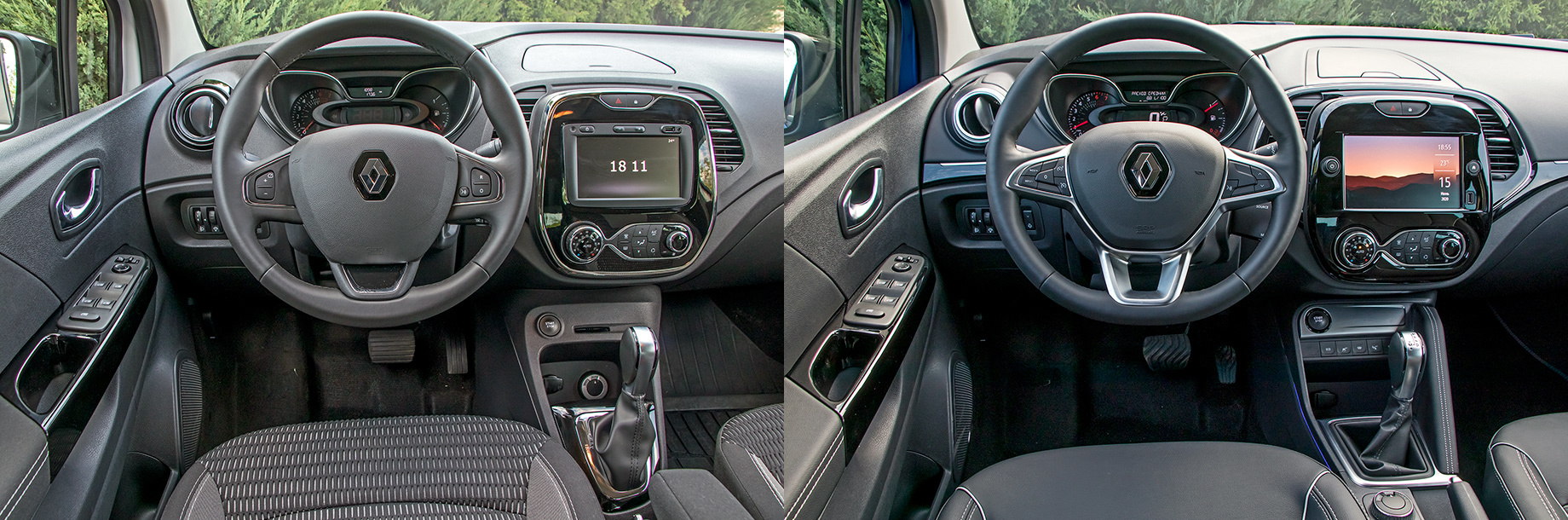
Paired with a lighter, vibration-insulated steering wheel, the new powertrain creates an overall impression of a more responsive and comfortable everyday car. The updated interior is considerably more ergonomic, though trim material quality remains a step behind the competition.
Ride and Handling: Facelift vs Pre-Facelift on Real Roads
There’s one area where the older 2.0 still holds an edge: suspension compliance over sharp bumps. The pre-facelift model handles speed humps with greater confidence at higher speeds.
- Pre-facelift 2.0: can clear speed bumps comfortably at up to 37 mph
- Updated 150 TCe: you’ll want to drop to around 31 mph for the same obstacles
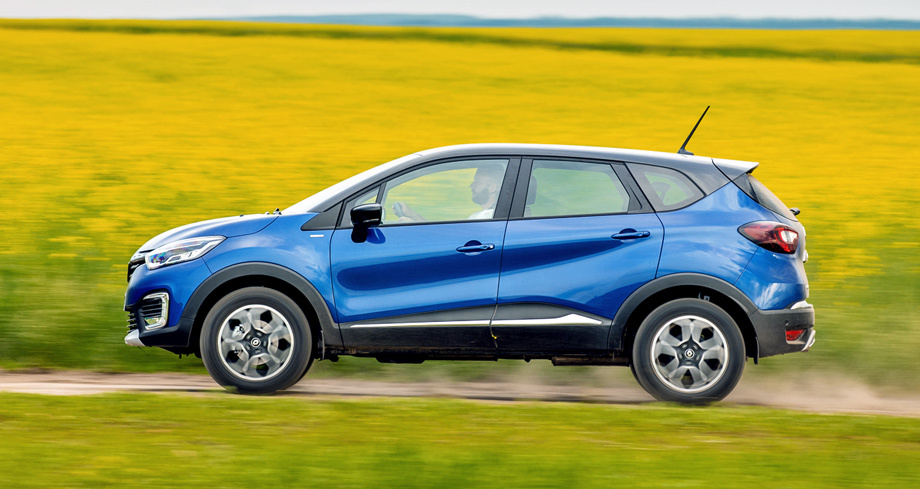
That said, both remain remarkably comfortable on rough country roads — territory where something like the Arkana, tuned for a sportier feel, simply batters through on brute force. For a high-riding crossover, the Kaptur’s handling is genuinely respectable: body roll is well-controlled, and the updated model noticeably reduces low-frequency pitching compared to the 2.0.
Steering Feel: A Trade-Off Worth Making?
The 17-inch wheels on the updated model do pick up slightly more texture from small road imperfections, but the steering wheel stays almost entirely free of that feedback — a deliberate trade-off. The light weighting takes a little adjustment at motorway speeds; sweeping highway bends require some searching for the right steering input rather than an immediate sense of connection. Within a day of driving, however, you adapt — and the pre-facelift’s weightier wheel starts to feel unnecessarily loaded by comparison.
There’s still room for improvement in the electric power steering tune. Specifically:
- The on-centre feel lacks a well-defined neutral position
- Return torque at high lateral loads could be more progressive
- Steering feedback doesn’t change meaningfully between a relaxed arc and a committed corner entry
None of this will bother the typical Kaptur buyer. The headline benefit is that parking now takes two fingers — and that’s exactly what most people want.
Off-Road Capability: Does the Facelift Keep Up?
Our off-road route wasn’t the most demanding, but both Kapturs handled patchy, muddy tracks without breaking a sweat. If anything, the updated model had the upper hand: the steering wheel didn’t fight back over rough ground, and throttle response was precise enough to exploit the turbo engine’s extra torque without unnecessary wheelspin.
There’s one important caveat for those who want to push further. The CVT’s pulley-based design is not a friend to serious off-road use. If you see the Kaptur primarily as a rugged, Duster-adjacent machine, that’s worth factoring into your decision before heading for the deep stuff.
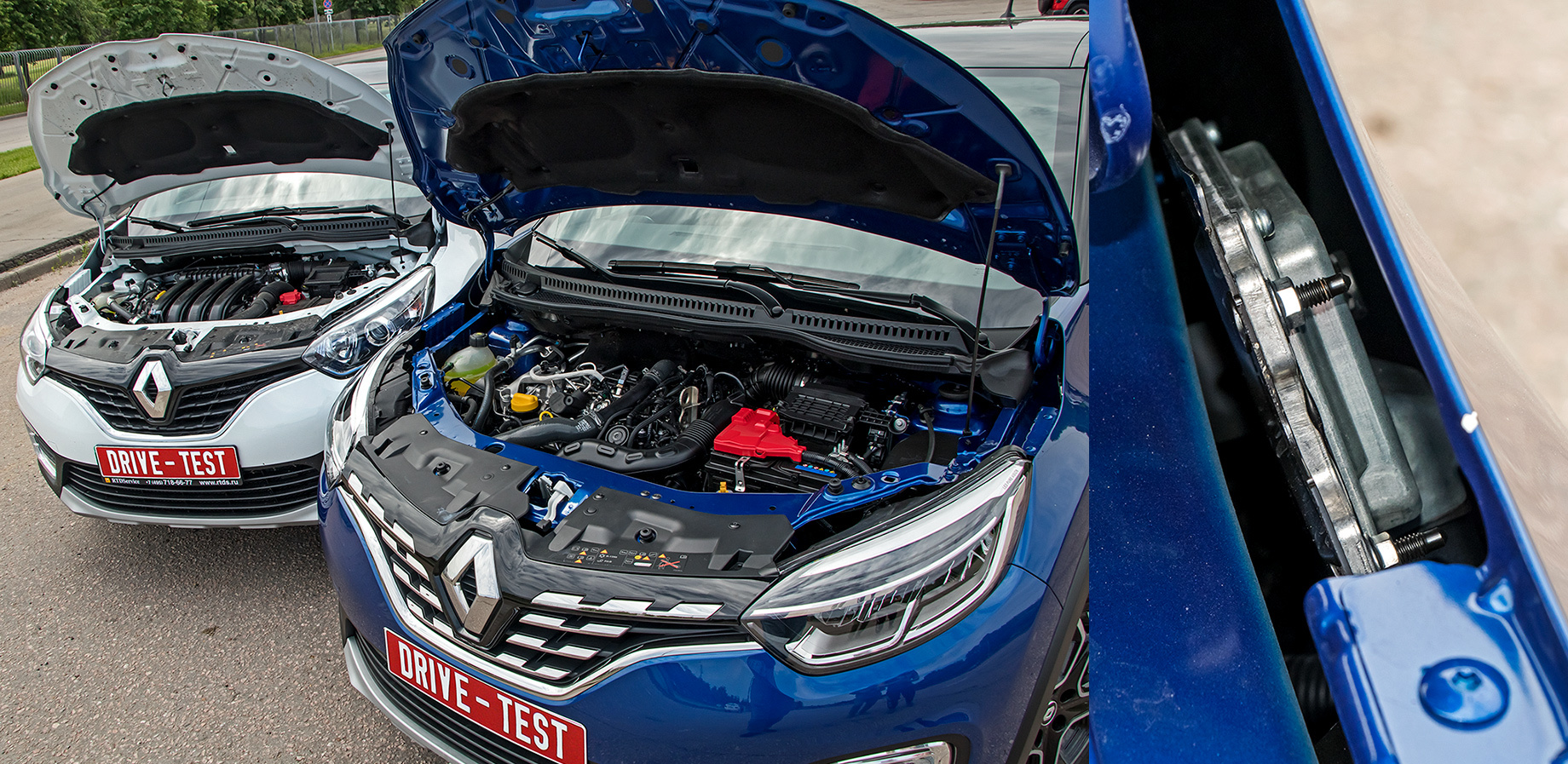
The Manual Gearbox Question: Is the 2.0 MT6 Gone for Good?
For buyers who specifically wanted the 2.0 with a manual gearbox, the window is closing fast. Dealer stock will last a few months at most — and there’s no manual in the updated lineup, despite Renault having all the hardware to make it happen (the TL8 gearbox and the right gear ratios exist).
About a quarter of previous buyers chose the 2.0 MT6 4×4 configuration. Renault’s apparent theory is that many of them chose three pedals out of reluctance to live with the old automatic — not out of genuine preference. If the new CVT wins those buyers over, the manual may never return. But the market will decide. The Kaptur’s restyling is, after all, a direct response to customer feedback — and if demand for a stick shift is loud enough, Renault has the means to deliver.
Resale Value and Long-Term Ownership Costs
The update will almost certainly drive up used prices on the outgoing 2.0 automatic — good news for current owners. Even if the turbocharged CVT version proves fully reliable in first-owner hands, reselling it may be trickier thanks to lingering buyer hesitation.
Renault is fighting this perception effectively in the Arkana range, where the 150-hp versions are consistently the most popular. But the Kaptur attracts a different buyer profile — one more focused on:
- Post-warranty repair costs
- Long-term mechanical reliability
- Resale liquidity
Servicing a Mercedes-sourced engine and a CVT that requires relatively frequent oil changes is not for everyone. It wouldn’t be surprising to see the sales mix shift towards the 1.6 variants — where the facelift brings meaningful improvements at a lower price premium, with none of the reliability question marks.
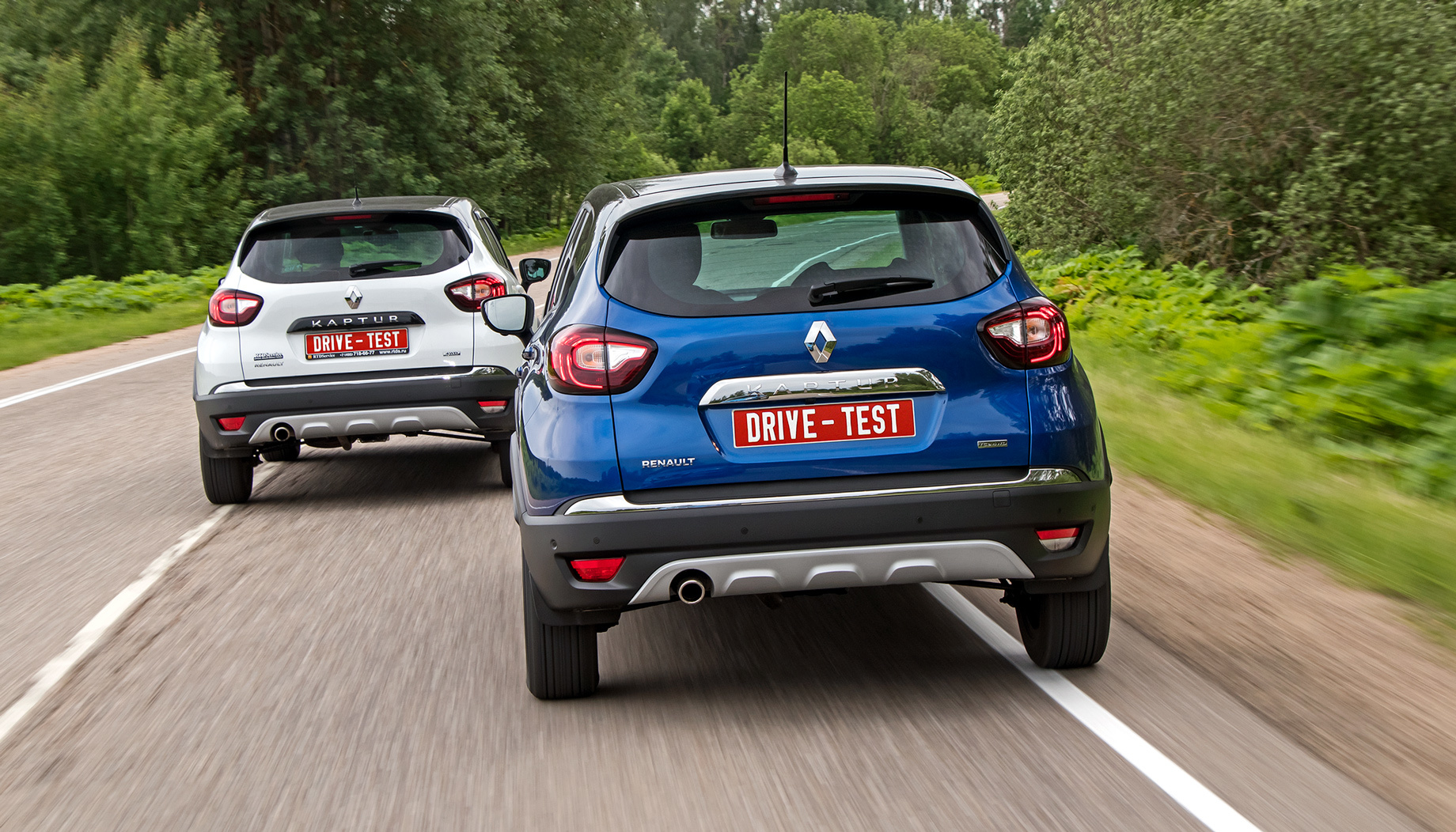
Verdict: Which Kaptur Should You Choose?
The updated 150 TCe Kaptur is the more refined, more capable everyday car. It’s quicker, more comfortable at the wheel, and better to live with in urban and motorway conditions. The CVT’s long-term durability remains an open question — one our year-long test will answer more convincingly than any short drive could.
- Choose the updated 150 TCe if everyday refinement, performance, and ergonomics are your priorities
- Choose the pre-facelift 2.0 if you value bump absorption at speed, mechanical simplicity, or plan serious off-road use
- Consider the 1.6 facelift if ownership costs and resale value matter most to you
This is a translation. You can read the original here: https://www.drive.ru/test-drive/renault/5eef8db3ec05c4bb52000000.html

Published November 24, 2022 • 7m to read