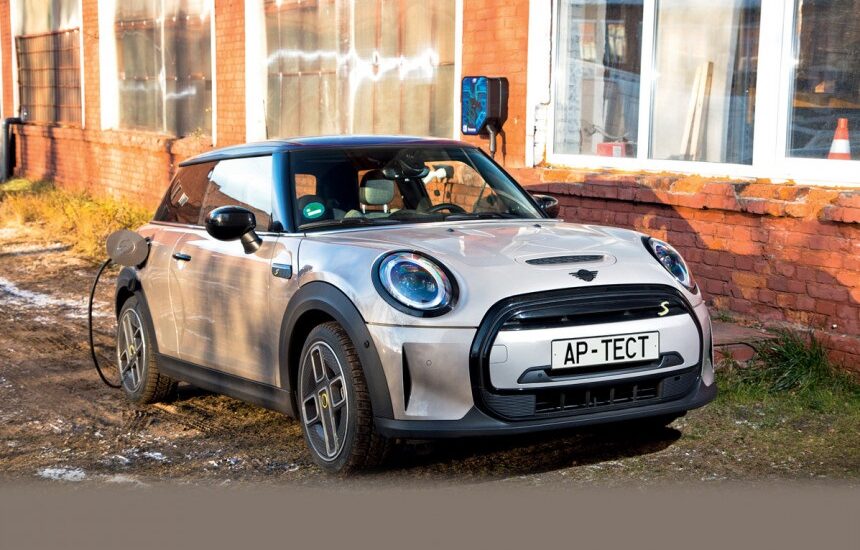

The Mini Cooper SE will do about 140 kilometres at zero degrees Celsius, and puts that range back at roughly 7.5 km for every hour on a standard 220-volt household socket. Against which there is one substantial mitigating factor: this vehicle is a Mini-Mouse, specifically a three-door model.
How I Got Hold of One
My pursuit of this car began after I told my colleagues I was ready to take on the Electric Dog column and write about electric cars not yet on sale in Russia. Encouraged by a first outing in a Peugeot e-208, I called on an Italian BMW and Mini dealer, planning to borrow the Mini Cooper SE for a couple of days and then the BMW iX, both cars being due on our market the following spring.
My return was less triumphant than I had hoped. The silicon crisis had forced dealers, under pressure from unhappy customers and trying to keep their businesses alive, to sell even their test-drive cars. Then, from snippets of company correspondence, I learned that the electric Mini I wanted was available for a two-week loan in Moscow, brought in from Germany.
So I flew out of Italy to seize the opportunity.
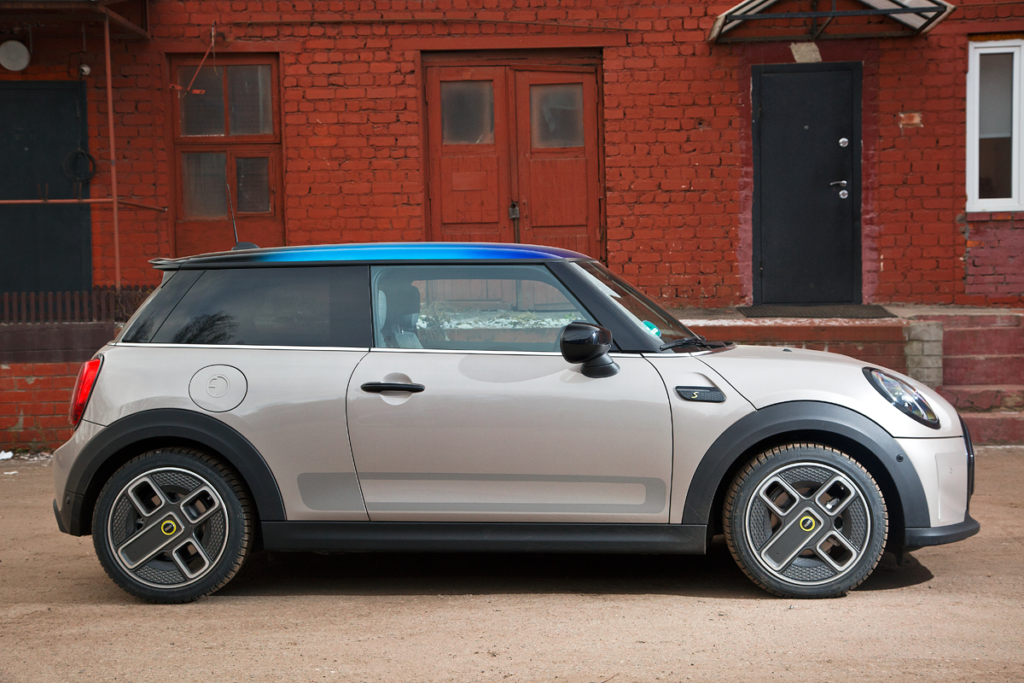
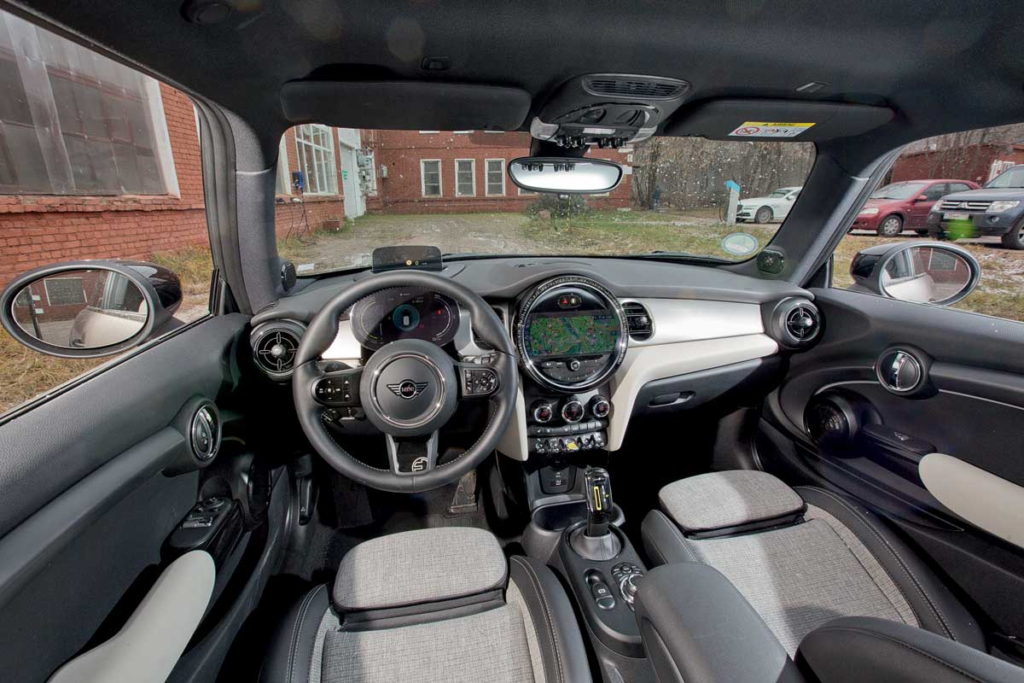
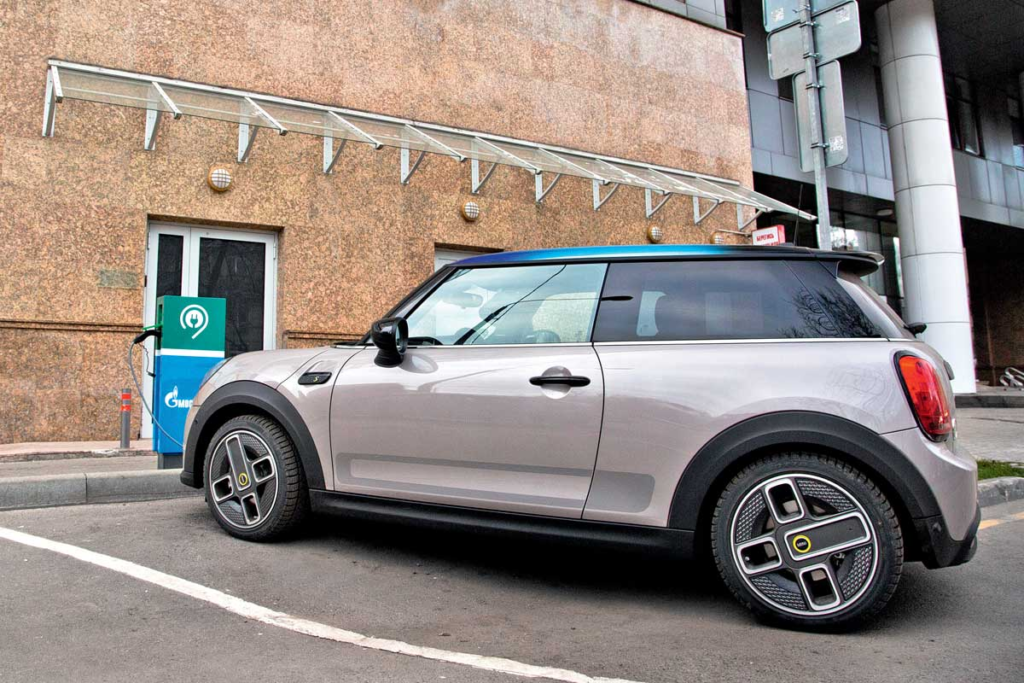
Visually the Mini Cooper SE is told apart from the other cars in the F56 body, of 2013 model year, by its own wheel rims, on top of the other decorative changes in the current post-facelift version.
One Pedal, and No Creep at All
The great revelation on the road was that this is the first grown-up electric car I have met with no creep mode whatsoever — not even buried in the deepest user settings, where releasing the brake pedal normally sets the car rolling at 7-8 km/h. One-pedal driving is taken here to its logical extreme, and it is brilliantly done.
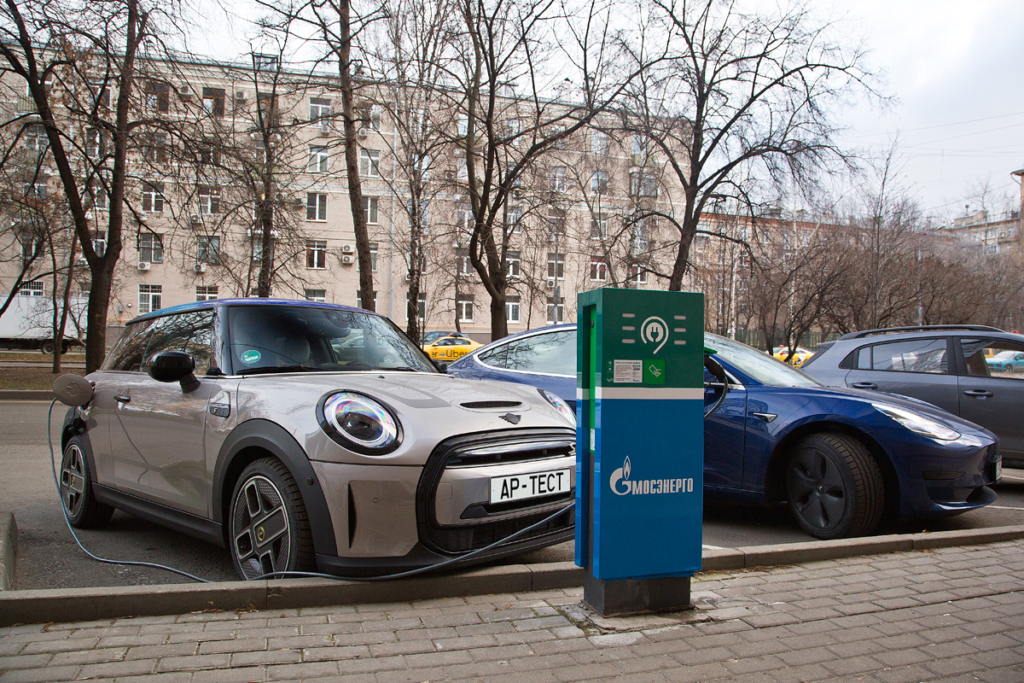
The regenerative braking is powerful, and the way it brings the car to a complete stop is so intuitive and predictable that I found myself enjoying a traffic jam for the first time in my life. I drove from the south-west of Moscow to the north without touching the brake pedal once. Inspired by the Mini, I even switched off the Creep mode on my Tesla Model 3.
Where Tesla Still Does It Better
I wish I had done that after publishing these lines — then the electric Mini might have had a chance of coming out ahead. In Hold mode the Tesla stops as though an FSO-trained professional were at the wheel, easing off the brakes at the last moment so there is no jolt at all. And where a stationary Mini commendably does not roll back on a hill, it will roll forward if you lose concentration; I nearly went into the back of a taxi. The Tesla does not roll.
The Adaptive Cruise Control, and Its Catch
Engage the Mini’s adaptive cruise control and it holds the car reliably on an incline too — but there is a catch. You quickly learn that once you have been stopped in traffic for more than three seconds you have to wake the cruise control up again, with the conveniently placed Res button under your left thumb. It is a way of asserting that you are engaged in the driving and consciously wish to proceed. I think that is an excessive precaution; hands on the wheel ought to be enough.
What I did appreciate is that, unlike the Tesla, the Mini in adaptive cruise reacts very calmly to drivers in the next lane who lean on the markings. The Tesla’s response, slowing to match the speed of the encroaching car, is irritating and sometimes forces you to take the speed back under manual control. The Mini does not so much as flinch. The trouble is that it reacts with exactly the same indifference, bordering on aggression, to a car that has moved fully into your lane in front of you. Occasionally it decides that following something slow is unacceptable and starts accelerating briskly with no warning at all. And the Mini — in this specification, at least — cannot change lanes, or even hold one properly.
Ah yes. A driver’s car indeed.
Acceleration and Steering
The acceleration is on a par with a petrol Mini Cooper S, and to leave no doubt about its willingness to reach 100 km/h in 7.3 seconds, the responses at the start of the pedal travel are sharply emphasised. I like it.
The handling, or more precisely the steering feedback, did not impress. I suspect it is not only the winter tyres but also that the electric assistance has been recalibrated for the extra 235 kg the car is carrying. At small angles the steering goes dishearteningly light, and Sport mode is no cure. Set it against a squirrelly Peugeot e-208 rather than a Tesla Model 3, though, and the understanding it gives you through the wheel — and especially through the brakes — is complete.
What the Owner’s Manual Says
I will not go into user settings in the style of “green vegetables,” nor send enthusiasts to the manual. I have read it myself, thankfully already available in Russian, and realised I had been too quick to mock the auto bloggers. A few quotations on the topics discussed above.
“Servotronic is a speed-dependent power steering system. At low speeds, steering effort is maintained stronger than at high speeds. This facilitates, for example, parking, and at high speeds, it makes handling more direct.”
That the translators and editors are not in the know is the lesser problem. But a hydraulic power steering system! What do you make of that, Elon Musk?
Or the description of Sport mode:
“Operating principle: Sequential sport setting of the drive for greater maneuverability while moving.”
How, exactly? Does the system switch to a different algorithm for active rear-wheel steering? Does it increase the maximum angle of the front wheels? Does it shorten the wheelbase?
And on adaptive cruise control:
“Operating range of the radar sensor. Camera recognition capabilities are limited. Therefore, warnings may be erroneous or delayed.”
Are we talking about the camera or the radar? What a curious book.
Charging Overnight: Twelve Hours
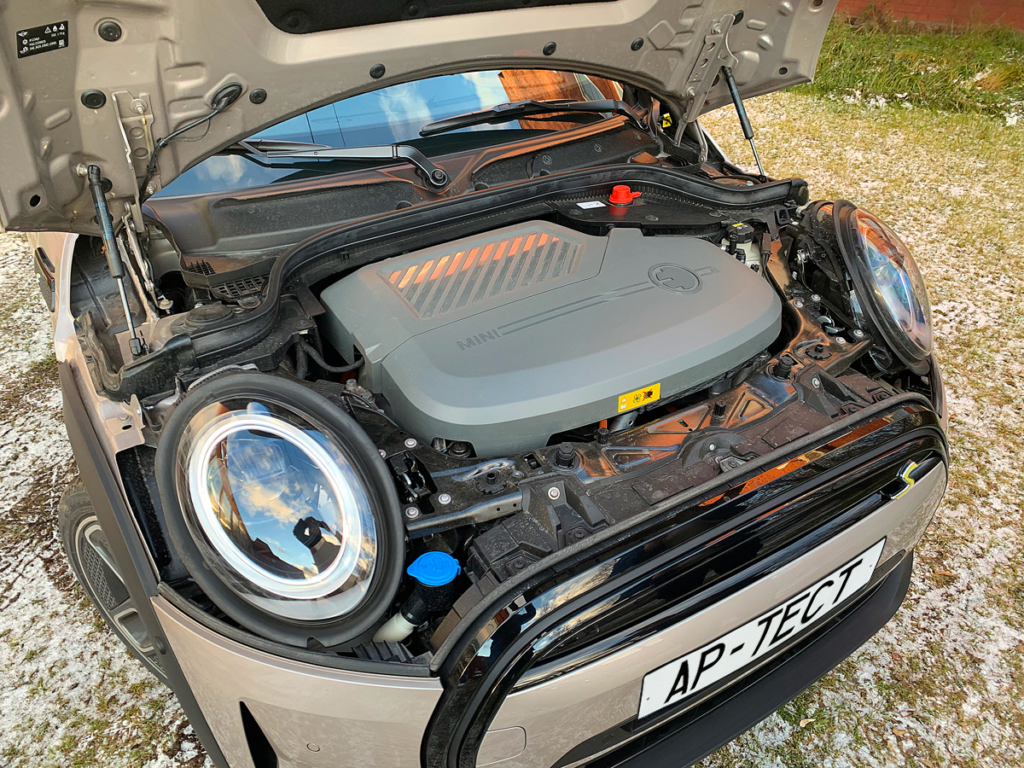
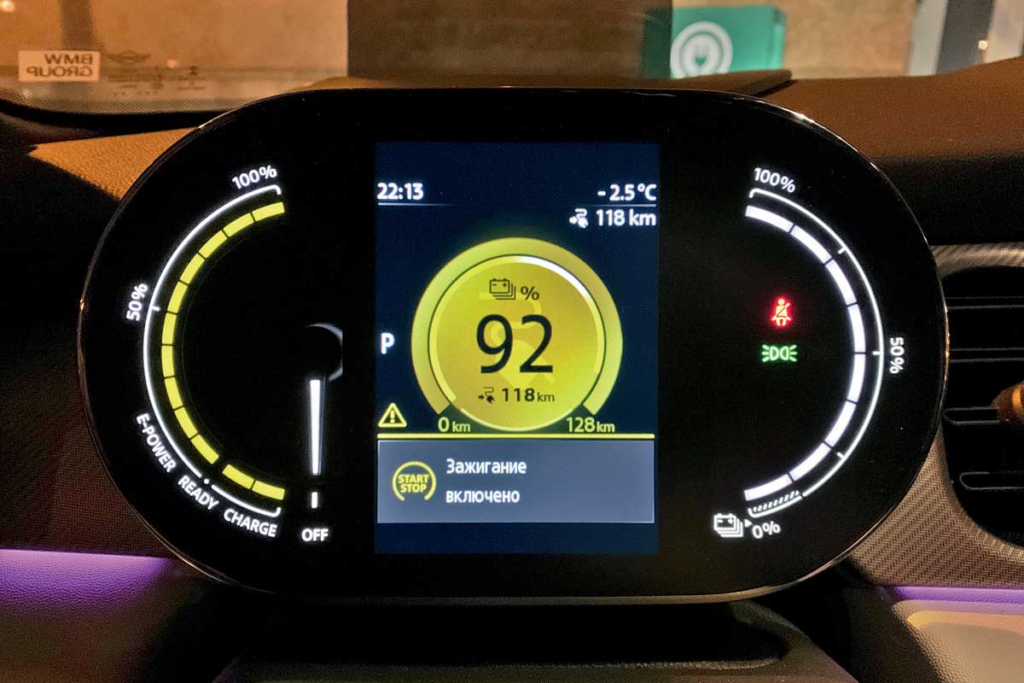
At half past midnight I drove into the underground garage with 36% charge, which the onboard computer reckoned was good for another 47 kilometres. I had a single-phase 220-volt socket at my disposal, and since that is enough to keep a nearly three-ton Tesla Model S with an 85 kWh battery in combat readiness, the Mini with its T-shaped 32.6 kWh battery ought to greet the dawn fully charged.
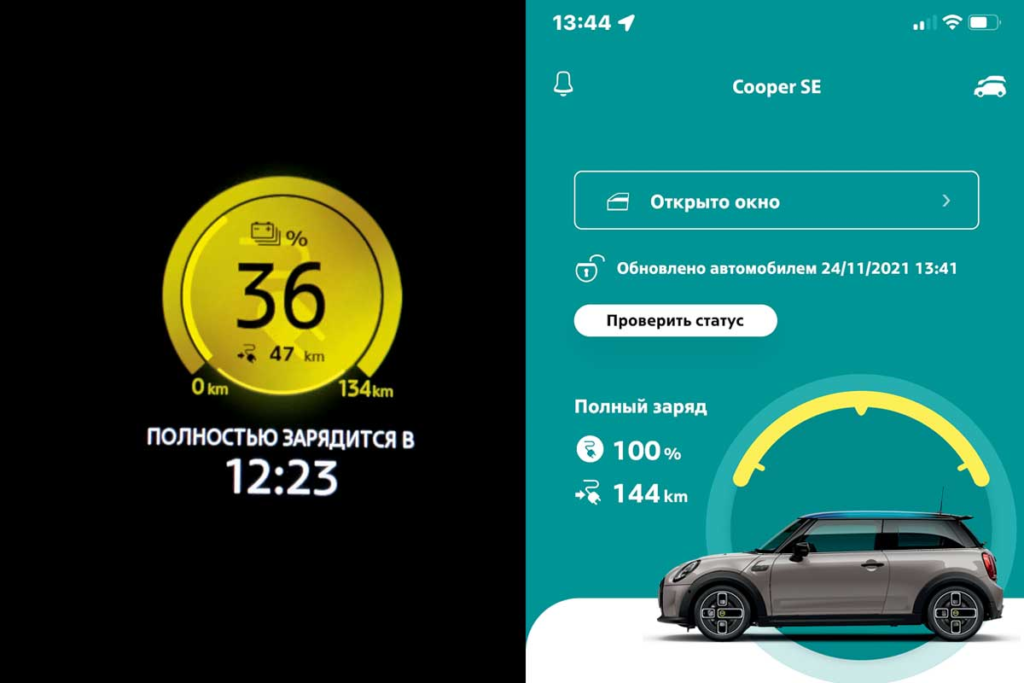
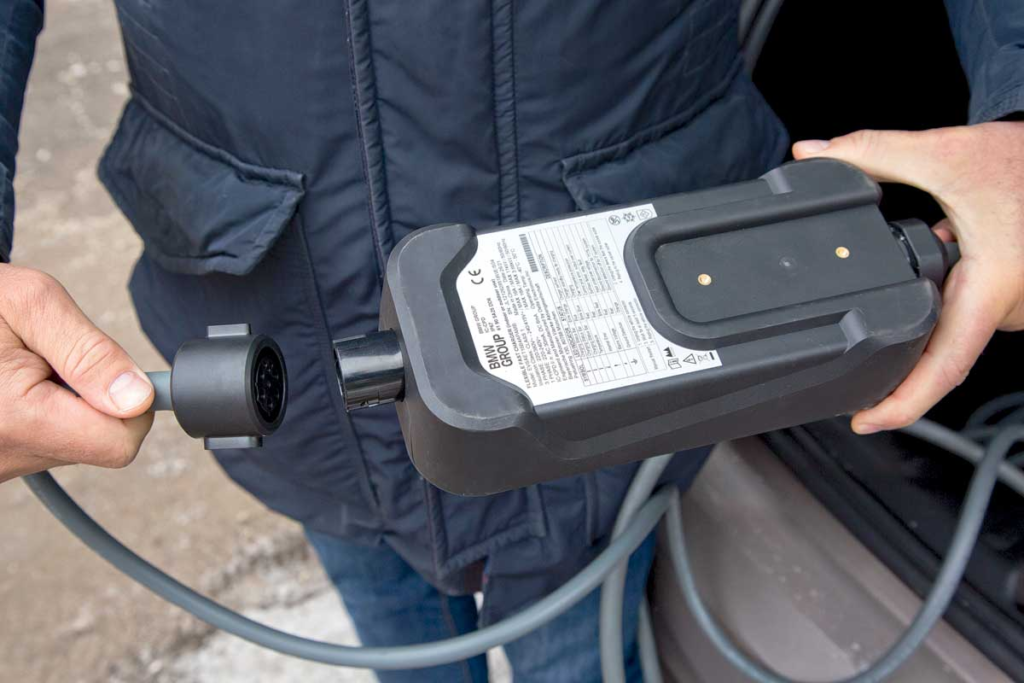
And what a convenient, versatile mobile connector it comes with. The cord running to the socket is not soldered into the unit but attached by a connector, so in seconds you can swap it for a cable with a plug for a more powerful blue single-phase socket, or a red three-phase 380-volt one. Better still, the charging does not draw on one phase but on all three, at 11 kW. There is no point splurging on a three-phase wall box. All that remained was to confirm through the menu that the car was set to charge at maximum speed, and…
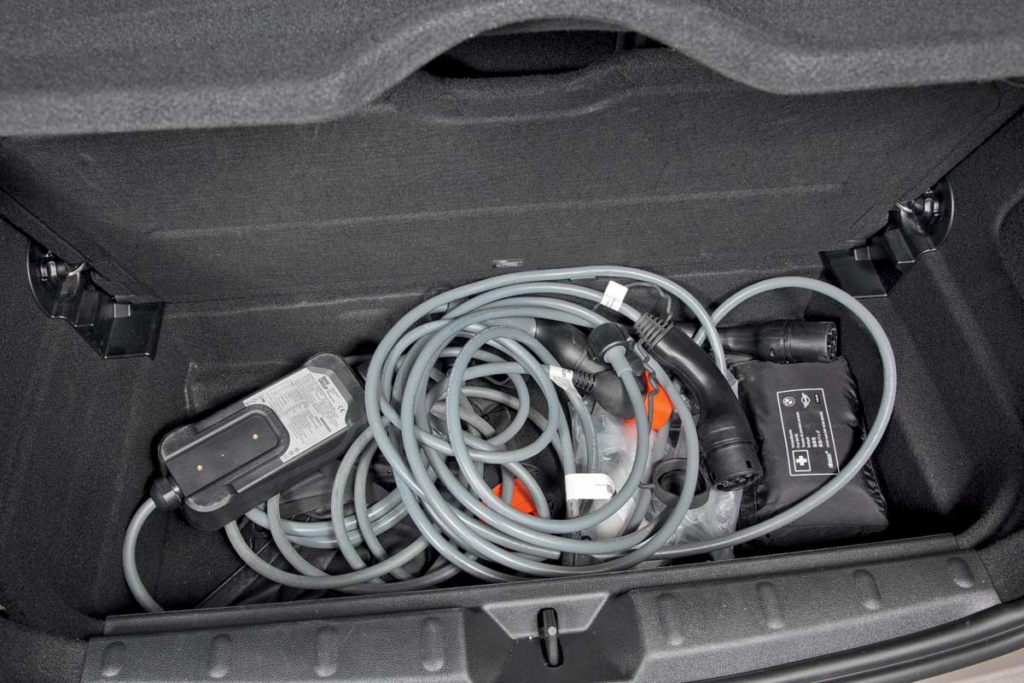
What nonsense is this? If the image on the matte instrument panel is to be believed — and what else is one to believe, certainly not the manual — a 100% range of 134 km will be reached in twelve hours. Twelve. Even allowing for the beer-mug effect, where the last 20% of the energy takes as long to pour in as the first 80%, and which is not noticeable here, that is daunting.
The Price, and the Verdict
And the final nail: expected prices of 3.6 to 4 million rubles. For a little over four million you could import a nearly new Tesla Model 3 from Germany — dual-motor, with autopilot — which would leave this little electric mouse, calling itself an electric car, with no ground at all to stand on.
Then again, unlike the Tesla, the Mini has:
- a head-up display
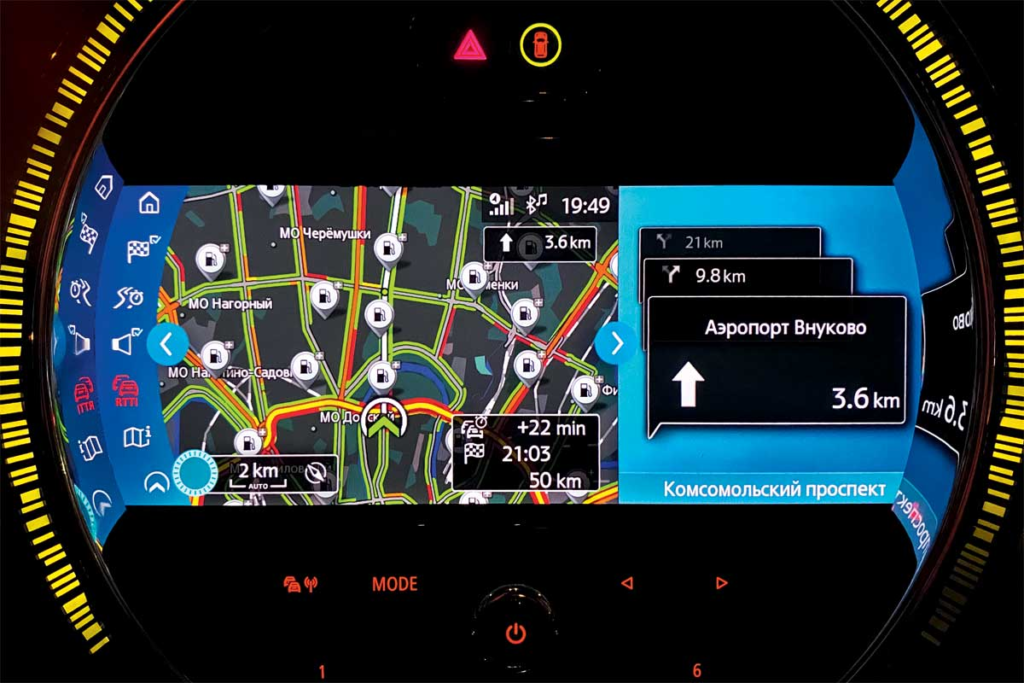
- standard navigation, on the Here mapping platform — BMW is one of its co-owners — which works in Russia
- Apple CarPlay, and with it a host of applications
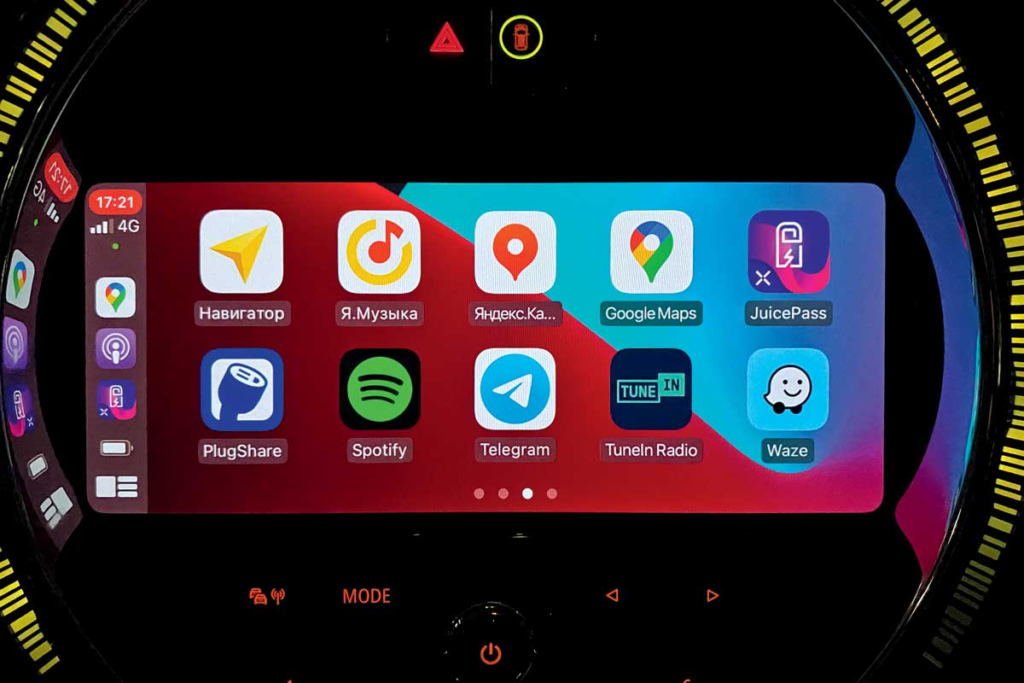
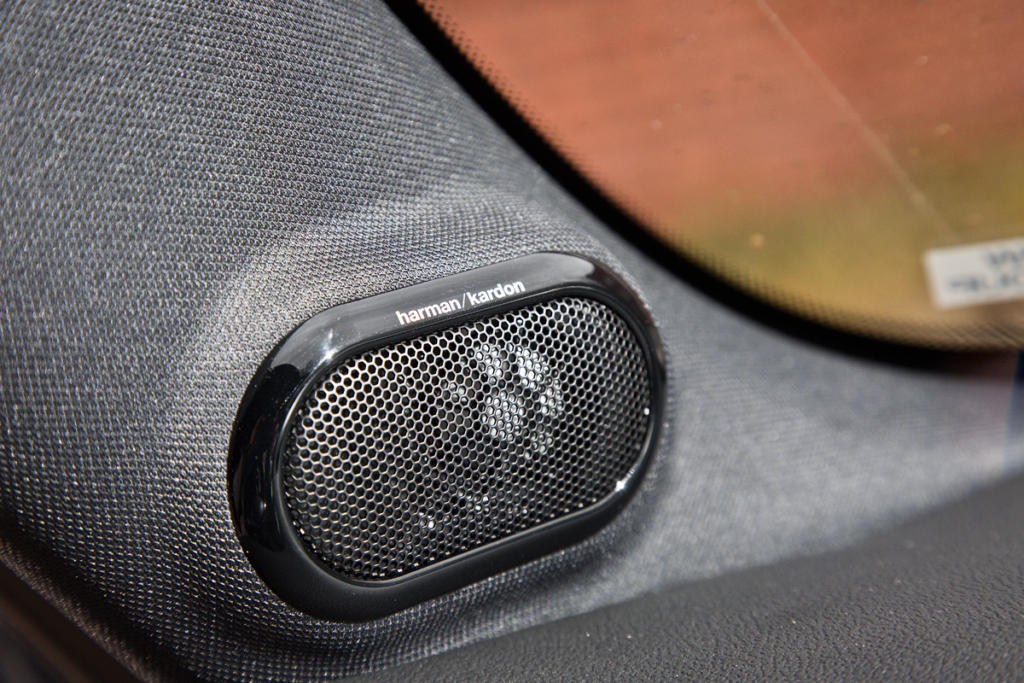
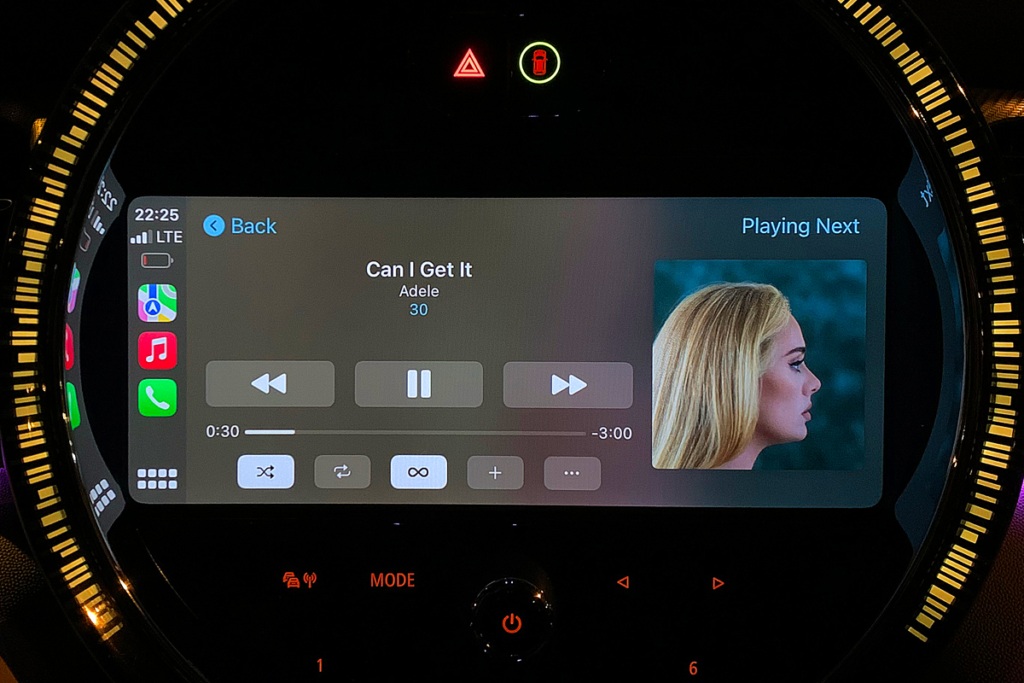
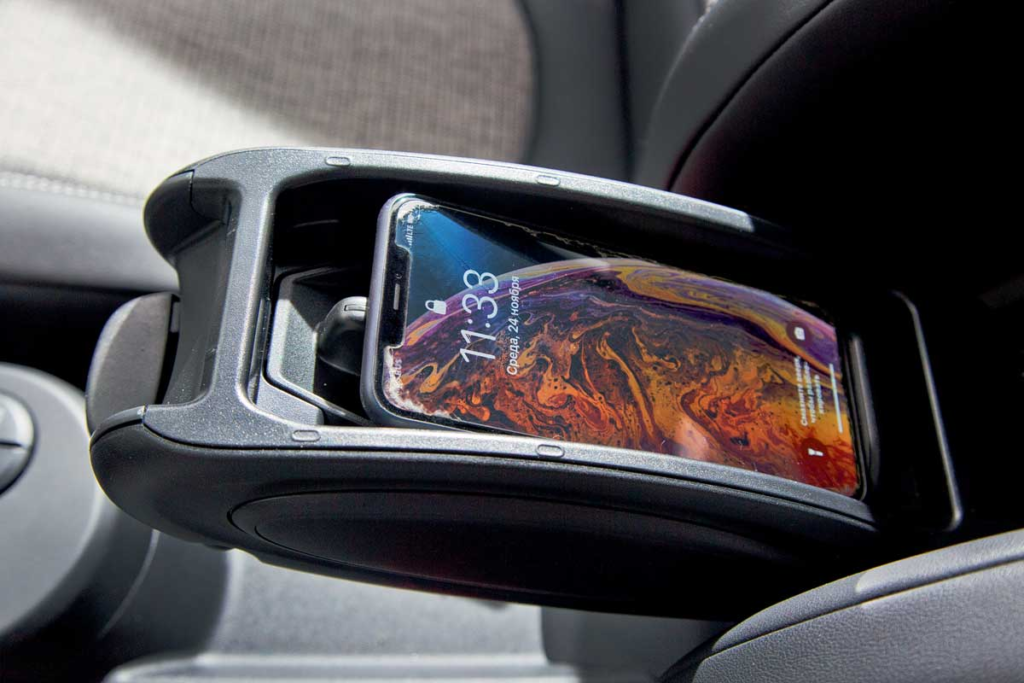
And the Mini Cooper SE has a chance of becoming iconic. It looks like the last electric car the old guard will build to the very limit of what can be done on the platform and in the body of an ICE car. The next Mini, the fourth generation, is expected in 2023, and it will most likely be an electric car first, on an architecture developed for the purpose, with ICE versions as an afterthought.
That is the electric Mini worth waiting for.
P.S. I have just learned that adaptive cruise control has been struck from the Russian options list. I would suggest extending that commendable practice to the whole Mini SE range, starting with the manual. The mobile power unit and the cables can stay. I would buy those.
Specifications
| Feature | Specification |
|---|---|
| Model | Mini Cooper SE |
| Body Type | Three-door hatchback |
| Dimensions (mm) – Length | 3850 |
| Dimensions (mm) – Width | 1727 |
| Dimensions (mm) – Height | 1432 |
| Wheelbase (mm) | 2495 |
| Ground Clearance (mm) | 128 |
| Curb Weight (kg) | 1440 |
| Gross Weight (kg) | 1775 |
| Engine/Motor Position | Transversely, in the front overhang |
| Max Power (hp/kW) | 184/135 |
| Max Torque (Nm) | 270 |
| Traction Battery Type | Lithium-ion |
| Battery Position | T-shaped, under the floor |
| Battery Capacity (kWh) | 32.6 |
| Max Charging Power AC (kW) | 11 |
| Max Charging Power DC (kW) | 50 |
| Drive Type | Front |
| Base Tire Dimensions | 195/55 R16 |
| Max Speed (km/h) | 150* |
| Acceleration 0—100 km/h (s) | 7.3 |
| Max Range (WLTP, km) | 225.3 |
| Energy Consumption (WLTP, kWh/100km) | 15.2 |
*Limited by electronics
Photo: Mikhail Podorozhansky | Nikita Kolobanov
This is a translation. You can read the original article here: Электрический пёс, часть третья: Подорожанский, Mini Cooper SE и адаптивный круиз-контроль

Published January 16, 2025 • 8m to read