
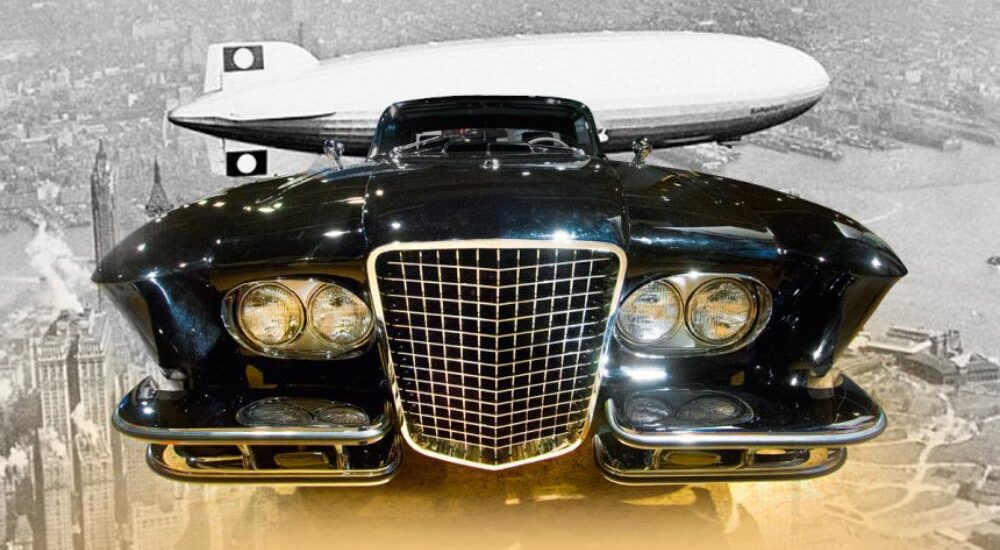

On the shores of Lake Constance at Friedrichshafen, in Germany, the Zeppelin Museum chronicles the evolution of the airship — and houses an impressive collection of old cars besides.
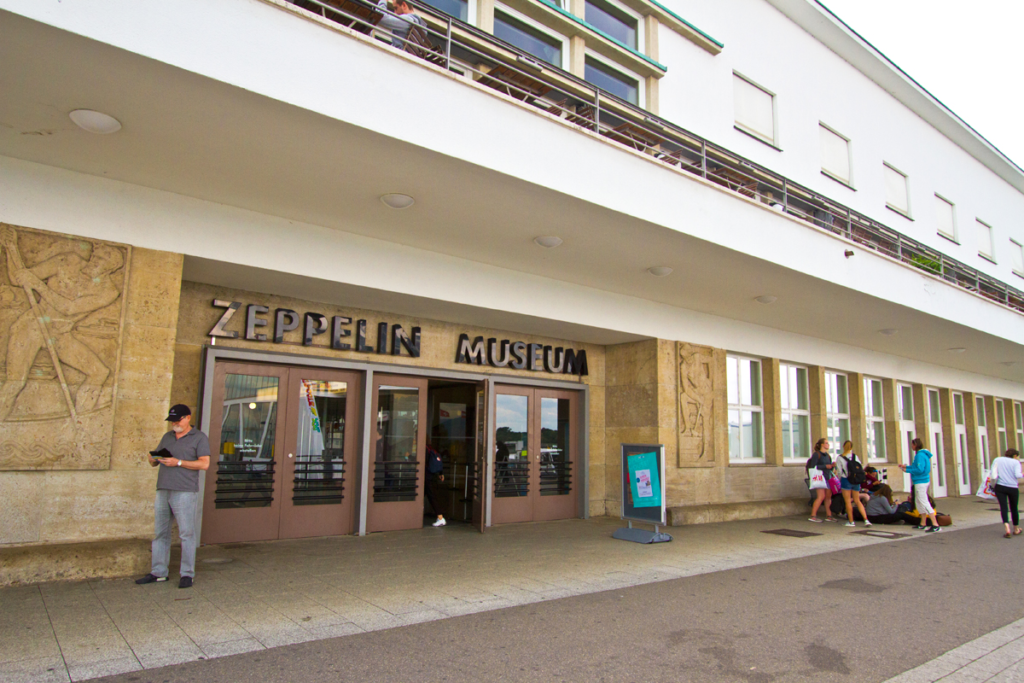
The Museum on Lake Constance
My interest in early twentieth-century aviation was modest, drawn mostly from the illustrations in Technology for Youth magazine and stories about the adventurous pilot Utochkin. What fired my imagination as a boy were the memoirs of the aircraft designer Yakovlev, full of World War I aeroplanes. Airships stayed a mystery, their stories untold, until I came to this museum.
Count Zeppelin and His Collaborators
The museum is given over entirely to the airship and to Count Ferdinand von Zeppelin, who launched his first, LZ1, in 1900 and began the Zeppelin era with it. After a fire destroyed his fourth airship in 1908, public subscription allowed the count to found Luftschiffbau Zeppelin — a company still in business today.
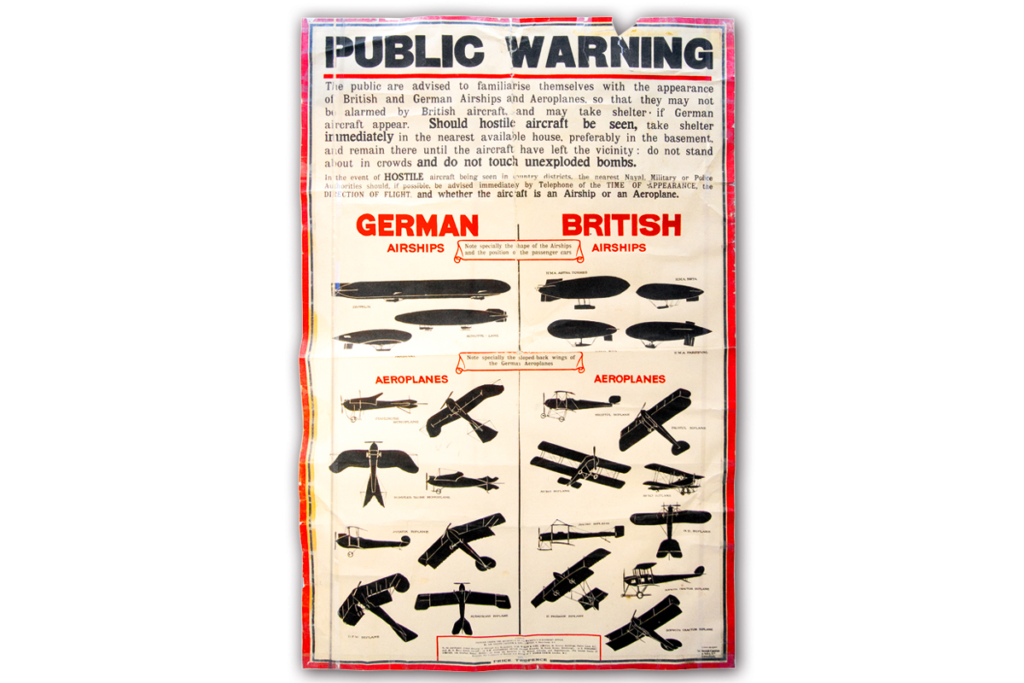
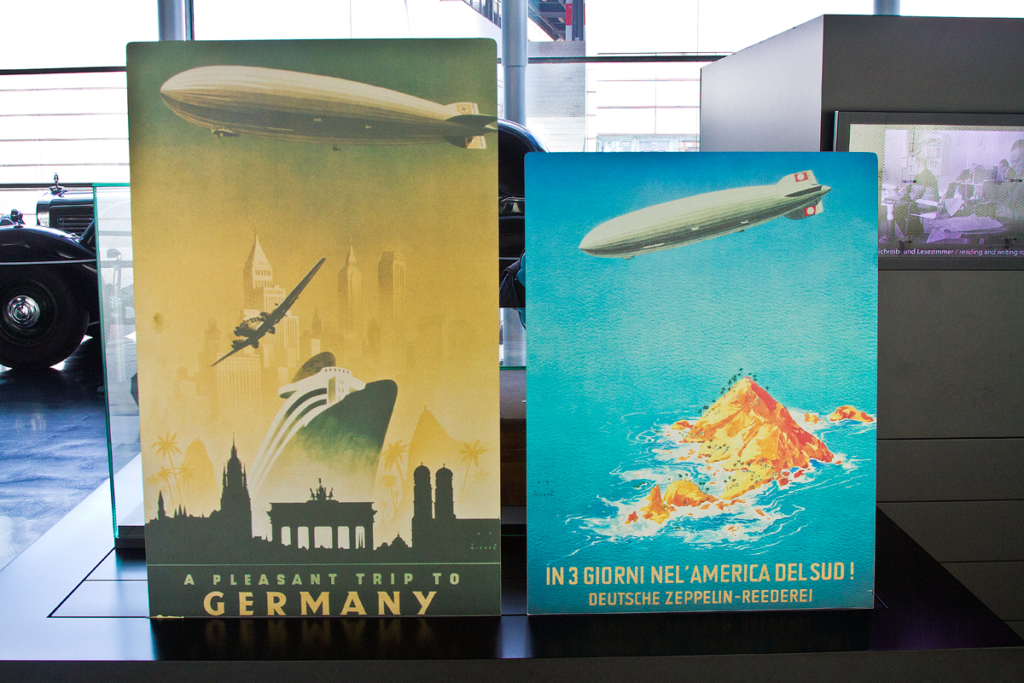
A World War I-era poster with silhouettes of aircraft. The long “cigar” in the top left corner is a Zeppelin.
Count Zeppelin’s ventures were supported by notable collaborators: Karl Maybach on engines, Claude Dornier on aircraft, and Zahnradfabrik Friedrichshafen, now known as the renowned ZF Group.
From Weapon to Airliner
During World War I the sight of a Zeppelin usually meant something bad was coming. The museum has a wartime London poster, a haunting reminder of the fear they caused, with silhouettes of German and British airships and warnings about unexploded ordnance. The poet Maximilian Voloshin caught the same menace in his 1915 poem “Zeppelins over Paris,” which pictures them as ghosts in the night sky.

The Hindenburg under construction—what scale!
From instruments of war the Zeppelins turned into civilian marvels — the prototypes of the modern airliner, crossing skies and joining continents. The most celebrated was LZ127, the Graf Zeppelin, which made 590 international flights, 143 of them across the Atlantic.
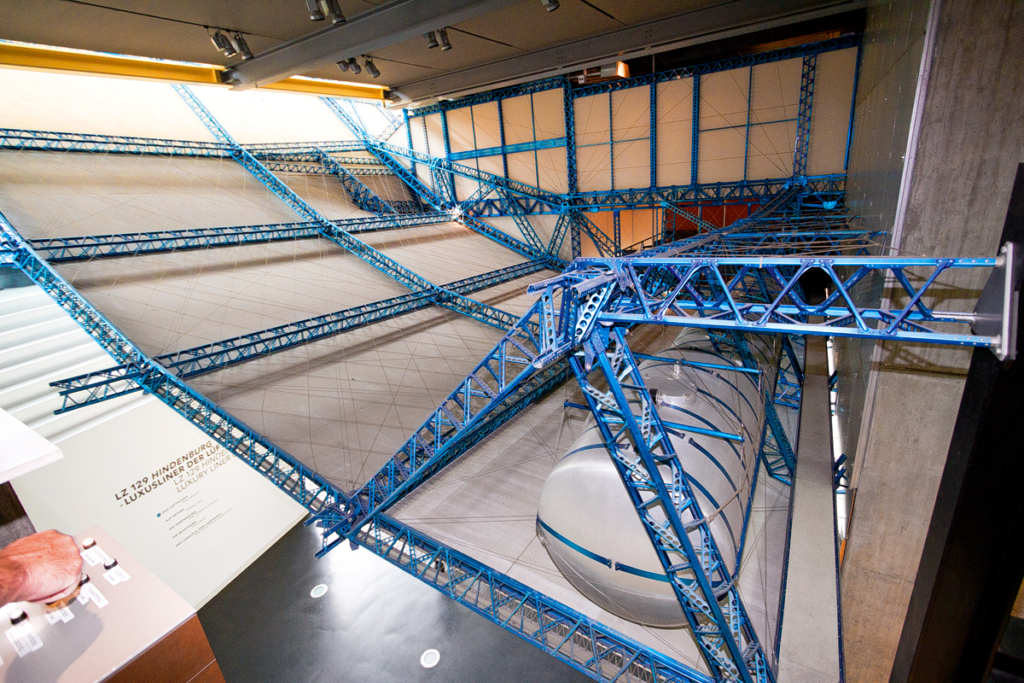
A cross-section of the Hindenburg: you can see the frame ribs, their cladding, and the fuel and water tanks. There were also 16 gas tanks inside the frame, but they are not shown.
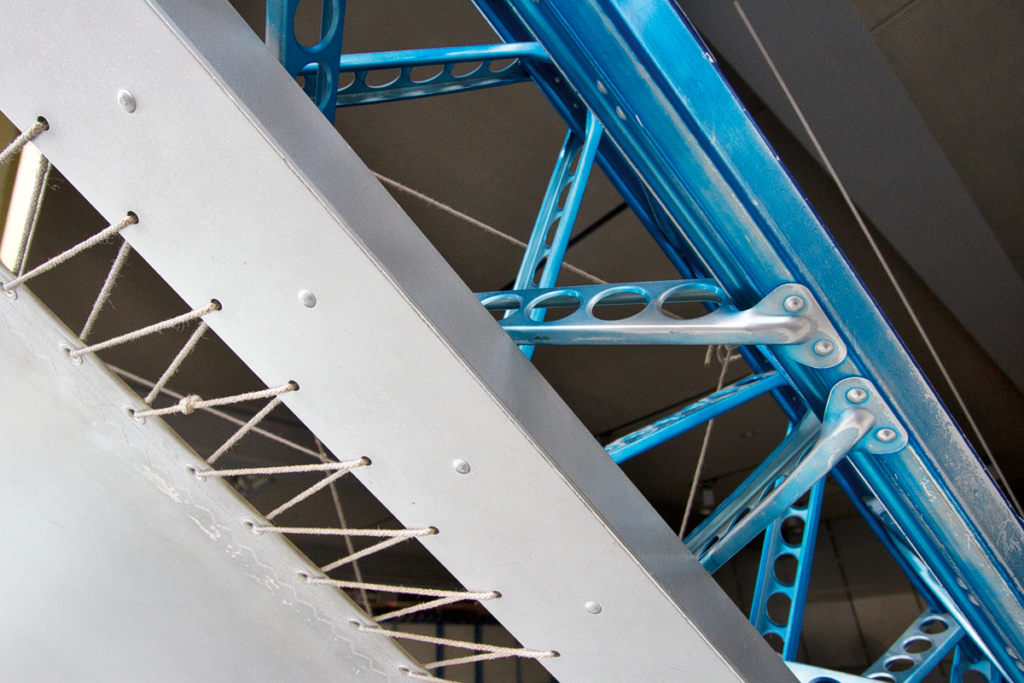
A section of the frame: duralumin structure with rivets and cladding.
In 1930 the Graf Zeppelin paid Moscow a friendly visit, an occasion marred by the tensions of the day: the airship was fired on as it crossed the Soviet border. That did not deter the Germans, who took the chance to photograph Moscow from the air and, later, to fly a reconnaissance mission over the Soviet Arctic.
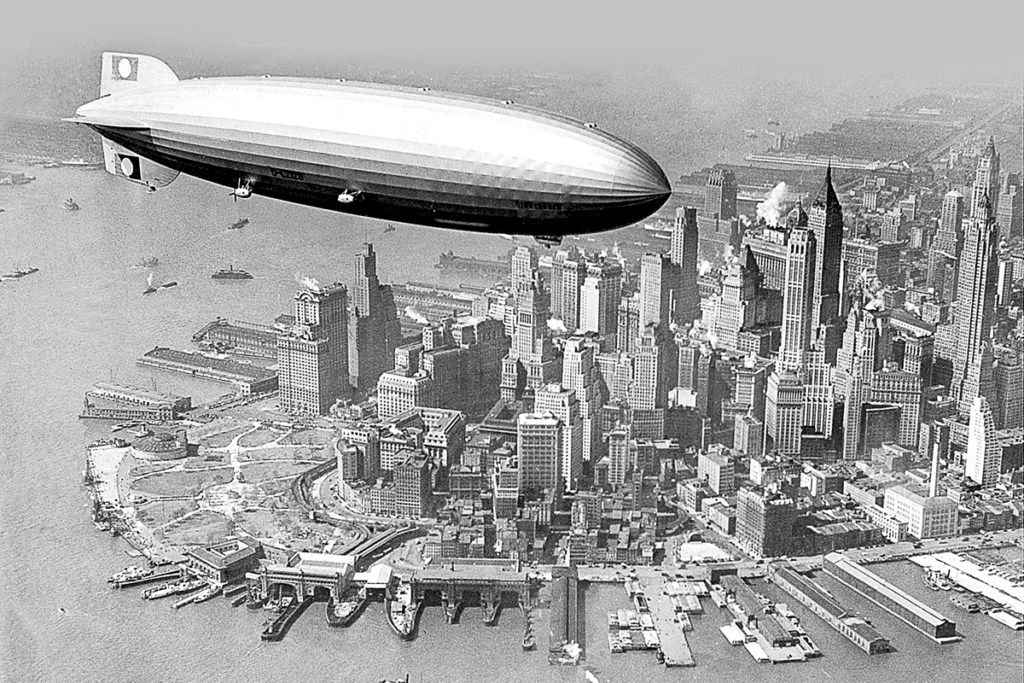
The Hindenburg
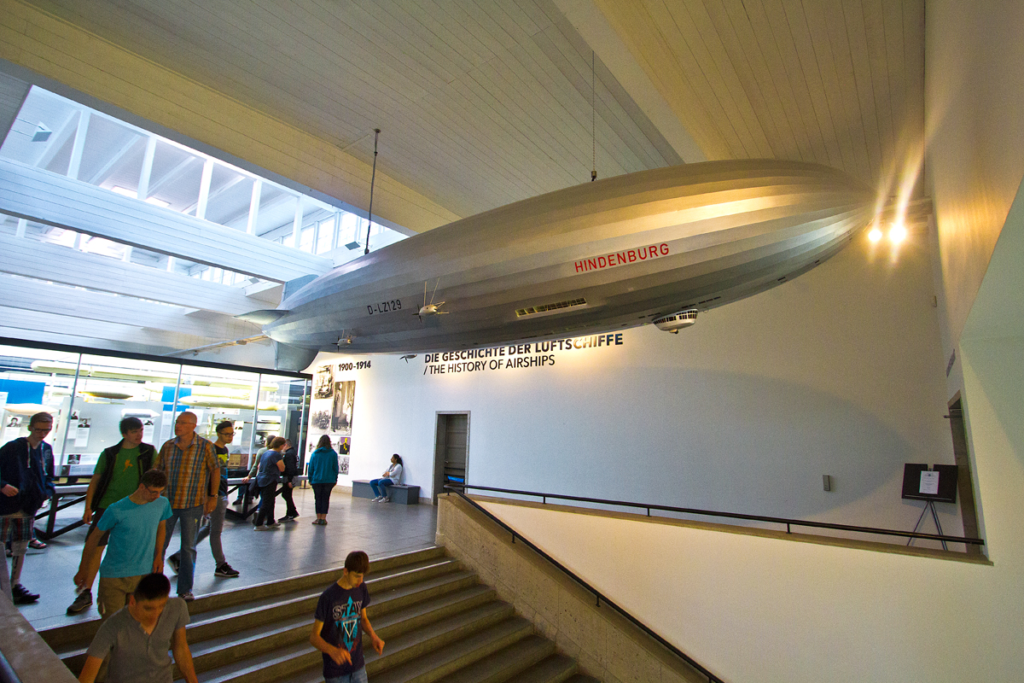
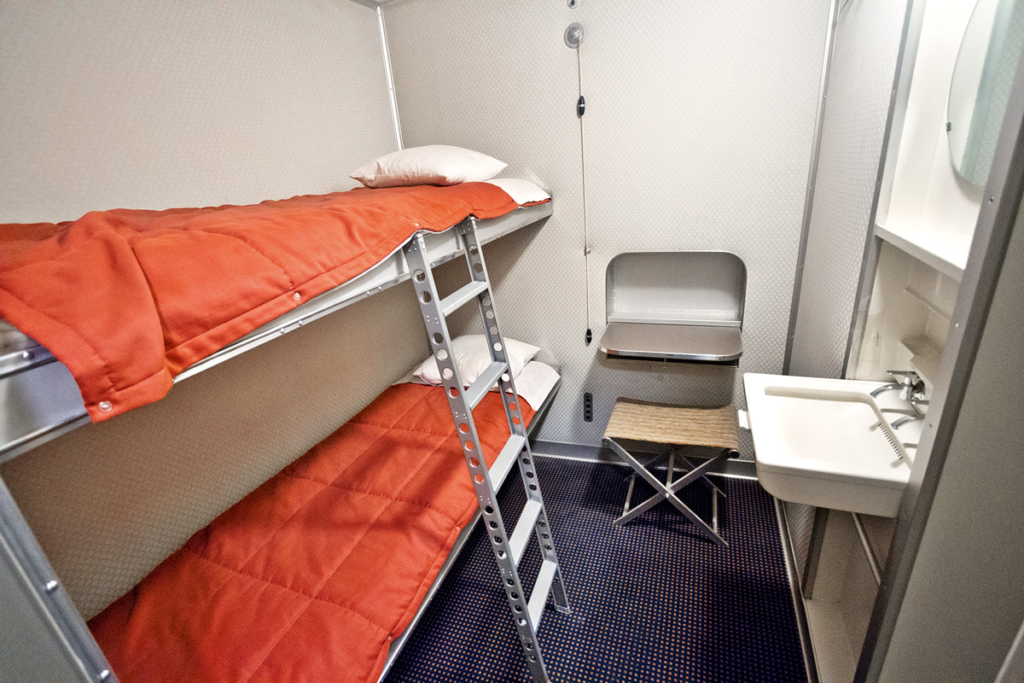
The high point of Zeppelin grandeur was LZ129 Hindenburg, the largest airship ever built. The museum’s main exhibit is a replica section of it, complete with original duralumin structure and interiors, and it conveys the scale of the thing better than any photograph.
A section of the frame: duralumin structure with rivets and cladding.
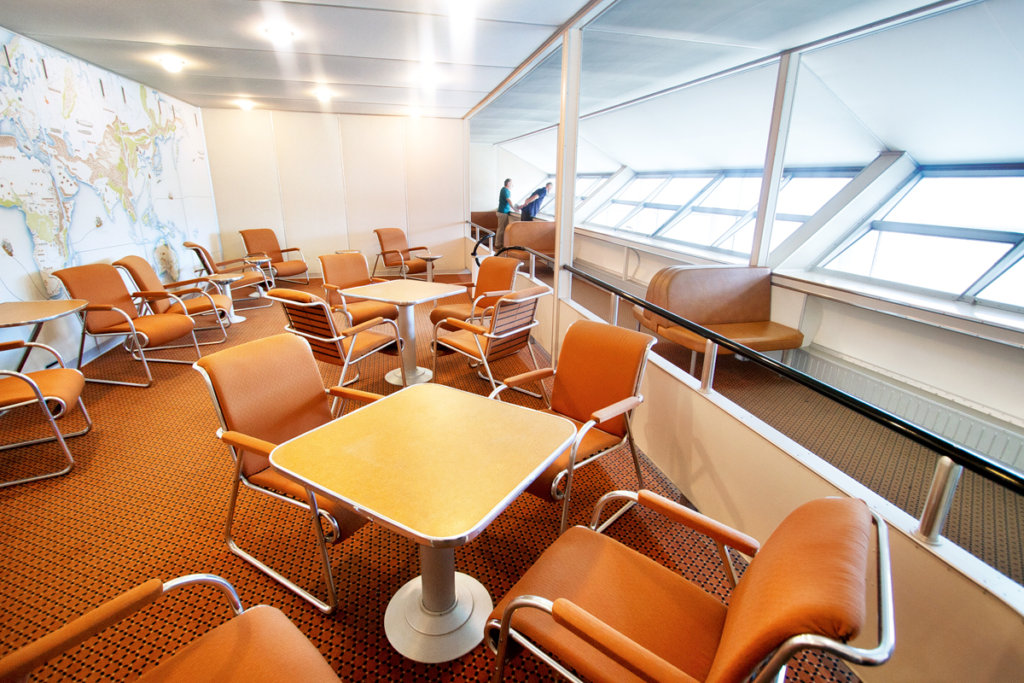
The Hindenburg’s lounge and a corridor with windows through which passengers viewed the ground.
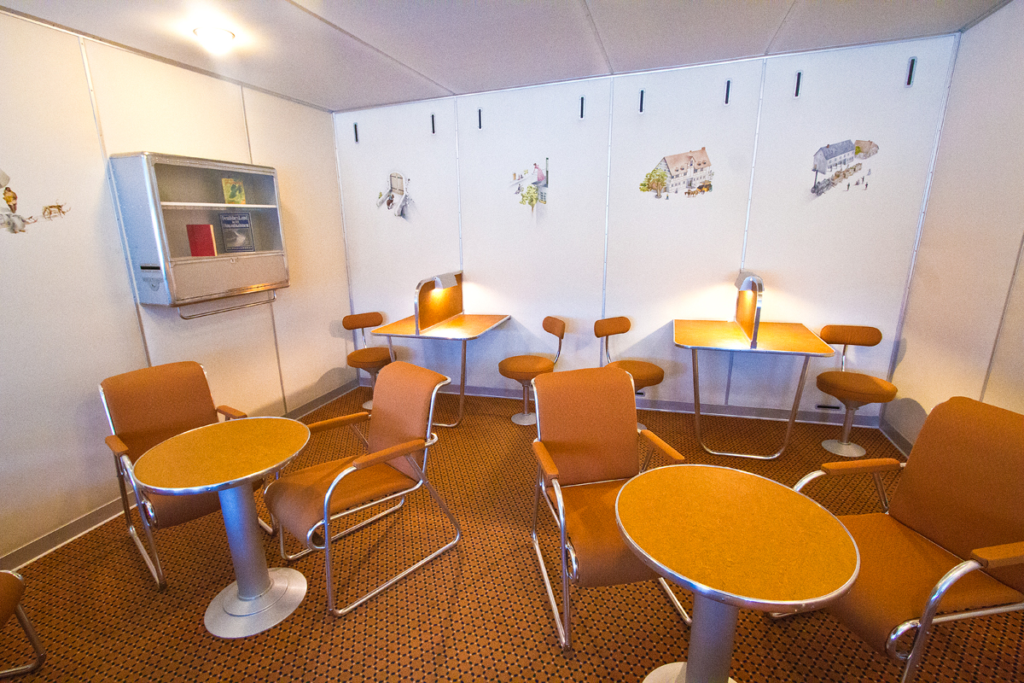
Reading room.
It took five years to build, and it dwarfed even the Titanic in scale and ambition:
- four Daimler-Benz diesel engines
- 90,000 litres of fuel
- 200,000 cubic metres of hydrogen
- 50 sleeping berths, rising to 75 by 1937
- a crew of 50 to 60, as on an ocean liner
Life on Board
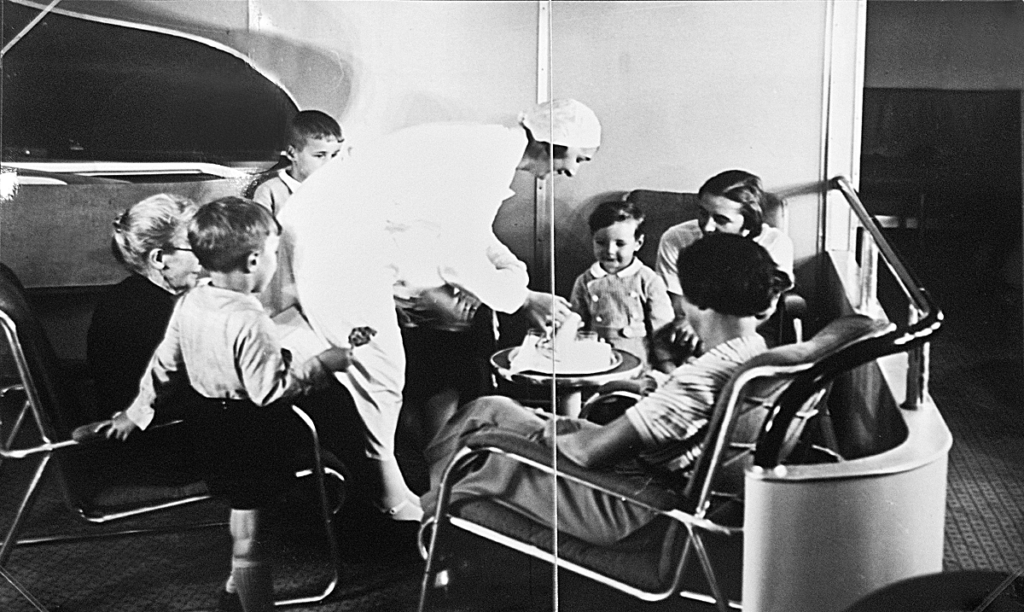
The accommodation was luxurious, and its passengers seemed undeterred by the prospect of flying inside a hydrogen-filled leviathan. The amenities ran to a kitchen, a large dining hall, a lounge, a bar and an aluminium-bodied piano. The museum keeps memorabilia from those flights — menus, and black-and-white postcards of life on board.
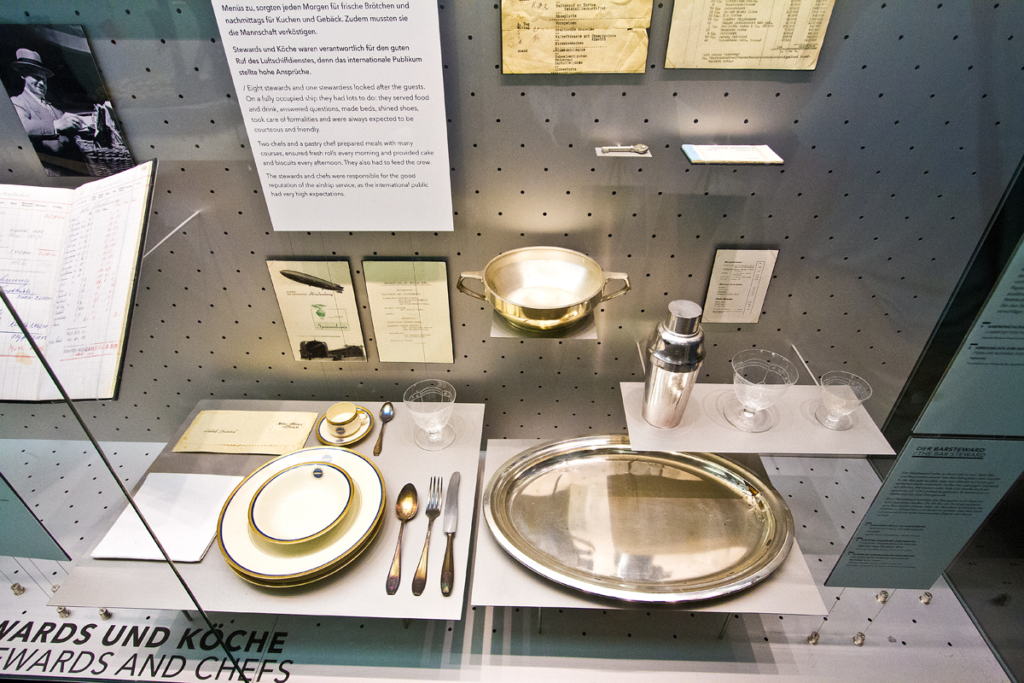
Tableware aboard the airship…
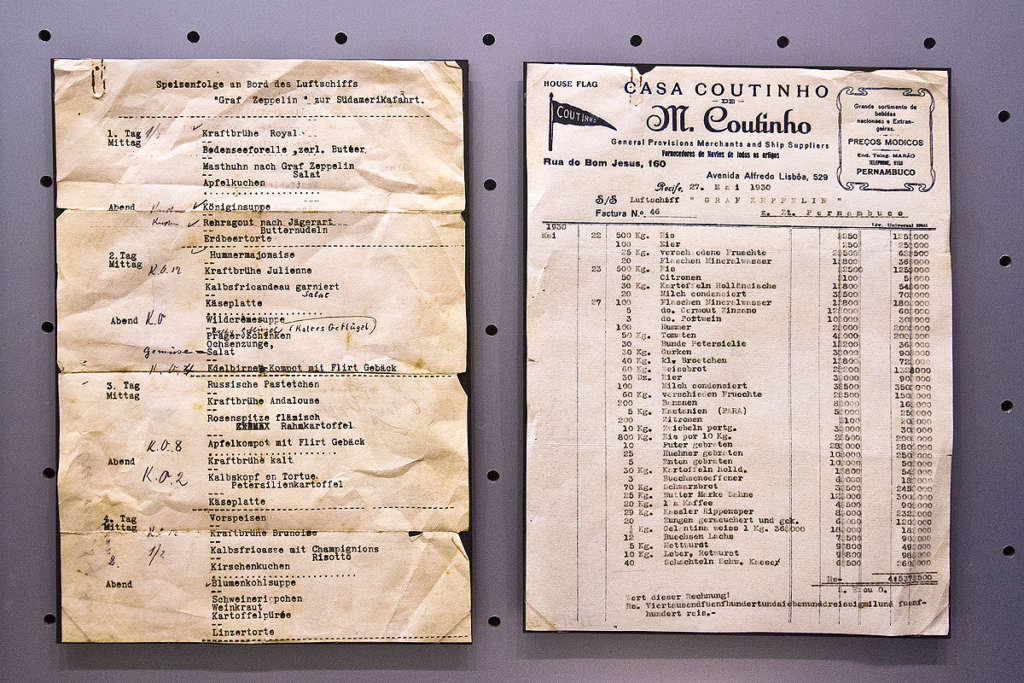
And the menu.
6 May 1937

The Hindenburg disaster on May 6, 1937.
The Hindenburg’s story ended on May 6, 1937, when it caught fire while docking near New York. Of the 97 people on board, 62 survived. It was a bleak end to the age of the passenger airship, and the relics of it here — a charred frame, a stopped clock in a casing of melted aluminium — say as much as any account.
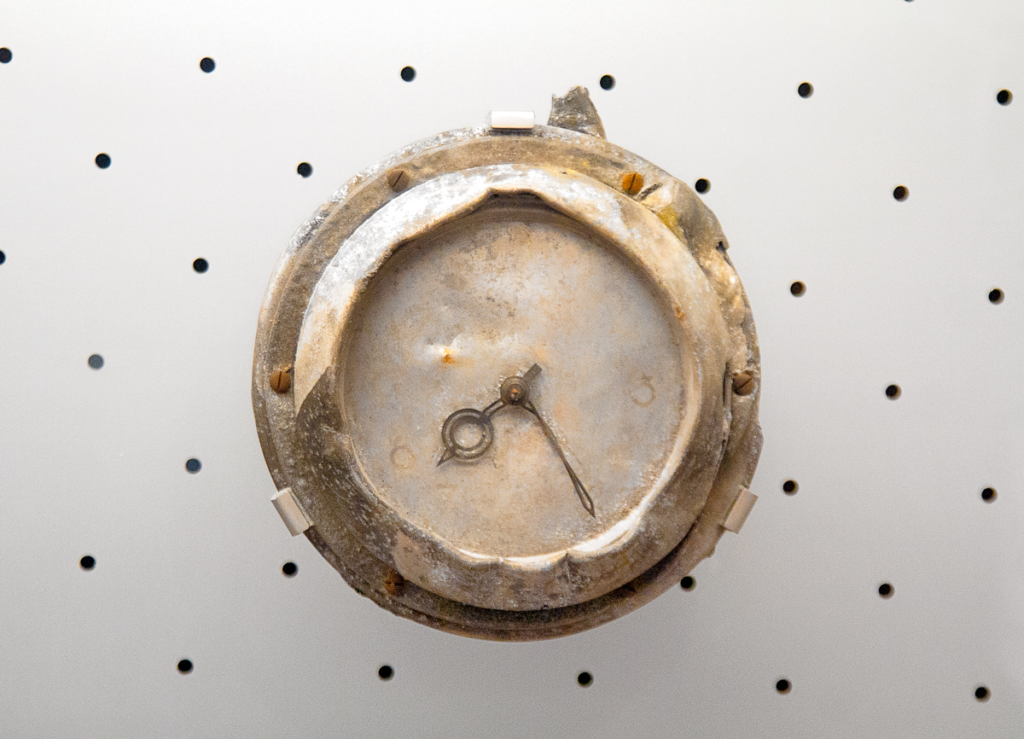
The Hindenburg’s clock in a melted casing.
The Zeppelin legacy survives, in the stories kept here, in the influence on modern aviation, and in airships still being built. A visit gives a real sense of the ambition of early twentieth-century engineering and of the mark it left.
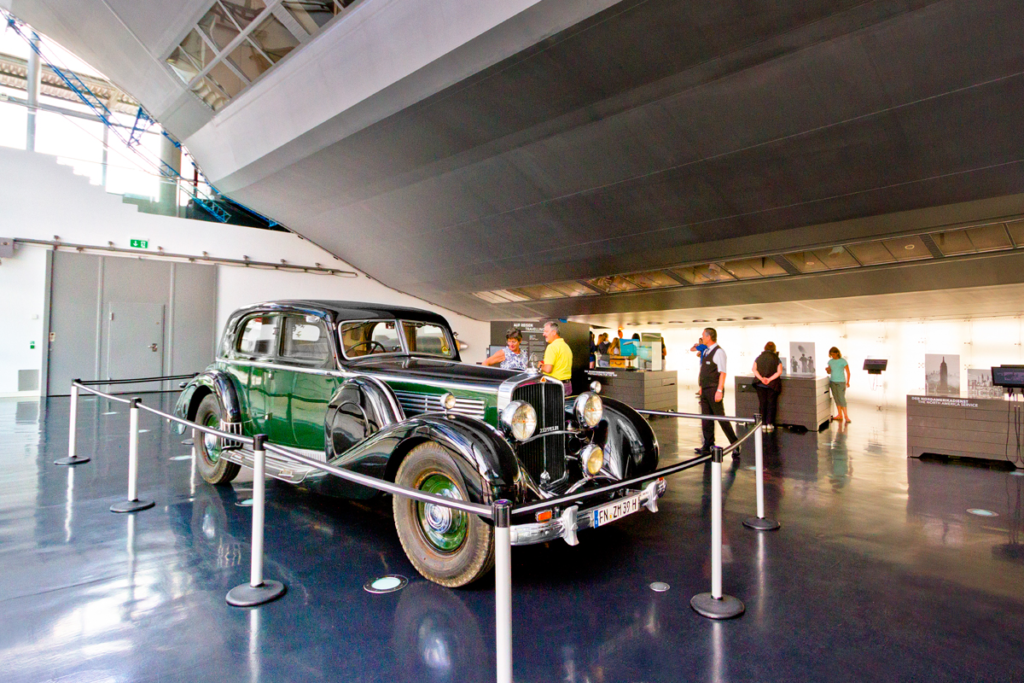
The Maybach DS8 Zeppelin
Deeper into the museum, beneath the fuselage of the great Hindenburg model, is a tribute not only to the sky but to automotive engineering: the majestic 1938 Maybach DS8 Zeppelin saloon, a car with the spirit of its airborne namesake. A 200-horsepower V12 took it to 170 km/h, and it drank 28 litres per 100 km doing it. Its transmission was a marvel of the period — an eight-speed Maybach Variorex with gear pre-selection, a system so advanced it was also used in German tanks.
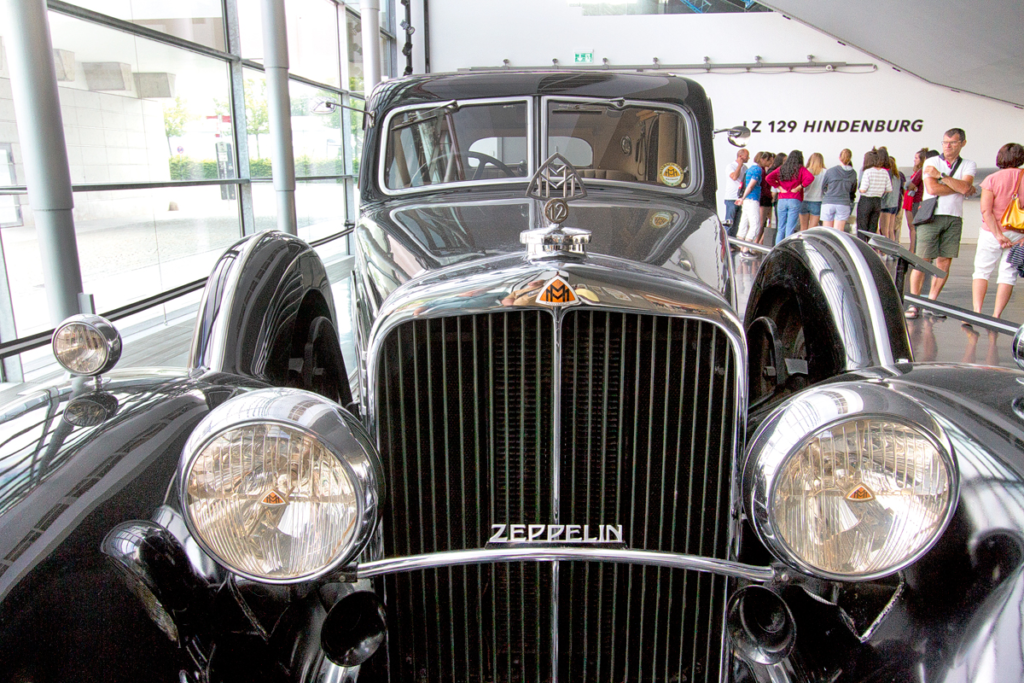
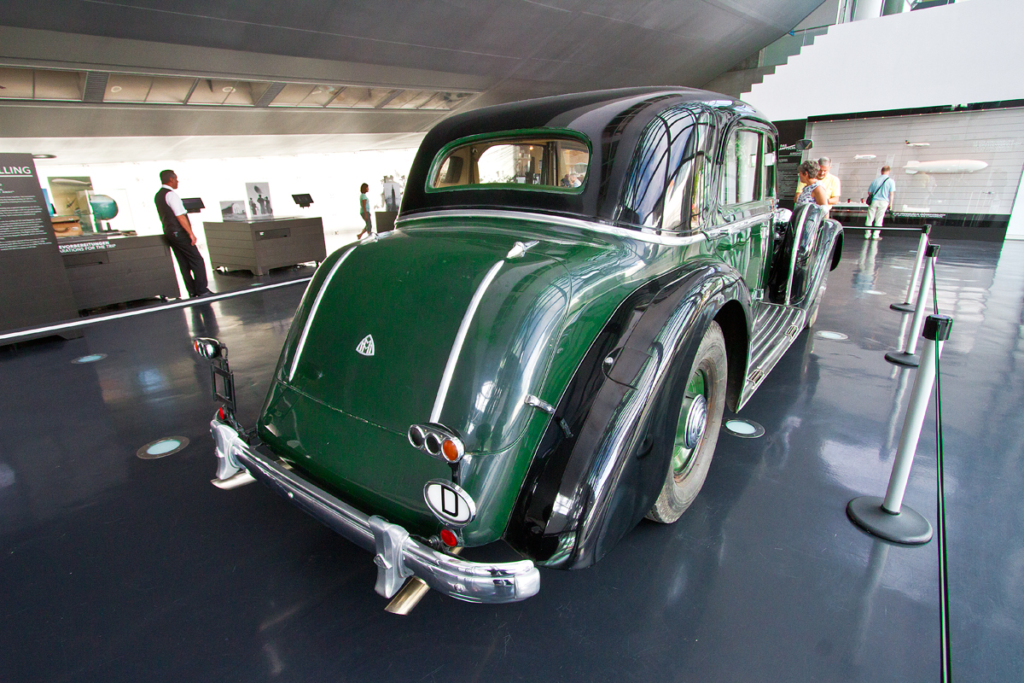
The most luxurious of the pre-war Maybachs—the DS8 Zeppelin (1938).
At nearly 3.5 tons the DS8 Zeppelin needed a driver with a heavy vehicle licence, which says something about how it was built. At 30,000 Reichsmarks it cost as much as two dozen contemporary Opel P4 saloons.
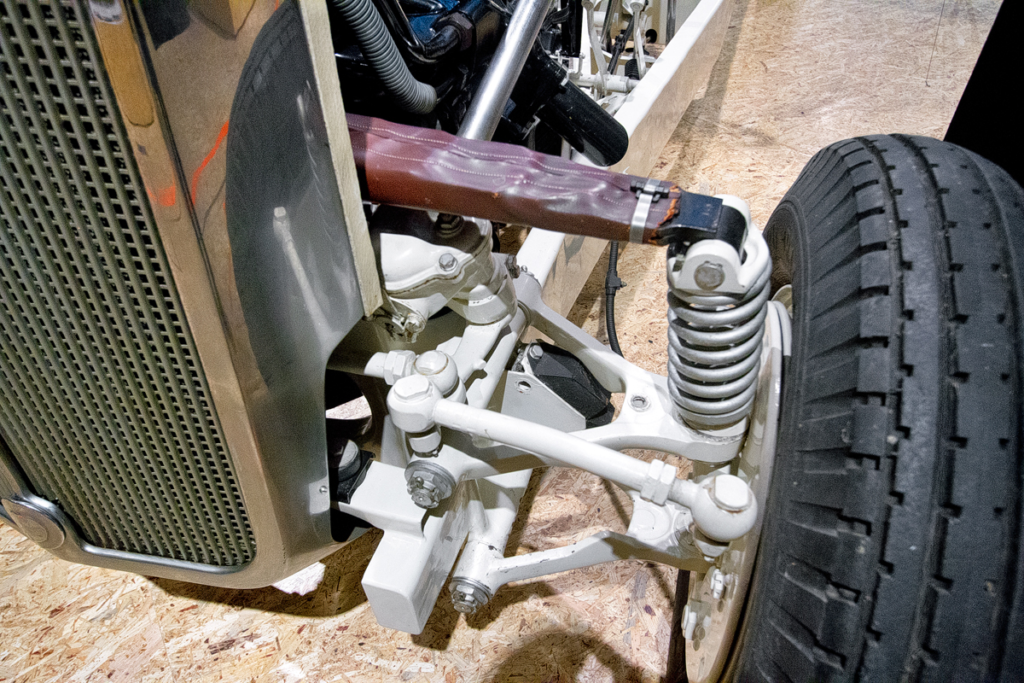
The chassis of the Maybach SW38 passenger car (1937). Both suspensions—front…
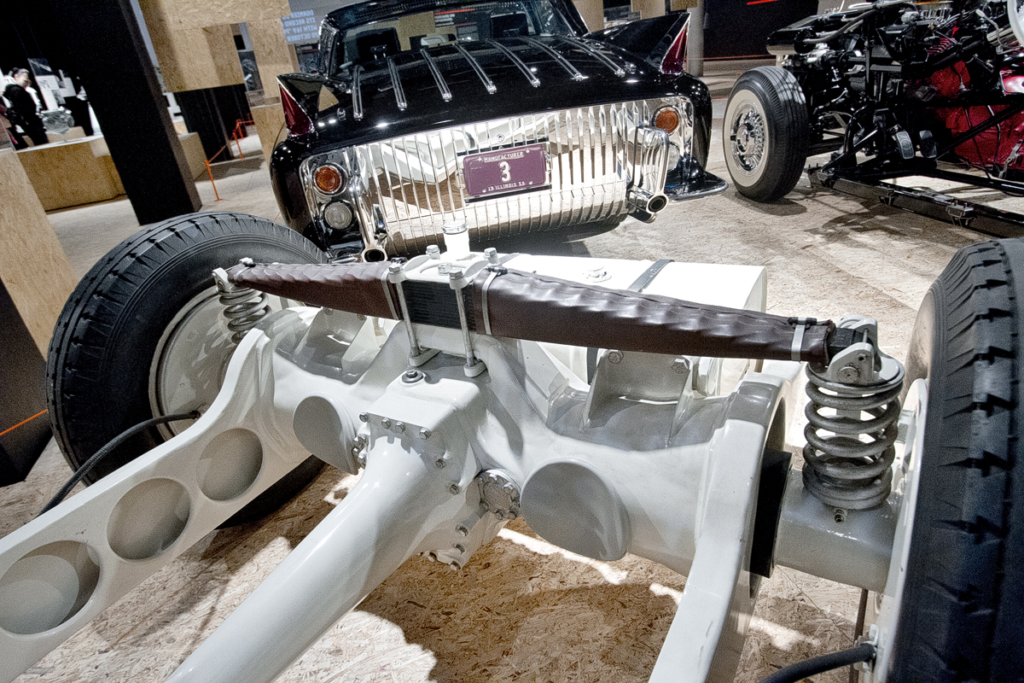
…and rear—are designed with springs and transverse leaf springs.
The Gaylord Gladiator, and What It Is Doing Here
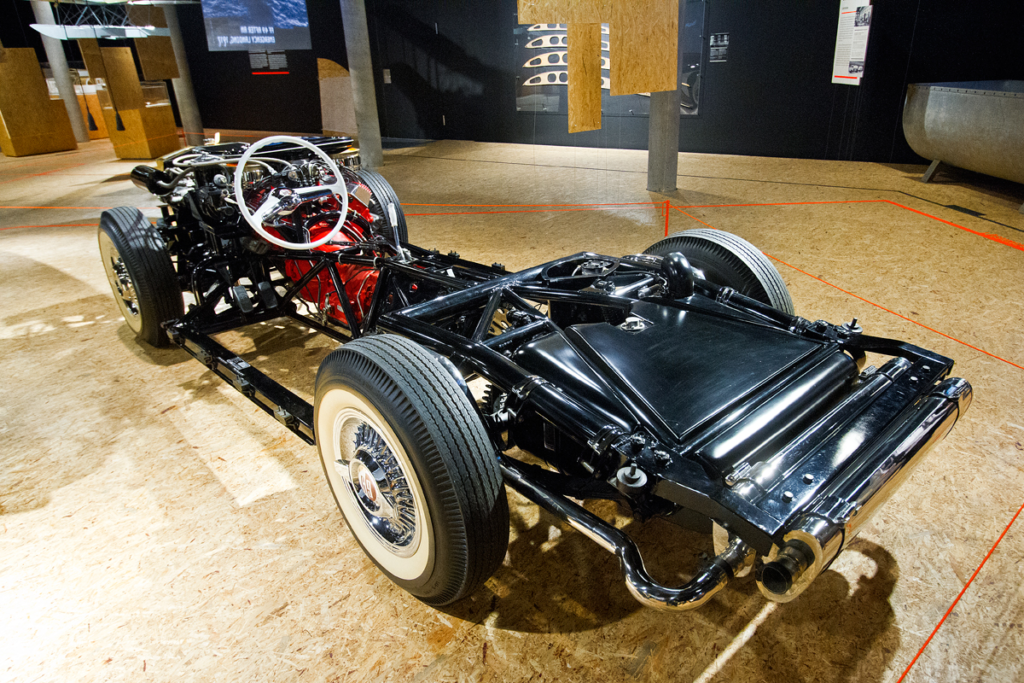
The museum holds a second automotive wonder, stranger than the first: a 1957 Gaylord Gladiator from the United States, shown in two versions, one complete and one stripped to the frame. What has an American car to do with German airships?
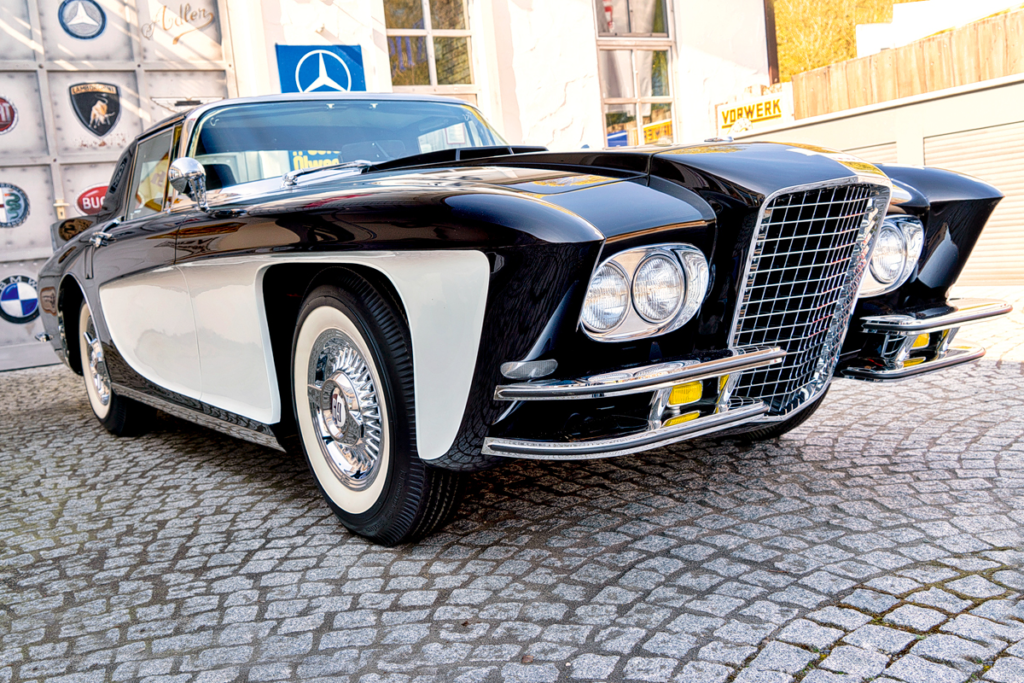

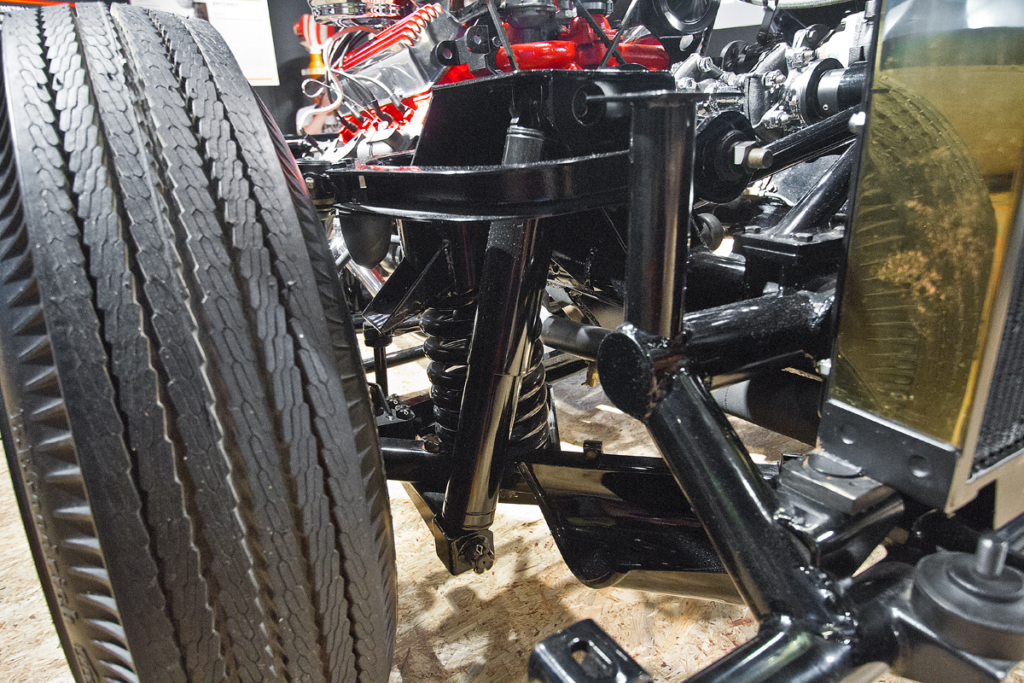
This Gaylord Gladiator, according to the factory plates, is the second unit and was built in October 1957.
The story starts in post-war America with a wealthy entrepreneur named Gaylord, who had made his money in ladies’ hair accessories. His sons, James and Edward, inherited the money and the enthusiasm, and what they dreamed of was not hair clips but a spectacular car. They pursued it without restraint.

The father of the car’s creators made his fortune from ladies’ hair clips.
Their search for a designer led to Alex Tremulis, of Tucker fame, known for the exotic three-headlight Tucker Torpedo. After a series of company changes Tremulis handed the project on to the freelance designer Brooks Stevens, who had worked with Harley-Davidson and Studebaker.
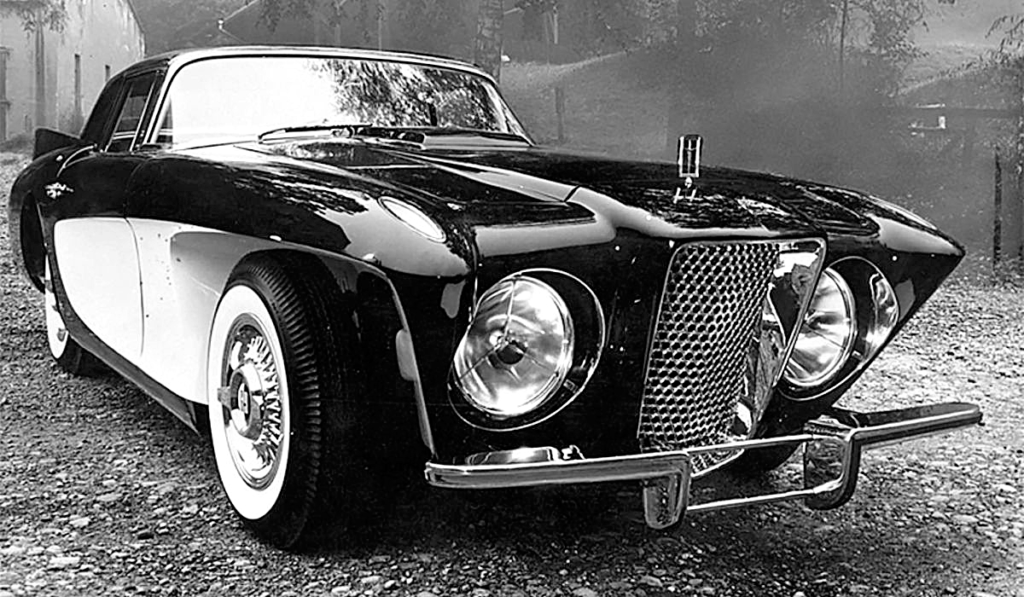
The first model had “owl eyes”—two large Lucas headlights.
The brief was to blend modernity with classical elegance. The first model had owl eyes — two large Lucas headlights, reminiscent of pre-World War II cars — which were later replaced by four smaller ones for a more refined look.

The body of one of the Gladiators on the slips in the Zeppelin factory.
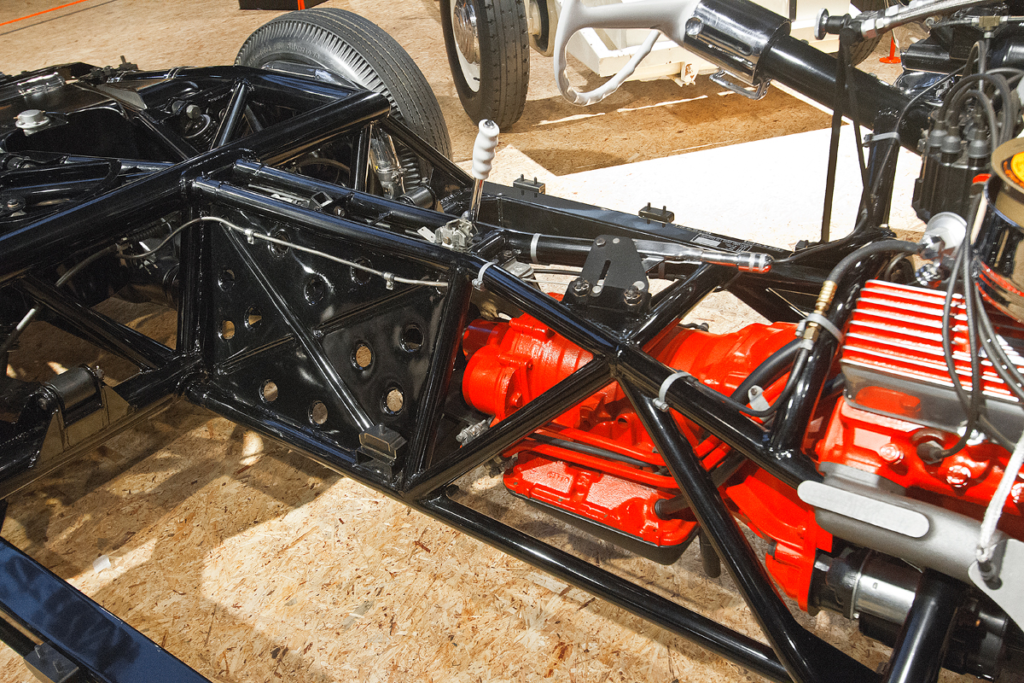
Built around a tubular space frame in chrome-molybdenum steel, the Gaylord Gladiator was impressively light for its day at 1800 kg. The suspension was conventional, with modern touches: enlarged rubber bushings, lubricated rear leaf springs.
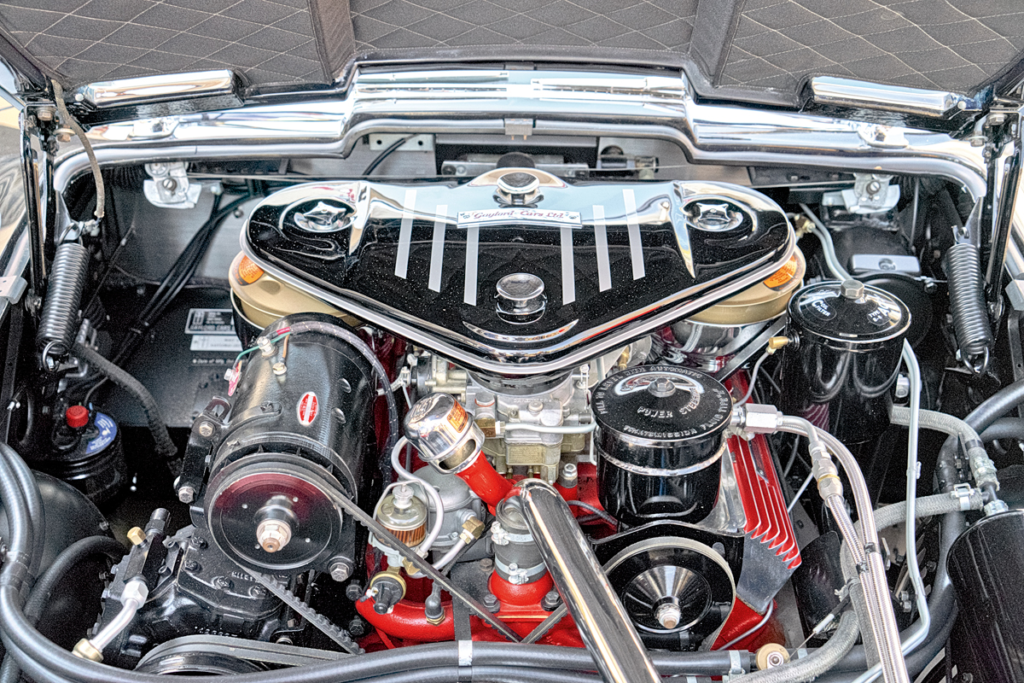
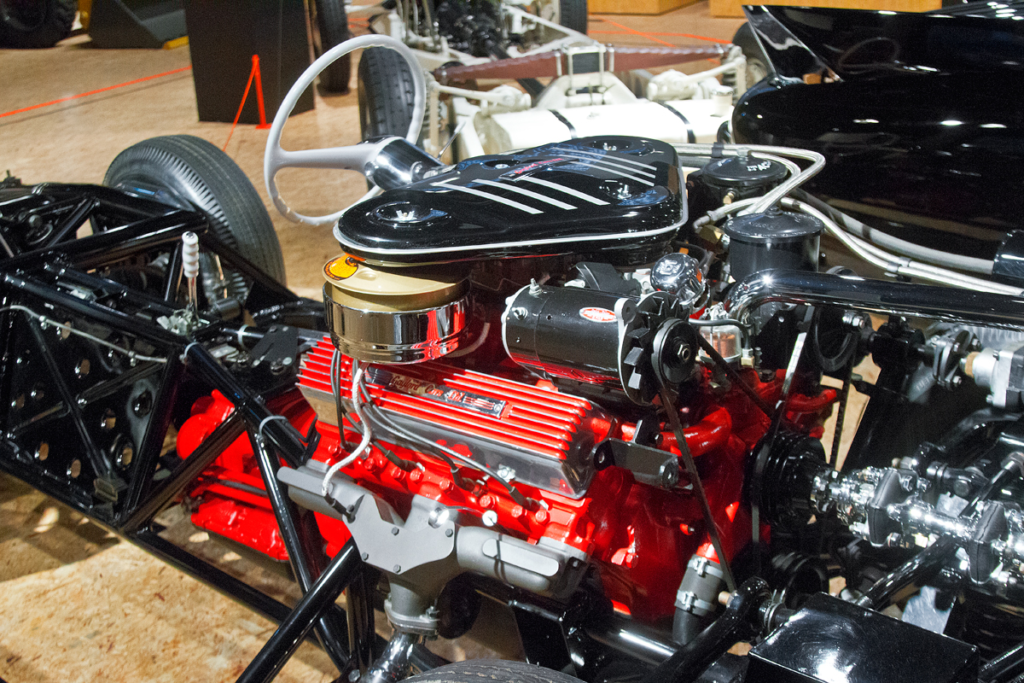
The Cadillac V8 engine (5.98 liters, 309 hp) could propel the car to 200 km/h.
Under the bonnet the early cars had a 5.4-litre Chrysler V8, later replaced by a quieter 5.9-litre Cadillac. That took the Gladiator to 200 km/h and from 0 to 100 km/h in eight seconds — quicker than a Cadillac Eldorado.
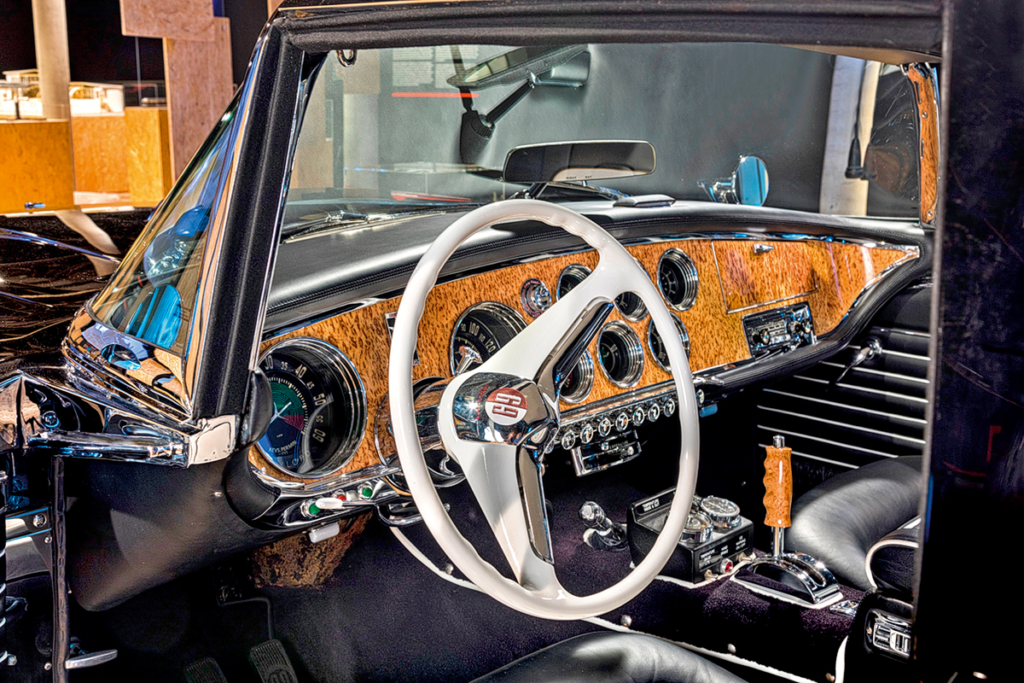
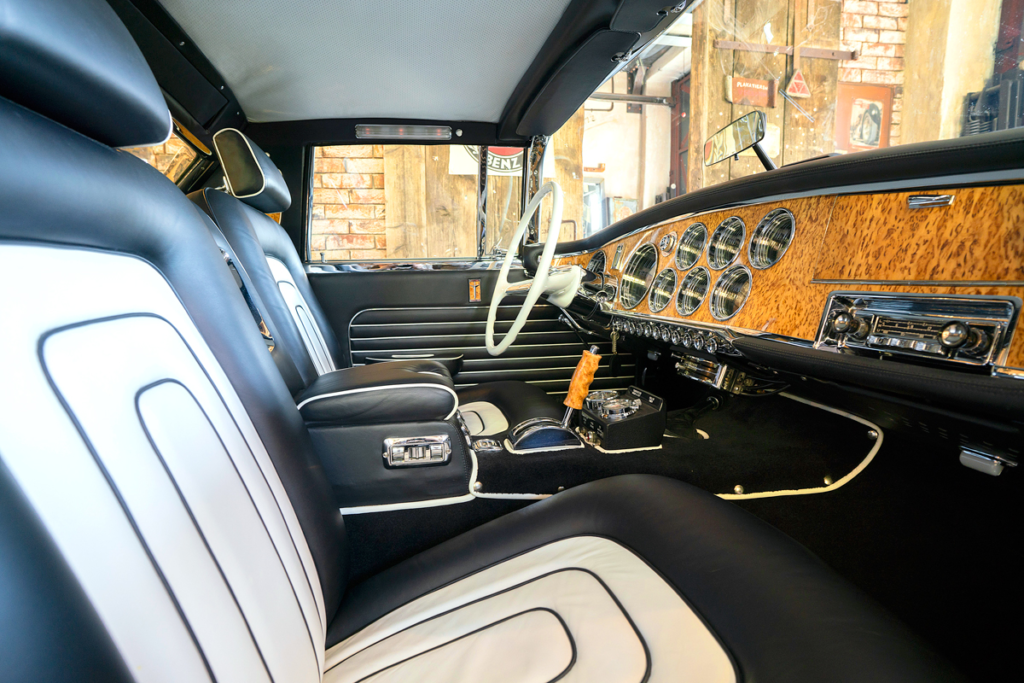
The interior features wood and round gauges.
There was a GM Hydra-Matic automatic and power steering that came on at the push of a button. Another button retracted the roof, worked by a single electric motor — where the Ford Skyliner needed seven for the same job.
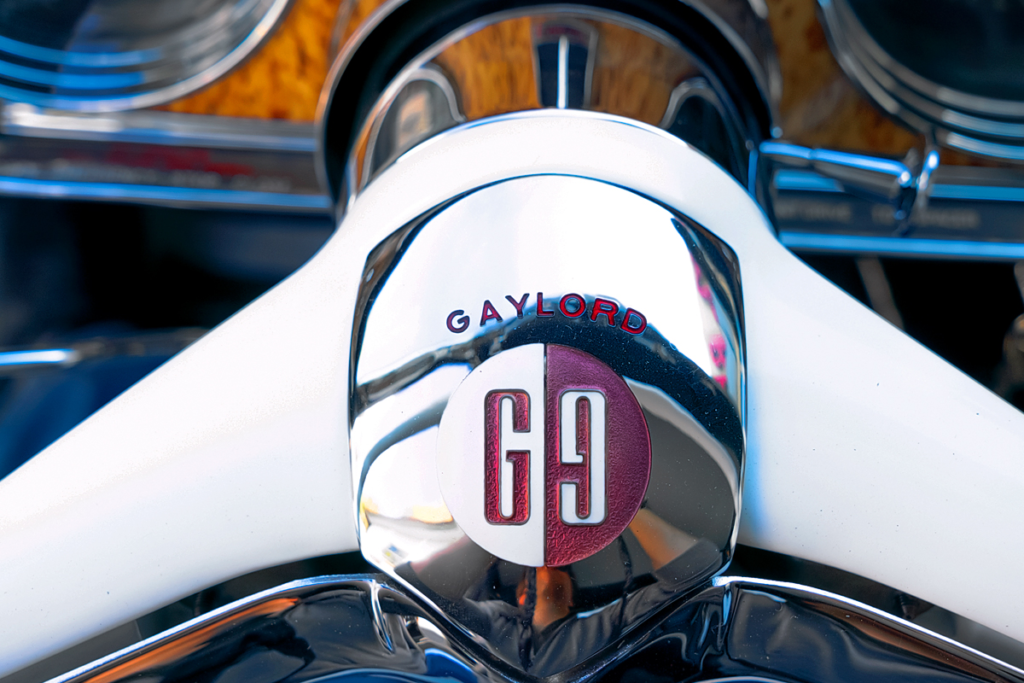
Two “G” letters on the steering wheel hub.
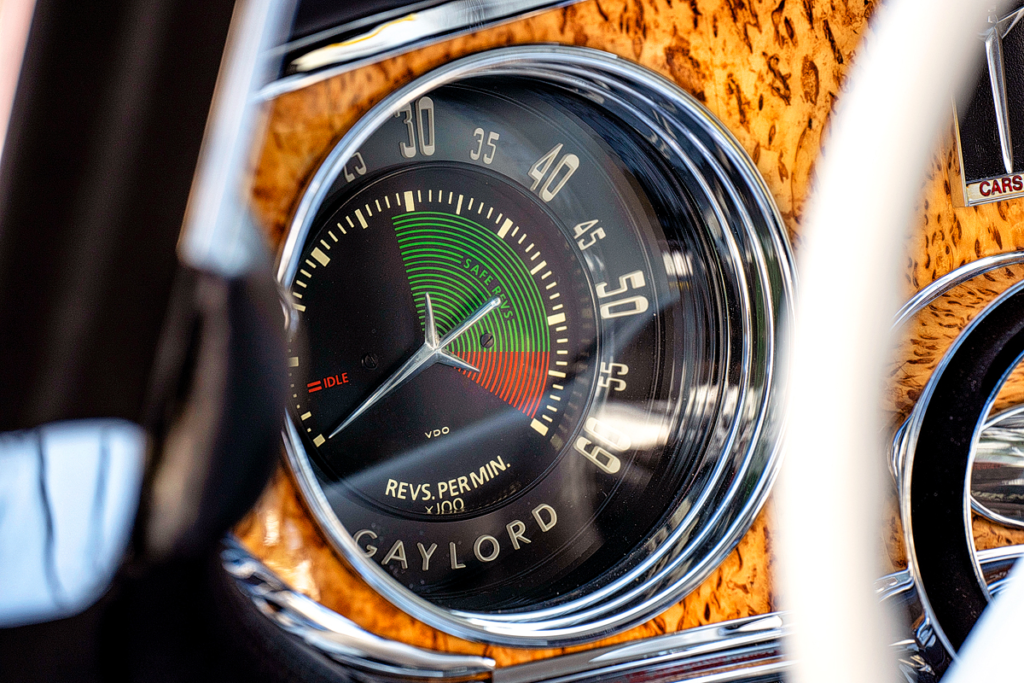
The tachometer needle is designed like a sword, the brand’s symbol.
Building It at the Airship Works
The Gladiator debuted successfully at the 1955 Paris Auto Show and was a hit; a production run of 25 was planned. Intriguingly, the manufacturing was entrusted to Luftschiffbau Zeppelin — the airship builders.
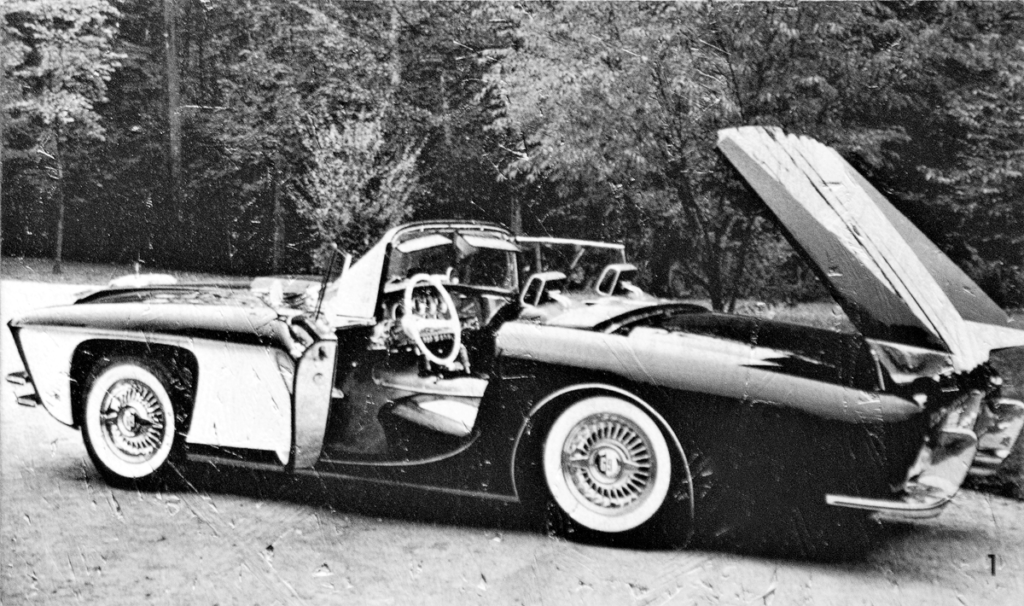
The roof retracted into the opening trunk at the push of a button.
Moving from airships to cars proved harder than expected, quality problems led to a lawsuit, and production stopped. The price, ten thousand dollars at first, had climbed to 17.5 thousand by then — around 200 thousand in today’s money.
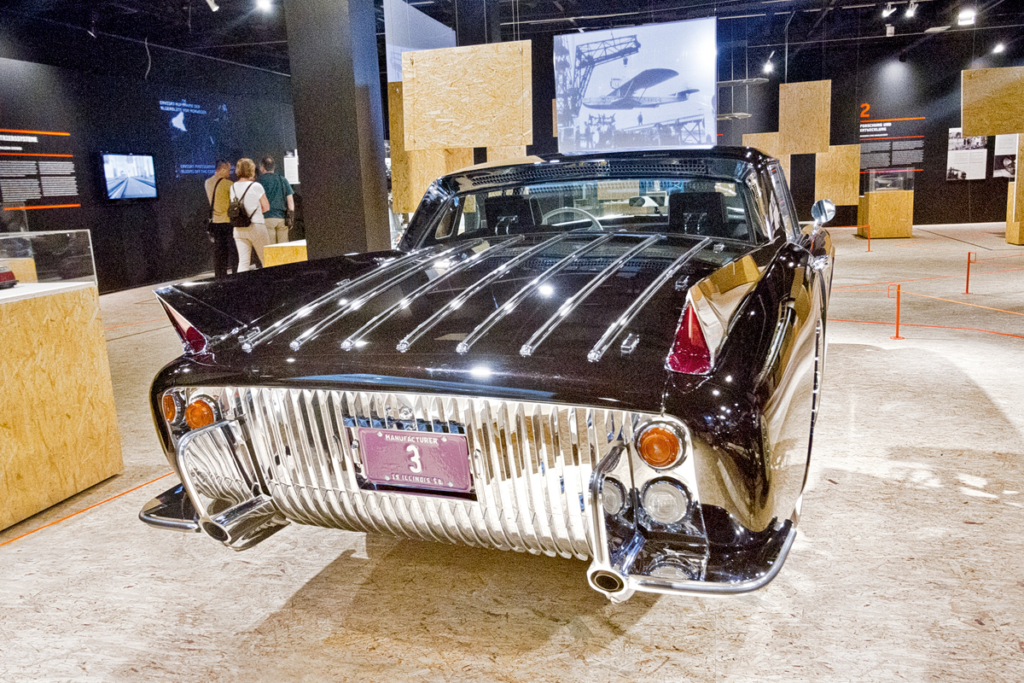
Rear view: ribbed metal and fins.
Only three or four Gladiators were ever built. One is here in the Zeppelin Museum, another is in a private U.S. collection, and a mysterious fourth is rumoured to have vanished somewhere in Europe.
The Zeppelin Legacy Today
The Zeppelin legacy now extends well beyond airships. The company owns the Caterpillar brand of construction machinery and engines. Airships are still made, on a far smaller scale — and a two-hour flight over Lake Constance in one of them costs 850 euros, which is a premium experience by any measure.
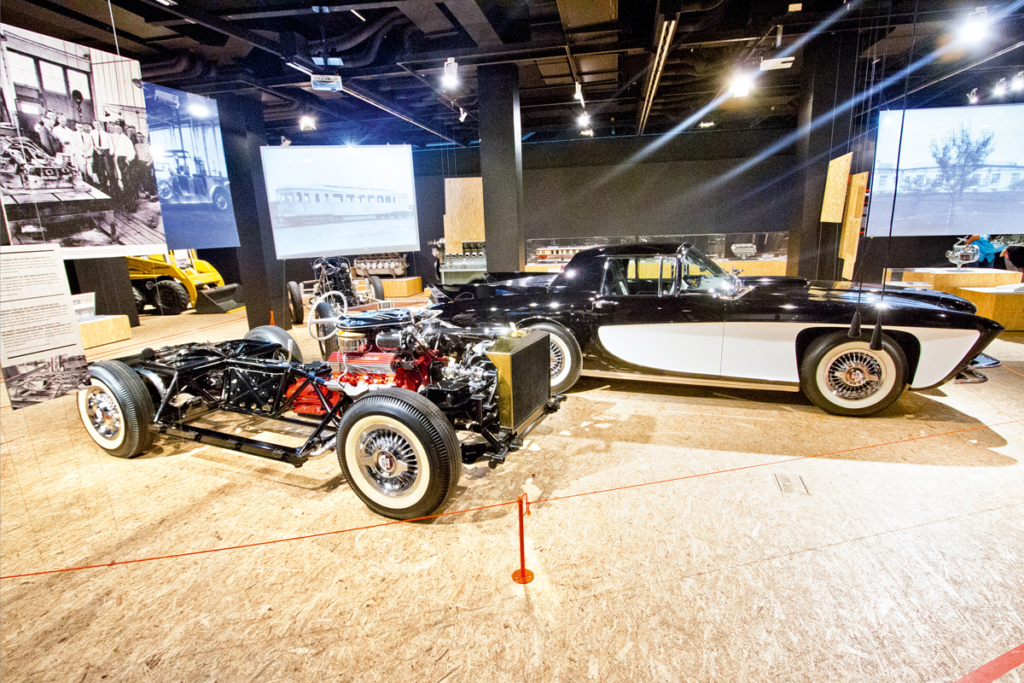
In the museum hall—the Gaylord Gladiator, its chassis…
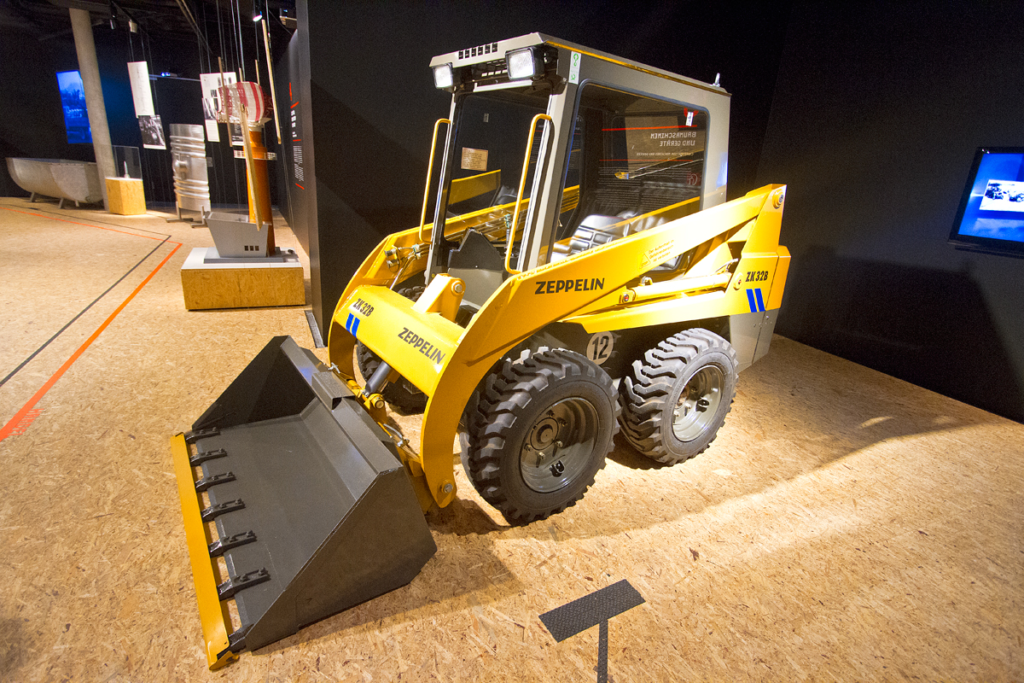
…and a Zeppelin forklift, which was produced until 1995.
Photo: Zeppelin Company | Fedor Lapshin
This is a translation. You can read the original article here: Цеппелины: дирижабли и автомобили

Published May 16, 2024 • 8m to read