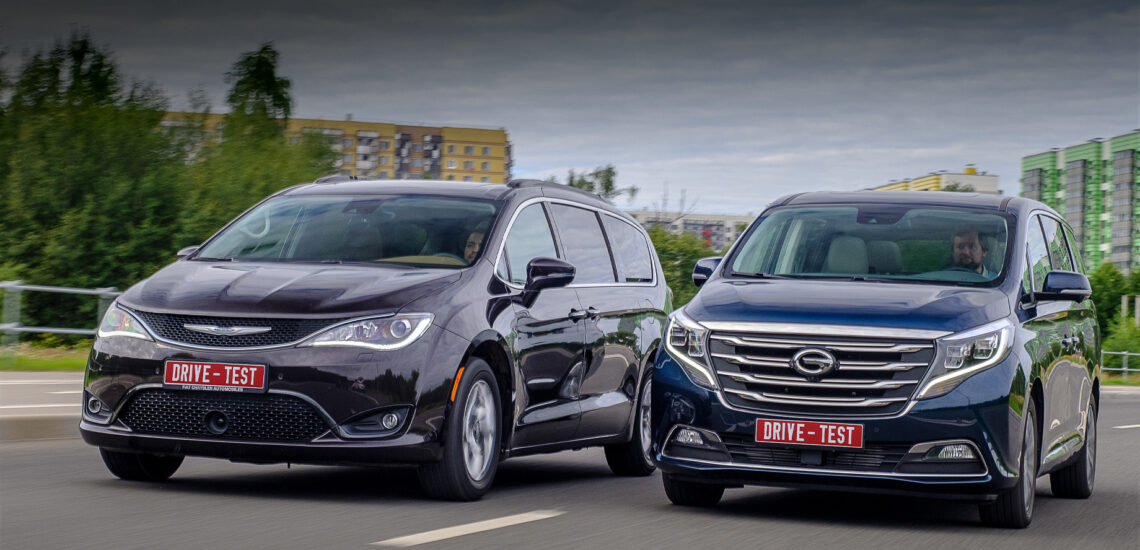

The minivan segment — those spacious five-seater wagons with optional fold-out trunk seats — has largely disappeared from global markets. The Citroën C4 Spacetourer and Grand C4 Spacetourer were among the last to go. Yet the maxivan class, where three full rows of seating come standard, is still very much alive. In this review, we put the Chinese newcomer GAC GN8 head-to-head with the Chrysler Pacifica — a vehicle that, until now, hadn’t featured in our tests — to find out which maxivan deserves your money.
Meet the Contenders
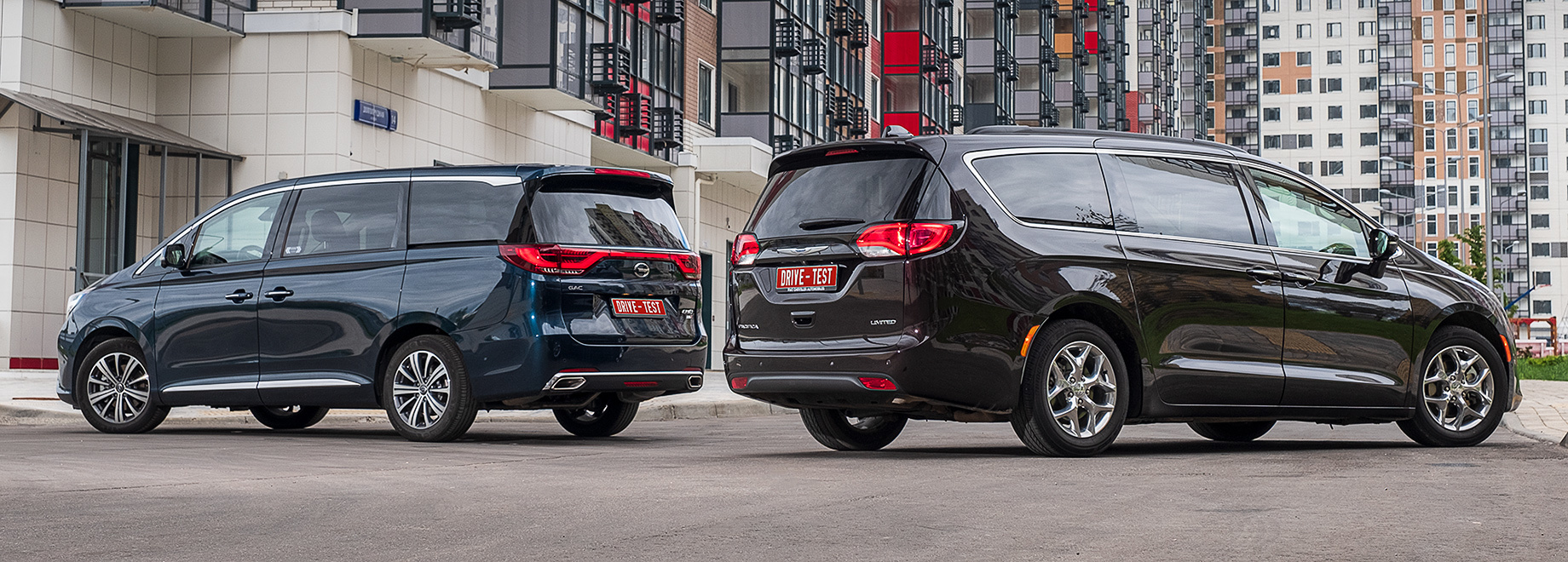
The Chrysler Pacifica is an elegantly proportioned large family vehicle stretching 5.2 meters in length, and it has been in production since 2016. Pre-owned examples with around 50,000 kilometers are now widely available at competitive prices, making the used market an attractive entry point. Our test car — provided by the official Chrysler representative — was a July 2017 model with roughly 40,000 kilometers on the clock, giving us a realistic preview of the pre-owned buying experience.
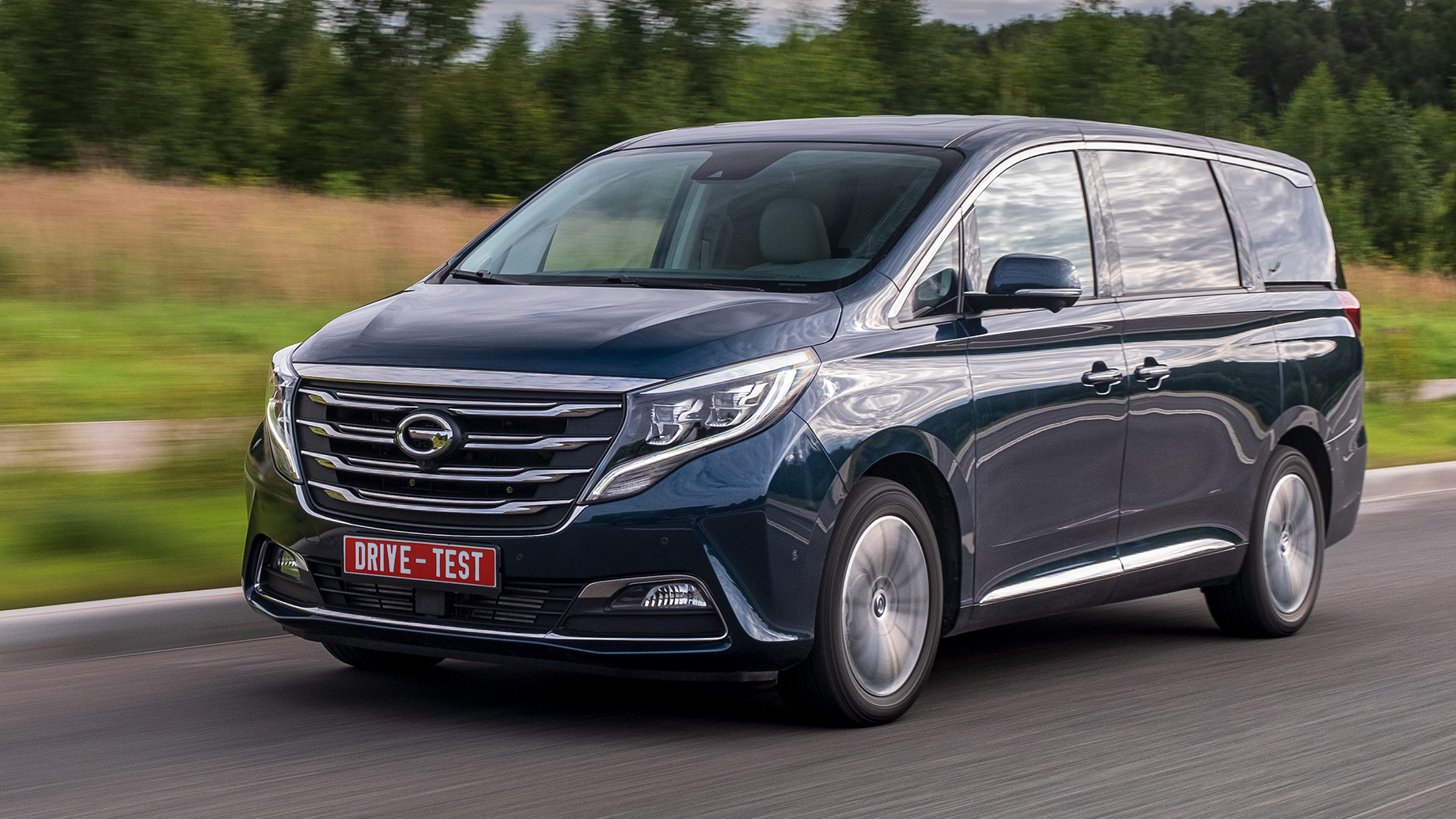
The top-spec GAC GN8 GT Premium sits in price between a new and a used Pacifica — making this comparison all the more relevant. Despite its more bus-like silhouette, the GN8 shares the Pacifica’s 2+2+3 seating layout and similar overall dimensions. The one notable difference: the Chrysler’s width exceeds two meters, giving it a distinct edge in interior spaciousness.
Interior Space and Comfort: Chrysler Pacifica
Step inside the Pacifica and the sheer generosity of space is immediately apparent. Every one of the seven seats feels genuinely human-sized — in the best American tradition. Highlights of the Pacifica’s interior include:
- A wide, thick-rimmed steering wheel that delivers a premium, substantial feel
- An abundance of storage compartments, glove boxes, and nooks throughout the cabin
- Thoughtfully designed cupholders with rubber retention clips — among the best in the segment
- Rear-seat screens, individual climate zones, and heating for second-row passengers
That said, there are some trade-offs. Various interior elements produce creaks and rattles — possibly attributable to age — and the overall impression, while spacious, isn’t without its rough edges.
The Stow’n Go System: Pacifica’s Party Trick
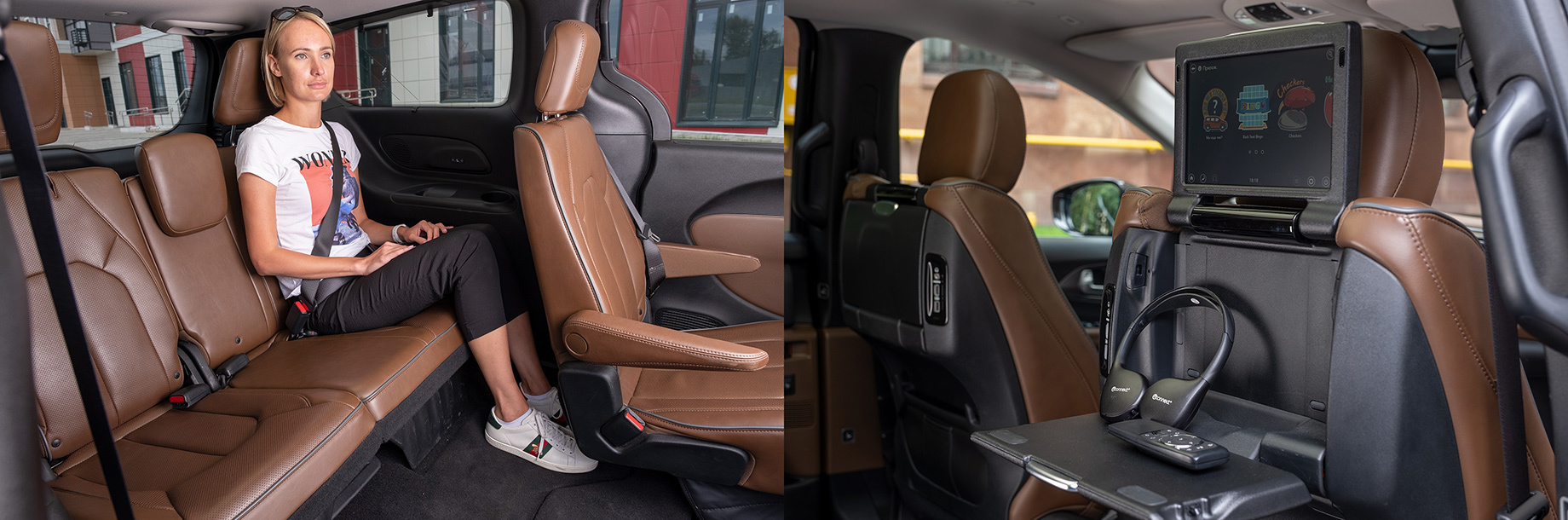
One of the Chrysler Pacifica’s most impressive features is its Stow’n Go seating system. The double-layered floor conceals both the second and third rows completely — something that has to be seen to be believed. Here’s how it works:
- Third row folds electrically in just 25 seconds
- Each second-row seat folds manually in about 10 seconds
- The result: nearly four cubic meters of cargo space with a completely flat floor
The compromise, however, is passenger comfort. All seats are firmer than average to allow for the fold-flat mechanism. The second-row split seats offer backrest angle and armrest height adjustment, but no longitudinal sliding — which means taller passengers will feel cramped at the knees. At 6’1″, the driver also loses most of the seat’s fore-aft adjustment range just to accommodate rear-row legroom.
Interestingly, the third row is actually more comfortable than the second: there’s more legroom, a better seating angle, and space to stretch out. Access, though, is awkward — you either squeeze through a narrow gap with the middle seats folded, or walk through the cabin aisle. The sliding doors themselves are on the narrower side, too. Third-row features include:
- Two sets of Isofix child seat anchors
- Cupholders and ventilation deflectors
- Overhead storage shelves
The downside: the upholstery is the firmest in the vehicle, and road noise at the back is noticeably higher than elsewhere in the cabin.
Interior Space and Comfort: GAC GN8
The GAC GN8 takes a fundamentally different approach — it’s designed to prioritize second-row VIP passengers above all else, at the expense of universal practicality. The second-row seats in the GT Premium configuration offer:
- Ottoman-style reclining with adjustment in all directions
- Lumbar support, ventilation, and massage functions
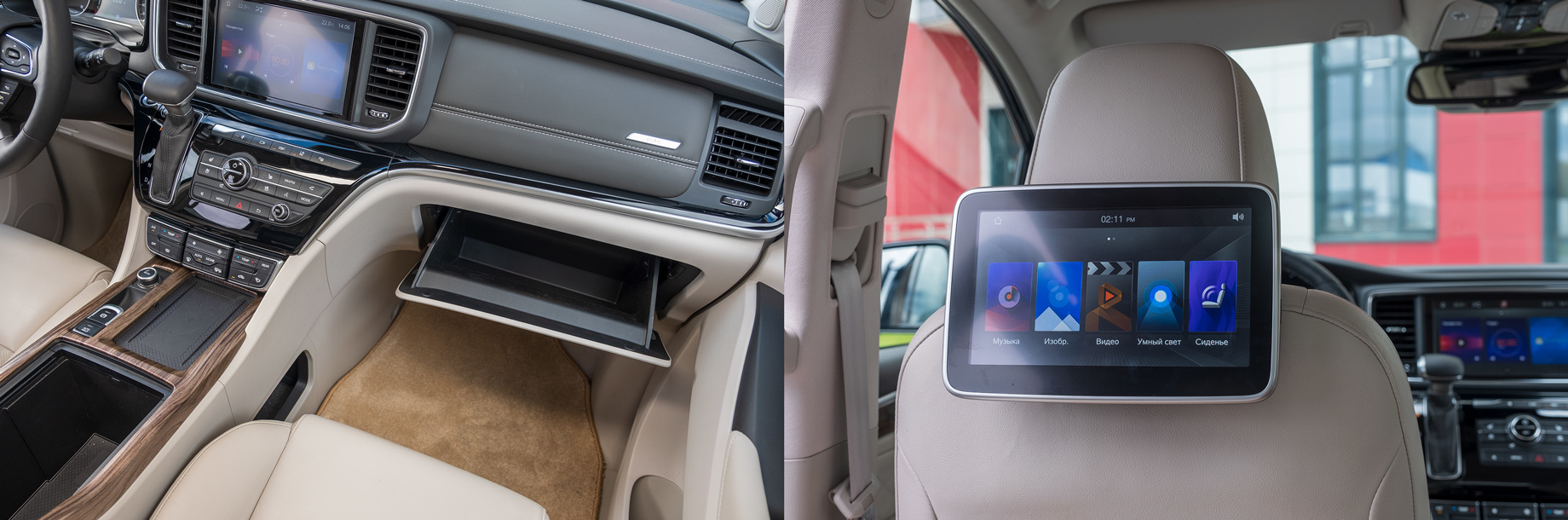
- Individual entertainment displays with a built-in media player
- Ambient lighting control via the rear screens
However, once the novelty of the massage seats wears off, some limitations become clear. The GN8’s second-row seats are best suited to passengers of average height or shorter — taller occupants will find the space tighter than expected. The third row is even more compromised: it’s accessed only through the cabin’s central aisle, the bench is narrow for three adults, and the seat cushion is short. Two passengers will sit comfortably; three will be a squeeze.
Notable omissions on the GN8 compared to the Pacifica include:
- No window blinds or folding tables for rear passengers
- Only one USB-A charging port for the entire rear cabin
- No practical cargo flexibility — the third row folds forward but cannot be removed
That last point is significant: the GN8 has virtually no meaningful cargo capacity for a five-meter vehicle. Bulky items like long planks or large appliances simply won’t fit — something the brand appears well aware of, given that trunk volume figures are conspicuously absent from GAC’s own product pages.
Build Quality, Ergonomics, and Driver Experience
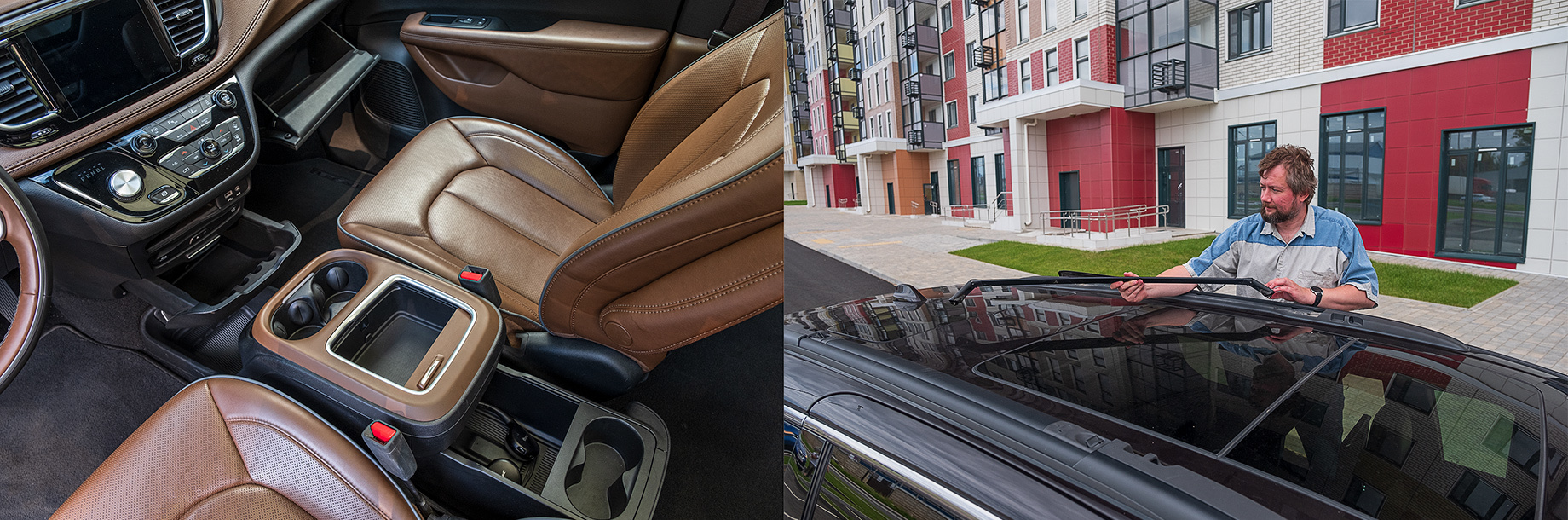
Both vehicles feature electrically operated sliding side doors and powered trunk lids, operable via ceiling buttons or the key fob. Motion sensors on the trunk prevent accidental closure on obstacles, and the Pacifica adds sensors on the side doors as well. The GN8 counters with a more refined solution: sensors integrated along the full length of the door seals to prevent pinching.
In terms of interior trim quality, the GN8 holds its own — soft-touch panels, quality leather, and well-labeled controls are present throughout. The main exception is the central tunnel’s printed wood trim, which feels out of place. However, getting in and out is slightly less convenient due to more prominent door sills; the Pacifica’s are nearly imperceptible by comparison.
Driving ergonomics reveal challenges on both sides:
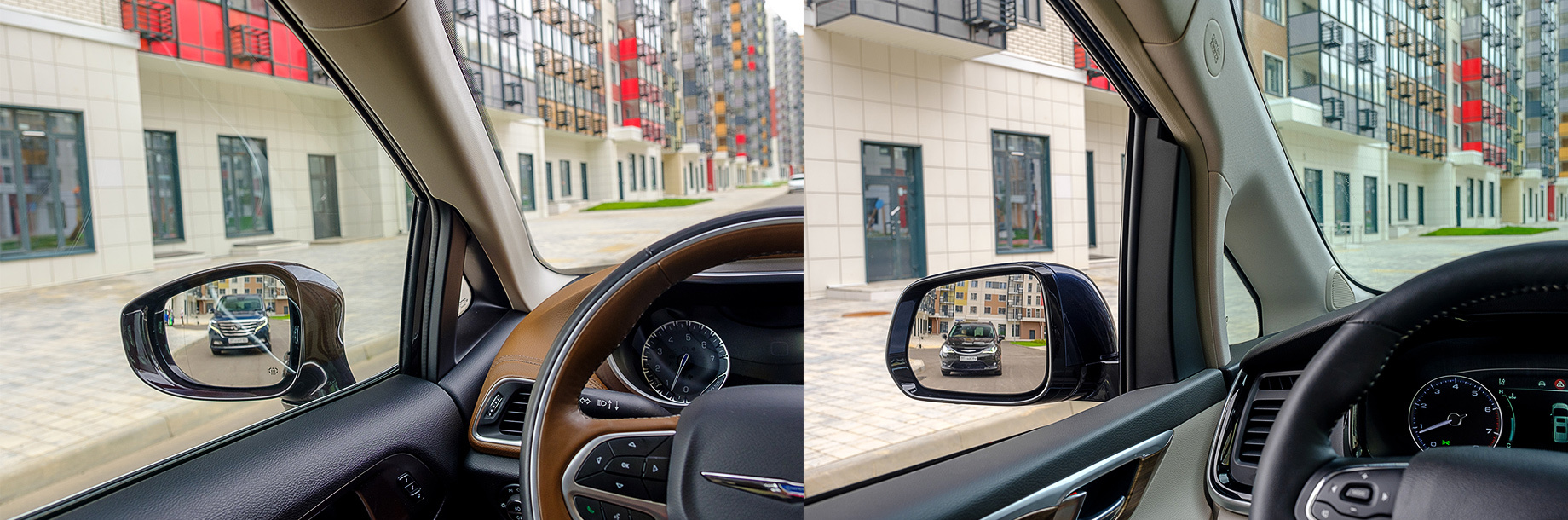
- Pacifica: The steering wheel can’t be lowered far enough, right-side mirror requires a near-90-degree head turn due to the wide body, and the rotary gear selector feels small and slippery. The infotainment menu is also somewhat confusing to navigate.
- GN8: The steering column adjusts in two planes but within limited ranges. Even after extended driving, finding a fully comfortable seating position takes time, and button layout on the center tunnel is similarly cluttered.
Engine, Transmission, and Driving Dynamics
Under the hood, the two vehicles take very different approaches:
- Chrysler Pacifica: 3.6-liter naturally aspirated V6, 279 hp, paired with a 9-speed automatic transmission
- GAC GN8: 2.0-liter turbocharged four-cylinder, 190 hp, paired with an Aisin 6-speed automatic
The Pacifica’s V6 sounds characterful at startup and pulls hard from low speeds. Official 0–60 mph time is a claimed 7.4 seconds, though the sensation of pace fades at highway speeds. Highway passing maneuvers require more planning than expected. The 9-speed gearbox is the weakest link — even gentle throttle inputs from 50–60 mph trigger 2–3 downshifts with noticeable hesitation and jerkiness. There are no Sport or Manual modes, only an “L” position for steep descents. On the plus side, the tall gearing pays off in fuel economy: our on-board computer recorded no more than 2.9 gallons per 60 miles.
The GN8’s turbocharged engine feels more refined in everyday use. Throttle response is smooth and linear — slightly delayed, but predictably so. The Aisin 6-speed shifts unobtrusively and comes with Sport and Winter modes, giving the driver meaningful control over character. The GN8 trails the Pacifica above 60–75 mph, but in urban and suburban driving, it’s the more satisfying powertrain to operate.
Ride Quality, Handling, and Noise Levels
The Pacifica handles predictably for a vehicle of its size. It tracks straight confidently, with a well-centered steering wheel that deflects ruts well. In corners, body roll is moderate and the line stays stable at sensible speeds. Push harder and the front end begins to wash wide early, with the steering going vague as lateral grip gives way. The suspension has a Mercedes-like character — bumps are rounded off, but you still feel larger imperfections. On rougher provincial roads, there’s a slight looseness to the damping that may or may not be related to our test car’s age and mileage. The standout quality is acoustic comfort: an apparent active noise cancellation system keeps the cabin hushed at all speeds, with only minor wind noise on the highway.
The GN8’s chassis feels more purpose-built for its role. The steering is accurate and informative, with 3.2 turns lock-to-lock (same as the Pacifica), and the car holds its line well. Large road imperfections are absorbed progressively — the suspension gets better as the bumps get bigger — though short, sharp surface irregularities transmit more vibration than expected on smooth roads. Cabin noise is comparable to the Pacifica, with slightly more wind noise at motorway speeds. Ground clearance slightly favors the GN8 at 150mm versus the Pacifica’s 130mm — a minor but meaningful edge on poorly maintained roads.
Braking is another area where the GN8 has a clear advantage. The Pacifica’s brakes feel heavy and reactive in a way that constantly reminds you of its 2+ tonne kerb weight. The GN8’s brakes are smoother and more progressive, making everyday driving less of a workout.
Visibility: A Shared Weakness
Both vehicles have visibility concerns worth noting:
- Pacifica: The A-pillars are thick but manageable; however, the side mirrors are positioned so far back that checking the right mirror requires turning your head nearly 90 degrees — a real inconvenience given the wide body. A blind-spot monitoring system helps compensate.
- GN8: The windshield is narrow with an unusually small wiper sweep area, and the A-pillars are extremely wide and angled toward the center of the car, creating meaningful blind spots.
Verdict: Which Maxivan Should You Buy?
Both the Chrysler Pacifica and the GAC GN8 are well-engineered vehicles in their own right — but they serve meaningfully different needs.
Choose the Chrysler Pacifica if you want:
- Maximum versatility — the Stow’n Go system is genuinely impressive for cargo use
- A genuinely large interior that accommodates seven adults with reasonable comfort
- A well-established name with a healthy pre-owned market
- Strong value for money in the three-year-old used market
Choose the GAC GN8 if you want:
- A premium VIP experience for second-row passengers with massage, ottomans, and individual screens
- A more refined and harmonious driving experience overall
- Smoother brakes and a more intuitive powertrain in city driving
- Modern tech features like wireless charging and ambient lighting control
The Pacifica’s passenger comfort isn’t its strongest suit — fixed, firm seats and limited adjustability hold it back — but its sheer versatility and interior quality make it excellent value as a used purchase. The GAC GN8, meanwhile, is a genuinely impressive effort from a Chinese brand: minimal rough edges, a capable chassis, and a luxurious rear compartment. Its limitations — a compromised boot, a narrow third row, and VIP seating that only truly suits passengers of average height — will rule it out for large families. And for those it does suit, the question remains: will they overlook an unfamiliar brand name for everything the GN8 has to offer?
This is a translation. You can read the original here: https://www.drive.ru/test-drive/chrysler/gac/5f476c38ec05c48a72000097.html

Published September 15, 2022 • 10m to read