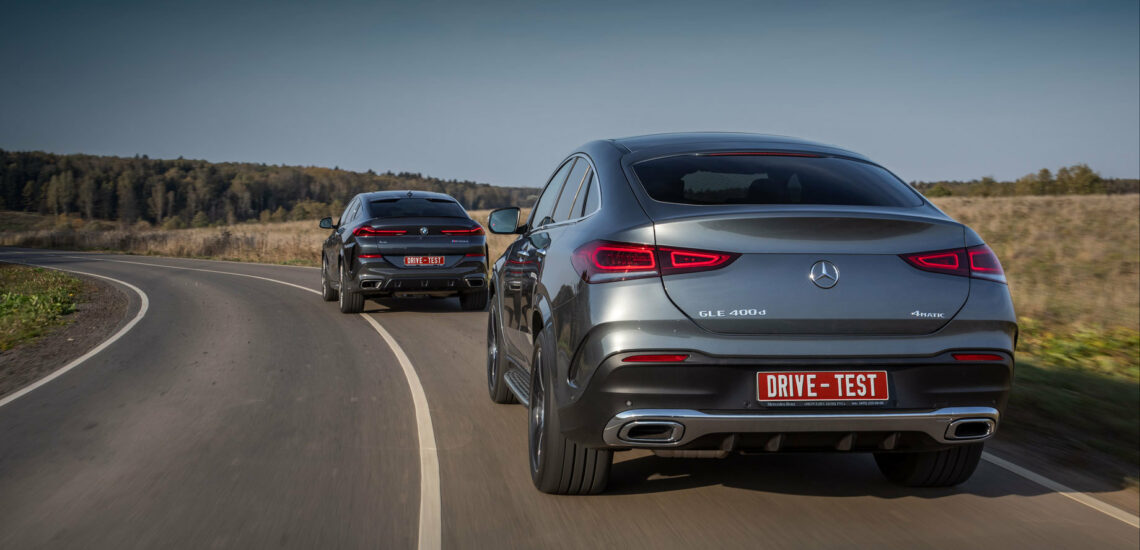

As a rule, it’s our workmate Alex who is on the other side of the camera in our reviews. He’s a “director-operator” — a rare specialist who handles both jobs at once. Our Alex is a petrolhead and lifelong BMW fan. More recently, he even traded his 5 Series E61 wagon for a diesel short-wheelbase 7 Series. So when he tells me that the market newcomer in this comparison, the Mercedes-Benz GLE 400d Coupe, is actually his preferred pick over the BMW X6 M50d, I ask him to explain himself. Being a member of the generation that explains everything through memes, he sends me two pictures instead of words.

Let’s set aside the slight inaccuracy of personifying two-ton, six-figure diesel crossovers — if we’re sticking with the meme, both guys would need an extra 20 years and 70 kilograms. But the underlying point lands accurately: the main problem with the BMW X6 is its design. I say “problem” because the 400-horsepower X only really earns its look of an aggressive, fashion-forward bruiser at very high speeds — speeds an ordinary owner will rarely, if ever, touch.
Ride Comfort and Everyday Driving Feel
In everyday life, the X6 M50d gives the glamorous, softly-sprung GLE a run for its money in plush behavior. It sways gently over undulations and absorbs road imperfections without fuss, which raises the question of which one is really the “Mercedes” here. BMW’s active steering system means the wheel needs only about two and a quarter turns lock-to-lock in parking maneuvers, and rear passengers can feel the back wheels turning slightly to aid maneuverability.
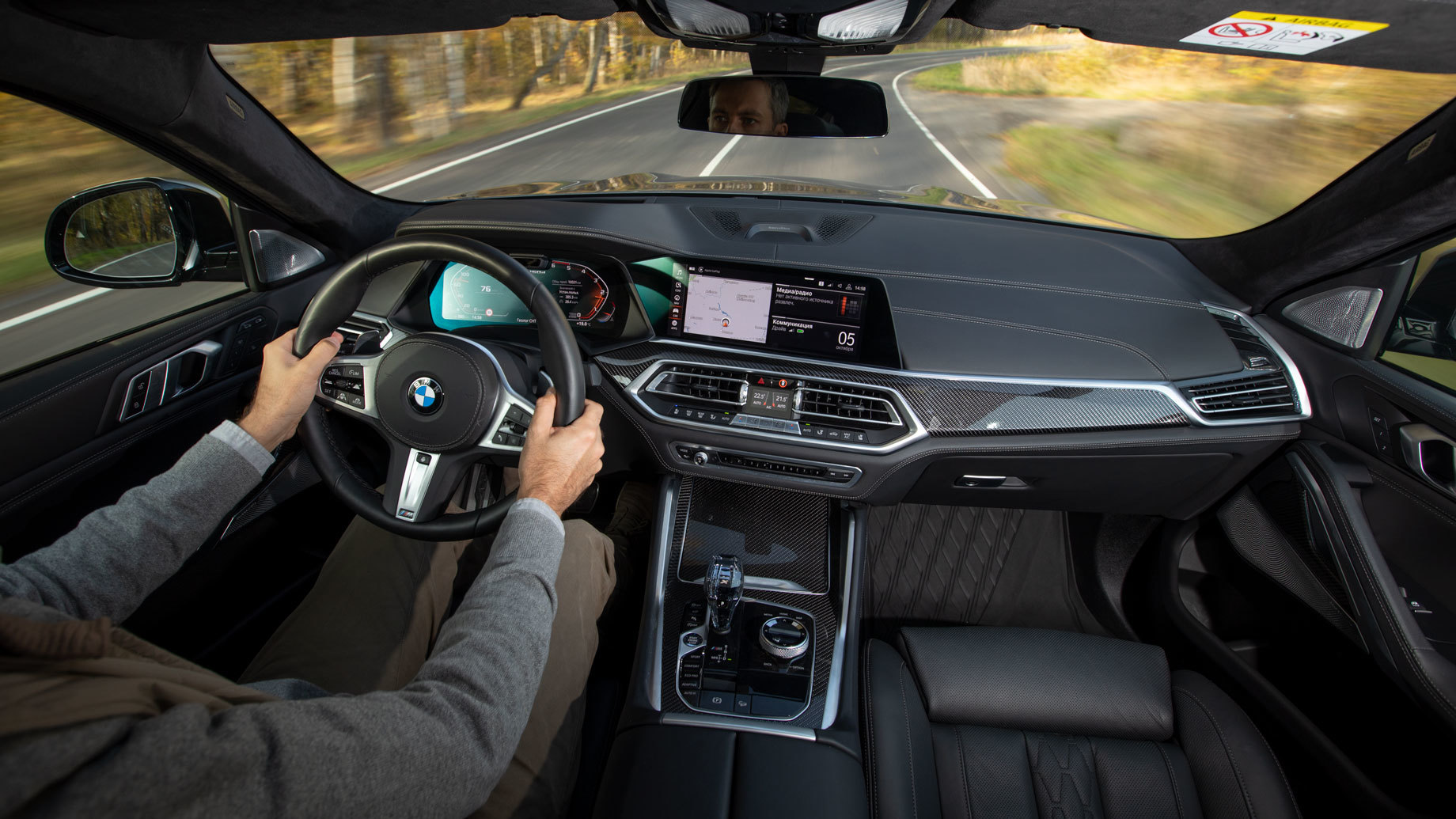
This is my first hands-on experience with the X6, and its versatility is a pleasant surprise. It almost feels like two cars in one:
- The relaxed side: smooth, easy to drive, only unsettled by large potholes.
- The aggressive side: tight and eager off the line, with an intrusive, almost synthetic baritone engine note pumped through the speakers.
Drive gently on the small turbos and you can relax. Push hard into the big, high-pressure turbo and the car goes all-in with you.
The GLE Coupe’s character is more consistent from end to end. The Mercedes feels a touch firmer at all times — never too soft, so it doesn’t get caught out when you need to move quickly. According to Racelogic timing gear, it loses no more than half a second to the BMW on the sprint to 100 km/h, and it holds a surprisingly composed line through corners. It achieves this the old-fashioned way, without the complex mechatronics BMW relies on (adaptive anti-roll bars, fully active chassis, electronically controlled differential locking). As a result, the Benz stays composed at all times — even on a relaxed drive to get your nails done.
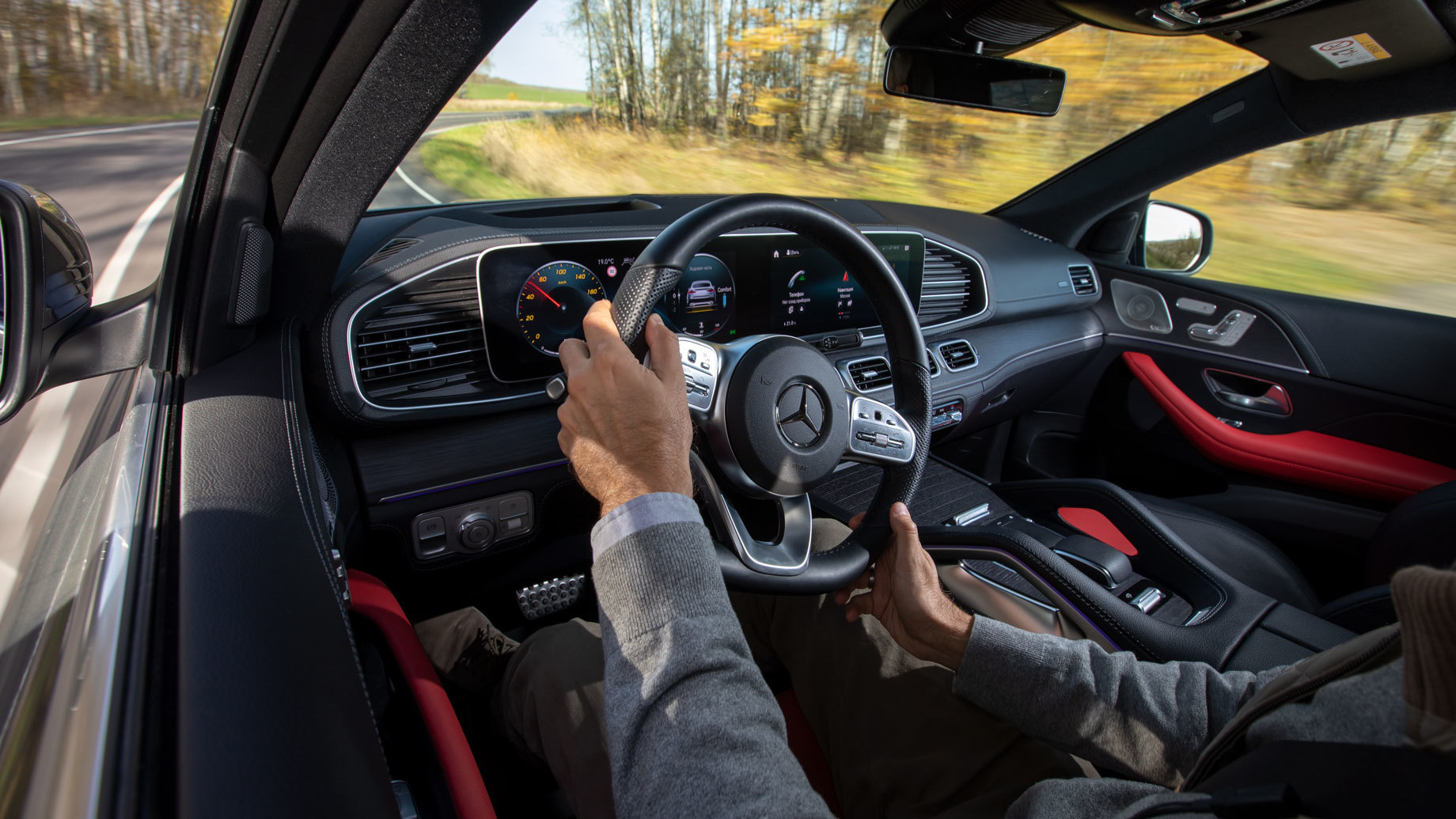
Interior, Space, and Design
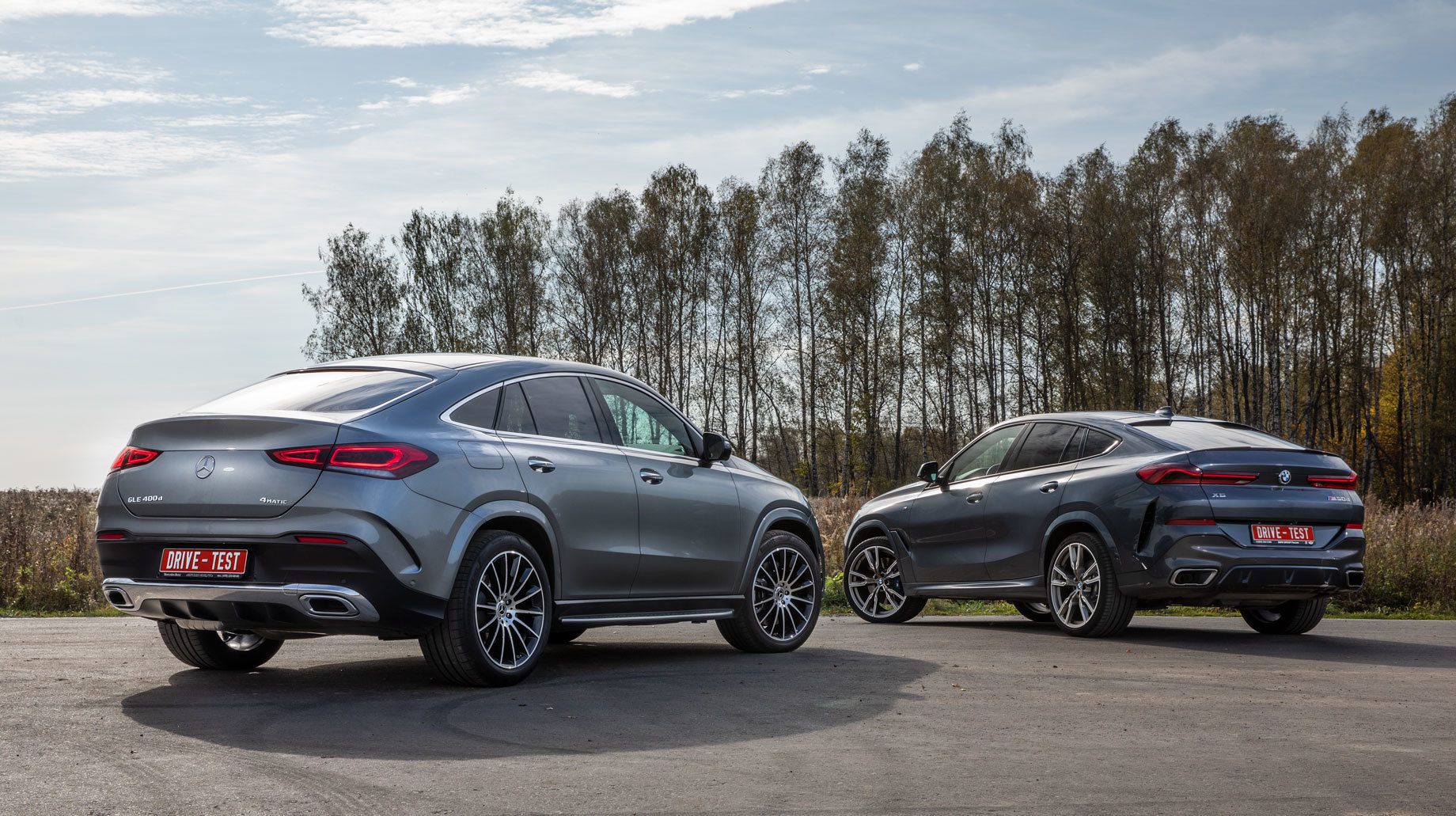
To make up for its slightly firmer ride, the GLE offers a light steering wheel, large screens, and a polished interface. Its cabin doesn’t taper in immediately behind the front pillars, so there’s more room in the back — both on the rear seat and in the trunk. Externally, the Benz is also more understated. It’s essentially how the X6 might look in a relaxed Comfort mode, before flexing, flaring its nostrils, baring its teeth, and lunging forward. Mercedes’ designers landed on a solid, if slightly heavy and overly inoffensive, look.
Engine, Transmission, and Performance
Both cars mask their real capabilities. Beneath the BMW’s aggressive exterior hides a gentler, occasionally indecisive character — the engine can get tangled between its sequential turbochargers or its planetary gearset, struggles to downshift cleanly under hard acceleration, and sometimes jerks during upshifts. The three-pointed-star “soap bar,” on the other hand, can dart around so eagerly that you’d shatter half your partner’s makeup collection trying to keep pace. Despite having more gears, the Mercedes responds more predictably to throttle inputs and reaches peak torque earlier.
Quick performance comparison based on Racelogic data:
- BMW X6 M50d: 0-60 mph in roughly 5.5 seconds, with a near-accurate speedometer.
- Mercedes GLE 400d Coupe: 0-60 mph in roughly 6 seconds, with a smoother, more gradual launch.
- Both cars feature a launch-control-style two-pedal start, kicking off at around 3,000 rpm.
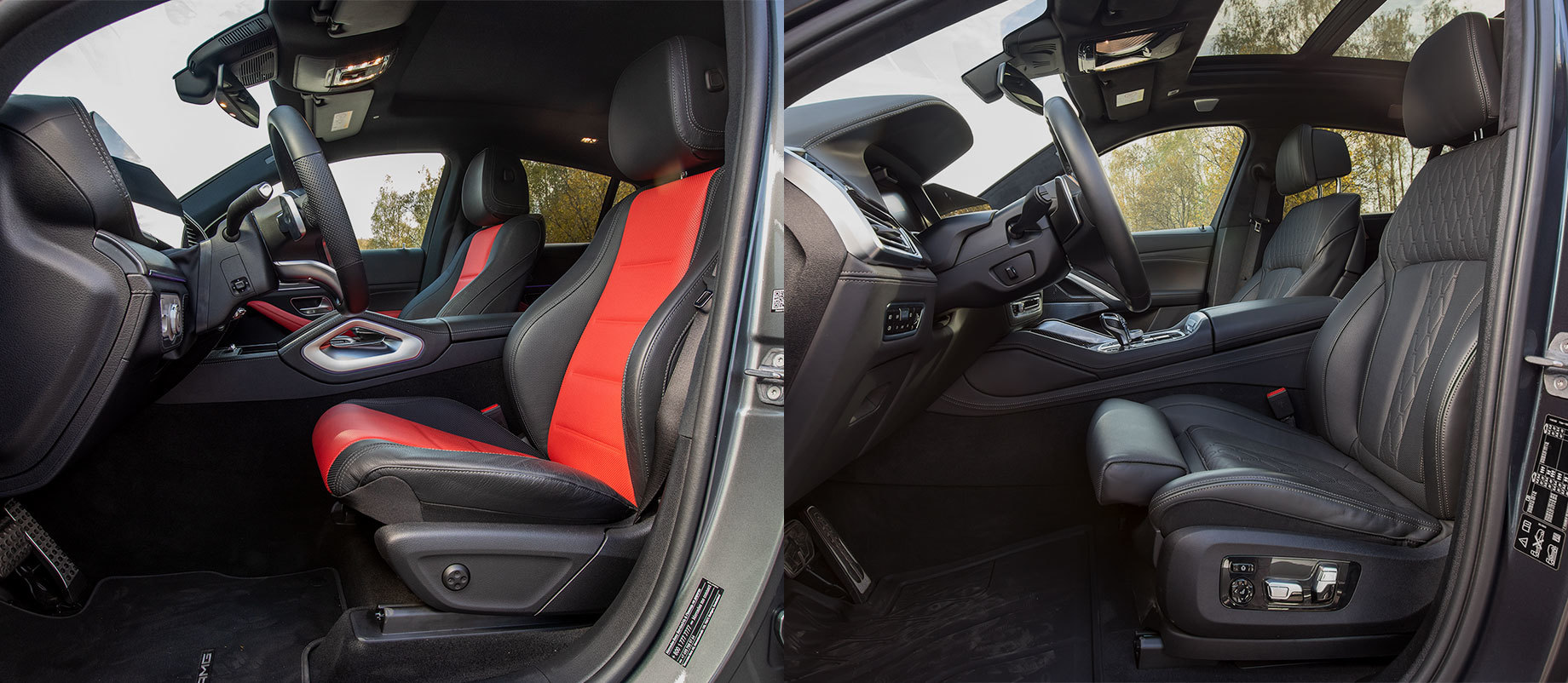
Why I’d Still Choose the BMW X6 M50d
Modern BMW styling isn’t really my taste. Still, when it’s time to choose a car for the commute home, I reach for the M50d’s key. Here’s why:
- The steering wheel is slightly heavier, but the effort feels far more natural than the lightweight, artificially weighted Mercedes setup.
- The seat distributes pressure noticeably well, even on longer drives.
- Turn signal stalks feel heavier, the trim feels more premium, and the head-up display stays compact and unobtrusive.
- The cabin is quieter, thanks partly to optional double glazing (also available, at a steep price, on the GLE) and partly to better isolation from mechanical and road noise.
- Adaptive cruise control is noticeably better tuned for stop-and-go city driving — the X6 slows down smoothly without needing a nudge on the accelerator afterward, and it doesn’t have the brake-pad rubbing noise the GLE makes at crawling speeds.
Rear Seat Comfort and Off-Road Capability
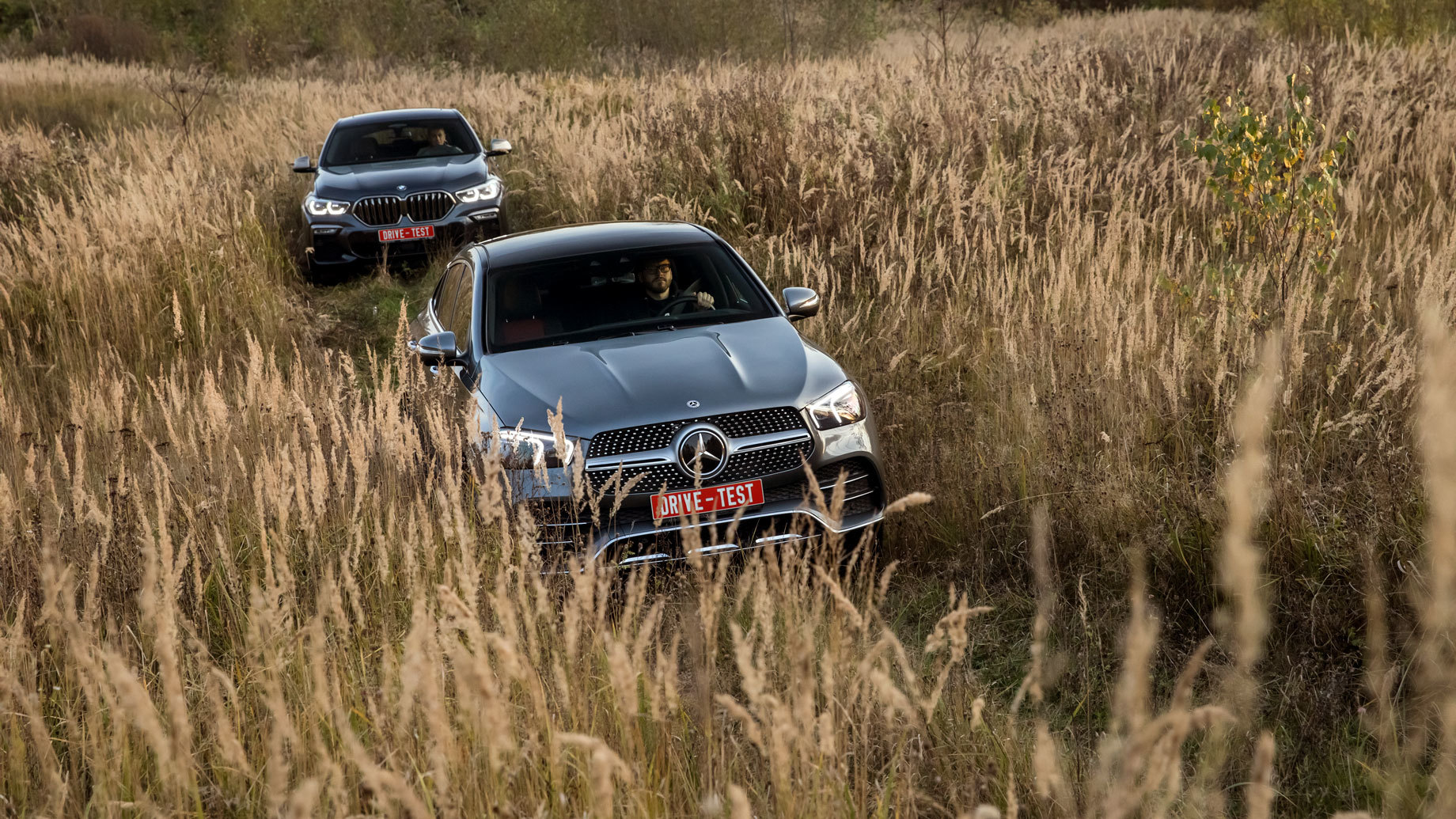
If you’re regularly riding in the back seat and care about noise and vibration, the Mercedes is the clear winner. The GLE also handles speed bumps better, with less risk of head contact against the roofline. What it can’t do is decouple the anti-roll bars the way the BMW can, so it tends to rock side to side over uneven road cross-sections. To be fair, both crossovers will rock you in their own way — the Mercedes turns you into a bobblehead, while the BMW’s tighter seat keeps movement mostly vertical.
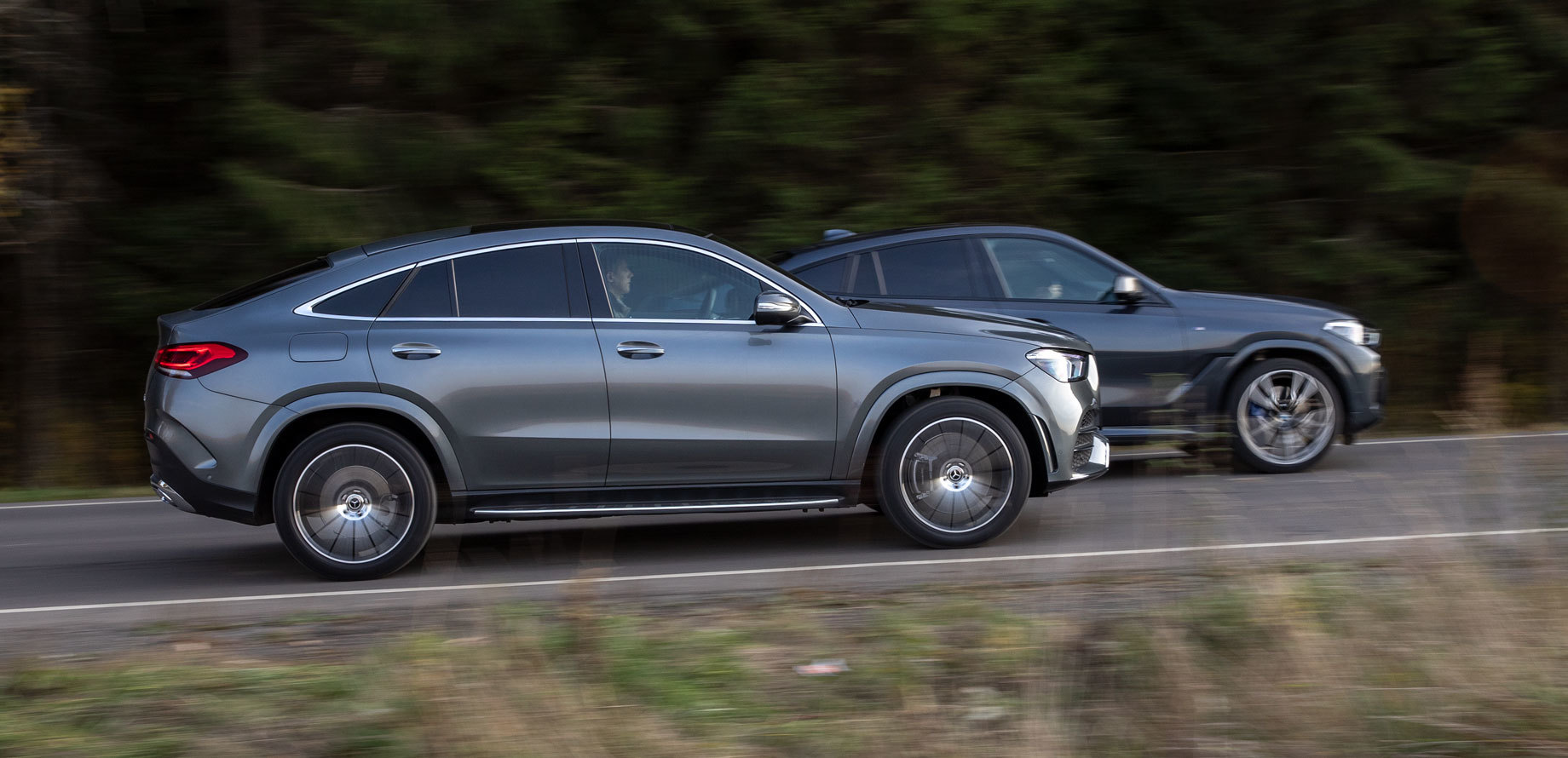
Sales Figures and Market Position
In my view, the M50d offers a wider range of capability for comparable money — and it’s not a coincidence that buyers vote for the X6 with their wallets far more often, with high-output diesel variants selling in the hundreds of units. That said, I only have partial-year data to go on: Mercedes is withholding current sales statistics until year-end. It seems manufacturers are trying to manage negative headlines in a shrinking market, but secrecy tends to make things look worse, not better. It’s clear the GLE C167 hasn’t built much momentum yet, and something tells me that’s unlikely to change soon.
So why does the relatively rare, niche Mercedes still feel like the predictable, default choice? Because it’s built for a conservative buyer who doesn’t want to overthink the decision. Have a look at what Mercedes’ online configurator has become — option descriptions read like promises of a better life, equal parts amusing and depressing. The typical buyer simply walks into a premium showroom and picks a familiar standard. That’s fine when it’s a near-mandatory choice like the S-Class or an unrivaled G-Wagon. But the GLE isn’t really a “default” pick. Despite its friendly styling and fresh multimedia system, it’s not good enough to justify skipping the competition entirely.
Upgrading From an Older Mercedes GLE
Even so, our petrolhead Alex did end up siding with the Mercedes. And several commenters on my social channels insist they’re moving up by trading their previous-generation X for the new GLE Coupe. So how much does quality of life really improve when switching from an old Mercedes to a new one? If you’ve made that jump, feel free to share your experience in the comments. It’s not that the outgoing C292 model has suddenly aged the moment the C167 hatch arrived — at least not visually. But it’s now obvious just how dated its interior feels by comparison.
How the X6 Has Evolved
It would be a stretch to say the X6 has made a dramatic leap forward in driving dynamics compared to its predecessor. Still, I get the impression BMW is pushing harder and iterating faster than Mercedes in this segment. I was about to say the X6 sets the benchmark for hatch-style crossovers — but then I remembered Audi’s 900 N·m, eight-cylinder SQ8. Any conversation about super-diesel performance SUVs isn’t complete without Audi in the mix.
Shared Strengths and Shared Weaknesses
The two cars actually have a lot in common — swap their bodies and the result would feel perfectly natural. Even their flaws overlap:
- Limited visibility and sensitivity to road ruts.
- Failed ambitions of becoming a true “digital hub” on wheels.
- General buyer skepticism toward long-term reliability and dealer service — it seems nobody’s fully satisfied with build quality and service anymore, aside from Lexus owners and the lucky few with trouble-free Land Rovers.
Final Verdict
So this isn’t really an argument for BMW over Mercedes — it’s an argument for test-driving as many options as possible before settling on a car. Push yourself, even against your own aesthetic instincts, and avoid the well-worn path of going from Benz to Benz or bimmer to bimmer. The right car for you isn’t always where you’d expect to find it. And even if your search eventually brings you back to where you started, you’ll understand your own preferences better — and the choice will feel more personal.
This is a translation. You can read the original here: https://www.drive.ru/test-drive/bmw/mercedes/5f7dbf1aec05c4627e000020.html

Published August 18, 2022 • 8m to read