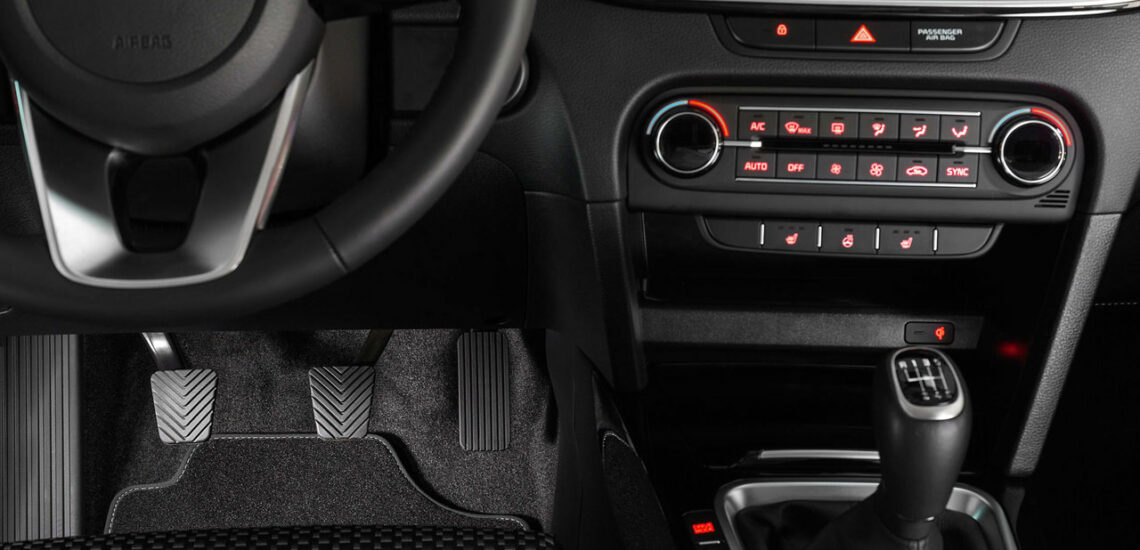

The Kia Rio hatchback was one of the first Kia models to feature the innovative intelligent Manual Transmission (iMT) — a six-speed manual gearbox paired with a fully electronic, wire-controlled clutch. The iMT represents a major step in the digitalization of drivetrain components, following in the footsteps of technologies like the electronic accelerator pedal, brake-by-wire systems, and steer-by-wire setups. But what exactly does Kia’s electronic clutch do, and why does it matter?
How Does the Kia iMT Electronic Clutch Work?
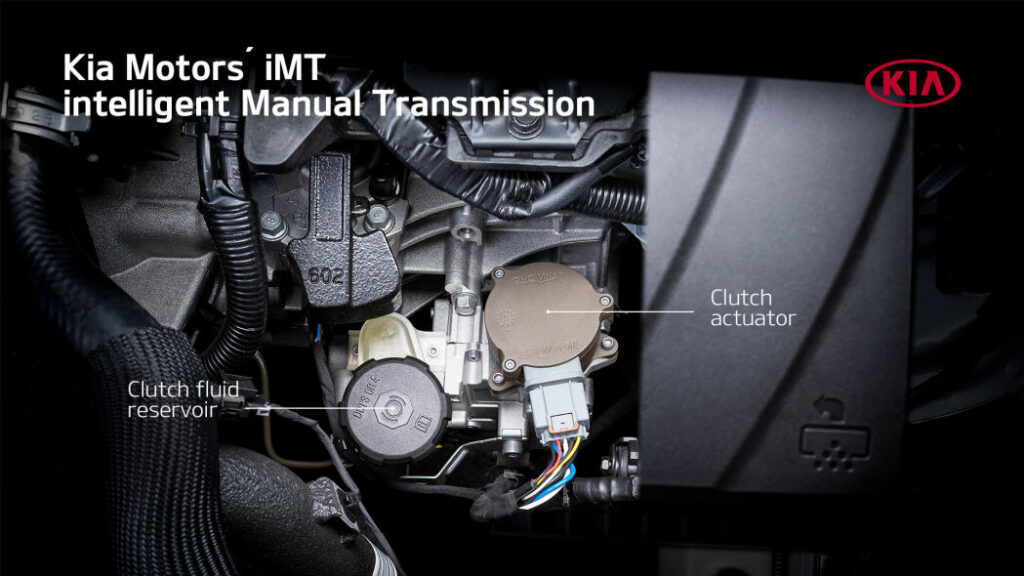
With the iMT system, the driver still shifts gears manually — just like a traditional manual transmission. However, the clutch pedal no longer operates the clutch through a mechanical link or conventional hydraulic circuit. Instead, it sends an electronic signal to the transmission control unit (TCU), which then manages the clutch automatically. Here’s the step-by-step process:
- The driver presses the clutch pedal, which sends a signal to the TCU.
- The TCU activates a dedicated actuator.
- The actuator builds hydraulic fluid pressure within the clutch circuit.
- The working cylinder engages or disengages the clutch accordingly.
This seemingly complex chain serves a specific purpose: it allows the vehicle’s hybrid system to control the clutch independently — without any input from the driver.
Why Kia Uses an Electronic Clutch in Its Mild Hybrid (MHEV) System
The iMT is exclusively used in Kia’s EcoDynamics+ mild hybrid (MHEV) variants, which feature a 48-volt electrical architecture and an integrated Mild-Hybrid Starter-Generator (MHSG) with belt drive. The MHSG serves three key roles:
- Acceleration assist: The MHSG adds torque alongside the combustion engine during acceleration.
- Energy recovery: During deceleration, it acts as a generator and recovers kinetic energy.
- Enhanced start/stop functionality: It replaces the conventional start/stop system, enabling much earlier engine shutdowns.
That last point is where the electronic clutch becomes essential. A conventional mechanical clutch can only allow the engine to switch off once the car comes to a complete stop and the driver selects neutral. With the iMT’s electronic clutch, the system can disengage the clutch automatically and shut down the engine during coasting — even while a gear is still engaged — just as some modern automatics and dual-clutch transmissions can do.
Seamless Engine Restart with iMT
When the engine needs to restart, the iMT system handles the process smoothly and automatically:
- The currently selected gear remains engaged — the driver doesn’t need to do anything.
- The MHSG pre-spins the engine to the correct RPM before the clutch re-engages, preventing any jolt or lurch.
- If the current gear is too high for the vehicle’s speed, the clutch stays open until the driver selects a more appropriate gear.
- The engine restarts automatically as soon as the driver presses the accelerator, brake, or clutch pedal.
Fuel Savings and Emissions Benefits
Because the electronic clutch allows the engine to stop sooner and restart later compared to a standard start/stop system, it delivers measurable gains in fuel economy and CO₂ emissions. Key figures from Kia include:
- ~3% fuel savings from the iMT system alone, measured in real-world driving conditions.
- Up to 10.7% total fuel savings from the full MHEV system, measured on the NEDC cycle.
While the iMT has expanded what’s possible with a mild hybrid and a manual gearbox, Kia continues to offer MHEV variants with dual-clutch semi-automatic transmissions as well. The company recognizes that many drivers — particularly in Europe — still prefer the engagement and control of a traditional manual gearbox. The iMT gives them just that, while adding modern hybrid efficiency on top.
The Electronic Clutch Isn’t Entirely New: A Brief History
While the iMT feels cutting-edge, the underlying concept of an automated clutch has roots going back decades. A notable early example is the 1955 Citroën DS, which featured a four-speed semi-automatic transmission. Drivers shifted gears manually using a lever on the steering column, but there was no clutch pedal to press. Instead, a hydraulic controller monitored engine speed, throttle position, and brake input to manage clutch engagement automatically. The experience was remarkably intuitive:
- The driver selected a gear, released the throttle, and pressed it again — the clutch did the rest.
- At a standstill, the clutch disengaged automatically; releasing the brake prompted the engine to rev slightly and re-engage the clutch smoothly.
- The result felt similar to driving a modern automatic transmission.
Kia’s iMT builds on this legacy, integrating it with 21st-century hybrid technology to deliver efficiency, convenience, and driving pleasure in one package.
This is a translation. You can read the original here: https://www.drive.ru/technic/kia/5ef9a14cec05c46250000054.html

Published August 05, 2021 • 4m to read