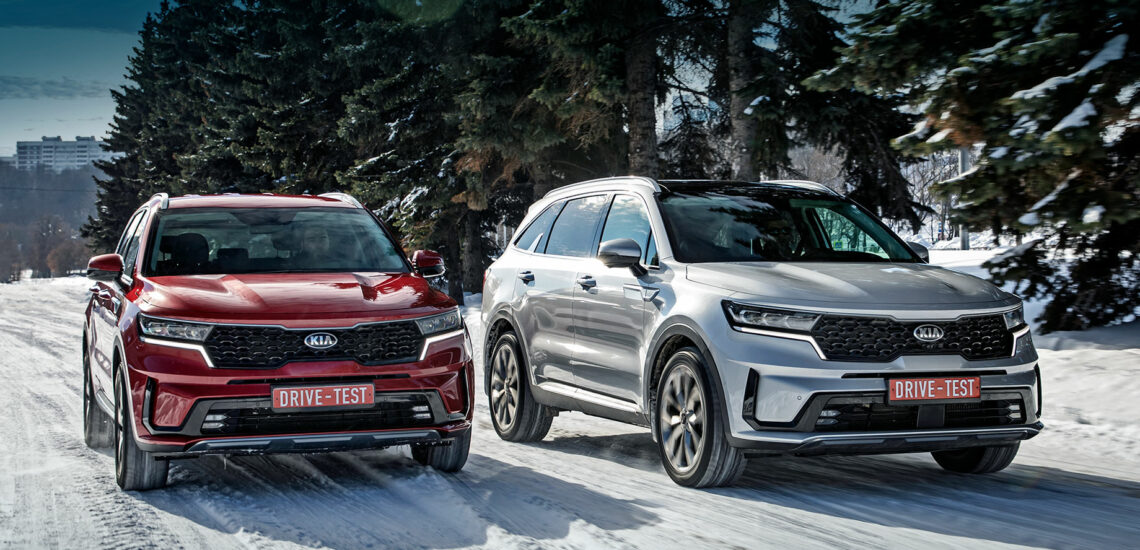

The Kia Sorento has no shortage of demand. Word spreads fast about stock availability, and buyers are lining up in semi-annual queues — sometimes without even knowing the final price. It’s easy to see why: the ratio of equipment to cost is simply too attractive to pass up.
Diesel or Gasoline: The Core Dilemma
Choosing the right Kia Sorento powertrain is not straightforward. Here’s the crux of the issue:
- The 2.2 CRDi turbodiesel is paired exclusively with a dual-clutch automated robotized gearbox — a transmission surrounded by skepticism and a still-unknown long-term reliability record. Its sales have already been suspended multiple times due to software issues.
- The 2.5 MPI naturally aspirated gasoline engine comes with a traditional 6-speed automatic — a proven, predictable unit, though the engine itself has a long-standing reputation for higher oil consumption.
Trim Levels and What You Actually Get
The diesel engine is more popular — and more expensive — available only in the two top-tier trim levels: Premium and Premium+. These are the only trims that offer:
- Electronic parking brake with Hold function
- Head-up projection display (Premium+ only)
- Adaptive cruise control (Premium+ only)
- 12-inch digital instrument cluster instead of analog dials
- Remote self-parking system
Buyers of any gasoline version must settle for an old-fashioned foot-operated parking brake. The rotary shifter — arguably more elegant and space-saving — is also exclusive to the diesel Premium+, while even the diesel Premium retains a traditional gear selector.
Known Problems with the Diesel Sorento
Before choosing the 2.2 CRDi, buyers should be aware of two recurring issues:
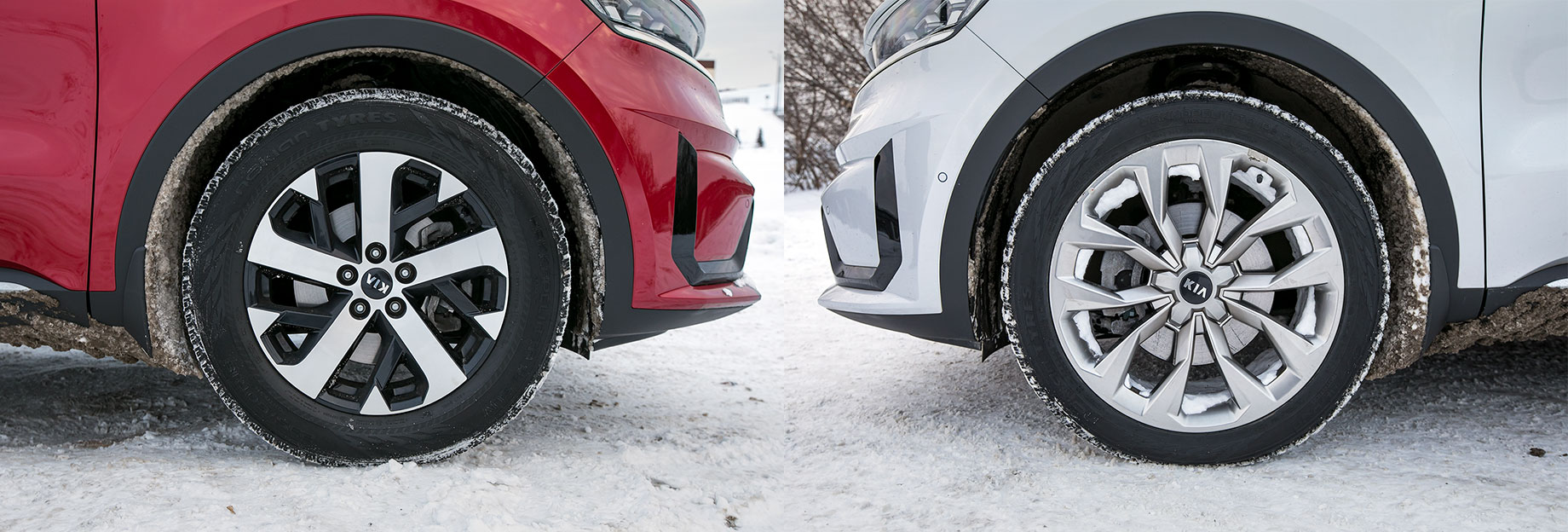
- Ride comfort: The diesel is only available with large-diameter wheels (19–20 inches). The test car ran on 255/40 R20 Nokian Hakkapeliitta R3 SUV tires. The suspension already handles small and medium road imperfections with noticeable firmness — wide, low-profile tires amplify vibration and cabin noise. Even at the prescribed 2.4 atm tire pressure (which drops further in cold weather), harshness is evident.
- Dual-clutch behavior in traffic: The robotized gearbox tends to disengage the clutch at any slight lift off the throttle at low speeds. When you reapply the gas, there’s a delay before drive is re-engaged — sometimes a full second without torque — followed by an abrupt jerk. Software updates have been released to address this (most recently noted in April of last year), and improvements are ongoing.
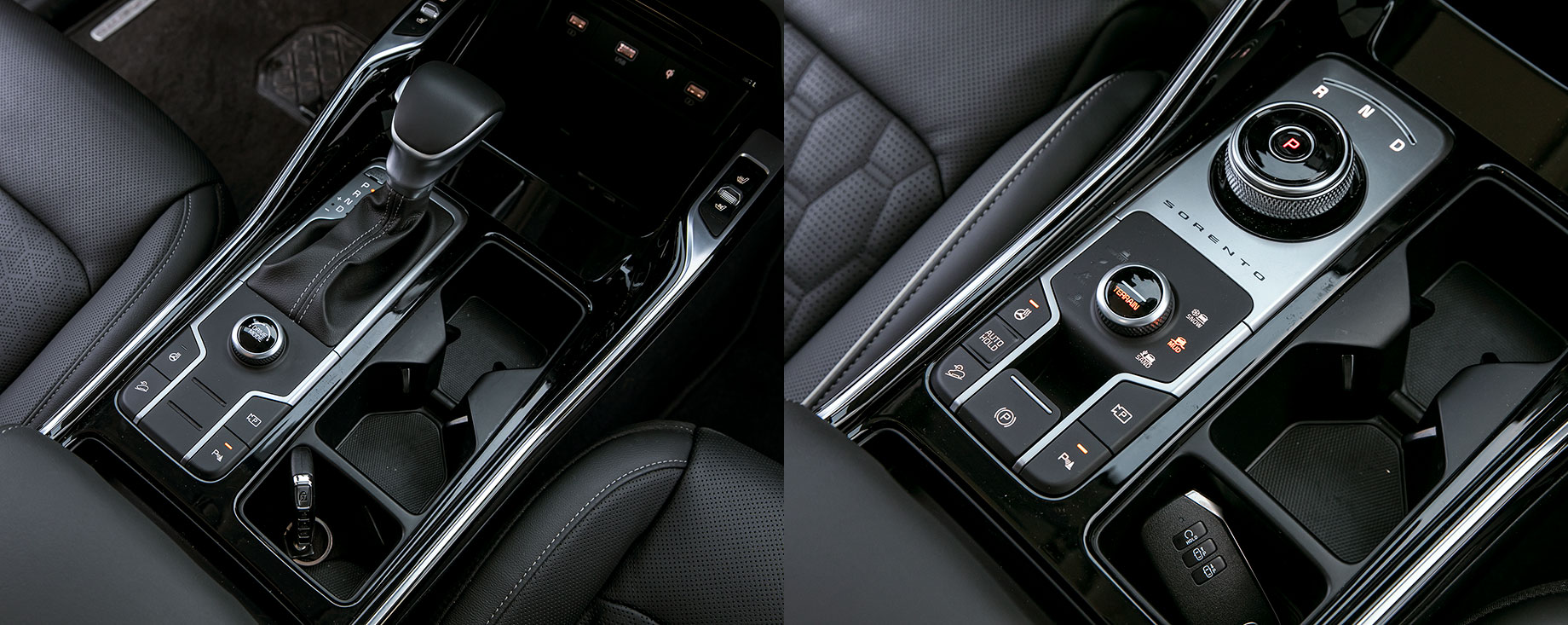
Two different versions of the center console of the 4th generation Kia Sorento crossover
On the Road: Diesel Performance
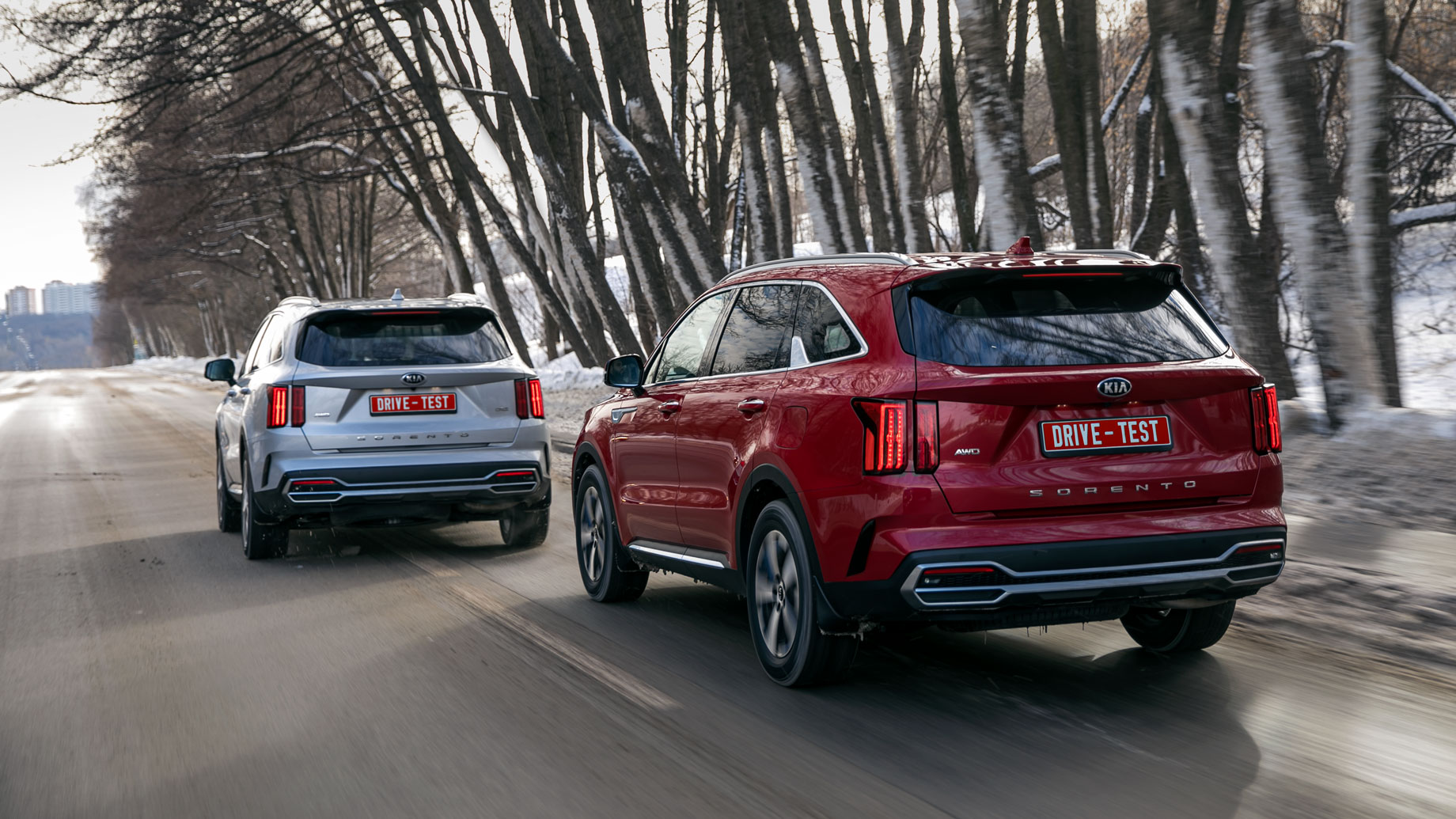
In normal traffic flow and highway driving, the dual-clutch gearbox finds its rhythm and the diesel engine’s strengths become apparent. The silver CRDi Sorento feels noticeably more effortless to drive than its gasoline counterpart — pulling cleanly at speed without strain. For daily urban commuting, the diesel is the more comfortable choice.
However, it has its weaknesses during spirited driving:
- The Sorento exhibits inertia under hard acceleration — not ideal for quick responses
- After lifting off the throttle, the engine continues revving briefly before settling, making it harder to use engine braking for trajectory adjustment
- Off-road, the dual-clutch is more hesitant than a conventional automatic, leaving the Sorento struggling in mild cross-axle situations
- The Sport mode — which proactively locks the clutch — is the best off-road option, but it causes noticeable understeer on icy surfaces
- Idle vibration is significantly higher in the diesel compared to the peaceful, quiet gasoline variant
Fuel Consumption: Real-World Numbers
Based on actual fuel receipts during the test, real-world consumption figures were:
- Kia Sorento 2.2 CRDi (diesel): 9.5 liters per 100 km average
- Kia Sorento 2.5 MPI (gasoline): 13.2 liters per 100 km average
The diesel advantage in fuel economy is real and significant — but so is the price premium.
The Case for the Gasoline Sorento
Despite the diesel’s appeal, the gasoline Sorento 2.5 MPI has several genuine advantages:
- More predictable throttle response in all driving situations
- A conventional automatic gearbox that behaves reliably in difficult conditions like off-road or tight parking
- No significant difference in steering feel or feedback compared to the diesel — both use electric power assistance
- Noticeably warmer cabin during short winter trips — diesel engines take longer to heat up
- Lower purchase price, with smaller wheels (17-inch on base, 18-inch on Luxe/Prestige) that ride more comfortably
- No need to budget for an aftermarket pre-heater, which many diesel Sorento owners end up installing despite a factory electric heater already being included
Advanced Driver Assistance: What’s Exclusive to Diesel
The diesel Premium+ stands apart thanks to a more advanced front radar, which enables the full DriveWise assistance suite:
- Adaptive cruise control
- Remote self-parking (operates from the key fob, even on uneven surfaces)
- Cyclist detection and protection
These systems are entirely absent from the gasoline lineup. The diesel Premium (without the Plus) drops adaptive cruise and remote parking, but still includes the 12-inch digital cluster. Despite this, the diesel Premium — not the Premium+ — is actually the most in-demand diesel trim among buyers.
What Do Real Buyers Actually Choose?
Sales data from the first quarter of 2021 reveals some interesting trends:
- Diesel versions accounted for approximately 47% of all Sorento sales
- Among diesel buyers, the Premium trim is the most popular choice
- Among gasoline buyers, the most popular model is not the Prestige, but the five-seat Luxe
Which Kia Sorento Version Offers the Best Value?
The Luxe 2.5 gasoline is likely the most balanced option in the lineup — even without having tested it directly. Here’s why it makes sense for most buyers:
- The 2.5 naturally aspirated engine is not so underpowered or fuel-hungry as to justify spending over half a million rubles more for the nearest diesel equivalent
- Kia dealers already charge a significant premium — adding a diesel surcharge on top makes the math harder to justify
- The Luxe does without ventilated front seats, electrical passenger seat adjustment, sound-absorbing front glass, and the Bose audio system — but these are luxuries, not necessities
- The smaller multimedia screen and simpler headlights are minor trade-offs for a substantially lower price
Looking ahead, the anticipated arrival of a gasoline V6 3.5-liter engine in the Sorento lineup is unlikely to disrupt the Luxe 2.5’s dominant position — but it would finally give the diesel an alternative at the top of the range.
This is a translation. You can read the original here: https://www.drive.ru/test-drive/kia/605372cb175e9e50eca9cc43.html

Published June 23, 2022 • 6m to read