
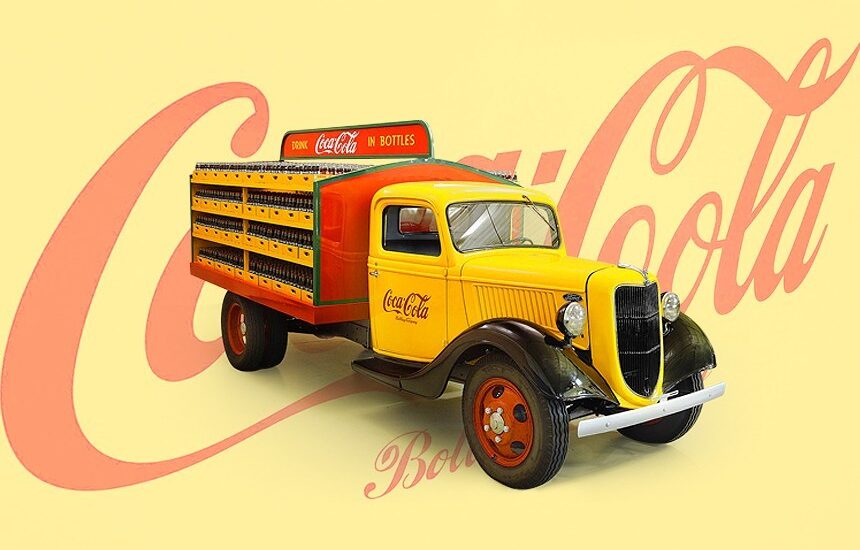

Today Santa arrives in a brightly painted red truck, towed by an equally striking red Freightliner tractor. Historical illustrations, though, reveal a time when different colours and different vehicles were in vogue for festive occasions.
Why This Truck Is Yellow, Not Red
The particular holiday dictates the colour and the decoration. Red is synonymous with Christmas, thanks to Coca-Cola’s long-running advertising, but the truck here was dressed for something else entirely. In 1936 the soda company celebrated its fiftieth anniversary, and for the occasion Ford Motor Company supplied a batch of “anniversary” vehicles in a livery of their own.
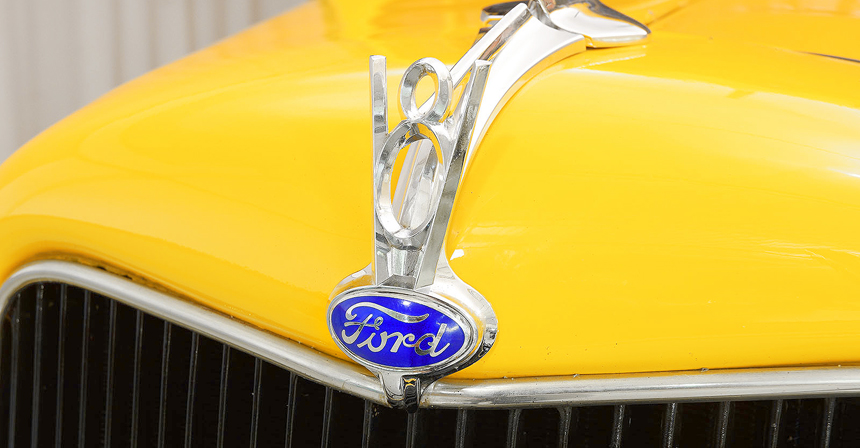
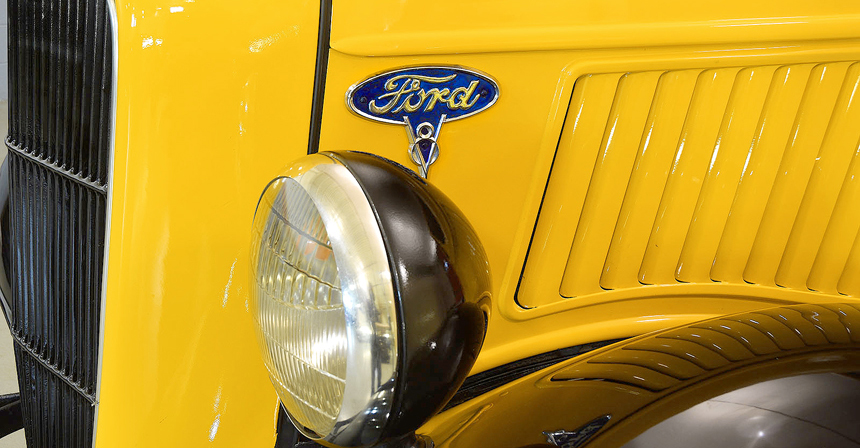
The presence of a V8 engine under the hood was emphasized in every possible way by the brand’s symbols – at that time, not every American truck could boast such an engine.
Advertising on Wheels
Coca-Cola took to motor vehicles as soon as their practicality was established, but put very little advertising on them: beyond the striking logo and the address of the affiliated bottler, the delivery trucks were plain. Other businessmen went much further. A rival beverage supplier under the Moxie brand mounted a life-sized wooden horse on a vehicle chassis and paraded that “Trojan wonder” through towns and villages. From today’s perspective the efficacy of such efforts is questionable — has anyone even tasted “Moxie drink”? Exactly.
The creativity of mobile advertising knew no bounds: bodies shaped like fashionable shoes, like milk bottles, like magnified spark plugs and Zippo lighters. Coca-Cola stayed conservative at first, and simply trusted the recognition of its logo.
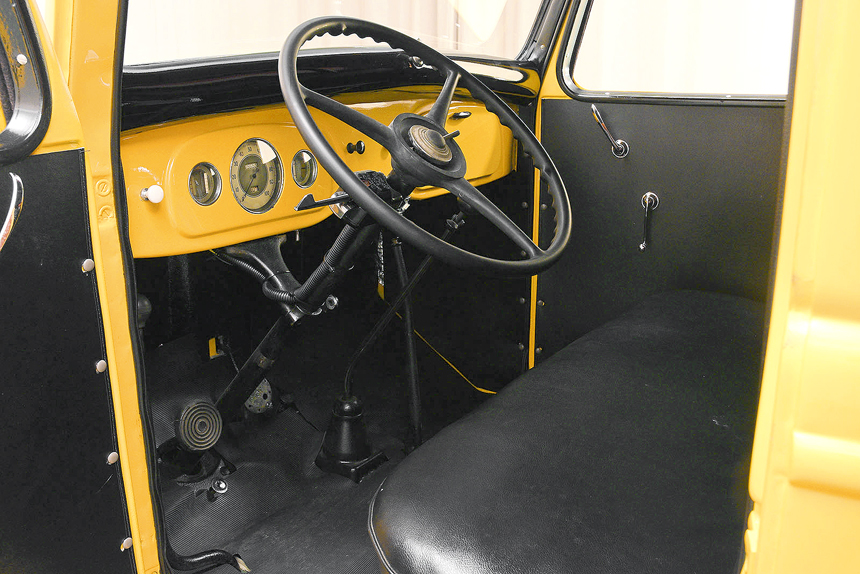
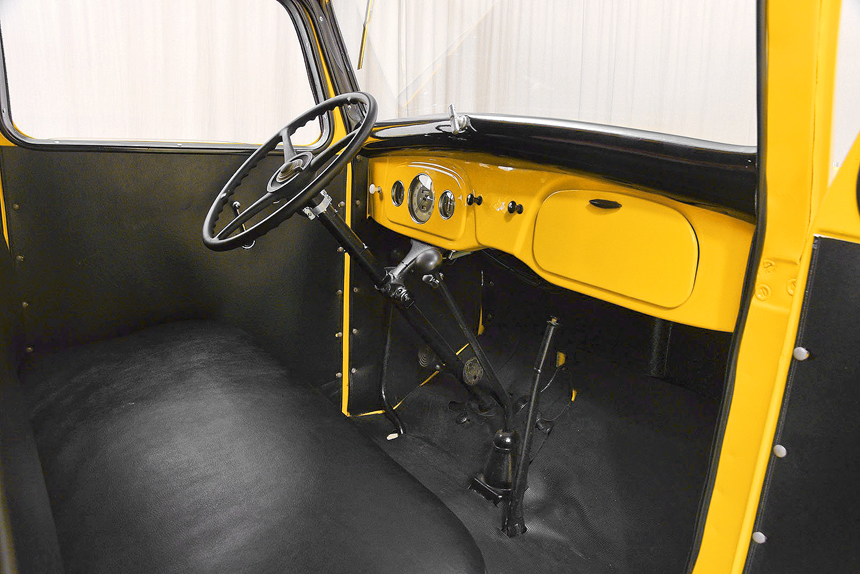
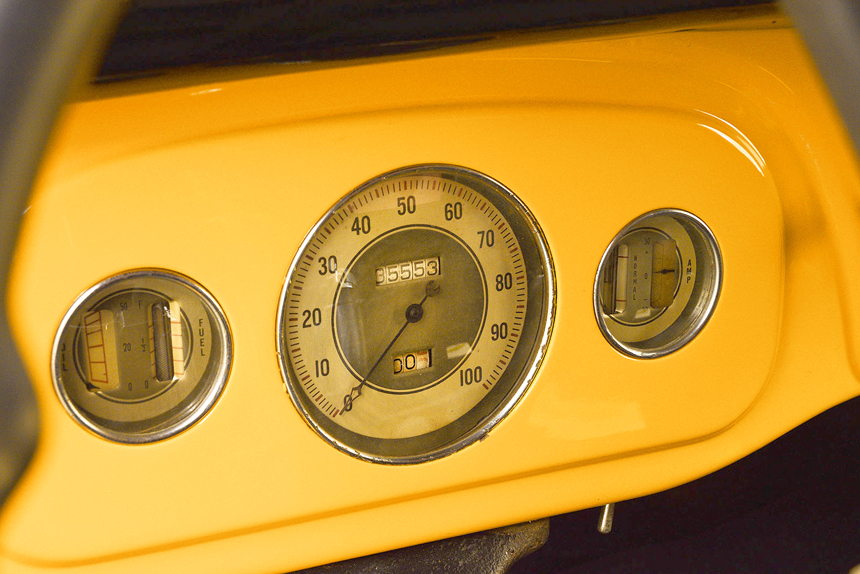
The cabin interior is decorated modestly but elegantly. Three dials are enough to place all the required instrument scales directly in front of the driver. The shiny handle in the middle of the front panel slightly opens the flat windshield, improving ventilation of the interior space.
Where the Red Santa Came From
The bearded man in the red coat, now recognised everywhere as Santa Claus, first appeared in Coca-Cola advertising in the early 1930s; the artist is said to have given the character something of himself. In time the bright colour of that suit became part of the brand’s identity — yet through the 1930s the corporate fleet stayed yellow. The “anniversary” trucks were mostly yellow too, with black fenders, red wheel disks and a green trim to lift them for the occasion.
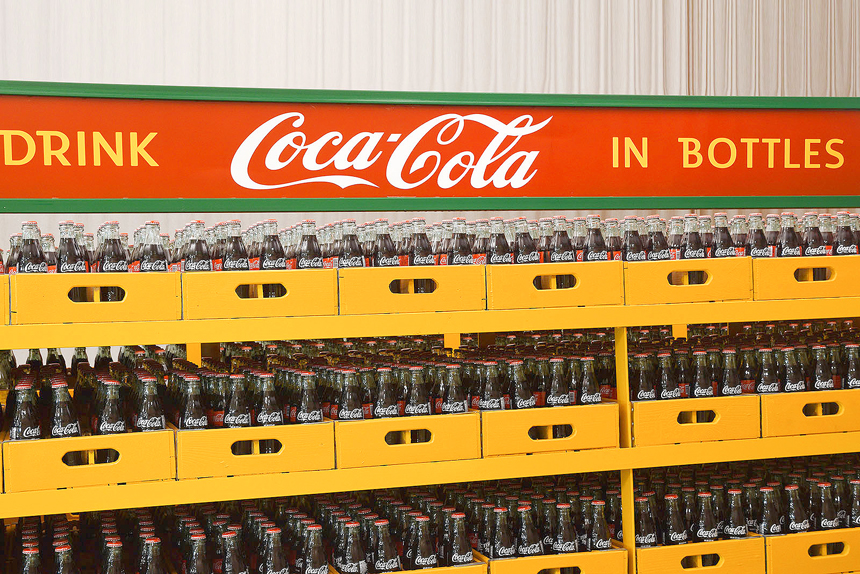
The boxes in the back are all new. The bottles are also modern, but they more or less correspond to the historical standard.
Not an Original, but a Recreation
Not one truck from that festive fleet survives. They were worked until they were worn out and then replaced, and preserving them for posterity never crossed anyone’s mind at head office. The vehicle shown here is therefore not an original but a copy, rebuilt from old photographs — and rebuilt with remarkable thoroughness. It started with a one-and-a-half-ton Ford chassis with dual rear wheels and the unusual V-shaped eight-cylinder engine of eighty horsepower. The restorers even found and fitted a historically correct Eaton rear axle with a two-stage final drive, as the heavy loads of the period demanded.
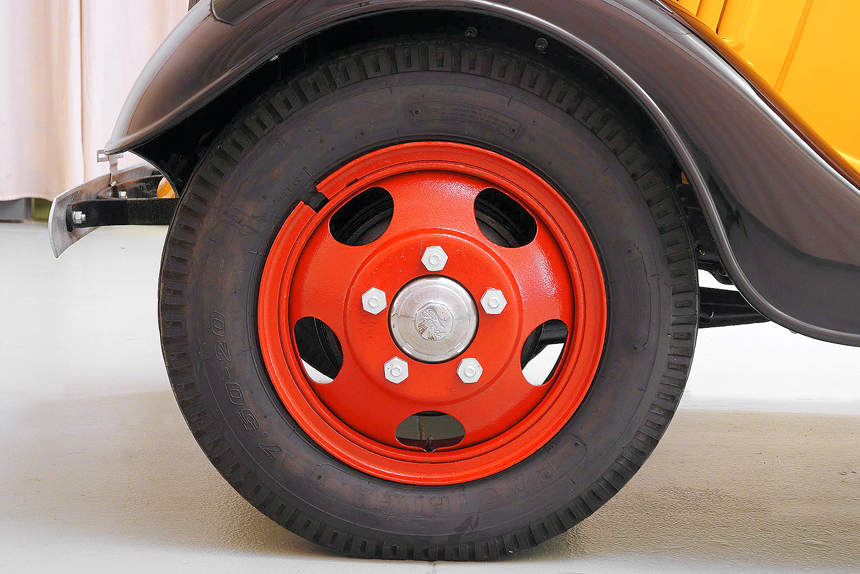
The red wheels made the car look even more dapper.
The bottles posed their own problem, because the low wooden crates that once carried them are long gone. The restorers hunted down several old crates in varying condition in remote parts of America, then commissioned a woodwork shop to make 160 exact replicas, painted them in the “correct” yellow and stencilled the corporate logos on. The glassware, at least, was easy: Coca-Cola has kept the “waisted” bottle design of 1915, which is often misattributed to the famous designer Raymond Loewy but was in fact introduced by Earl R. Dean.
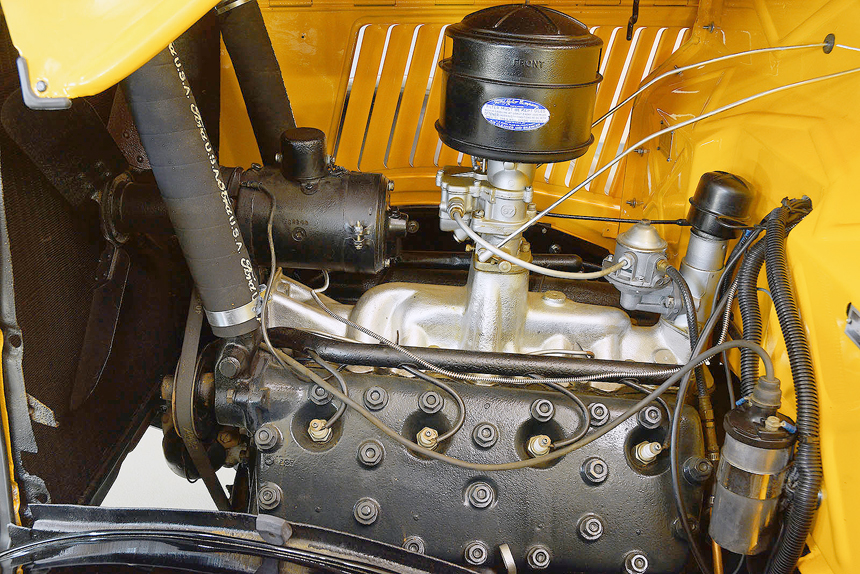
In the mid-thirties, Ford trucks were equipped – like passenger cars – with a V-shaped eight-cylinder engine, reliable and durable, but not particularly powerful (80 hp).
What It Does Now
Each truck could carry 3,840 bottles in those purpose-made crates. To help load and unload such fragile cargo every vehicle had a two-wheeled cart; it is not in the photographs, but it comes with the restored truck. The finished machine was once an exhibit at the American National Museum of Trucks and Passenger Cars in Auburn, Indiana, where it delighted young visitors by dispensing Coca-Cola. It still runs, and can still be used for mobile vending at outdoor events such as vintage car and motorcycle parades.
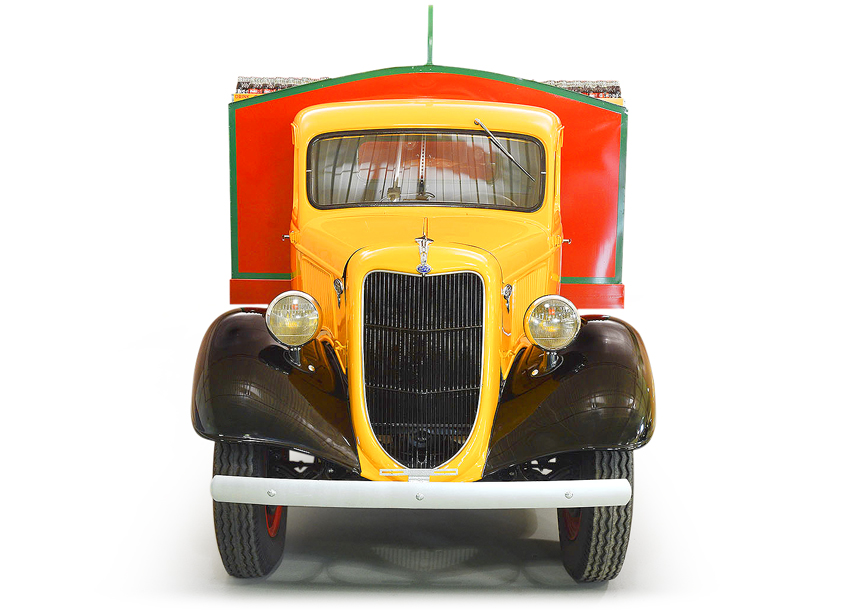
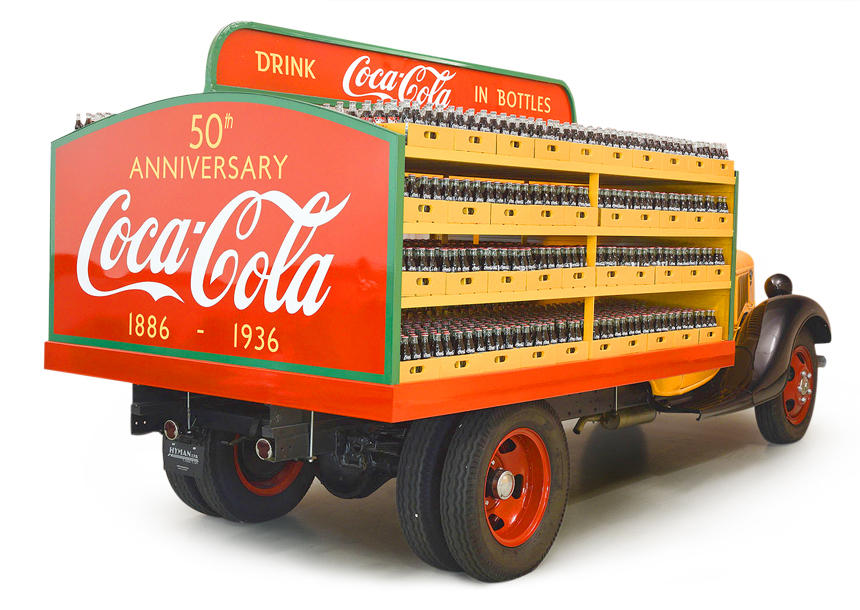
The cabin design for the 1936 Ford 1.5-ton truck chassis was designed in the style of Ford passenger cars from two years earlier.
The Coca-Cola Anniversary Truck: The Key Facts
- The occasion: Coca-Cola’s fiftieth anniversary in 1936, for which Ford Motor Company supplied a batch of specially liveried trucks
- Colours: mostly yellow, with black fenders, red wheel disks and green trim — not the red of Christmas
- Chassis: a one-and-a-half-ton Ford with dual rear wheels
- Engine: the V-shaped eight-cylinder, eighty horsepower — not every American truck had one then
- Rear axle: an Eaton unit with a two-stage final drive, sourced to be historically correct
- Capacity: 3,840 bottles, in crates of which 160 replicas had to be built
- Status: a recreation, not a survivor — none of the original fleet is left
Frequently Asked Questions
Why isn’t the truck red? Because it was not dressed for Christmas. It wears the livery of Coca-Cola’s fiftieth anniversary in 1936, and through the 1930s the company’s fleet was yellow.
Is this an original 1936 truck? No. Every truck of that fleet was used up and scrapped. This one was rebuilt from old photographs, down to a period-correct Eaton rear axle and 160 replica crates.
Who designed the famous contoured bottle? Earl R. Dean, in 1915. The design is often credited to Raymond Loewy, but that attribution is wrong.
How much did one truck carry? 3,840 bottles, with a two-wheeled cart aboard to move the crates.
Did Coca-Cola invent the red Santa? The figure appeared in the company’s advertising from the early 1930s and the red suit became part of its identity — but the corporate fleet of that decade was yellow, as this truck shows.
Photo: Sean Dugan, Hyman Ltd.
This is a translation. You can read the original article here: Праздник к нам приходит: фургончик Ford Model 51 в новогоднем рассказе Андрея Хрисанфова

Published December 26, 2024 • 5m to read