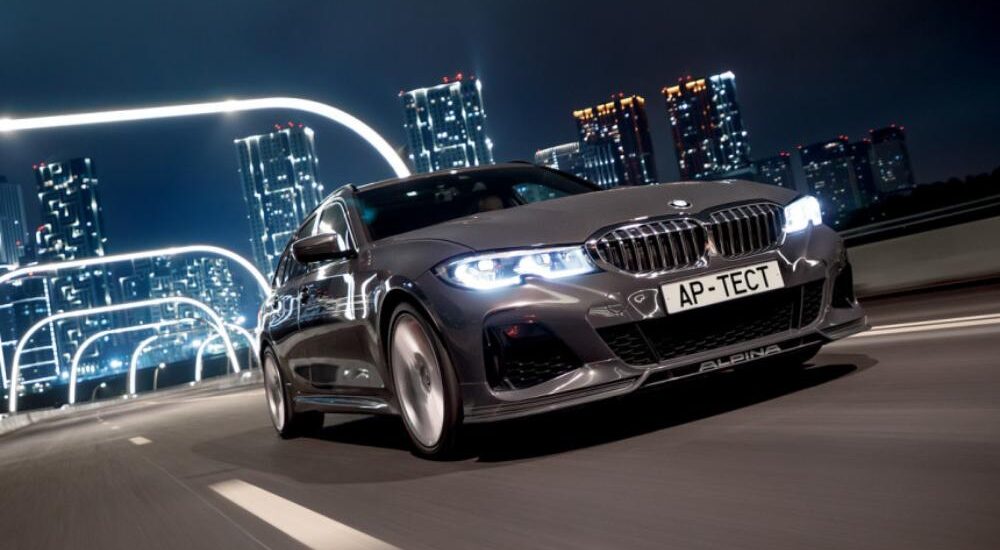

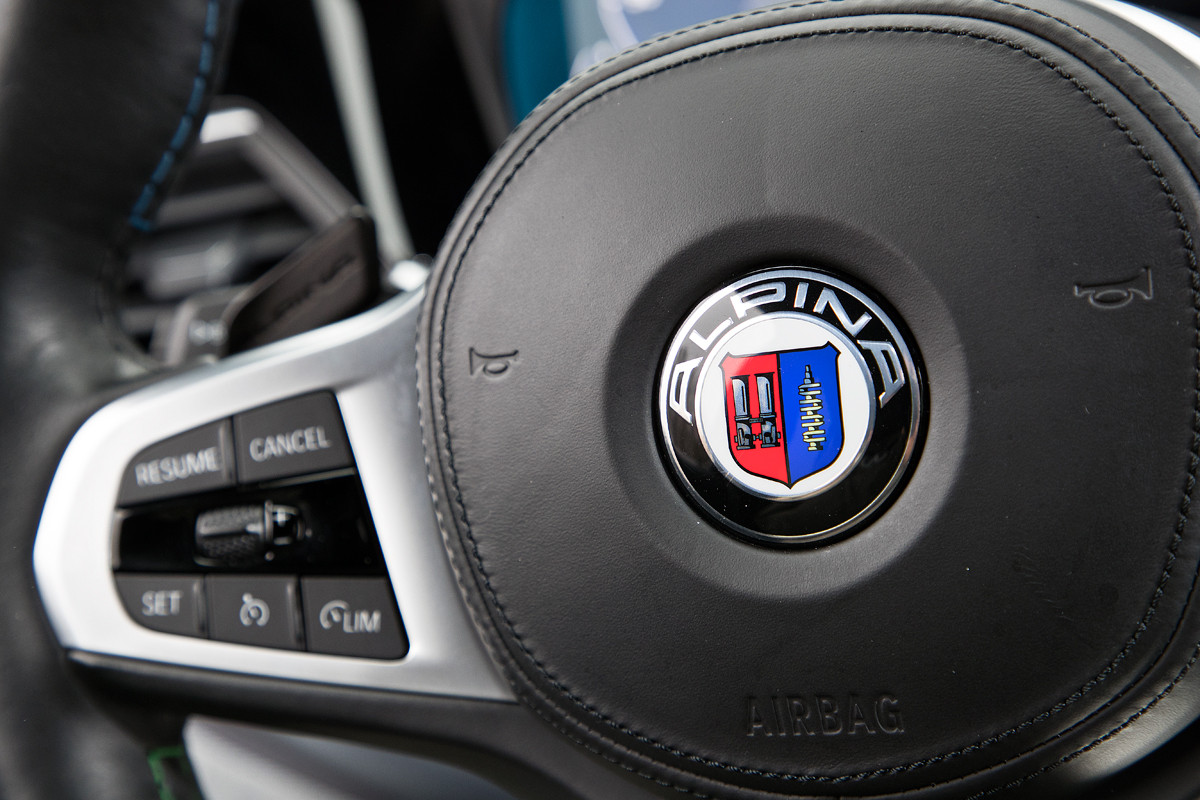
It wants to slide into oversteer on its own. That plump steering wheel with the blue-and-red emblem at the centre. Say “Alpina” out loud and you feel it — that sense of exclusivity that has followed these cars like a shadow through 60 years of company history. Barely a handful of tests in the automotive press each year, production numbers that make Lamborghini and Ferrari look mass-market. Even the VIN isn’t BMW’s — it’s Alpina’s own. Alpina is more than a tuning house. It’s a genuine automotive philosophy.
A Brief History of Alpina
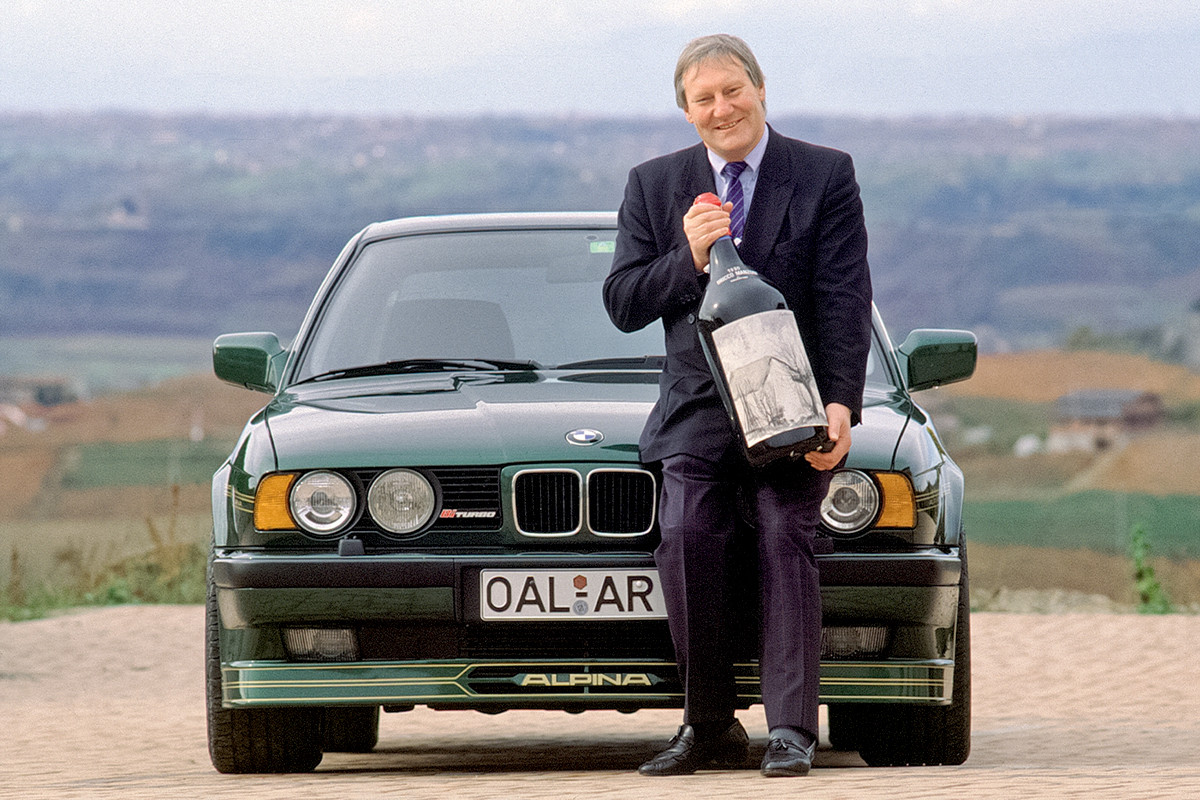
In 2006, Pavel Karin visited the Alpina ancestral home in the Bavarian town of Buchloe. His guide was Andreas Bovensiepen, son of the company’s founder, Burkard.
“Of course we occasionally test our cars at the Nürburgring, but since comfort on public roads matters more to us, there’s nothing better than testing them on exactly those roads.”
Forced Induction as a Philosophy
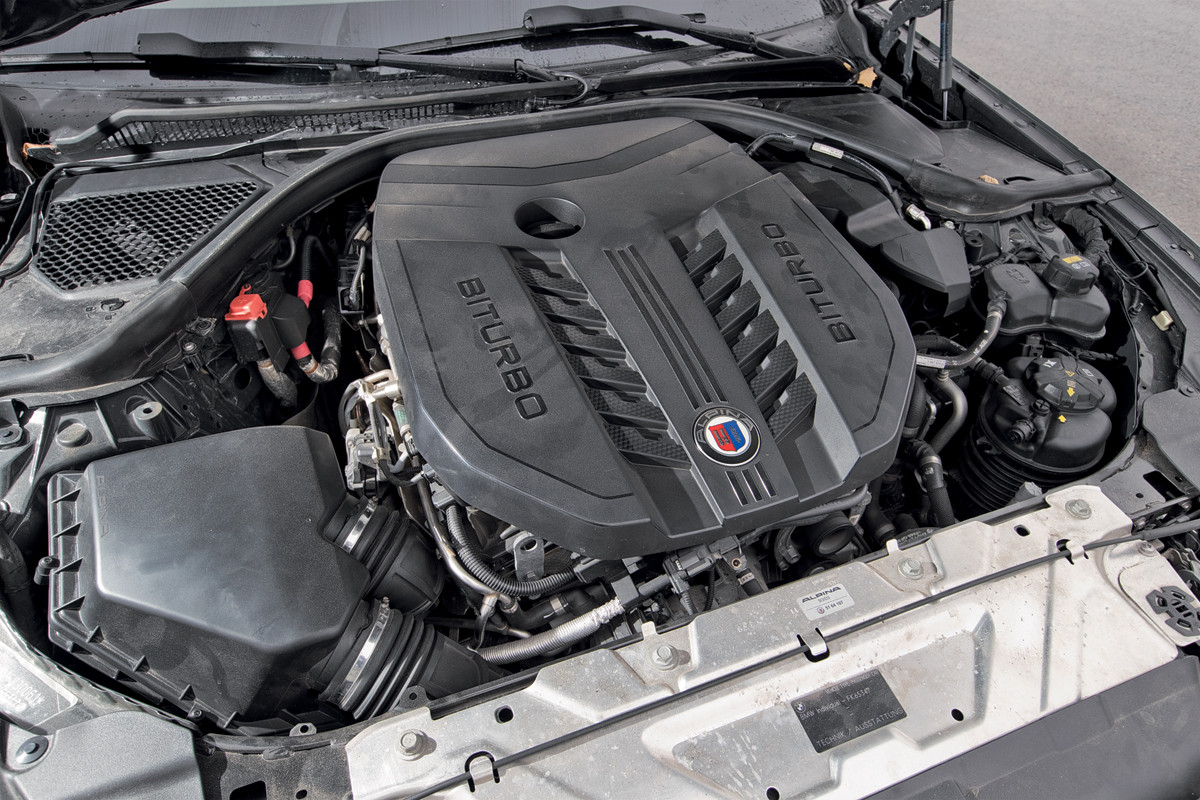
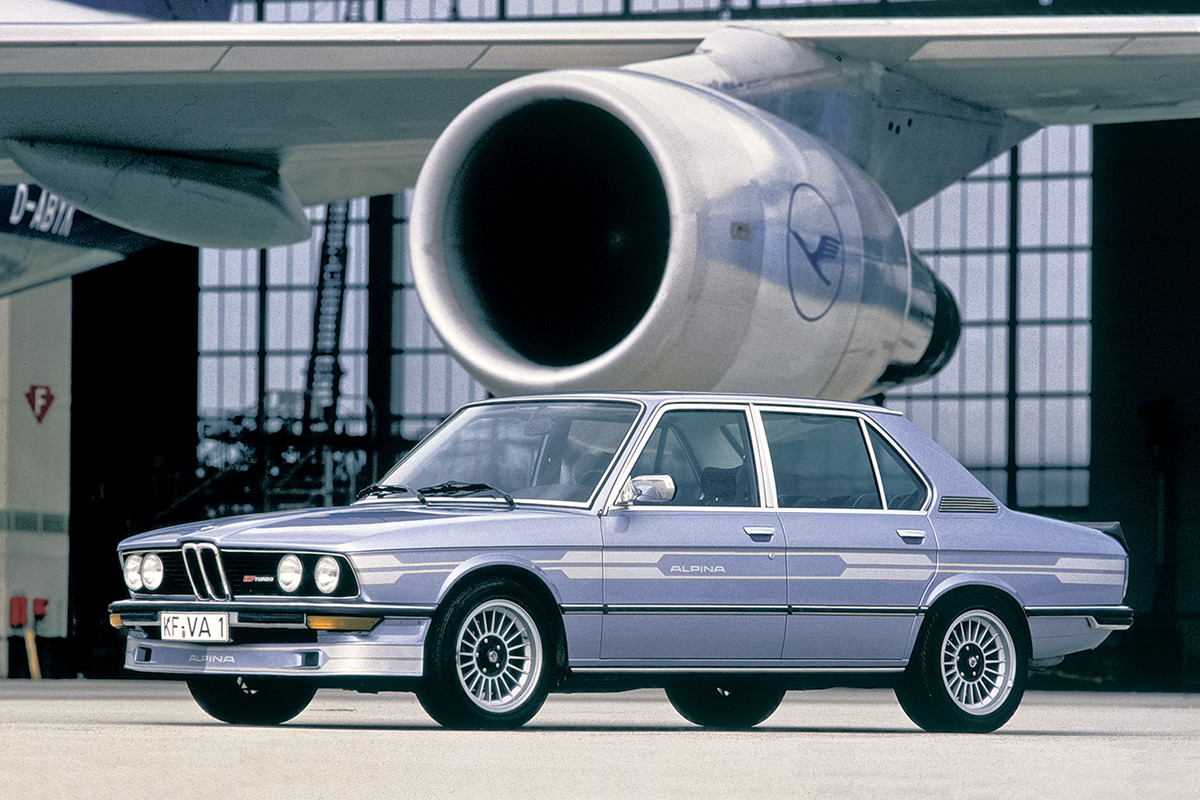
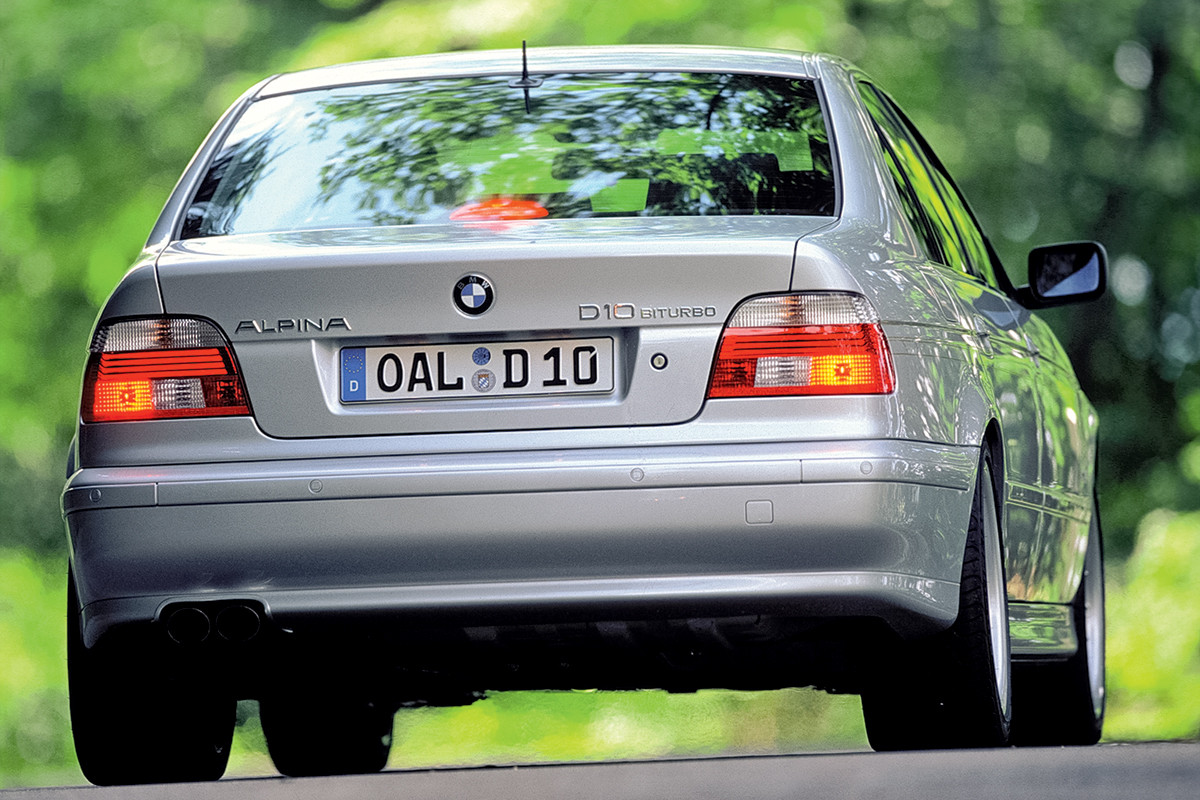
The novelties of that era were the B5 and B7 sedans, based on the BMW 5 Series E60 and 7 Series E65. Alpina’s engineers fitted superchargers to their naturally aspirated V8s, pushing output to 530 hp and 725 Nm of torque. Bovensiepen’s company had long proven that forced induction was the way to go — turbocharging was one of the brand’s defining approaches. The most vivid example: the Alpina B10 Bi-Turbo, the fastest production sedan of its time. Its turbocharged 3.4-litre engine, developing 360 hp, turned the BMW E34 5 Series into a genuine spectacle, with a top speed approaching 300 km/h — and this was in 1989, when the BMW M5 made do with an atmospheric inline-six producing 315 hp and was noticeably slower.
The Car BMW Could Not Build in Time
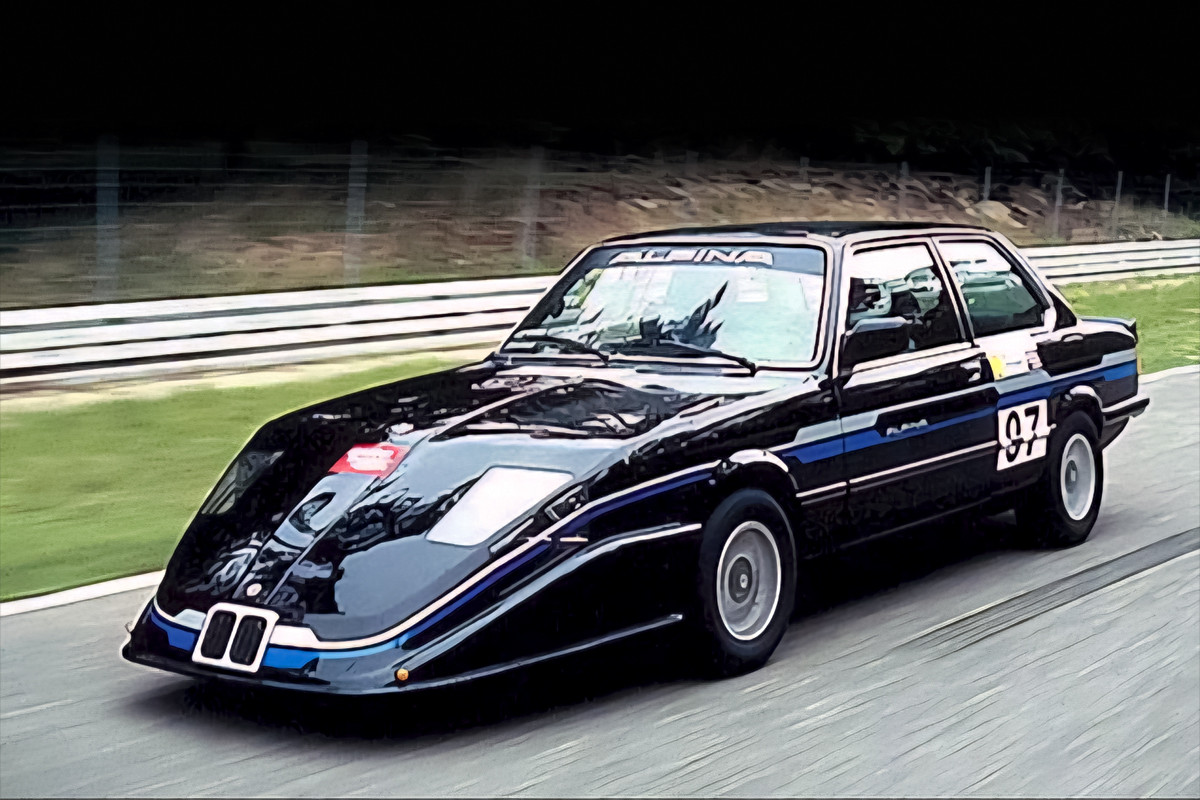
BMW wasn’t just losing on the road, either. It was losing on the racetrack. In 1970, Alpina took victory in the European Touring Car Championship in a prepared BMW 2800 CS, sweeping every major German title including hillclimbs — despite the BMW being 200–300 kg heavier than rival Opel Commodore and Ford Capri entries. Bovensiepen proposed to BMW’s chief engineer, Bernhard Oswald, that they build a lightweight version: aluminium bonnet, doors, and boot lid; no rear window winders; a sports battery. The measures were expected to save 130 kg, and the three-litre engine promised a significant performance gain. BMW gave its blessing but couldn’t build the car in time — Alpina wanted homologation ready for the 1971 season. So the car known as the BMW 3.0 CSL was, in effect, built by Bovensiepen’s company. It became the most successful touring car of its era.
Why the B3 Uses an M Engine
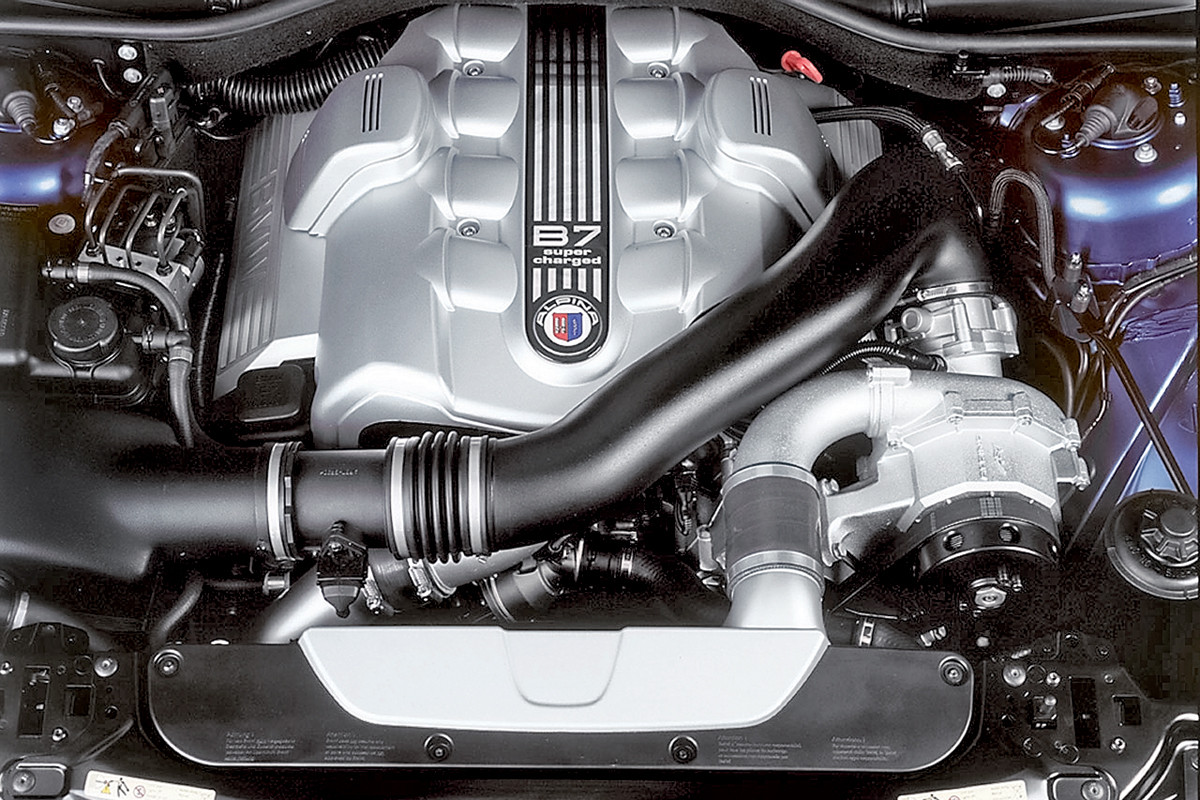
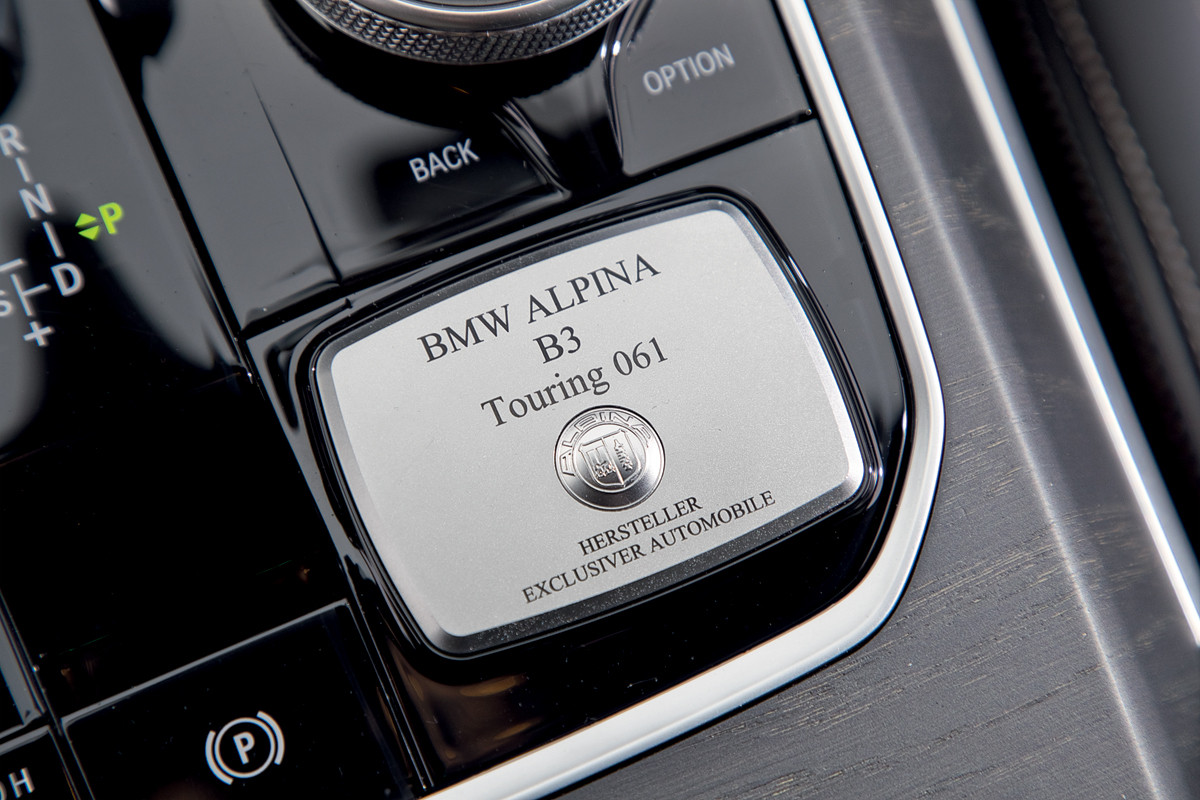
The smoky, elegant B3 Touring wagon in the G21 body style is another example of Alpina getting ahead of BMW. Open the bonnet and pull off the decorative cover, and you’ll spot an M logo on the fuel rail — this car uses the S58 engine. Remarkably, this is only the second time in Alpina’s history that its engineers have chosen a unit from the M division.
The first was the B12 5.7 coupé on the E31 platform — the model on which Alpina also introduced a unique automatic clutch, developed in cooperation with LuK.
A Three-Year Window
So is BMW’s B58 engine — as used in the M340i that underpins the standard B3 — somehow inadequate? Absolutely not. It’s an excellent single-turbocharged unit, proven on everything from the Toyota GR Supra to countless BMW applications. The real reason for the swap was timing:
- 2019: Alpina reveals the B3, notably debuting it as a Touring for the first time in the nameplate’s history
- 2022: The BMW M3 Touring finally arrives — three years later
- Throughout that window: The Alpina B3 was the only way to get an S-unit engine in a wagon body
Then it became the only way to get that engine with classic BMW kidney nostrils. And to this day, it remains the only G20-generation 3 Series that offers genuinely civilised ride quality.
Ride Quality: Where the Alpina Truly Shines
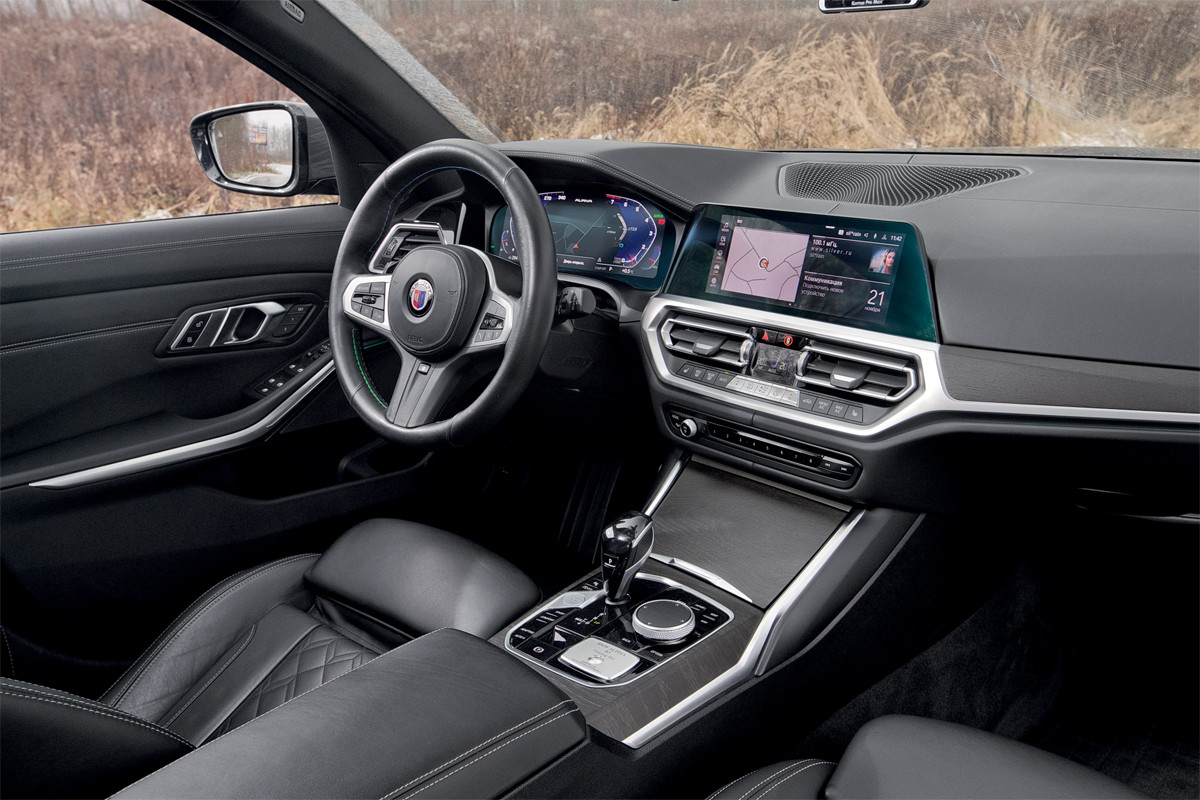
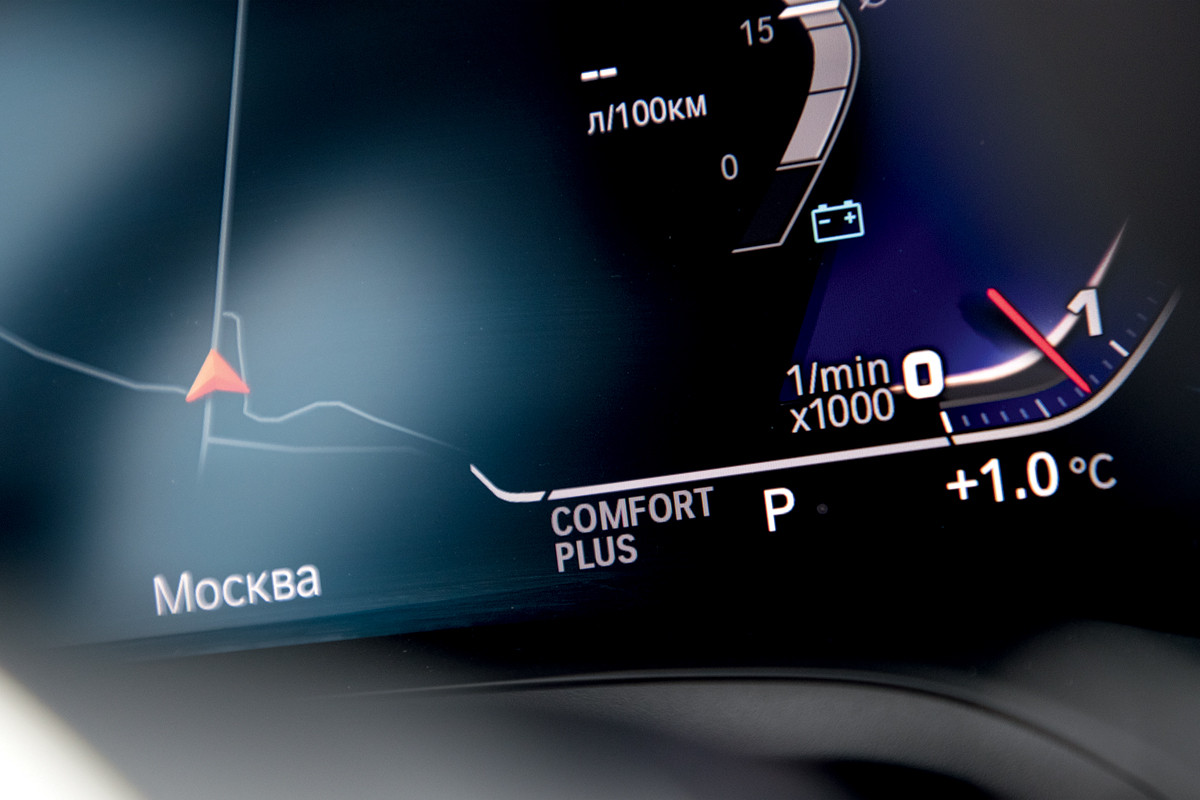
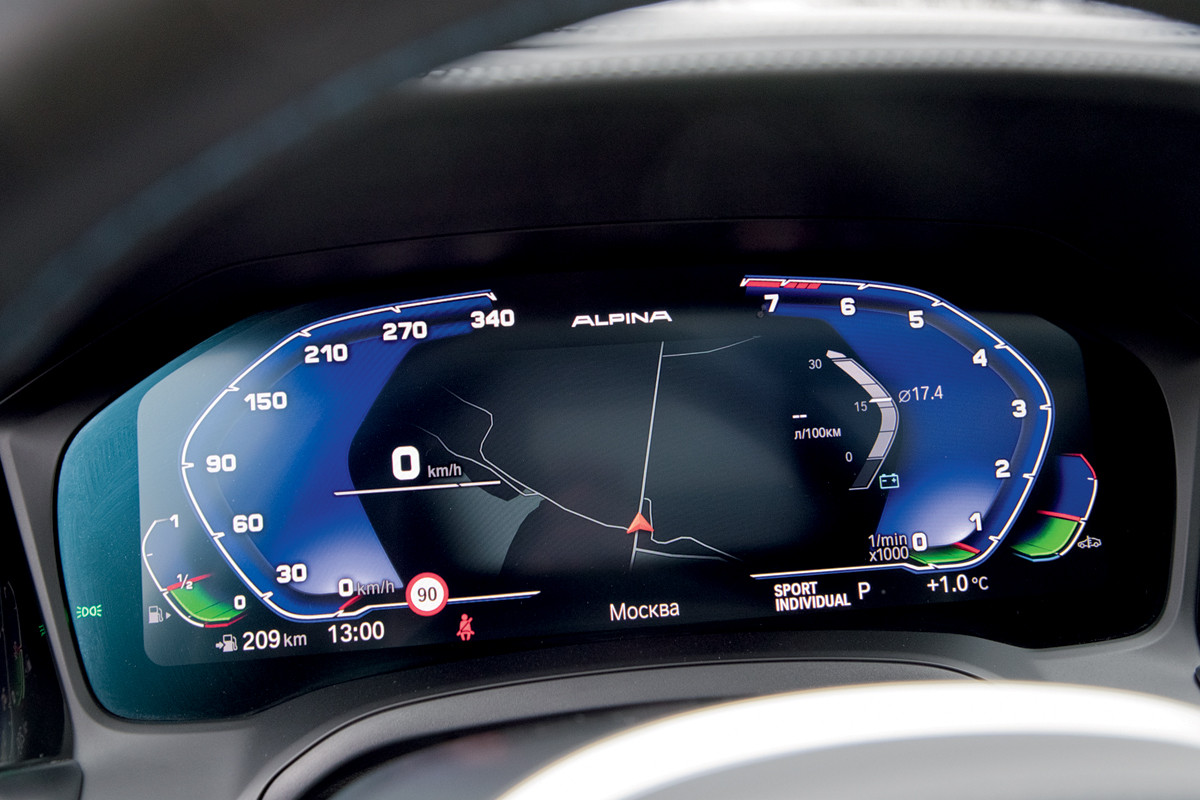
A road join approaches — I brace for the sharp jolt these modern 3 Series cars are known for. It never comes. The bump dissolves somewhere inside the electronically controlled dampers, and a sunken manhole cover vanishes just as quietly. The “Comfort Plus” label on the characteristically Alpina-blue instrument background doesn’t lie — and this mode simply doesn’t exist on standard 3 Series cars.
Beyond its proprietary damper software, Alpina fits different springs and anti-roll bars. The result is a 3 Series that handles surface imperfections in a fundamentally different way.
What Alpina Actually Changes
Key suspension differences versus a standard 3 Series:
- Bespoke electronically controlled damper software
- Unique spring rates and anti-roll bar settings
- A dedicated “Comfort Plus” mode unavailable on BMW variants
- 255 mm front tyres versus BMW’s modest 225 mm on the M340i — a meaningful increase in front-end grip and composure
- Winter setup on this test car: 19-inch Pirelli P Zero Winter tyres with the “ALP” sidewall marking, a small but telling detail that Alpina is more than a modifier
An earlier-generation B3 I drove recently felt like those signature multi-spoke 20-inch wheels were its weak point — the dampers couldn’t contain the unsprung mass vibrations, and sharp edges produced unpleasant jolts. On this new car, the magic is fully in effect.
One Elegant Annoyance
One caveat worth noting: the tyre valves on Alpina wheels are not on the rim’s edge but in the centre, under a decorative cap — air travels through the hollow spoke. Elegant in theory, but anyone who tries to remove that cap in winter, after road salt has fused the lock cylinder, may find it less charming.
Performance: Power, Torque, and a Modified Boost Map
With the dampers doing their work quietly in the background and no desire to leave the proprietary Comfort Plus setting, it’s time to think about the engine.
Smaller Turbos, Earlier Torque
Alpina’s engineers use smaller, more compact turbochargers than BMW’s M division, which means boost — and therefore torque — arrives earlier in the rev range. The figures:
- Alpina B3 Touring: 476 hp, 700 Nm from 2,500 rpm
- BMW M3: 510 hp, 650 Nm from 2,750 rpm
In everyday driving, the Alpina actually feels quicker than the numbers suggest. The M3’s broader performance window only truly opens above 2,750 rpm, whereas the Alpina pulls strongly from the moment you ask. The torque curve does fall away noticeably after 4,000 rpm, which is where the M3 comes alive — but on public roads, that plateau is rarely reached.
It’s worth noting that this particular car has had its boost pressure increased by the owner. Power is now approaching 600 hp, though the engine’s character remains distinctly Alpina in its delivery — seamless, linear, and never aggressive for the sake of it.
The Claimed Numbers
Claimed performance:
- 0–100 km/h: 3.46 seconds — quicker than both the Ferrari Purosangue and the BMW M3
- 0–200 km/h: 11.6 seconds, with total stability throughout
Even in Sport mode the eight-speed automatic refuses to become coarse. Shifts stay smooth, throttle response remains measured, and the whole experience has the manners of a car brought up properly — which makes the pace it sustains all the more striking.
Dynamics: More Than the Sum of Its Parts
The longer you drive the B3, the more its character becomes clear. In ordinary life, it’s more pleasant than not just the raw, firm M3, but even a standard 320d on its base suspension — which also feels over-damped by comparison.
A few details that add up:
- Steering: The vague, self-correcting quality common to current G20-generation BMWs is noticeably reduced. The B3 feels more honest and more readable.
- Balance: The chassis has a genuinely neutral character at the limit, with no meaningful understeer. Push beyond the limit and the front tyres slip briefly before finding grip — the wider front rubber plays its part here.
- xDrive all-wheel drive feels more even-handed than on the M340i, which has a strong rear bias. The B3’s modified front-axle coupling is specifically mentioned in Alpina’s documentation, and you can feel why — cornering on a trailing throttle is stable, and the car sets up on the throttle without the constant minor steering corrections the M340i demands.
- Brakes: The one area left wanting. Stopping from city speeds without a forward pitch takes practice. The massive 395 mm front discs — shared with the BMW X3 M — are optimised for high-speed stops, and they make urban driving feel slightly clumsy. A minor point, but an honest one.
The End of an Era
And here lies the bittersweet context for all of this. The B3 Touring exists at the close of Alpina’s independent chapter.
In 2021, BMW approached the Bovensiepen family with an acquisition offer. Andreas and his brother Florian accepted. The deal takes effect on 1 January of the coming year, and Burkard Bovensiepen — who founded the company and built its reputation over six decades — will never see what becomes of his badge in the new era. He passed away in October 2023.
What Alpina Actually Invented
BMW’s intention is to position Alpina as something like Mercedes-Benz’s Maybach sub-brand — though luxury and opulence were never the defining qualities of the cars built in Buchloe. Their reputation rested on driving ability and unexpected engineering solutions:
- 1970: Alpina effectively created the BMW 3.0 CSL, the most successful touring car of its era
- 1989: The B10 Bi-Turbo was the fastest production sedan in the world
- 1993: The B3 became the first car in history to offer steering-wheel paddle shifters — the Switch-Tronic system, developed with Bosch, which appeared a full year before Porsche’s Tiptronic
- E36 era: Alpina fitted a V8 into the 3 Series — something BMW’s own head of development, Wolfgang Reitzle, thought impossible, claiming the engine wouldn’t fit between the chassis rails. Bovensiepen disagreed. The secret was assembly method: BMW fits engines from below on its production line, where the V8 does indeed hit the rails. In Buchloe, engines were lowered in from above. The result was the Alpina B8 4.6, whose idle torque matched the contemporary M3’s peak output.
Why the Chapter Is Closing
The B3 Touring sells in Germany at the same €110,000 as the BMW M3 Competition, and demand has remained steady. Its appeal is unique: it offers something almost no other modern car does — a contemporary vehicle that communicates with its driver the way older cars used to.
That, paradoxically, is also why the independent chapter is closing. Electrification, hybridisation, and the proliferation of active safety systems have narrowed the space for the kind of intervention that defined Alpina. As Andreas Bovensiepen put it:
“Times are changing. Cars are becoming hybrid and electric, there are too many active safety systems and too many restrictions. Essentially all you can change is the software. Working with that is not interesting, and making money from it is difficult.”
What Comes Next: Bovensiepen
The story doesn’t end there. The brothers have registered a new brand under their family name, Bovensiepen, and have already shown a first prototype based on the BMW M4 convertible. This isn’t a modest aero kit — it’s a complete exterior redesign by Zagato using carbon fibre, plus the expected mechanical upgrades. Price: approximately €450,000.
Where Alpina’s automotive margins rarely exceeded 5%, the brothers have decided to operate at a different scale. Their reasoning is sound: people will pay properly for something genuinely rare and considered. After all, Burkard Bovensiepen began collecting wine in the late 1970s, and alcohol sales have long contributed around a tenth of the company’s revenue. Fine things, it seems, have always found their audience in Buchloe.
Alpina B3 Touring: The Key Facts
- Engine: the BMW M division’s S58, only the second M unit in Alpina’s history — 476 hp and 700 Nm from 2,500 rpm
- Performance: 3.46 seconds to 100 km/h and 11.6 seconds to 200 km/h, through an eight-speed automatic
- Chassis: Alpina’s own damper software, springs and anti-roll bars, a Comfort Plus mode BMW does not offer, and 255 mm front tyres against the M340i’s 225
- Brakes: 395 mm front discs shared with the BMW X3 M — superb at speed, awkward in town
- Price: around €110,000 in Germany, the same as a BMW M3 Competition
- The context: BMW’s acquisition of Alpina takes effect on 1 January, and the Bovensiepen brothers have launched a new brand of their own
Frequently Asked Questions
Why does the B3 use an M engine? Because of timing. Alpina launched the B3 Touring in 2019 and BMW’s M3 Touring only arrived in 2022, so for three years the Alpina was the only way to have an S-unit engine in an estate body. It is only the second M engine Alpina has ever used, after the B12 5.7 coupé.
Is it quicker than an M3? On paper it has less power but more torque, earlier: 476 hp and 700 Nm from 2,500 rpm against the M3’s 510 hp and 650 Nm from 2,750. It claims 3.46 seconds to 100 km/h. The test car had also had its boost raised by the owner, to nearly 600 hp.
What makes an Alpina ride better than a BMW? Its own damper software, spring rates and anti-roll bars, plus a Comfort Plus mode that no standard 3 Series has. Wider 255 mm front tyres do the rest.
Is Alpina still independent? No. The Bovensiepen family accepted BMW’s offer in 2021 and the deal takes effect on 1 January. Burkard Bovensiepen, who founded the company, died in October 2023.
What is Bovensiepen? The brothers’ new brand, named after the family. Its first prototype is based on the BMW M4 convertible with a complete carbon-fibre redesign by Zagato, at roughly €450,000.
Photo: Vladimir Melnikov
This is a translation. You can read the original article here: Лучше, чем M3? Alpina B3 Touring в кузове G21 на нашем тесте

Published June 05, 2026 • 12m to read