
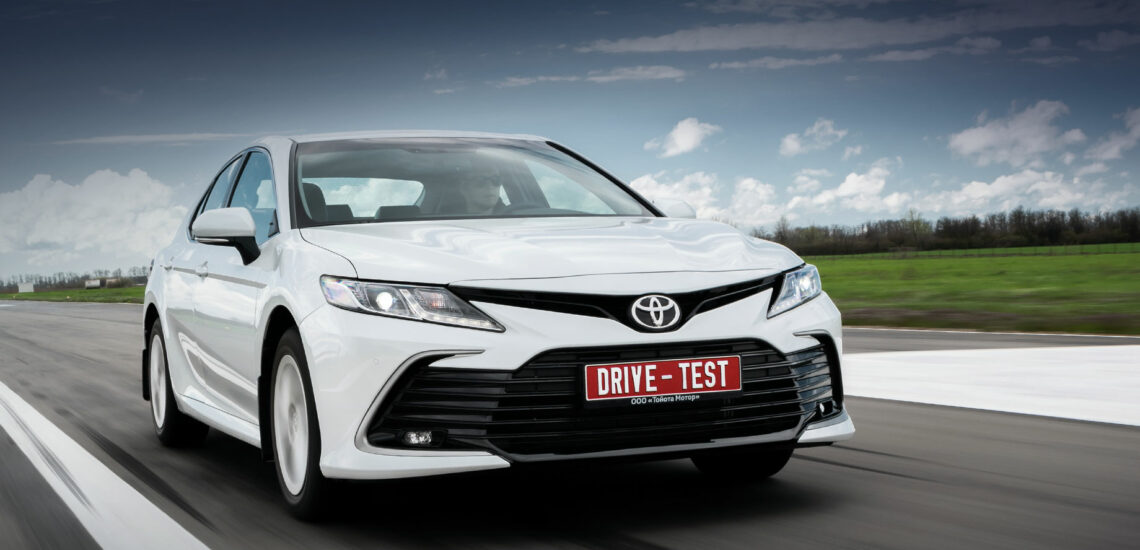

At first glance, the updated eighth-generation Toyota Camry doesn’t look dramatically different from its predecessor — but look closer and the changes add up. The wide radiator grille now features elegant C-shaped decorative inserts available in black, silver, or chrome depending on the trim level. The wheels have been redesigned too, though the difference is subtle at speed.
GR Sport: The Easiest Trim to Spot
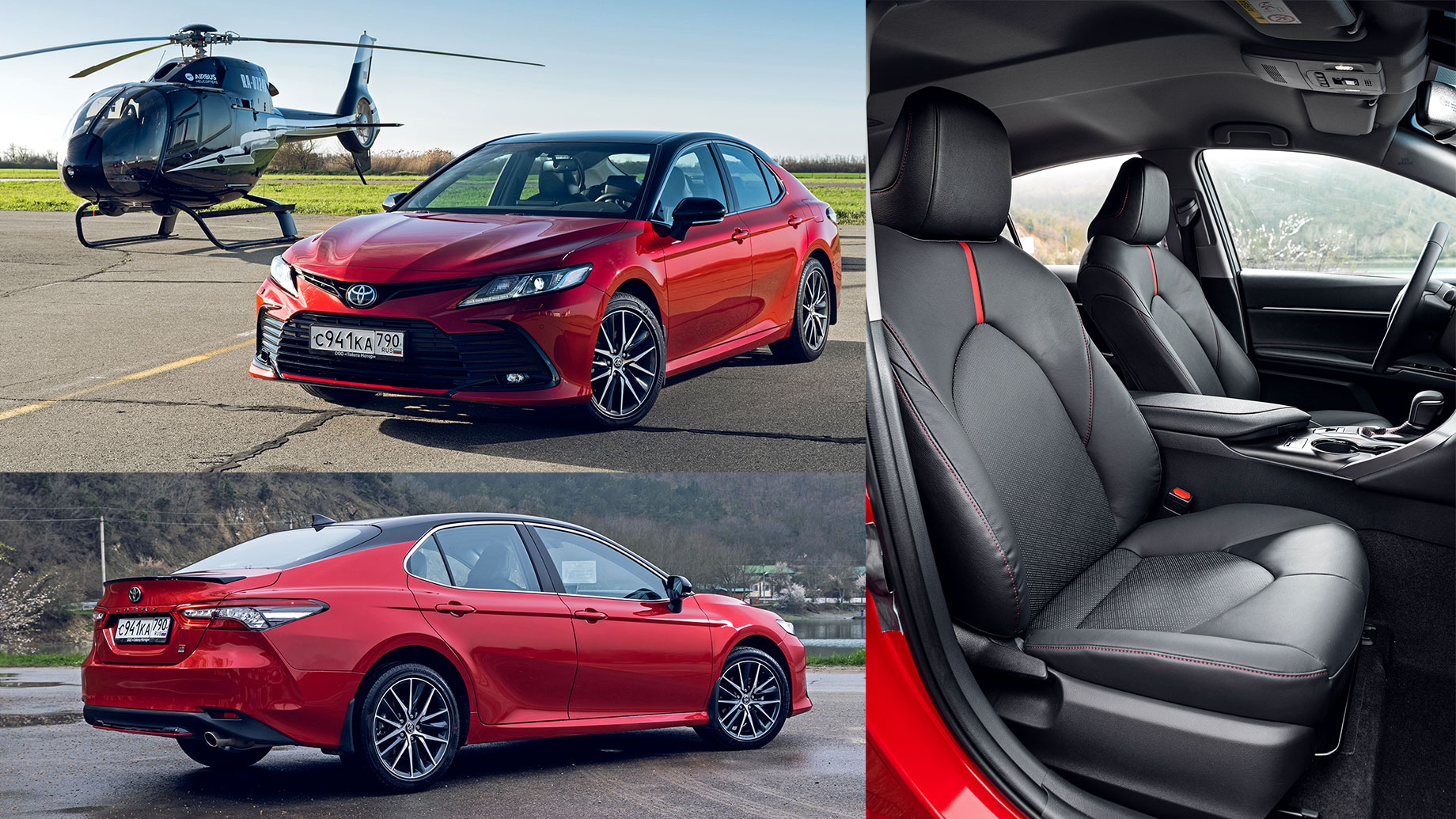
The one version that stands out immediately is the GR Sport, which replaces the outgoing S-Edition. While the “Sport” badge here is more about aesthetics than performance, the bold two-tone exterior — bright red body with a contrasting black roof — makes it hard to miss in traffic. The GR Sport also includes:
- Clear tail lights
- Black window frames
- Blacked-out wheels and moldings
- Available with two older engine options
Interior Updates: Subtle but Functional
Inside, the Camry’s cabin hasn’t been overhauled — but Toyota has made some worthwhile tweaks. The decorative trims above the glove box have been refreshed, and the multimedia screen and central air vents have been repositioned in a layout inspired by the RAV4. The touchscreen now rises prominently above the dashboard in either a 7-inch or 9-inch configuration.
Highlights of the updated interior include:
- Physical control buttons flanking the touchscreen for quick access
- Responsive, straightforward interface that avoids unnecessary complexity
- Apple CarPlay and Android Auto support as standard
- Spacious cabin with comfortable, well-bolstered seats
- Good all-around visibility
The standard navigation maps look a little dated, and Toyota is relying on third-party search integration to fill the gap — some of which is still in development. The trip computer display, driver-side control layout, and button feel also still have room to improve, but these are minor criticisms of an otherwise well-appointed interior.
New Powertrains: The Biggest Change Under the Hood
The most significant update to the Camry is what’s under the hood. The old naturally aspirated four-cylinder engines have been replaced by Toyota’s modern Dynamic Force series — the same units found in the RAV4 crossover. Here’s how the powertrain lineup breaks down:
- Camry 2.0 (150 hp) — paired with a new Direct Shift-CVT variator, replacing the outgoing six-speed automatic
- Camry 2.5 (200 hp) — retains a traditional torque-converter automatic, now upgraded from six to eight gears
- Camry 3.5 — mechanically unchanged from the previous generation
Driving the 2.0: CVT Makes a Real Difference
The 2.0-liter engine paired with the new CVT delivers a noticeably fresher driving experience. The old six-speed automatic was sluggish to downshift — there was an awkward pause between pressing the accelerator and getting a response. The new variator eliminates that frustration almost entirely:
- Throttle response is immediate and predictable
- Pull away from a standstill is quicker and smoother
- Mid-range acceleration at 50–70 mph is more confident
- Overtaking on open roads feels more relaxed
The claimed 0–60 mph time drops from 11 seconds to 9.5 seconds. In real-world testing on an airfield runway, the updated Camry 2.0 consistently beat the pre-facelift version by two to three car lengths by 60 mph. It’s not a sports car, but the uncomfortable feeling of being underpowered on the highway is gone. The trade-off: it does get a little louder under heavy load.
Driving the 2.5: Eight Gears, More Refinement
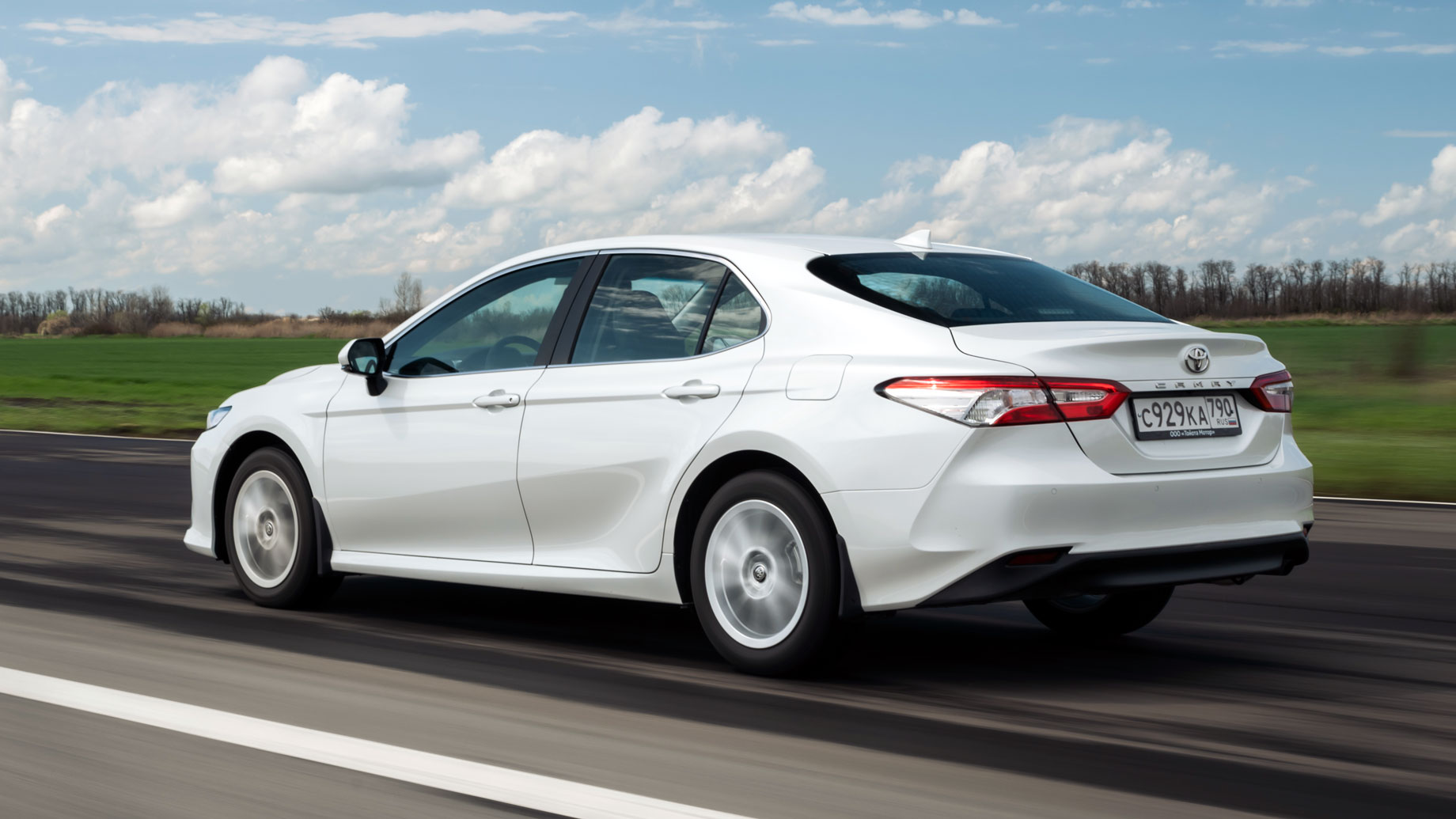
The gap between old and new isn’t as dramatic with the 2.5, but the improvements are still tangible. The engine gains 19 hp and 12 N·m of torque over its predecessor, and the A25A-FKS unit with combined injection runs without any noticeable increase in noise or vibration. Improvements include:
- Slightly quicker acceleration across the entire speed range
- Faster, smoother gear changes from the new eight-speed automatic
- Better overall communication between driver and car
One caveat: there’s still a noticeable hesitation when flooring it from a steady speed, as the transmission works through several downshifts before committing to hard acceleration. On two-lane roads with heavy truck traffic, switching the gearbox to manual mode and pre-selecting the right gear before an overtake proved to be the smarter approach.
Tires and Suspension: Continental, with a Catch
Both test cars rolled on 17-inch wheels with Continental Premium Contact tires — a premium European brand that deserves credit for well-balanced road manners. However, there’s a notable discrepancy worth knowing about:
- Pre-facelift press demo cars were fitted with the newer Continental Premium Contact 6
- Production models use the older Continental Premium Contact 5 (released in 2012)
- Toyota has not publicly explained the decision to use the older tire generation
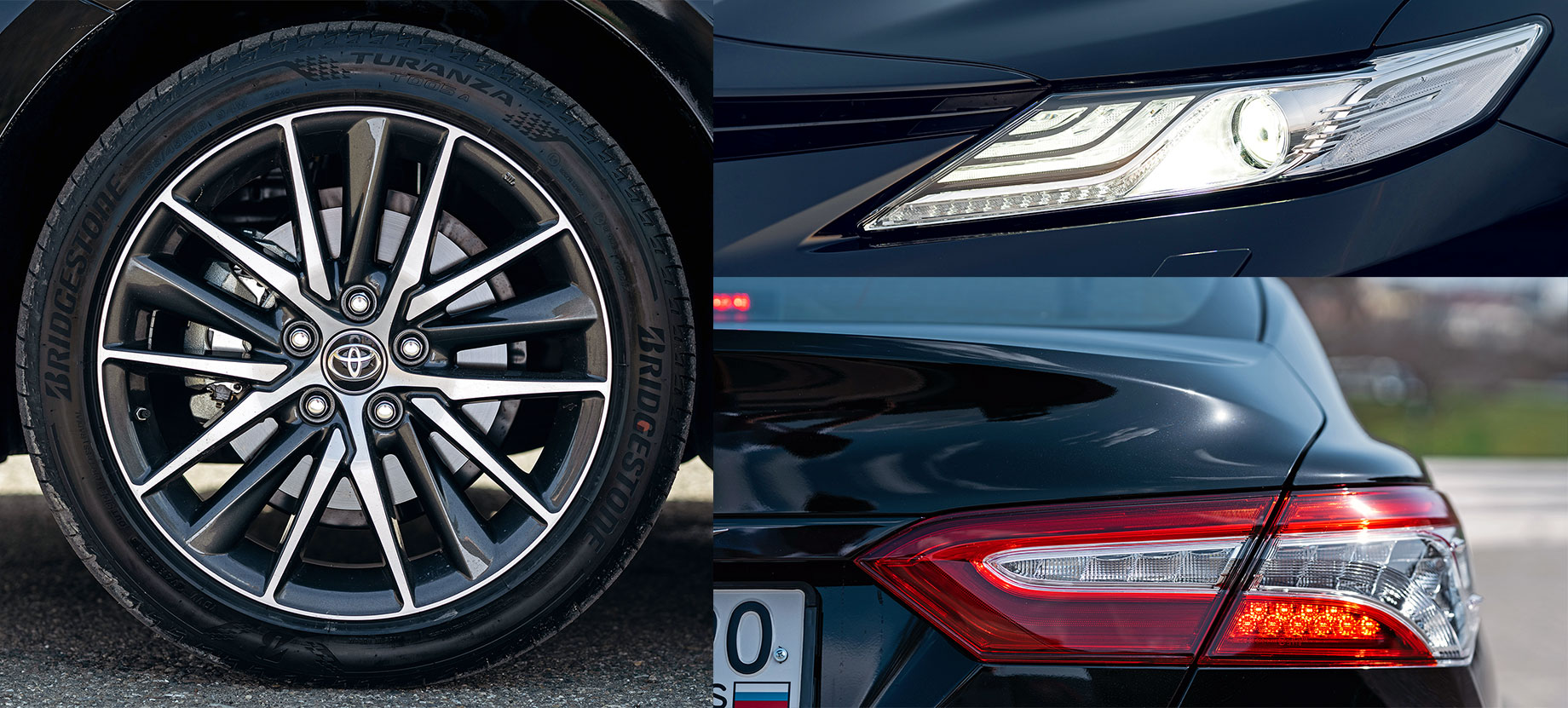
Despite this, the suspension setup is largely unchanged and the 2.0-liter Camry on 17-inch wheels does a better job of absorbing small road imperfections — and transmits less vibration through the steering wheel — compared to the 200 hp 2.5 version on 18-inch Bridgestone Turanza T005 A tires. The switch to Continental at least maintains quality, even if it doesn’t raise the bar.
Safety and Connectivity Upgrades
The updated Camry also brings meaningful improvements to its technology suite. The Connected mobile service now works alongside the Safety Suite app, allowing owners to remotely monitor vehicle status. The Toyota Safety Sense package has been expanded with several new capabilities:
- Automatic speed adjustment in corners when adaptive cruise control is active
- Road sign recognition to adapt cruise control behavior
- Lane-centering assistance to keep the car in the middle of the lane
- Oncoming traffic detection at intersections during turns, with emergency braking if needed
Verdict: Is the Camry Base Model Worth It?
The standout winner of this refresh is the 2.0-liter base model. While both four-cylinder engines have improved, the jump in everyday drivability from the new CVT is the most dramatic change of the entire update cycle. The base Camry is now genuinely competitive on the highway — not just on paper.
A few more reasons to consider the 2.0 over the 2.5:
- More likely to come with 17-inch wheels, which ride more comfortably than 18-inch setups
- Price increase is more modest — around $795 on average — making the value proposition stronger
- The CVT’s responsiveness closes much of the real-world performance gap with the 2.5
That said, the top-spec 3.5 still justifies its premium if you want the most refined powertrain and the latest multimedia suite. Overall, the updated Camry is a more complete package — and the base model finally gets the drivetrain it always deserved.
This is a translation. You can read the original here: https://www.drive.ru/test-drive/toyota/60890351bfb1b0352be43948.html

Published July 07, 2022 • 6m to read