
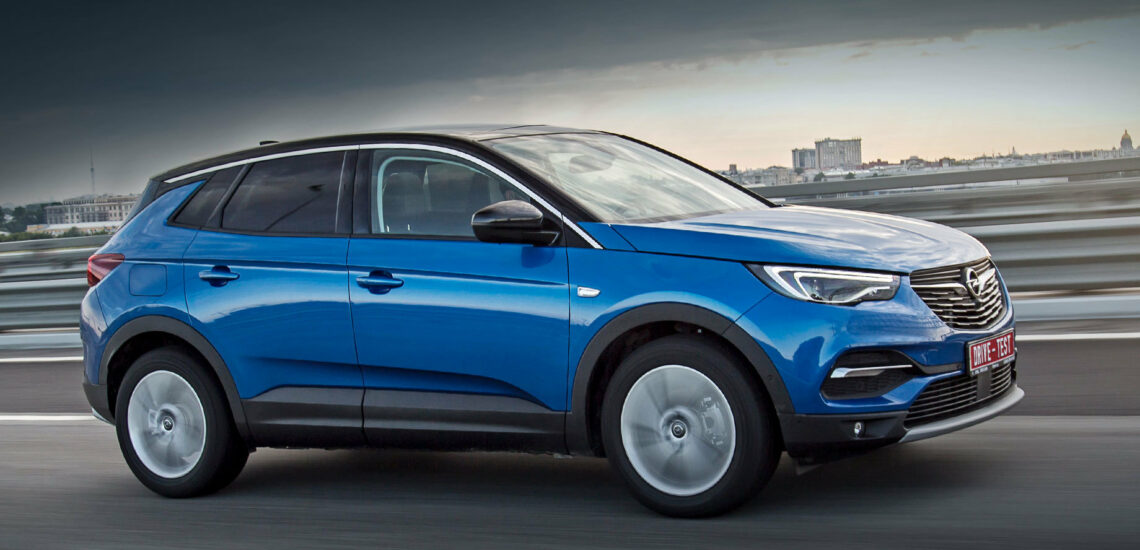

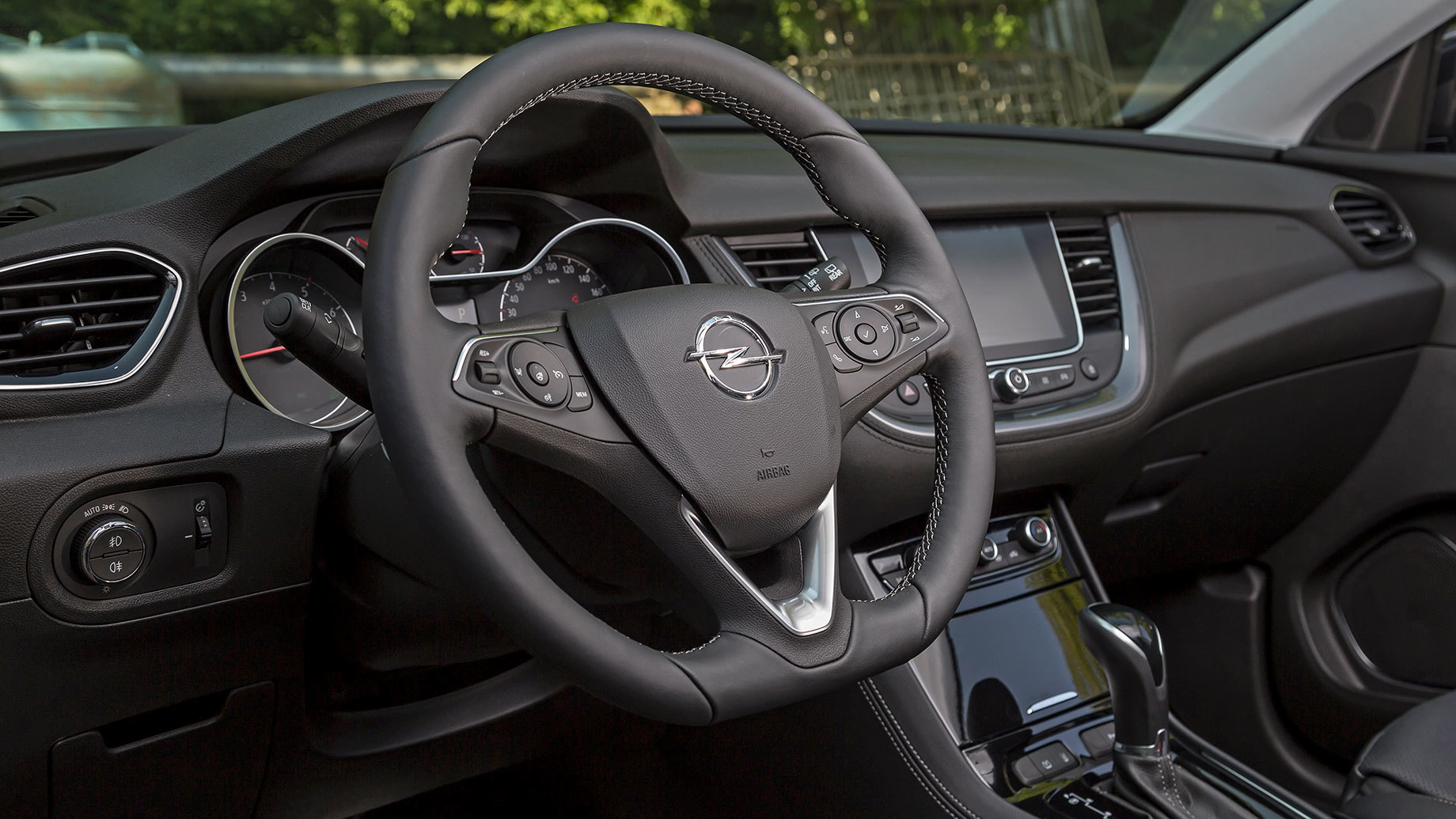
The Opel Grandland X SUV presents an interesting paradox: it’s based on the French EMP2 modular platform, a decision the Germans made even before PSA took over Opel — not a forced move, but a deliberate one. The real achievement of Opel’s engineers is that the French roots are barely visible, either in the exterior design or the cabin. Only someone familiar with PSA products would recognize shared components like the door handles or power window buttons. The dial gauges, the real physical climate control unit (instead of a menu tab), and other key details are unmistakably Opel.
Exterior and Interior Design
The Opel Grandland X looks genuinely good. It avoids the bold styling of its platform-mate, the Peugeot 3008, opting instead for harmonious, rational forms — though that simplicity may date the design more quickly. The cabin follows the same philosophy: understated but attractive. That said, panel fit and finish quality lag slightly behind the Peugeot, landing somewhere around average for the segment. The seats, however, are a clear highlight.
Seat Comfort and Front Cabin Experience
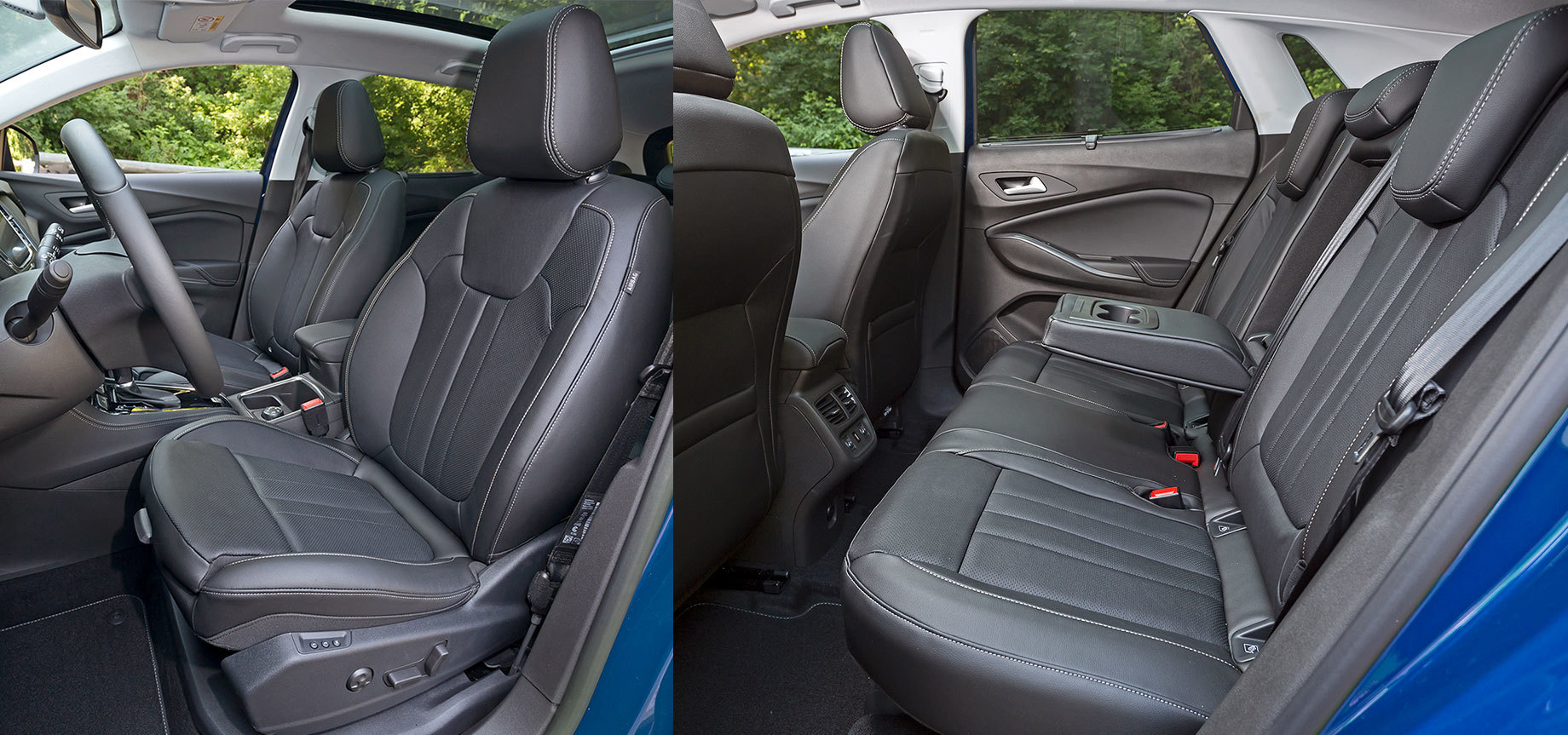
Seat comfort is treated as a core part of the Opel brand DNA. In two of the three trim levels, the Grandland X comes with “sporty” front seats certified by the German Association of Orthopedists (AGR). The seat profile genuinely delivers — after two full days of driving, there was no noticeable fatigue. Upholstery firmness sits at a medium level, and the adjustment range is generous.
- AGR-certified ergonomic front seats on most trims
- Medium-firm upholstery with wide adjustment range
- Ventilated seats available, though noisy even at minimum speed
- A known EMP2-platform quirk: the headrest sits too far back when lowered
Rear Seats, Cargo Space, and Storage
Rear-seat space is tight. A tall passenger seated behind a tall driver will find their knees brushing the seatback and their head close to the headliner — a notable drawback in the top-tier Cosmo trim, which includes a fixed (non-opening) panoramic roof. The trunk fares much better: it’s spacious, with a two-level adjustable floor, an electric tailgate, and a hands-free flap sensor. One inconsistency stood out, though — a loose trim element in the cargo area.
Small-item storage is where the Grandland X struggles most:
- The main glovebox is roomy, but oddly only lit when the ignition is on
- Door pockets are shallow and offer limited capacity
- The small central console box is occupied by the wireless smartphone charger
- The bulky automatic gearbox selector eats up tunnel space, leaving no cupholders for front occupants
- No eyeglass case or rear coat hooks — a puzzling omission
Driving Experience: Engine, Transmission, and Handling
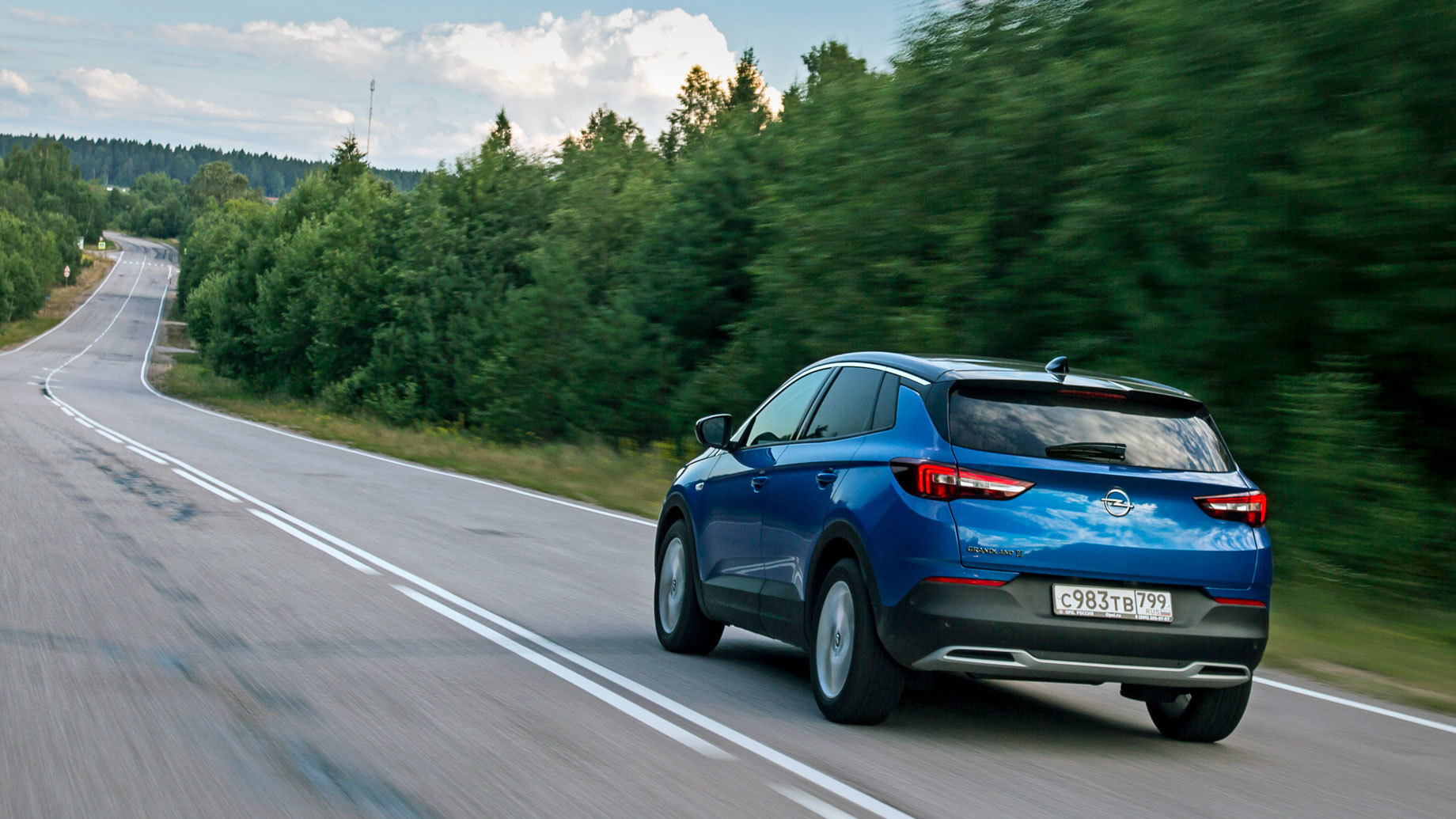
Keyless entry and push-button start are reserved for the top trim; other versions rely on a traditional key. Shifting into Drive via the old-school lever is satisfying — true to Opel tradition, it moves along a shaped groove that’s easy to locate by feel. The Grandland X drives with a distinctly German character. The 1.6-liter turbo engine, paired with a six-speed automatic transmission, delivers logical, predictable power delivery, and the claimed 150 hp is noticeable during overtaking. Wheel spin under acceleration is minimal, and unlike its French siblings, the brakes avoid an overly sharp initial bite — deceleration is easy to modulate.
The chassis feels noticeably tighter than the Peugeot’s, and steering feedback is sharper. Don’t expect outright sportiness in corners, though — grip from the Continental CrossContact LX2 tires is unremarkable. The Grandland X simply tracks through turns with mild body roll, staying composed even when provoked. What matters more is that the cornering stays even, since the firm rear suspension can unsettle the rear over joints and patched surfaces. Ride comfort on straight roads is similarly imperfect: large bumps are absorbed confidently, but mid-sized ones transmit more often than expected — a result of its European-tuned suspension.
Cabin Noise, Infotainment, and Connectivity
Despite using standard single-pane windows, the cabin stays impressively quiet. The engine note is pleasant and only becomes noticeable past 4,000 rpm, while wind and tire noise stay well controlled at highway speeds. Call quality over Bluetooth is excellent on both ends of the line, according to those tested. The infotainment system, while wearing Opel’s fonts, is fundamentally the French-sourced unit — meaning slightly confusing menu navigation, but also a neat “virtual 360-degree view” feature that blends front and rear camera footage into a single overhead-style image.
Winter Readiness and Cold-Weather Performance
On paper, the Opel is better equipped for winter than its French counterpart. Even the base trim includes a heated steering wheel, full windshield heating, and heated rear seat cushions. In practice, though, a few quirks show up:
- The left wiper falls about three inches short of fully clearing the windshield
- After using the washer fluid, a stray stream of water can run right across the driver’s line of sight, since the right wiper doesn’t fully clear the left one’s path
- Front-wheel drive and a measured ground clearance of just 6.5 inches limit cold-weather capability
Opel Grandland X vs. the Competition: Final Verdict
Among segment leaders, most buyers favor all-wheel-drive models. For the Kia Sportage and VW Tiguan, 4×4 versions account for roughly two-thirds of sales, and for the Toyota RAV4, that figure climbs above 80 percent. That trend says a lot about the Grandland X’s market position. However enjoyable its European driving manners may be, its pricing puts it at a disadvantage in a segment where all-wheel drive is increasingly expected. Even so, demand for the Grandland X is likely to outpace that of its sibling, the Peugeot 3008.
Quick Summary: Opel Grandland X Pros and Cons
- Pros: Comfortable, AGR-certified front seats; quiet cabin; tight chassis with sharp steering; strong heating features for winter; spacious, well-equipped trunk
- Cons: Cramped rear legroom and headroom; limited small-item storage; no all-wheel-drive option; inconsistent panel fit and finish; firm rear suspension on rough roads
This is a translation. You can read the original here: https://www.drive.ru/test-drive/opel/5f4cd41bec05c40510000059.html

Published September 08, 2022 • 6m to read