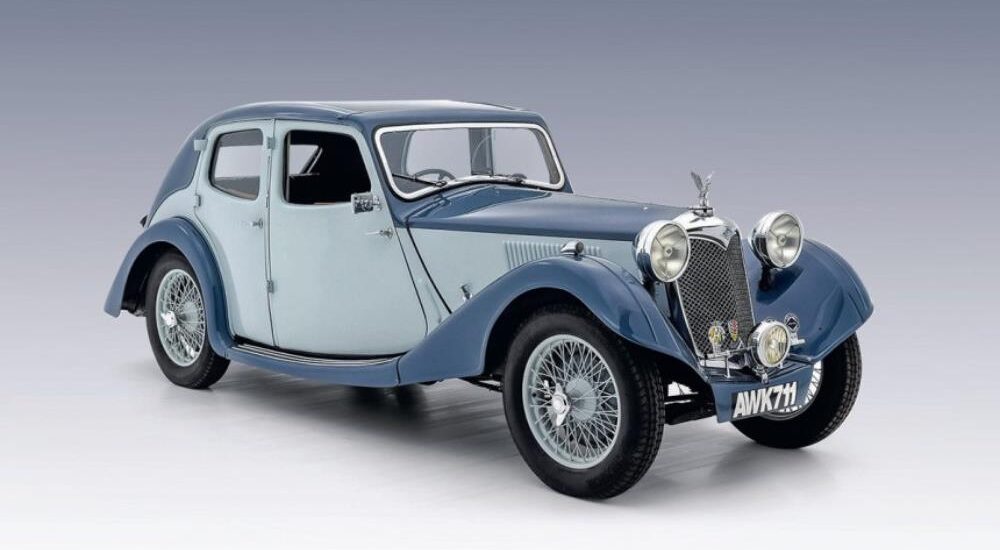

“If our Kestrel could talk, it would boast, ‘I am always on time!'” Such could have been the advertising slogan for this quintessentially English model if it had been marketed today. During its time of manufacture, though, there was no suitable market in our region.
A Bird’s Name for a Fast Car
This slice of British ornithology is embodied in the car’s name. A “tit” translates directly to “tit,” and a “siskin” remains “siskin,” but a “kestrel” is known as “pustelga” in our language — a predatory, swift, sharp-eyed bird, akin to a falcon, feared by sparrows and voles alike. The English automaker Riley evidently thought it an apt name for a quick car when it introduced this 1.5-litre enclosed model.
The roster already carried evocative names: Brooklands, after the famous racetrack; Stelvio, after the Alpine pass, with its clear sporting connotations; even Ascot, after the racecourse patronised by the British crown. Those were open tourers or sporty two-door saloons. The new car was a four-door, extending the 1.5-litre line, and it took the bird’s name.
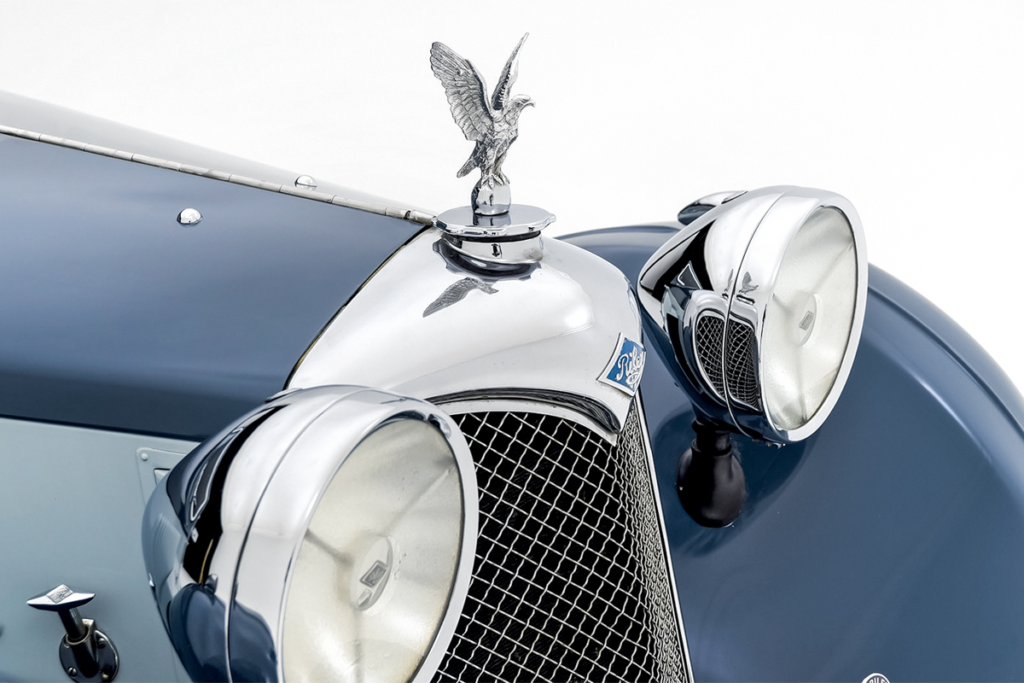
The bonnet ornament depicts a kestrel taking off. The cutout in the front fascia is covered with a safety net.
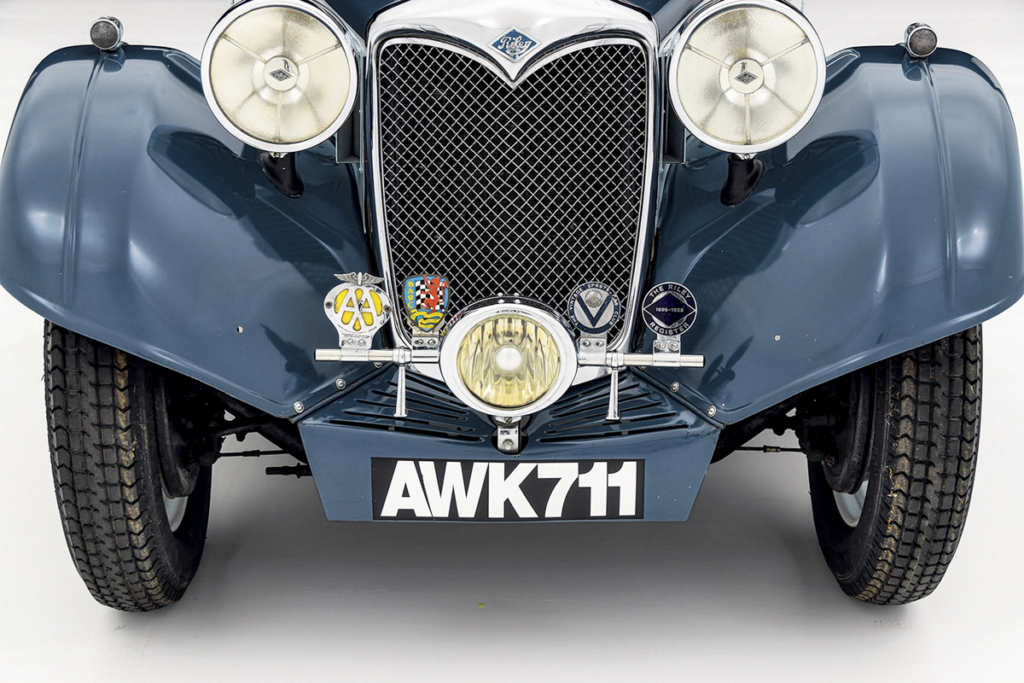
A very conservative frontal solution. The headlights here are Rotax, and the fog light at the very bottom, on the contrary, is Notek. There is no front bumper at all
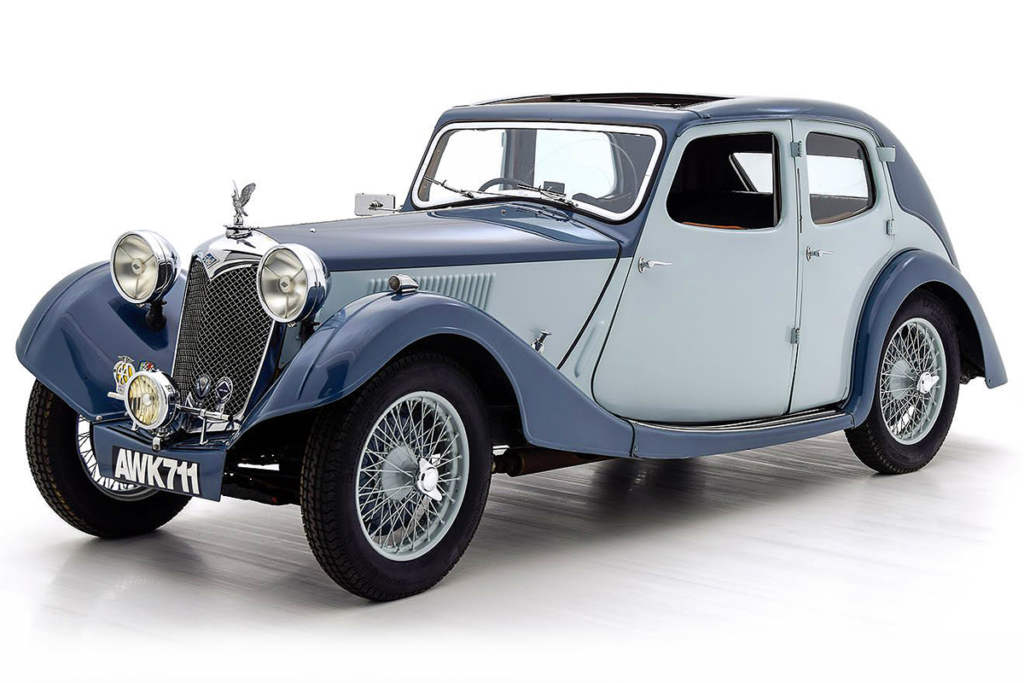
The mid-thirties “aerostyle” in its British version: a sloping top and smooth sides, but fenders and running boards protruding beyond the main volume of the body. The gray color of the body also evokes certain ornithological associations, although in terms of coloring, a real kestrel is not at all like that – it is mottled with a tint of red
From Bicycles to Its Own Engines
The Riley name first went on bicycles. The first motorised vehicles under it appeared in 1898, powered by French De Dion Bouton engines — an ordinary arrangement at the time, when a great many vehicles across the Old World ran on them. By 1903 the company was building its own engines and had stopped depending on outside suppliers.
The Wheels Everyone Wanted
Riley’s Coventry factory was famous above all for its spoked wheels, a craft perfected in the bicycle years and much in demand once cars arrived. Mercedes, Panhard and Hispano-Suiza bought them. So did Rolls-Royce, maker of “the best cars in the world”. Thick wire-spoked wheels came to dominate the output so completely that the work had to be split off into a separate business, unconnected with car manufacture, to stop it overshadowing the firm’s own cars.
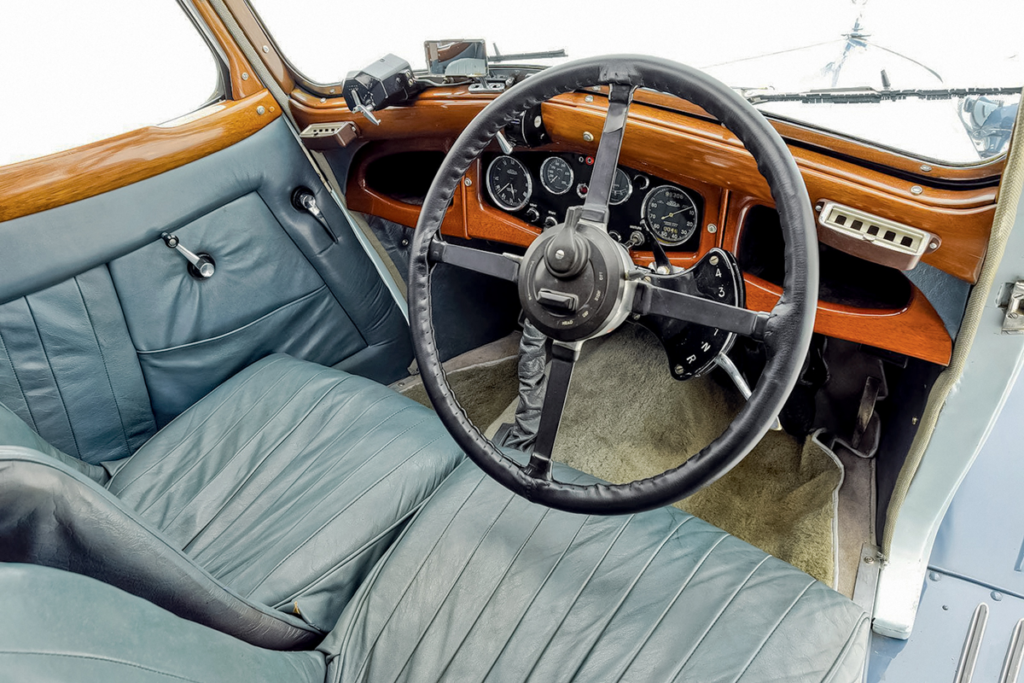
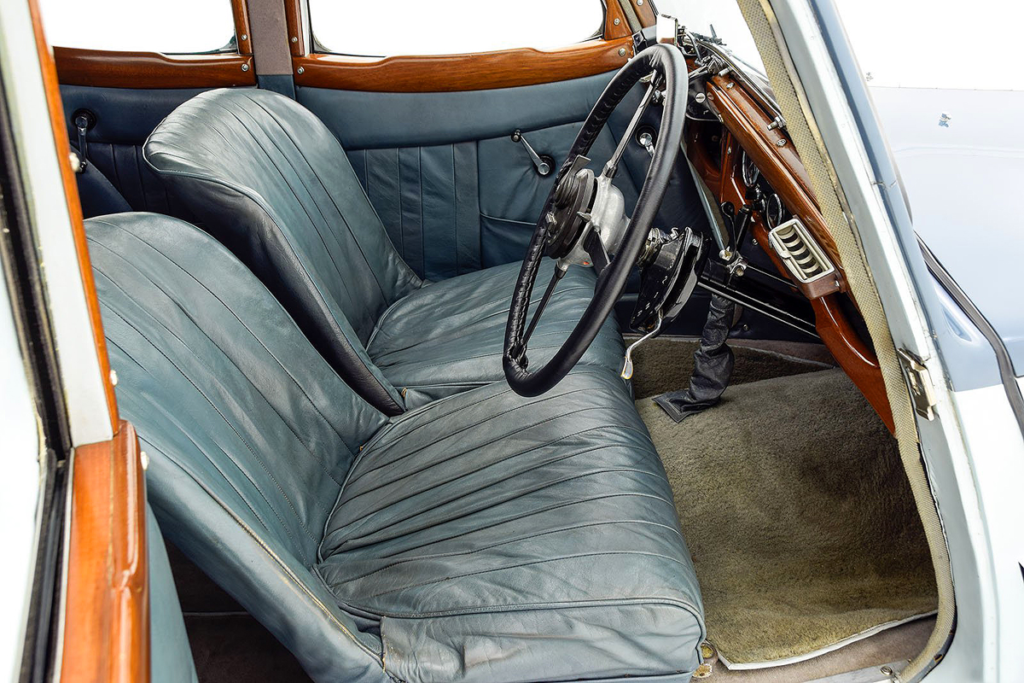
View of the driver’s workplace. The black sector just below the steering wheel is the transmission selector
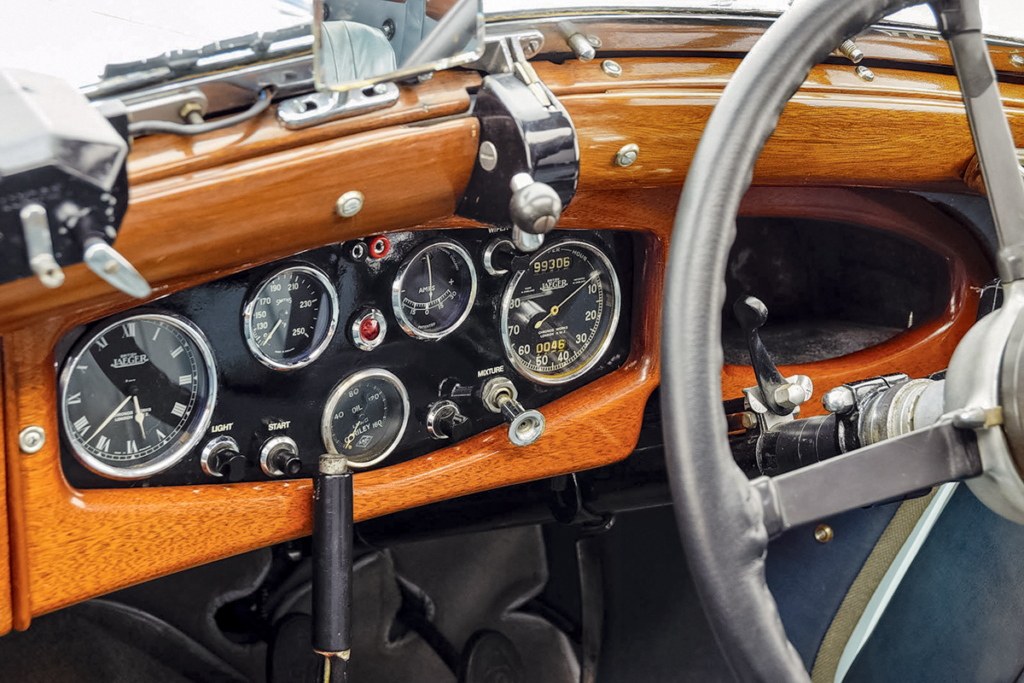
The scales on the instrument panel are somewhat motley: there are Jaegers and Smiths, and it is not clear whose ammeter it is. The only original dial, apparently, is the oil temperature indicator in the middle down: it has the Riley brand in white on black
The Engine
Riley’s cars were commendable enough that Walter Owen Bentley counted himself a satisfied customer, with his nine-horsepower model. The four-cylinder 1458 cc engine grew out of a 1926 design that was advanced for its era: inclined overhead valves, hemispherical combustion chambers, and twin camshafts driven by gears.
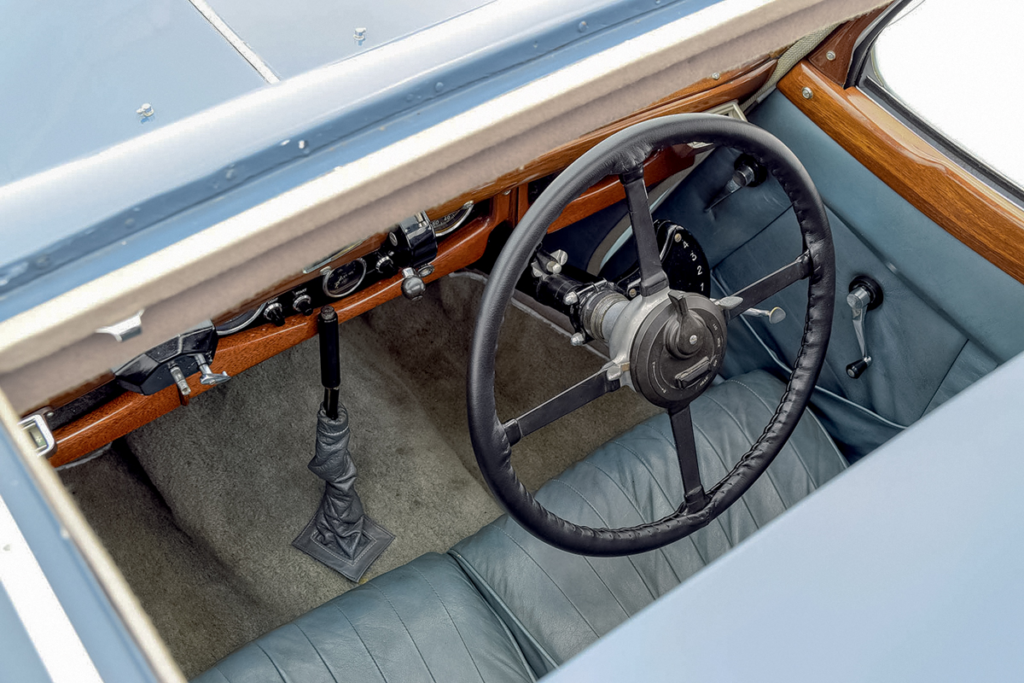
The roof has a sliding hatch
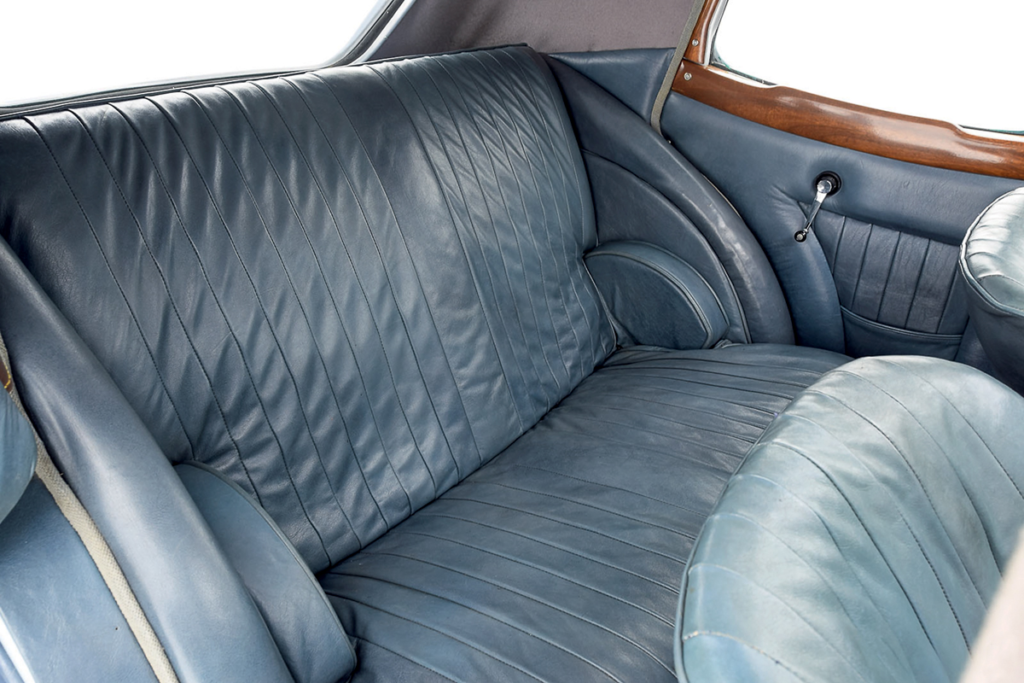
Comfortable rear sofa for two people. What is characteristic, no ashtrays or cigarette lighters. But the edging around the windows is made of natural wood, as is the front panel
A redesign in 1935 raised output to fifty horsepower, and to fifty-five in some versions, and the unit went on powering Riley cars until 1957 after several further improvements. The example in our illustrations has a pre-selector transmission from an outside supplier, Armstrong-Siddeley. Another point worth noting is the centralised Bijur lubrication system.
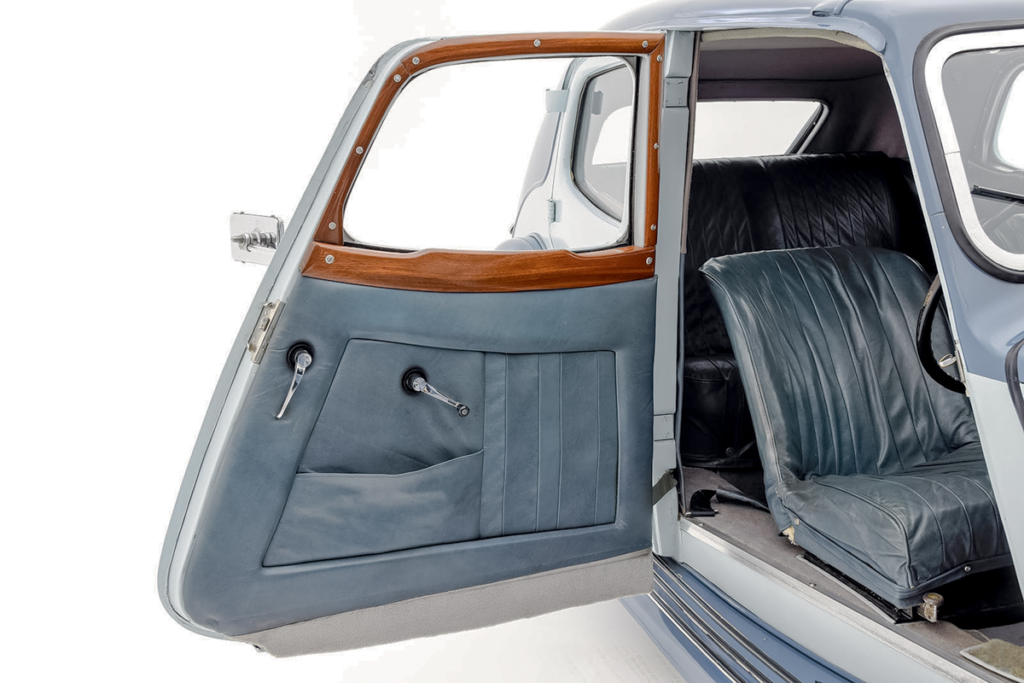
The four-cylinder overhead valve engine develops about 50 hp. The fuel system is two S.U. carburetors; the company that manufactured them also became part of the Nuffield Organization
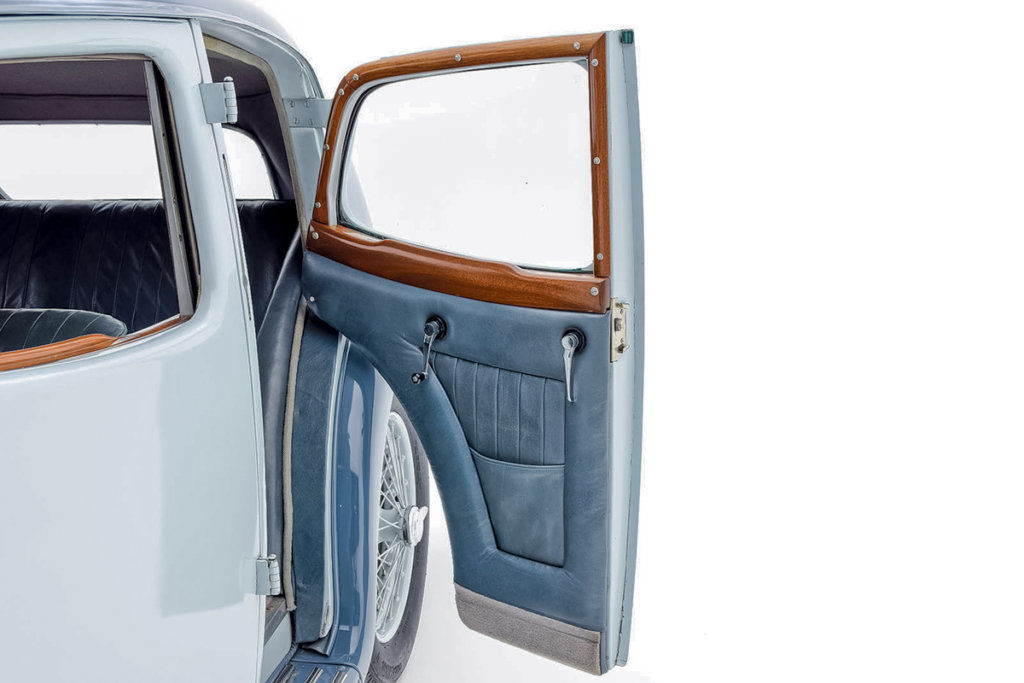
Absorbed, Then Erased
Barely three years after this particular car left the factory gates, Riley became part of the newly formed Nuffield Organization, alongside Morris, Wolseley and MG. After World War II, in 1948, it went into the newly named British Motor Corporation Ltd. together with Austin.
At first the brands inside the conglomerate kept some design independence. In time, though, in the spirit of “production rationalization” and its promised savings, the cars became largely standardised, separated mainly by radiator grille and interior trim. The Riley name was dropped in 1969: its market share had fallen to 1% and was still going down. It ended with three models on offer, among them the four-cylinder, four-door Kestrel 1300 Mk.II — a modest and unremarkable car.
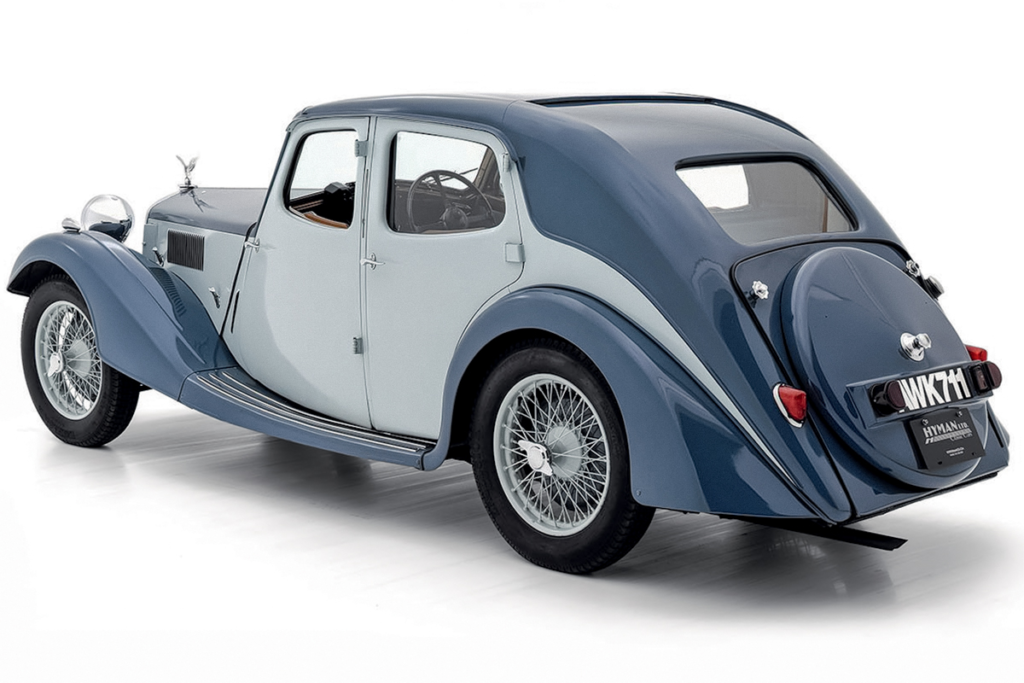
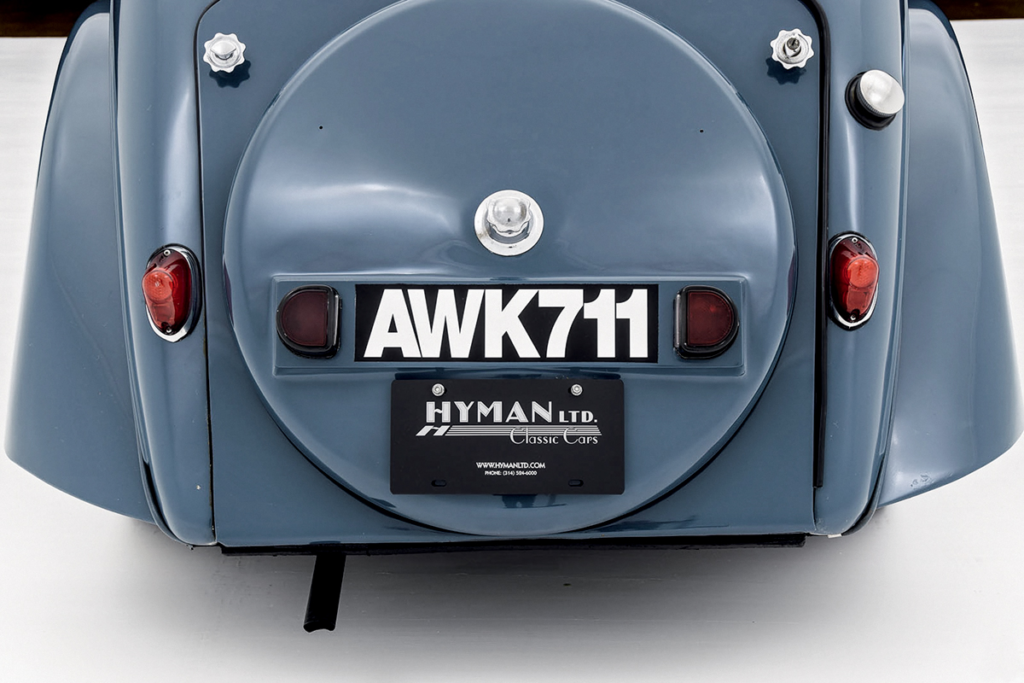
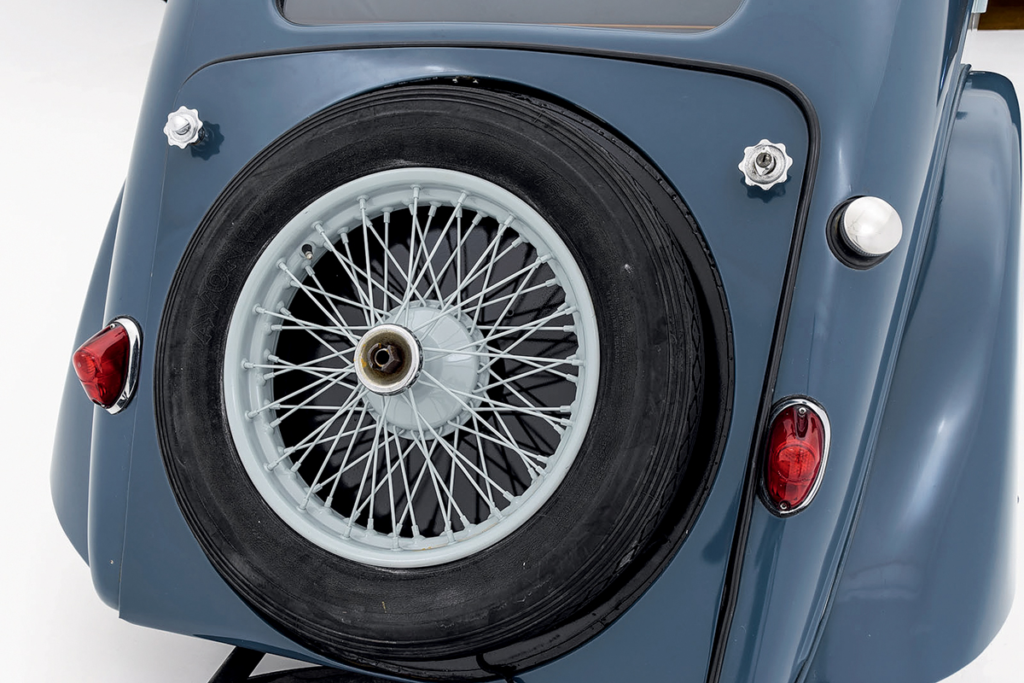
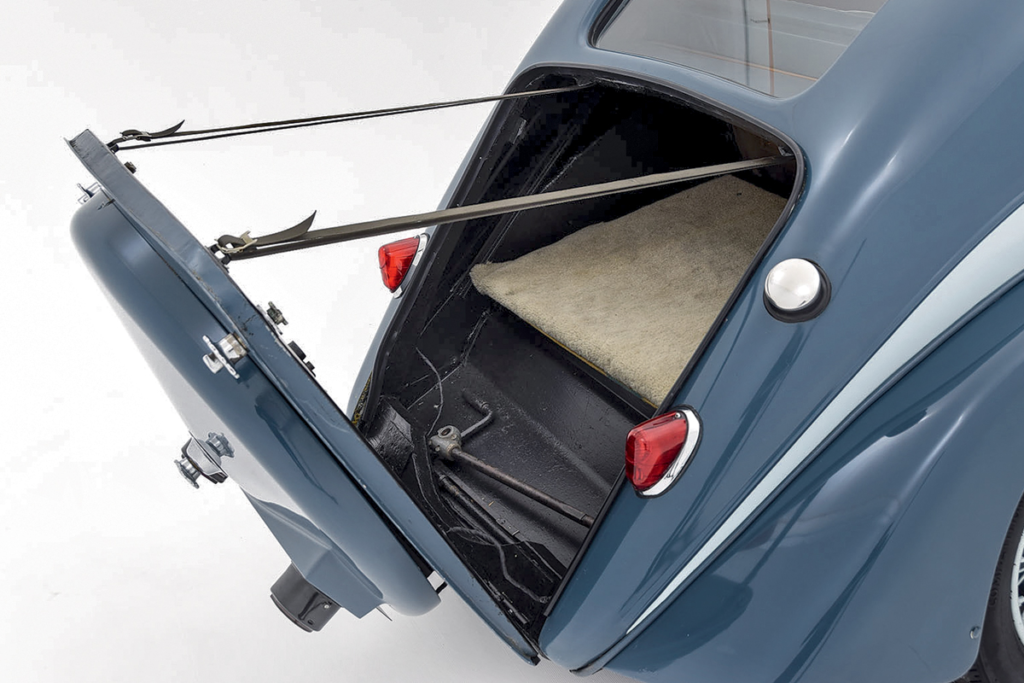
The spare wheel is located on the trunk lid and covered from above by another, its own, lid. The trunk opens (or rather, opens slightly) downwards. The rear bumper is also missing
Riley Kestrel: The Key Facts
- The name: a kestrel — a falcon-like bird, chosen for a car meant to be quick, in a range that already held Brooklands, Stelvio and Ascot
- Body: a four-door saloon, the four-door addition to Riley’s 1.5-litre line
- Engine: four cylinders, 1458 cc, from a 1926 design — inclined overhead valves, hemispherical chambers, twin gear-driven camshafts
- Power: fifty horsepower after the 1935 redesign, fifty-five in some versions; the engine served until 1957
- Transmission: a pre-selector unit bought in from Armstrong-Siddeley
- Also notable: centralised Bijur lubrication, and two S.U. carburettors
- The company: Riley from 1898, own engines from 1903, into the Nuffield Organization, then British Motor Corporation Ltd. in 1948, name dropped in 1969
Frequently Asked Questions
Why is the car called a Kestrel? Riley named its cars after racetracks and passes — Brooklands, Stelvio, Ascot — and for this four-door 1.5-litre saloon it chose a fast, sharp-eyed bird of prey instead.
What made Riley’s engines interesting? The 1458 cc four came from a 1926 design with inclined overhead valves, hemispherical combustion chambers and twin camshafts driven by gears — advanced for the period, and durable enough to stay in production until 1957.
Did Riley really supply wheels to Rolls-Royce? Yes. Its Coventry-made wire wheels went to Mercedes, Panhard, Hispano-Suiza and Rolls-Royce, and the business grew large enough to be separated from car manufacture altogether.
What happened to the marque? It joined the Nuffield Organization, then British Motor Corporation Ltd. in 1948. Standardisation left its cars distinguished mainly by grille and trim, and with market share down to 1% the name was dropped in 1969.
Photo: Sean Dugan, Hyman Ltd.
This is a translation. You can read the original article here: Riley Kestrel Saloon 1935 года в рассказе Андрея Хрисанфова

Published February 13, 2025 • 6m to read