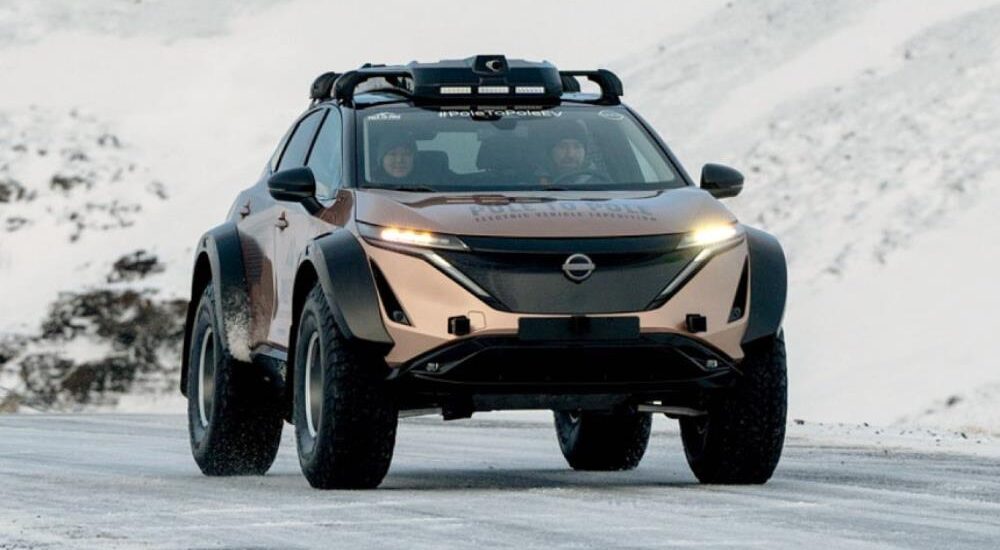

Debates about the real-world range of electric vehicles, particularly in harsh winter conditions, are ongoing. In a bold move, Nissan has undertaken an extraordinary challenge: a 30,000-kilometer trek from the North to the South Pole in its electric crossover, the Nissan Ariya.
What Had to Change on the Car
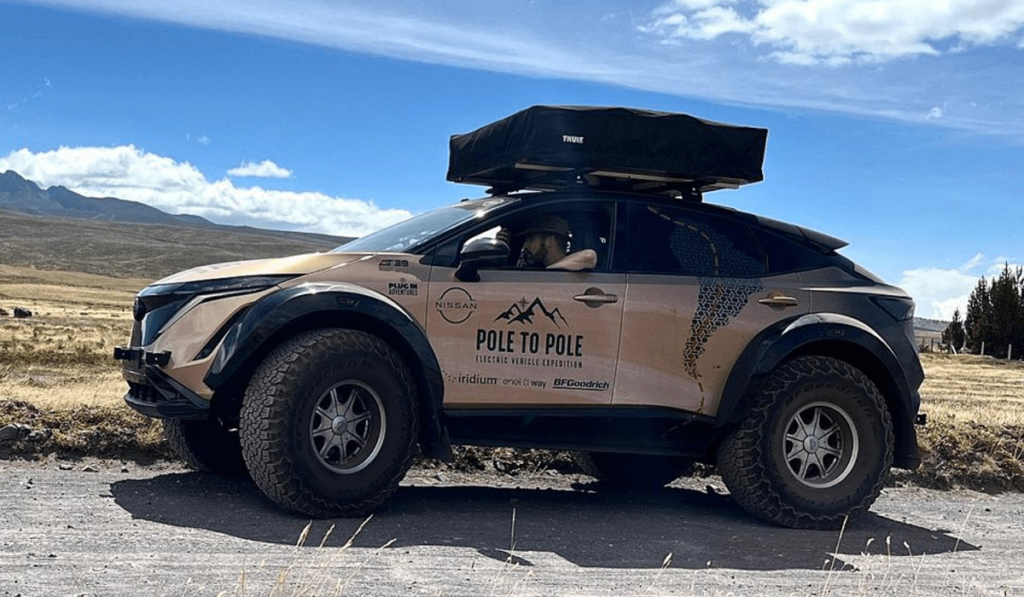
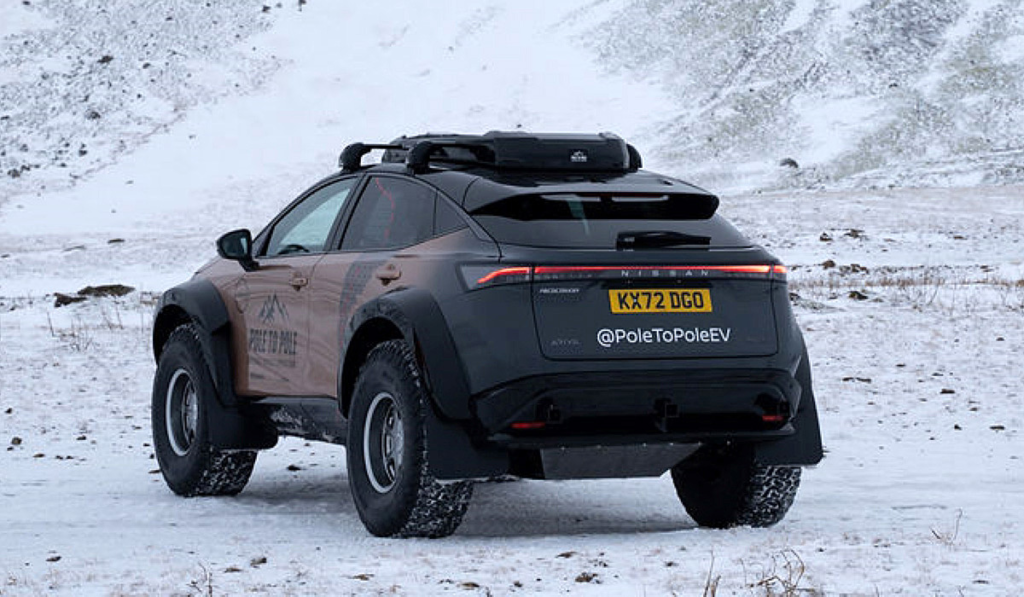
To adapt the Ariya for demanding snowy environments, Nissan enlisted Arctic Trucks, a renowned customization workshop. Their modifications included raising the body significantly, fitting massive 39-inch BF Goodrich off-road tires, and widening the wheel arches to clear them.
Charging Where There Is Nothing to Charge From
Nissan equipped the Ariya with its standard e-4orce dual-motor powertrain and traction battery, which normally allows up to 460 km on a single charge on the WLTP cycle. The extreme cold and the oversized tires cut into that, which prompted an unusual answer: a trailer carrying an extendable wind turbine and solar panels to feed the car’s energy needs. Several support vehicles accompanied the expedition.
The People Who Drove It
Piloting the modified Ariya were Chris and Julie Ramsay, auto enthusiasts and veterans of the 2017 Mongolia Rally, where they drove a Nissan Leaf electric hatchback across 10,000 kilometers. This adventure was significantly harder, spanning over nine months and beginning in late March. The Ramsays had spent four years planning the route, which traversed the western coasts of both Americas across 14 countries. They never met truly extreme cold — the lowest temperature was -23°C — but the journey stands as a landmark in automotive endurance.
Nissan has announced that this is the first time any vehicle, electric or otherwise, has completed such a monumental and continuous journey, setting a new benchmark for endurance travel in electric cars. The run highlights the Ariya’s durability in extreme conditions, and Nissan’s appetite for pushing at what electric vehicles can be asked to do.
Pole to Pole: The Key Facts
- Distance: 30,000 kilometers, North Pole to South Pole
- Car: a Nissan Ariya with the standard e-4orce dual-motor powertrain and battery
- Modified by: Arctic Trucks — raised body, 39-inch BF Goodrich tires, widened arches
- Charging: a trailer with an extendable wind turbine and solar panels
- Crew: Chris and Julie Ramsay, who had already crossed 10,000 kilometers in a Nissan Leaf on the 2017 Mongolia Rally
- Duration: over nine months from late March, after four years of planning, through 14 countries
- Coldest point: -23°C
Frequently Asked Questions
How did they charge in the polar regions? From a trailer carrying an extendable wind turbine and solar panels, backed by several support vehicles.
Was the car standard? The powertrain and battery were. The body was raised, the arches widened and 39-inch BF Goodrich tires fitted by Arctic Trucks — changes that also reduced the usual 460 km WLTP range.
How cold did it get? Not as cold as expected: -23°C was the lowest recorded on the whole journey.
Has anyone done this before? According to Nissan, no — no vehicle of any kind had previously completed the pole-to-pole run as a single continuous journey.
Photo: Nissan Company
This is a translation. You can read the original article here: Электромобиль Nissan Ariya проехал от Северного до Южного полюса

Published July 11, 2024 • 3m to read