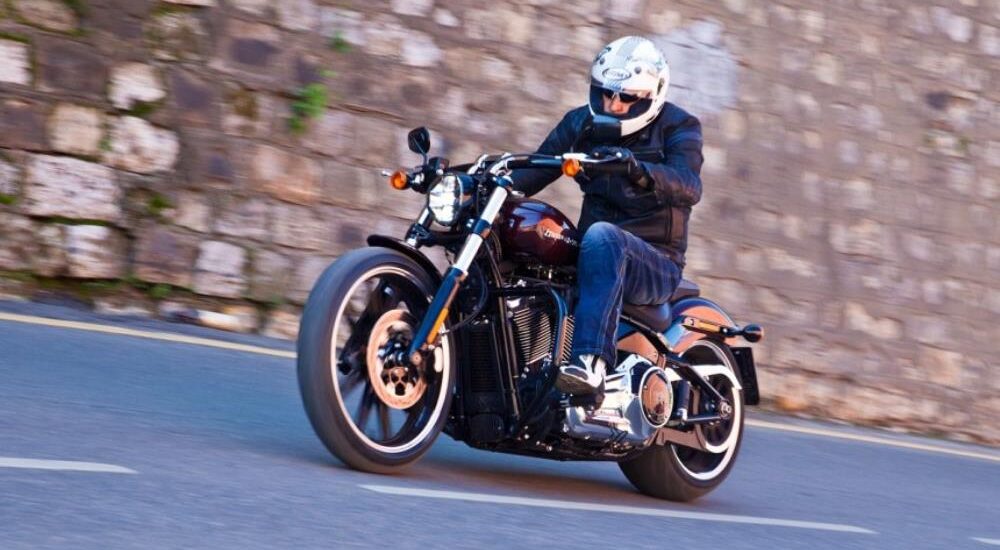

Never say never: just a couple of years ago, the idea of taking the flamboyant Harley-Davidson Breakout for an extended test ride — say, for four weeks — might have gotten nothing more than a sarcastic smile out of me. The motorcycle arrived brand new, but this honeymoon period is unlikely to be the easiest in the life of this “American” newcomer. No allowances for its size and class: daily commutes to work, navigating four-wheeled traffic jams, and at least one long journey are just the start of the “joys” awaiting this budding partnership, culminating in trials at a test track.
The Cult of Harley-Davidson
For me, the American brand has always remained somewhat mystical, beyond comprehension and awareness: you won’t find such fervent love and reverence for any other motorcycle manufacturer. A whole industry of adoration has sprung up around the company — a true cult known by the abbreviation HOG (Harley Owners Group). There, respectable businessmen and high-ranking executives in their “civilian” lives don leather vests, adorn themselves with skull rings, and closely monitor the correct execution of cult rituals for newly arrived novices. By the way, myths about uncontrollable bikes shedding parts as they go are nothing more than the machinations of competitors: killing a Harley would take a deliberate effort.
First Impressions: Surprisingly Easy to Adapt To
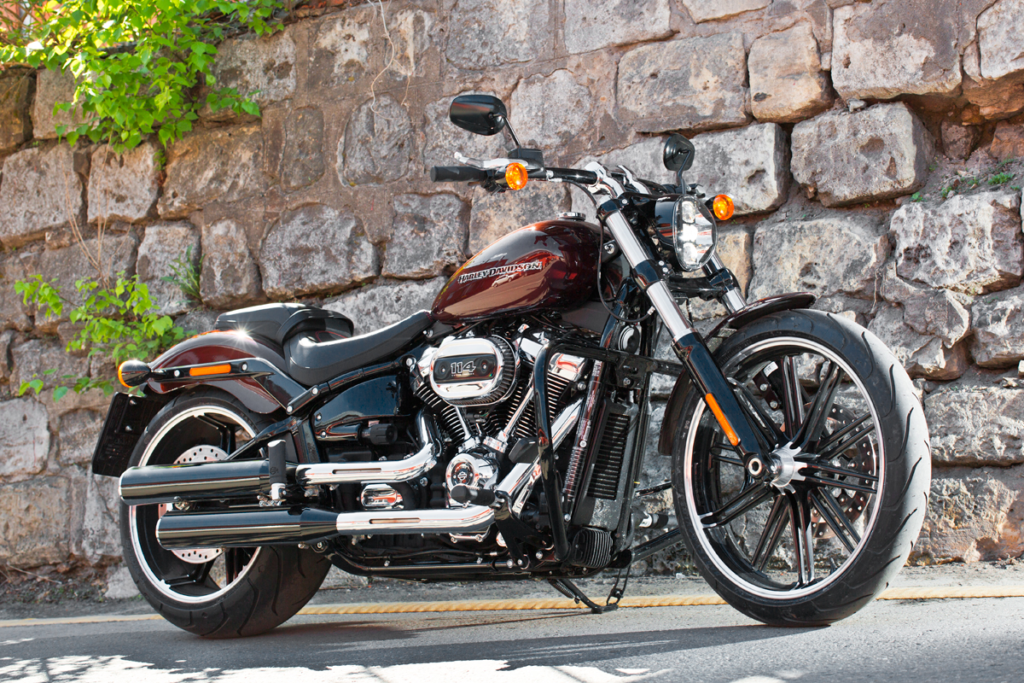
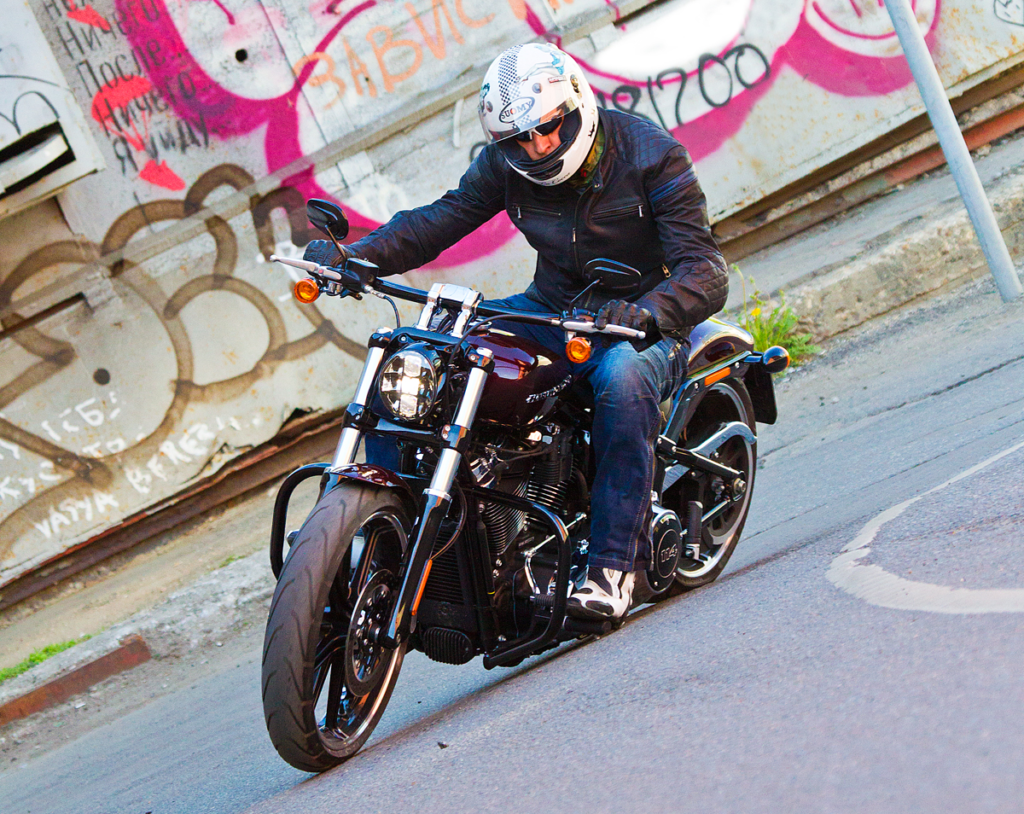
Surprisingly, the low and long (2335 mm) Breakout — with its rear “fat tire” measuring 240 (!) mm and a 21-inch front wheel, looking like it rolled straight off a show stand — took no more than ten minutes for me to adapt to. Routes from home to the office alongside “ordinary” motorcycles, and early concerns about this dreadnought’s maneuverability in city streets, faded away almost as quickly.
Handling and Suspension: Heavy, but Predictable
Of course, no miracle occurred — a curb weight just over 300 kg and a wheelbase worthy of a limousine don’t turn this luxurious representative of the motorcycle world into an agile naked bike. The motorcycle feels heavy and substantial, and its reactions to turns are gradual and measured. The suspension, typical for this class, doesn’t excel in comfort and transmits plenty of road roughness straight to your spine — though it could be worse. After all, 130 mm of fork travel and 86 mm at the rear monoshock aren’t the most radical figures in the class.
Riding Position: Built for Taller Riders
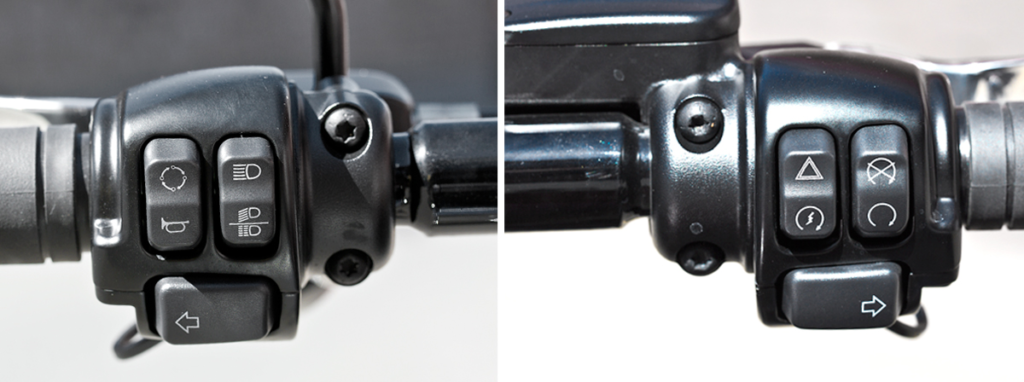
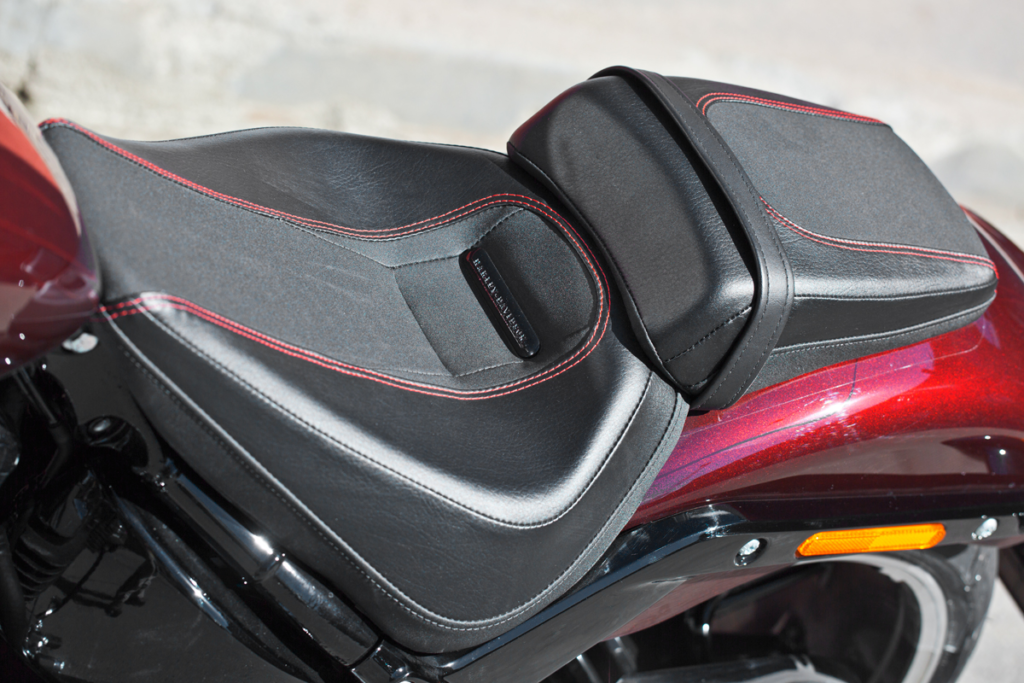
The unique riding position — an almost straight handlebar (about a meter wide), a seat set far back in an amphitheater-style arrangement, and foot pegs stretched far ahead — creates a specific ergonomic style, somewhere between cruiser and hunting orangutan. This triangle architecture of handlebar, foot pegs, and seat imposes real requirements on the rider:
- Riders should be at least 180 cm tall for genuine comfort
- Shorter riders may prefer the Harley-Davidson Sportster family instead
- Riders with a larger build may find the Softail series a better fit
Design and Engine: The Milwaukee-Eight 114
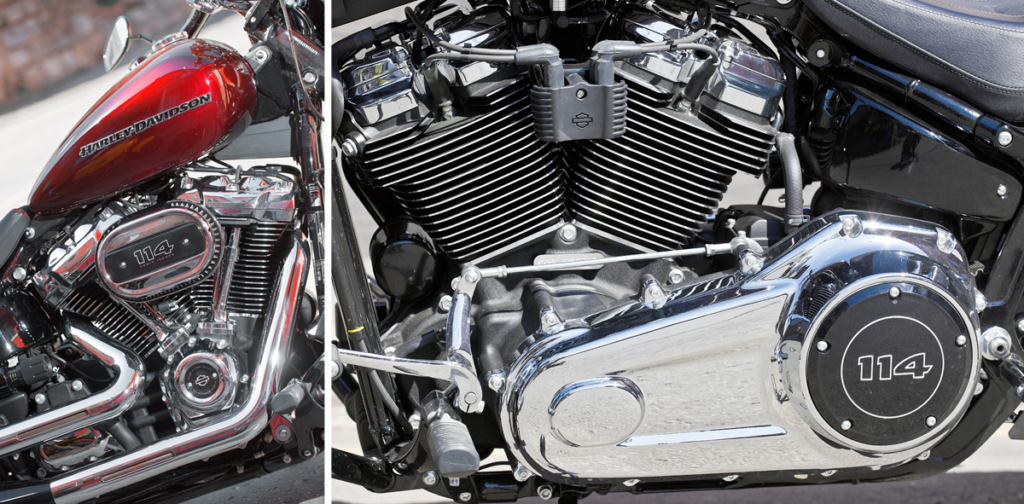
I’ve already written in detail about the “114” engine, a true technical masterpiece from Milwaukee with air-oil cooling. The idea is simple in concept: to an outside observer, the engine looks like a classic air-cooled unit, but the cylinder heads actually have an oil-cooling jacket. It’s all cleverly disguised, right down to the unobtrusive radiator that barely catches the eye.
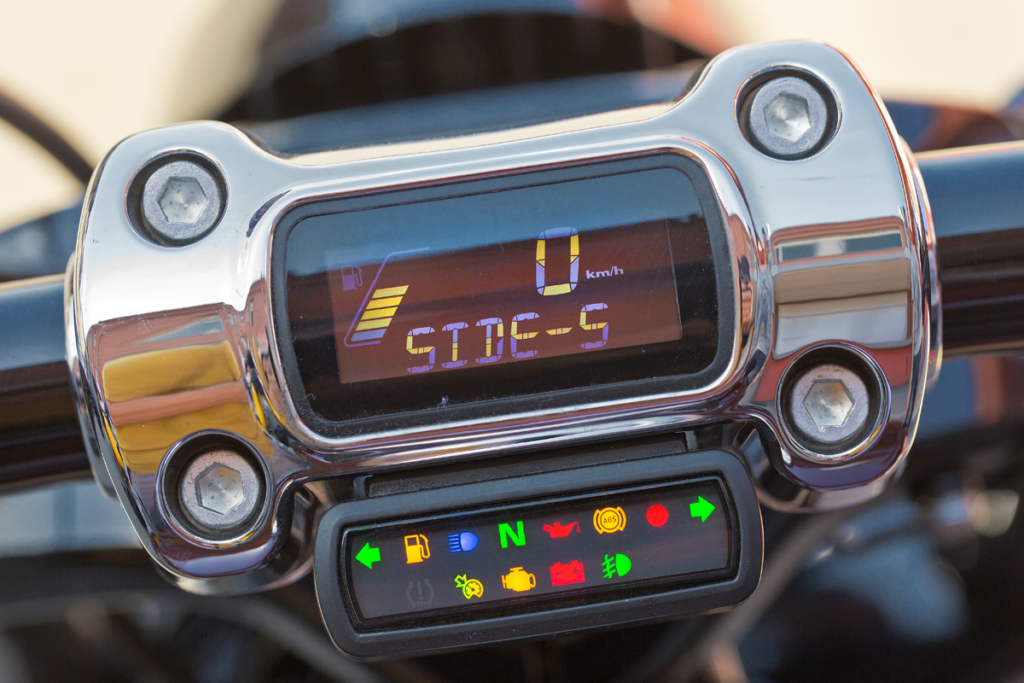
As for style, the Breakout stands out as the most harmonious model in the extensive Softail lineup. Harley’s designers sometimes go overboard chasing embellishments and “garlands,” but in the case of my test bike, everything feels concise and cohesive. The minimalist instrument panel, hidden in the handlebar’s crossbar, is a particularly stylish touch. Personally, I’d love to see a spoked-wheel option, but I suspect the folks in Milwaukee already know exactly what they’re doing.
On the Road: Torque, Sound, and a Different Kind of Pace
I’m gradually trying to alter my consciousness. Or is Harley changing it for me? The trademark exhaust sound — the “potato-potato” — from the almost two-liter V-twin, delivering another round of “bullets” (my metaphor for gear changes in that cavernous gearbox), eliminates any desire to hurry anywhere. Especially considering the 13.2-liter gas tank: it’s all about style, not range.
And now, 110 km/h no longer feels humiliatingly slow. With 155 Nm of torque available already at 3000 rpm, you can shift into sixth gear at just 60 km/h and the engine still pulls cleanly. Sure, you can push it to 180 km/h if you want, but why bother? For the first time in over twenty years of riding motorcycles, I was overtaken by a scooter rider — and honestly, it didn’t bother me one bit.
Engine Options and Fuel Economy
It’s interesting to think about where this month with the Harley will lead, both in terms of riding experience and finances. On the latter point: the Breakout is also available with a more modest Milwaukee-Eight 107 engine, displacing 1745 cc, for riders who want a lower entry price.
Now, all that’s left is for me to be embarrassed by my sportbike boots “from another world,” track down a leather vest from the perestroika era, dust off my Ural — and note the surprisingly moderate fuel consumption for such a flashy showcase machine: just 7 liters per 100 km.
Harley-Davidson Breakout FXBRS: Key Specifications
- Length: 2370 mm
- Width at handlebars: 950 mm
- Seat height: 665 mm
- Wheelbase: 1695 mm
- Front fork rake/offset: 34° / 145 mm
- Frame: Steel
- Curb weight: 305 kg
- Engine: 2-cylinder, V-shaped
- Cylinder bore/stroke: 102.0 / 114.3 mm
- Compression ratio: 10.5:1
- Displacement: 1868 cm³
- Valves: 8
- Maximum power: 93.8 hp / 69 kW at 4500 rpm
- Maximum torque: 155 Nm at 3000 rpm
- Transmission: 6-speed gearbox, multi-plate clutch in an oil bath, belt drive
- Front suspension: Telescopic fork, Ø 49 mm tubes, 130 mm wheel travel
- Rear suspension: Mono-shock with spring preload adjustment, 86 mm wheel travel
- Front brake: Ø 300 mm disc, 4-piston caliper
- Rear brake: Ø 292 mm disc, 2-piston floating caliper
- Front wheel: 130/60-21″
- Rear wheel: 240/40-18″
- Fuel tank capacity: 13.2 liters
- Fuel type: Gasoline AI-95—98
Photo: Nikita Kolobanov
This is a translation. You can read an original article here: Шоумен: Harley-Davidson Breakout на длительном тесте Авторевю, запись первая

Published October 18, 2023 • 5m to read