
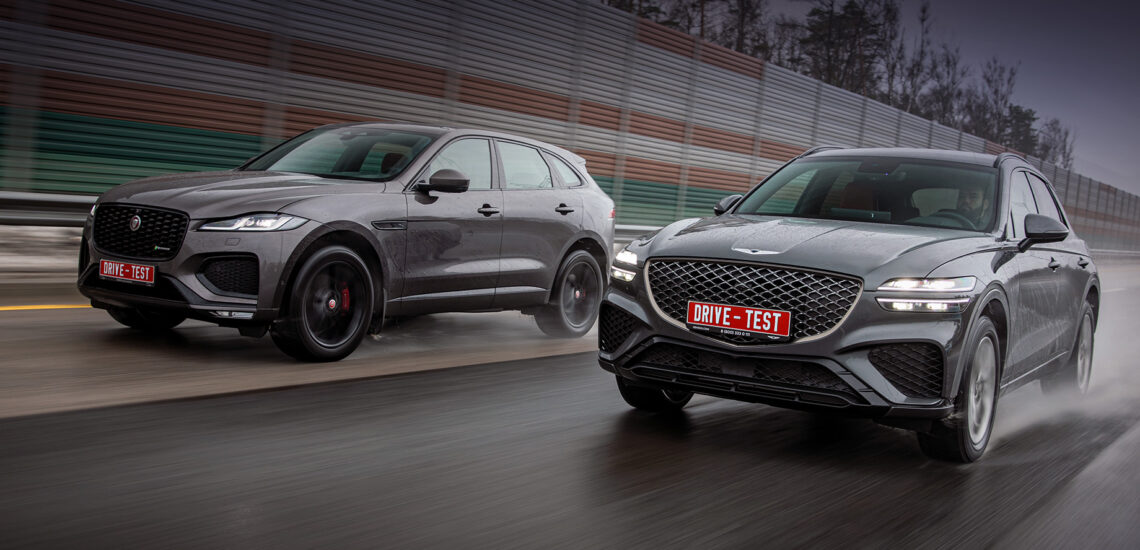

Finding a worthy rival for the Genesis GV70 proved harder than expected.
So the Genesis GV70 meets the refreshed Jaguar F-Pace — and it turns out to be a genuinely revealing matchup. The F-Pace received a completely redesigned interior and a new-generation 2.0-liter four-cylinder Ingenium diesel producing 199 hp, matching the output of the GV70’s larger 2.2-liter Korean unit exactly.
Build Quality and Exterior Design
The first surprise: the Genesis GV70 is built worse than the Jaguar. Panel gaps on the rear bumper differ noticeably left to right at the fender junction, and the hood gaps are similarly misaligned. The F-Pace, meanwhile, gives no reason for jokes — ironic given the longstanding reputation of British cars built around weekends.
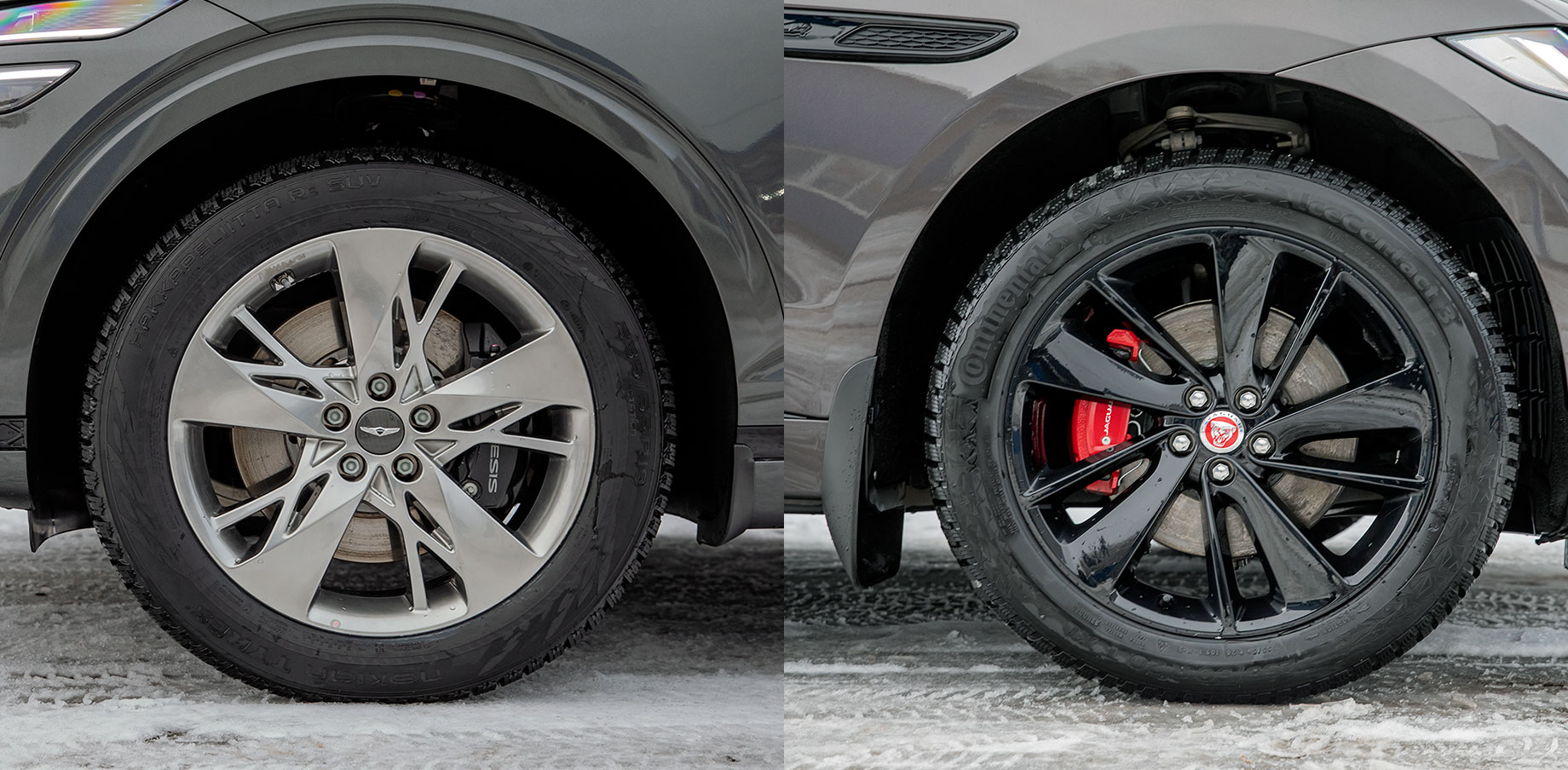
The Jaguar looks sharp regardless of its age, especially in the sporty R-Dynamic trim with extended black exterior accents. The GV70 also comes with a Sport package, but the design hits inconsistently. Viewed as a whole, the heavy rear end and 19-inch wheels that look lost in oversized arches work against it.
Interior Quality and Ergonomics
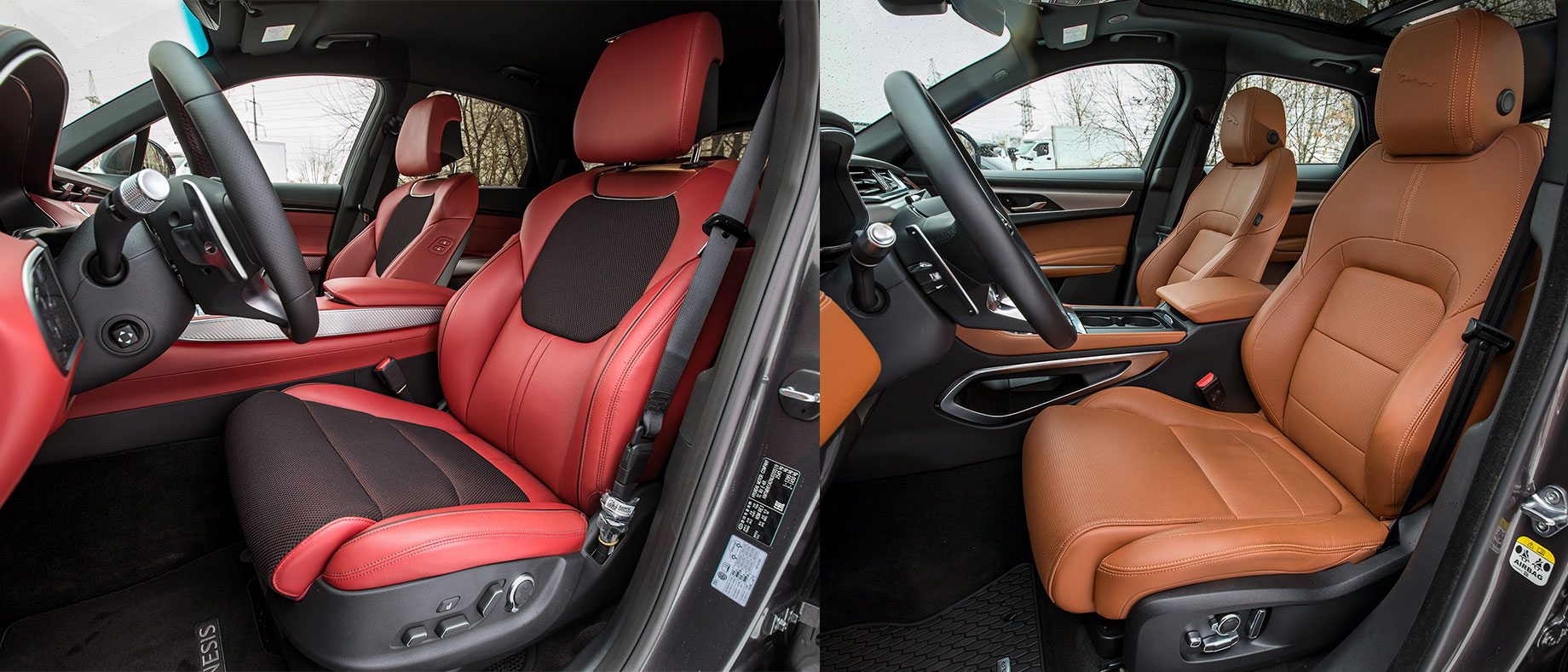
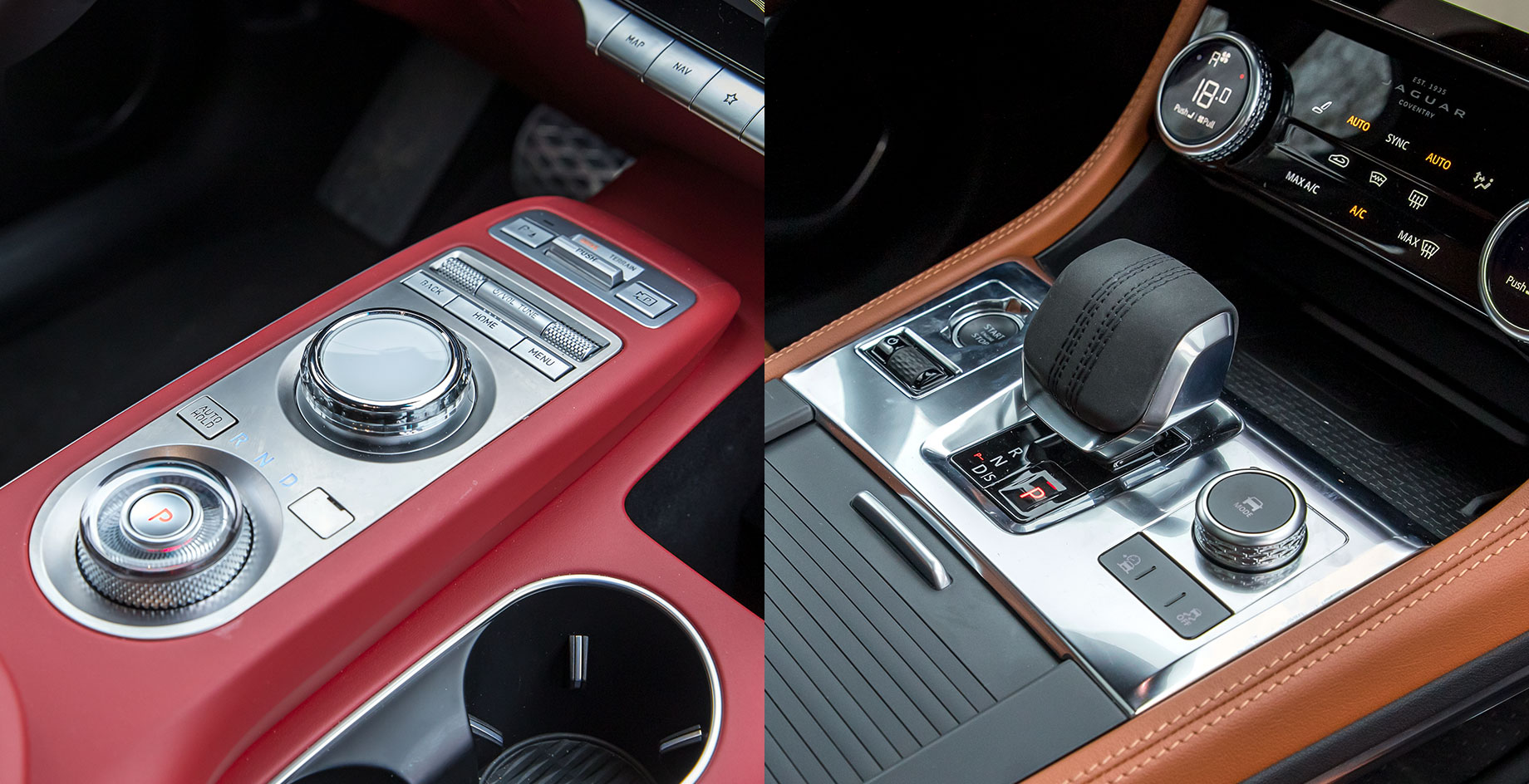
The GV70’s cabin is genuinely striking — somewhere between the Oval Office and a high-end VIP lounge. It edges out even the G80 and GV80 in ergonomics, replacing the awkward swivel ring recessed into the center tunnel with a proper controller dial. Assembly quality and material finish match those bigger siblings.
Practical interior highlights of the GV70 include:
- Rocker panels fully covered by doors — no dirty trousers
- Driving position that’s neither too high nor too low
- Seats more comfortable than in the GV80, thanks to a less curved backrest
- Massage function, lumbar extension, and lateral support adjustment — driver’s seat only
The Jaguar counters with its own set of advantages in the front:
- Full electric seat adjustment for both front occupants
- Sportier seats with better shoulder support
- More comfortable head restraints
- Steering wheel that extends further to compensate for shorter seat travel
Landing geometry is nearly identical in both cars. Blindfolded, you’d tell them apart only by scent — each has its own, and both smell expensive.
Interior Finish: Attention to Detail
Post-facelift, the F-Pace interior looks and feels premium. But Genesis sweats the small stuff in ways Jaguar simply doesn’t. The GV70’s buttons are calibrated for consistent tactile feedback; the F-Pace has:
- Climate control temperature rings with noticeable play
- Steering wheel buttons with vague, indistinct action
- Touch-sensitive keys that often require multiple attempts
- A gear selector that slips between modes too easily
The F-Pace’s new multimedia system looks great on screen and is feature-rich, but runs sluggishly, reboots occasionally while driving, and stutters when using Apple CarPlay or Android Auto. Genesis has none of these issues — though its wide display requires a stretch to reach, menu customization is limited, the default font is small, and the larger size option looks unpolished.
Engine Performance and Acceleration
The GV70’s 2.2-liter turbodiesel is noisier and sends more vibration into the cabin than the Ingenium unit. But the punch it delivers is remarkable — the two-ton SUV launches with the urgency of a BMW B57D30. The tachometer needle sweeps like an Aston Martin’s, second gear stretches to 37 mph before the eight-speed automatic shifts, and the century mark arrives in fourth. Racelogic clocked 8.7 seconds to 100 km/h — just 0.4 seconds off the official figure.
The GV70 pulls strongly from low to mid speeds and stays effortless on the highway. The throttle in Sport mode is sensitive and linear, and the gearbox downshifts promptly and with purpose.
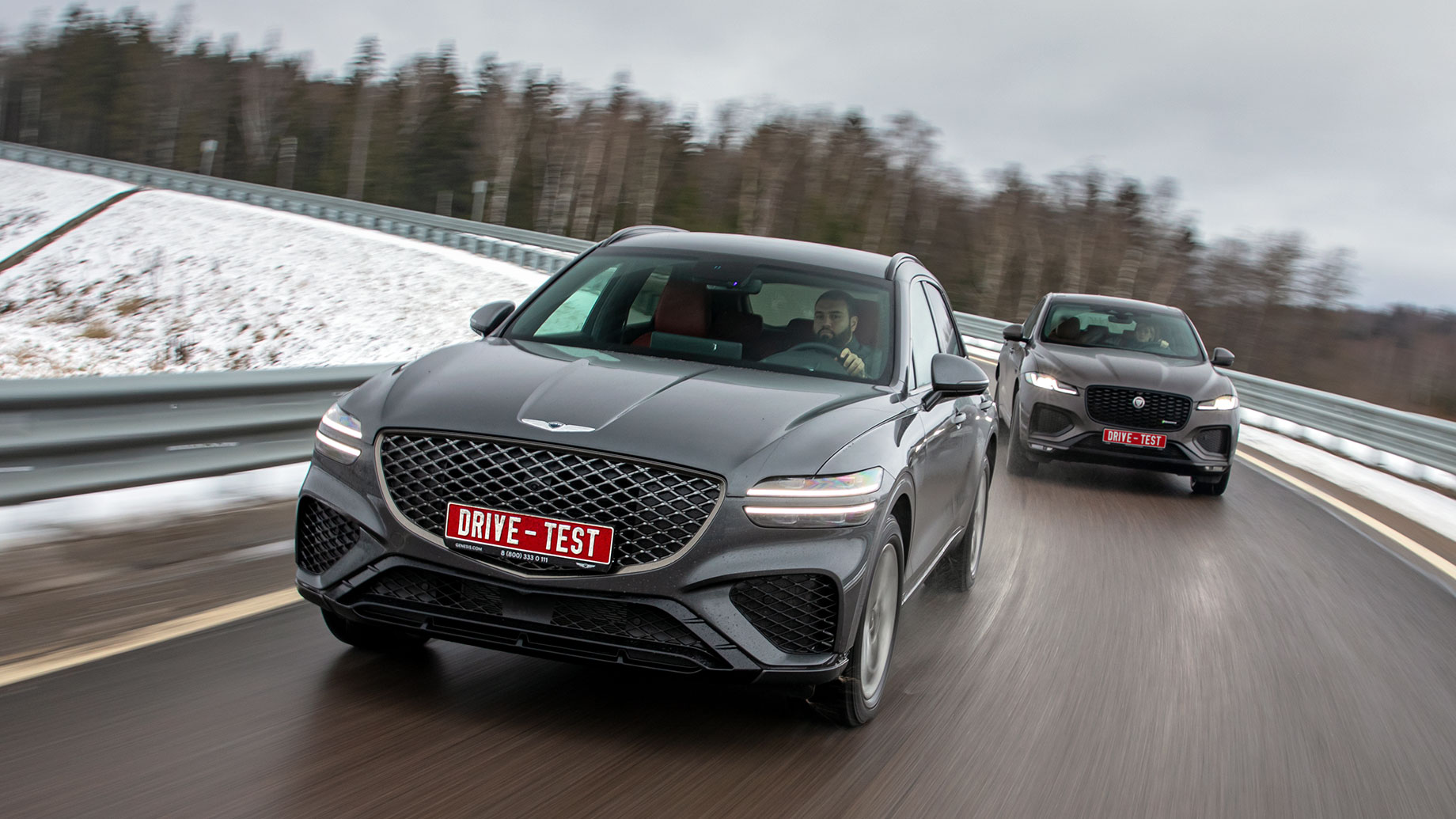
The aluminum-bodied F-Pace weighs 242 lbs less and trails only slightly in torque (430 N•m vs 441 N•m), yet takes 8.9 seconds to reach 100 km/h. Its acceleration character differs: a sluggish start gives way to real momentum after a couple of seconds. Like the GV70, the F-Pace impresses more on the move than from a standstill, but both ease off earlier at highway speeds.
In Dynamic mode with the ZF eight-speed gearbox set to Sport, the F-Pace transforms noticeably — shifts quicken, gears hold longer under load, and throttle response sharpens considerably.
Handling and Driving Dynamics
The F-Pace truly comes alive on winding roads. On challenging sections with elevation changes, cross-slopes, and broken surfaces, the adaptive suspension clamped down delivers exciting, composed progress. The steering is sharp and informative, the car rotates under throttle but responds even more keenly to lift-off, and the brakes — underwhelming in city traffic — become precise and effective tools on open roads.
The GV70 handles less naturally at the limit — the steering feels slightly heavy and the effort build-up is artificial. But in everyday spirited driving, it genuinely surprises:
- Accurate and responsive on soft compound tires
- A noticeable rear-wheel-drive bias with mild oversteer tendency
- Rear slip that’s easy to manage and catch — making it entertaining on slippery surfaces
Ride Comfort and Urban Behavior
This is where the F-Pace struggles most. In city conditions, the suspension is harsh on standard bumps, with impacts accompanied by wheel vibration that feeds into body shake. The GV70 isn’t softer as such — it reads road texture and short waves accurately — but on firm surfaces it rides more nobly. The passive suspension feels cohesive, handles speed bumps and road joints quietly, and keeps wheel vibration away from the floor and body.
Verdict: Genesis GV70 vs Jaguar F-Pace
The GV70 has something the vague “eighties” lack: genuine character. A low, purposeful driving position, a combative diesel, a tight chassis, and strong brakes combine into a cohesive, honest performance package. That makes it the best Genesis to date — and the competitive pricing, plus the option to buy online, only strengthens the case. But a rough ride and a cramped second row prevent it from leading the class.
Here’s how the two compare at a glance:
- Genesis GV70: better ride quality on sealed roads, more consistent interior controls, stronger low-speed punch, friendlier to drive in slippery conditions
- Jaguar F-Pace: more rewarding on twisting roads, sportier seats, better front passenger comfort, more distinctive character behind the wheel
The GV70 doesn’t reach the level of the best German rivals in the segment, but it competes squarely with the Jaguar. The difference is that the Genesis’s shortcomings feel fixable, while the F-Pace’s time is running out. The Coventry crossover will be remembered as bright, unbalanced, and ultimately too flawed — a fitting send-off before its fully electric successor arrives. The Genesis still has everything ahead of it.
This is a translation. You can read the original here: https://www.drive.ru/test-drive/genesis/jaguar/61b88771769f9a3e3a7c6248.html

Published March 03, 2022 • 6m to read