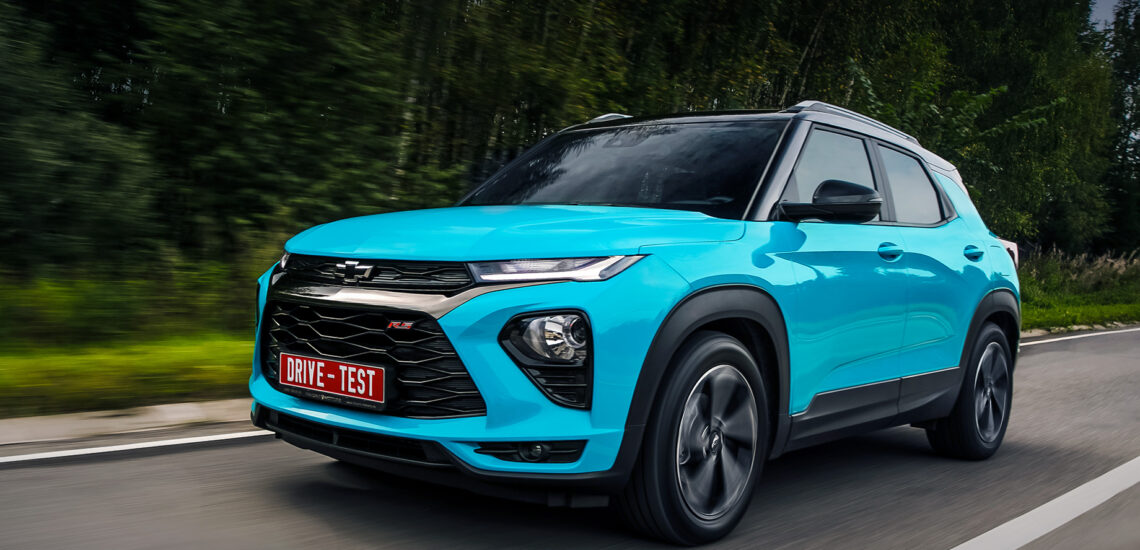

The Chevrolet Trailblazer compact crossover shares nothing but a name with the body-on-frame SUV produced until 2010, nor with its successor still sold in Latin America, Southeast Asia, and the Middle East. This model traces its roots to the Buick Encore unveiled in Shanghai in 2019 — a fresh start, a new concept, and a new kind of buyer: one who is open to a turbocharged three-cylinder engine under the hood.
Powertrain and Drivetrain: What’s Under the Hood?
The Trailblazer made its way to the US market with two turbocharged three-cylinder engine options. The 1.2-liter variant with 139 hp didn’t find its audience, and today only the stronger 1.3-liter unit — rated at 150 hp and 236 N·m of torque — rolls off the assembly line in South Korea. Here’s how the drivetrain breaks down by trim:
- Front-wheel drive: paired with a torque converter automatic and a rear torsion beam suspension
- All-wheel drive (Active and RS trims): uses the Hydra-Matic 9T45 nine-speed automatic gearbox with a part-time rear axle
- Rear suspension: semi-independent setup supplemented with Watt’s linkage, similar to the last GM-era Astra
Trailblazer Active vs. RS: What’s the Difference?
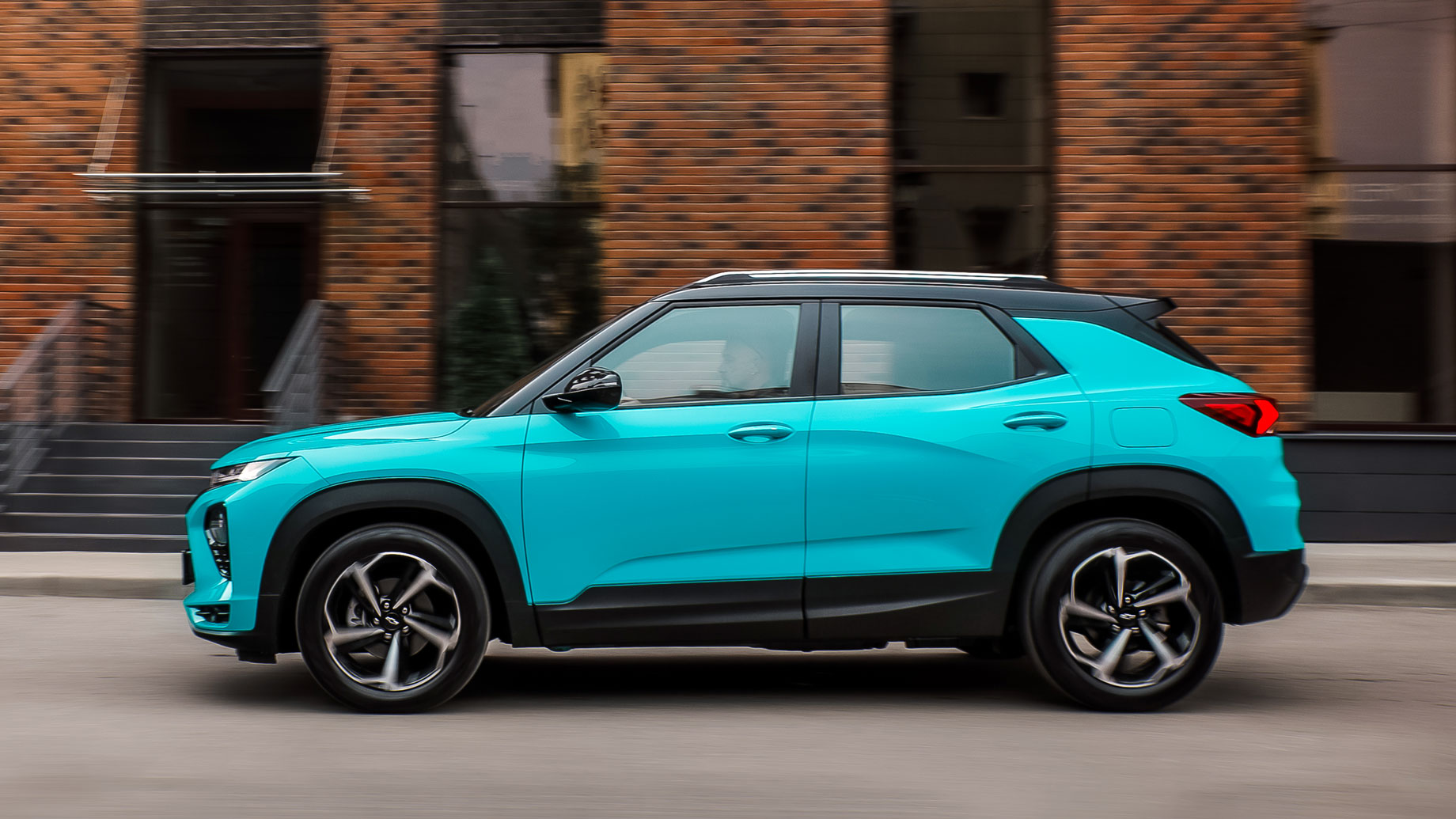
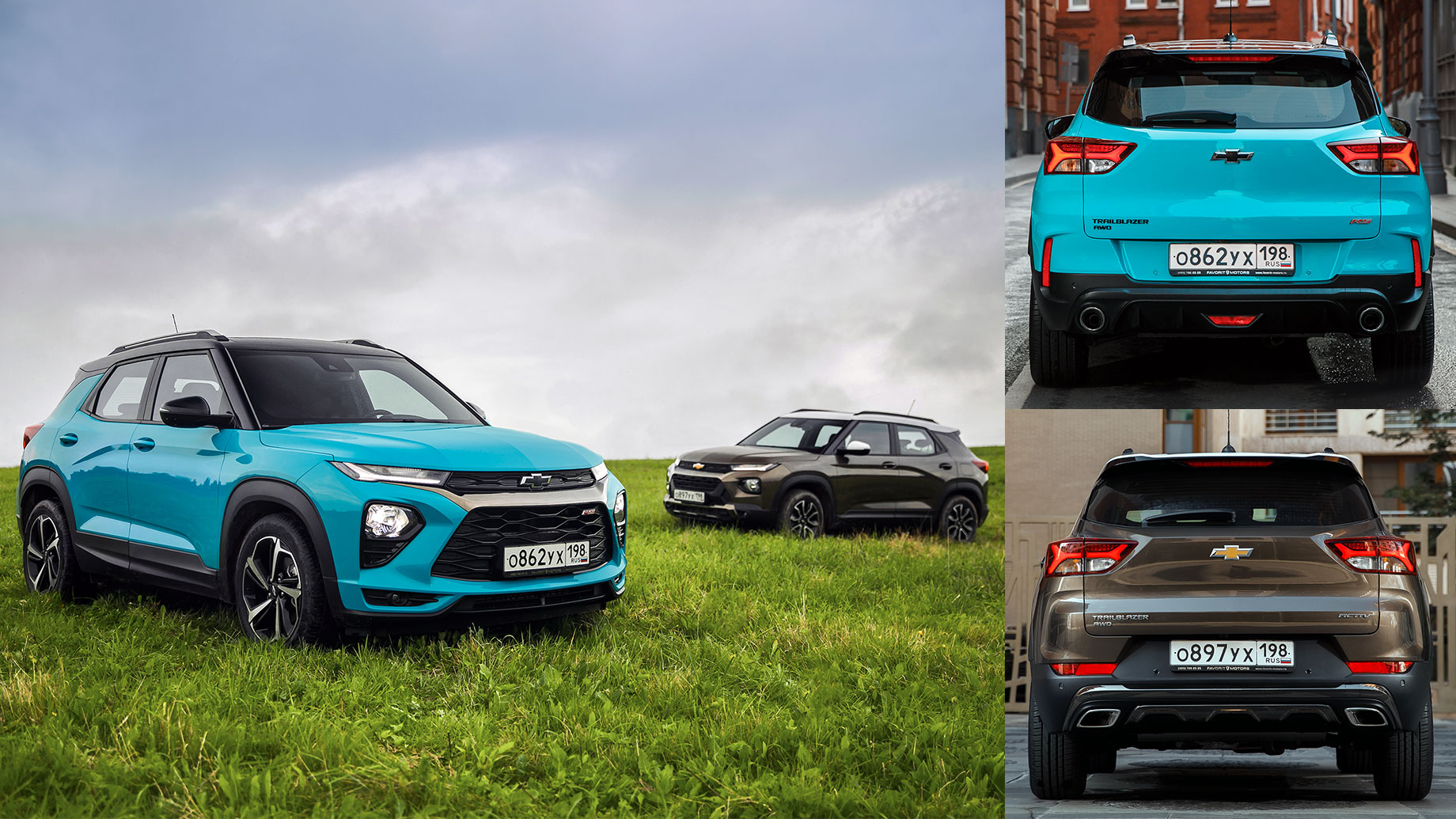
GM offers two all-wheel-drive top trims for the Trailblazer — the Active and the RS. One is marketed as an outdoor adventure companion, the other as a sporty street machine. In practice, the differences are mostly cosmetic:
- Different interior and exterior styling and trim details
- Different wheel sizes (17-inch on the Active, 18-inch on the RS)
- The Active rides on Hankook Ventus S1 Evo 2 SUV 225/60 R17 tires — softer and more comfortable
- The RS uses Continental UltraContact UC6 225/55 R18 tires — slightly firmer
- Despite its adventure branding, the Active has 183 mm of ground clearance — a full centimeter less than the RS’s 194 mm
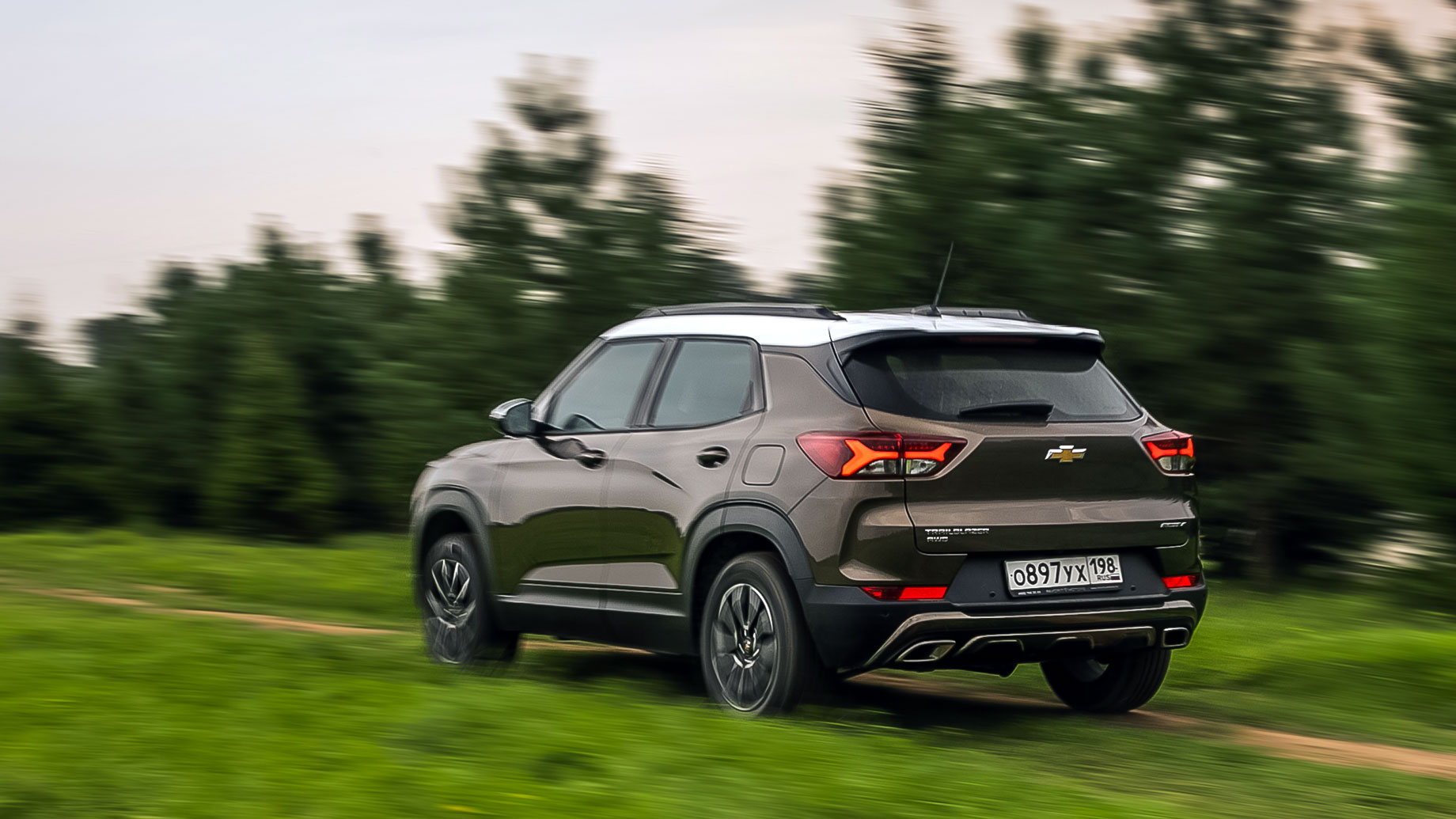
The Trailblazer looks striking in Chevrolet’s promotional photos near the Grand Canyon, and it holds up just as well in person. The optional LED headlights draw comparisons to both the Hyundai Creta and, for some, even the Camaro.
Interior Quality and Features: The Good and the Bad
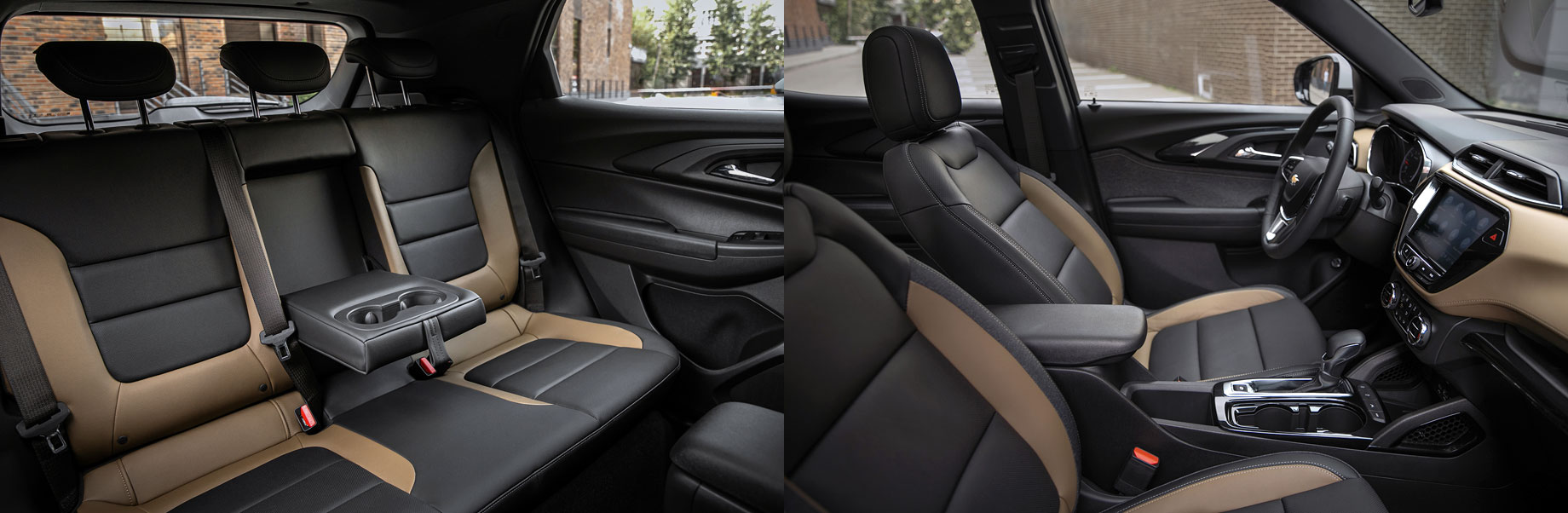
The Trailblazer’s interior photographs better than it looks in person. Up close, some quality control issues become apparent:
- Chrome climate control rings feel loose
- Rear seat heating buttons creak
- Hard plastic is used in too many contact points
That said, the ergonomics are solid. The control layout is intuitive, the instrument cluster with its classic analog dials is easy to read, and the eight-inch touchscreen responds well. On the connectivity front:
- Apple CarPlay and Android Auto are both supported
- The media system graphics are simple but functional
Space, Comfort, and Equipment: Where Does the Trailblazer Fall Short?
Cabin space is competitive for its class. The roofline is tall enough to enter without ducking, and rear passengers have enough legroom — feet tuck neatly under the front seat. However, knee room in the back depends on the driver’s height; a driver over 6′ 2″ will noticeably push back into the rear passenger’s space. The trunk is a highlight: excellent geometry and a clean two-level floor. The cargo cover, oddly, is listed as a dealer accessory rather than standard equipment.
On the equipment side, even the top configuration has some noticeable gaps:
- No heated windshield or heated wiper rest area
- Power seat adjustment and lumbar support are driver-only
- Auto mode on power windows is driver-only
- No rear air vents in the second row
- No rear climate temperature control
- A 1 kW heater is the main tool for warming the cabin in cold weather
Engine Performance: How Does the 3-Cylinder Turbo Feel to Drive?
Put the Trailblazer in Drive and the turbo engine responds with more urgency than you might expect. Torque is rated across a wide 1,600–4,000 rpm band, but the real pull arrives around 3,000 rpm. In urban driving, the powertrain is genuinely capable — there’s no reason to think about cylinder count in city traffic. The nine-speed gearbox is well-calibrated in its single operating mode, though it hesitates slightly when multiple downshifts are needed quickly.
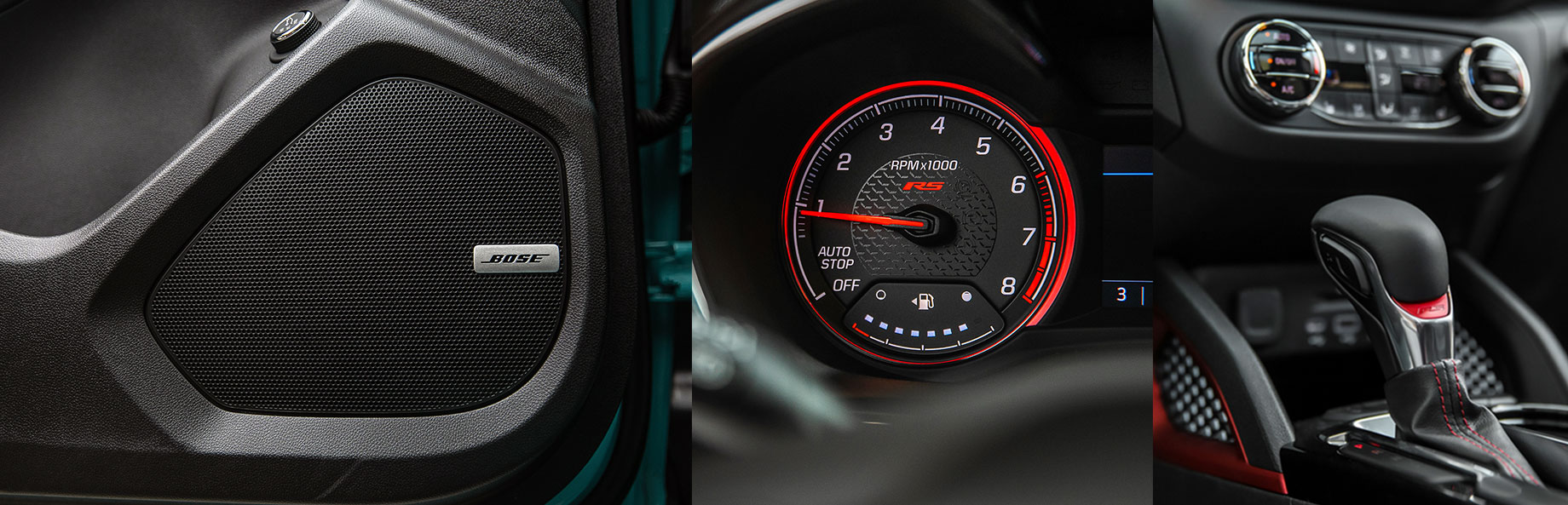
Highway performance tells a different story. Above 55–60 mph, the engine slips into an on/off fuel-saving mode. On long highway stretches, the tachometer tends to hover between 4,500 and 6,000 rpm under sustained throttle — which highlights the limitations of the 1.3-liter displacement at speed.
Noise, Vibration, and Ride Quality
The Trailblazer’s noise insulation is genuinely impressive for this segment. The turbocharged three-cylinder stays hushed even under load, and at low speeds, the cabin is practically silent with no noticeable vibrations. The main noise sources are:
- Wheel arches — the primary source of road noise at all speeds
- Trunk area rumble — audible in the second row
- Exhaust note at full throttle — present but not intrusive
Overall, conversation in the cabin is easy at normal road speeds without raising your voice.
The suspension handles minor surface imperfections well, but larger bumps translate more noticeably into steering wheel vibration and body movement. A sharp hit at speed will jostle occupants, though the hydraulic rebound bumpers in the shock absorbers prevent bottoming out even in serious potholes.
Handling and Steering: Confident, But With Caveats
The Trailblazer is stable on sweeping curves and not easily unsettled by sharp evasive maneuvers — body roll is present but controlled. The steering, however, has some notable drawbacks:
- Low feedback around center — limited sense of tire grip through the wheel
- Effort increases with steering angle, but not in a consistent or progressive way
- The transition from understeer to oversteer on loose surfaces (gravel or dirt) is abrupt
- Stability control is slow to intervene during rear-axle slides off-road
All-Wheel Drive System: How Well Does It Work Off-Road?
The AWD system is activated via a button behind the gear selector. On dry asphalt, the difference between 2WD and AWD modes is barely perceptible — the main benefit is reduced wheelspin during hard acceleration. Off-road, the AWD system earns its keep:
- Cornering speeds on gravel and earth roads are noticeably higher
- The car is more stable through corners in AWD mode
- The clutch can lock completely, though this is managed automatically — the driver has no manual control over torque distribution
- According to Chevrolet, AWD functionality is available across the full speed range
Fuel Economy and Running Costs
The Trailblazer’s 50-liter fuel tank feels modest for a crossover that’s marketed with adventure in mind — and it requires premium fuel. On the positive side, the relatively light curb weight (under 1,500 kg) and the AWD system’s shaft disconnect clutch keep fuel consumption manageable. At a relaxed pace, a combined average of around 6.5 liters per 100 km is realistic.
Verdict: Is the Chevrolet Trailblazer Worth Buying?
The Trailblazer leaves mixed impressions. It’s a well-rounded, modern compact crossover with no glaring flaws — but equally, no standout strengths that set it apart from competitors like the Hyundai Creta or Kia Seltos. Here’s the quick summary:
- ✅ Quiet and refined cabin for a three-cylinder engine
- ✅ Good ergonomics and a responsive infotainment system
- ✅ Capable AWD system for light off-road use
- ✅ Reasonable fuel economy at relaxed speeds
- ❌ Highway performance is limited above 60 mph
- ❌ Interior quality doesn’t match the price tag
- ❌ Missing features even in top trim (heated windshield, rear vents, etc.)
- ❌ Steering lacks feedback and the off-road stability logic feels underdeveloped
As an import from South Korea, the Trailblazer is inevitably a niche product. The recommended price is already steep, and optional packages push the cost even higher. GM isn’t chasing volume here — but shifting the units planned for 2022 was always going to be an uphill task.
This is a translation. You can read the original here: https://www.drive.ru/test-drive/chevrolet/61486807094d7944c87c4afb.html

Published April 14, 2022 • 7m to read