

The Porsche 911 GTS has always occupied a sweet spot in the 911 lineup — more capable than a Carrera S, yet more accessible than a Turbo or GT3. With the 992 generation, the GTS nameplate now spans Porsche’s entire petrol range, from the Macan and Cayenne to the Panamera, Boxster, and Cayman. So what exactly does the 992 911 GTS bring to the table — and is the manual transmission worth choosing over the PDK? We drove the full range to find out.
What Is the Porsche 911 GTS? Understanding the GTS Formula
Despite early rumors that the Carrera GTS might inherit the 3.8-liter engine from the Turbo, Porsche opted for the familiar three-liter flat-six found in the Carrera S. The GTS letters still denote a curated bundle of popular options and existing components offered at an attractive price — a formula Porsche has refined over many years. It may not be as headline-grabbing as some enthusiasts would like, but it represents a practical, well-considered approach to performance.
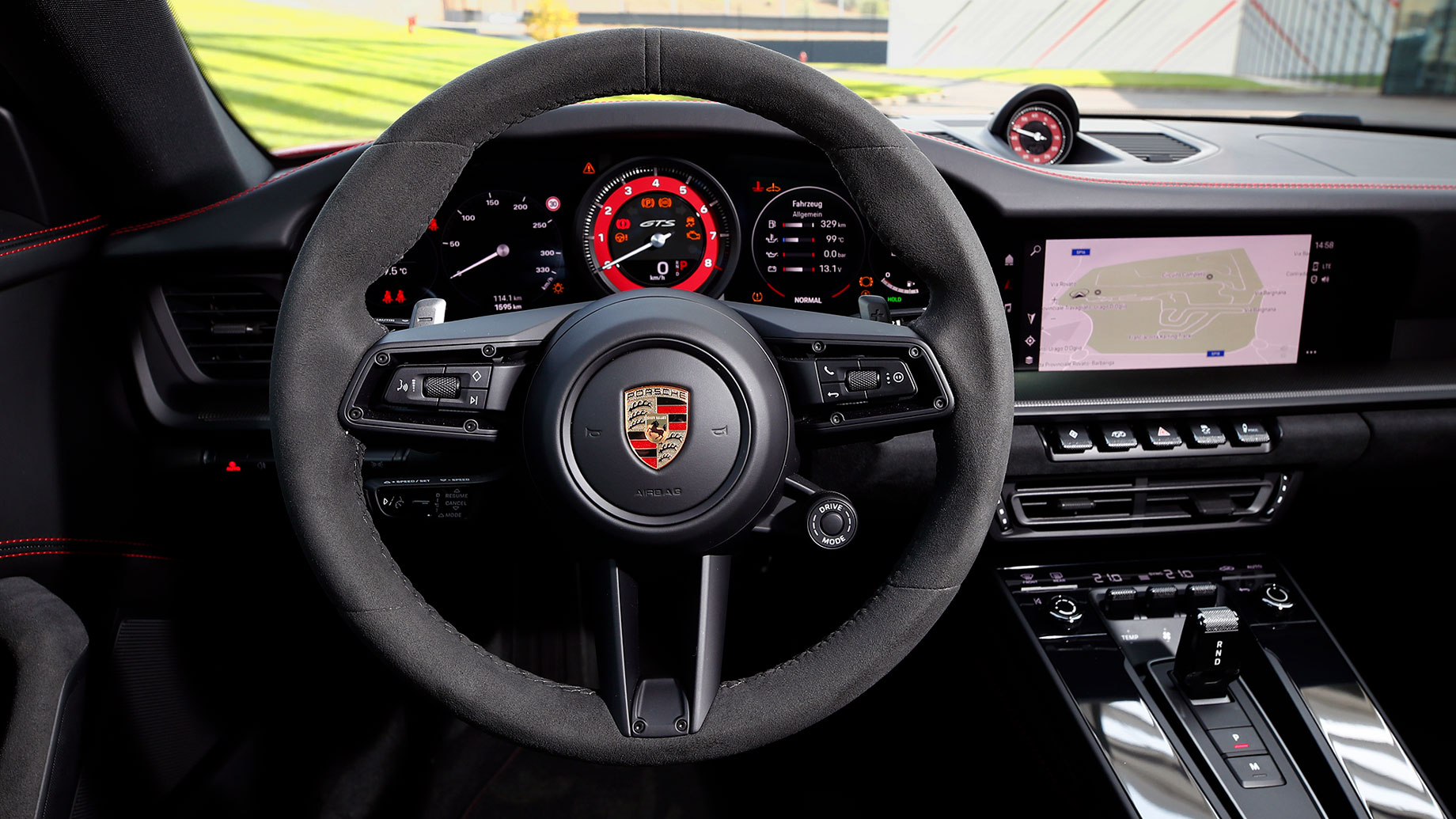
Engine and Performance: 480 hp Turbocharged Flat-Six
As with every GTS before it, the 992 GTS receives a 30 hp boost over the Carrera S — bringing total output to 480 hp. What’s new this time is how that extra power is achieved: for the first time in GTS history, the bump comes entirely through software tuning rather than hardware changes.
- Output: 480 hp — 30 hp more than the Carrera S
- Torque: 570 Nm (+40 Nm over the “S”), available from 2,300–5,000 rpm
- Boost pressure: 1.3 bar — same superchargers as the Carrera S, remapped via software
- Previous GTS: used larger-diameter impeller turbochargers for the power increase
In practice, the turbo flat-six pulls confidently at lower revs, but the on-paper torque curve doesn’t tell the full story. Roll into the throttle at around 2,500 rpm in a high gear and there’s a noticeable pause while boost builds — a few seconds that feel longer than they are. Things improve sharply from 3,000 rpm, and from 4,000 rpm the throttle response is genuinely excellent. In everyday driving paired with the eight-speed PDK, this is rarely an issue: the gearbox always selects the right ratio, keeping the engine in its element.
Porsche Sport Exhaust (PSE): Sound and Behavior
The Porsche Sport Exhaust (PSE) is standard equipment on the GTS, with a range spanning from genuinely hushed to pleasantly loud. It works similarly to other 992 Carreras — but with one meaningful difference. On previous-generation 911s and current Boxster and Cayman models, the electronics automatically open the exhaust valve under hard acceleration, even with sport mode switched off. On the 992 GTS, the valve stays firmly closed until you manually select the sport setting. The exhaust holds whatever program you choose, no matter how enthusiastically you’re driving.
Manual vs. PDK: Which Gearbox Should You Choose?
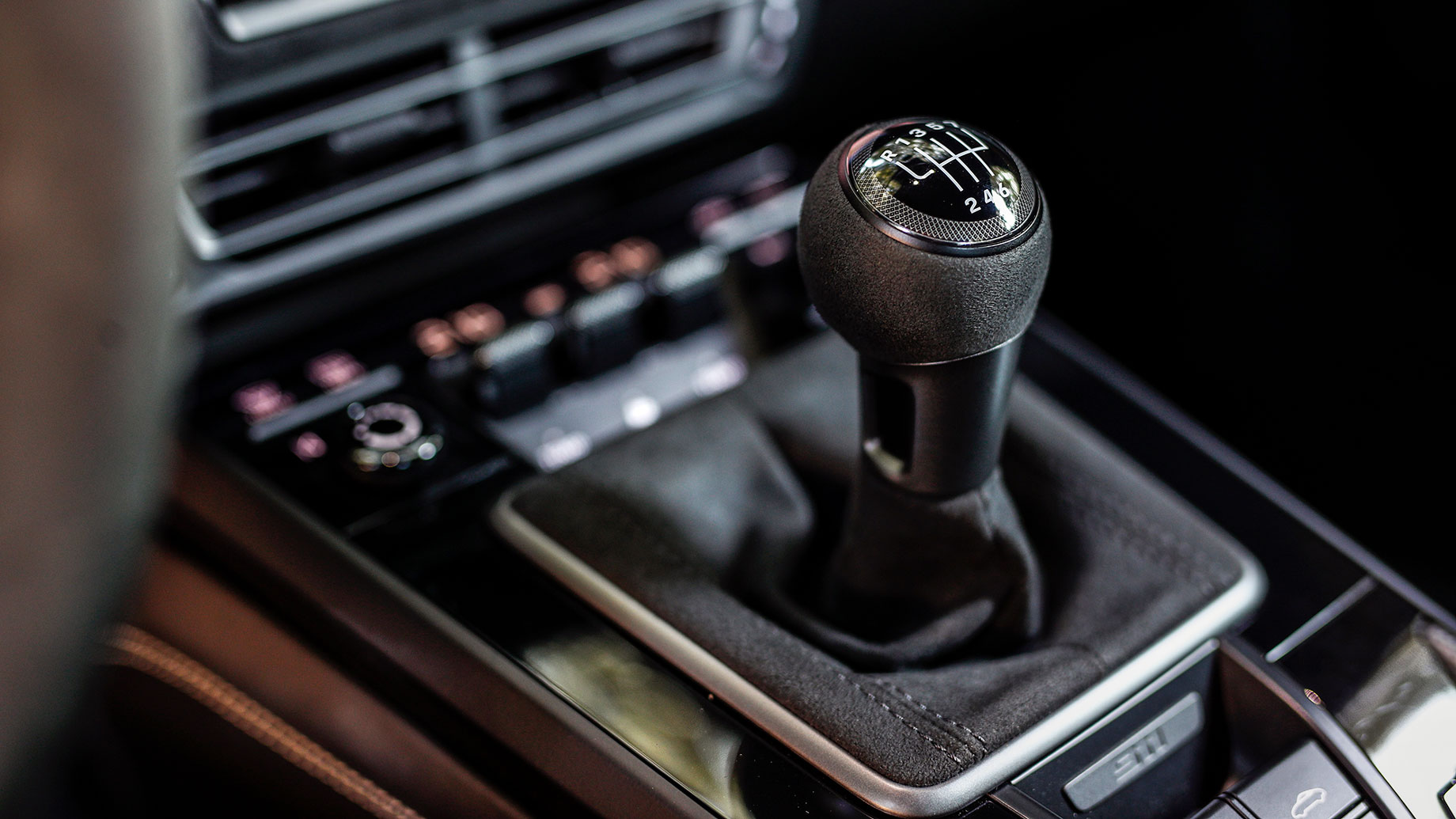
One of the most compelling aspects of the rear-wheel drive 992 GTS coupe is the availability of a six-speed manual gearbox — offered at no extra cost. In Porsche’s world, “free” still means paying for it within the car’s base price, but for a hand-built sports car configured to your exact spec, that’s a fair trade. Manual variants remain rare in most markets, making each one a minor occasion.
The seven-speed manual fitted to the cabriolet we tested is a different proposition. Derived from the previous-generation PDK, that adaptation comes with real-world compromises:
- The clutch feels light, especially in the second half of the pedal travel — noticeably easier than the Cayman GT4’s, for example
- The gear lever demands more effort than expected, particularly when shifting quickly at speed
- Seventh gear is effectively a highway-only overdrive — and easy to select by accident when trying to drop from sixth to fifth
- After a quick full-throttle upshift, the turbo needs time to spool back up — a delay that feels significant compared to a naturally aspirated engine
The performance numbers make the PDK’s case clearly. The cabriolet with PDK reaches 100 km/h (62 mph) in 3.5 seconds — seven tenths quicker than the manual — and hits 200 km/h (124 mph) a full 1.1 seconds sooner, a gap equivalent to roughly 60 meters of road. This is despite carrying an extra 35 kg and additional drivetrain losses.
The manual isn’t bad — its very existence is worth celebrating. But these cars are clearly engineered around the PDK as the primary gearbox. If a stick shift is non-negotiable, the six-speed in the GT3 or GT4 remains the benchmark. The seven-speed in the Carrera GTS is a worthwhile option, not a great one.
Chassis, Suspension, and Brakes: Turbo Hardware at GTS Prices
The GTS receives a number of suspension and braking upgrades borrowed directly from the Turbo and Turbo S — a characteristically Porsche move that is always welcome, even when it’s difficult to explain on paper.
- Springs and dampers: unified with the Turbo/Turbo S spec, with rewritten software for the electronically controlled racks
- Handling effect: increased angular stiffness and reduced nose dive under braking, with a minor trade-off in ride smoothness
- Brakes: cast-iron units from the Turbo — adding a meaningful performance margin straight from the factory
Without a direct back-to-back comparison against the Carrera S, the suspension differences feel more refined than transformative. The Turbo-spec brakes, however, give the GTS a clear edge on track, distinguishing it meaningfully from the rest of the Carrera range.
The Porsche 911 GTS Light Package: What’s Included
Originally introduced on the Turbo S configurator following the GT3’s launch, the optional Light Package is now available to GTS buyers. It targets both weight reduction and aerodynamic performance — though some of its contents actually add mass, making the name slightly misleading.
Weight-saving measures:
- Lithium-ion battery replacing the conventional lead-acid accumulator
- Carbon fiber bucket seats, with the rear row removed
- Lightweight glazing throughout
- Reduced engine compartment soundproofing
Performance upgrades also included:
- Aerodynamic airflow guides under the front bumper to reduce high-speed lift
- Rear spoiler angle increased by four degrees in the raised position for improved aerodynamic balance
- Rear-axle steering included as standard within the package
The total weight saving amounts to around 25 kg (55 lbs) — though there are caveats. In colder climates, Porsche already fits a lithium-iron-phosphate battery as standard on the 992, reducing the gain. And if the carbon buckets are too aggressive for daily life, Porsche will supply the package with 18-position comfort seats instead — at which point, the company itself acknowledges there are no mass savings at all. A “performance package” label would be more accurate. Either way, expect a noticeably louder cabin: the reduced soundproofing is apparent on road.
Track Testing at the Porsche Experience Center Franciacorta
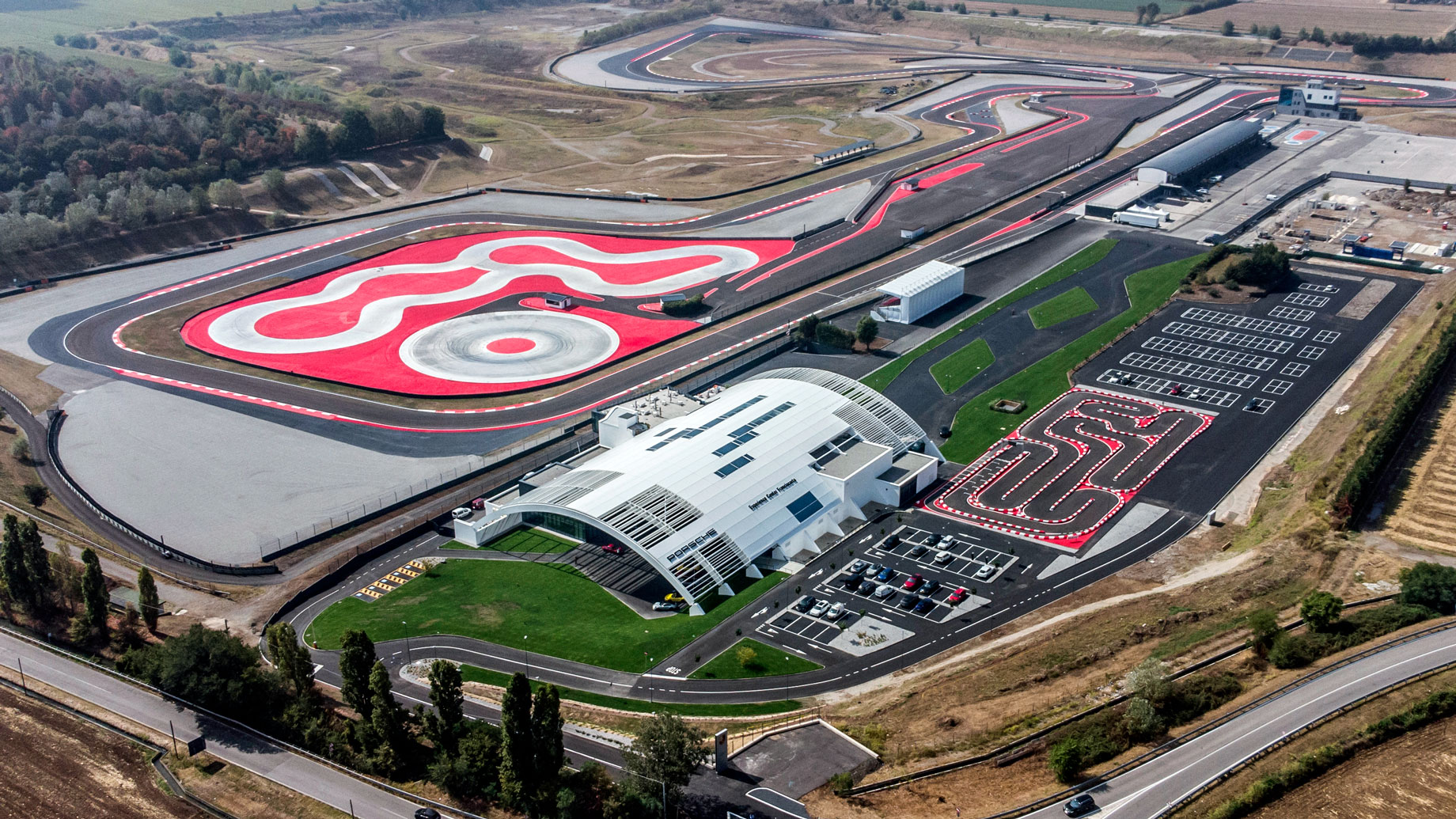
No Porsche sports car launch is complete without track time, and for the 992 GTS, Porsche chose its brand-new Experience Center near Brescia — about an hour east of Milan. Named after the Franciacorta wine region, the €28 million complex features a 2.5 km (1.55 mile) private circuit. We arrived just days after the official opening, among the very first guests to drive there.
The track — built on the site of a former karting circuit — now offers a well-balanced mix of higher-speed sections and tight, technical turn combinations. The format for the launch was straightforward: coupe on track, cabriolet and Targa on public mountain roads.
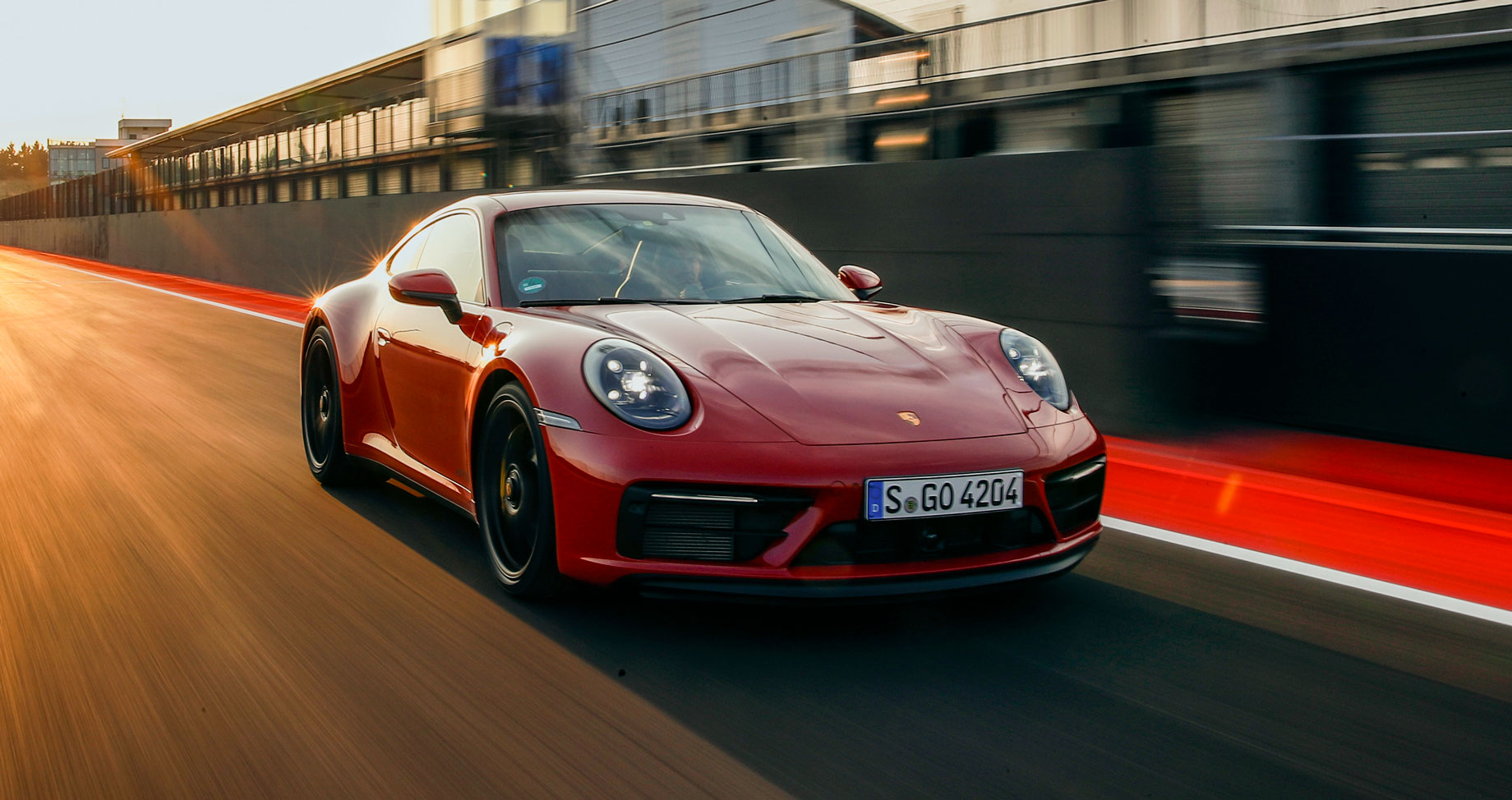
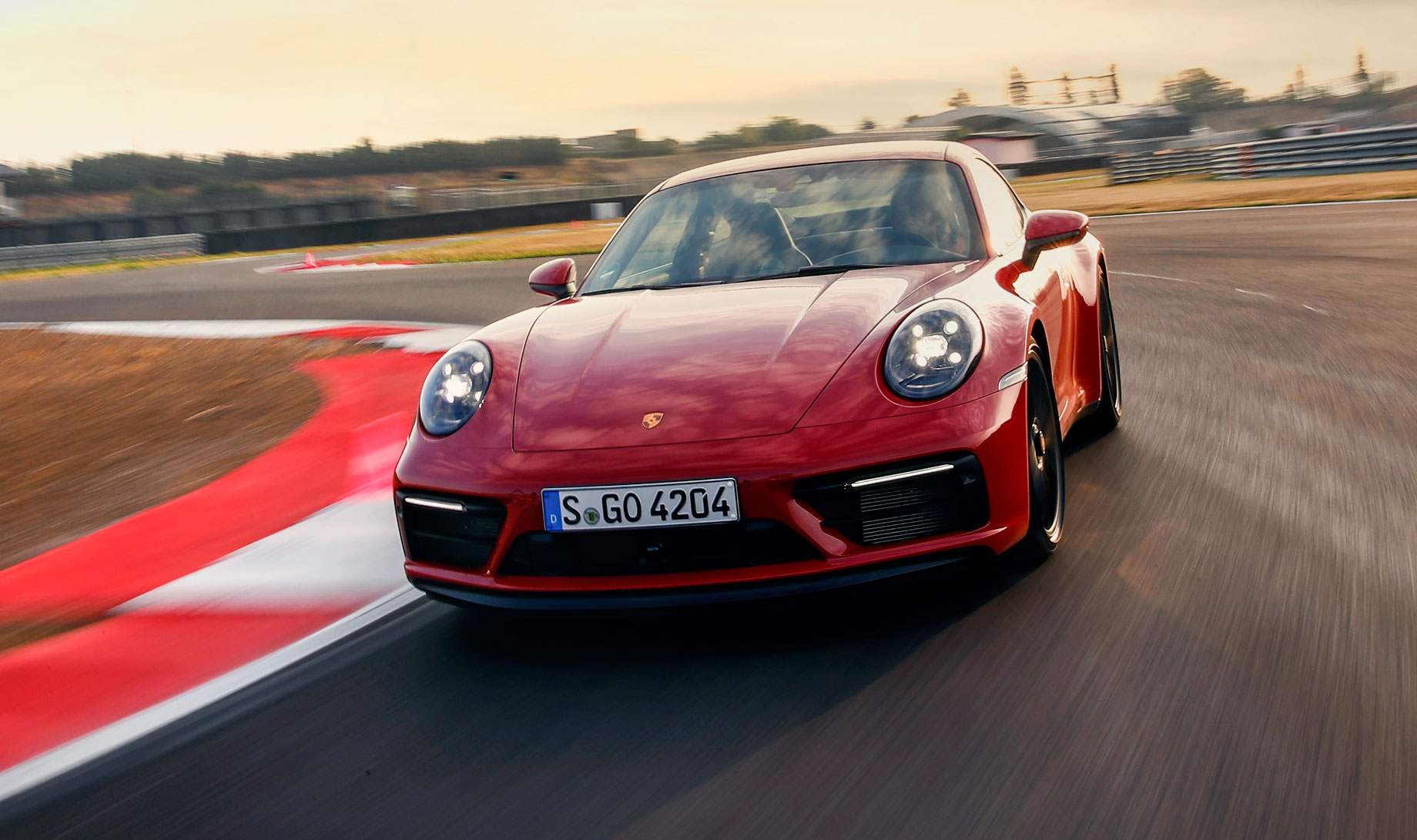
On Pirelli P Zero road tires, the Carrera 4 GTS coupe generates astonishing grip — the kind that requires real commitment before the car fully reveals itself. On circuit, the 911 sheds its road-going composure and delivers serious, focused speed. The 992’s handling confidence traces directly to its front suspension: Porsche has invested heavily in widening the front track across generations, and the grip of the steered axle today is near-exceptional. The old 991’s weakness — strong rear grip but modest front bite — has been thoroughly resolved in the 992.
RWD vs. AWD: How the 911 GTS Variants Compare
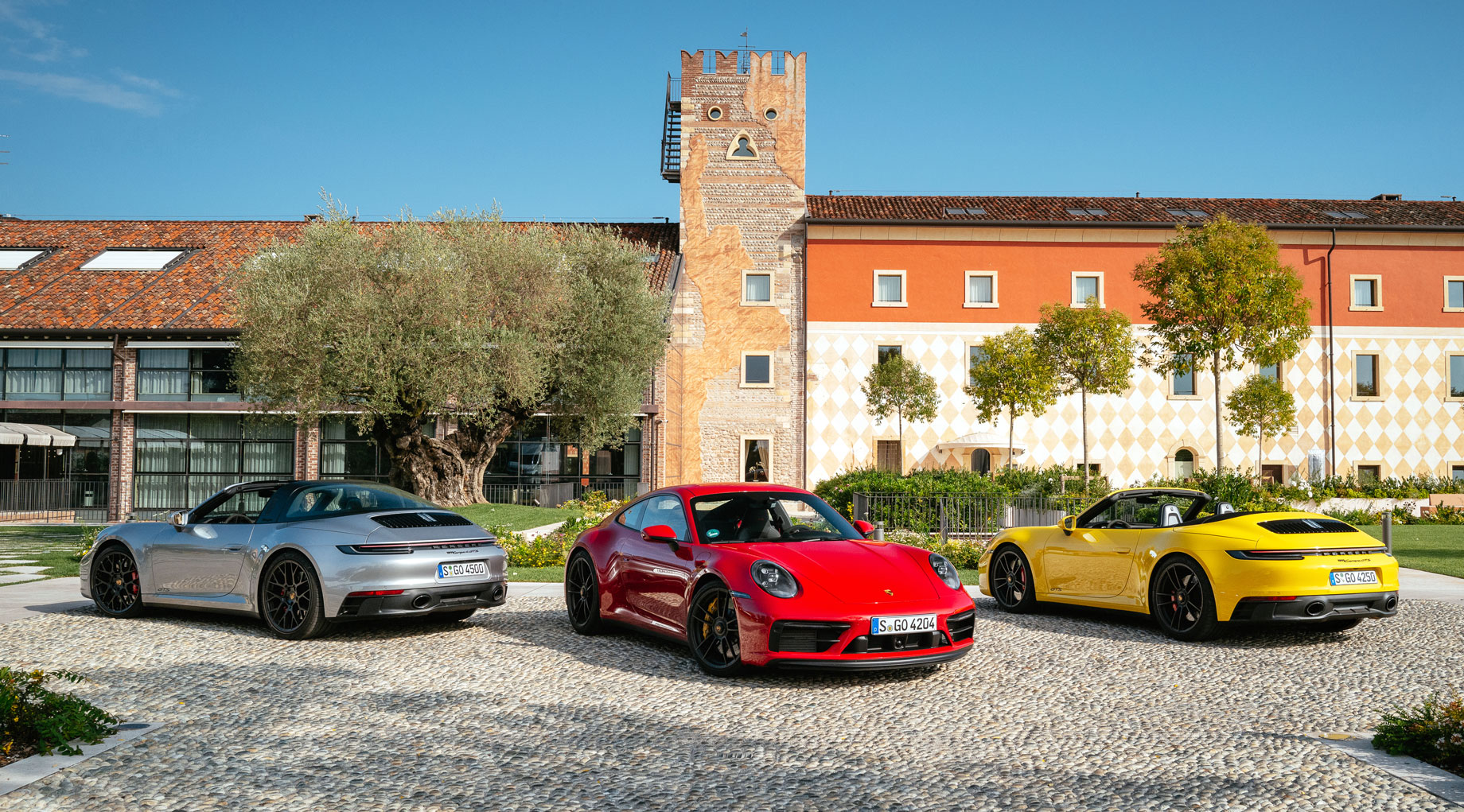
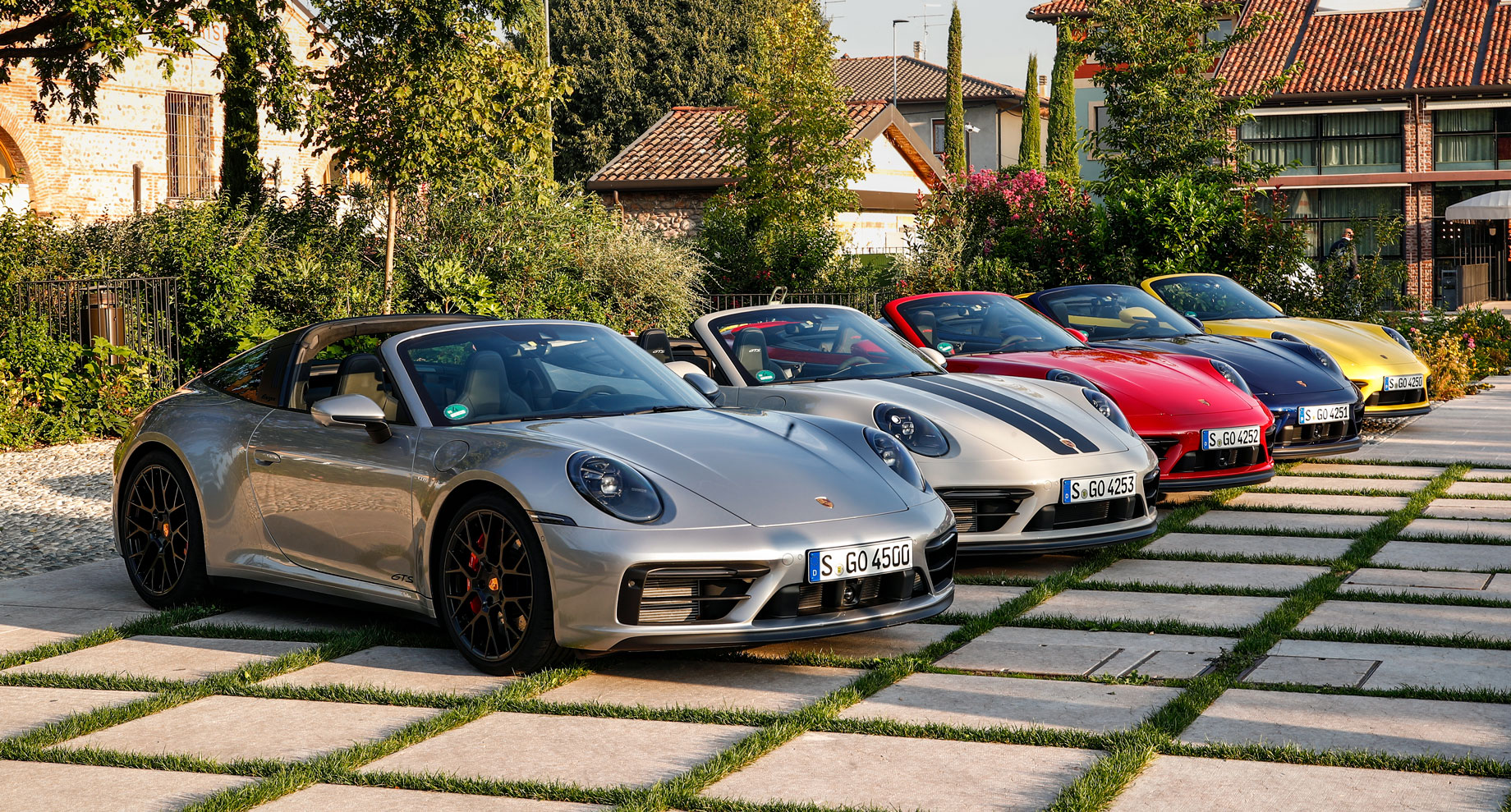
The 992 GTS is available in three body styles across two drivetrain configurations. Weight plays a significant role in how each variant feels to drive:
- Carrera GTS Coupe (RWD, manual): 1,510 kg (3,328 lbs) — the lightest and most driver-focused version
- Carrera 4 GTS Cabriolet (AWD, manual): approx. 1,630 kg (3,593 lbs)
- Carrera 4 GTS Targa (AWD, PDK): 1,685 kg (3,714 lbs) — heaviest in the range
Switching from the AWD coupe to the rear-wheel drive version on track, the difference is felt immediately. With 50 kg removed from the front axle and no driveshaft influence on steering feel, the base GTS is lighter, sharper, and more precise. It may not necessarily be faster over a lap, but it is considerably more engaging to drive at the limit.
For everyday use in mixed conditions, the AWD variants offer a real confidence advantage. A rear-drive Carrera is capable on most surfaces, but the four-wheel drive versions always give more margin. The trade-off is a noticeable weight penalty that dulls turn-in response and raises inertia — particularly in the heavier open-top and Targa bodies.
Four hours on winding mountain roads in the Carrera 4 GTS cabriolet confirmed this. With the roof raised, the convertible is barely distinguishable from the coupe in feel — but the additional mass makes itself known through slightly slower direction changes and a more deliberate quality through the steering. The coupe remains the driver’s choice. The cabriolet and Targa are the lifestyle choices — and that’s not a criticism.
Final Verdict: Why Buy the Porsche 992 911 GTS?
The practical case for the GTS is straightforward: it’s a curated package that bundles desirable options at a price that undercuts selecting them individually. But the more compelling reason is what the GTS unlocks in terms of personalization. It’s the only Carrera that opens the door to sport-specific options unavailable on standard models. Build one on the configurator and you can create something close to a “baby GT3” — or, with AWD and comfort-oriented choices, a more accessible “baby Turbo”. Remarkably, neither the GT3 nor the Turbo itself offers this degree of configuration flexibility.
Key reasons to consider the 992 911 GTS:
- 480 hp from the proven flat-six — 30 hp more than the Carrera S
- Turbo-spec suspension and cast-iron brakes as standard
- Six-speed manual transmission available on the RWD coupe at no extra cost
- Access to the optional Light Package with aero and weight upgrades
- Available as a coupe, cabriolet, or Targa — in RWD or AWD
- More configuration flexibility than either the GT3 or Turbo
The 992 GTS isn’t without its compromises — the seven-speed manual is a mixed experience, and the weight of the AWD variants is hard to ignore on a twisting road. But as a highly configurable, track-capable 911 that works equally well on a daily commute, it makes a strong and convincing case for itself.
This is a translation. You can read the original here: https://www.drive.ru/test-drive/porsche/6172c8b2424311363bb95f44.html

Published May 12, 2022 • 9m to read