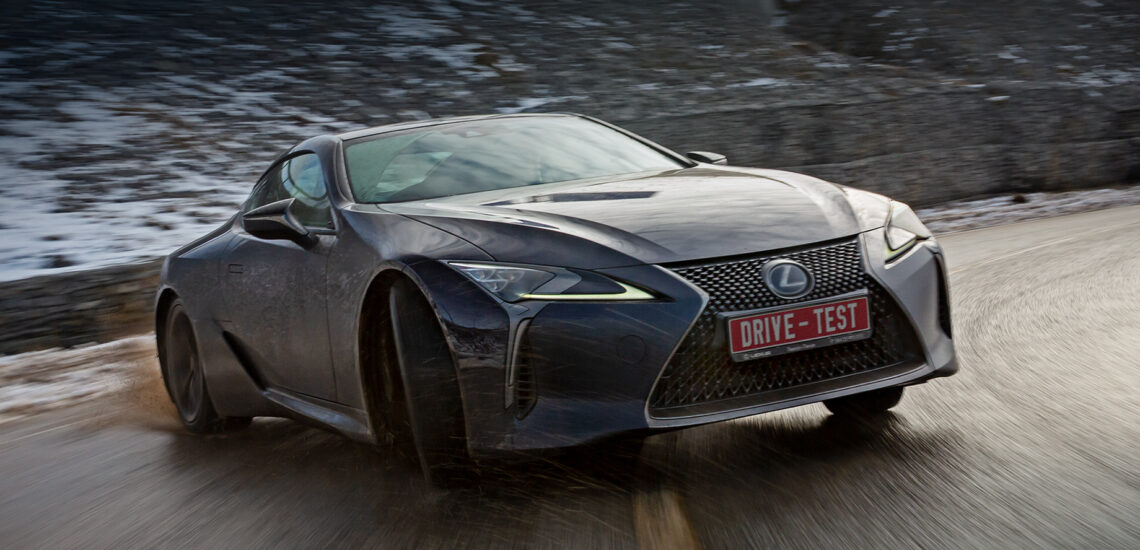

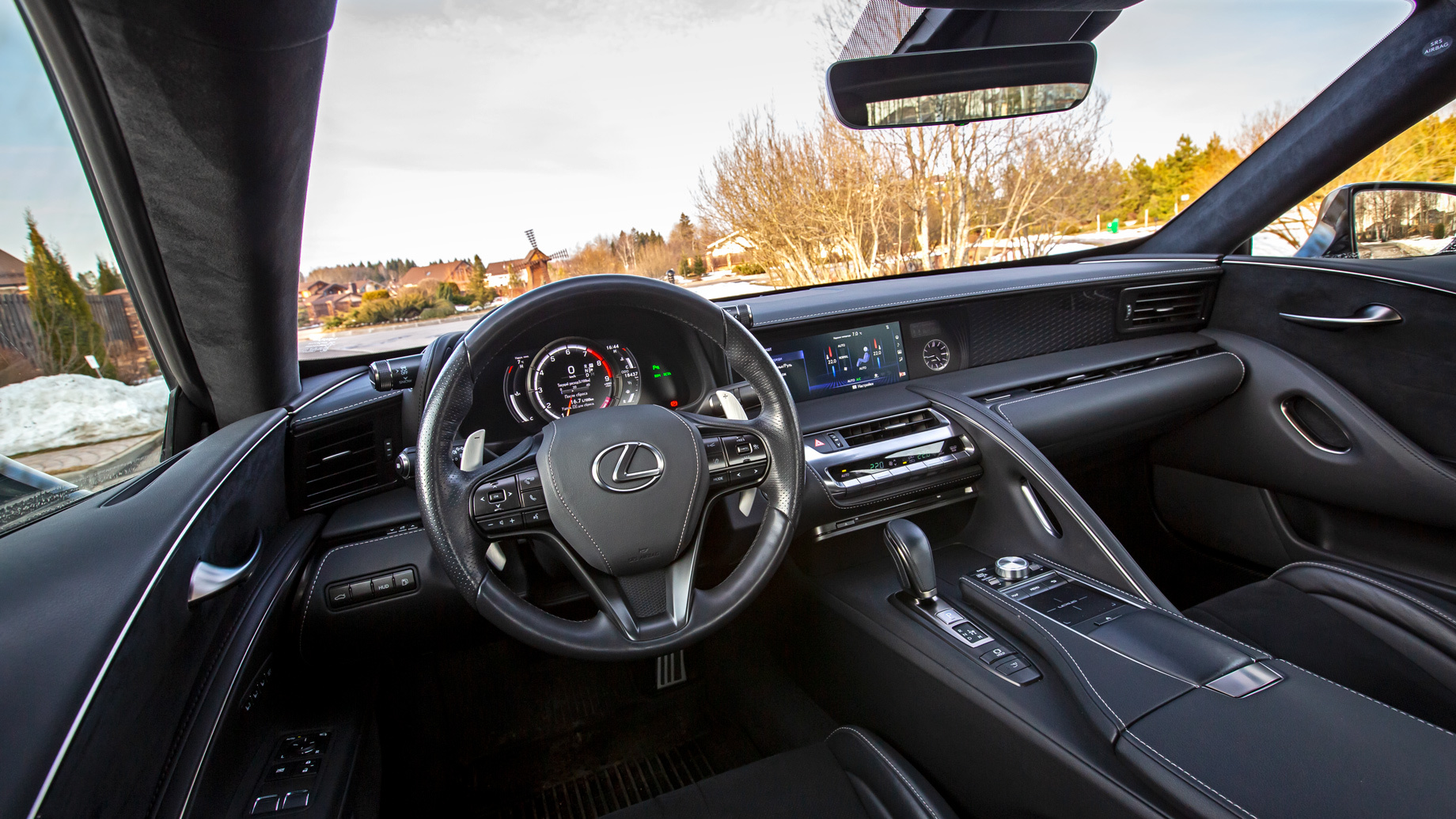
The interior should be beige — with a warm reddish tone, just as I remember the LC 500 from the 2017 New York Auto Show. Nothing has changed since that debut, and yet everything feels deliberate. The black trim sits elegantly in a light, airy cabin. Discreet metal accents and Alcantara surfaces speak to a personality shaped by obsessive attention to detail. It’s no surprise the LC 500 resembles the legendary LFA — Lexus’s last car I truly wanted to talk about — since both were built in the same factory. And the pricing follows the finest of grand touring traditions: starting just under $129,000 for a coupe. There must be something to it. I’d take it for a ride without hesitation. But the chances of a test drive were zero — I’m on the blacklist.
Lexus LC 500 Sales History: A Slow Burn Worth Watching
I waited, watched, and listened. YouTube buzzed, opinions flew. The sales numbers told a complicated story:
- 2017 (first year): only 3,621 units sold worldwide
- 2018: 4,816 units, but US demand dropped by 21%
- By late 2019: just 2,582 more coupes found homes globally
- Russia: fewer than ten buyers in total
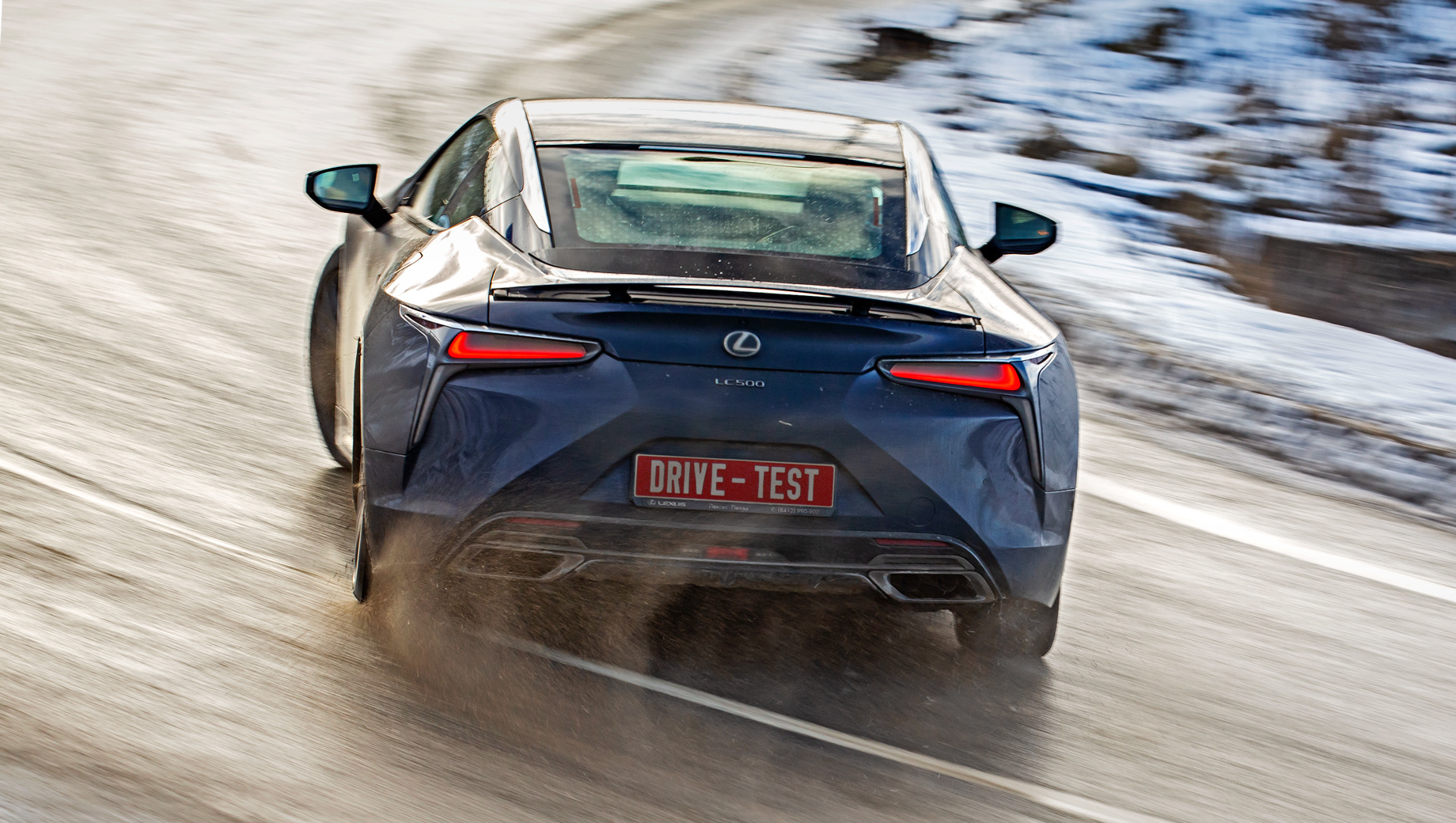
Continuous updates didn’t reverse the trend. And yet, against this backdrop of commercial underperformance, we finally met. The car I tested carried a registration dated September 7, 2017 — blue exterior, fifth class, 477 hp — with just 16,500 km on the odometer. So what exactly is wrong with the LC 500?
First Impressions: Why the LC 500 Is Built to Last
Let me be upfront: there’s no final verdict here yet. The LC 500 arrived on studded Continentals, with summer tires locked in the dealership warehouse — and without them, certain questions remain open. We’re publishing the winter findings first, since there are no other test drives left in the editorial pipeline. The burning question — why LC 500 owners almost never sell their cars on the secondary market — will have to wait for the summer chapter.
But one thing is already clear: the Lexus LC 500 is genuinely special. It will go down in history. Viewing it from the vantage point of three years of production, without illusions, makes it easier to spot what it truly is — a low-volume, commercially underperforming car that is absolutely a future classic. The layer of road salt on the bodywork only helps: imagine it isn’t grime, but 30-year-old patina.
Interior and Design: Classically Conservative, Deliberately Timeless
The LC 500 was arranged with a classical mindset — designed and tuned to stay in one owner’s hands for a long time. Here’s what makes the cabin work:
- Not a single centimeter of glossy surface — easy on the eyes, easy to live with
- Alcantara and discreet metal accents placed with precision
- A massive volume knob on the center console that deserves its own award
- Build quality that is simply beyond reproach
- A 2+2 seating formula that sets honest expectations about rear passenger comfort
The looks may seem aggressive at first, but you adapt quickly. Like the Japanese designers themselves, you learn to focus on the successful details. The one weakness is the multimedia system — it bugs out too often and the interface is primitive. Yet even that feels considered: the screen is positioned and styled so it doesn’t dominate the eye line. In the elegant tightness of this cabin, there’s room to grow into something genuinely worthwhile.
The 5.0-Litre V8 Engine: Timeless, Vocal, and Utterly Addictive
The naturally aspirated five-litre V8 is the heart of this car — and it is timeless. Vociferous, torquey, and alive across the rev range. The automatic gearbox manages the V8’s temperament almost flawlessly once it’s up to temperature. Friction only appears in two scenarios:
- Cold starts, when gearbox and engine haven’t yet found their rhythm
- Illogical fractional alternating inputs — brake, gas, brake, gas in quick succession
Even in manual mode, the gearbox applies enough protective logic to feel slightly patronising. But when the LC 500 falls short of raw pace — and at nearly two tonnes it sometimes does — it compensates through sound alone. The growl is so sincere, so rich, that it never feels like it’s enough. And it’s entirely authentic: no audio trickery, no speakers simulating an engine note. The sound arrives through an intake resonator connected directly to the cabin.
Winter Driving Dynamics: Demanding, Charming, and Deeply Rewarding
The chassis in winter conditions is both demanding and genuinely charming. Its versatility is one of its strongest qualities:
- Precise and immediate response to light steering inputs
- Appropriate aggression when pushed hard
- Willingness to forgive random driver errors
- The ability to balance on the edge of a slide — and let the driver enjoy it
The steering weight is expertly judged. Light enough for effortless single-handed city driving and quick skid corrections, yet sufficiently weighted to maintain constant feedback. Over the course of a full winter of driving, I never misjudged a corner entry angle, never had to correct the trajectory due to any fault of the car’s. I only discovered the variable-ratio front steering mechanism from reading the technical specification sheet — it’s that seamlessly integrated.
The LC 500 trains you in the art of subtle commands. To accelerate efficiently without triggering the traction control requires what I’d describe as a jeweller’s touch on the throttle. It allows you a great deal of latitude — but it will also punish carelessness, as I discovered firsthand.
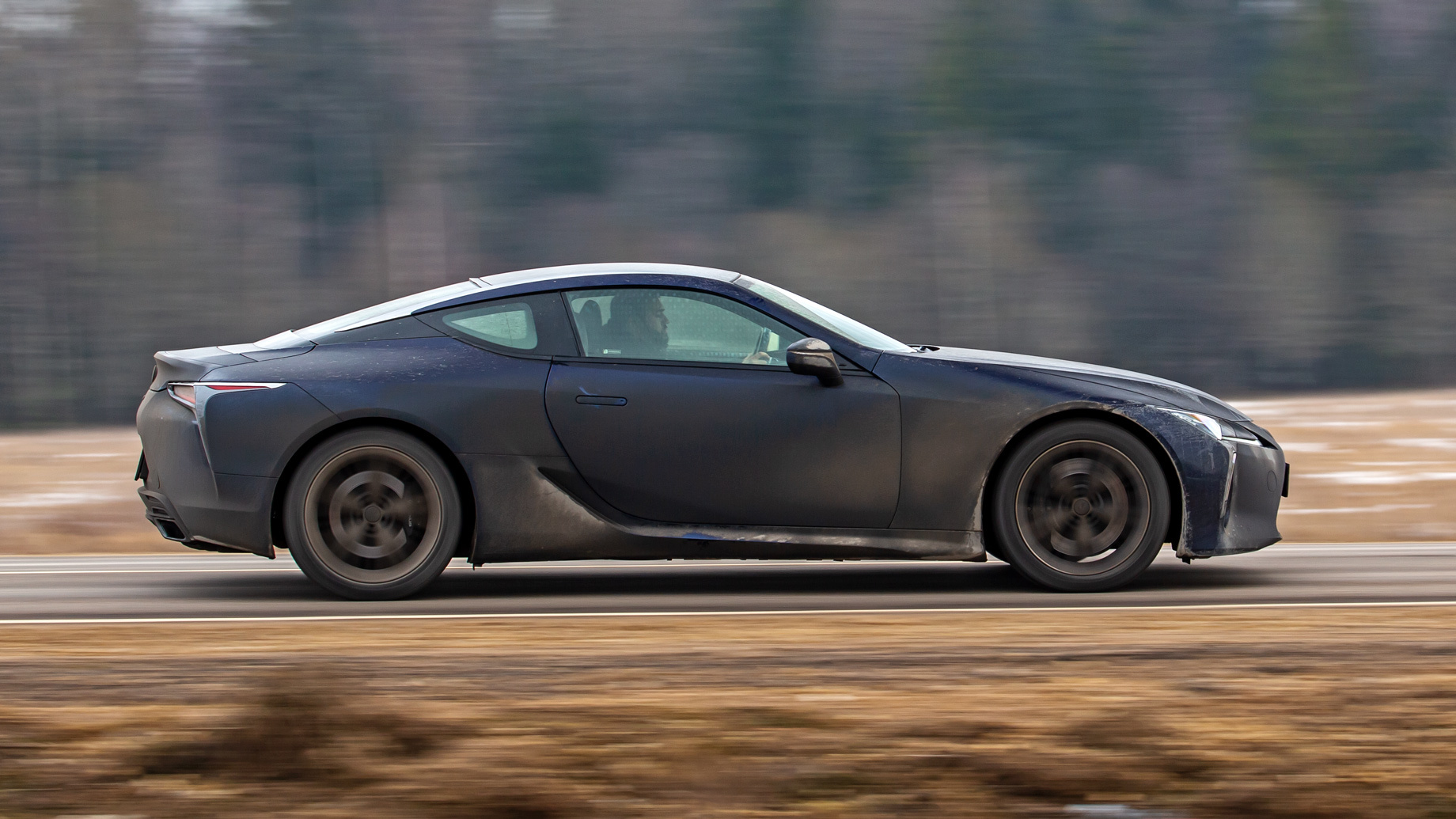
Handling Balance: How the LC 500 Manages Understeer
The one area where the LC 500’s handling feels slightly unnatural is its full-controllability logic. At the initiation of a corner with elevation change, there’s a brief, perceptible discontinuity as the chassis compensates for understeer by redirecting force through the driven wheels. Unlike a Porsche — which preemptively steers the rear axle — the Lexus takes a split second to assess the situation: measuring the difference in wheel speeds, cross-referencing the accelerometer, the steering angle, and throttle position. You can feel the precise moment when it finishes computing and begins to correct. Tension transfers from the front outer wheel to the rear, and the car neutralises.
The sequence is always identical and therefore predictable, which means your vestibular system never conflicts with the strategy. The coupe always adjusts a moment before you decide to intervene. Interestingly, the LC 500 becomes more natural the harder you push — the role of electronic mediation seems to diminish as speed, lateral forces, and slip angles increase. At the limit, it feels as organic as possible.
Weight, Ride Quality, and Real-World Compromises
There are genuine compromises to acknowledge with the LC 500, particularly around weight and ride:
- Kerb weight of approximately two tonnes with the driver — heavier than the larger, turbocharged, all-wheel-drive BMW M850i
- The chassis transmits small vibrations through the steering wheel and seat even on smooth surfaces
- Road noise from studded tyres fills the cabin noticeably, suggesting limited acoustic insulation
- An armoured steel underbelly — impressive protection, but a significant weight contributor
The suspension is on the stiffer side — which actually benefits the driving experience by preserving transient responses — but the latest round of factory updates softened the dampers in response to consumer feedback prioritising comfort. Whether that’s the right call is debatable. What isn’t debatable is that the LC can be dragged over a kerb without consequences, something that can’t be said for every low-riding grand tourer.
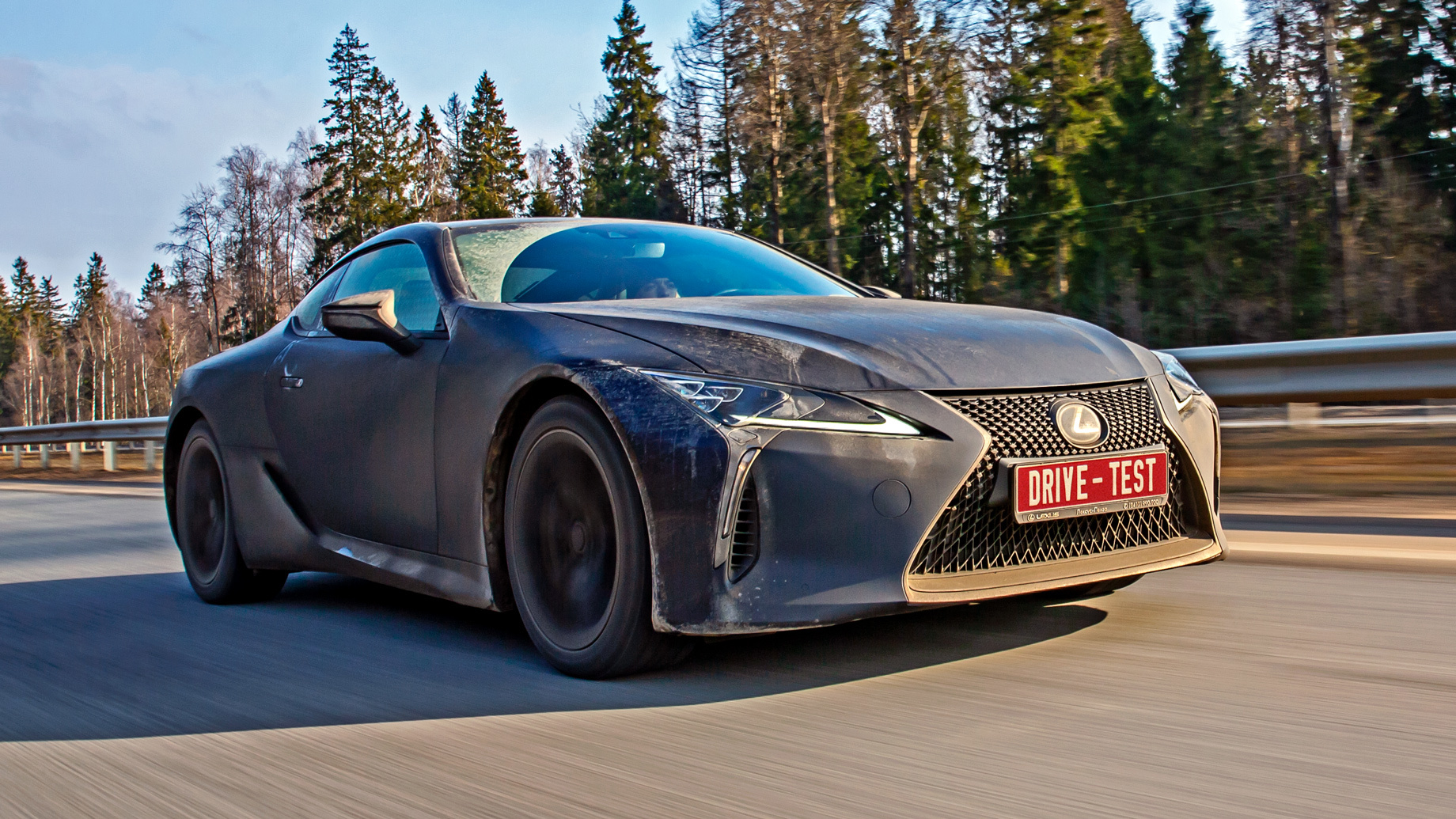
LC 500 vs BMW M850i vs Porsche 911: How Does It Compare?
Despite weighing more than the BMW M850i, the LC 500 offers something the Bavarian cannot: character. The M850i’s all-wheel drive makes it more dynamically capable, quieter, and offers a more practical boot — but at the same price, it holds no historical interest whatsoever. The LC 500 has an energy more akin to a compact, focused sports car — something between a base Mercedes-AMG GT and the niche Jaguar F-Type — though buyers seeking a classic Gran Turismo experience may find that unsettling.
As for the Porsche 911 Carrera 4S — yes, it costs roughly the same. But consider the differences:
- The 992-generation 911 is more versatile and holds its resale value better across European markets
- The Porsche is a mass-market product compared to the low-volume LC 500
- The LC 500 is more eventful, more individual, and more emotionally engaging away from a circuit
- The 911 lacks the LC’s sense of occasion in everyday driving
Lexus also draws comparison to AMG Mercedes before the brand became overly focused on track metrics — and to the previous-generation BMW M5 fitted with the naturally aspirated E92 engine. In other words, the LC 500 arrived a decade late by some measures, yet feels completely relevant precisely because cars like it no longer exist. Everything else has sharpened, tightened, and accelerated. The LC exists in a state of blissful analogue relaxation that, in the current automotive landscape, feels almost radical.

Is the Lexus LC 500 a Future Collectible? The Investment Case
Among all the grand touring coupes available today, only the LC 500 and the Porsche 911 carry any genuine collector potential. Several factors support the case for the Lexus specifically:
- Total production of eight-cylinder variants is unlikely to exceed 15,000 units globally
- The anticipated LC F with a twin-supercharged 600 hp engine has been replaced by speculation about Lexus abandoning V8s entirely
- First three years of production (2017–2019) are already considered the most desirable among enthusiasts
- The car’s commercial failure — paradoxically — protects its rarity and future collectibility
Whether current owners have the patience to hold long enough to see a meaningful appreciation in value remains to be seen. But the fundamentals are there. The LC 500 is a naturally aspirated, eight-cylinder, rear-wheel-drive grand tourer produced in tiny numbers at a time when the entire industry is moving away from everything it represents. History tends to reward exactly these cars.
This is a translation. You can read the original here: https://www.drive.ru/test-drive/lexus/5eb2c7c0ec05c4861900002e.html

Published December 08, 2022 • 9m to read