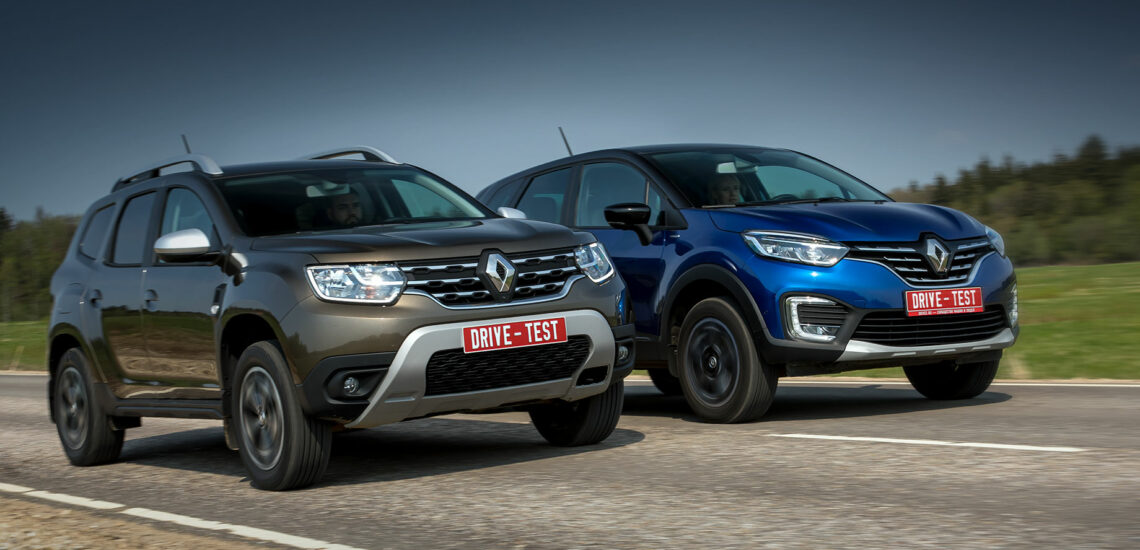

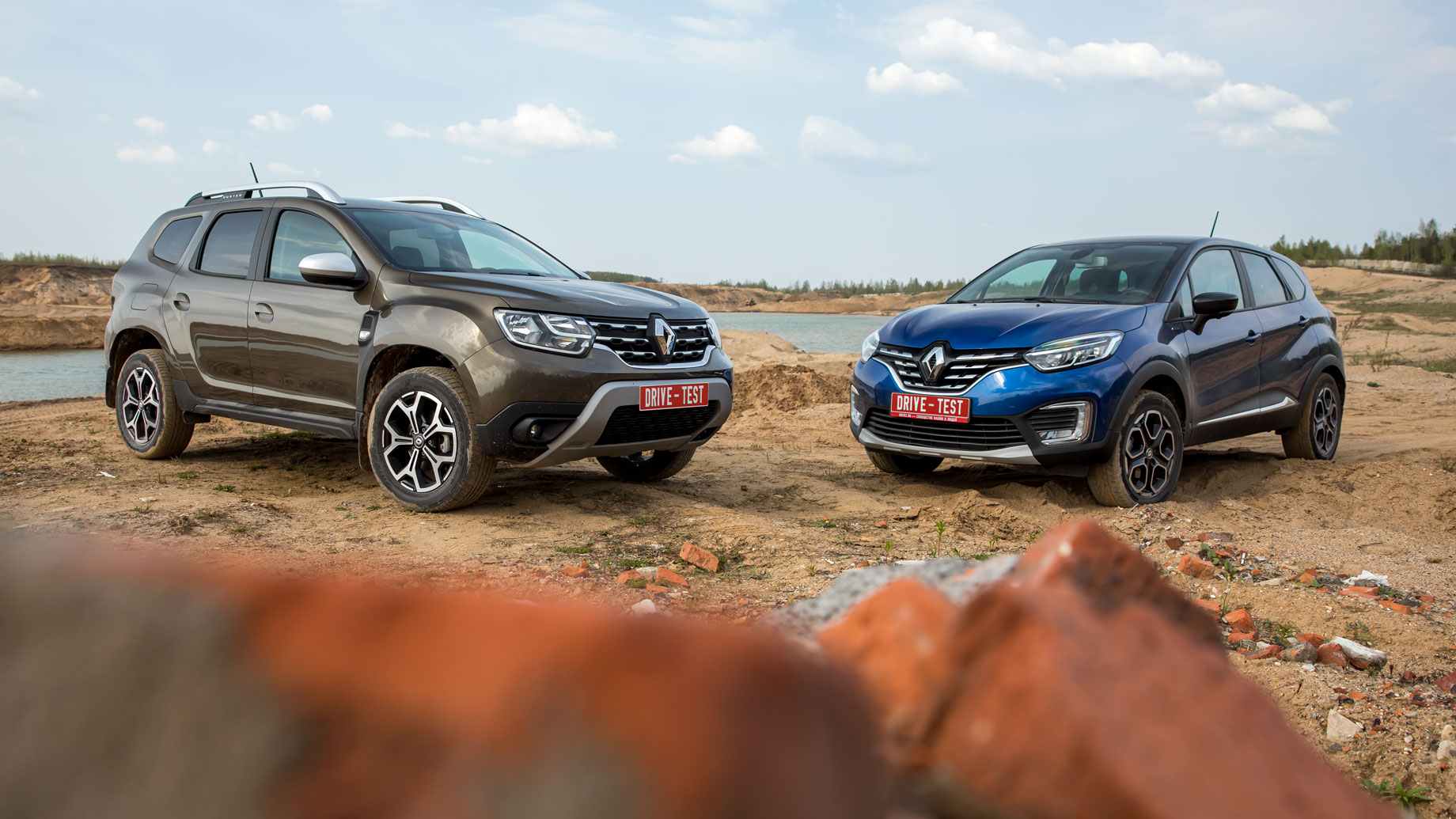
The new Renault Duster may look almost identical to the 450,000 cars that came before it — few would give it a second glance on the street. But beneath that familiar exterior, this second-generation crossover has evolved so dramatically it could easily wear a new badge. Gone is the old Duster — uncomfortable at the wheel, clumsy on good roads, but a workhorse on bad ones. Strangely, it’s the Kaptur that now carries those traits. It’s as if the spirit of the original Duster found a new home in the body of a pricier Renault.
Interior Comfort and Fit: Duster Takes the Lead
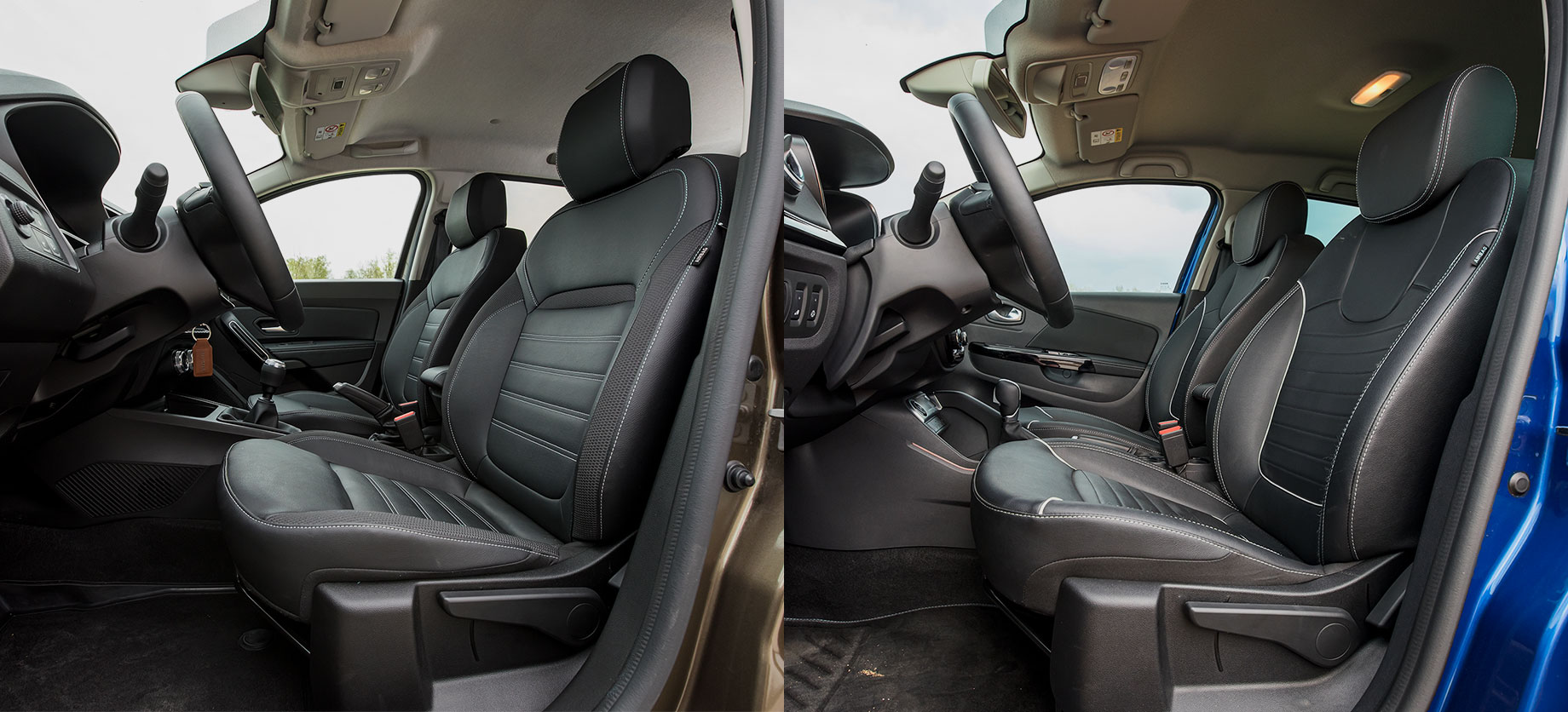
They say “the theater begins with the cloakroom” — and for these crossovers, everything begins with the driving position. The new Duster sets an immediately higher standard:
- The steering wheel adjusts in all directions and sits at a more natural angle
- The driver’s seat drops lower than ever before
- The seat itself wraps around the body rather than pushing it away
- The interior is better assembled, with hard but solid (not hollow) plastics throughout
- Stylish details include metallized climate control knobs and a steel-capped gearshift lever that wouldn’t look out of place in a hot hatch
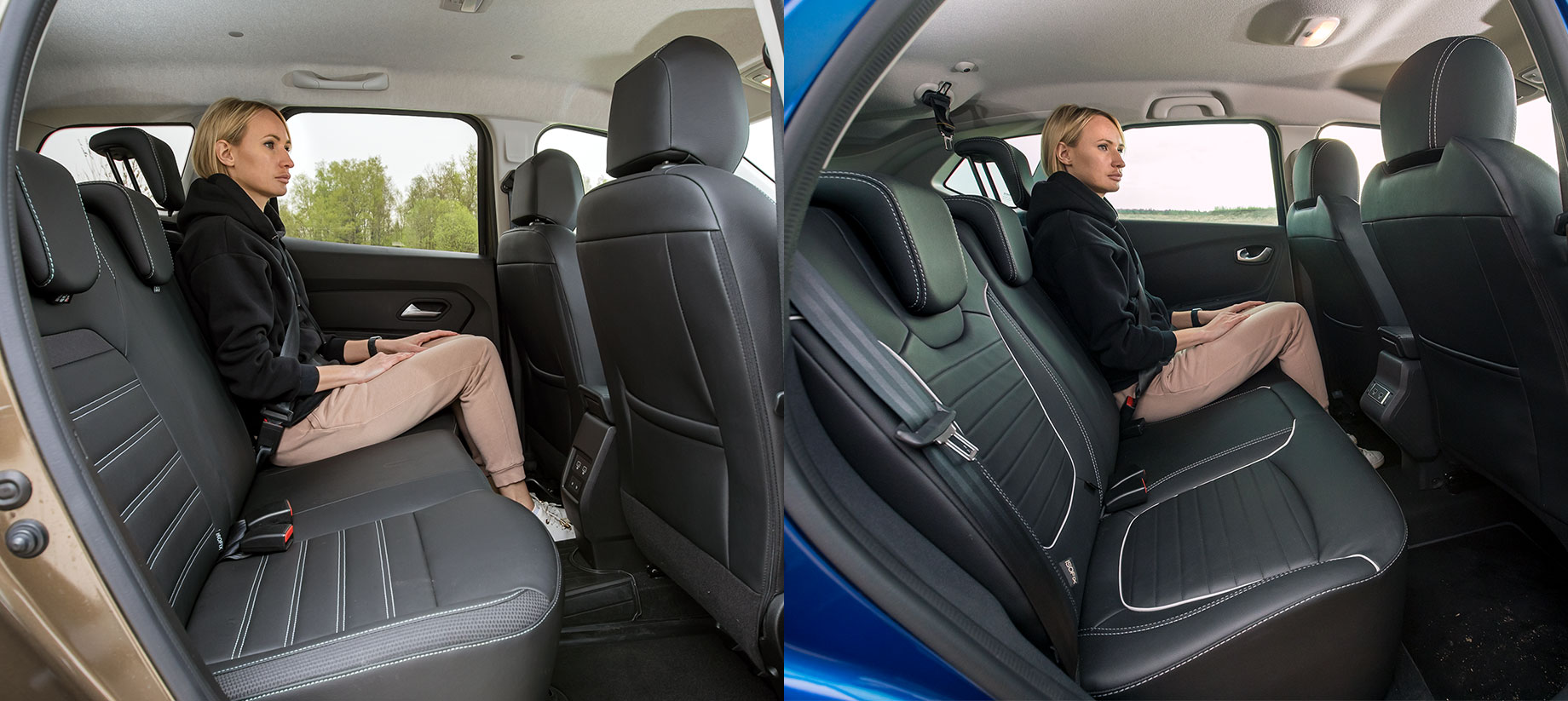
The second-generation Duster is slightly narrower and lower than its predecessor, and the wheelbase has grown by just three millimeters — but the cabin feels genuinely spacious. Adjusted for a driver of 5’9″, there’s still three centimeters of knee room in the rear, eight centimeters of headroom, and a commendably low floor tunnel that benefits the middle rear passenger. The only weak point: the rear seatback is too upright and a touch too firm.
Renault Kaptur: More Style, More Compromise
The Kaptur makes a stronger visual impression with its two-tone body, matching wheels, and metal-look trim elements. The interior is brighter and the dashboard unusually styled yet easy to read — the central display is well-positioned, and the longitudinally adjustable armrest is a welcome shared feature with the Duster.
However, comfort in the Kaptur comes with caveats. Renault added steering column reach adjustment, but the rim still sits at a steep angle, pushing you closer to it. The result:
- Knees are more severely bent when reaching the pedals
- The high, curved seat back pushes the driver’s body forward
- Long drives take a toll — the back and left leg fatigue more quickly
- Rear passengers have less space: knees touch the front seat, and headroom shrinks to just 2.3–2.5 inches
Engine and Performance: Same Power, Very Different Results
Both the Duster and Kaptur share a 150 hp 1.33-litre turbocharged engine, but their gearboxes tell very different stories.
The Duster with a six-speed manual was a genuine revelation. It’s the fastest Duster ever made:
- 0–60 mph achieved in just 9.7 seconds — a full second better than the factory claim
- Feels quick from rest, at medium speeds, in city traffic, and on the highway
- Gearshift is precise and light — a world apart from the predecessor’s notchy box
The Kaptur with its CVT offers smooth, predictable power delivery but falls short on outright pace:
- 0–60 mph took 10.7 seconds — slower than its factory-stated 10.4
- There’s a slight hesitation when pulling away aggressively from standstill
- Traction is pleasant and easy to modulate under normal driving
Handling and Driving Dynamics
The Duster’s handling is a major step forward from its predecessor. The steering communicates road feel clearly, the car tracks confidently through fast bends — even rough ones — and the chassis recovers predictably when pushed. Brakes are strong, progressive, and consistent. In every driving discipline, the gap between old and new Duster is enormous.
The Kaptur sits somewhere in the middle — ahead of the old Duster, but behind the new one:
- More body roll in both longitudinal and lateral movement
- Steering is largely isolated from road feedback — driving feels somewhat detached
- The steering wheel’s neutral position is vague, requiring constant small corrections at speed
- Brakes work well, though the pedal travel is longer than the Duster’s
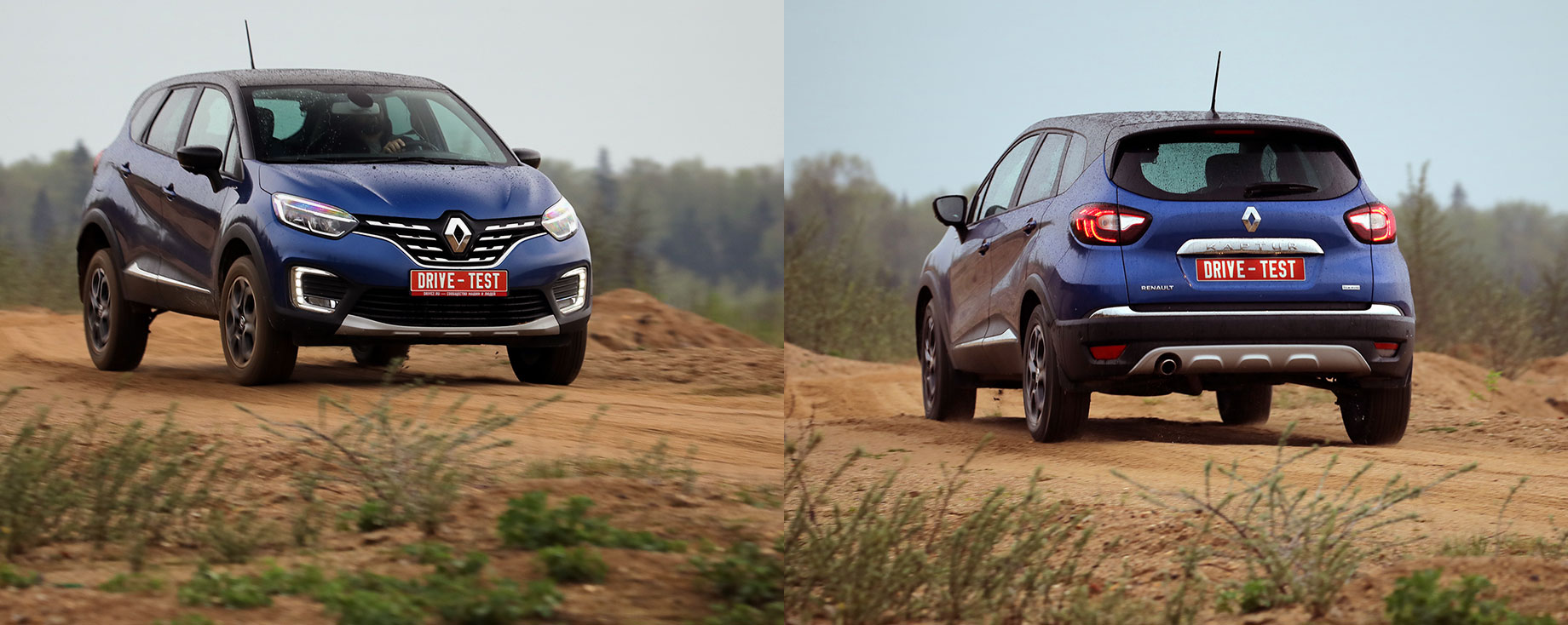
Ride Quality: Where the Kaptur Truly Shines
This is where the reincarnation argument becomes most compelling. The Kaptur’s suspension comfort is extraordinary — arguably the best not just in its segment, but one or two classes above it:
- Micro-bumps and small road imperfections are absorbed completely
- Medium-sized potholes are smoothed out to a barely noticeable background sensation
- On broken dirt tracks, the Kaptur glided through without a single harsh jolt
The Duster, by contrast, shows its limits on very rough surfaces. Where the Kaptur flies, the Duster has to slow down — at times to as low as 20 km/h — to avoid bottoming out the suspension. That said, in normal driving conditions, the difference narrows considerably. The Duster handles road ripples and mid-sized bumps impressively well; this limitation only surfaces in genuinely punishing terrain.
Off-Road Capability: Duster Still Dominates
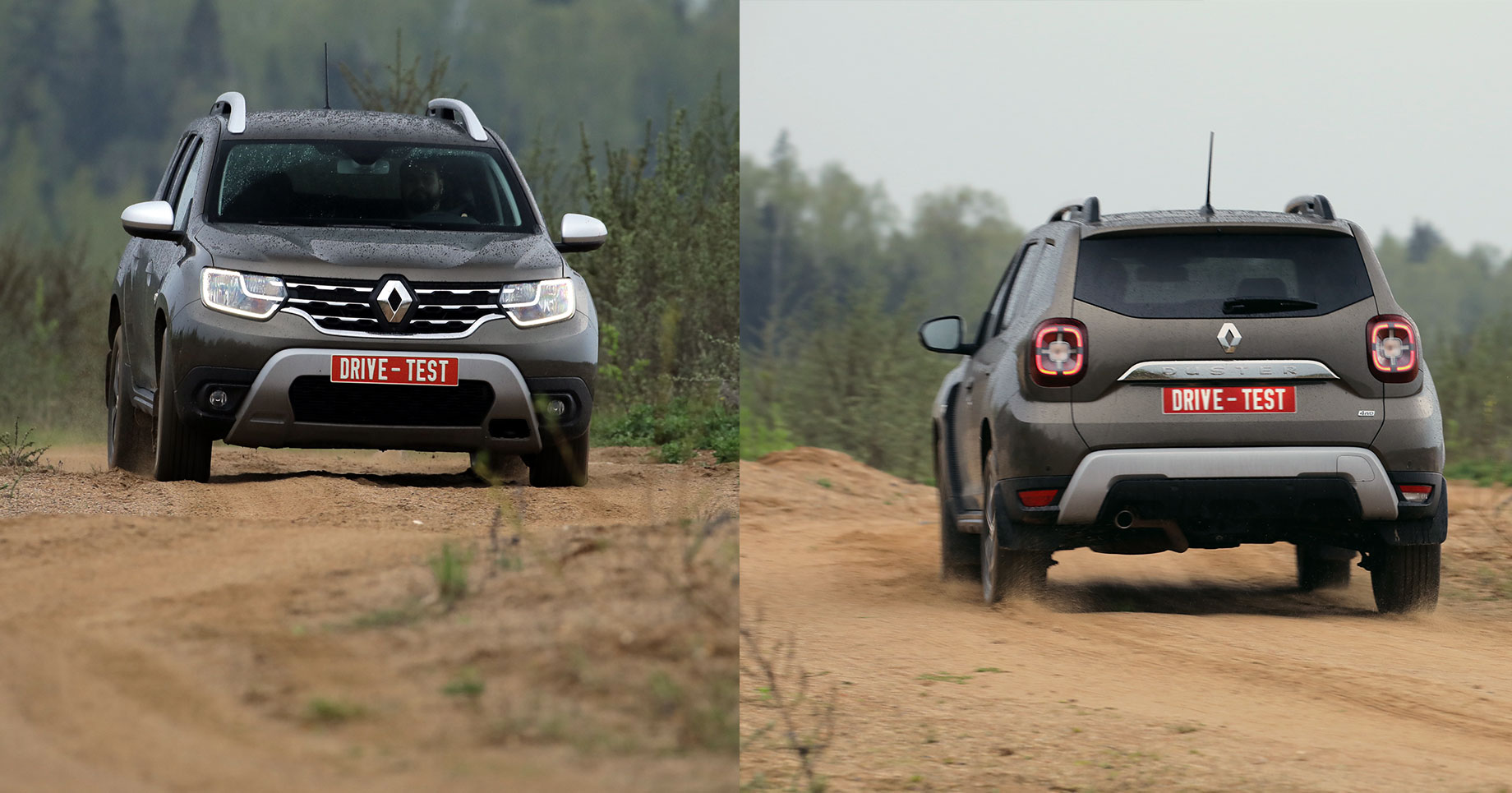
Away from tarmac, the Duster remains the more capable machine. Key off-road credentials include:
- 210 mm of ground clearance
- Approach angle of 31° and departure angle of 33°
- On-demand 4WD with a GKN electromagnetic rear clutch
- A torquey engine with a short first gear that partly substitutes a low-range ratio
- Well-calibrated electronics that simulate front and rear differential locks
Notably, the Kaptur kept up with the Duster across every off-road section we tackled. It runs the same engine and all-wheel drive system with an Auto mode and positive clutch lock — but its assistants respond more slowly, geometric clearance is lower, there’s no standard underbody protection, and the CVT replaces the manual. Neither the transmission nor the clutch overheated during testing, though a more extreme session would likely tip the balance firmly in the Duster’s favour.
Which One Should You Buy?
Demand for the new Duster is high enough that dealers are selling with markups — and buyers are willingly paying them. That enthusiasm is justified. The second-generation Duster is a well-rounded, comfortable, and genuinely capable crossover that has taken a massive leap forward in fit, handling, and driving dynamics. It’s now accessible to a broader, younger audience who would never have considered the original.
If the Duster feels too utilitarian, the Kaptur brings a more polished package:
- Richer exterior styling with two-tone paint and premium wheel designs
- A more upscale cabin ambience
- Exclusive features: LED headlights, keyless entry, built-in navigation, and a Bose audio system
- Class-leading ride comfort on broken and unpaved roads
- Adequate all-wheel drive performance for everyday off-road use
The Kaptur’s turbocharged engine and CVT pairing works smoothly in day-to-day driving, and it won’t let you down on moderate off-road terrain. But its headline advantage remains ride comfort — so exceptional that it alone could be reason enough to choose the Kaptur over anything else in its class.
This is a translation. You can read the original here: https://www.drive.ru/test-drive/renault/60bfc0c7dce2281125f41bc4.html

Published June 09, 2022 • 6m to read