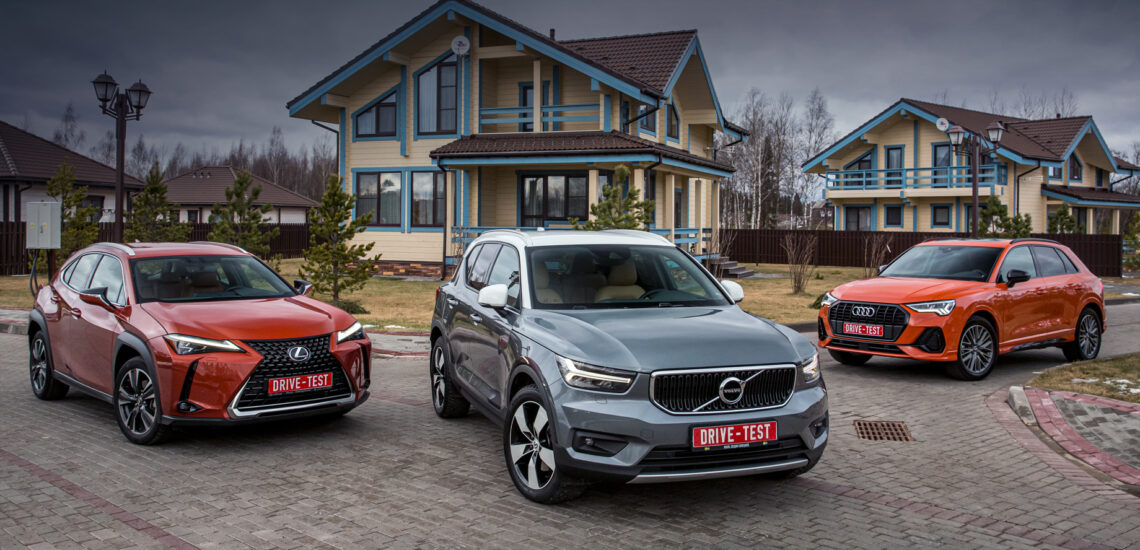

The Lexus UX entered the compact premium crossover market in early 2019 but has struggled to gain traction against established rivals. In this comparison, we pit the UX 200 against two of its most direct competitors — the Audi Q3 and Volvo XC40 — to see how it stacks up on interior space, performance, ride comfort, and value. For this test, we chose the most popular version of the UX 200, equipped with a two-liter, 150-horsepower naturally aspirated engine and CVT. Of the 883 UX models sold in 2019, 810 were this 200 variant.
Engine and Powertrain Specifications
All three crossovers take different approaches to delivering comparable power output, from naturally aspirated engines to turbocharged and hybrid-assisted setups:
- Lexus UX 200: 2.0L naturally aspirated engine, 150 hp, 202 N•m torque, CVT, front-wheel drive
- Audi Q3 (1.4 TFSI): 1.4L turbo engine, 150 hp, 250 N•m torque, six-speed dual-clutch automatic, front-wheel drive
- Volvo XC40 (T4): 2.0L turbo engine, 190 hp, 300 N•m torque, eight-speed automatic, all-wheel drive standard
Notably, the Volvo is only available with all-wheel drive and commands a higher starting price as a result, while the Audi and Lexus stick to front-wheel-drive layouts in these configurations.
Pricing and Options
The Audi Q3 is the most expensive of the trio once options are factored in — it’s practically a showcase of extras, and few buyers in this class will spend half the car’s price on add-ons. The Volvo, for similar money, can be equipped with nearly every available package. The Lexus UX 200 also lands near the top of the price range, but feels like it belongs in a different league: dressing up a front-wheel-drive “Japanese” car to command a premium price requires loading it with accessories.
Interior Space and Comfort
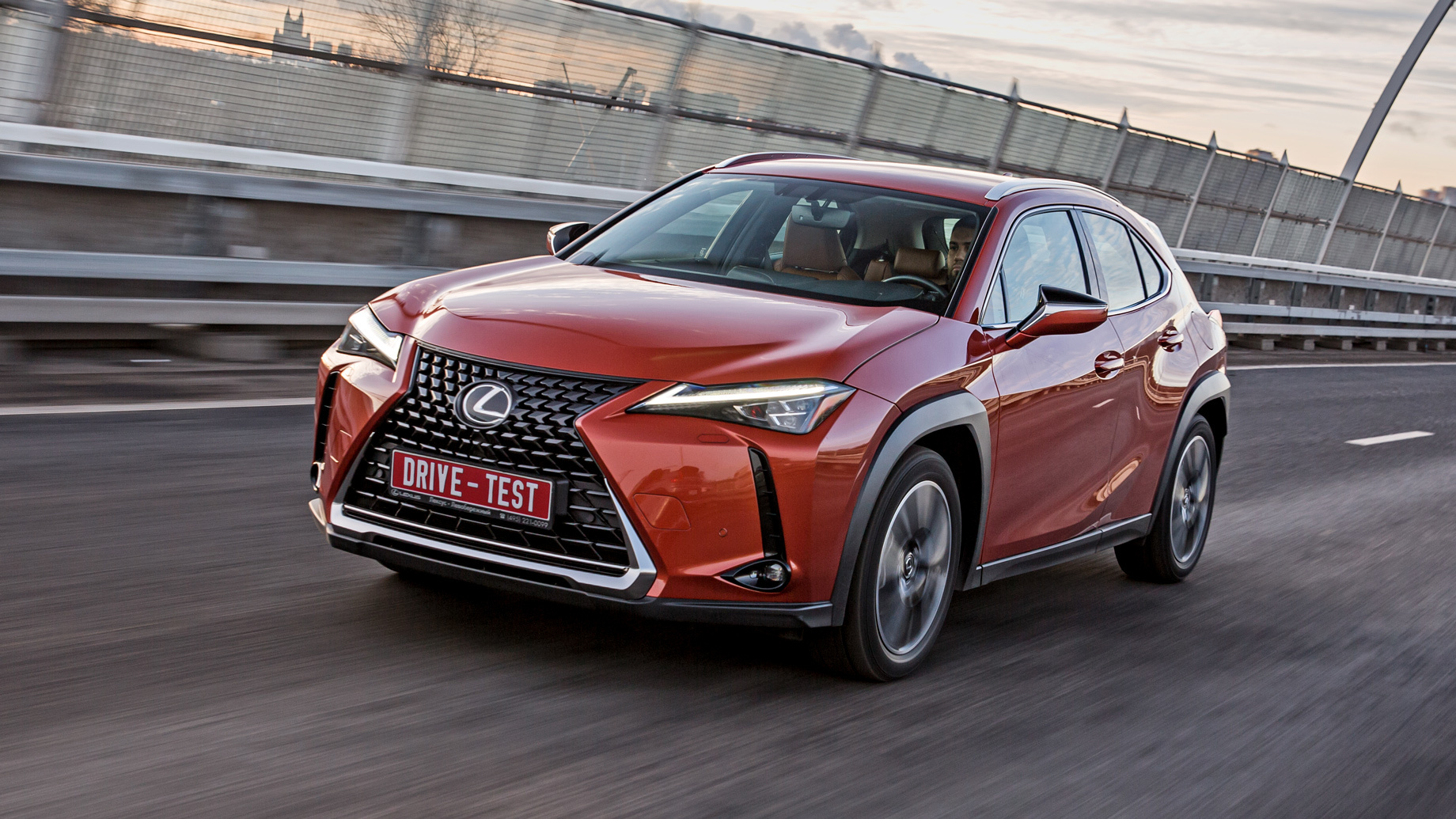
From the driver’s seat, the UX doesn’t feel like a typical crossover. You sit closer to the ground, more like in a regular hatchback. The Lexus is noticeably lower than its rivals, with the shortest wheelbase and narrowest body. As a result, it offers the least interior room of the three, especially noticeable in the back seats. Visibility is also slightly reduced due to smaller windows, and the trunk is compact.
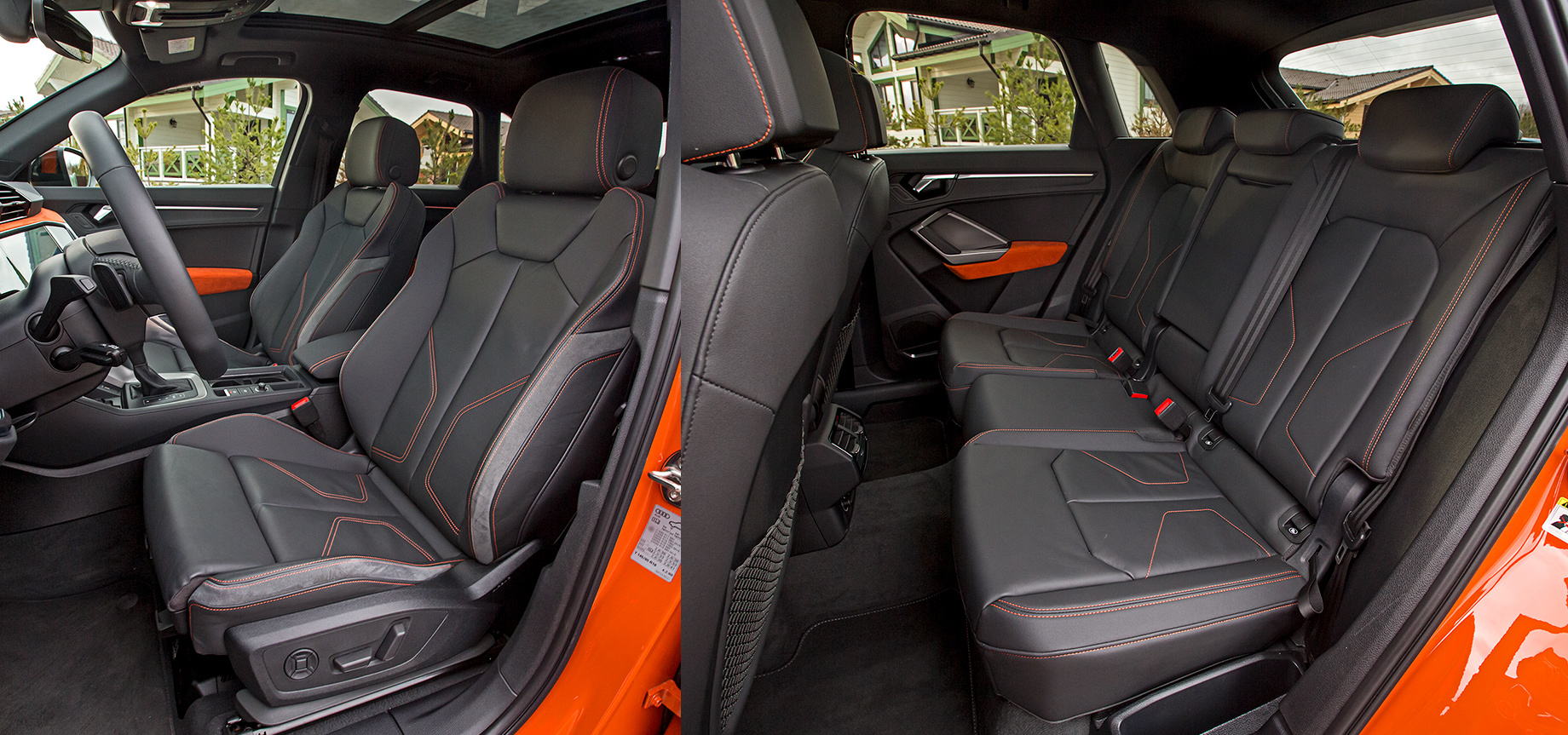
The Audi’s interior doesn’t skimp on hard plastics, but it’s considerably more spacious. Seating position is higher than in the Lexus, and the seat adjustment range is wider — tall drivers (5’6″ and up) may find the seat can be raised enough to touch the ceiling. Glossy surfaces do pick up fingerprints easily, but the climate control unit benefits from physical buttons and dials rather than touch controls.
Rear-seat access is easier in the Audi than in the Lexus, with more room to stay clean while getting in and a reclining backrest for finding a comfortable position. The cargo area is nearly double the size of the Lexus’s and better organized, with more versatile configurations thanks to the sliding rear bench.
In the Volvo, seating is relaxed and roomy, similar to the Audi, but there are no grab handles on the door panels or ceiling — a feature the Q3 does offer. Overall build quality across the two European models is close, but the XC40’s cabin materials feel more consistent than the Audi’s, and the layout is more practical. The doors have generous storage cavities, there’s a sliding tray under the driver’s seat, and multiple small-item compartments are scattered throughout. The glove box, while small, is unusually capacious — though like the tiny Lexus glove compartment, it lacks finished trim, and a lock is only available as a paid extra.
From the driver’s seat, the Volvo’s nearly square hood is clearly visible, making it easier to judge the car’s dimensions. The steering wheel is comfortable and the matte buttons are a improvement over the glossy switchgear on older Volvo models. However, the non-adjustable rear bench forces a fairly upright seating position, and the tall center tunnel limits comfort for a middle rear passenger. The trunk, although smaller than the Audi’s, is well organized — though the load-through hatch can’t match the Audi’s folding center armrest for handling long items.
Driving Dynamics and Acceleration
From the first few miles, the Volvo feels the most powerful of the three: it launches easily, builds speed confidently, and accelerates smoothly on the move. This isn’t just about raw output — the throttle response is well-tuned, making it easy to modulate power delivery. The eight-speed automatic shifts smoothly without feeling sluggish.
The naturally aspirated Lexus with its CVT isn’t as quick, but acceleration feels just as controllable. The car responds willingly to throttle input, and the transmission convincingly mimics stepped gear changes. Selecting Sport mode via the dashboard-mounted shifter sharpens responsiveness further, and the added intensity never feels uncomfortable — making it a great setup for city driving. The one downside: hard acceleration causes the engine to hang at high rpm, and the naturally aspirated four-cylinder isn’t particularly pleasant-sounding under those conditions.
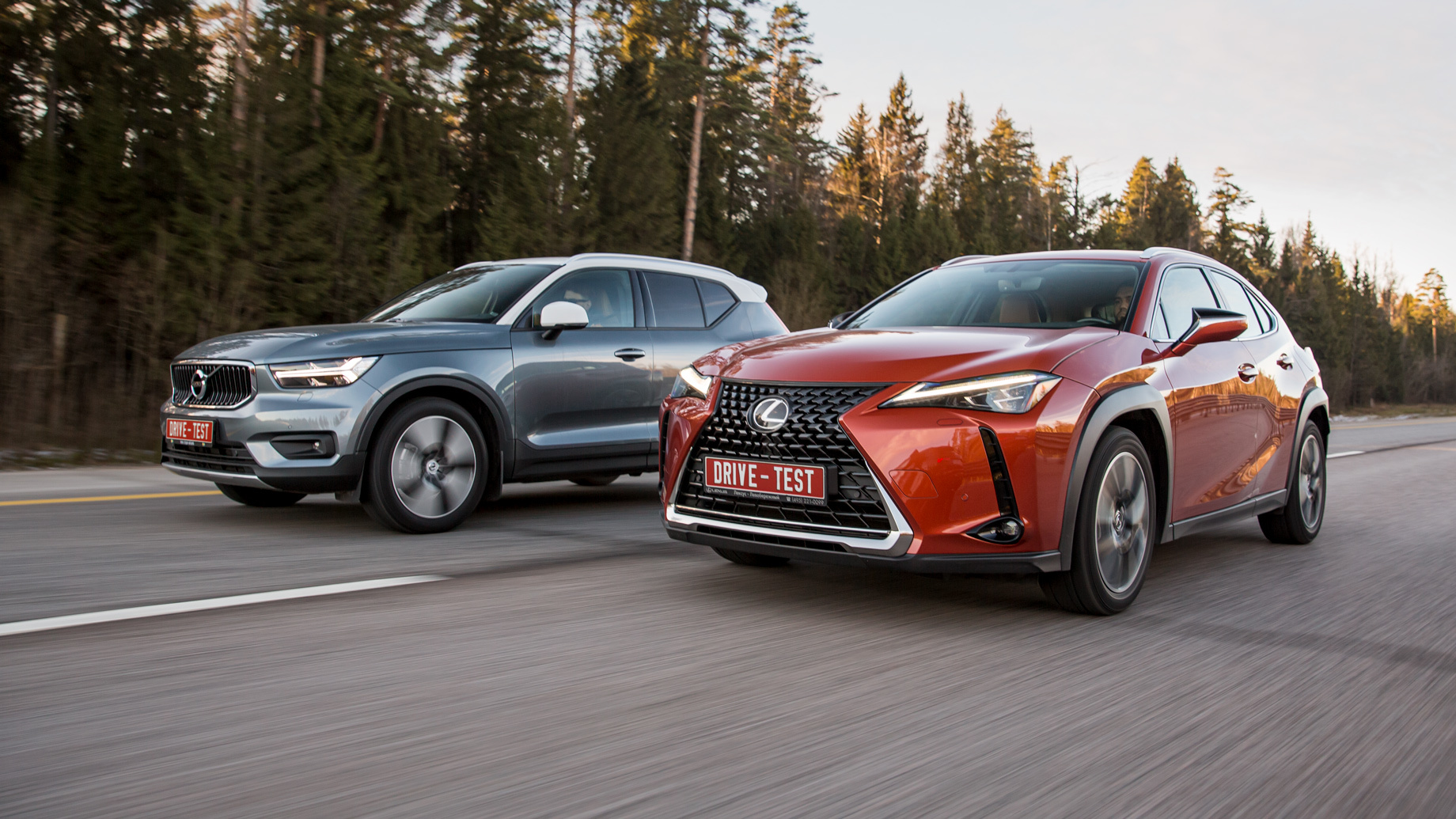
The Audi’s engine never gets vocal, but the 150-horsepower Q3 feels like it has a cushion between the pedal and the throttle response. Input during the first third of pedal travel is heavily dampened — whether this is an overly eco-focused calibration or simply a flaw isn’t entirely clear. The result is a crossover that both launches hesitantly and accelerates with noticeable lag when already moving.
That muted throttle response, combined with some hesitation from the dual-clutch gearbox at low speed, makes stop-and-go traffic genuinely frustrating: press the gas and the car seems to slow down, press harder and it lurches forward. Once speed builds, the turbo engine shakes off the overly conservative electronics and the car comes alive — pulling briskly and shifting through its six gears almost imperceptibly. Sport mode makes the Q3 track the accelerator more closely overall, though shifts become slightly less smooth.
Handling and Ride Quality
Fitted with Michelin Pilot Alpin 5 SUV non-studded tires, our Audi test car was well matched to winter conditions. On these tires, the Q3 was the quietest of the three and handling was generally solid. The crossover stays stable and predictable through corners, and at the limit, it drifts wide gradually rather than abruptly. The electronic stability systems are difficult to catch off guard, and the steering builds natural weight as you turn — though there’s a slight artificial feel right around center.
The Lexus, riding on firmer ContiWinterContact TS 830 P tires designed for European winters, highlights the car’s driver-focused chassis tuning. Thanks to a relatively low center of gravity, the crossover responds quickly to steering input, with satisfying feedback building through a turn. Adding throttle mid-corner tightens the line, while lifting off can prompt a graceful rear-end slide. A sharp steering input can also trigger a slide — a trait fairly typical of vehicles built on the TNGA platform.
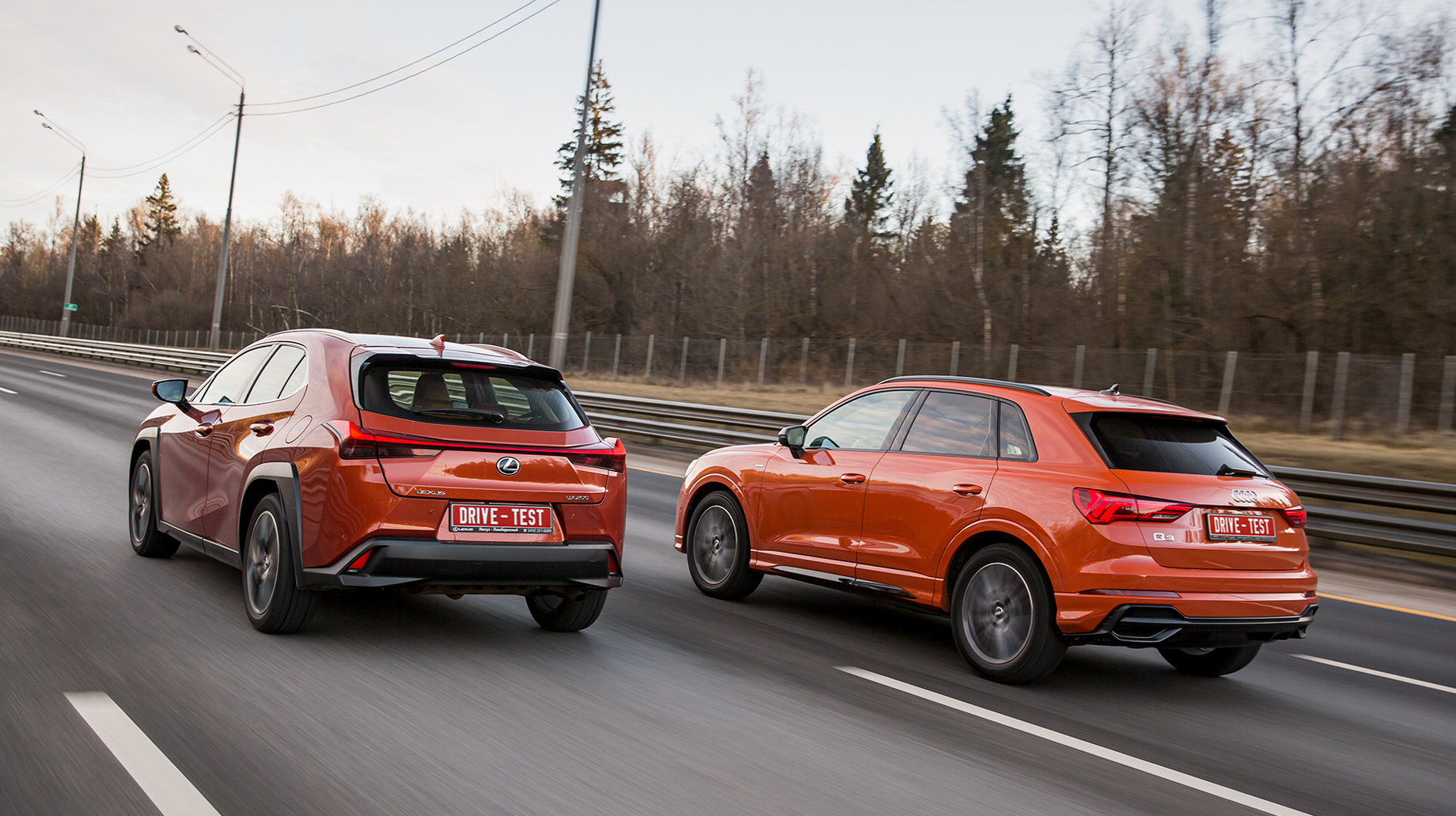
The UX absorbs small and medium bumps reasonably well, but shudders noticeably over short, sharp ridges and expansion joints — more so than its rivals — raising some questions about chassis rigidity. Speed bumps in particular are not the Lexus’s strong suit.
The Audi delivers a more comfortable ride overall but transmits road texture in more detail, visibly reacting to sharp-edged potholes. Its suspension has enough travel to avoid bottoming out over most speed bumps, though the XC40 clearly has even more compliance in reserve. The Volvo smooths out potholes effectively but is less attentive to smaller road imperfections. Its studded Hakkapeliitta 8 SUV tires don’t compromise the reliable handling — reactions lack outright sportiness but remain thoroughly predictable.
Off-Road Capability and Ground Clearance
Off the beaten path, the XC40 offers more than just all-wheel drive to back it up:
- Volvo XC40: Favorable approach/departure geometry, measured ground clearance close to the claimed 8.31 inches, well-tuned traction control, automatic gearbox suited to off-road use
- Audi Q3: Moderate ground clearance, capable on rough surfaces with all-wheel-drive versions
- Lexus UX 200: Not well-suited to off-road use — a long front overhang combined with low ground clearance (6.3 inches) turns the front bumper into an obstacle on rough terrain
Warranty and Maintenance Comparison
- Audi Q3: 4-year warranty, 120,000 km limit; service interval every 15,000 km
- Volvo XC40: 3-year warranty, 100,000 km limit; service interval every 20,000 km
- Lexus UX 200: 3-year warranty, 100,000 km limit; service interval every 10,000 km
Final Verdict: Which Compact Crossover Should You Buy?
Thanks to its more advanced infotainment system, the Audi Q3 feels more modern than the Volvo, though it isn’t necessarily better overall. If you’re already spending this much on a premium crossover, it may be worth skipping the extensive options list in favor of all-wheel drive — or better yet, upgrading to the 180-horsepower 40 TFSI quattro with its 2.0L engine and seven-speed automated gearbox. Whatever you spend on the Q3, though, a Volvo driver will still pass you on a rough road.
The XC40, meanwhile, reaffirms its status as the benchmark compact premium crossover, offering a broad range of configurations and straightforward pricing. An upcoming front-wheel-drive T3 gasoline variant should only strengthen its position — the XC40 already found 1,898 buyers in its first year on the market.
As for the Lexus, if you’re drawn to the UX, stick with the 200. The more powerful hybrid version adds an electric rear-axle motor that most buyers won’t need, and the UX 200 isn’t especially affordable even with the base cloth upholstery. Don’t expect versatility, and be ready to accept dated infotainment tech. Still, the UX has real appeal on the move — it’s a nimble, easygoing city car well suited to a single driver or couple without a family. It doesn’t quite match the space and practicality of the rivals in this comparison, but it could well appeal to buyers put off by the cramped cabin of the BMW X2.
Quick Comparison Summary
- Best for city driving and agility: Lexus UX 200
- Best for interior space and practicality: Audi Q3
- Best all-around value and off-road capability: Volvo XC40
This is a translation. You can read the original here: https://www.drive.ru/test-drive/audi/lexus/volvo/5e1db9e8ec05c4175e00002e.html

Published March 16, 2023 • 9m to read