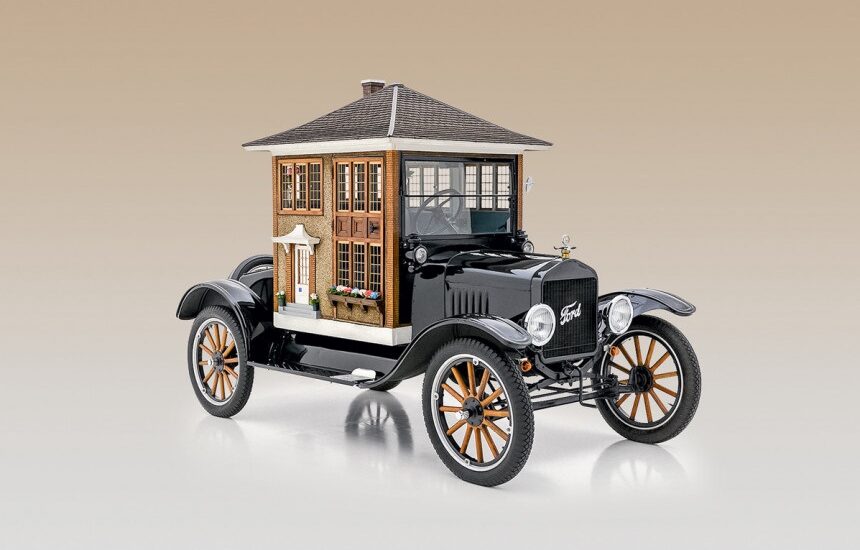

What a delight! It is as if someone whimsically decided to place a dollhouse atop a Ford chassis. Large toys like that usually boast intricately detailed interiors, full of doll furniture and accessories. This one, though, conceals a simple two-seater cabin. So what exactly are we looking at?
Rolling Homes — and What This Is Not
Decades ago a Lithuanian book appeared under the title “Riedantys Namai”, Rolling Homes in English. Lavishly illustrated, it told the stories of people who turned decommissioned buses and trucks into mobile homes, and of their so-called “creations”. A few of those illustrations even reached the pages of Autoreview — though not the Ford T shown here.
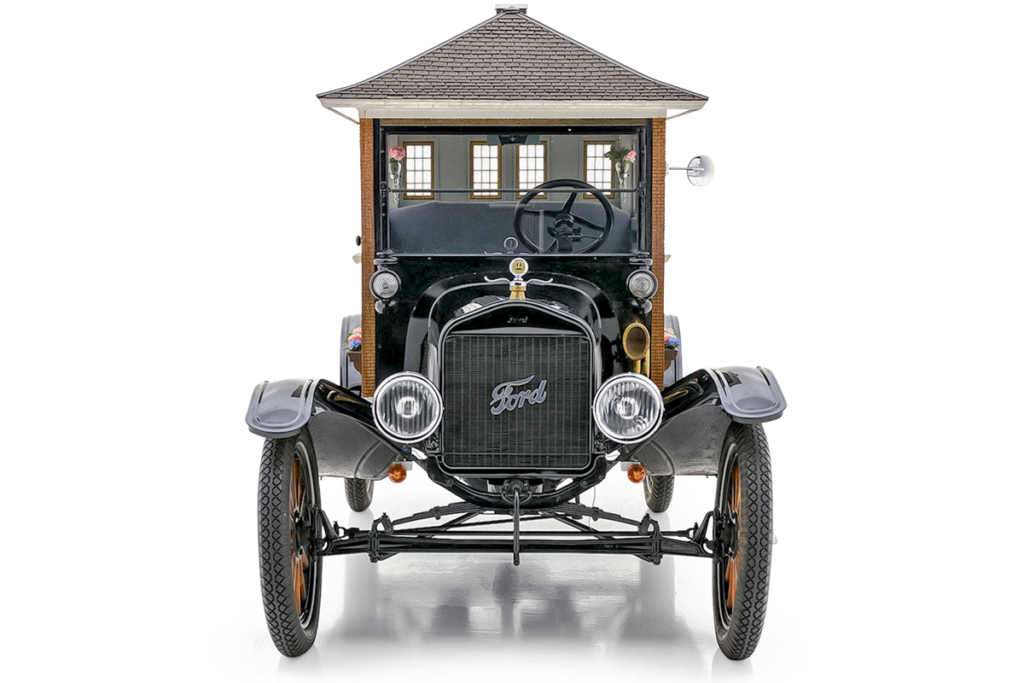
This particular Ford T did not appear in the book, whose subject was genuine dwellings built on vehicle chassis. What we have here is a typical “admobile”, of which a great many were built a century ago, in whatever whimsical shape the promoted product suggested.
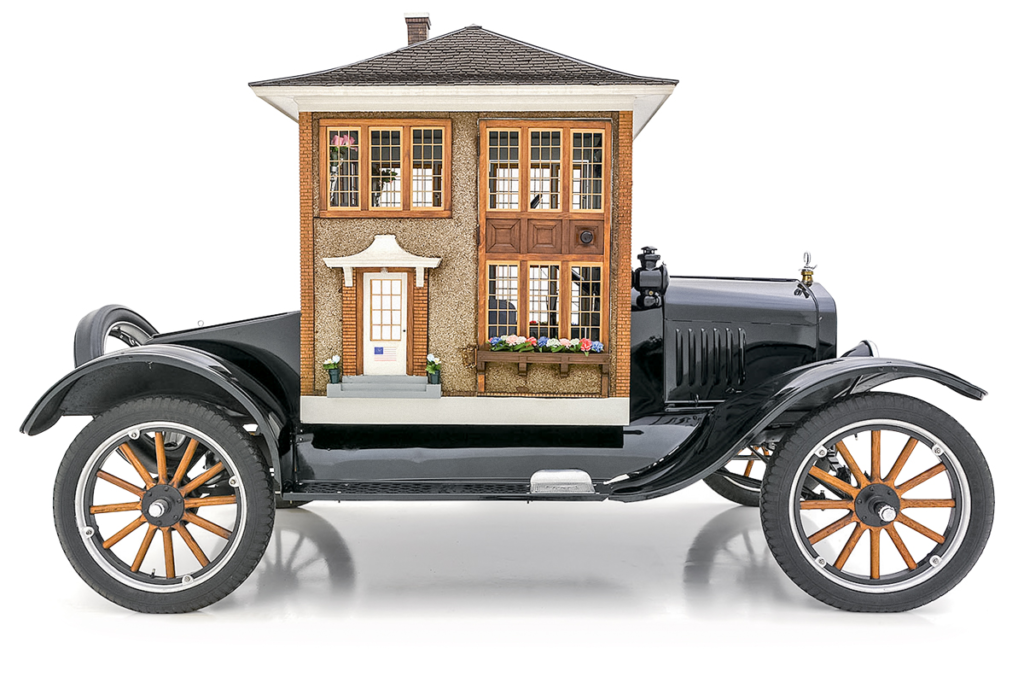
You need to enter the “house” not through the white illuminated porch, but by pulling the round handle to the left and above the headlight. Access to the interior is possible only from the sidewalk; the opposite door has no handle and opens only from the inside.
A Century of Advertising on Wheels
A shoe repair and tailoring workshop once mounted an enormous, realistically crafted leather shoe on a car chassis. Beverage sellers, alcoholic and non-alcoholic alike, tried with mixed success to mould their promotional vehicles into the shape of bottles. Budweiser’s brewers did not bother with small gestures and decorated two or three Cadillac cars as battleships, with anchors, cannons, flags and lifebuoys. In Lithuania a Chevrolet truck shaped like a fish toured remote areas, handing out not fish but fish-shaped soap samples at every stop. The British tobacconists Carreras Ltd., launching their Black Cat brand, sent out a pristine white vehicle whose driver and passengers wore sinister cat costumes and smoked those very cigarettes without pause.
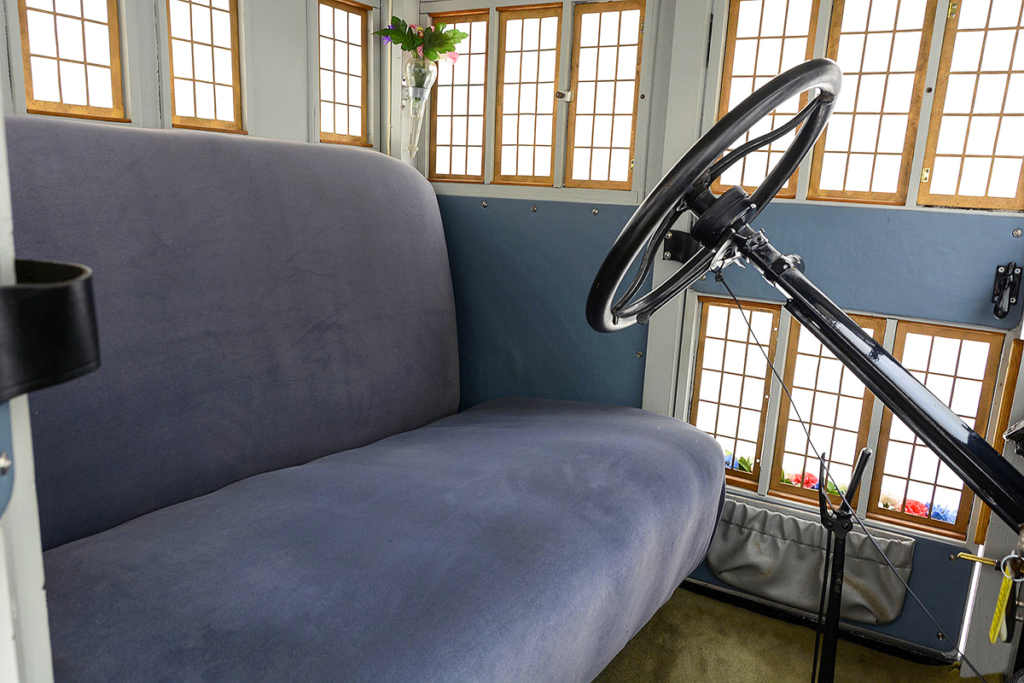
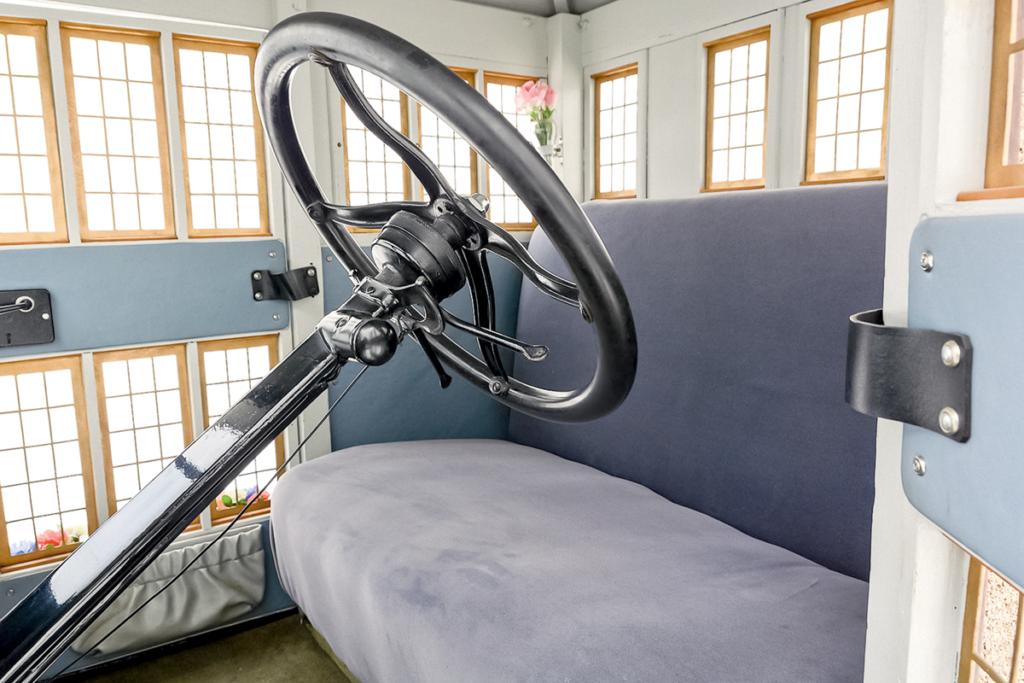
The salon is decorated with two very cute boutonnieres. The two-seater sofa, on the other hand, is quite standard.
Why a Wooden House in Portland, Connecticut
What we have here is a rather benign advertisement, for a woodworking plant that supplied building materials for private houses. Portland, Connecticut is no bustling metropolis: it is a piece of “one-story America”, where most buildings are made of wood. That held even though the main local industry until 1936 was a quarry producing brownstone, which travelled from there to New York, San Francisco and Boston, and overseas to England and Canada. Portland’s own residents, however, preferred traditional wooden houses — and it was for them that several mobile cottages were built, standing on wheels instead of the proverbial “chicken legs”. They toured the city streets and the country around, advertising building and repair materials.
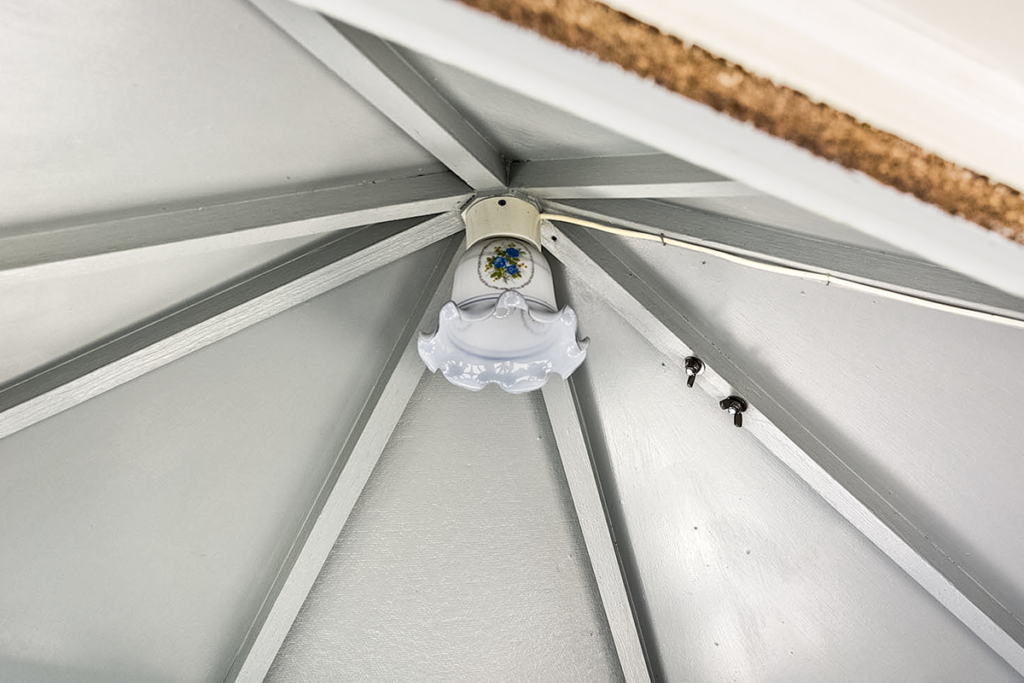
A flirty interior lighting shade. Two “lambs” to the right secure a decorative chimney pipe to the roof.
John Barry and COME ON OVER
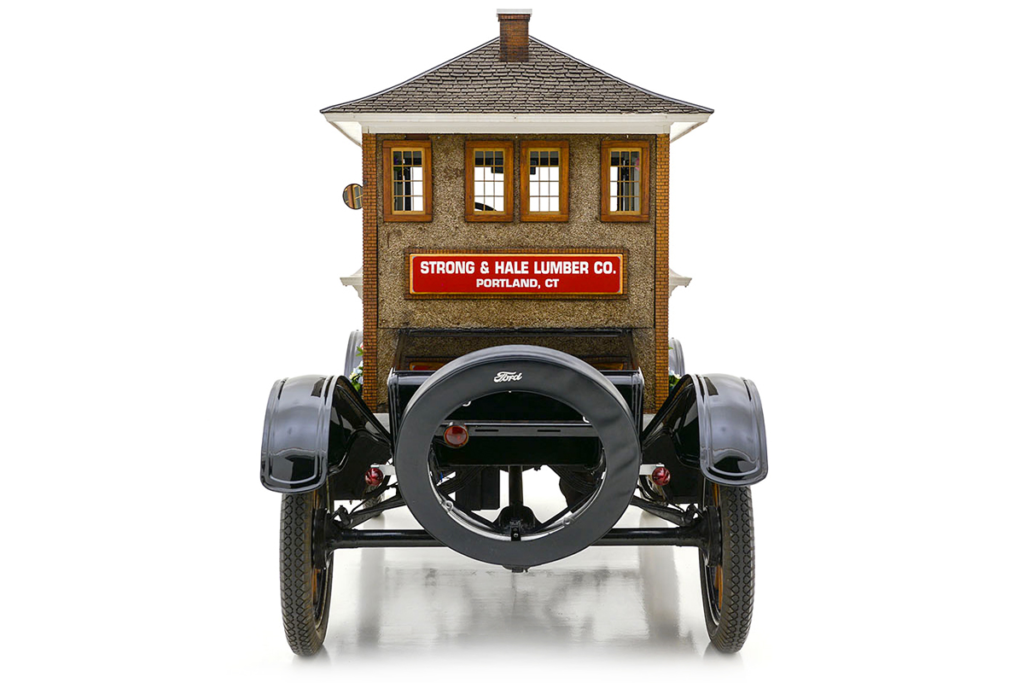
The man behind the campaign was John Barry. Through the period described, and for many years after, he presided over Strong & Hale, whose logo covers the rear wall of the “house”. His creativity was hard to mistake. Besides the decorated Fords, he was known for a three-metre-high inscription on a brick wall along the Connecticut River, made in 1925, reading “COME ON OVER” — an invitation to migrants to settle in Portland. It survives to this day, recently restored, with the riverbank cleared of the overgrowth that had hidden the letters.
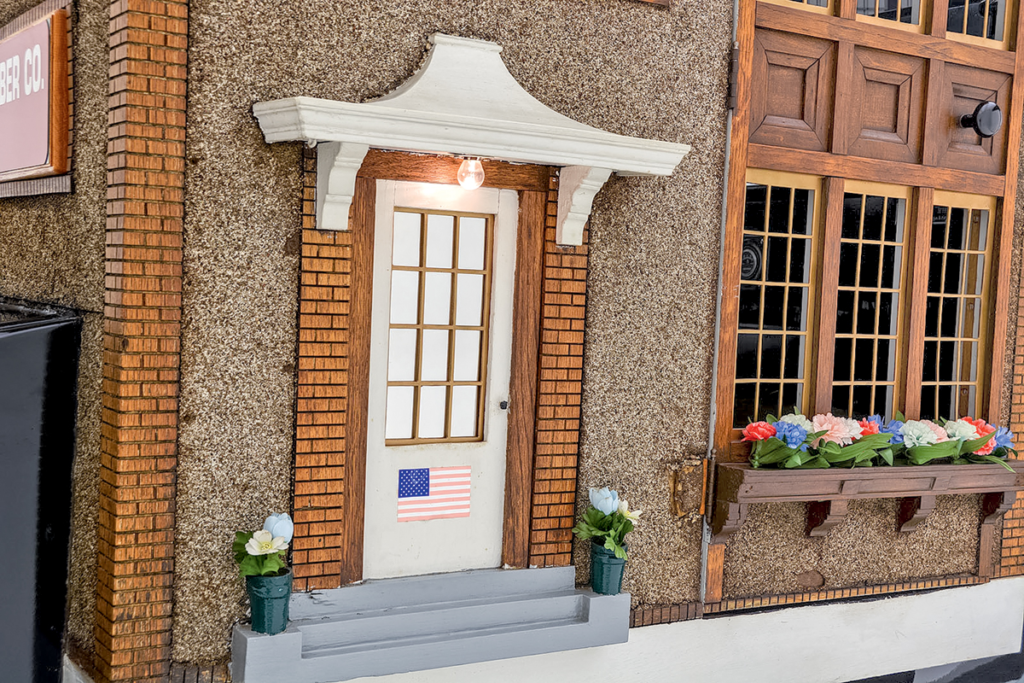
The “entrance group” is made with all the care of an architectural model – there is even a working lantern above the porch.
What Became of the Business
Barry reckoned that newcomers would build in the private sector and would need his lumber, beams and carpentry — door and window frames and the rest. He was proved right: Strong & Hale came through the Great Depression and World War II under his unyielding leadership. John Barry died quietly in 1958, at the age of eighty.
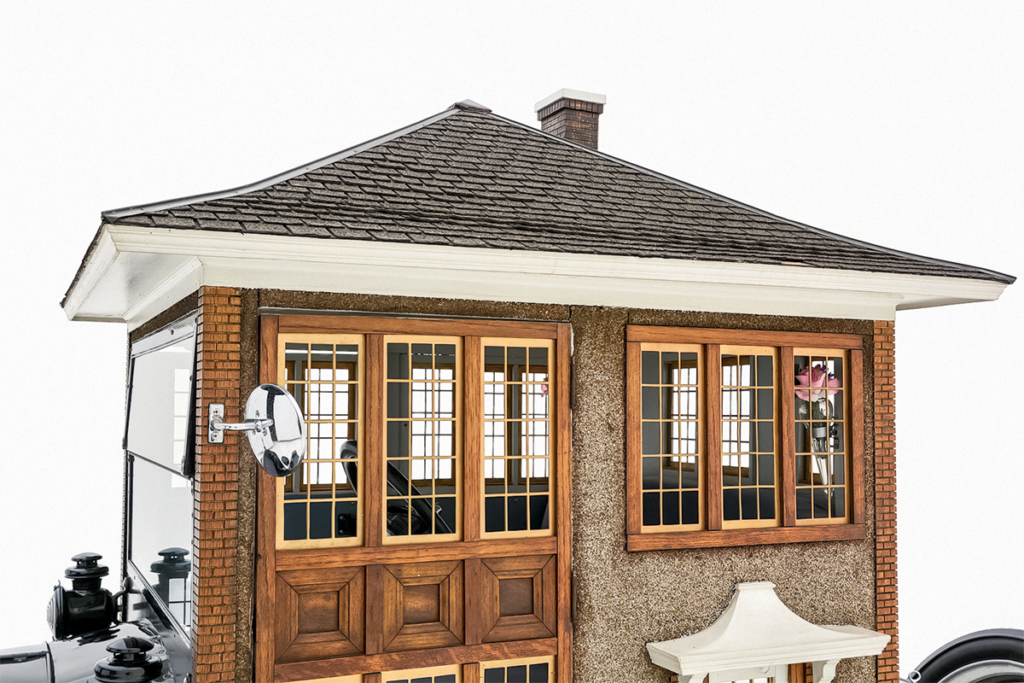
Three years after his death the company was bought by a competitor, which soon went bankrupt. What is left today is the nostalgic inscription, now lit at night by spotlights, and this charming, ornate “gingerbread house”.
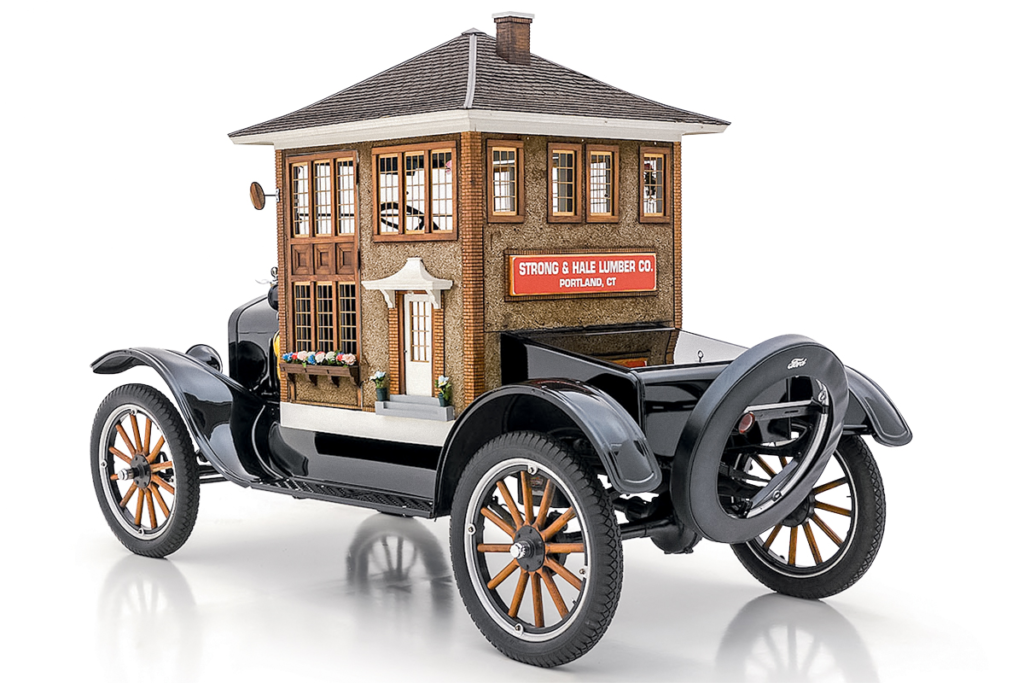
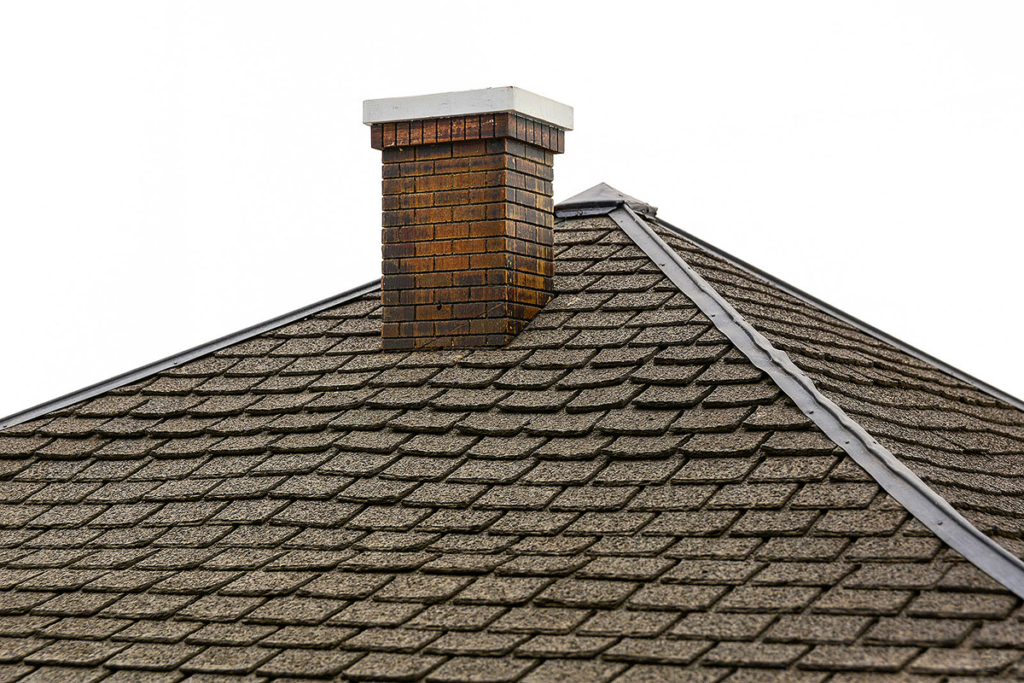
The roof of the “house” is covered with imitation tiles. The advertiser’s name is written in large letters – white on red – across the entire width of the back wall.
The Gingerbread Ford: The Key Facts
- What it is: an “admobile” — a Ford T chassis carrying an advertising body, not a mobile home
- Advertiser: Strong & Hale, a woodworking plant supplying materials for private houses
- Where: Portland, Connecticut — a wooden town, despite a brownstone quarry that was its main industry until 1936
- Behind it: John Barry, who also put “COME ON OVER” in three-metre letters on a wall by the Connecticut River in 1925
- Inside: a plain two-seater cabin — the detail is all on the outside
- Afterwards: Barry died in 1958 aged eighty; the firm was sold three years later and the buyer soon went bankrupt
Frequently Asked Questions
Is this a motorhome? No. It is an advertising vehicle. Genuine homes on vehicle chassis are a different tradition — the subject of the Lithuanian book “Riedantys Namai”.
What was it advertising? Building and repair materials from Strong & Hale, a woodworking plant in Portland, Connecticut.
Were there really cars shaped like shoes and battleships? Yes. A shoe workshop built a giant leather shoe; Budweiser dressed two or three Cadillac cars as battleships; a Lithuanian Chevrolet toured as a fish, giving out fish-shaped soap.
Does the COME ON OVER sign still exist? It does. The inscription of 1925 has been restored, and the riverbank in front of it cleared so the letters can be read again.
Photo: Sean Dugan, Hyman Ltd.
This is a translation. You can read the original article here: Пряничный домик Ford Model T 1922 года в рассказе Андрея Хрисанфова

Published February 20, 2025 • 5m to read