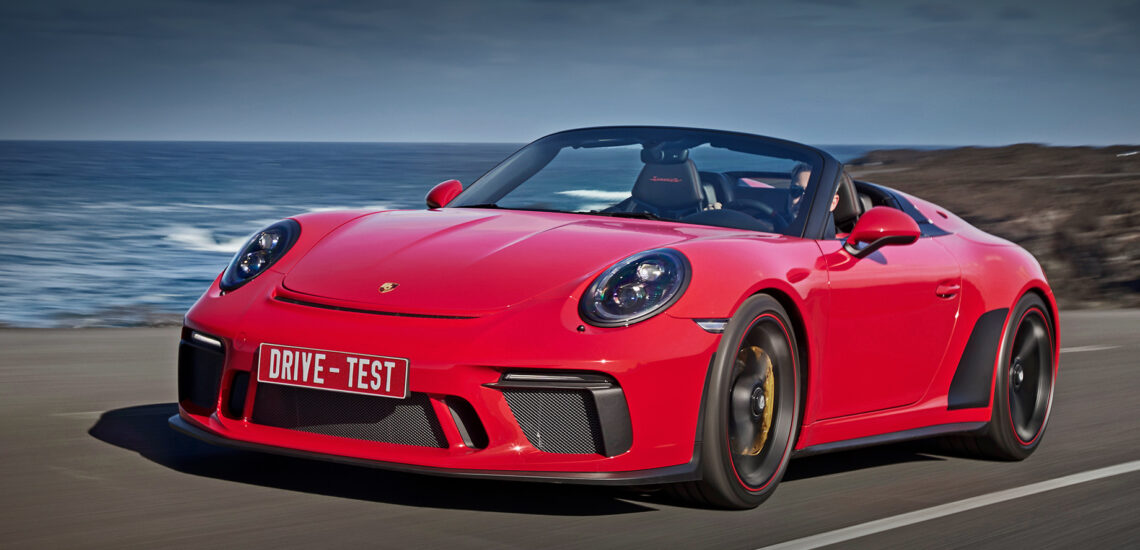

The Porsche 911 Speedster deserves a proper deep-dive. What started as a YouTube video and a flood of unanswered comments has grown into this full-length review. With time to reflect and a rich archive of voice notes and first-hand interviews, it’s finally time to give this car — and its extraordinary engine — the coverage it deserves.
A Rare Preview of the Upcoming GT3 Engine
The Speedster’s most significant talking point isn’t its open-top body or its collectible status — it’s what’s under the lid. The 911 Speedster debuted a brand-new four-litre naturally aspirated flat-six, developed with the forthcoming 992-series GT3 firmly in mind. Just 1,948 buyers received an exclusive early look at the engine that would go on to define Porsche’s sports car lineup for years to come.
Thanks to first-hand information gathered during the Italian test drive in Sardinia, this remarkably charismatic engine takes centre stage in everything that follows.
Launch Control and Raw Performance: What It Feels Like Off the Line
Set launch control to five thousand revolutions and the Speedster makes its intentions clear immediately. The Dunlop Sport Maxx Race 2 tyres offer no cushioning from the transmission hit — as soon as the long-stroke clutch is released, the rubber bites hard into abrasive asphalt with almost no slip. The naturally aspirated engine surges instantly, fighting the inertia of a car tipping the scales at one and a half tonnes.
Active engine mounts simply cannot contain the raw energy on offer. The power unit bucks with such amplitude that it seems ready to tear free of its subframe entirely.
Key performance figures recorded via Racelogic during testing:
- 0–60 mph: approximately 4.5 seconds with a mechanical gearbox
- Peak power: 510 hp at 8,500 rpm
- Redline: 9,000 rpm
- First gear reaches up to 50 mph — only one upshift needed to hit 60
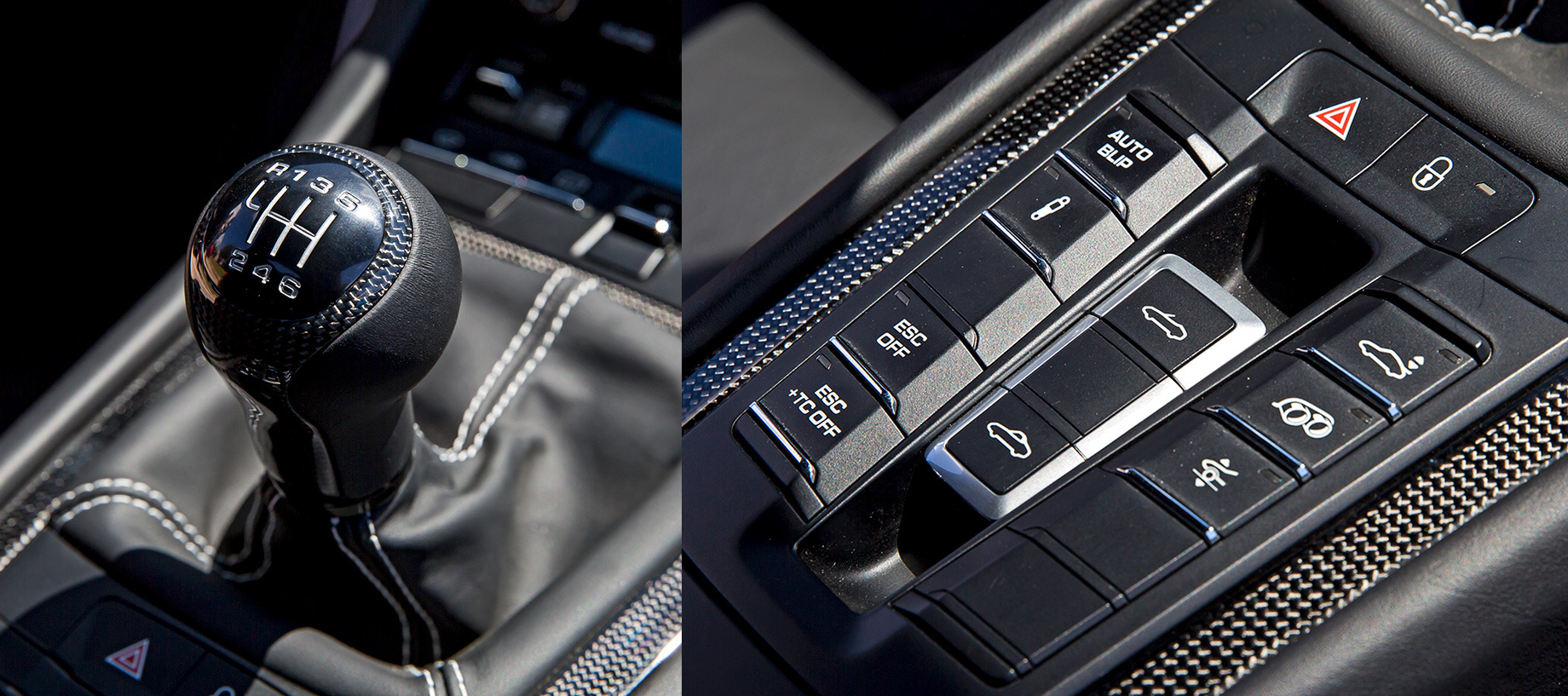
The Speedster also features flat-shift — an autothrottling system in reverse that holds revs during upshifts, so the driver can focus entirely on fast clutch operation without any power interruption.
The Sound: Why the Speedster’s Exhaust Is in a Class of Its Own
Numbers alone don’t explain what makes this engine so special. The tachometer needle rushes towards the red zone with relentless purpose, and resisting the urge to hold it all the way to the limit is genuinely impossible — the sound at the top of the rev range is simply too good to cut short.
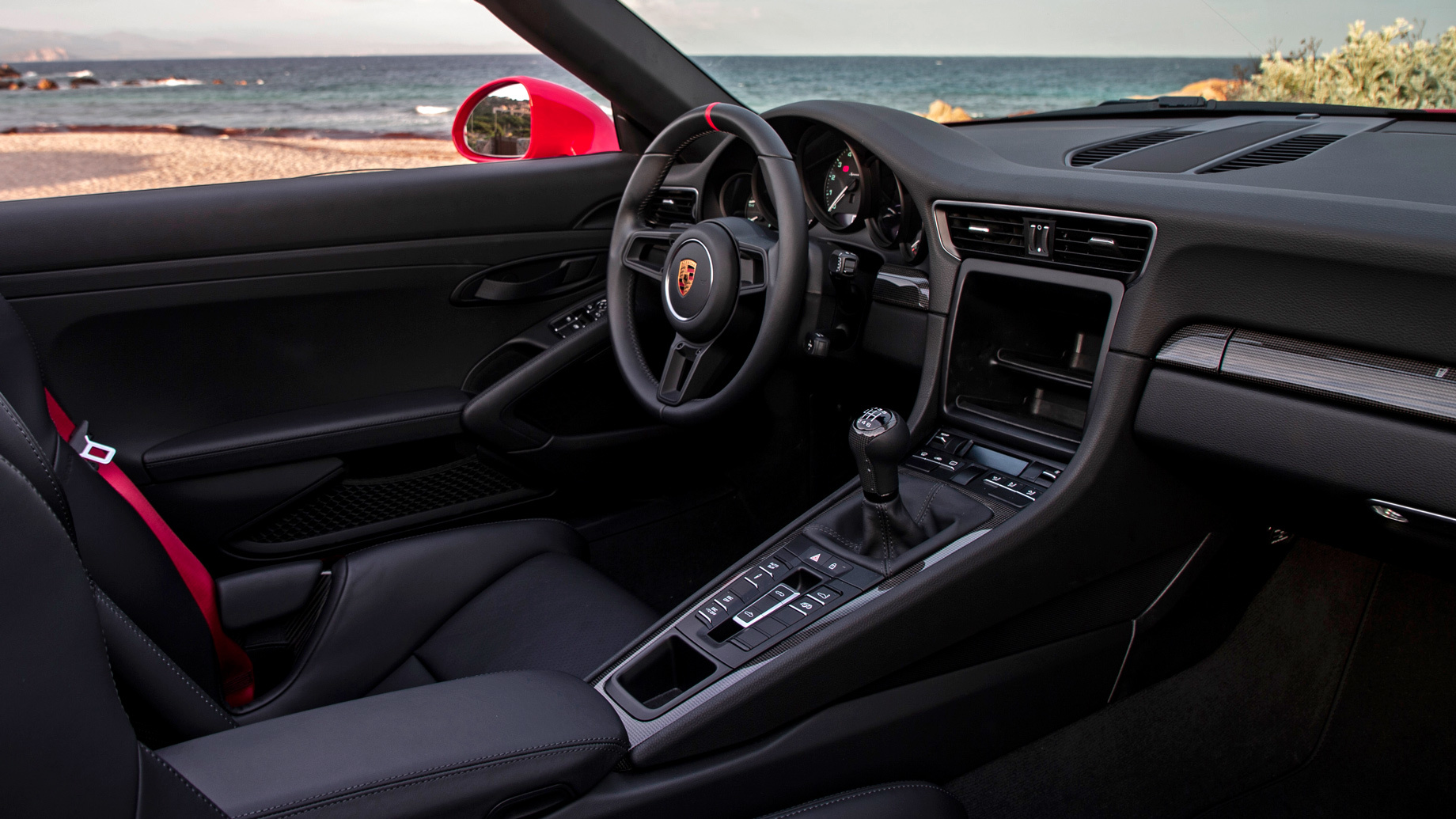
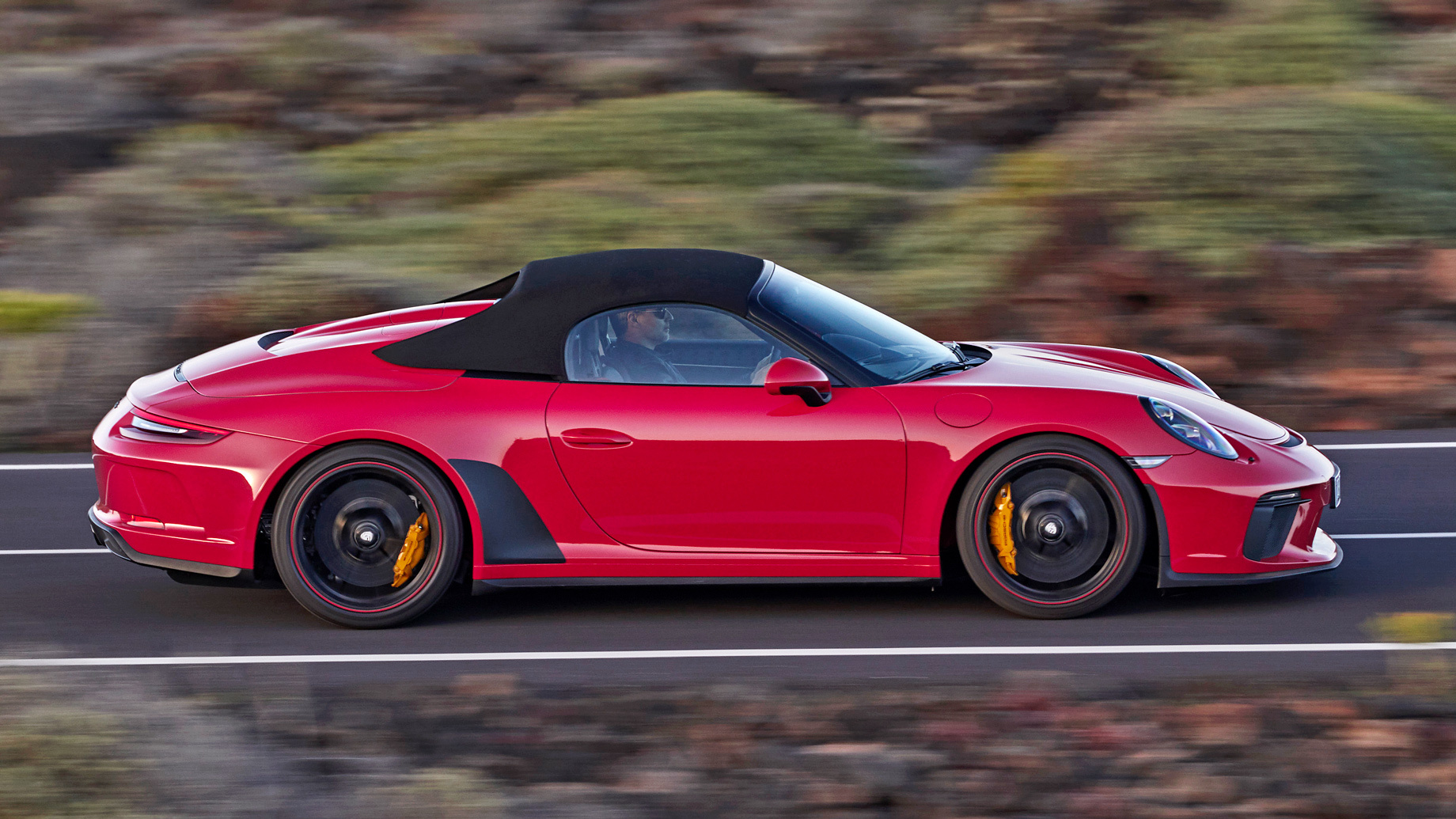
The open roof is crucial here. Only the Speedster lets you hear the exhaust’s full soprano clearly over the mechanical roar of the hard-valve GT boxer. The sound is so raw and direct that the presence of particulate filters in the system is genuinely hard to believe.
What makes the new exhaust noteworthy:
- The first all-new exhaust system in 13 years — the previous unit dated back to the GT3 997 restyling
- Developed entirely from scratch by Flacht engineers, signalling a long production cycle ahead
- Achieved surprisingly low back-pressure despite integrating particulate filters
- Power output increased by 10 hp to 510, while overall system performance rose by 25%
- At lower revs, the engine basses so deeply and distantly it can be mistaken for a piston aircraft overhead
Individual Throttle Bodies: The Engineering Story Behind the GT3 Engine
The four-litre flat-six traces its lineage back to the 2013 engine, but the 992-generation unit is a fundamentally different animal. The removal of hydraulic lifters sharpened throttle response noticeably — yet the new individual throttle valves push that response even further, into territory that engineers describe as Taycan-like in its immediacy.
The development path of these individual throttle bodies is a fascinating story in its own right:
- Primary purpose: optimise mixture formation and reduce emissions by acting as intake vortex generators
- Prototype development began in 2014 using BMW M-series serial throttle dampers as proof-of-concept components
- Final production versions required unprecedentedly tight manufacturing tolerances — beyond what BMW mechanics could achieve in the 2000s
- Integration demanded a completely new engine control unit and extensive software calibration
- Final calibrations were signed off less than two months before the first press test drive
- Porsche Motorsport has long used multi-throttle systems in racing, but the GT3 Cup had never used them before
With a common throttle body still retained in reserve, the door remains open for further development. A freer intake manifold could unlock significantly more power — relevant both for third-party tuners and for a potential future GT3 RS.
Throttle Response and Driveability: Smooth Enough to Rival an EV
For all its aggression at the top end, the engine is remarkably refined at lower loads. In day-to-day driving through the hills of Sardinia, the Speedster behaves more like an electric car than a high-strung GT racer — smooth, linear, and eerily predictable in its response to throttle inputs. It idles even more cleanly than the restyled GT3, and the Germans admit that getting the engine to breathe correctly at low loads was the most difficult part of the entire calibration process.
Fuel Economy: Surprisingly Efficient for a 510 hp Naturally Aspirated Engine
Fuel consumption figures from the Sardinian test drive were a genuine surprise. With Belgian racing driver Jan Coomans pushing hard through the hills for half a day at full throttle, the on-board computer registered less than 3.7 gallons per 60 miles — reset fresh that morning.
Efficiency highlights from the test:
- The most economical naturally aspirated 911 since the 997 generation
- Efficiency actually improves at higher speeds: consumption at 143 mph and 6,000 rpm is barely more than at 80 mph and 3,300 rpm
- Noticeably more fuel-efficient than the previous engine in urban conditions
- Uses conventional electromagnetic injectors and a direct-drive water pump — deliberately simple architecture by Porsche standards
How the Speedster Handles: GT3 Chassis in an Open-Top Body
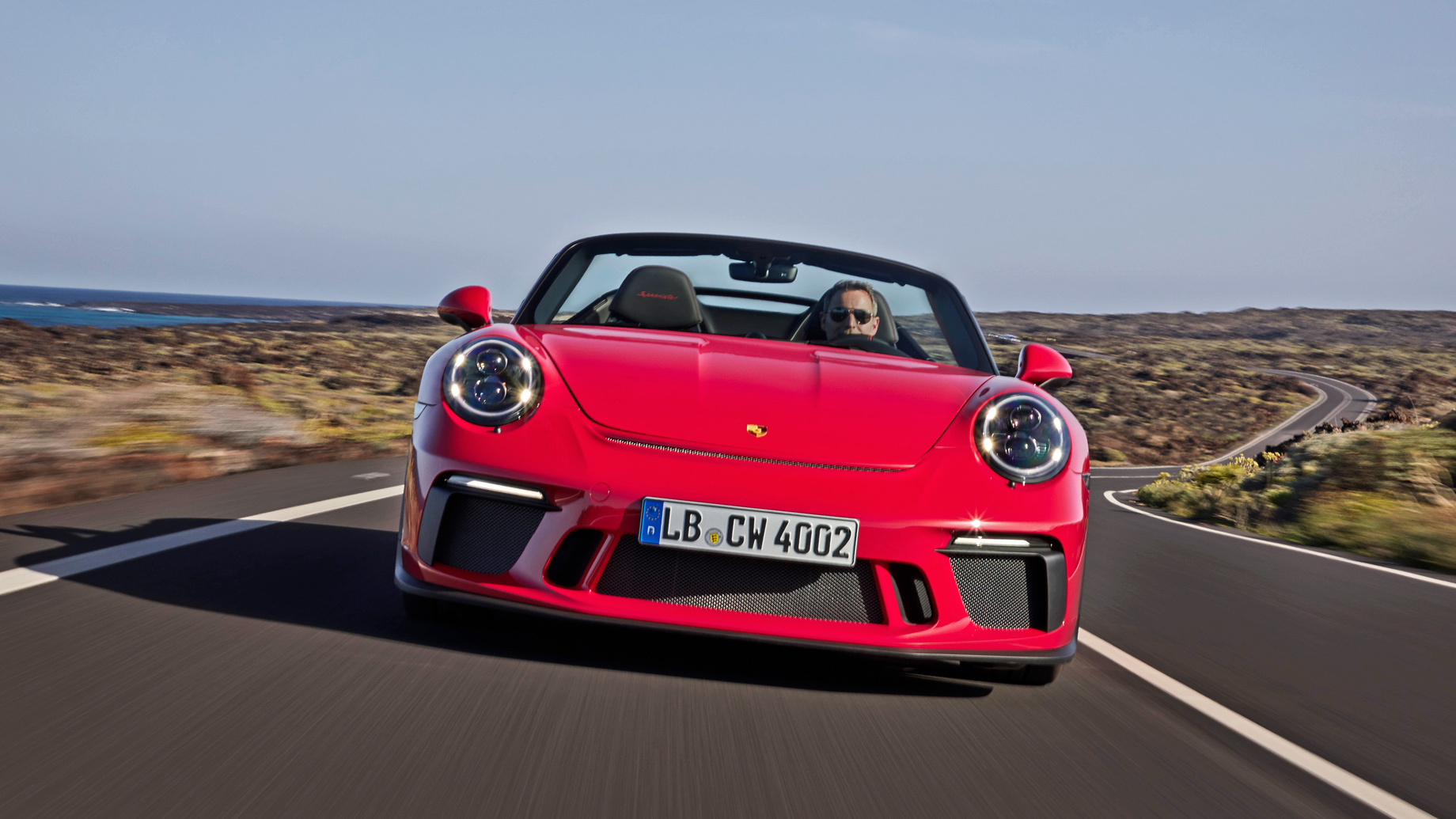
The entire front end of the Speedster is shared with the GT3, and that rigidity carries through clearly in the car’s behaviour. Responses to steering inputs are accurate and precise — the car communicates exactly as a Flacht GT product should. Camera footage confirms what the seat of the pants suggests: there is no meaningful structural flex, even without a hardtop.
For reference, the Ferrari 458 Aperta — arguably the Speedster’s closest spiritual competitor — uses an aluminium structure without composite reinforcements. Without direct experience of the Aperta, comparison with different 430 body styles suggests the Ferrari responds predictably to removing a fixed roof. The Speedster simply does not share that compromise.
How the Speedster Compares to Its Competitors
The natural rivals here are not the V10 roadsters from Audi and Lamborghini, but the last naturally aspirated open-top cars from Ferrari:
- Ferrari 458 Speciale Aperta — 605 hp, 499 units built between 2015 and 2016, now commanding over €500,000 on the secondary market
- Porsche 911 Speedster (991) — 510 hp, 1,948 units, originally priced at around €280,000, now trading at €370,000–€380,000 with low mileage
- Porsche 911 R — only 991 units built, yet the Speedster has proven more investment-attractive on the used market; the R’s exclusivity was diluted by the GT3 Touring
- Porsche 911 Speedster (997) — 356 units, 3.8-litre engine, 408 hp; started at around €200,000 and has now reached comparable values to the 991 Speedster
What Comes Next: The Future of the GT Roadster from Flacht
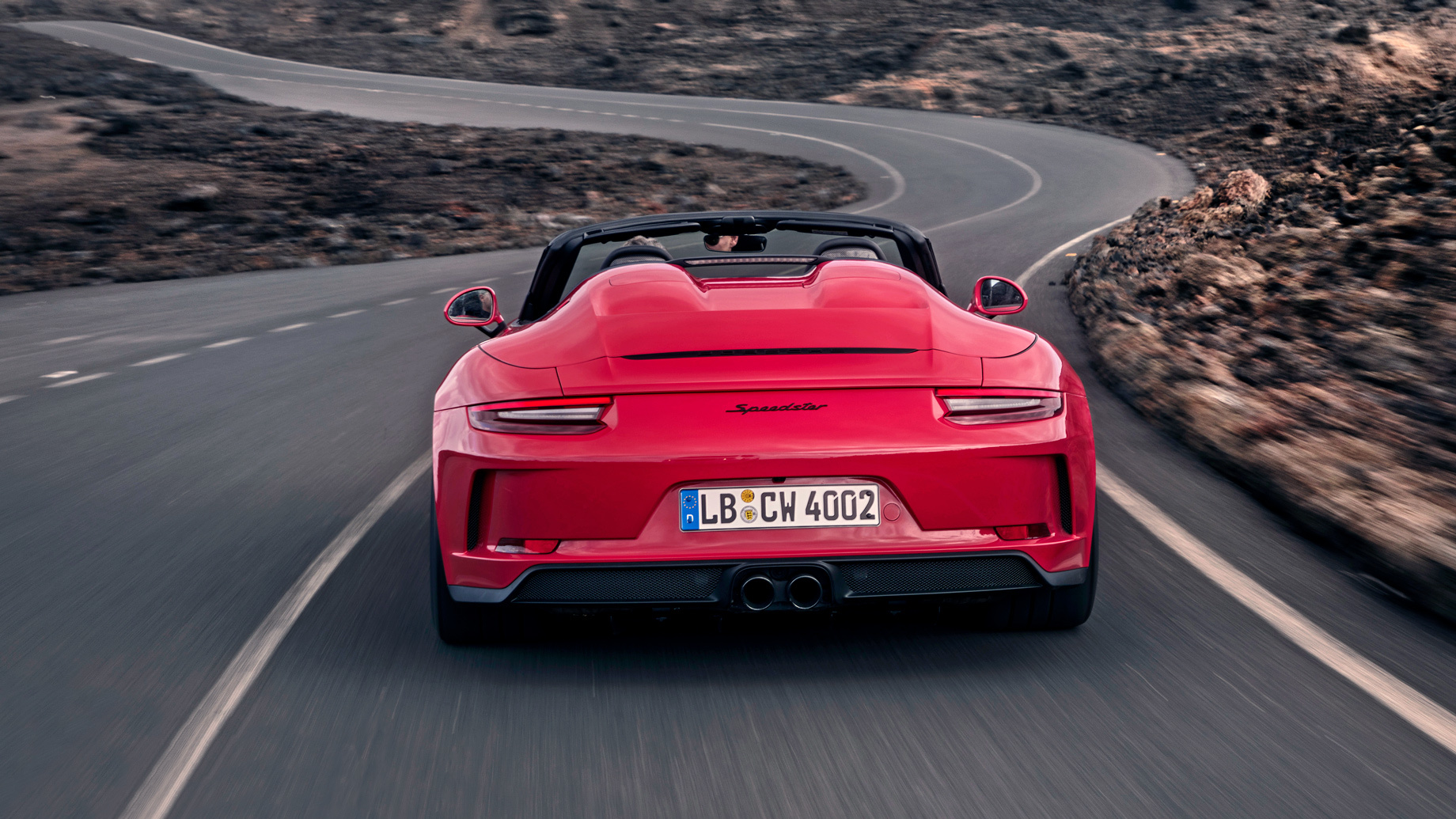
The Speedster was an initiative from Porsche Motorsport — not a natural fit for a brand that had long associated roadsters with fashion rather than performance. But the secondary market has vindicated the GT department’s gamble, and the concept of a rear-engined GT roadster has proven surprisingly compelling.
What a future open-top GT model might look like:
- A different name — with both a 718 Spyder and a GT3 Spyder now in the lineup, “Speedster” isn’t the only option
- PDK availability — making the car far more accessible to US and UK markets, which traditionally favour open-top bodies
- Manual roof operation retained as a deliberate trade-off for the move to touchscreen-heavy interiors
- The same four-litre naturally aspirated engine — which simply has to be experienced in the open air
One final thought: if the particulate filter has bought the naturally aspirated engine more time, Porsche’s 50-year-old engineers are right to be cheerful about it. Ferrari felt forced to abandon the naturally aspirated theme with the switch to turbos. Porsche, it seems, has found a way to keep it alive — and the Speedster is proof of just how much life remains in it.
This is a translation. You can read the original here: https://www.drive.ru/test-drive/porsche/5ddabc8bec05c4ac43000000.html

Published December 15, 2022 • 8m to read