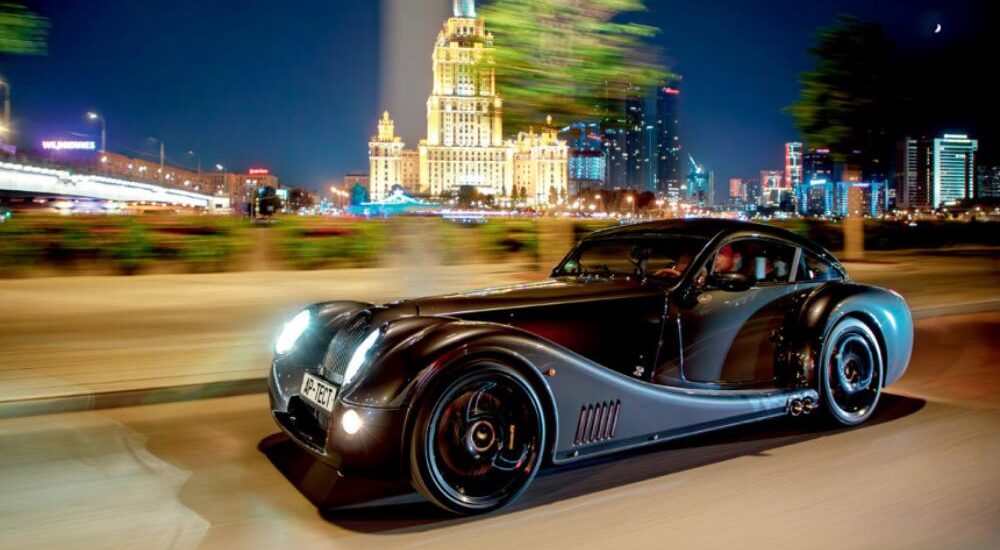

The evening had turned to night, and the heat finally retreated. The aluminum floor panels cooled, and a fresh breeze slipped through the cracked windows alongside the thunderous roar of a V8. Xenon headlights — fused deep into the wide front wings — carved out the familiar road ahead. A long nose eased right to dodge a pothole; a quick left waited just over the crest. At last, the Morgan AeroMax could relax and be exactly what it is: a proper sports car built for B-roads.
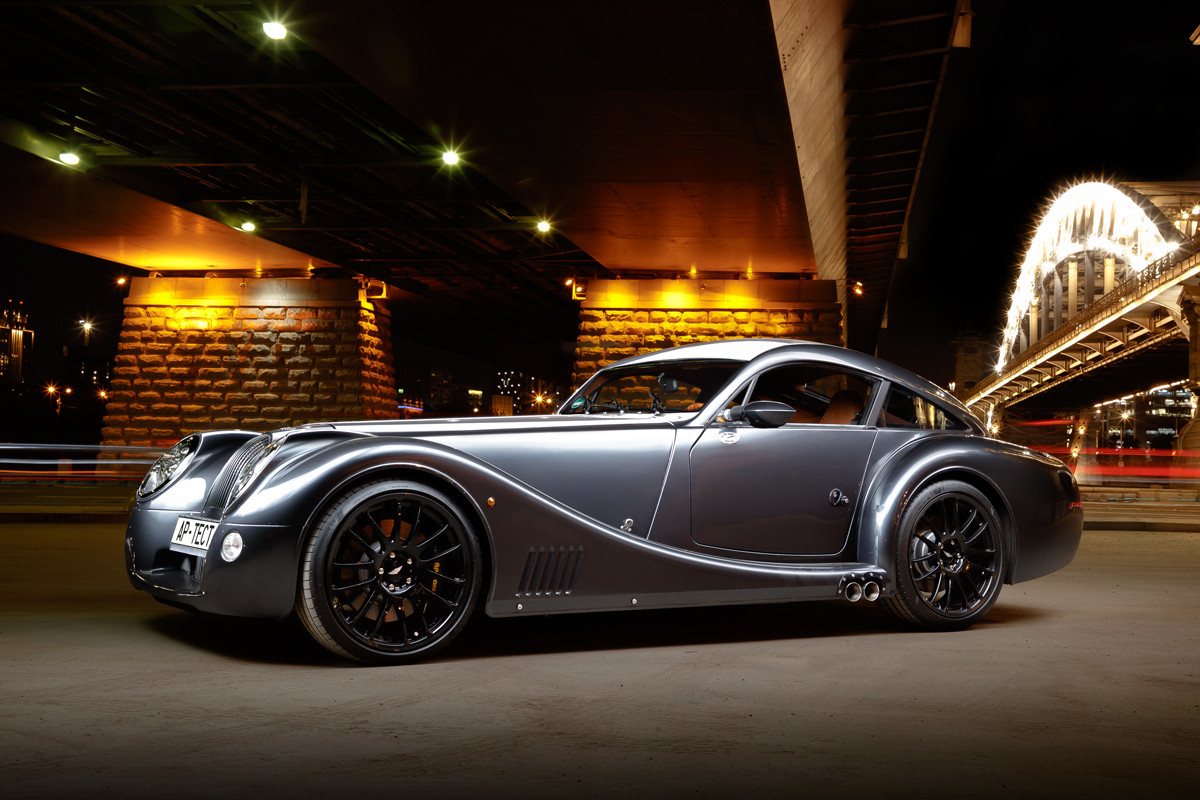
What Is the Morgan AeroMax?
The AeroMax began as a commission. In 2004, Swiss banker Eric Sturdza approached Charles Morgan — grandson of company founder H.F.S. Morgan — with a simple request: build a coupé version of the Aero 8 roadster. Just one, for his personal collection.
The design brief landed on the desk of 21-year-old Matthew Humphries, who had recently sent his CV to Morgan on a whim. There happened to be nobody else at the Malvern Link factory at that moment who could take on a coupé design project. Humphries had drawn his lucky card.
The AeroMax debuted at the Geneva Motor Show — and the reception immediately became an order book. Within days, Morgan announced a limited production run of exactly 100 cars. The car reviewed here carries serial number 91.
Key fast facts:
- Production run: 100 cars only
- Body style: 2-seat grand touring coupé
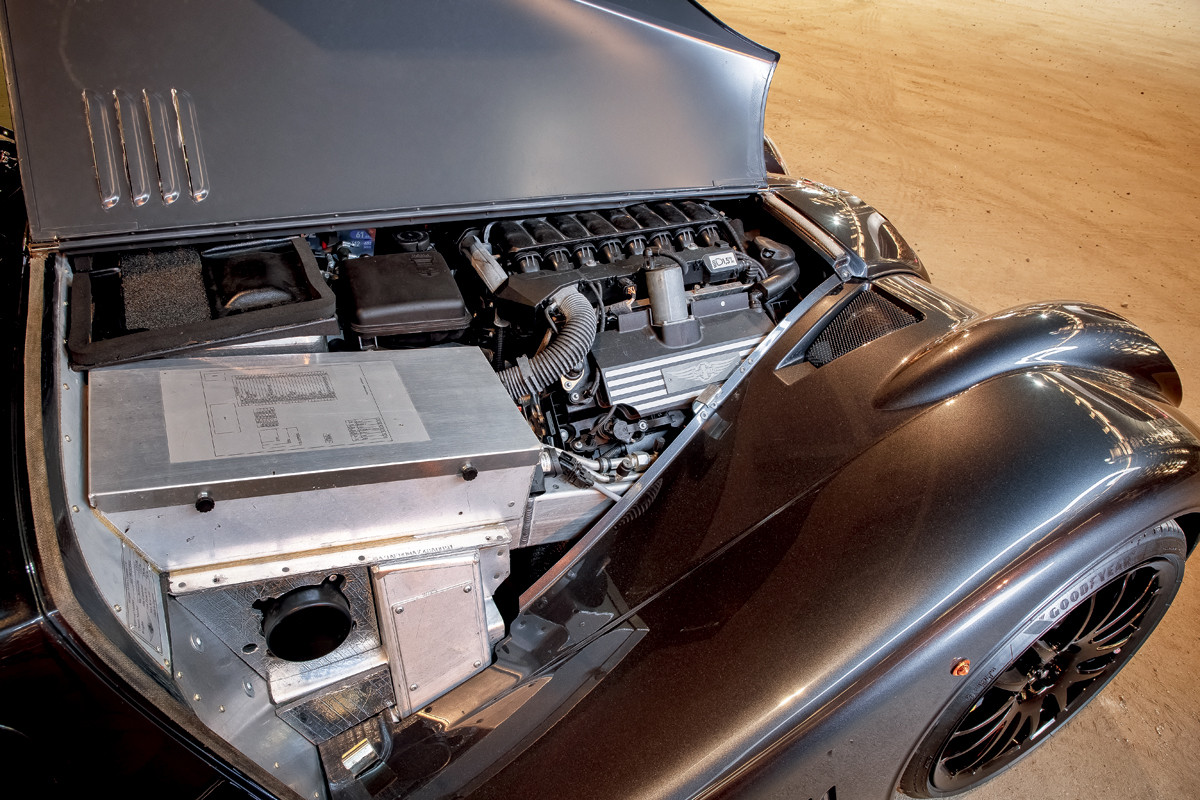
- Engine: BMW N62B48 V8, 4.8 litres, naturally aspirated
- Power: 368 hp / 490 Nm of torque
- Gearbox: 6-speed ZF automatic (manual also available)
- Kerb weight: 1,180 kg
- Top speed: 270 km/h
- Fuel tank: 55 litres (~300 km range)
- Price (Europe): approx. €200,000
Design and Bodywork: Built by Hand, Shaped by Heritage
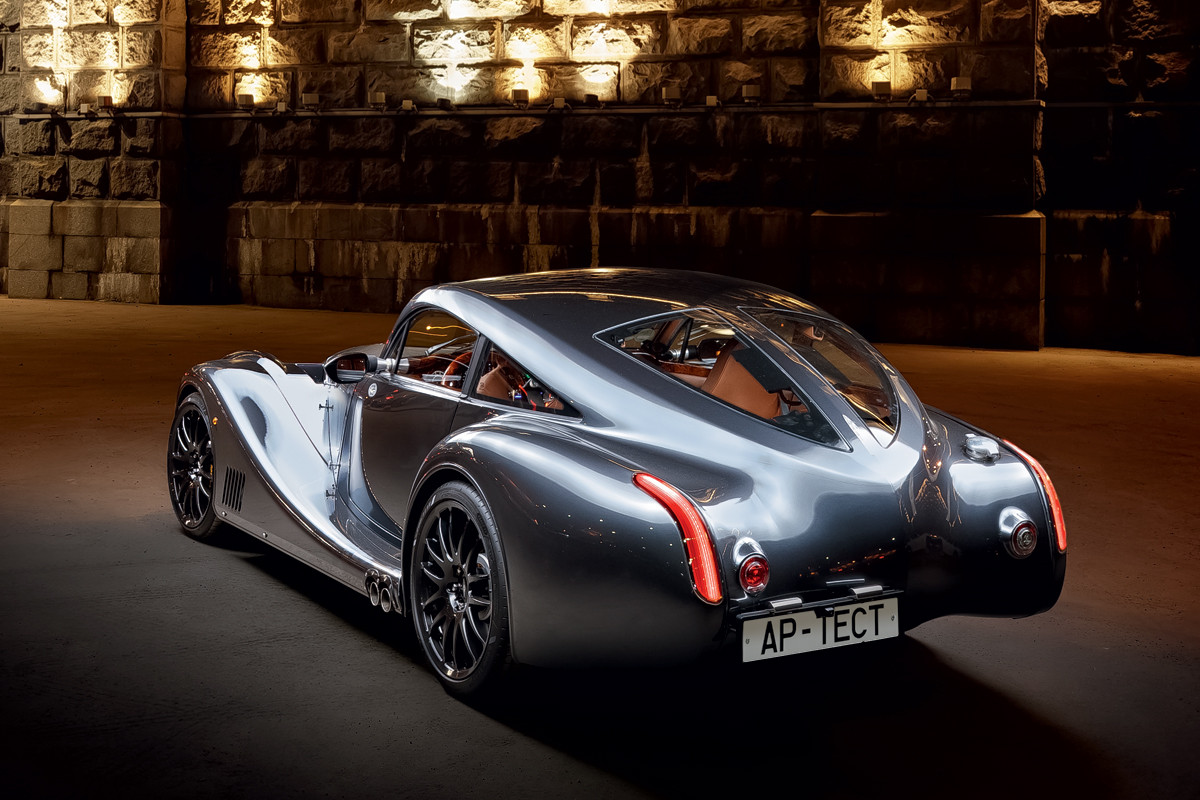
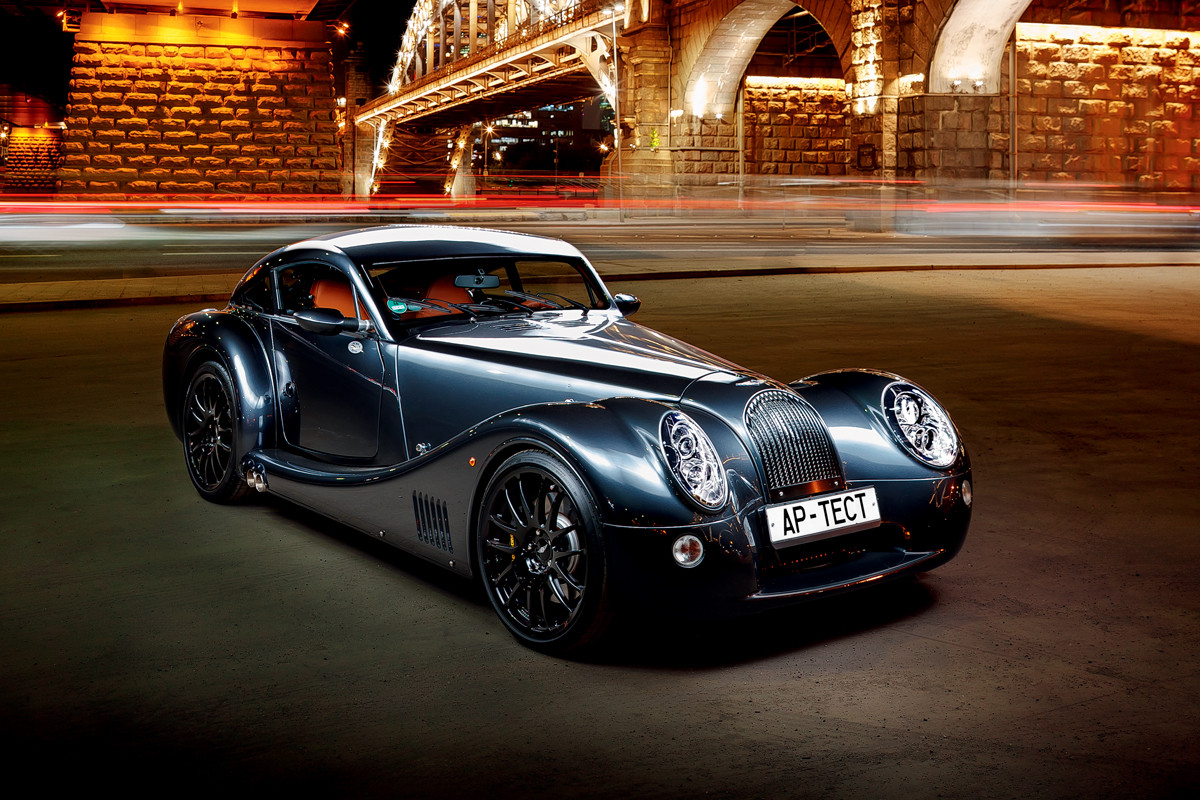
The AeroMax is visually arresting in a way that no amount of money spent on a modern supercar quite matches. Its long nose, sweeping roofline, and a stern that evokes the lines of a fast motorboat set it apart from anything on the road.
The rear is one of the most distinctive details: it uses tail lights borrowed from the Lancia Thesis saloon — and somehow they look more at home here than they ever did on the original car. The low windscreen was so flat it required three small wiper blades rather than the usual two.
Standout design details include:
- Xenon headlamps integrated flush into the front wings
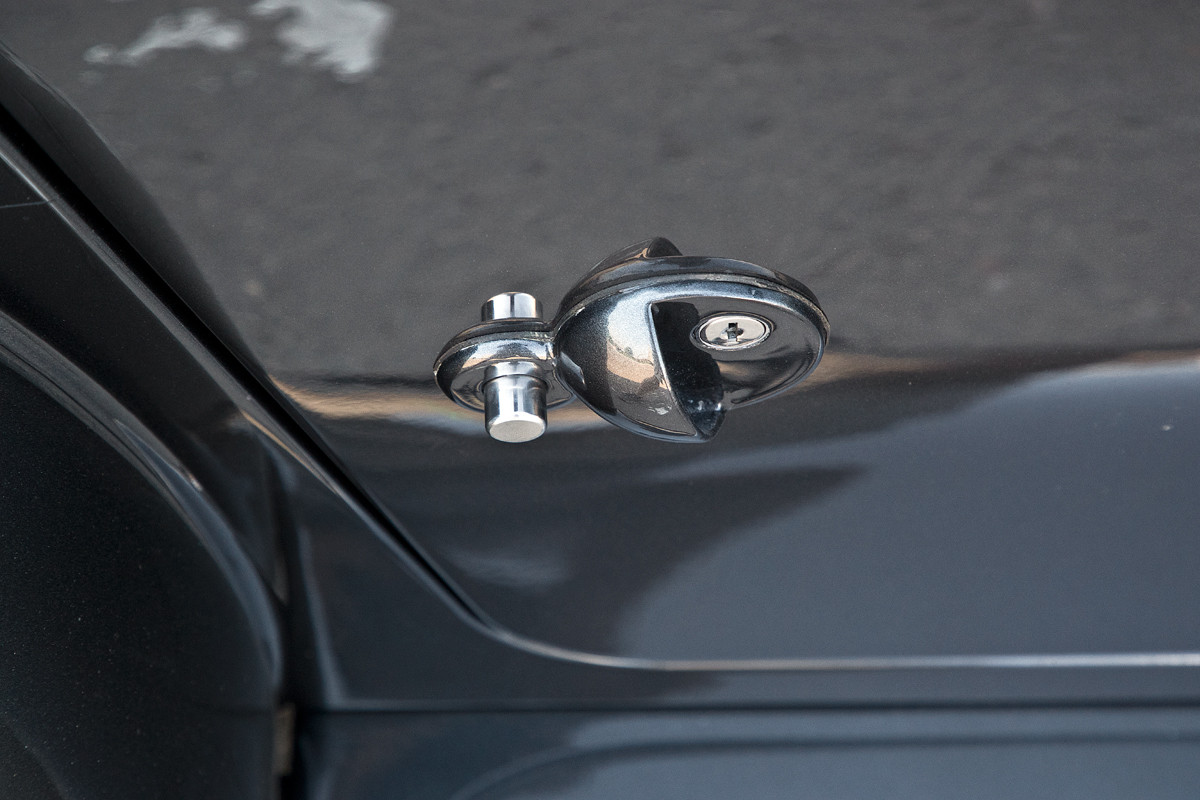
- A clamshell bonnet with twin pin-release catches, reminiscent of wartime British vehicles like the GAZ-67
- Rear “wing-glass” panels that open electrically — an elegant, unusual way to access the luggage area
- Hand-fitted aluminium exterior panels over an ash wood frame
The build quality deserves special mention. Panel gaps are even, parts fit flush, and weld seams are immaculate. The craftspeople in Malvern Link comfortably exceed the finish standards you’d encounter at far more expensive Italian coachbuilders.
The Cabin: Wood, Leather, and Absolutely No Plastic
Getting into the AeroMax requires a measure of ceremony. The roofline sits roughly at waist height; the door handle is positioned near the bottom of the door. A firm, mechanical button — somewhere between a Citroën and a vintage British saloon in feel — releases a heavy aluminium-hinged door over a wide sill that conceals the main structural sill beam beneath.
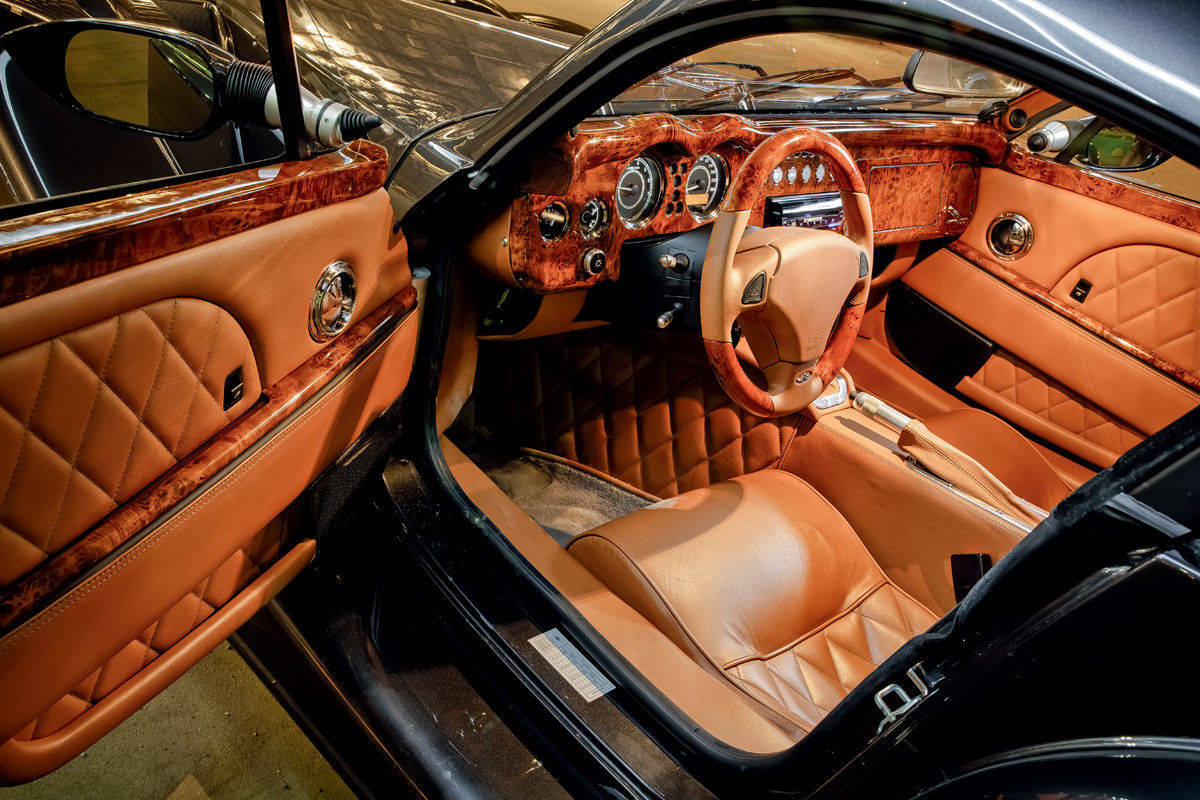
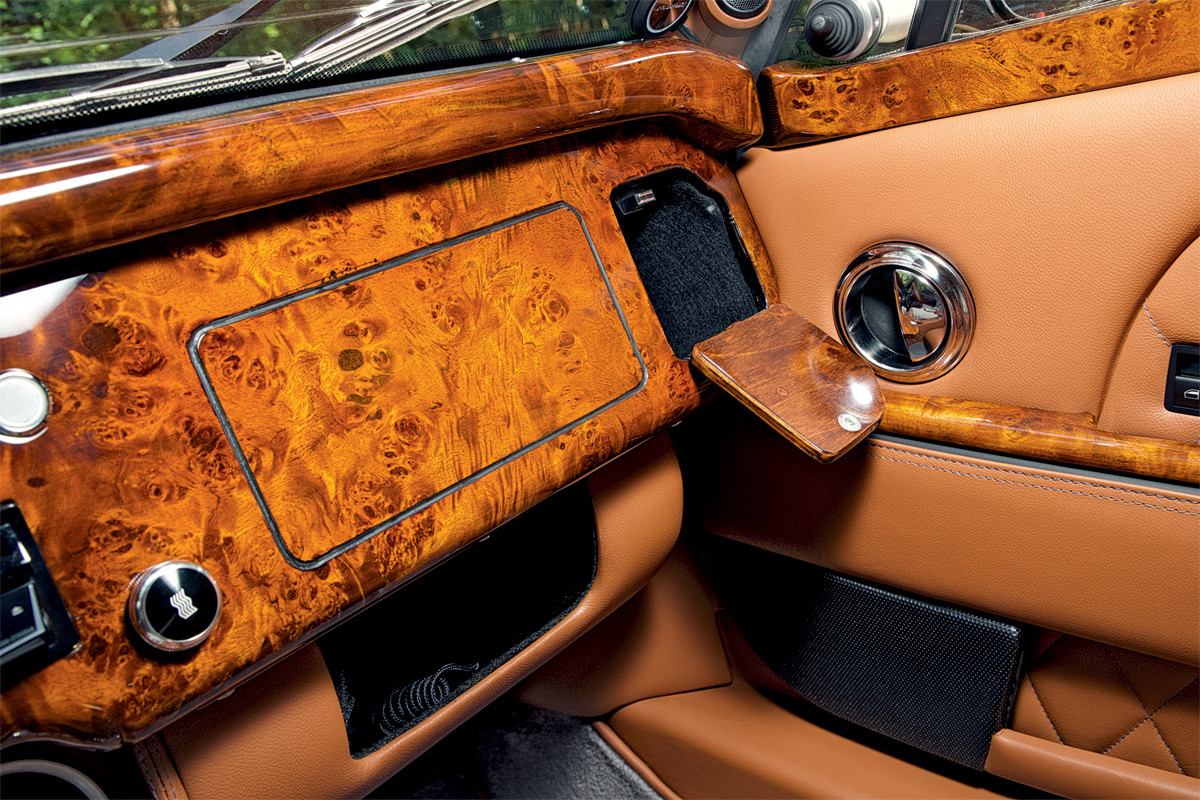
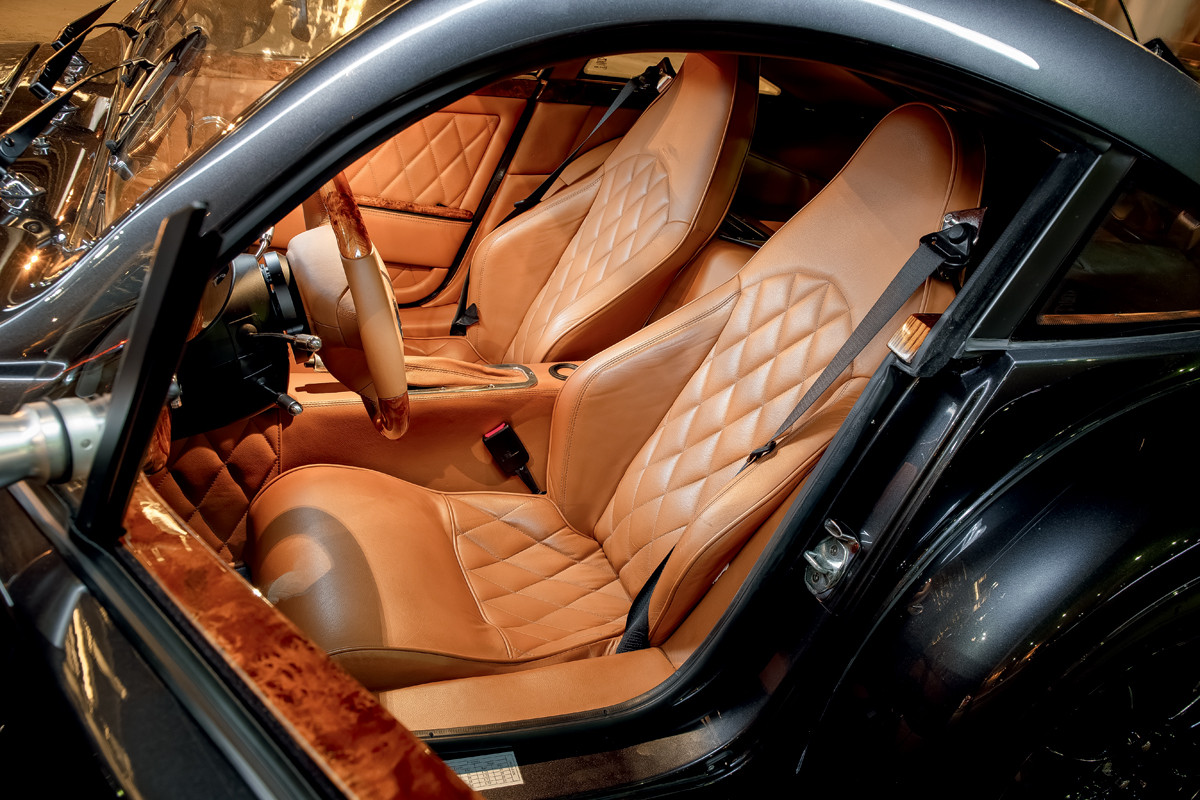
Once inside, there is no plastic trim anywhere. None. The cabin wraps you in:
- Ash wood structural framing
- Hand-stitched leather throughout
- Brushed aluminium switchgear and controls
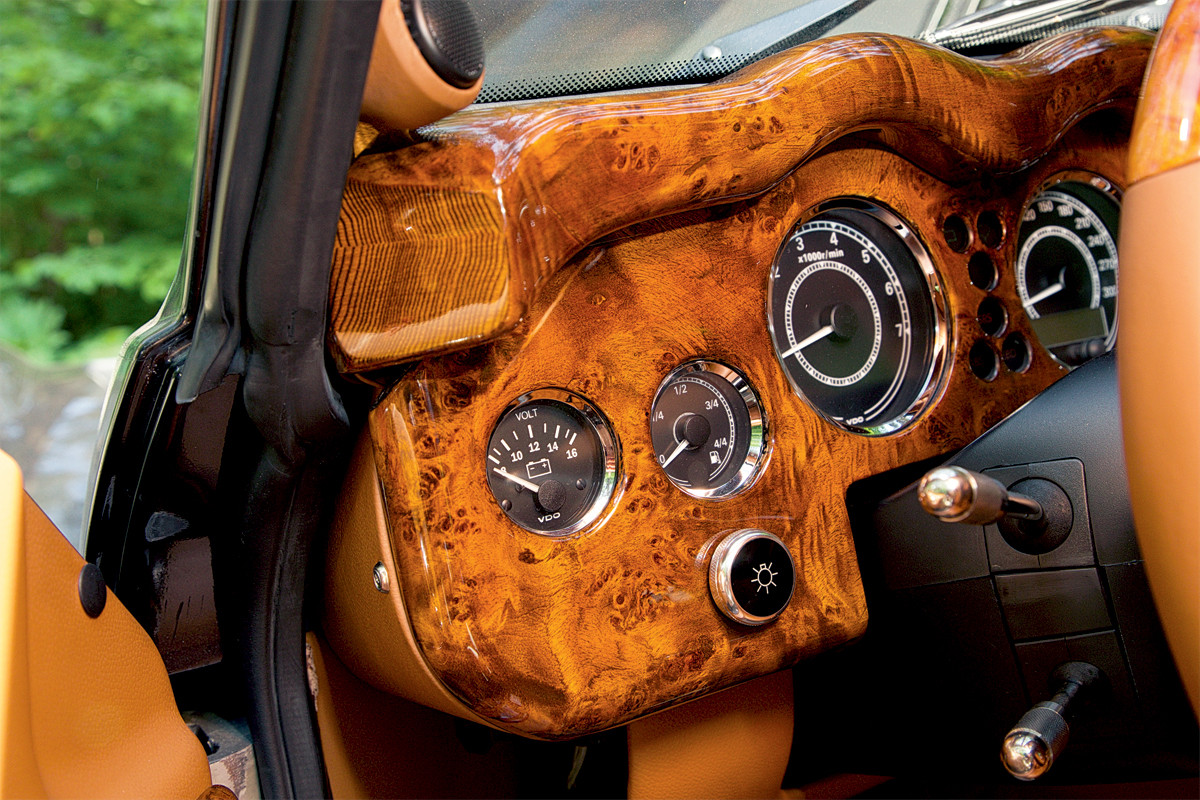
- VDO instruments spread across a near-vertical dashboard
- A single small digital display showing the odometer
The seating position is low and long — legs stretching forward into a narrow cockpit that somehow accommodates two pedals (three on manual-gearbox cars). The rearview mirror is of limited use, showing mostly the rear window struts and the wing-glass framework.
This is, without question, how a driver-focused interior should feel. Before looking at it, you might picture something rustic. After sitting in it, you stop caring about touchscreens.
Engine and Performance: An American Heart in a British Body
Morgan has fitted V8 engines before — the Plus 8 roadster of 1968 ran a 3.5-litre Rover unit producing 161 hp, enough to make the 900 kg car the fastest production vehicle in Britain at the time (0–100 km/h in 6.7 seconds). The AeroMax goes considerably further.
The BMW N62B48 is a sophisticated naturally aspirated 4.8-litre V8 featuring, among other things, the world’s first continuously variable intake manifold — allowing it to pull cleanly across the entire rev range. In a 1,180 kg car, however, the engine’s refinement is almost academic. Even a modestly tuned four-cylinder might do the job.
What the N62 actually sounds like in this car is the surprise. Morgan’s custom exhaust system transforms the smooth, high-revving BMW unit into something with a deep, burbling character more at home in an American muscle car than a Bavarian saloon. It doesn’t rev to the limiter for fun; it hauls from 3,000 rpm and simply doesn’t stop until the speed limiter becomes a concern. On an unrestricted road, range becomes the only governor — and at 55 litres for roughly 300 km, you’ll be stopping for fuel before you’re done smiling.
Performance highlights:
- 0–100 km/h: comparable to BMW M5 (F10 generation) from standstill
- Pull from 3,000 rpm through to 270 km/h
- Drag coefficient: Cd 0.39 (modest, but the engine doesn’t notice)
- Exhaust roar audible from idle; prominent at 2,000 rpm and above
Handling and Chassis: Old School, Done Right
The AeroMax platform traces its lineage to Morgan’s GT2 racing programme — the same aluminium space-frame was used in competition some 30 years before this road car arrived. Chassis engineer Chris Lawrence, a racing driver from the 1960s, apparently had no interest in stability compromises, and the AeroMax wears his philosophy openly.
What you won’t find on this car:
- Electronic stability programme (ESP)
- Anti-roll bars (front or rear)
- Rubber bushed suspension joints (spherical joints are used instead, as on racing cars)
The absence of anti-roll bars is a Morgan tradition, and it works here. With correctly tuned spring rates, a light car simply doesn’t need them — and removing them often improves mechanical grip through corners by allowing weight transfer to happen more progressively. Suspension is by Koni dampers and Eibach springs; the setup feels firm at slow speeds but reveals real compliance and energy absorption on faster roads.
Steering is quick at 2.4 turns lock-to-lock, but calm in the straight-ahead position — there’s no nervous darting, even above 200 km/h. The wheelbase is shorter than a two-door Mercedes-AMG GT by nearly 20 cm, which eliminates the yaw delay you often feel in rear-engined or rear-biased GT cars. Turn the wheel, and the AeroMax pivots. Rear loading is felt clearly; in fast sequences of corners, the body leans onto the outside wheel, then the tail moves briefly on the power, and then the car is already pointing at the next apex.
AP Racing fixed-caliper brakes are unfazed by repeated hard use. The one weak link is the automatic gearbox: switch immediately to manual mode, or the relaxed torque converter will blunt your throttle responses. Work the tall gear lever yourself and the whole experience sharpens into something that feels genuinely, unexpectedly vintage-racing in character.
Living With the AeroMax: City vs. Open Road
The AeroMax is not designed for urban use — and it makes no pretence of being so. In town:
- Visibility is extremely limited (low screen, long bonnet, rear-quarter blindspots)
- The seating position near the rear axle makes junction observation difficult
- At low speeds, the suspension feels firm, though not harsh
- The BMW V8 growls at every set of traffic lights
None of this is a problem, because the AeroMax draws a crowd wherever it appears — and the attention it attracts is invariably warm and curious rather than aggressive. At €200,000 in Europe, it generates more fascination than hypercars costing significantly more.
Open roads, however, are where the AeroMax is entirely at home. Dual carriageways reveal its high-speed stability and genuine GT credentials; twisting secondary roads reveal everything else. This is a car designed for the kind of driving that made British sports cars worth driving in the first place — following an MGB or Morgan Plus 4 along a winding moorland road in the 1960s. The AeroMax carries that spirit forward without nostalgia becoming sentimentality.
Morgan’s Story: Family, Wood, and a Change of Ownership
The Morgan Motor Company was founded in 1909 with three-wheeled cyclecar-style vehicles. Until 2001, all Morgans used wood as a primary structural material — load-bearing ash frames that gave the cars their distinctive character and construction. Today the wood remains in the body framing, but the structural role has passed to an aluminium spaceframe.
Charles Morgan, who drove much of the company’s modern development — including the aluminium platform cars and the revival of three-wheelers — was eventually removed from the board by directors who considered his development philosophy unsuitable for the business.
In 2019, Investindustrial, an investment fund whose portfolio includes Italian confectionery businesses, chemical industry assets, and electric hypercar manufacturer Rimac, acquired a controlling stake in Morgan Motor Company. It is difficult to imagine two car manufacturers further apart in philosophy than Morgan and Rimac.
Whether Morgans built without a Morgan at the helm feel any different is a matter for another road test. One observable difference: the current Supersport roadster features a large digital display in the dashboard that, in this reviewer’s view, breaks the interior entirely.
Verdict: The Most Impressive British Sports Car on B-Roads
The Morgan AeroMax is not a car you compare with a Porsche. Not because the Porsche is better or worse, but because the comparison is simply irrelevant — like debating whether a timber-framed house is inferior to a concrete one. Different materials, different character, different relationship between driver and machine.
What the AeroMax does better than an Aston Martin or Jaguar of equivalent ambition is refuse to hide behind power. Those cars compensate for weight with horsepower. Morgan compensates for nothing, because there is nothing to compensate for. The result is a lightweight, naturally balanced sports car that rewards the driver with feedback and involvement rather than managed, isolated performance.
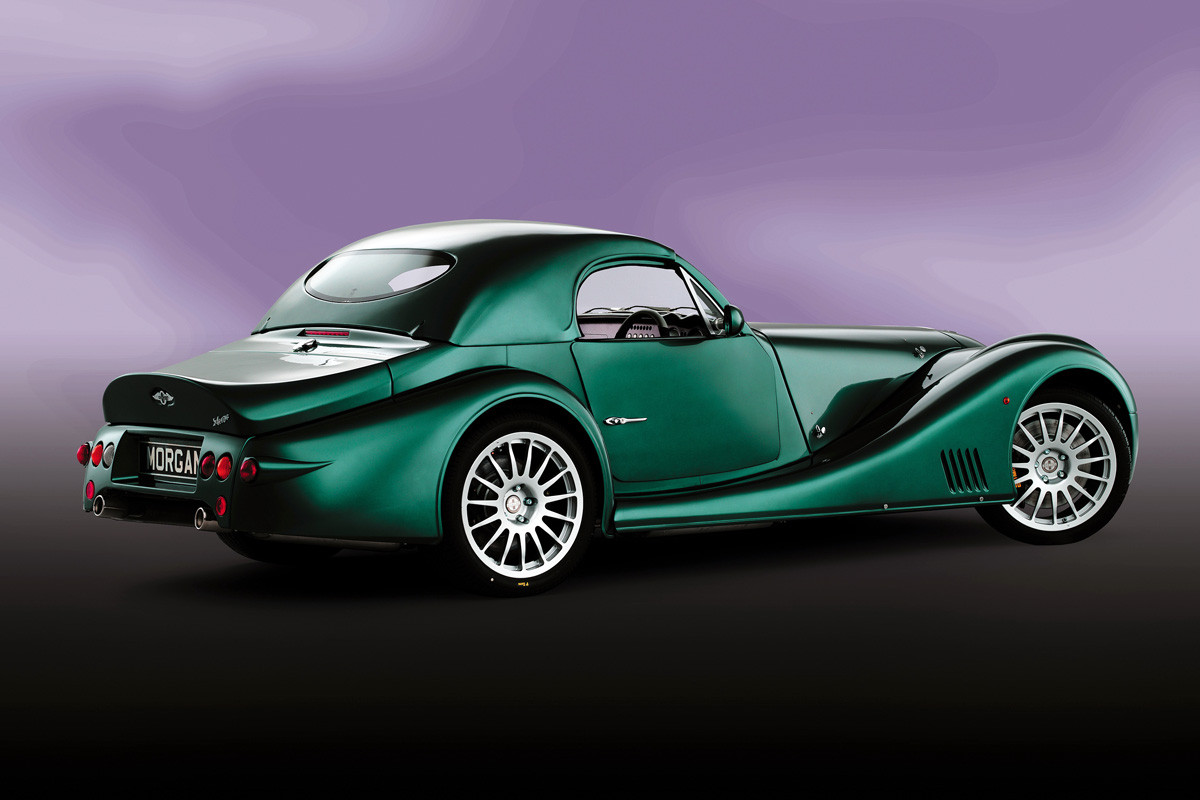
Photo: Vladimir Melnikov
This is a translation. You can read the original article here: Morgan AeroMax: когда время остановилось

Published August 28, 2026 • 9m to read