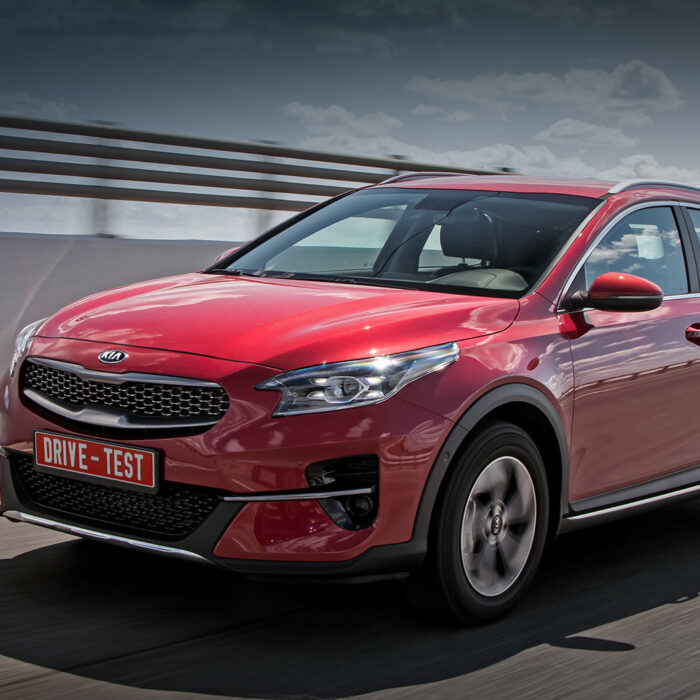
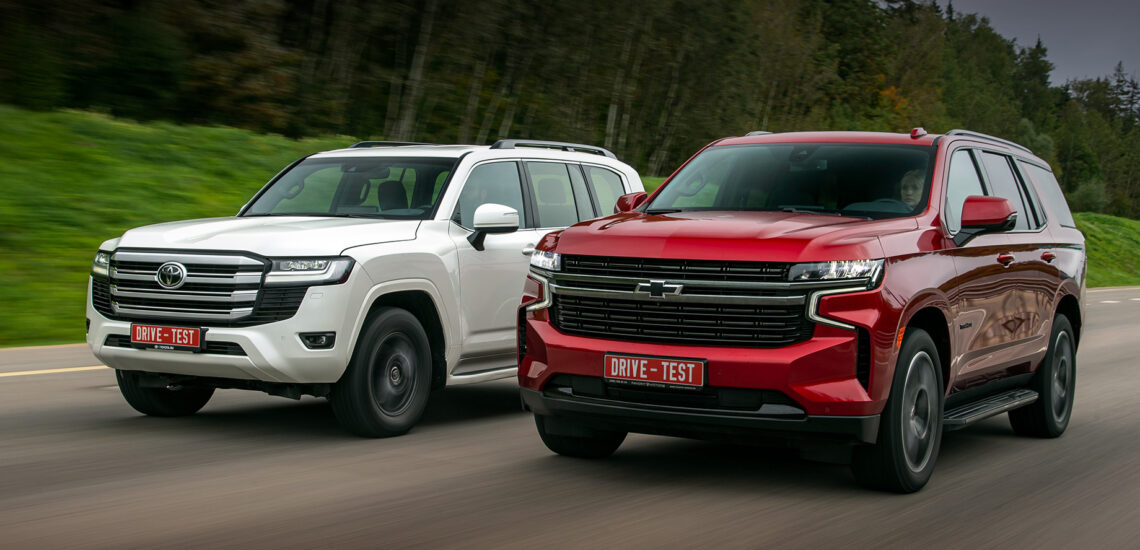

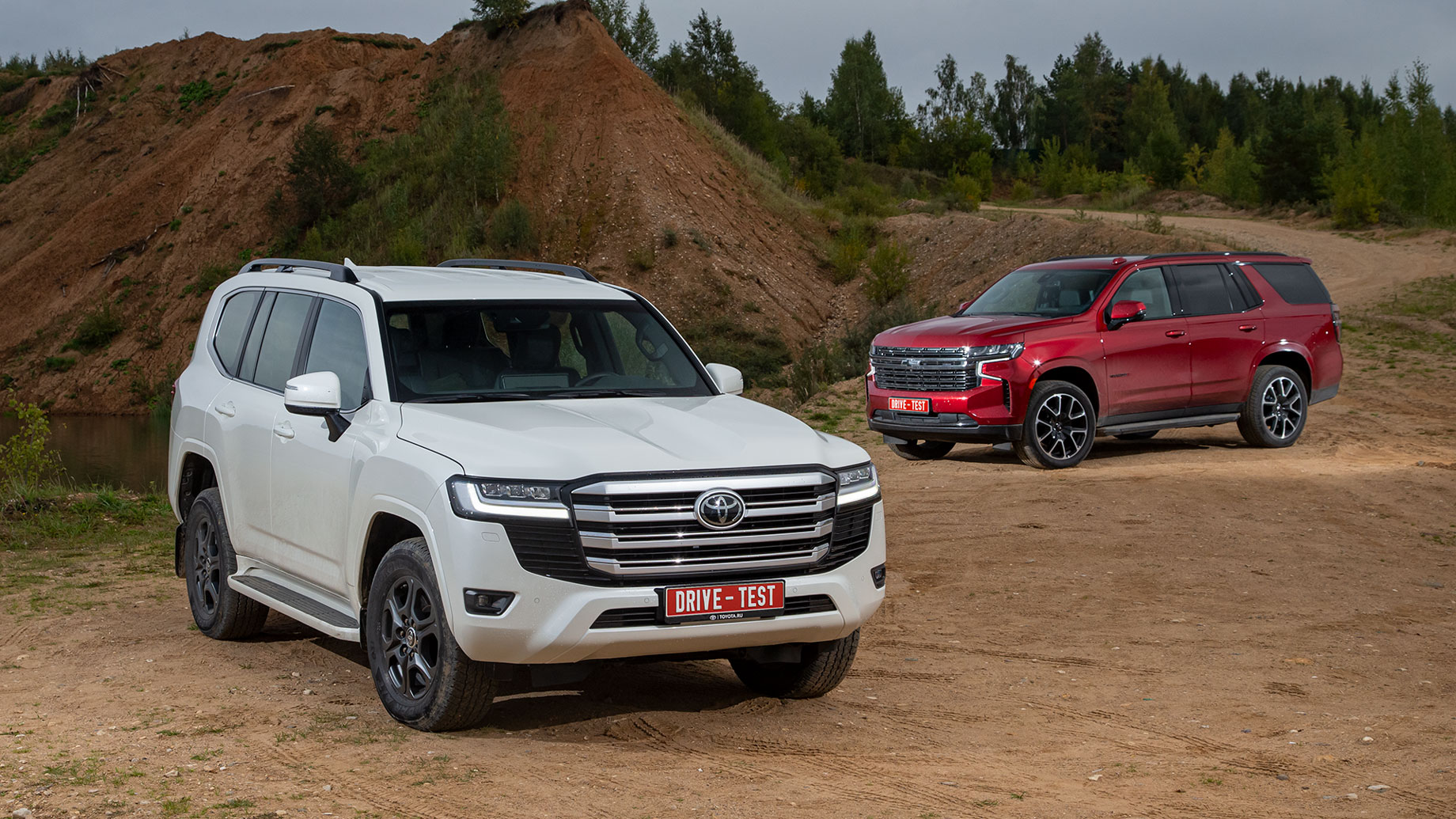
The Toyota Land Cruiser 300 and the Chevrolet Tahoe are two of the most iconic full-size framed SUVs on the market — and for good reason. Both offer serious off-road capability, spacious interiors, and powerful engines wrapped in premium packages. But which one is truly better? We put them side by side to find out.
Exterior Design and First Impressions
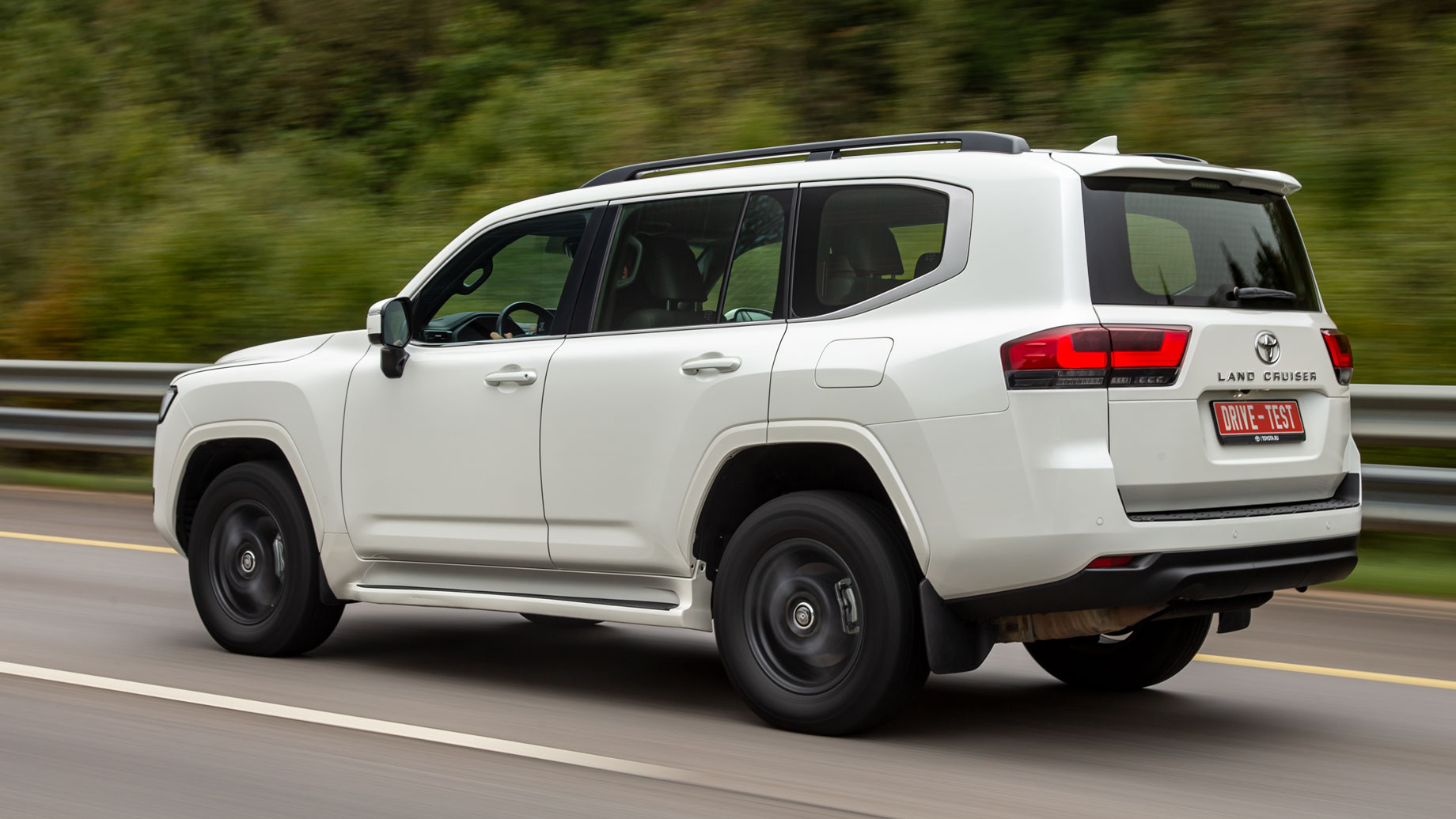
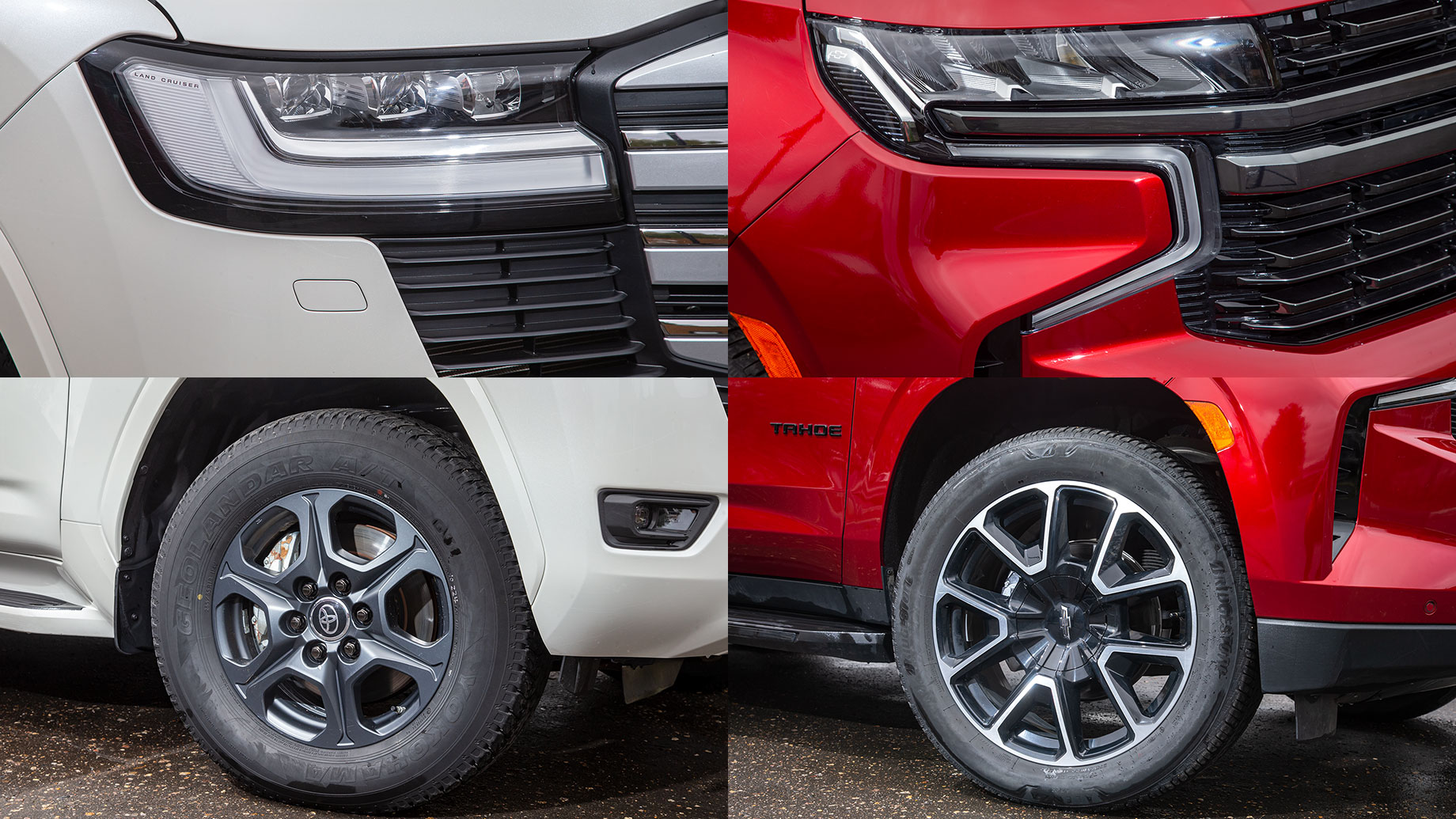
Loyal Land Cruiser fans were not disappointed when the 300 Series arrived — even without the beloved V8 and with a somewhat softer, more refined look compared to its predecessor. The new model smiled at the world through its wide air intake wrapping around the bottom of a distinctive radiator grille. Most external body panels are made of aluminum, sitting on a reinforced GA-F frame and chassis with a lowered center of gravity.
The Land Cruiser 300 shed 200 kg (440 lbs) while keeping nearly the same footprint. Here’s what changed dimensionally:
- Length increased by 15 mm
- Height reduced by 30 mm
- Width and wheelbase remain unchanged
Despite the lower roofline, boarding remains easy — a grab rail on the front pillar and a wide footboard make entry comfortable, arguably more so than in the outgoing 200 Series.
The Chevrolet Tahoe counters with bold American styling and a wider range of trims. The RST Sport Edition rolls on massive 22-inch wheels, while the off-road-focused Z71 trim brings:
- All-Terrain tires
- Underbody protection
- Improved geometric ground clearance
- An exposed front tow point
Suspension and Platform Differences
Both the Tahoe and the Land Cruiser 300 ride on body-on-frame platforms, but their suspension setups differ significantly:
- Chevrolet Tahoe — MacPherson strut independent front suspension
- Toyota Land Cruiser 300 — Independent double-wishbone front suspension
This difference has real-world implications for both on-road handling and off-road performance, as we’ll explore below.
Interior Comfort and Driver Ergonomics
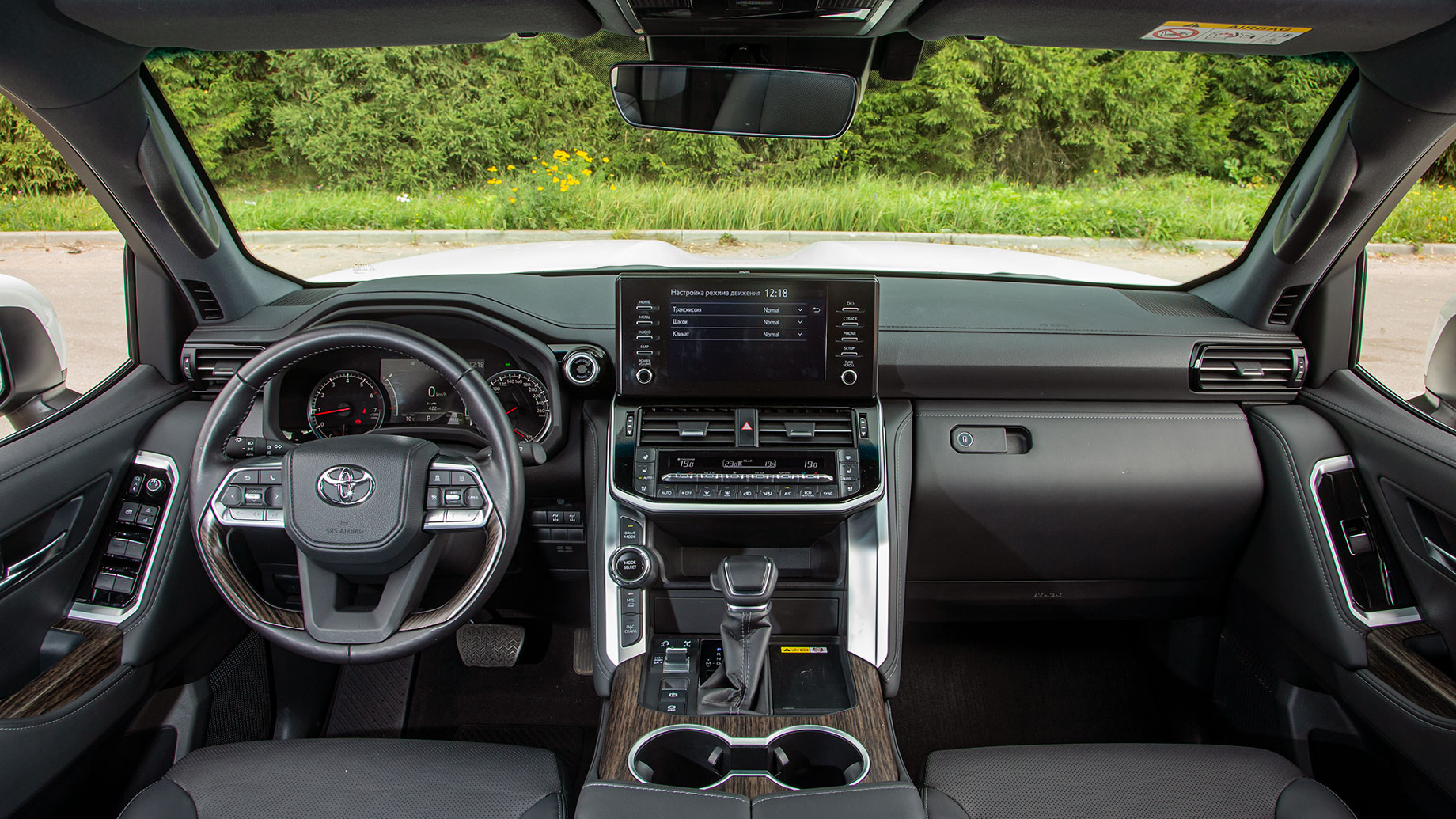
Climb into the Land Cruiser 300 and you’ll notice a more upright, commanding seating position. The steering wheel is less raked than before and adjusts over a longer range. The driving position has improved versus the 200 Series — the seat sits lower, the legs are less bent, and you depress the pedals rather than stomp on them. That said, there’s still room for improvement:
- Lateral seat bolstering could be firmer
- A seat cushion extender is missing
- Vertical lumbar adjustment would be a welcome addition
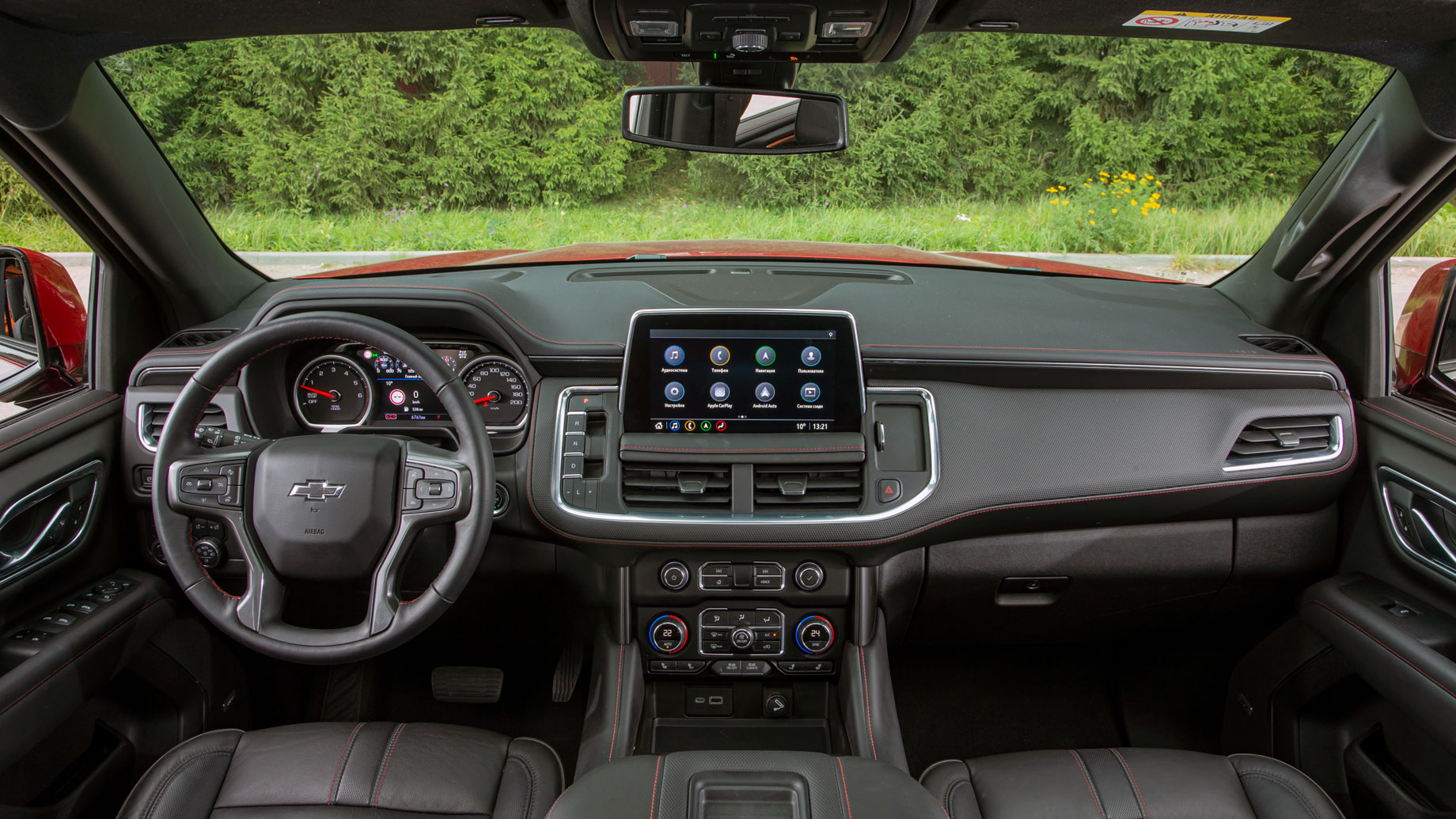
The Tahoe’s driver seat is a step ahead in several areas. It sits lower, wraps the body better, and offers more adjustment range. The steering wheel is more upright and free of faux-wood trim, making it far more pleasant to hold. The wide center armrest is also better positioned. The one ergonomic complaint? The feet sit more bent relative to the lower leg — adjustable pedals would fix this, but they’re not available here.
Infotainment and Technology
This is where the gap between the two SUVs becomes most apparent. The Land Cruiser 300’s multimedia experience is uneven across trim levels:
- The 70th Anniversary and GR Sport trims get a modern widescreen display
- The Comfort+ trim is stuck with an older, sluggish system with low screen resolution and dated graphics
- Positives include a well-placed touchscreen, large readable fonts, and fast Bluetooth pairing
- The steering wheel heating doesn’t cover the entire rim
- Wood trim finish feels low-quality for the price point
The Tahoe’s infotainment system is clearly superior across the board:
- 10-inch touchscreen with higher resolution
- Faster touch response and smooth map navigation
- Wired Android Auto for stable smartphone connectivity
- Optional rear-seat entertainment system available as an add-on
- Bluetooth connection is slightly slower, but overall integration is more polished
Rear Passenger Space and Practicality
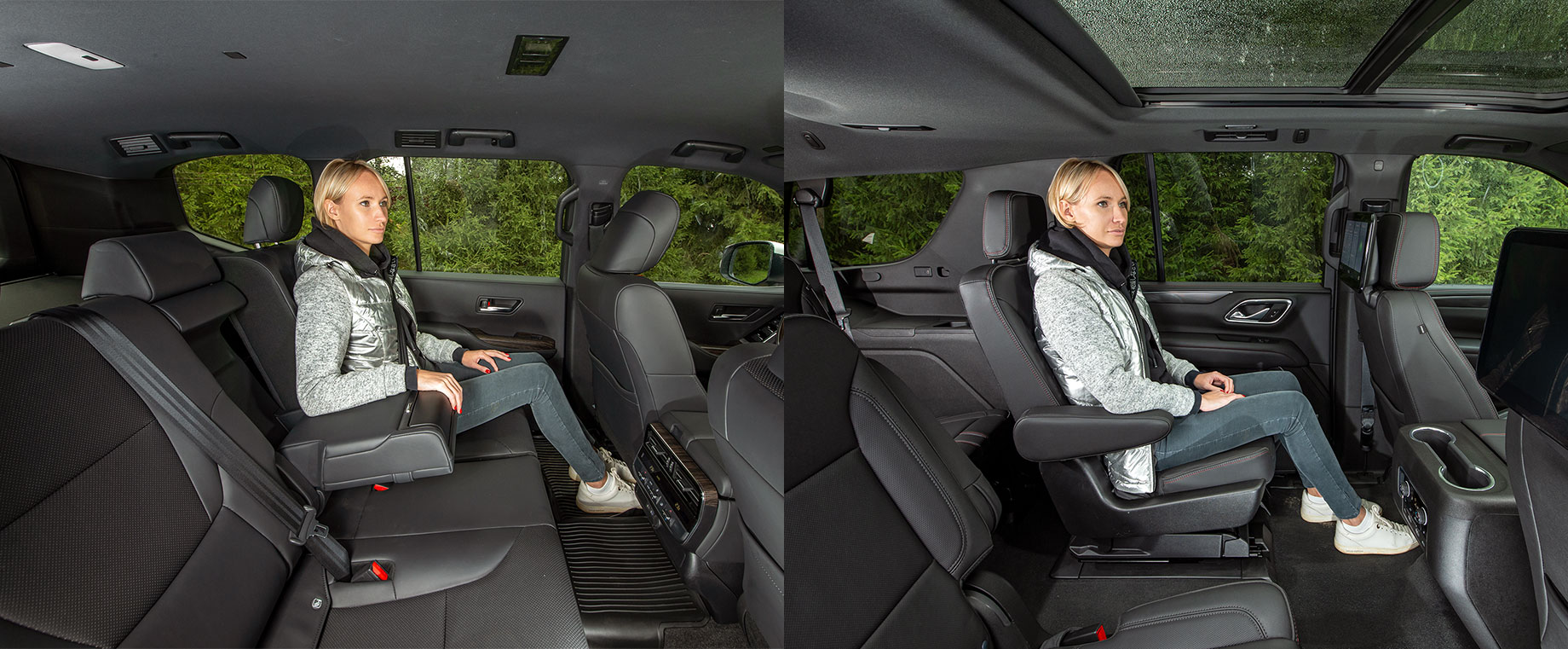
For rear passengers, the Tahoe has a clear edge in comfort and accessibility. Its advantages include:
- Wider rear door openings for easier entry
- A lower floor and available air suspension that lowers the body to the ground
- Individual seats that slide longitudinally and recline to a generous angle
- More knee room — up to 130 mm of legroom margin at 175 cm height
- USB-C connectors and cup holders within easy reach
The Land Cruiser 300 offers generous rear space as well, plus dual-zone climate control versus the Tahoe’s single-zone rear setup. However, its second row falls short in comfort for its price class:
- The bench cushion is too firm and sits closer to the floor than ideal
- The seatback is flat, though it does recline
- No heated rear seats on the $84,000 trim — or even the $72,000 base model
Engine Performance and Acceleration
The Land Cruiser 300 replaces its old naturally aspirated V8 with a twin-turbocharged V6 petrol engine, and the results speak for themselves:
- 415 hp and 650 Nm of torque
- 0–100 km/h in 6.9 seconds — a full 2 seconds quicker than the 200 Series
- Combined fuel consumption of 8.9 L/100 km
The driving modes shape the experience meaningfully. Comfort mode offers soft, predictable throttle and brake responses. Normal mode sharpens throttle reaction, while Sport S makes the SUV feel genuinely quick — almost like a taut clutch connection to the road. Sport S+ is there for the curious, but best kept for brief experiments.
The 10-speed automatic gearbox mostly stays out of the way, though it can get confused under alternating loads — gear hunting and noticeable downshift pauses are occasional complaints. A powerful engine, however, covers for most of its shortcomings.
The Tahoe’s 6.2-liter V8 sounds magnificent — deep and throaty at 2,000–3,000 rpm, building to a bassy roar near the redline. The power delivery, however, doesn’t quite match the drama:
- 0–100 km/h measured at 8.6 seconds — 0.6 seconds slower than the official figure
- The throttle feels damped and sluggish in the lower third of travel
- Sport mode and higher revs improve responsiveness, but never reach Land Cruiser levels
- The 10-speed gearbox shifts slowly and can be indecisive when dropping multiple gears
Above 5,000 rpm, the Tahoe finally comes alive and rewards assertive driving. At highway speeds above 120 km/h, though, it begins to feel strained — while the Land Cruiser remains composed and confident at 150 km/h and beyond.
On-Road Handling and Ride Quality
The Tahoe has made real strides in on-road dynamics — it no longer feels like a truck pretending to be a car. Key handling improvements include:
- Responsive steering on winding roads with confident high-speed cornering
- Sport mode tightens adaptive dampers and air springs, reducing body roll noticeably
- Fewer vibrations from unsprung masses compared to previous generations
- Better energy absorption on sharp-edged potholes
The main complaints are a steering wheel that feels unnecessarily heavy and provides little feedback in standard modes, and a tendency for the body to rock sideways on rough road sections.
The Land Cruiser 300 is more engaging for spirited driving — sharper steering response, higher cornering speeds, and a stability system that can be fully deactivated. However, it rolls more in corners and exhibits stronger longitudinal pitching. Its sport suspension mode sacrifices ride quality more than it improves handling composure.
On everyday paved roads, the Land Cruiser 300 is notably rougher than expected — particularly over medium and large potholes, where it constantly finds excuses to jolt. At speeds between 15–20 km/h over speed bumps, the rear suspension becomes especially disruptive for back-seat passengers. On the bright side, double-glazed side windows and well-insulated wheel arches keep the cabin noticeably quiet.
Off-Road Capability: Where They Truly Differ
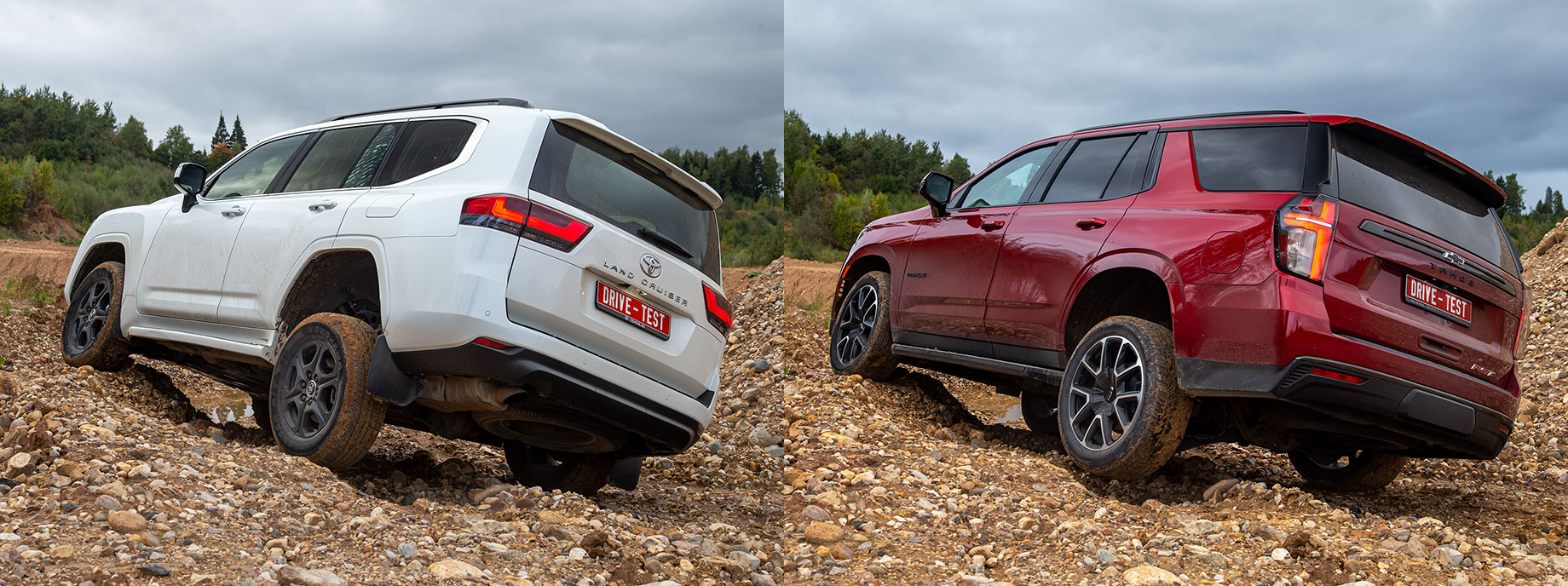
This is where the Land Cruiser 300 reminds everyone why it exists. On rough terrain, it left the Tahoe far behind. Its off-road advantages are substantial:
- Greater ground clearance and better geometric passability
- Permanent four-wheel drive (vs. Tahoe’s on-demand system)
- All three differentials can be manually locked
- Smarter off-road electronics with more liberal traction settings
- Maintained speeds of 60–70 km/h on rough terrain where the Tahoe struggled above 40 km/h
The Tahoe, to its credit, is no pushover off-road. Its air suspension raises the body by 50 mm when needed and can lower it to the ground for easier passenger loading. We drove it through sand, mud, and loose inclines without getting stuck — and its lowered suspension mode actually came in handy when helping pull the Land Cruiser out after it briefly bottomed out on a high, hard ridge under soft clay.
Still, the Tahoe’s front bumper lip and rear control arms are vulnerable on serious terrain, and suspension clashing during compression and rebound is a clear limitation above 40 km/h off-road.
Verdict: Which Full-Size SUV Should You Choose?
Both SUVs have a strong case for different buyers. Here’s the bottom line:
Choose the Toyota Land Cruiser 300 if you:
- Prioritize serious off-road performance and reliability
- Want permanent 4WD with full differential locking
- Value long-distance highway composure at speed
- Prefer a more engaging, driver-focused on-road character
Choose the Chevrolet Tahoe if you:
- Spend most of your time on paved roads and city driving
- Need a more comfortable, well-equipped interior for the family
- Want better infotainment, rear passenger space, and standard heated seats
- Prefer a more polished daily driver experience at a competitive price
The Land Cruiser 300 is the real deal when the pavement runs out — a genuine SUV in every sense. But for most families who’ll spend 90% of their time in the city or on highways, the Tahoe delivers a more complete, comfortable, and tech-forward package. Toyota would do well to smooth out the ride and upgrade its standard equipment list to match the price tag it commands.
This is a translation. You can read the original here: https://www.drive.ru/test-drive/chevrolet/toyota/6169a811c083e6637ae3a79e.html

Published March 17, 2022 • 8m to read