


The Volvo XC60, Land Rover Discovery Sport, and Mercedes GLC represent three very different takes on the premium compact crossover. The Discovery Sport and XC60 have a history together, but time has not been equally kind to both — the XC60 has changed generations and grown considerably, while the Discovery Sport has received only incremental updates. Now, with the restyled Mercedes GLC joining the mix, we have a three-way battle that covers nearly every corner of the segment.
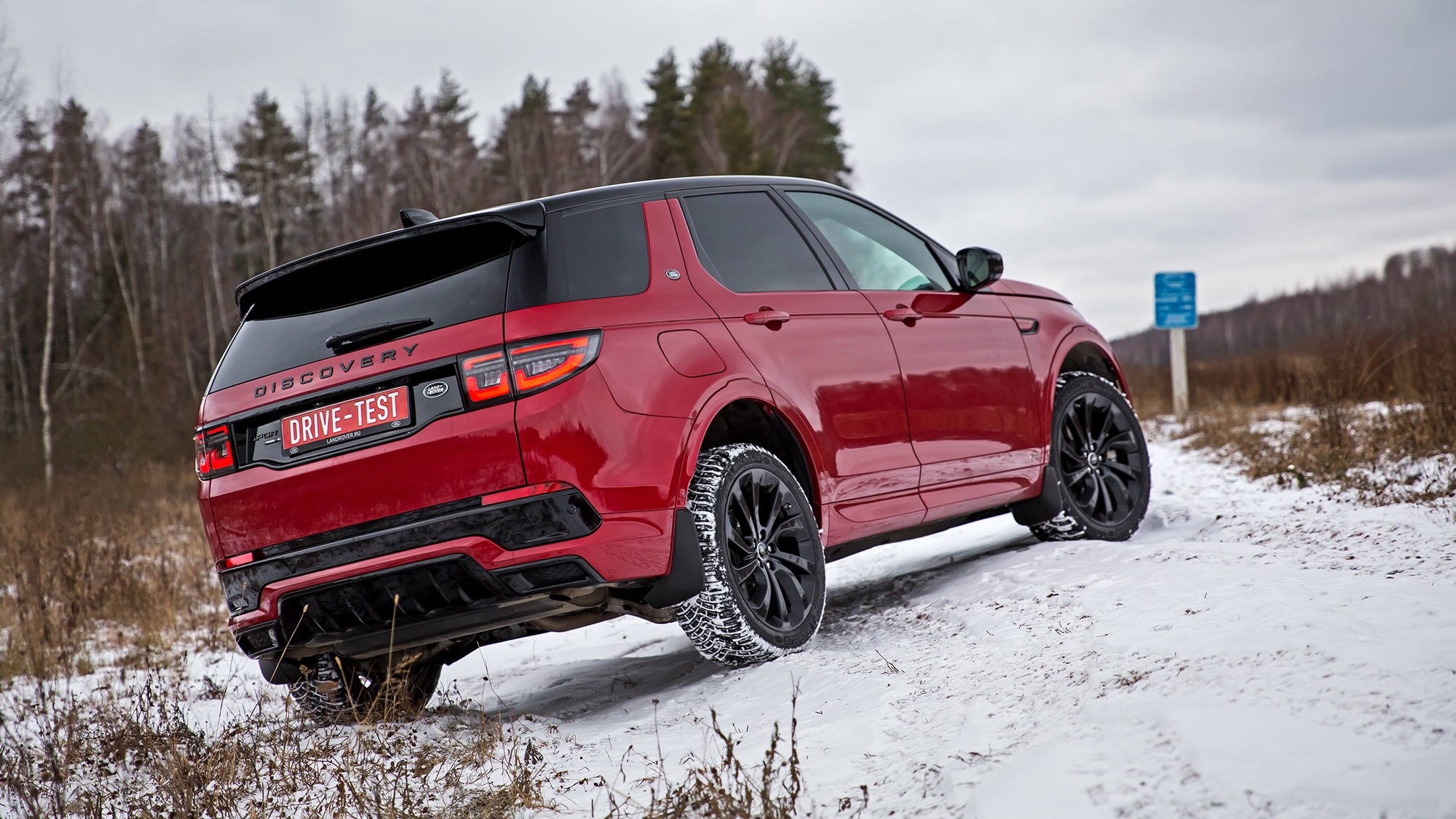
Price and Value: Which Crossover Gives You the Most for Your Money?
The Land Rover Discovery Sport is the most affordable entry point in this test — and within a shared budget, it actually offers the best power-to-equipment ratio of the three. Skip the R-Dynamic body kit and you can step into a Sport P250 with 250 hp for the same price as our 200 hp test car. Here’s how the three stack up at the base level:
- Land Rover Discovery Sport: Most affordable, best power-to-price ratio, optional 250 hp P250 variant available within budget
- Volvo XC60 T5: Mid-range pricing, 250 hp, generous standard equipment
- Mercedes GLC 200: Premium pricing, 200 hp, leatherette upholstery and partially mechanical seat adjustments at base level
Interior Design and Infotainment: Screens, Buttons, and Build Quality
Step inside each of these crossovers and you’ll find three very distinct philosophies when it comes to interior design and technology.
The Volvo XC60 interior is a genuine pleasure. The Sensus infotainment system with its vertical touchscreen responds quickly and fluidly — a stark contrast to the sluggishness found in the Discovery. The downside? Physical buttons are sparse. Want heated seats or a heated steering wheel? You’re diving into a menu. The start/stop system is also buried in settings — frustrating, especially since Volvo’s system shuts down and restarts the engine even during a slow gear shift from D to R.
The Mercedes GLC impresses most on the inside. Material quality is high, attention to detail is excellent, and the media display — mounted proud of the dashboard — features an intuitive interface with sharp graphics. Crucially, Mercedes hasn’t fully surrendered to touch-only control:
- Physical climate control buttons with tactile feedback
- Core driving functions accessible without menu diving
- Buttons are small and uniform but responsive and reliable
The Land Rover Discovery Sport sits high up front, giving the driver a commanding view — but the wide nose makes judging the front end tricky. A 360-degree camera system with a “transparent hood” function is available, but the low-resolution horizontal screen makes it nearly useless. Most frustratingly, the Touch Pro multimedia system continues to disappoint with laggy responses and a strobing picture. These are issues we’ve flagged in previous tests, and they remain unresolved.
Rear Seat Space and Passenger Comfort
Cabin space is a key factor in the compact crossover segment. Here’s how the three compare in the back seats:
- Land Rover Discovery Sport: Surprisingly generous legroom despite compact dimensions — shorter passengers can even cross their legs. Entry is the hardest of the three due to a high threshold and a door opening narrowed by the wheel arch.
- Volvo XC60: Headroom is excellent and legroom is strong — feet can slide under the front seats. Width is class-leading; two broad-shouldered adults will sit comfortably side by side.
- Mercedes GLC: Most spacious overall, matching the Disco for knee room and the Volvo for headroom. However, rear seat heating, USB charging ports, and front seat back pockets are all absent at the base GLC 200 trim level.
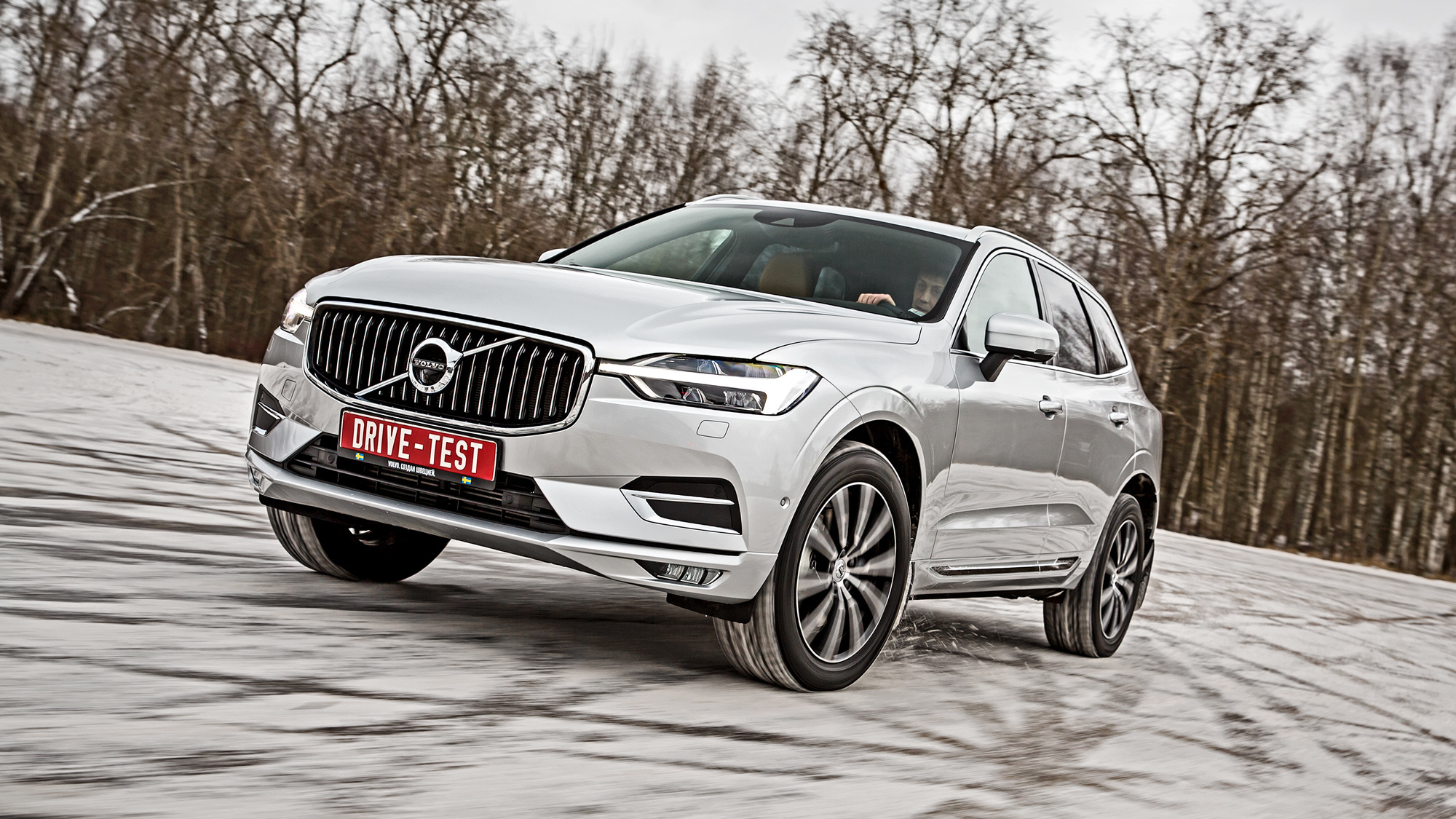
Engine Performance and Acceleration
All three crossovers offer around 200 hp in base configuration, but they deliver that power in very different ways.
The Mercedes GLC 200 punches above its weight. It launches briskly from a standstill and delivers linear, confident acceleration. The 9-speed automatic handles upshifts seamlessly, though downshifts can be accompanied by small jolts. Sport mode sharpens throttle response noticeably without a major fuel economy penalty — the on-board computer recorded around 2.4 gallons per 60 miles during testing.
The Volvo XC60 is the heaviest of the three by nearly 286 lbs, but it’s still the quickest. Acceleration builds smoothly and confidently with no dips or surges. The automatic gearbox prioritizes refinement above all else — even in Dynamic mode it remains emphatic in its smoothness, which can feel frustrating when you want urgency. Fuel consumption came in at around 2.8 gallons per 60 miles.
The Land Rover Discovery Sport is the least satisfying to drive quickly. It takes an extra second to reach 60 mph compared to the GLC, despite similar claimed kerb weight. Light throttle inputs produce unpredictable responses, the accelerator only feels properly connected at larger pedal angles, and the automatic gearbox is noticeably rougher than the GLC’s. Fuel consumption reached up to 3.5 gallons per 60 miles.
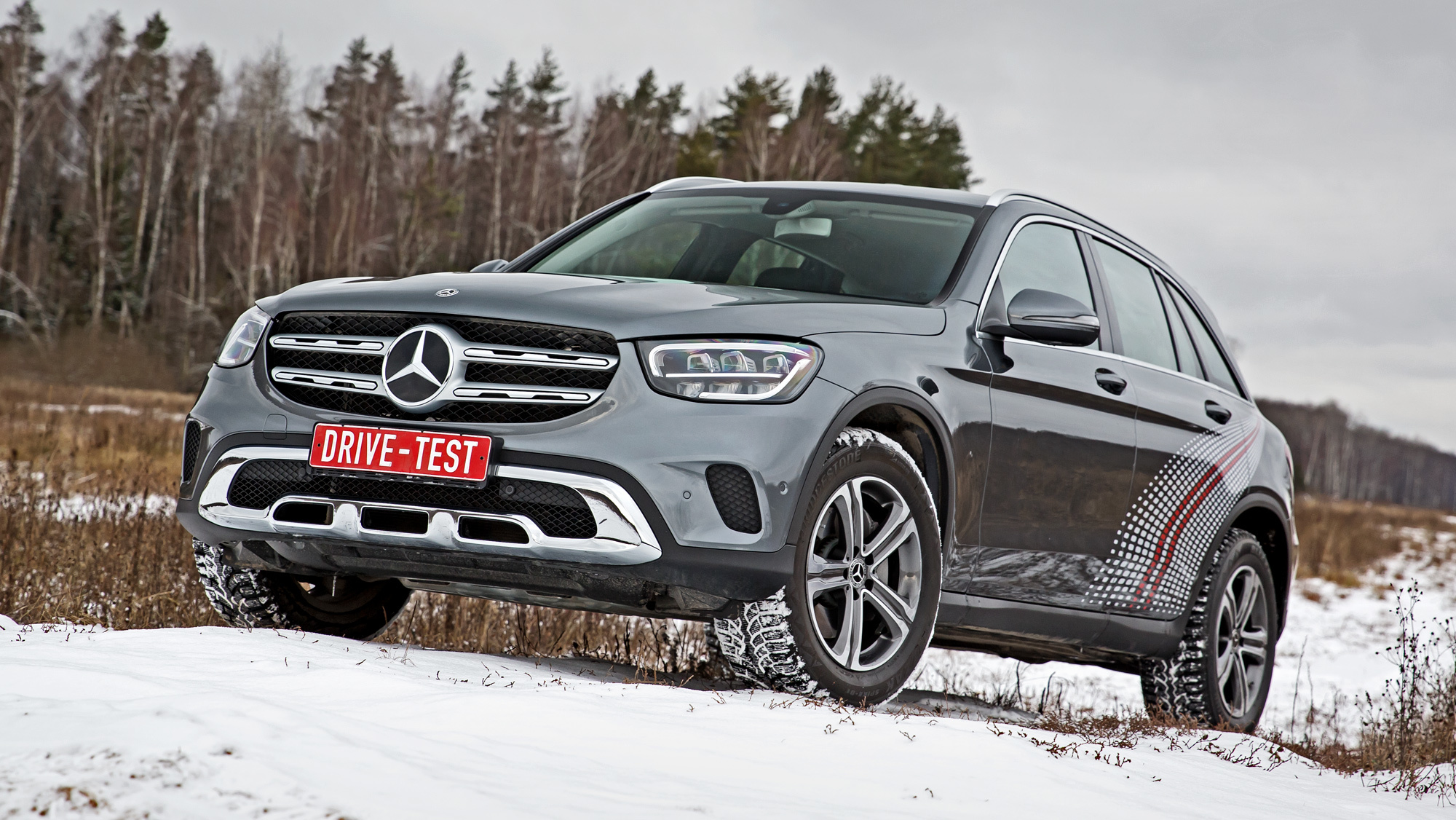
Handling and Driving Dynamics
On twisty roads, the character differences between these three become even more apparent.
The Mercedes GLC handles with surprising agility. Body roll is comparable to the C-Class sedan platform it shares underpinnings with. The steering is precise and informative, making it easy to place the car accurately whether you’re sweeping through a motorway interchange or tackling a tight 90-degree turn.
The Volvo XC60 is tuned for composed, unhurried progress. Minimal body roll, but the steering responds with a deliberate pause — it cultivates the impression of a large, weighty car. In the handling settings, the emphasis is firmly on solidity over sportiness. The steering becomes heavier in sport mode, but at the cost of feel and feedback.
The Land Rover Discovery Sport is the weakest handler of the trio. It drifts wide on gentle arcs and leans significantly in sharp corners. The steering carries a persistent rough background force, and the suspension — despite being capable over large obstacles — makes the crossover feel cumbersome and heavy through bends. Paradoxically, the larger Discovery 5 feels more agile and composed on the road.
Ride Comfort and Cabin Noise
Ride quality and refinement are where the Volvo XC60 truly shines.
- Volvo XC60: Air suspension absorbs the vast majority of bumps and imperfections with ease. Double-glazed windows cut aerodynamic noise dramatically — passing trucks are reduced to a whisper. Quietest cabin of the three by a clear margin.
- Mercedes GLC: Suspension is firm and controls body movement well, but shock absorbers feel slightly over-damped on rough surfaces, and there is some tapping from the suspension over repeated road imperfections. More road and exterior noise than the Volvo.
- Land Rover Discovery Sport: The suspension handles large impacts well but is overly detailed in its response to smaller bumps, giving the impression of an older-generation SUV with a solid rear axle. Noisiest cabin of the group, and the brakes introduce a vibration when stopping at traffic lights.
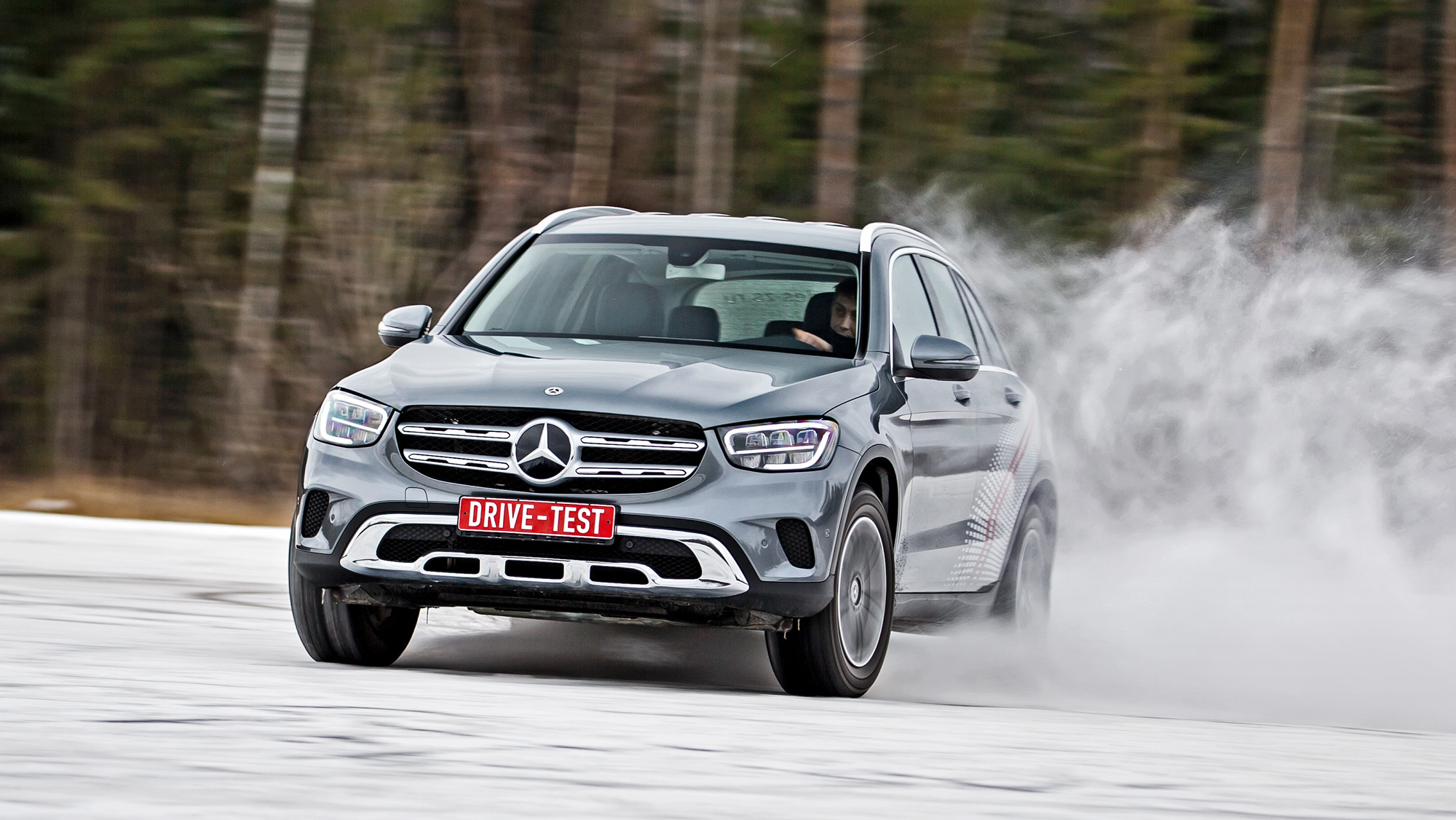
Off-Road Capability: Terrain Response, Traction Control, and Ground Clearance
This segment isn’t primarily bought for off-road use, but capability still matters — and the results here are surprising.
The Volvo XC60’s Off-Road mode raises ground clearance to 9.8 inches, linearises throttle response on slippery surfaces, and automatically activates hill descent assist. It’s a single, clearly structured system that removes complexity and minimises driver error.
The Land Rover Discovery Sport’s Terrain Response 2 system offers a mode for almost every surface, but the execution is inconsistent:
- Snow mode: Electronics react quickly but too gently — insufficient for climbing slippery slopes
- Sand mode: Minimal electronic intervention, which suits loose surfaces or controlled slides
- Mud mode: Closest to universal, but simulated cross-axle locking only activates after wheelspin has already occurred — by which point the car may have already moved off the ideal line
The Mercedes GLC has no dedicated terrain modes, yet it performed impressively off-road wherever its overhangs permitted. Suspension travel is comparable to the Discovery Sport, and the standard traction control system prevented wheelspin on icy slopes without any driver input. Its chrome-trimmed front bumper is less forgiving of contact than the Land Rover’s repaintable R-Dynamic body kit — but where it can go, it goes confidently.
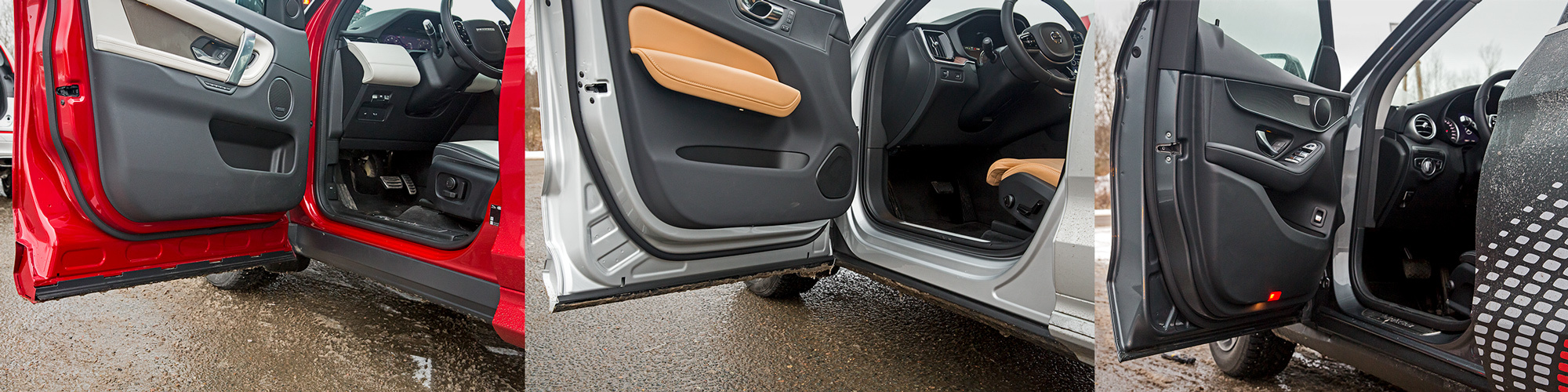
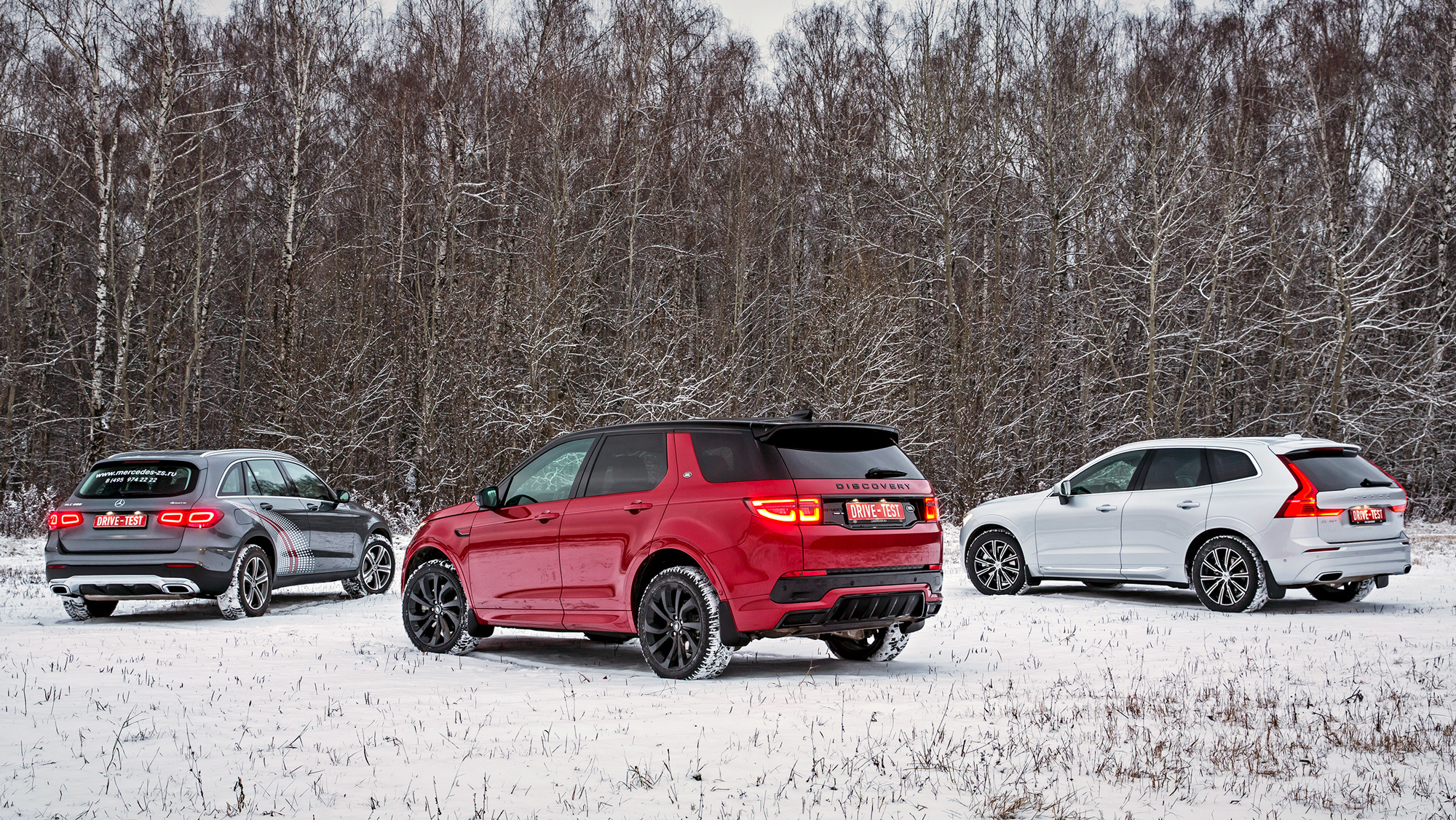
(On the right is the Land Rover Discovery Sport, in the middle is the Volvo XC60, and on the left is the Mercedes GLC)
Verdict: Which Premium Crossover Should You Buy?
The GLC is a car of contrasts — understated on the outside, unexpectedly quick and capable once you’re moving. It’s a compelling package, but its stripped-out base spec and the ambiguity of its character make it a harder recommendation than it should be.
The Discovery Sport remains the most affordable route into a premium crossover, and it still offers genuine off-road credibility. But it’s showing its age in almost every measurable way: infotainment, dynamics, refinement, and efficiency all lag behind the competition.
The Volvo XC60 is the most complete package here. It looks exceptional, rides beautifully, delivers the strongest performance, and wraps it all in a cabin that’s calm, quiet, and beautifully built. It doesn’t shout about what it cost or try to be something it isn’t. Sales figures back this up — the XC60 consistently outsells both the GLC and the Discovery Sport, and it’s easy to see why. For buyers who want the best all-round crossover in this class, the Volvo remains the benchmark.
This is a translation. You can read the original here: https://www.drive.ru/test-drive/landrover/mercedes/volvo/5dfcdeddec05c4af7700000f.html

Published March 30, 2023 • 8m to read