
Attitudes towards diesel fuel — among both the public and lawmakers — have shifted dramatically over the past decade. With landmark legislation confirmed, cities tightening emission restrictions, and electric vehicle adoption accelerating, the question every diesel driver is asking is: does diesel have a future? Here’s everything you need to know.
What Will Happen to Diesel Cars in the UK?
The UK government has confirmed a two-stage phase-out of new petrol and diesel vehicles. Under the Labour government’s Zero Emission Vehicle (ZEV) Mandate — which reinstated the original 2030 deadline after a temporary extension to 2035 under the previous Conservative government — the timeline is as follows:
- From 2030, new cars powered solely by petrol or diesel engines will no longer be sold in the UK.
- New hybrid vehicles — including plug-in and full hybrids — will remain on sale until 2035, after which all new cars must be 100% zero-emission.
- Buying, selling, and driving an existing diesel car will remain perfectly legal even after the 2030 ban on new sales.
- Small British manufacturers producing fewer than 2,500 vehicles per year — such as Aston Martin and McLaren — may be granted exemptions beyond 2030.
Is It Worth Buying a Diesel Car Today?
Diesel registrations fell by 60% in 2020, according to the Society of Motor Manufacturers and Traders (SMMT), while sales of battery-powered electric vehicles grew by 161% over the same period — a trend that has continued to accelerate since.
The decline in diesel’s market share that began around 2019 has continued steadily. While diesel cars remain widely available, tightening legislation and shifting market forces make them a more complicated purchase than they once were. Key factors to consider include:
- Resale value: As the 2030 ban on new sales approaches, demand for used diesel cars is expected to soften, which may affect long-term resale values.
- Urban running costs: Diesel drivers face daily emission charges in a growing number of UK cities — particularly in London, where both the ULEZ and the Congestion Charge can apply simultaneously.
- Vehicle tax: All fully electric vehicles are exempt from vehicle excise duty, while petrol and diesel owners typically pay more — a gap that is widening over time.
- Long-distance efficiency: For high-mileage motorway drivers, diesel still offers strong fuel economy and may remain cost-effective in the short term.
When Will Diesel Cars Be Banned in the UK?
The sale of new pure diesel (and petrol) cars will end in 2030, with a complete ban on all non-zero-emission new vehicles following in 2035. However, it is important to understand what the ban does and does not cover:
- There is no ban on owning or driving an existing diesel car — even after 2030 or 2035.
- The used diesel market will continue to operate for many years after the ban on new sales.
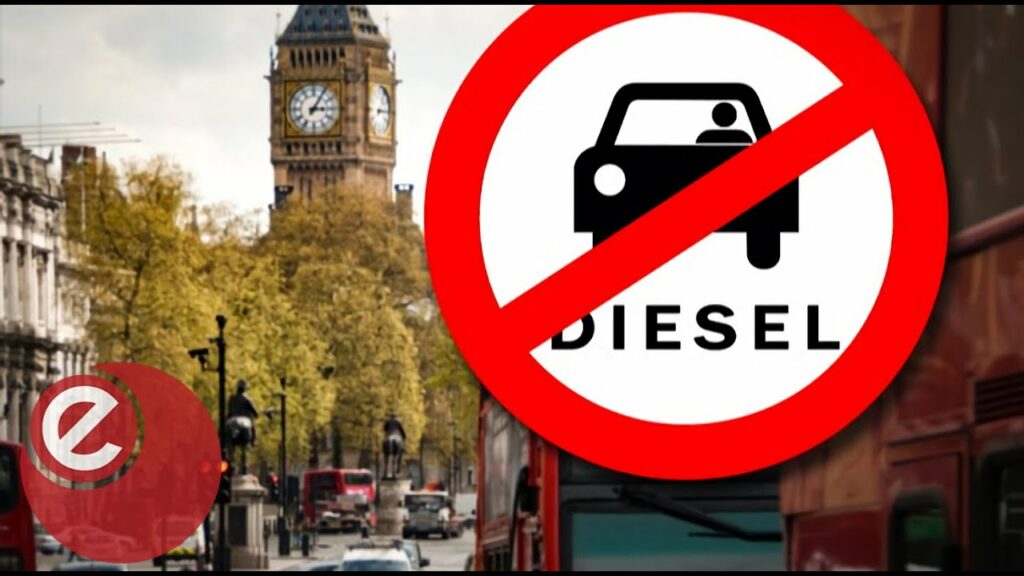
- Legislation already in place — such as London’s ULEZ — makes running older diesel vehicles in city centres increasingly expensive right now, ahead of any full ban.
- The mayors of Paris, Madrid, Athens and Mexico City have also pledged to ban or restrict diesel cars in their cities, reflecting a global shift away from diesel in urban environments.
Ultra Low Emission Zone (ULEZ) and London Congestion Charge
London operates two separate daily charges that significantly affect diesel drivers. Understanding both is essential for anyone driving in the capital:
- The Ultra Low Emission Zone (ULEZ) was introduced in central London in 2019 and massively expanded in August 2023 to cover all of Greater London — an area of 580 square miles, home to around 9 million people. It operates 24 hours a day, 364 days a year (Christmas Day excluded).
- Non-compliant diesel cars — generally those registered before September 2015 that do not meet Euro 6 emission standards — must pay a daily charge of £12.50.
- Failure to pay can result in a penalty of up to £180, reduced to £90 if settled within 14 days.
- The London Congestion Charge rose to £18 per day from January 2026 (up from £15), and applies to central London. Both charges can apply simultaneously to non-compliant diesel vehicles driving through central London.
- Fully electric vehicles are exempt from the ULEZ charge and currently qualify for a discounted Congestion Charge rate.
Is It Worth Buying a Diesel Car in 2026?
Despite the long-term outlook, the share of diesel cars in both new and used markets remains significant. This is largely the legacy of two historical factors:
- Transport tax incentives introduced by the government in 2001 drove a sustained increase in diesel demand throughout the following decade.
- At the time, diesel cars were cheaper to run, taxed less heavily, and widely regarded as more environmentally friendly than petrol — a perception that has since been reversed as the health impact of diesel’s nitrogen oxide and particulate emissions became better understood.
Today, those advantages have largely disappeared. Anyone considering buying a diesel car in 2026 should carefully weigh up ongoing urban charges, potential long-term resale difficulties, and the rapidly improving range and affordability of electric alternatives.
Why Are There Still So Many Diesel Cars on UK Roads?
The number of diesel vehicles on UK roads grew sharply during the 2000s and 2010s, fuelled by government incentives that made diesel an attractive — and even officially recommended — choice for many drivers. Key milestones illustrate how quickly the shift happened:
- Between 2000 and 2017, the total number of licensed cars in the UK rose from 24.4 million to 31.2 million, driven by population growth and improved road infrastructure.
- Over those 17 years, diesel’s share of the car fleet climbed from just 12.9% (around 3.2 million vehicles) to 39.7% (around 12.4 million vehicles).
- In the early 2000s, environmental focus was almost entirely on reducing CO2 emissions — and diesel produced less CO2 per kilometre than petrol. The damaging effect of diesel’s other emissions on air quality and public health only became a mainstream concern later.
Should You Buy a Used Diesel Car?
Most manufacturers still produce diesel models, but a growing number of major automakers have begun distancing themselves from this fuel type — or have phased it out entirely. Notable developments include:
- Toyota, Volvo, Subaru, Suzuki, Bentley and Mitsubishi have already stopped selling new diesel cars or have announced firm plans to do so.
- Several other manufacturers have suspended the development of new diesel engines or committed to phasing diesel out of future model lines entirely.
- This means the used market is increasingly becoming the primary source of diesel vehicles — though supply will naturally decline over time as the fleet ages and is replaced by electric alternatives.
What Is the Long-Term Future of Diesel Cars?
There is no outright ban on using diesel cars currently in force, and many millions remain on UK roads. However, with the 2030 new-car sales ban confirmed and emission zones expanding across UK cities, the direction of travel is clear. Looking ahead:
- Demand for used diesel cars is likely to decline significantly as 2030 approaches and EV ownership becomes more mainstream and affordable.
- Urban emission charges — already in effect in London and several other UK cities — may expand further, increasing the cost of diesel ownership in built-up areas.
- Insurance costs, availability of servicing, and parts supply for older diesel vehicles could all become practical considerations in the longer term.
- While you can save money on car insurance regardless of your vehicle type, shopping around is especially worthwhile for diesel drivers navigating a rapidly changing market.
Country guides

Published July 29, 2021 • 6m to read