

Why the Season Matters for the Lexus LC 500
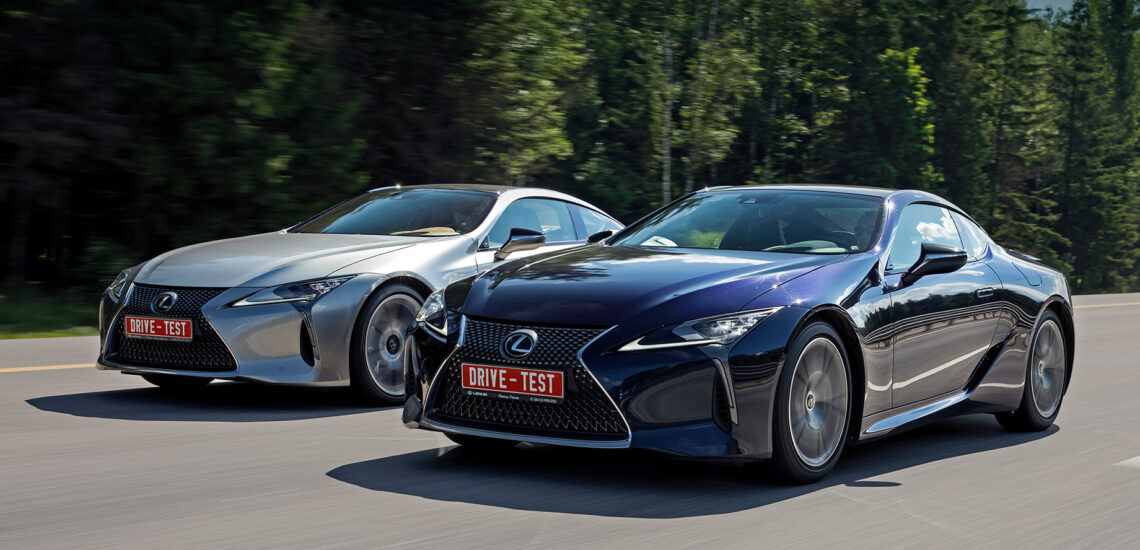
A Toyota facility quarantine forced us to delay the LC 500’s summer tire swap until mid-season. By then, the blue Lexus had spent enough time in the garage to let the winter impressions fade. Winter had once flattered this charismatic coupe — the hostile season added heroism and scale to the exotic grand tourer. The slippery surface revealed subtle nuances of its character, creating an illusion of serious performance potential. But when summer finally arrived, the reality was more prosaic.
Summer Driving: A Contradictory Picture
If you describe the LC 500’s summer character in broad strokes, the picture turns out contradictory. The car finally found its traction and could be pushed harder, yet it also became more troublesome. The factory RunFlat tires made the coupe far more sensitive to road surface quality, creating a demanding and occasionally frustrating driving experience:
- Nervous and unsettled on roads with noticeable camber, requiring constant steering corrections
- Prone to tramlining and fighting ruts — something the winter tires masked entirely
- Quieter without the studs, yet ride quality noticeably worsened overall
- The 2019 LC 500 with staggered 21-inch wheels proved even more restless and harsh than the standard 20-inch setup
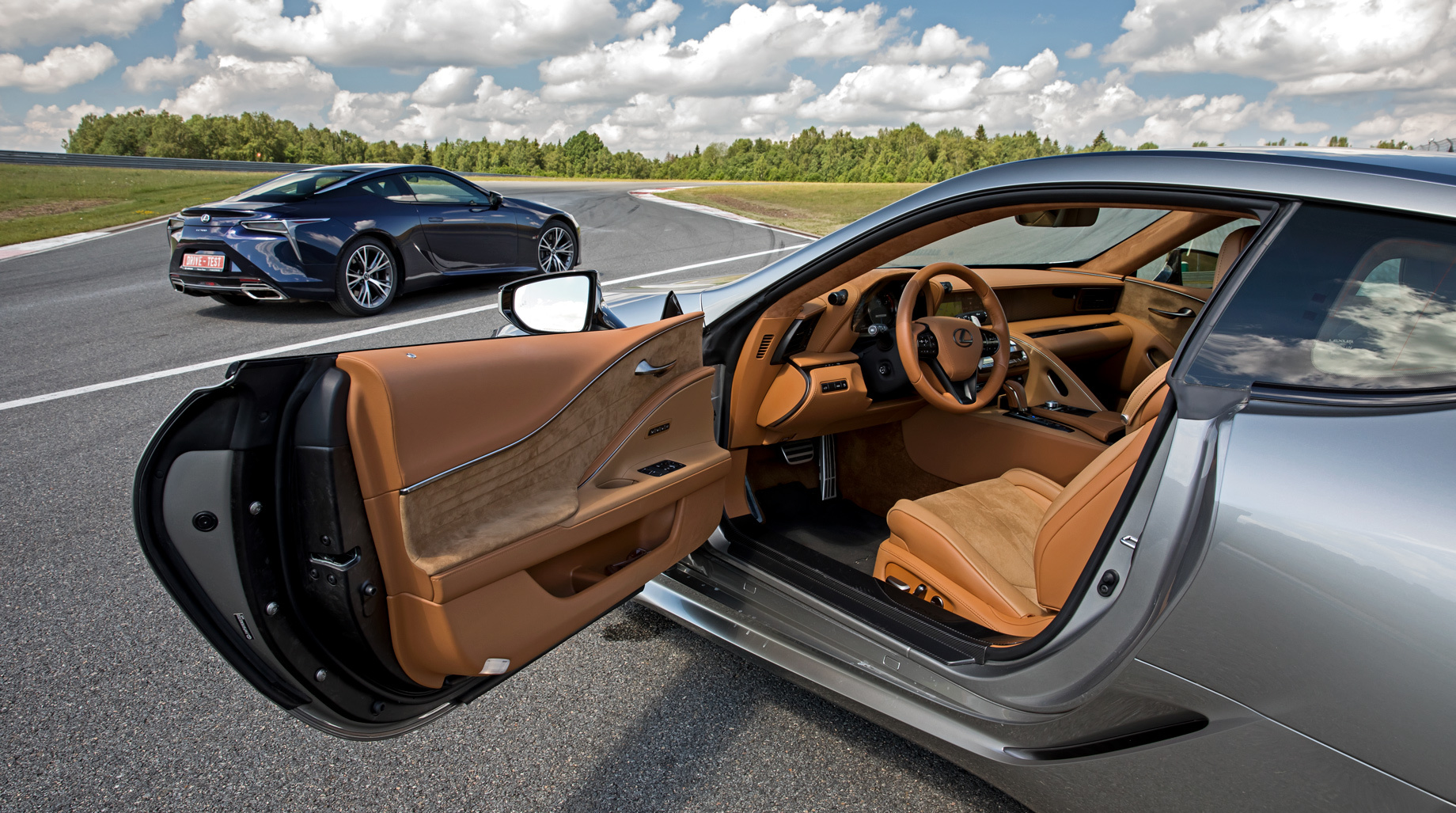
Upgraded shock absorbers with independent compression and rebound adjustment fail to compensate for the reduced tire profile and increased unsprung mass. Transverse road joints cause the silver Lexus to vibrate more intensely and dance on short-wave surfaces — a reminder that tire choice on the LC 500 is not a minor detail.
Lexus LC 500 Performance: 0–60 mph and Real-World Dynamics
The LC 500’s straight-line performance is impressive on paper, but real-world results tell a more nuanced story. Key performance figures recorded by Racelogic in a half-empty car at 20°C (68°F):
- Best 0–60 mph time: 5.2 seconds — half a second slower than the factory claim
- Top gear cruising speed of 80 mph: just 1,600 rpm, demonstrating the engine’s long-legged refinement
- Gearbox: a 10-speed automatic that drops up to five ratios on kickdown, introducing a noticeable pause before acceleration
At partial throttle, gear changes are smooth and seamless, giving the impression that the naturally aspirated engine pulls cleanly from low revs. Touch the accelerator gently and the Lexus accelerates with minimal hesitation — though this seamless transition happens across multiple gears rather than within a single one.
The engine’s character builds progressively. The soundtrack grows richer and more involving almost imperceptibly, and before you know it, you’re in sixth or seventh gear with the tachometer sitting at 3,000 rpm. The dial is deliberately calibrated so that the frequently used 3,000–4,000 rpm zone reads visually as low speed — a clever trick that makes the LC 500 feel effortless even when working hard.
Fuel Efficiency: The V8’s Surprising Secret
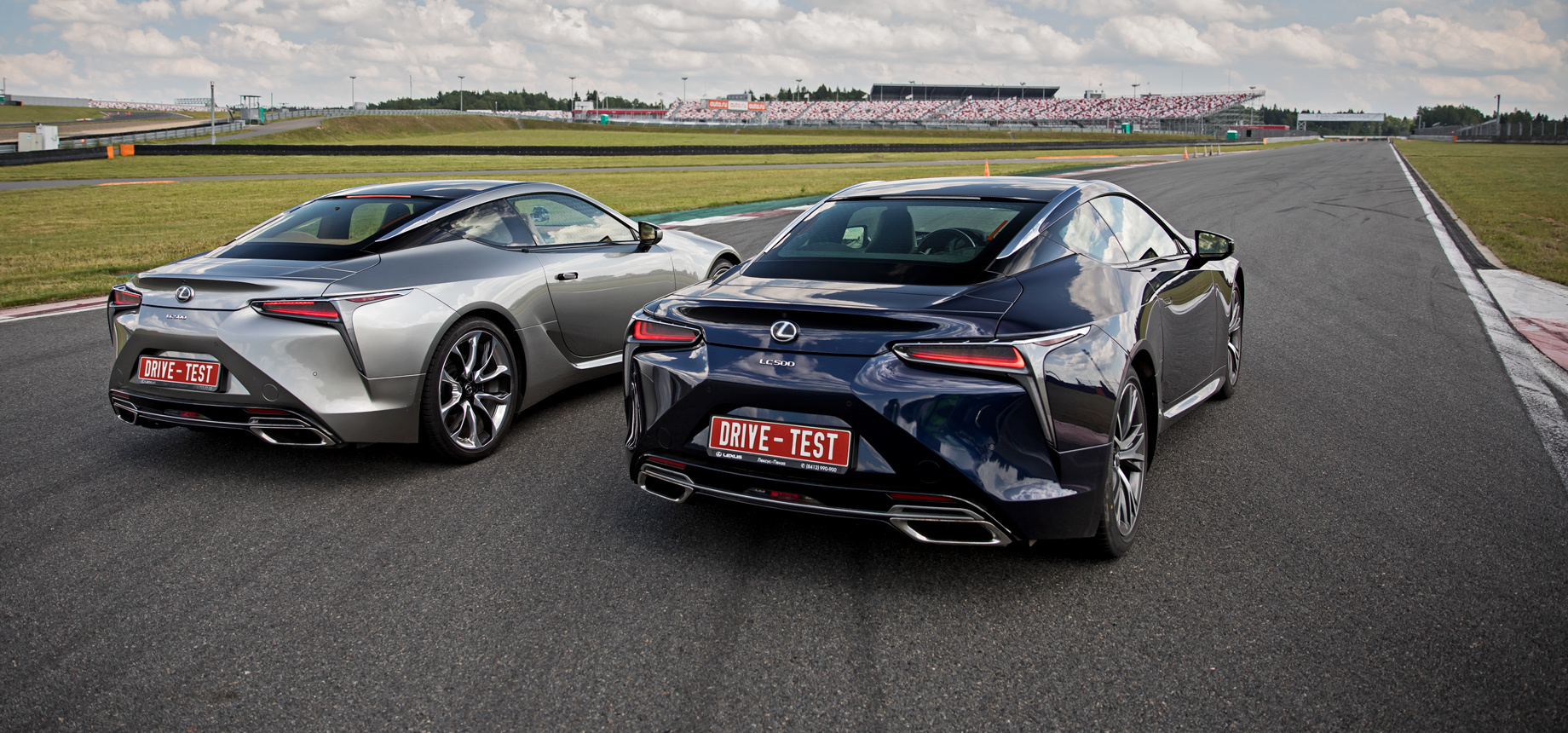
Perhaps the most unexpected aspect of the LC 500 is how its 5.0-litre aluminium V8 balances fuel consumption with character. Even driven hard — in what we’d call “deny-yourself-nothing” mode — the engine returned approximately 3.5 gallons per 60 miles at the pump. Credit goes largely to the combined direct and port injection system, which helps the Japanese engineers achieve an unusual pairing of real-world efficiency with theatrical brutality. The LC 500 growls like something far less refined, and that voice accounts for a lion’s share of the coupe’s charm.
Handling and Grip: Where the LC 500 Shines
The LC 500’s handling strengths become most apparent on smooth, flat surfaces — particularly a race track, where its weight and suspension tuning are no longer fighting against road imperfections. Highlights from track testing include:
- Lateral g-force: 1.2 g on a typical suburban roundabout (recorded by Racelogic) on Bridgestone Potenza S001L tires
- The Bridgestone Turanza on the blue car gives up slightly earlier, though both are composed at the limit
- The near-two-tonne mass means the LC 500 is best explored at its limits away from public roads
On flat, ideal asphalt, you no longer fight the car for a chosen trajectory. The LC 500 is temporarily rehabilitated — responsive, balanced, and genuinely rewarding to drive fast.
Stability Control Modes: Night and Day Difference
Track testing reveals just how much the LC 500’s behaviour depends on the stability control setting rather than the tires themselves:
- Stability control ON: Dulls initial turn-in response, promotes understeer, and suppresses the chassis’s natural tendency to oversteer. The handover to full driver control — subtle in winter — is imperceptible in summer.
- Stability control OFF: Transforms the car entirely. The LC 500 becomes responsive, sensitive to dynamic weight transfer between axles, playful, and forgiving of mistakes. Steering feel is consistently well-weighted.
Even after a winter spent drifting on ice, the LC 500’s willingness to slide with grip underfoot is surprising. The 2019 coupe with its wider rear tires suits high-speed power slides on dry asphalt, while the blue car excels in rhythmic wet-weather oversteer thanks to gentler breakaway and more cooperative stability intervention.
Braking Performance: Consistent but Not Track-Proof
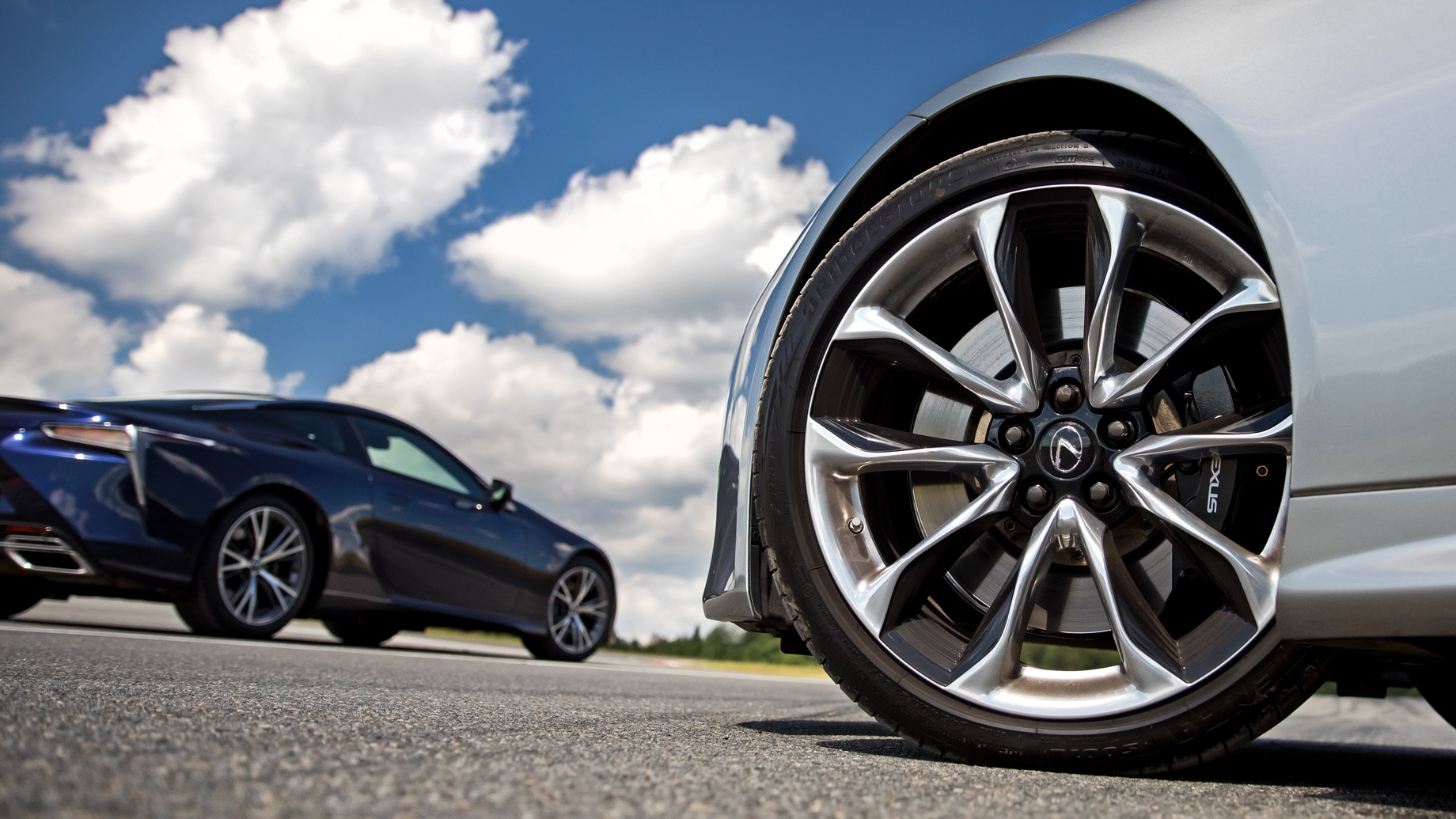
The LC 500’s braking system doesn’t need our test driver behind the wheel to reveal its main limitation: it cannot sustain repeated hard stops at the pace the chassis and engine are capable of, and fade sets in before either the motor or suspension shows signs of stress. That said:
- ABS logic is well-calibrated and raises no concerns, even on rough surfaces
- Stopping distances from 60 mph are consistent and repeatable
- The difference in braking distance between tire sets amounts to just a couple of feet
- Pedal feel on initial application is light, though confidence builds progressively
Verdict: Tire Choice Makes or Breaks the Lexus LC 500 Experience
Even after a spirited drift session on a fresh set of tires, it’s hard to shake the feeling that the LC 500 was simply more interesting in winter. Strip away the drama of fighting adverse conditions, and the summer LC 500 raises legitimate questions — particularly around suspension tuning. It no longer feels special enough to silence concerns about its pricing.
The conclusions drawn at the end of winter stand: the LC 500 earns its place in automotive history. But had this test begun in summer, the romantic tone would have been considerably more measured. Here’s the honest summary:
- Tire selection is critical — it shapes the LC 500’s personality more than almost any other variable
- Factory RunFlat tires feel out of place, turning the grand tourer into a Gran Turismo that sulks at the first pothole
- Winter tires help the LC 500 disguise its chassis compromises — the rolls and body movement are far too pronounced on dry roads
- The shock absorbers lack energy intensity on dry, fast surfaces, and the suspension tuning never fully resolves the tension between comfort and performance
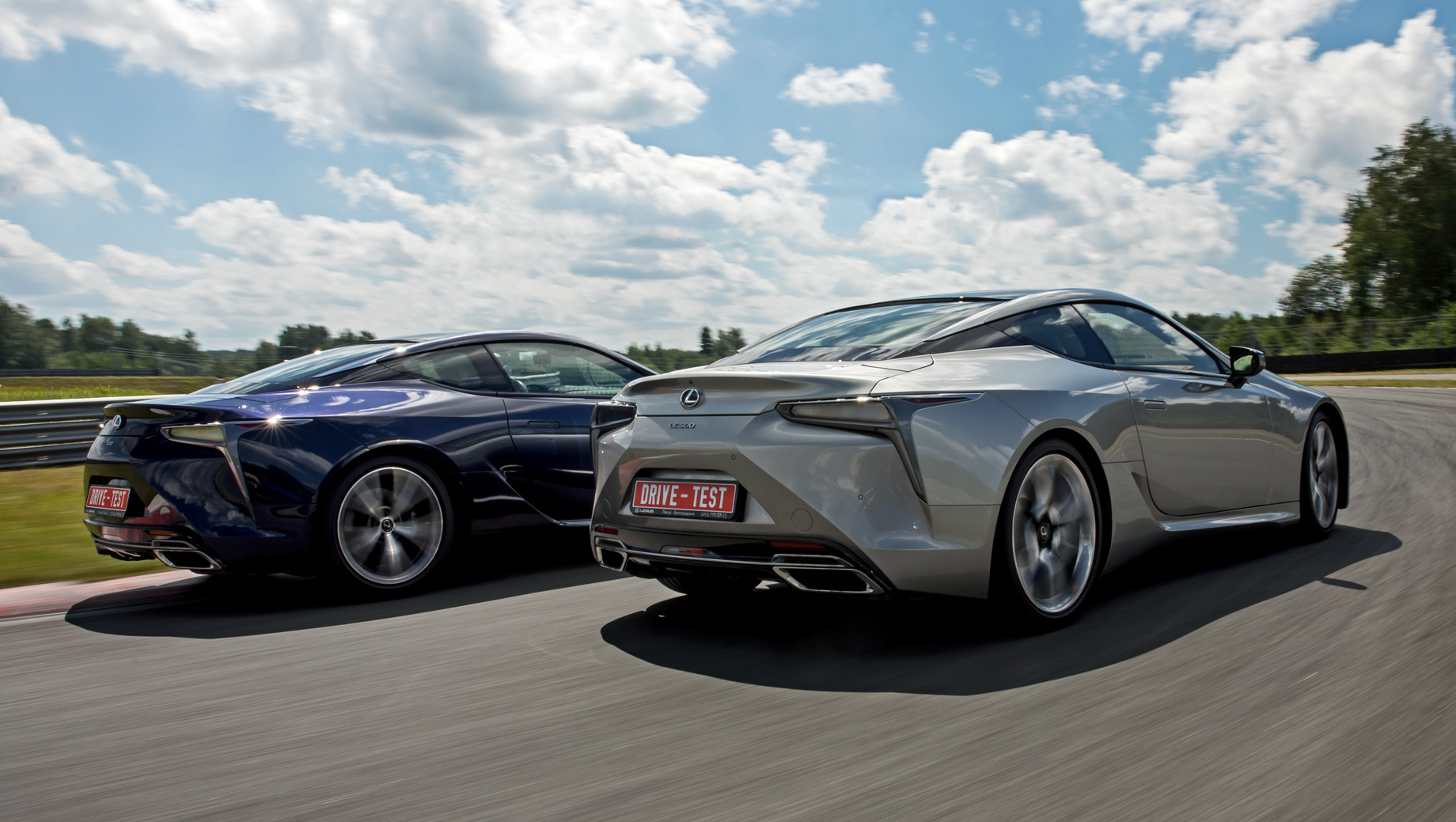
There is genuine pace here, and a good road lets you enjoy it. As our test driver — who came to the two-tonne LC 500 directly from a Porsche 911 GT3 RS — put it: driving along the Rhine to a fine restaurant, you could still swing by the Nürburgring, complete a lap at your leisure, and overtake the odd hot hatchback along the way. Coming from someone used to 500-hp precision machinery, that lightly condescending verdict is actually a generous compliment.
This is a translation. You can read the original here: https://www.drive.ru/test-drive/lexus/5f0df5a0ec05c472100000aa.html

Published October 13, 2022 • 6m to read