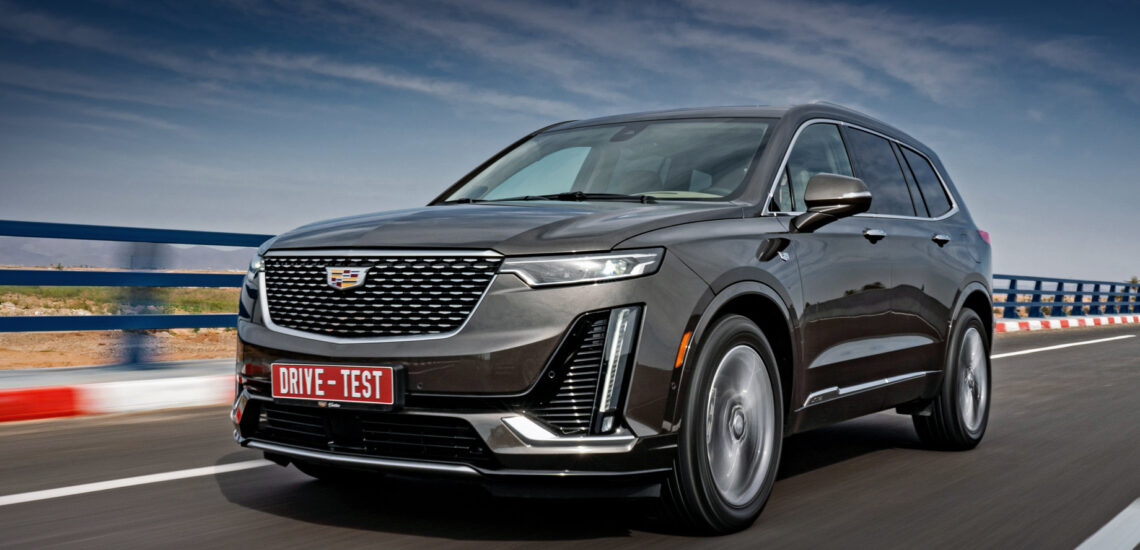

The Cadillac XT6 is a full-size three-row crossover that sits between the iconic Escalade and the mid-size XT5 in GM’s lineup. With its detuned 2.0 LSY turbo engine producing just under 200 hp — 199.9 hp to be precise, a deliberate move to reduce the tax burden on owners — the XT6 raises an immediate question: is the power sacrifice worth it? After spending time behind the wheel on Morocco’s challenging roads, here’s a comprehensive look at what this crossover does well, where it falls short, and who it’s really for.
Cadillac XT6: Where It Sits in the Lineup
The sixteen-foot XT6 bridges the gap between the three-row Escalade and the mid-size XT5. It shares its platform and transversely mounted engine layout with the XT5, while also borrowing the Escalade’s three-row interior concept. There are two all-wheel-drive configurations available:
- Premium Luxury AWD — features a multi-disc clutch on the right rear axle and a cam clutch in the GKN transfer box. Both disengage the driveshaft under normal conditions to cut mechanical losses and improve fuel economy.
- Sport AWD — adds a second clutch for the left rear axle, eliminating the traditional differential and enabling torque vectoring. Still, with only 350 N·m from a 2.0-liter turbo-four, the vectoring effect is modest.
Exterior Design: Bold but Practical?
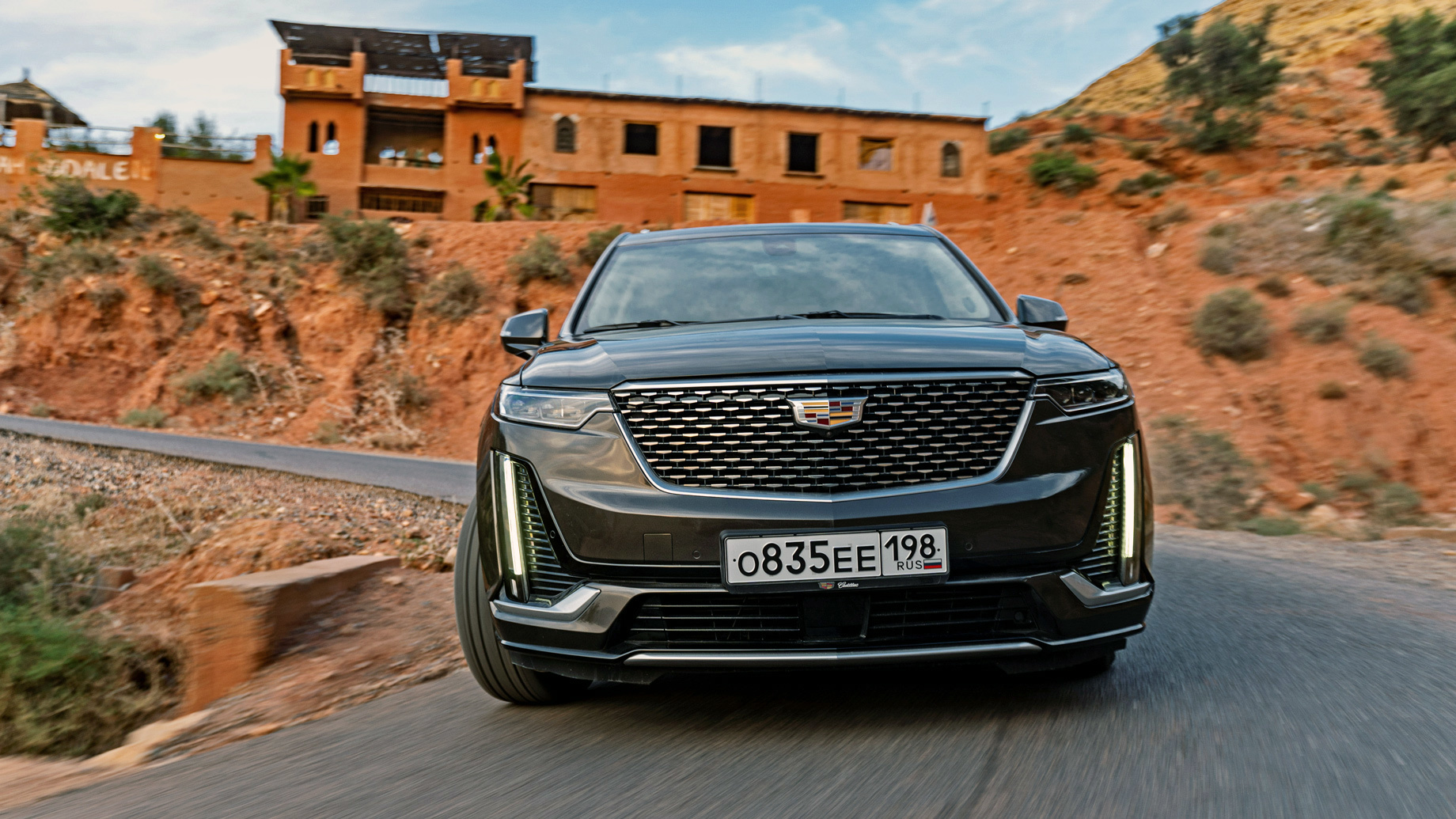
The XT6 has a distinctive presence on the road. Cadillac’s signature vertical running lights compete in size with the headlights themselves — slightly theatrical, but they don’t undermine the overall look. A few exterior notes worth mentioning:
- Door sills are covered by the door panels for a clean appearance, but Moroccan dust still finds its way through the door rubbers.
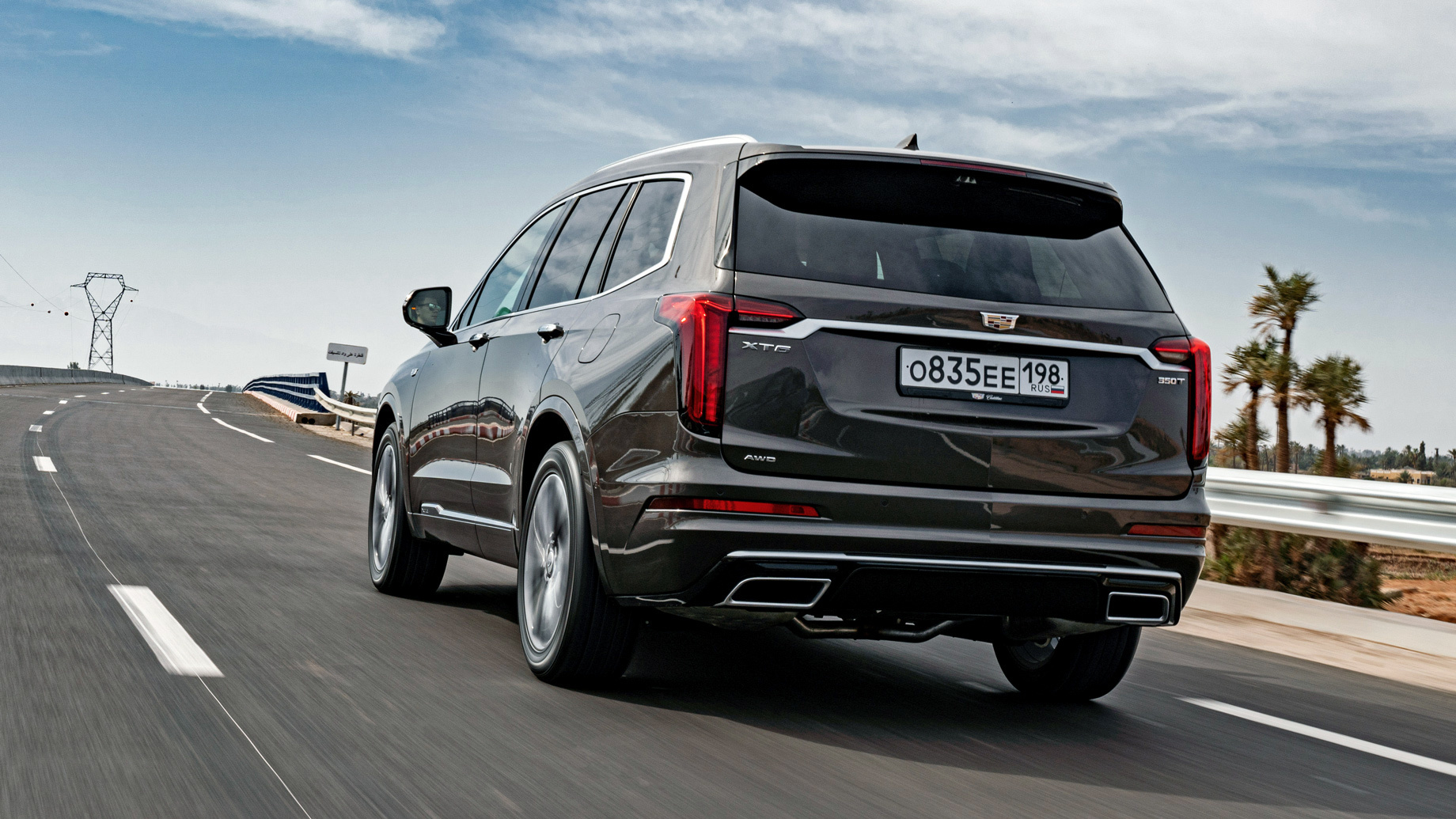
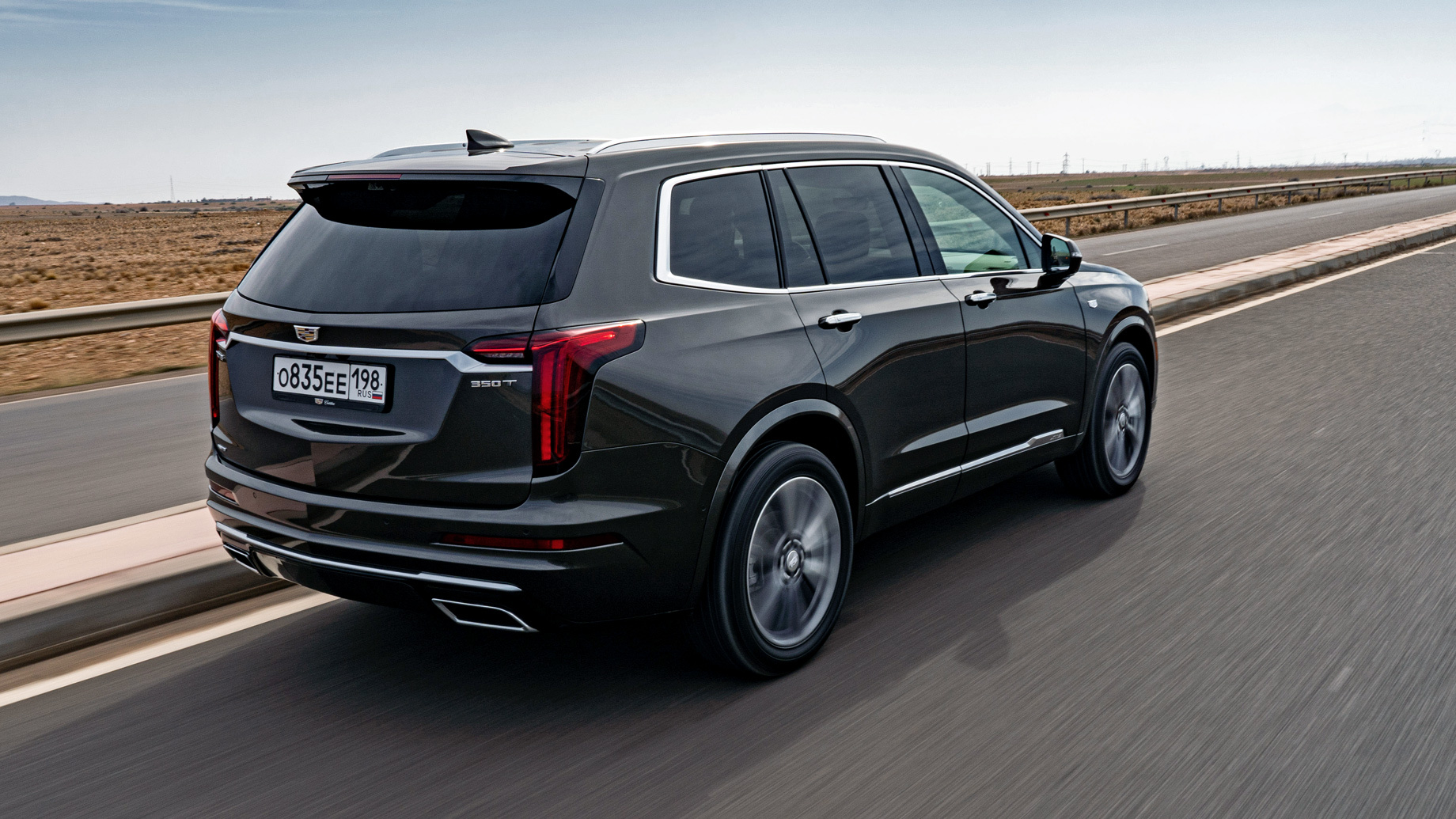
- The rear wheel arches are completely unprotected — passengers in the second and third rows should watch out when entering or exiting.
- Ground clearance is just 169 mm, with a front bumper skirt sitting nearly flush with the ground — clearly road-oriented geometry, not built for off-road use.
Interior Space and Practicality
The XT6’s cabin is built around practicality for larger families. Here’s what you get inside:
- The power trunk lid features a motion sensor for hands-free opening, though there are no cargo anchoring points inside the boot.
- The third row folds and unfolds automatically; the second row folds via a remote switch, and both seat backs create a flat load floor.
- A curtain storage compartment sits near the tailgate, and a removable tow bar is hidden under the boot tray next to the spare — included as standard.
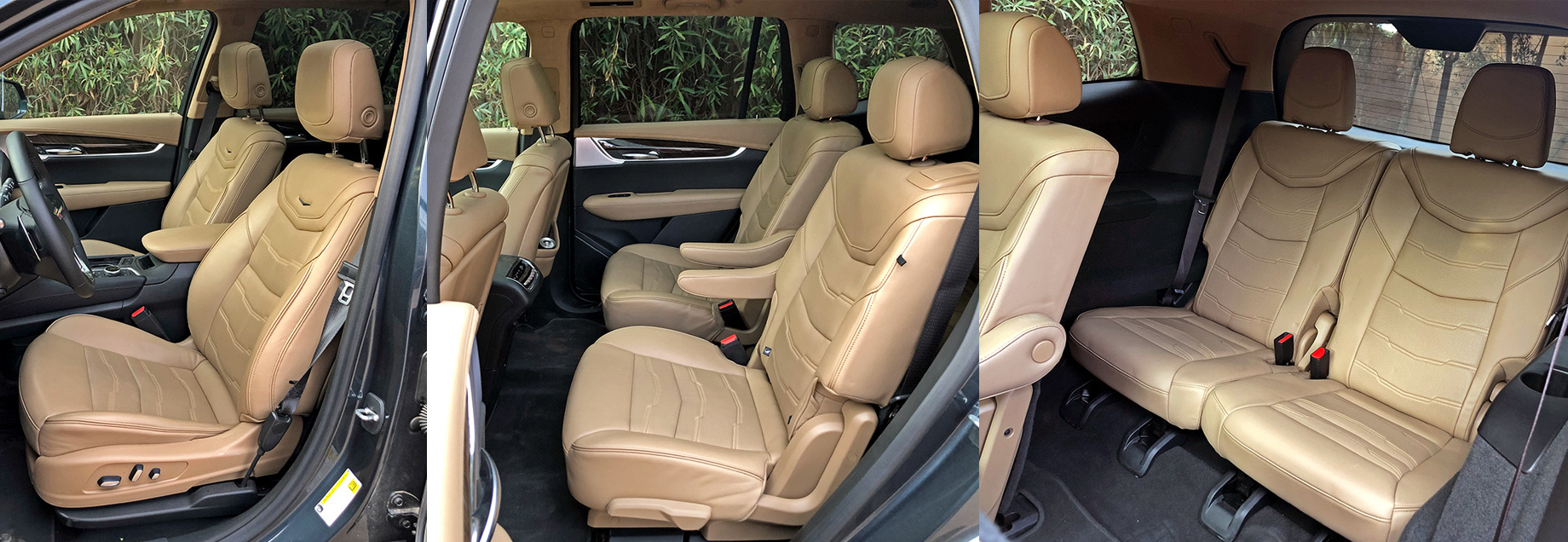
- The standard three-seat bench in the second row can be swapped for two individual captain’s chairs at no extra cost. The test cars in Morocco were all configured with the six-seat layout.
Headroom and legroom vary significantly by row. At 5’5″, the rear third row is passable. A taller colleague at 6’1″ found the seating position awkward — knees nearly at ear level, with no room to slide feet under the front seat. It’s cramped, but it’s not strictly a children-only space.
Cabin Quality and Technology
The XT6’s interior follows a “luxury maximalist” philosophy. The top-spec Platinum pack brings:
- Semi-aniline leather throughout — soft and premium-looking, but slippery in use.
- Alcantara-lined headliner for an upmarket feel, though the combination of textures starts to feel overwhelming.
- Thick A-pillars that compromise the forward view, partially offset by a wiper blade that sweeps close to the driver’s left edge.
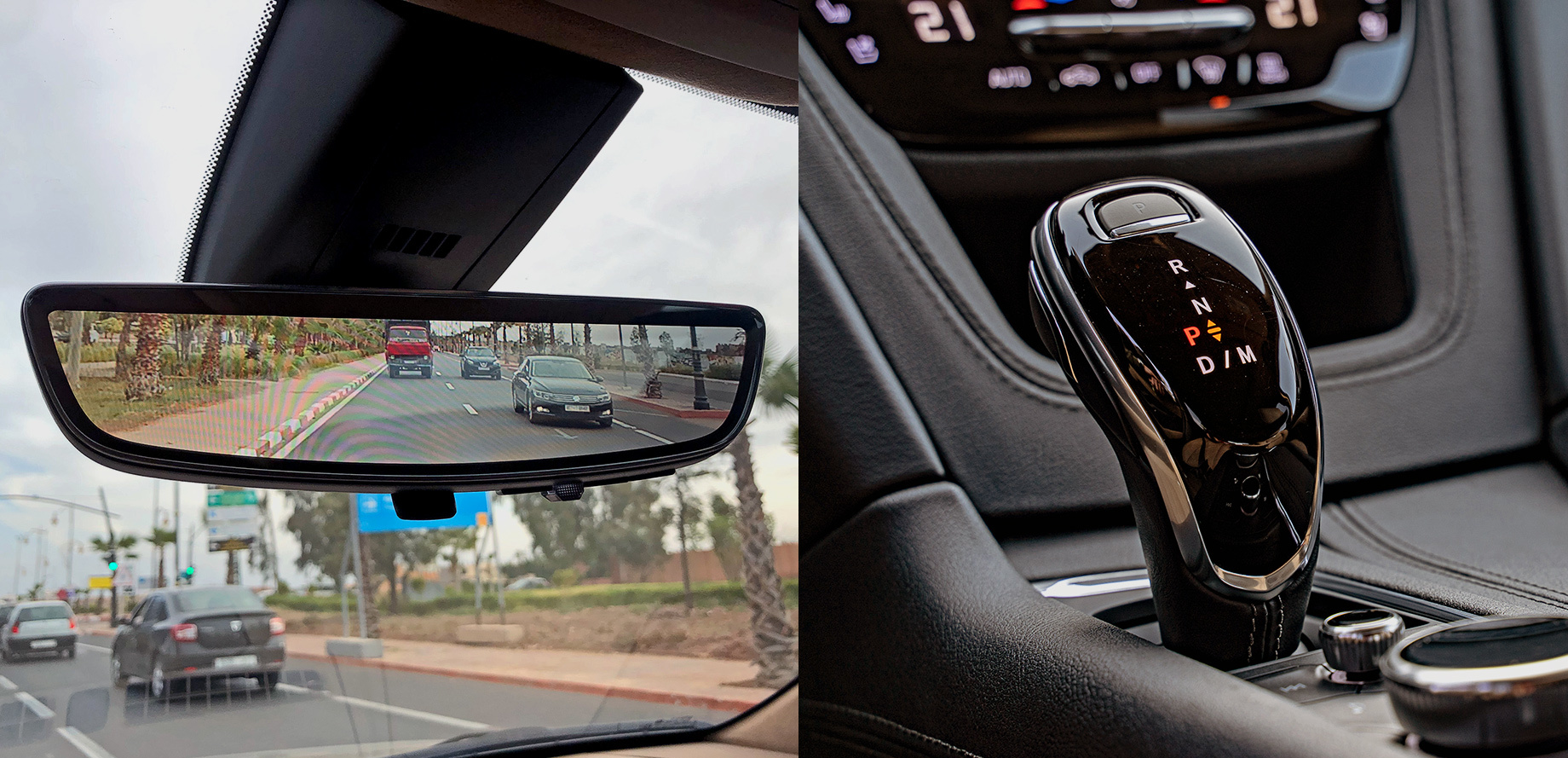
The digital rearview mirror is a standout feature for a three-row vehicle. When all rear headrests are folded, the conventional mirror works fine. Switch to camera mode and you get a wide rear view with adjustable height and angle — genuinely useful, though it takes some getting used to and the mirror housing runs quite warm during use. Parents will appreciate the option to keep the mirror angled toward the rear seats to monitor passengers.
Connectivity is well thought out:
- NFC pairing — Android phones connect via Bluetooth instantly by tapping the NFC tag. iPhone users need a companion app.
- USB-C and USB-A ports are both available, so no adapter headaches.
- Wireless charging pad on the center tunnel accommodates a large-format iPhone in a case.
- The electronic transmission selector is intuitive, with a manual override to shift into neutral mechanically if needed.
Engine and Performance: Honest Numbers
The 2.0-liter turbocharged four-cylinder engine officially outputs 199.9 hp — a deliberate figure to qualify for lower tax brackets. In practice, this means moving a two-ton crossover with noticeably modest thrust. Key performance observations:
- 0–60 mph takes 9.9 seconds — on par with mass-market SUVs like the Hyundai Santa Fe and Kia Sorento with naturally aspirated 2.4-liter engines.
- Overtaking at speeds above 60 mph requires real planning and patience.
- The nine-speed automatic transmission is smooth and virtually seamless in its shifts, which does help the overall experience.
- The four-cylinder exhaust note is subdued and slightly coarse — unoffensive rather than exciting.
- The only comparable premium seven-seater in this power range is the Land Rover Discovery Sport, which is over 150 kg lighter and measurably quicker despite similar figures on paper.
Ride, Handling and Noise Isolation
The XT6 handles daily driving competently, with a few notable trade-offs:
- Noise isolation is good, thanks largely to acoustic double-glazed front windows and a standard Bose active noise cancellation system.
- Ride comfort is compromised. The adaptive dampers struggle with sharp-edged potholes and short undulations, sending uncomfortable jolts into the cabin. Rough asphalt also reveals sensitivity to road microprofile.
- Steering is a highlight — precise, quick, and naturally weighted with minimal body roll for a vehicle this size. Responses feel almost inertia-free.
- Brakes are a weak point. The pedal feels spongy and over-firm simultaneously, offers little feedback, and stopping distances feel longer than expected for a premium vehicle.
The suspension tuning appears to be a deliberate compromise: the firmer setup makes the XT6 feel agile and responsive for its size, but passengers pay the price in daily comfort. Sport mode clamps the suspension further, weights up the steering, and holds lower gears longer — but without a more powerful engine, it mainly highlights the vehicle’s limitations rather than revealing hidden capability.
Off-Road and AWD Capability
Despite the all-wheel-drive system, the XT6 is not an off-roader in any meaningful sense. The front bumper contacts the ground at the first real bump off-road. Traction control also seems crude when traction is lost — it appears to brake all four wheels simultaneously, causing the car to stall rather than claw forward. The XT6 is best kept firmly on pavement or well-maintained gravel.
Verdict: Who Is the Cadillac XT6 For?
The XT6 is best understood as a large, premium family station wagon or minivan — not a performance SUV or a serious all-terrain vehicle. It makes a credible case as city or suburban transport for families who need three rows and a luxury feel, but its 200 hp engine is a genuine limitation at this price point and vehicle weight.
- Better than: The aging Infiniti QX60 and arguably the Lexus RX 350L in certain respects.
- Outclassed by: The Volvo XC90 for overall refinement and value, and the Audi Q7 for driver engagement and powertrain options — both available with popular diesel engines in key markets.
- On par with: Mass-market family SUVs in acceleration terms, which is a tough sell at a premium price.
The Cadillac XT6 is a comfortable, well-equipped, and genuinely spacious three-row crossover. If you prioritize interior space, technology, and badge prestige over driving dynamics, it earns its place. But with only 200 hp moving two tons of vehicle, it’s unlikely to win conquest buyers away from its European rivals.
This is a translation. You can read the original here: https://www.drive.ru/test-drive/cadillac/5e6a1cb4ec05c4d004000015.html
Country guides

Published January 19, 2023 • 7m to read