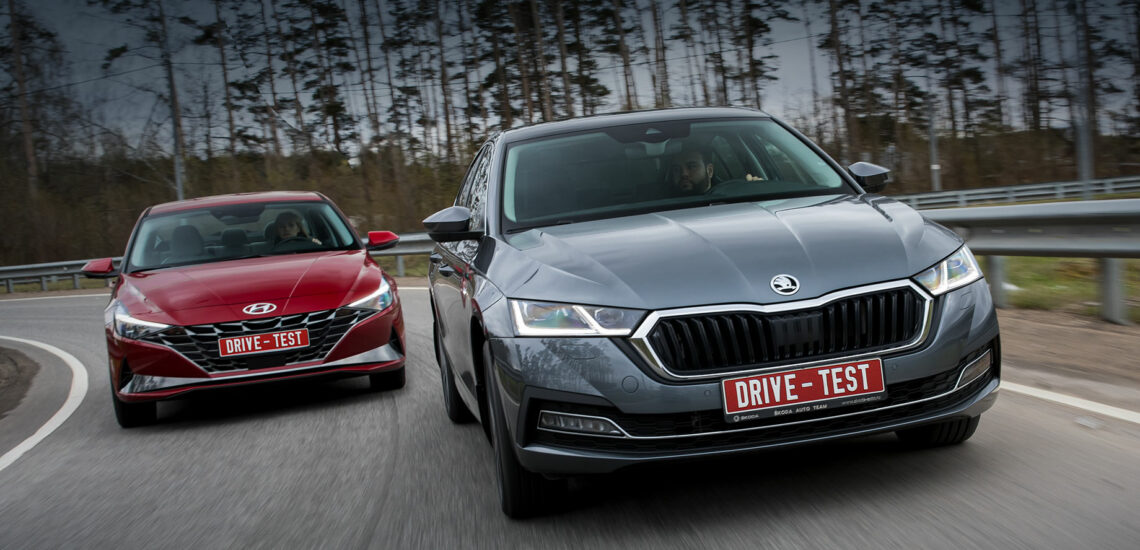

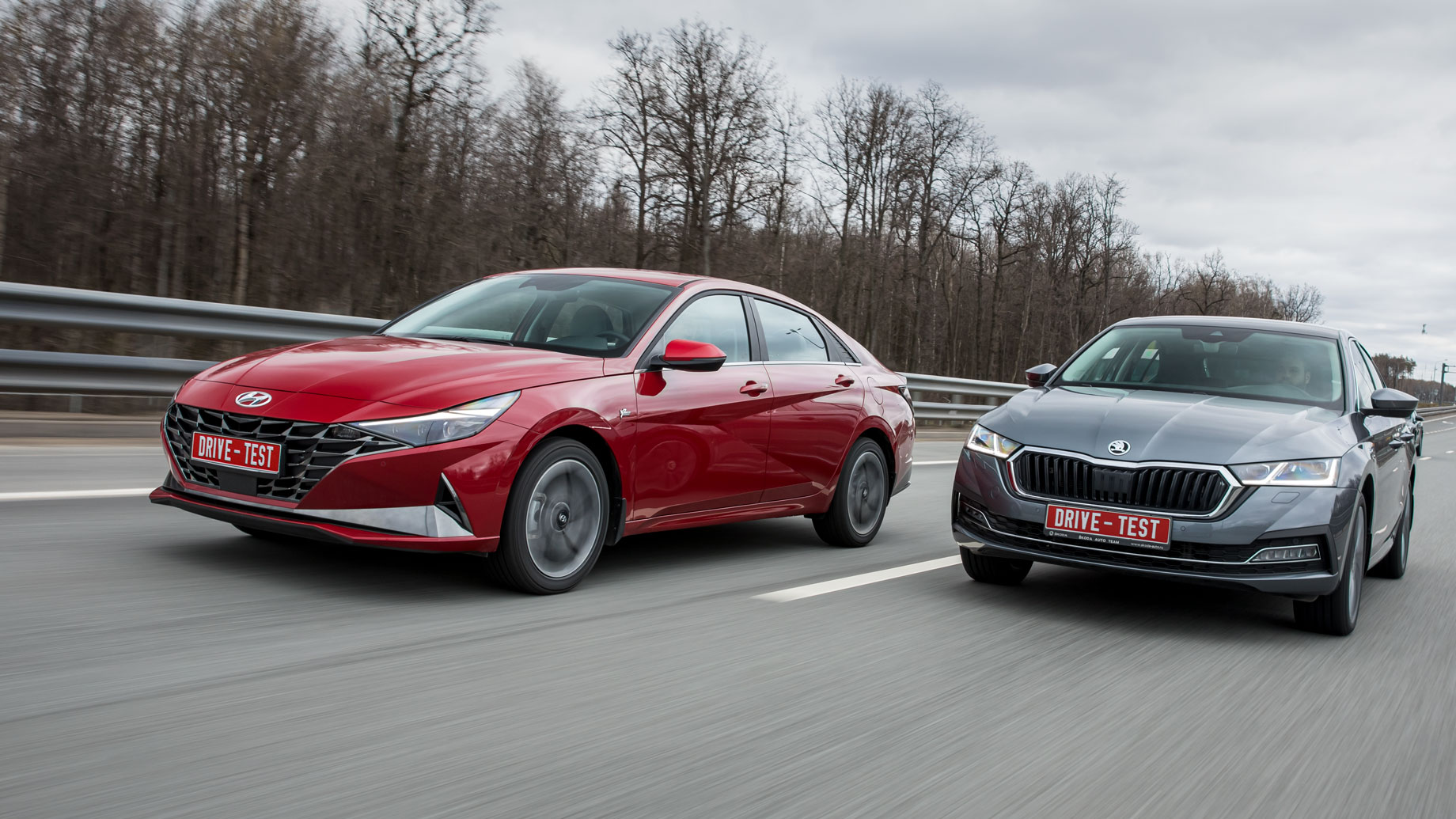
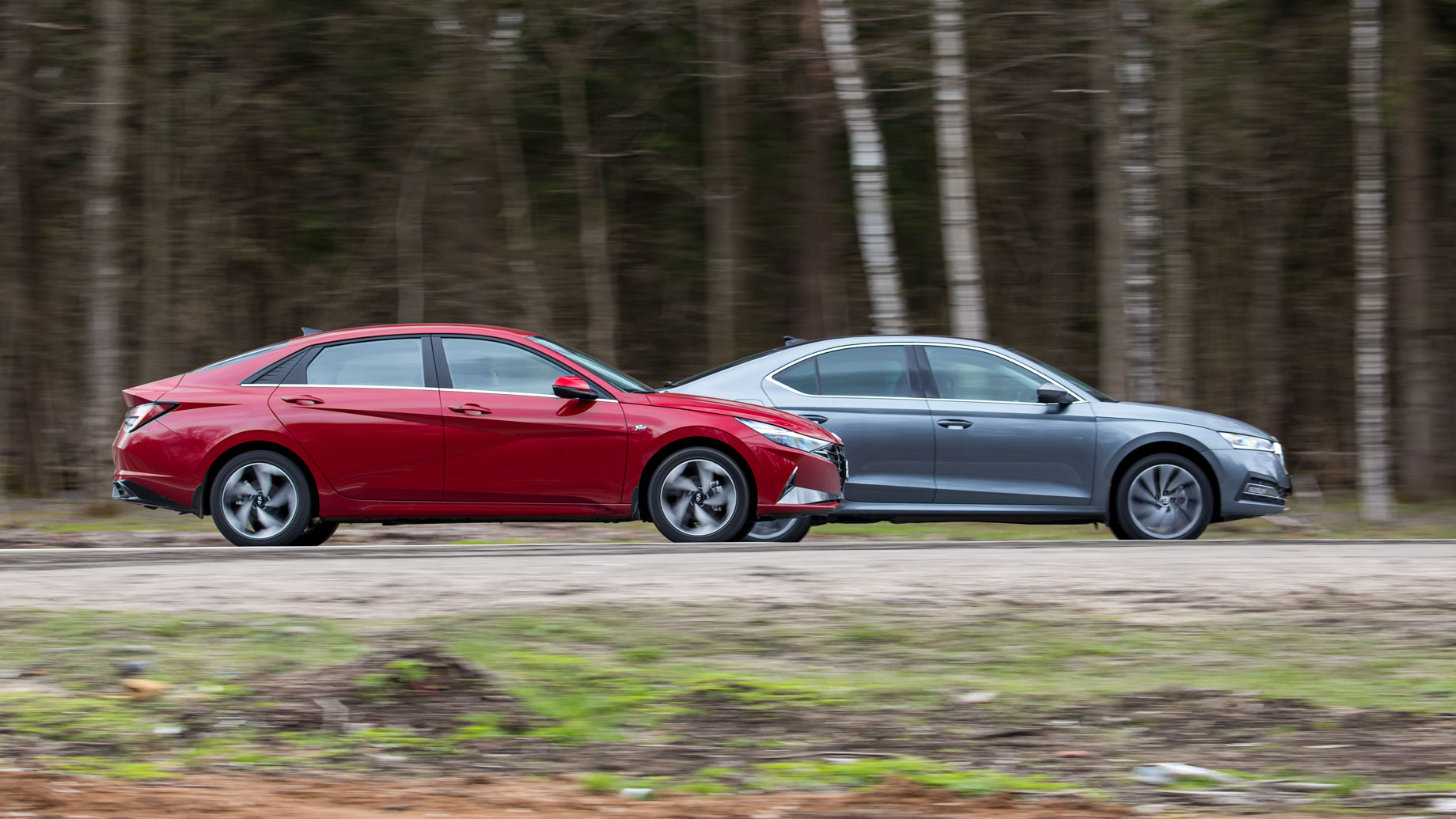
Choosing between the Hyundai Elantra and the Skoda Octavia liftback isn’t straightforward. One impresses with bold design and a surprisingly capable chassis; the other wraps you in refinement and practicality. We put them head-to-head to find out which one truly earns its price tag.
First Impressions: Interior Quality and Comfort
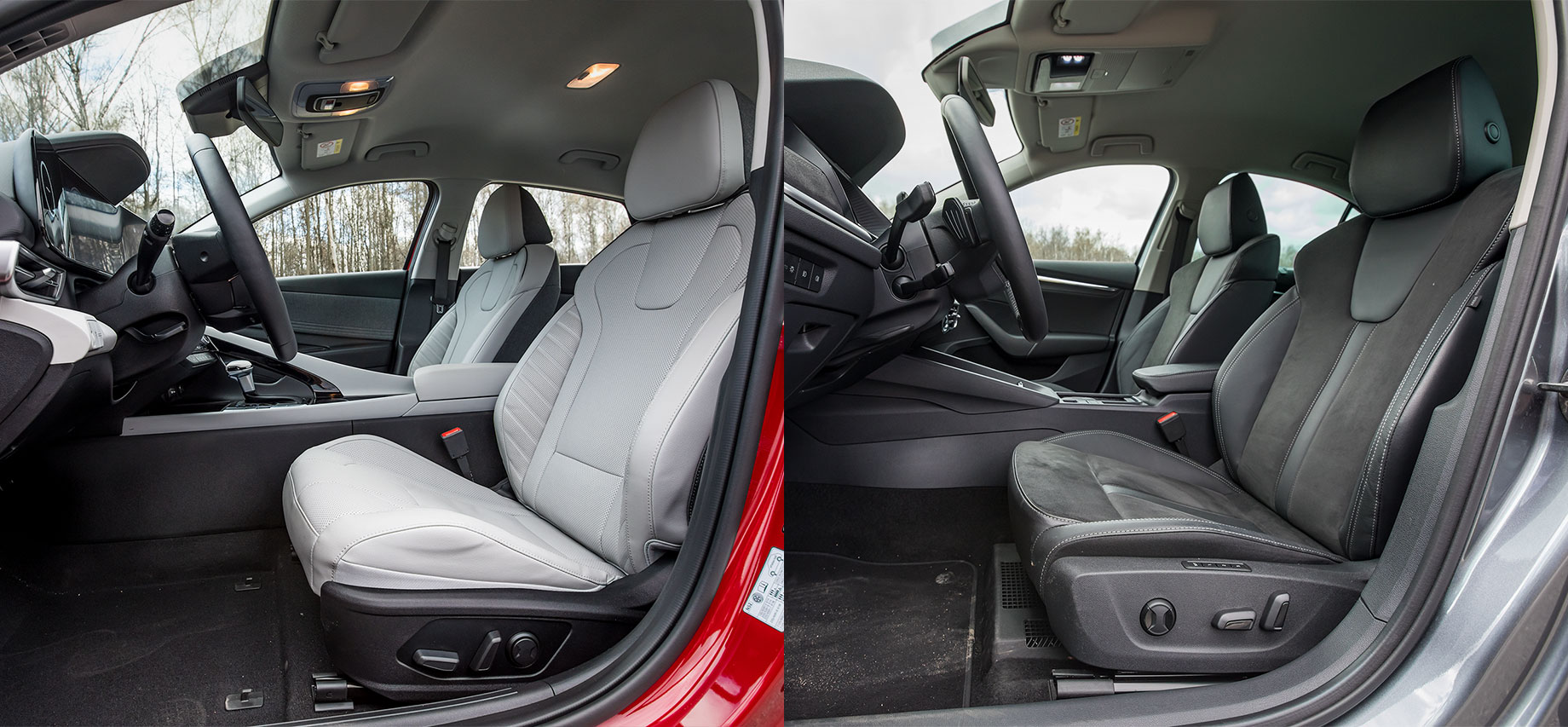
The Skoda greets you with matrix headlights and near-total silence the moment the driver’s door slams shut — it’s like stepping into a different world. Inside, you’ll find:
- A steering wheel reminiscent of a previous-generation Mercedes S-Class
- Large, crisp displays with excellent picture quality
- Alcantara trim on the front panel
- Ambient contour lighting throughout the cabin
Has the Octavia gone upmarket? It certainly feels that way. Yet despite the premium atmosphere, it doesn’t drive significantly better than its predecessor — a stagnation made all the more noticeable by the generational leap the Elantra has achieved.
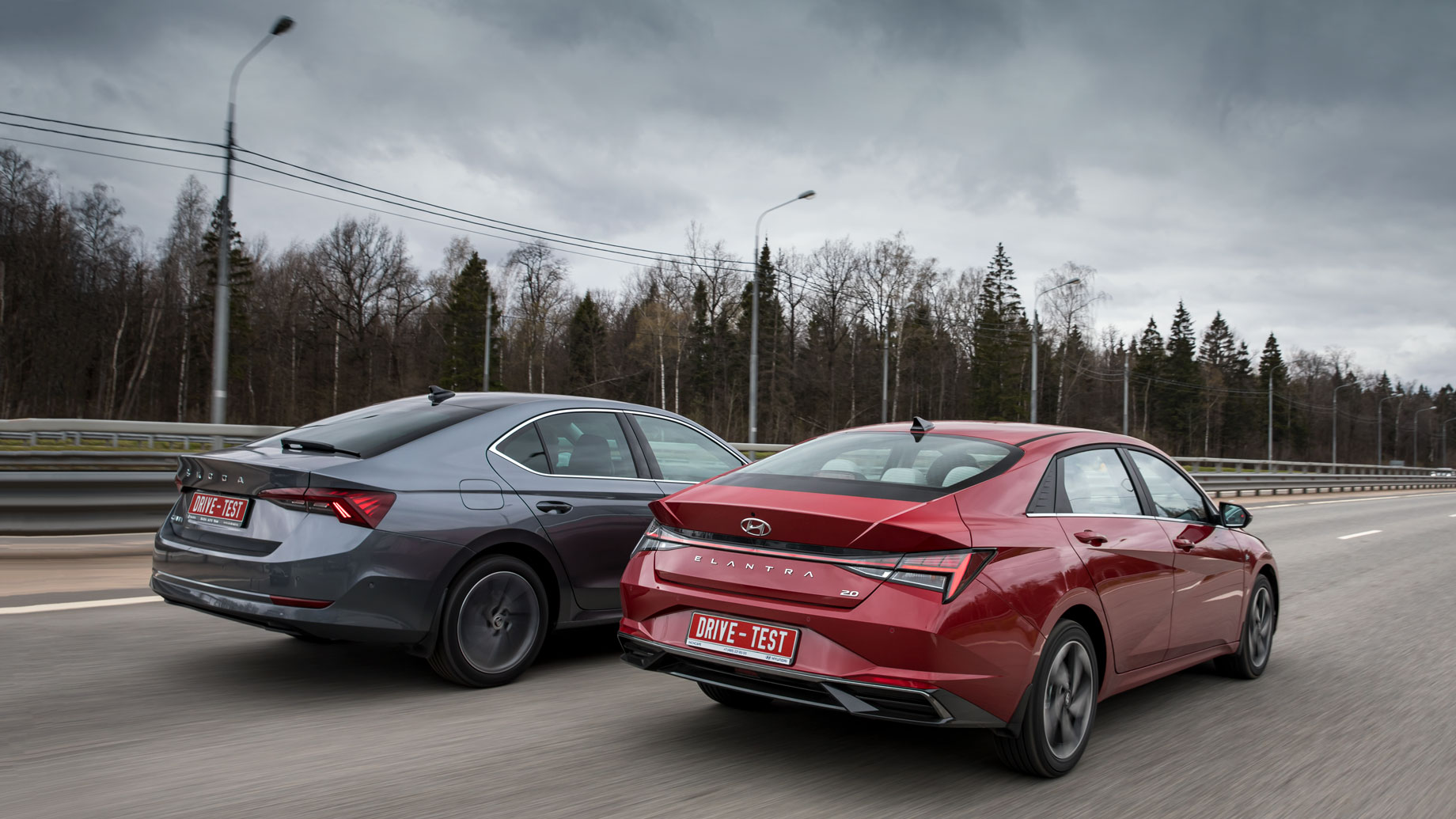
Ride Quality: Comfort vs. Composure
This is where the two cars diverge most sharply — and where your priorities will decide the winner.
The Hyundai Elantra rides on 17-inch wheels (one inch smaller than the Octavia’s) and delivers a noticeably smoother experience over everyday road imperfections. Speed bumps can be taken at a comfortable pace, and acceleration peaks are smoothed out rather than jolting passengers. That said, it’s not without flaws:
- Feels loose and unsettled on severely broken road surfaces
- Vibrations from average road defects are transmitted to the cabin
- Tyre noise builds aggressively with speed — even at low speeds, the hum is present
- On rough or gravelly asphalt, stones drum loudly in the wheel arches
- In wet weather, water splash noise is clearly audible inside
- The naturally aspirated engine sounds strained during hard acceleration
The Skoda Octavia is a firmer ride, but it’s a composed firmness — the kind that hints at sports car breeding rather than poor engineering. At low speeds, the shock absorbers are more delicate than on the previous model. However:
- Potholes and sharp bumps are reported with uncomfortable enthusiasm
- Large road imperfections push the suspension’s rigidity toward cruelty
- 18-inch wheels worsen the situation — opting for smaller wheels helps
- The chassis settings are the primary cause of poor riding comfort
On a genuinely bad stretch of road, the Octavia stays more focused and composed — stiffer, yes, but never chaotic.
Driving Dynamics: Which One Is More Fun?
The Octavia is the clear winner here. It rushes through bends with confidence, offers precise and progressively weighted steering, and its brakes are a genuine pleasure at higher speeds. The stability control system is liberal enough to allow a touch of driver involvement without immediately cutting power mid-corner.
The Elantra is technically capable — surprisingly small body rolls, minimal diagonal swinging in corners, and almost no tendency to oversteer even with stability control off. But the driver experience falls short:
- Steering feels viscous and almost completely devoid of road feedback
- Steering weight remains constant regardless of speed or corner intensity
- Brakes fade noticeably under repeated hard use — the pedal softens and a burning smell appears
In calm, everyday driving, the Elantra’s brakes actually feel better calibrated than the Octavia’s — braking intensity responds to pedal effort rather than travel distance. But push it hard, and they can’t keep up.
Engine and Transmission Performance
Both cars produce 150 hp, but the way they deliver that power couldn’t be more different.
The Skoda’s 1.4 TSI turbocharged engine is responsive and torquey from low revs. In testing with Racelogic equipment, it reached 60 mph in just 8.8 seconds — beating its official figure by two tenths. The eight-speed automatic transmission is smooth, fast, and intelligent, dropping multiple gears seamlessly when you push the accelerator harder.
The Hyundai’s naturally aspirated engine tells a different story:
- Sluggish at low revs, wakes up at mid-range, pulls well only at high RPM
- Recorded 9.9 seconds to 60 mph in best attempts vs. the factory claim of 9.8 s
- Significantly less torque — 191 N·m vs. the Octavia’s 250 N·m
- Torque arrives later and across a narrower RPM band
- The six-speed automatic shifts more slowly than the Skoda’s unit
- Throttle response is more muted, making overtaking feel laborious
Practicality, Space, and Everyday Usability
The Octavia liftback is, at its core, one of the most practical family cars in its class. Getting in and out is easier, the cabin is more spacious, and the boot is on a different level entirely — both in convenience and capacity. The Elantra, meanwhile, cuts corners in ways that affect daily life:
- No gas struts on the hood — a cost-cutting measure that feels outdated
- Cheap trim materials in several areas of the interior
- No pocket on the back of the driver’s seat
- Noise insulation is insufficient, especially at motorway speeds
On the positive side, the Elantra does offer more comfortable front seats, better-calibrated rear seat geometry, and improved mirror visibility compared to its predecessor. Its striking design and well-equipped interior punch above the car’s price point — buyers expecting a looker that drives blandly will be pleasantly surprised by its capable chassis.
Verdict: Hyundai Elantra or Skoda Octavia?
Neither car earns an unconditional recommendation, but they serve different buyers.
Choose the Hyundai Elantra if:
- Design and interior aesthetics are your top priority
- You mostly drive in the city at moderate speeds
- You value comfortable front seats and good driving visibility
- Budget is a key factor and you’re willing to compromise on refinement
Choose the Skoda Octavia if:
- You need genuine practicality — space, boot capacity, and ease of use
- Sound insulation and cabin refinement matter to you on long journeys
- You want a more responsive, enjoyable engine and gearbox
- You’re after a more technologically advanced and better-built car overall
Within the framework of this comparison, the Octavia comes out ahead. It is difficult to overlook not only its superior practicality and convenience, but also its higher perceived quality, noticeably better sound insulation, more engaging powertrain, and more communicative steering. The Czech liftback is simply a more technologically mature product. And if the ride is too firm for your taste, Skoda has proven with the Karoq that they know how to tune a comfortable chassis when they want to.
This is a translation. You can read the original here: https://www.drive.ru/test-drive/hyundai/skoda/60a3de51631bce01e036c896.html

Published June 16, 2022 • 6m to read