
How does the Mazda CX-30 stack up against the Subaru XV and Peugeot 2008? This in-depth comparison test puts three compact crossovers head-to-head — covering design, interior ergonomics, powertrain performance, ride comfort, handling, and off-road capability — to find out which one truly deserves a place on your shortlist.
Why This Comparison Matters
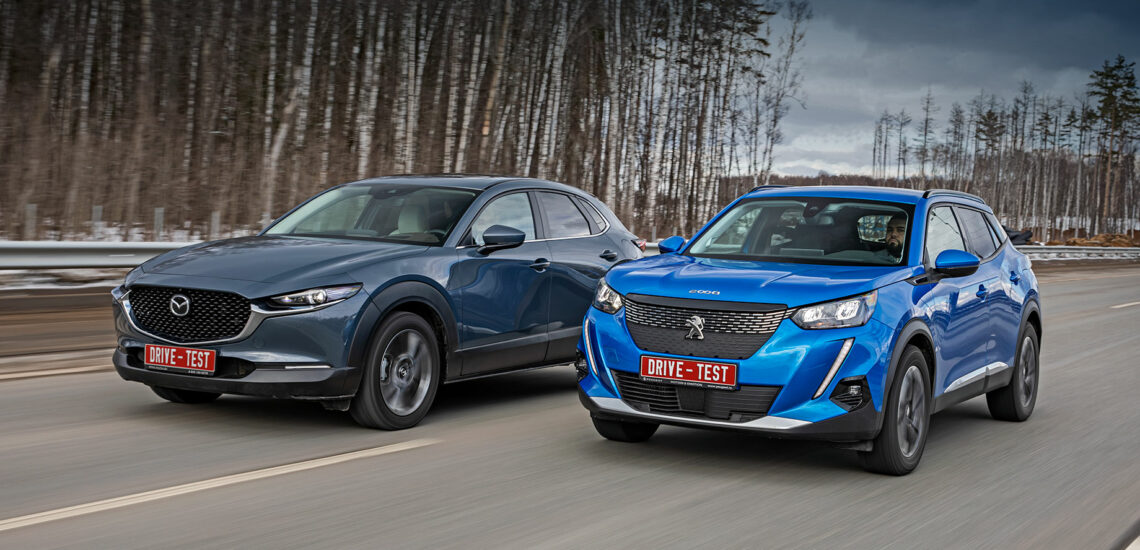
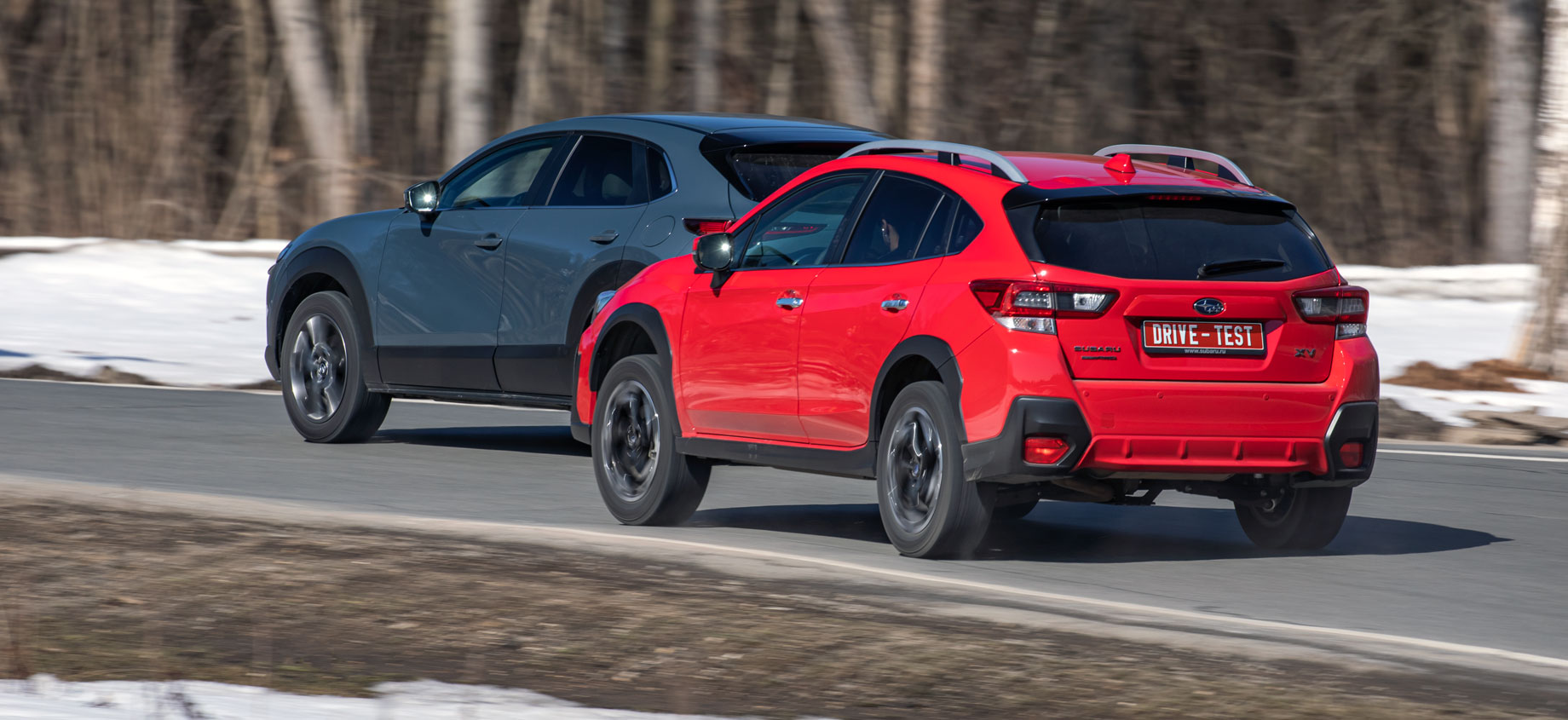
This test has several interesting features at once. Three cars are involved, but only the Mazda CX-30 is familiar with both of its rivals — so all the photos are paired accordingly. The context is also telling: having failed to make a strong impression on the market, Peugeot and Subaru now watch as the CX-30 quietly exits. Mazda demand is so high on its primary markets that nothing is left for the secondary ones.
Exterior Design: Calm vs. Bold
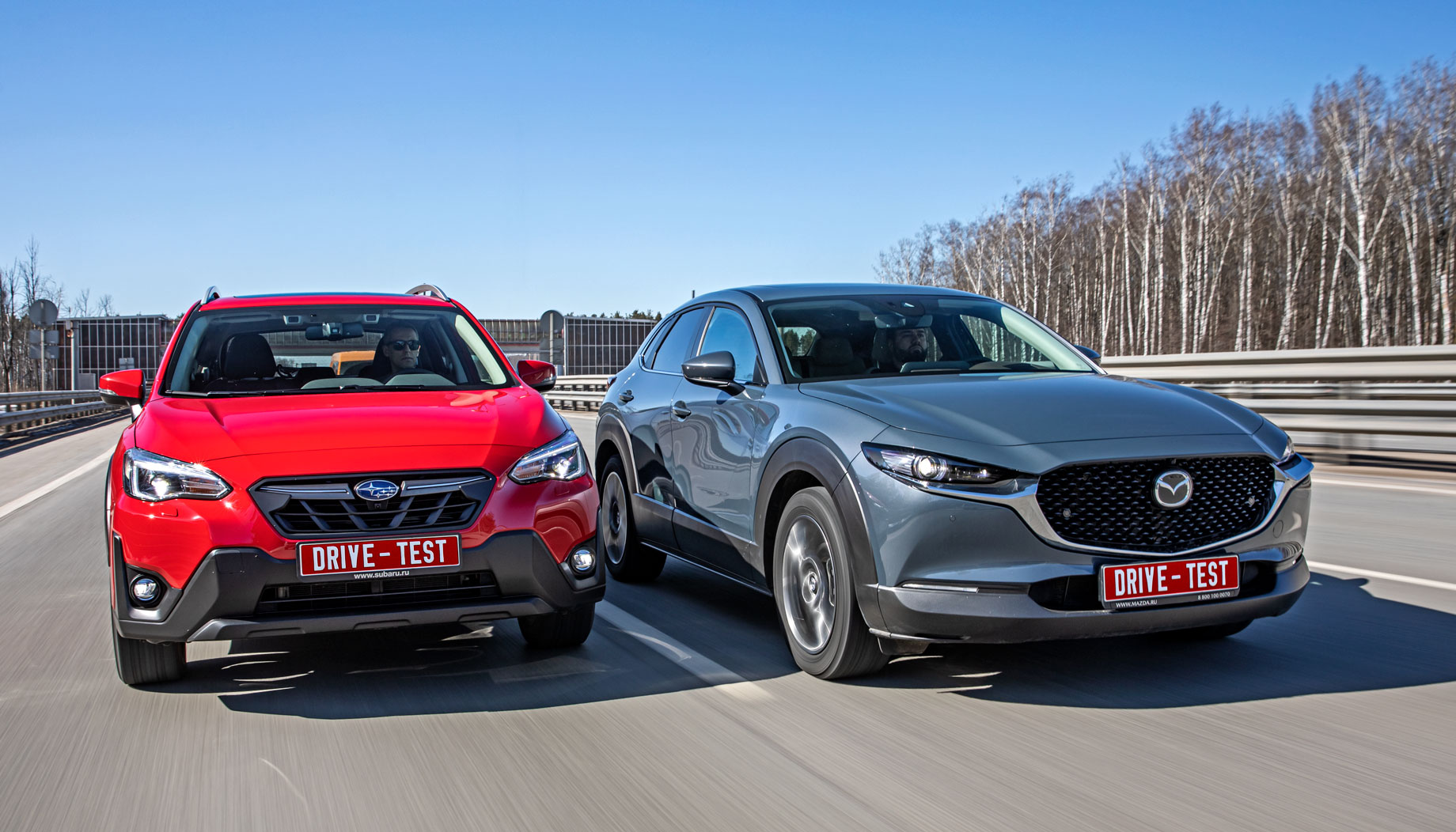
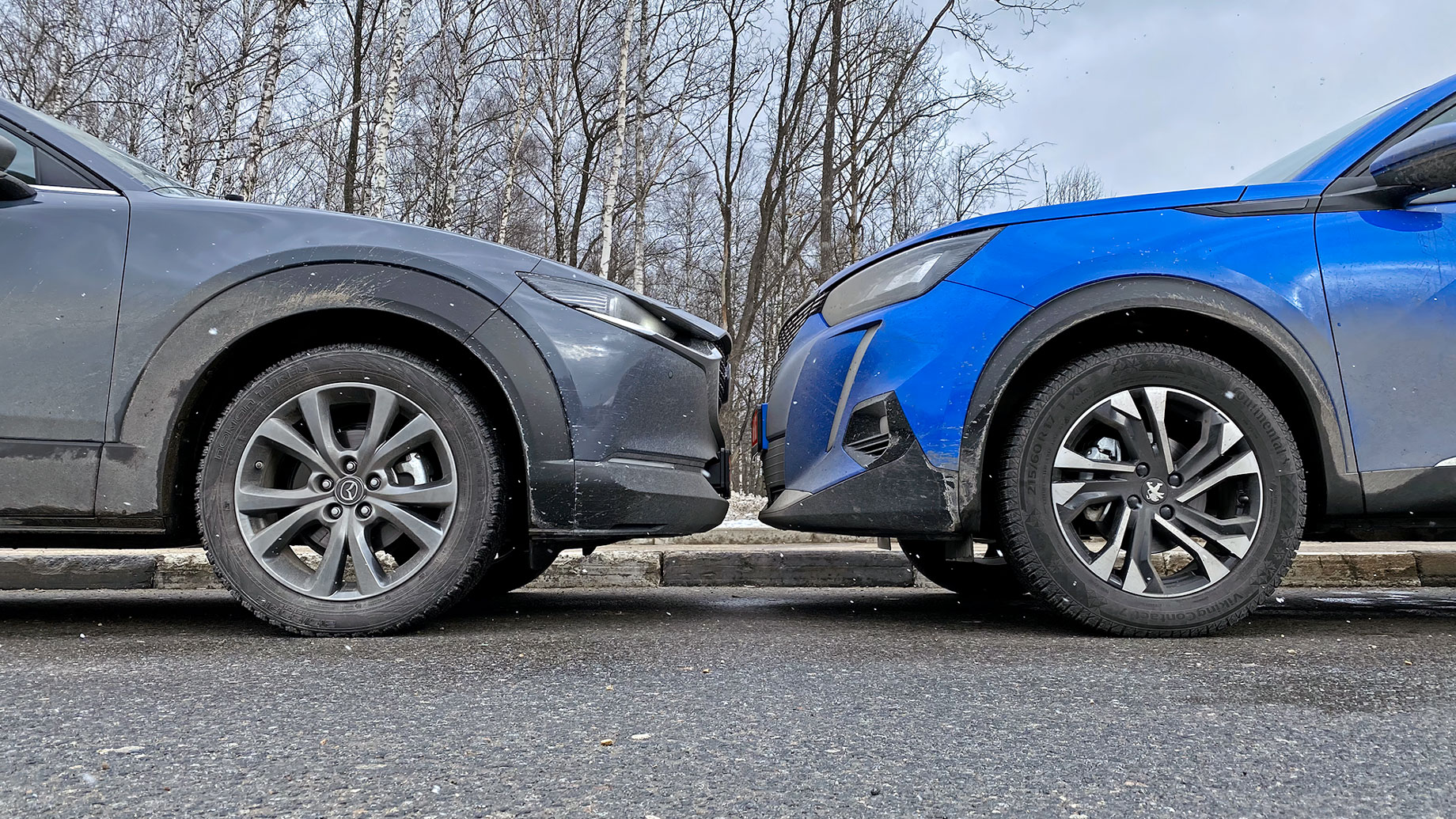
At first glance, there is nothing flashy about the Mazda. Whether standing next to the extravagant Peugeot or beside the design-conflicted XV, the CX-30 is a grey blur — and that turns out to be exactly the point. The moderate detailing and composed surfaces carry no obvious timestamp: no date of manufacture, no expiry date either.
The Peugeot 2008 takes a completely different approach. It is an up-to-the-minute car, engineered to sit at the height of fashion and inject emotion into every day. The European market proves there is real demand for this kind of boundary-pushing design — and it shows in how the 2008 sells there.
Interior & Ergonomics: Three Very Different Philosophies
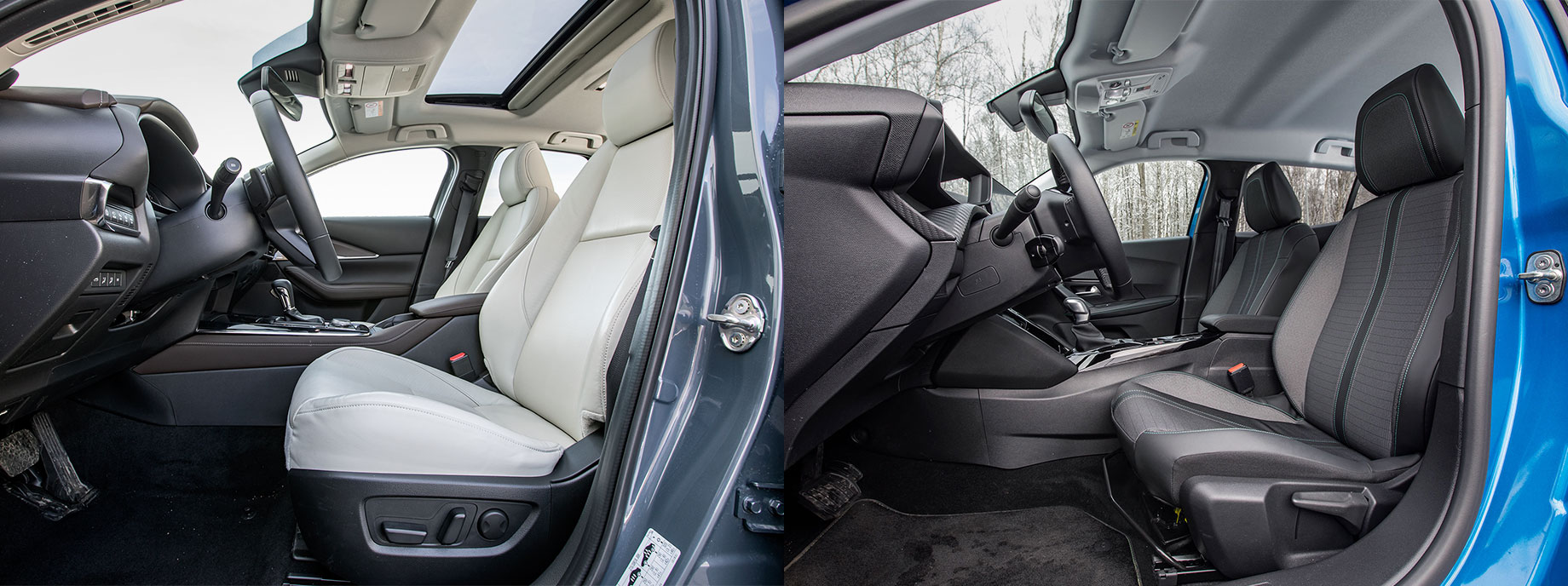
Step inside any of these three and the differences are immediately apparent. Here is how each cabin stacks up:
- Peugeot 2008: The most striking interior of the three — eerily fresh, almost disorienting. The low seating position lets you stretch your legs like in a passenger car, though the steering wheel must sit almost on your knees to avoid the dashboard blocking the instrument cluster rim. Climate control is buried in the touchscreen, and the closely spaced column stalks make left-hand operation a squeeze. The starter button has a frustratingly long lag before the engine responds.
- Mazda CX-30: A very European approach — clean, uncluttered, and immediately familiar. It strikes a balance between practicality and refinement that the other two struggle to match.
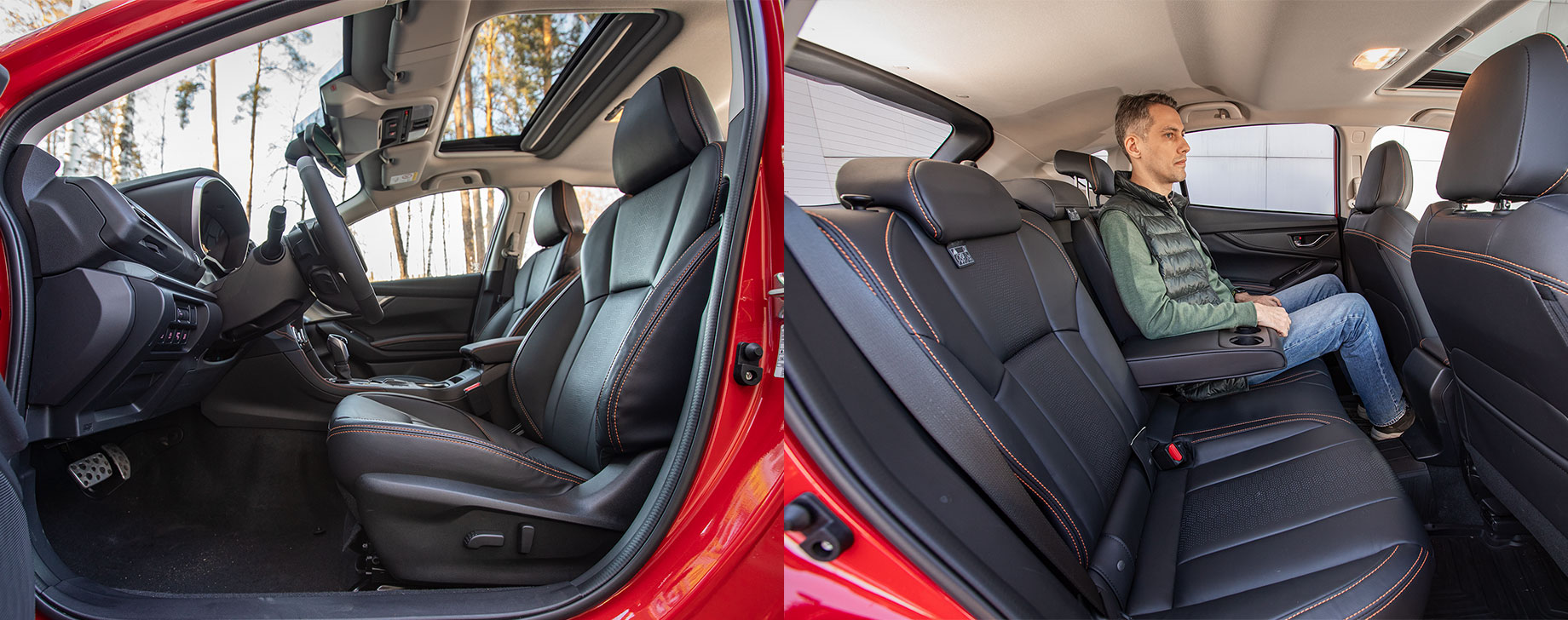
- Subaru XV: The least sporty seating position of the group. The steering wheel cannot be pulled close enough without overreaching on the pedals. Subaru still relies on its specific system of distributing information across three displays at different heights, backed by a budget mix of touch and button controls.
Powertrain & Performance: Automatics, CVTs, and Character
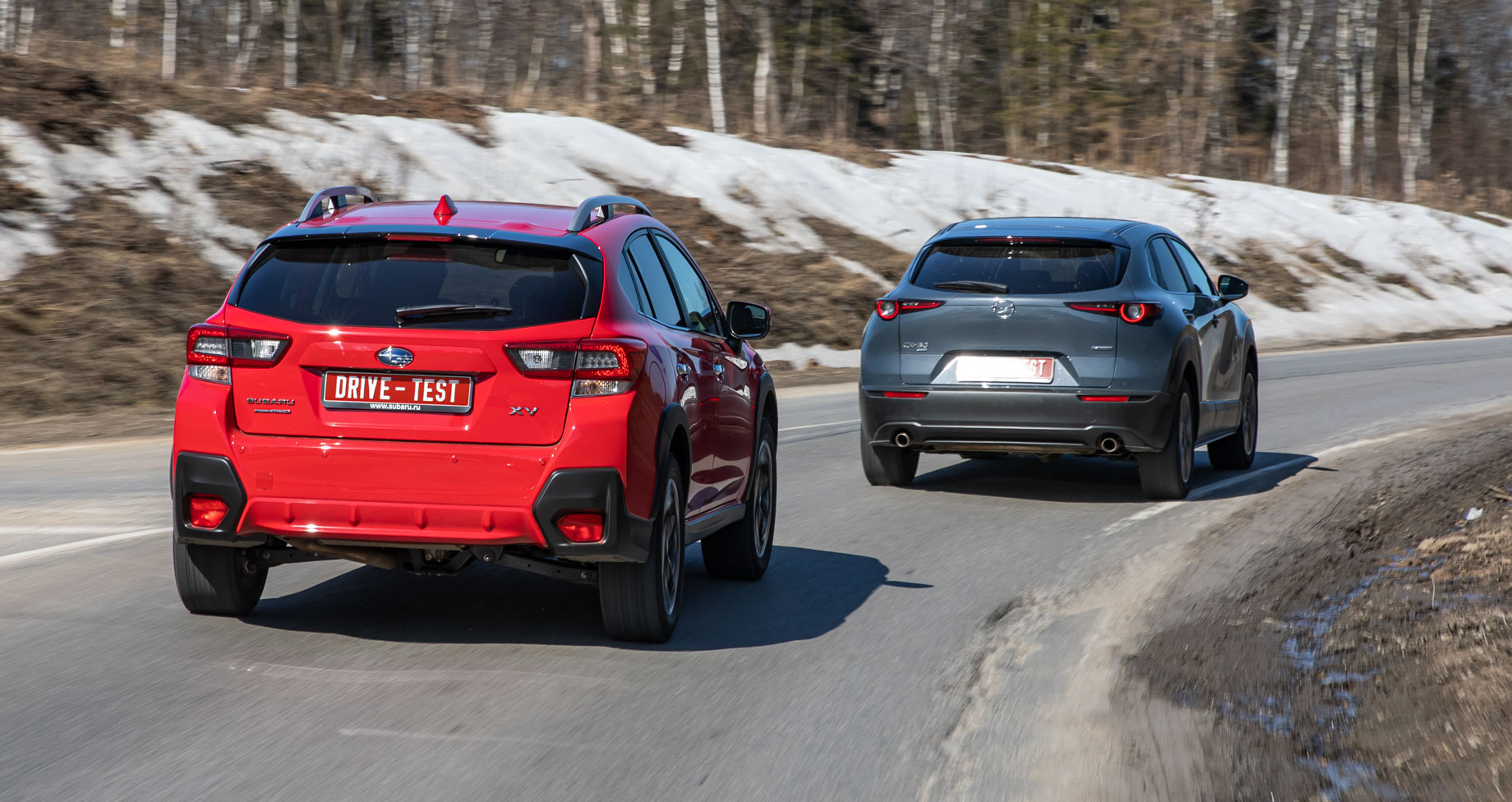
The Peugeot 2008 is the lightest of the three — already more than 440 lbs lighter than the Mazda — but it falls short on power and outright pace compared to CX-30’s six-speed Aisin automatic. In a rolling start, you would need to offload a passenger and drain half the tank to pull away from the Mazda. Fully loaded and side by side, however, all three crossovers accelerate on broadly similar terms.
The key differences emerge in how each powertrain manages everyday driving:
- Peugeot 2008: The three-cylinder turbo engine is noisy and vibration-prone at low revs, and the gearbox struggles with downshifts. In response to a kickdown from around 50 mph, the Aisin-sourced unit drops one gear, hesitates, then searches for another — an obvious and recurring error in gear selection.
- Mazda CX-30: The 2.0-litre naturally aspirated engine responds willingly to the throttle, but the six-speed automatic blunts the sensation. The torque converter lacks lock-up firmness — at a steady throttle, engine speed floats and the motor drones. Manual mode produces satisfying throttle blips on downshifts, though engine braking trails off slightly.
- Subaru XV: The initial throttle response off the line is sharp — almost too sharp for crawling traffic — but acceleration doesn’t continue linearly once the pedal is held at a small angle. Deep throttle input is needed to sustain pace. The CVT quickly climbs to peak torque and holds between 4,000 and 5,000 rpm under hard acceleration, which becomes aurally wearing. A brief lift mid-corner reintroduces the transmission’s characteristic pause as the torque converter resets.
Ride Quality & Comfort: Who Absorbs the Road Best?
- Subaru XV: The most comfortable of the three. The suspension feels robust, and the body’s resonant characteristics are well-tuned for a platform that isn’t especially rigid. Speed over poor surfaces is limited only by the driver’s nerve — speed bumps are the main thing to keep in mind in town.
- Peugeot 2008: The stiffer body amplifies sharp impacts at joints and abrupt bumps with a low-frequency shudder throughout the cabin. The chassis itself is capable and handles larger potholes with composure, but sudden rebound hits are amplified unpleasantly. On broken roads you tend to slow down more than the suspension actually demands.
- Mazda CX-30: More cautious on rough surfaces, and it shows its discomfort. On decent tarmac, though, the chassis is rattle-free and overall comfort rises to meet the Peugeot. The CX-30 collects more small surface details but without harsh resonance. Measured on an Apple Watch sound meter, cabin noise runs about two decibels higher than in the Peugeot — tyre roar is dominant in both. The CX-30 also lacks the aerodynamic noise that the 2008 develops above 68 mph; by around 80 mph the gap nearly closes.
Handling & Dynamics: Precision, Balance, and Road Feel
Despite being the most compact car here, the Peugeot 2008 carries a surprising amount of speed into corners and holds its line well — partly out of necessity, since its throttle stays pinned to keep pace with the Mazda. The light steering wheel, however, makes precise trajectory-setting difficult: everything requires anticipation and frequent correction. In challenging bends with uneven surfaces, the 2008 rolls noticeably, unsettles itself, and leans heavily on its non-switchable stability control. On the Viking Contact 7 winter tyres fitted to our test car, all four wheels slide progressively before the electronics step in with a composed, measured intervention.
The Mazda CX-30 offers a more satisfying dynamic package overall:
- The steering is better weighted and more responsive than the Peugeot’s
- The rear wheels track faithfully behind the fronts through long arcs
- Adjusting throttle mid-corner effectively shifts the balance and adjusts the line
- The main drawback is sensitivity to road camber, requiring active steering correction on crowned roads
One additional steering note: the Peugeot’s wide spokes are difficult to grip properly — you end up pressing them against your palms rather than wrapping your fingers around them, which increases wrist fatigue and reduces precision. The Mazda’s wheel, by contrast, is grippy and natural in the hand.
The Subaru XV is the least dynamically ambitious of the trio. Its handling balance is genuinely good once you push past its composed nature, and it can match the Mazda’s pace if you insist. But the XV’s character resists being pushed. The EyeSight system is the main obstacle — it panics early when driving close to other vehicles and cuts fuel supply with a sharp, piercing alert, making spirited driving difficult.
Off-Road Capability: Which Crossover Goes the Extra Mile?
There is no dedicated off-road section in our test programme, but a snowy slope reveals the real-world limits of each car’s capability:
- Peugeot 2008 (front-wheel drive): Climbs the snowy slope with good geometric approach. The stability system maintains directional control even with traction control off, without smothering momentum. It also features downhill assist — the only one of the three to do so. Drawback: it cannot stop and restart mid-climb; you must roll back and attack in motion.
- Mazda CX-30: Offers no dedicated off-road programmes. If you stop on a slippery slope, the four-wheel drive is slow to engage, allowing the front wheels to spin for a frustratingly long time before drive is sent rearward.
- Subaru XV: Received a Deep Snow/Mud programme in its latest update, but the non-switchable stability control undermines it. The system suppresses wheelspin too aggressively in situations where slip is exactly what’s needed, and the CVT refuses to hold above 3,000 rpm to help the driver overcome the electronics mechanically.
Safety & Driver Assistance Systems
All three cars include driver assistance technology, but the quality and calibration varies considerably:
- Subaru XV: The EyeSight system operates entirely on optical data — even the adaptive cruise control runs without radar. Camera-only systems, however large the sensors, degrade in poor visibility conditions.
- Mazda CX-30: Radar-assisted cruise control, but the system can brake sharply and unexpectedly — a jolt for following traffic that hasn’t kept a safe gap. Not recommended for use in urban environments in this calibration.
- Peugeot 2008: The only car here with a speed limiter suited to city driving — a practical feature that the other two lack.
Verdict: Which Compact Crossover Should You Buy?
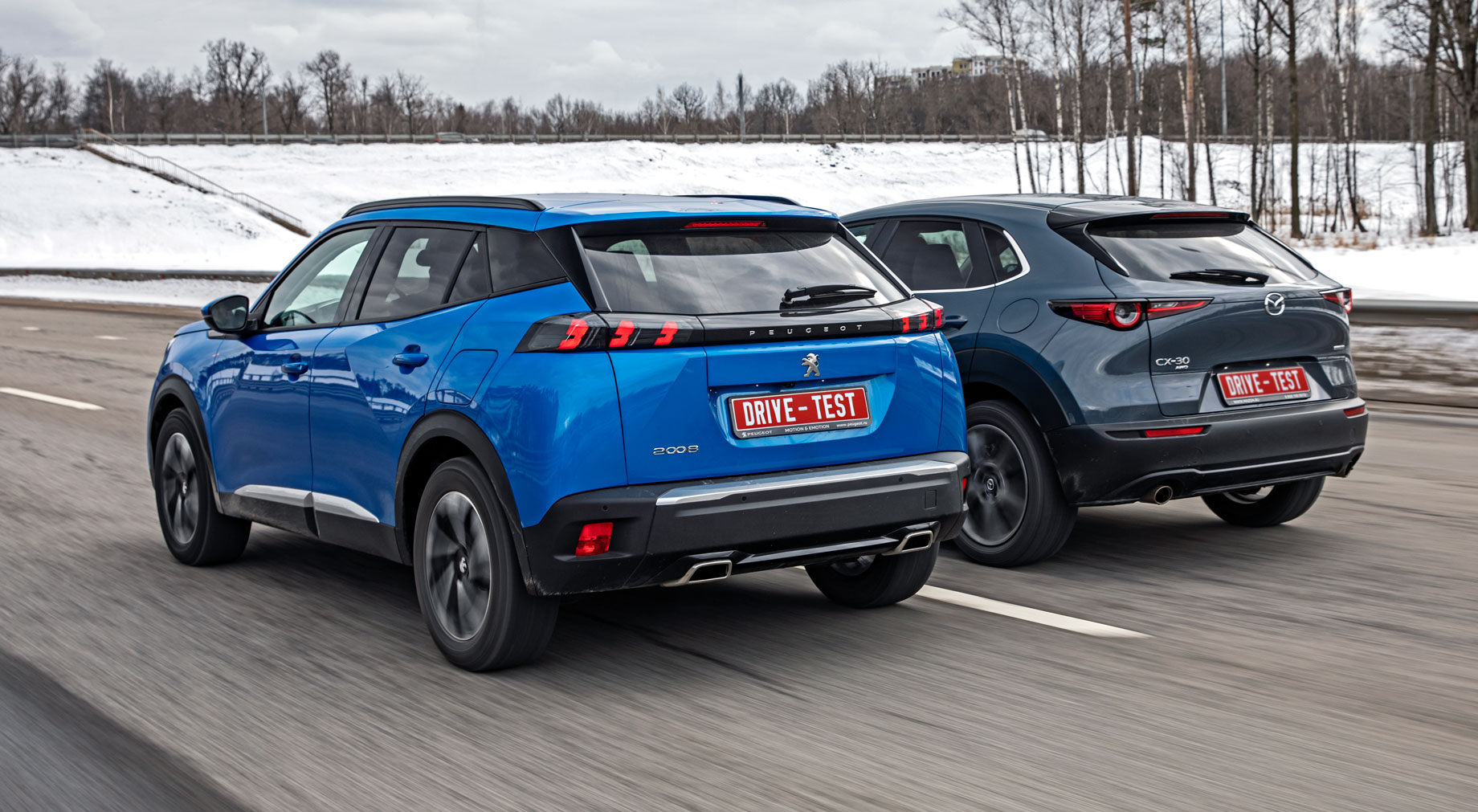
Despite having a natural affinity with Mazda, in each of today’s pairings the rival is the more interesting choice. Here is the honest summary:
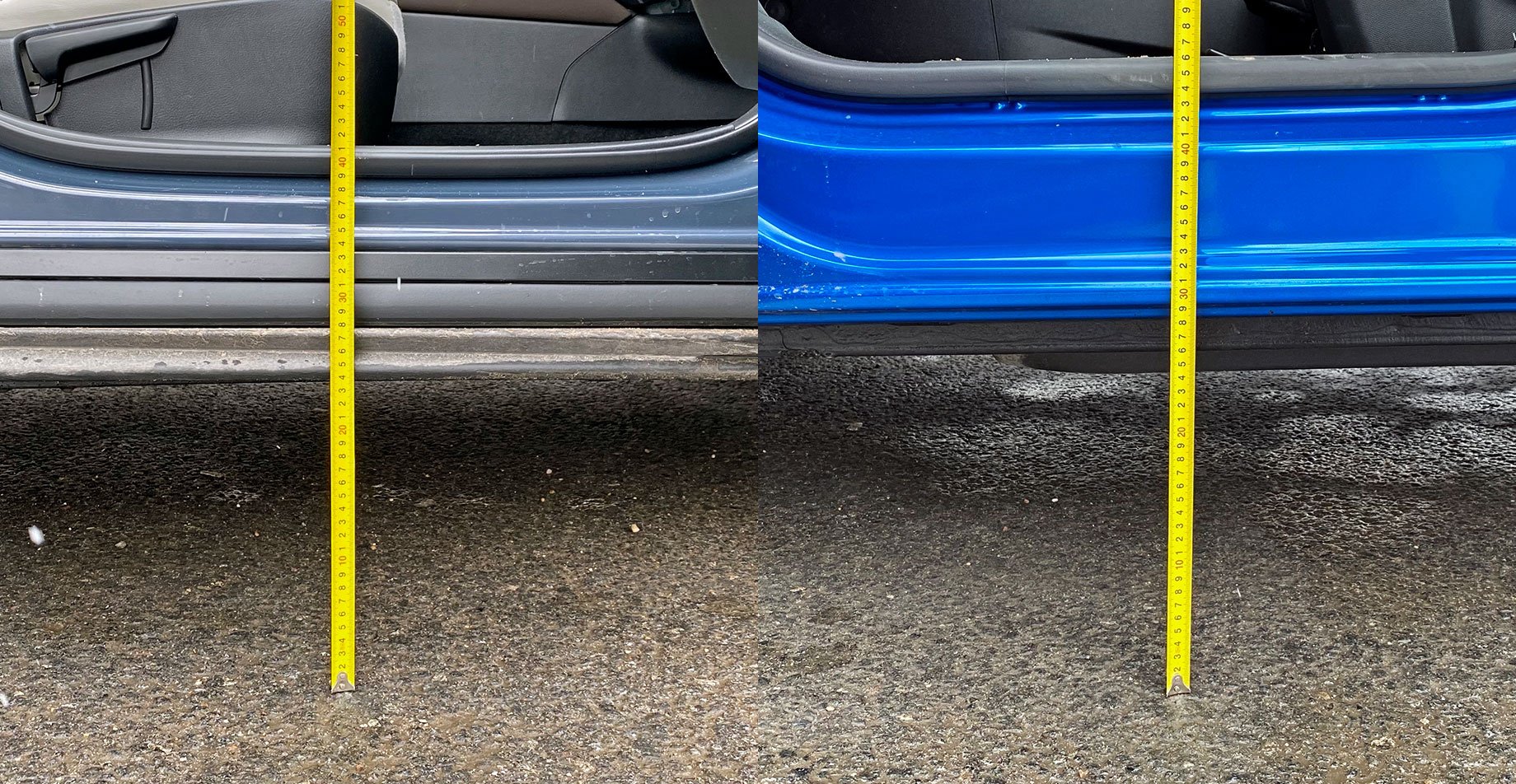
- Peugeot 2008: Surprises with genuine freedom in extreme driving modes. The chassis extracts everything the turbo engine can offer, even if that engine is rough in transient conditions. The 150 hp, eight-speed automatic version strengthens the case considerably — and at 215 mm of ground clearance (a full centimetre more than the Subaru), city dwellers lose little by not having all-wheel drive. The brakes, however, remain a genuine weak point: even the uprated setup on the GT version lacks feel underfoot, as if there’s cotton wool between the pedal and the callipers. Pricing starts at around $18,135 for the 130 hp Allure, with the 150 hp version adding $1,565.
- Subaru XV: Impresses with unfussy design, honest build quality, and a settled, confidence-inspiring feel on the move. The all-wheel drive system is a genuine asset — until the traction control settings undermine it. Starting price from around $23,600. Note: the XV has not yet been included in Subaru’s new five-year warranty programme.
- Mazda CX-30: The arithmetic mean of the group. Not too bold, not too boring — a safe, considered choice that demands the least personal compromise from the buyer. But it is precisely this inoffensiveness that makes it the least memorable of the three, and its market exit creates space for the more distinctive alternatives to be properly considered.
Ultimately, both the Peugeot and Subaru reward buyers willing to engage with something a little less obvious. For those open to an emotional purchase rather than a purely rational one, either rival makes a compelling case — and neither requires you to settle.
This is a translation. You can read the original here: https://www.drive.ru/test-drive/mazda/peugeot/subaru/608c52e1722dd36d6cc05b2c.html

Published April 07, 2022 • 9m to read