
Semi-automatic transmissions sit at the intersection of driver control and automation — offering the best of both manual and automatic gearboxes. To truly understand how a semi-automatic transmission works, it helps to first revisit the fundamentals of a conventional manual gearbox.
How a Manual Transmission Works: The Basics
A traditional manual transmission is built around two main shafts:
- Primary (driving) shaft — receives torque from the engine via the clutch gear
- Secondary (driven) shaft — transfers the converted torque to the drive wheels
Both shafts carry gears that mesh in pairs. On the primary shaft, gears are fixed rigidly; on the secondary, they spin freely. In neutral, all secondary gears rotate without transferring torque to the wheels.
When shifting gears, the driver presses the clutch to disconnect the primary shaft from the engine. Moving the gear lever shifts special devices called synchronizers along the secondary shaft. A synchronizer clutch then rigidly locks the relevant gear onto the shaft. Once the clutch is released, torque flows through the locked gear at the chosen ratio, continuing to the final drive and wheels. To keep the gearbox compact, the secondary shaft is often split in two, spreading the driven gears across both halves.
How a Semi-Automatic Transmission Works
A semi-automatic gearbox follows exactly the same mechanical principles — with one key difference: servo actuators handle the clutch and gear selection instead of the driver. These actuators typically include:
- A stepper electric motor with a reduction gearbox
- A servo unit for clutch operation
- Hydraulic actuators in some configurations
An electronic control unit (ECU) orchestrates the entire process. When a gear change is commanded:
- The first servo depresses the clutch
- The second servo moves the synchronizers into the desired gear
- The first servo slowly releases the clutch
This eliminates the need for a clutch pedal entirely. In automatic mode, the onboard computer triggers shifts based on vehicle speed, engine RPM, and input from systems like ESP and ABS. In manual mode, the driver commands shifts via the gear selector or paddle shifters.
The Drawback: Lack of Clutch Feedback
The primary weakness of a semi-automatic transmission is the absence of tactile clutch feedback. An experienced driver can feel exactly when the clutch plates engage and modulate the transition accordingly. Electronics, however, must take a more conservative approach — holding the clutch open longer to avoid jerks and prevent wear. The result is noticeable power interruptions during acceleration.
The only real solution is to reduce shift time, but that directly increases the cost of the unit — a trade-off that limits semi-automatic transmissions in budget-friendly applications.
The DCT Revolution: Dual-Clutch Transmission Explained
The Dual-Clutch Transmission (DCT), which emerged in the early 1980s, addressed these shortcomings with a clever mechanical breakthrough. Take Volkswagen’s 6-speed DSG as a prime example. It features:
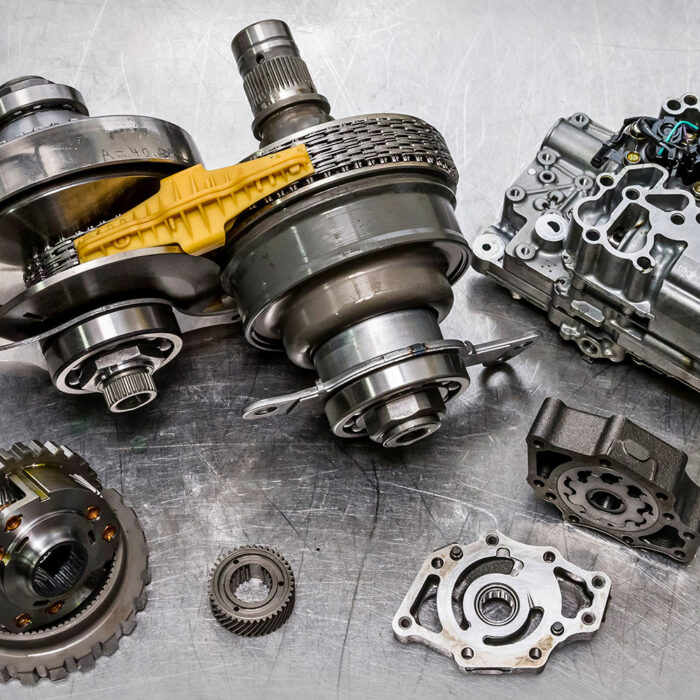
- Two secondary shafts with driven gears and synchronizers
- Two primary shafts — one nested inside the other, like a Russian matryoshka doll
- Two separate multi-disc clutches, one for each primary shaft
Here’s how the gears are distributed:
- External primary shaft: 2nd, 4th, and 6th gears
- Internal primary shaft: 1st, 3rd, 5th, and reverse gears
Here’s what makes DCT so fast: while the car is driving in 1st gear (internal shaft, first clutch closed), the electronics pre-selects the 2nd gear simultaneously on the external shaft — even though that clutch remains open. This is why DCTs are also called preselective transmissions.
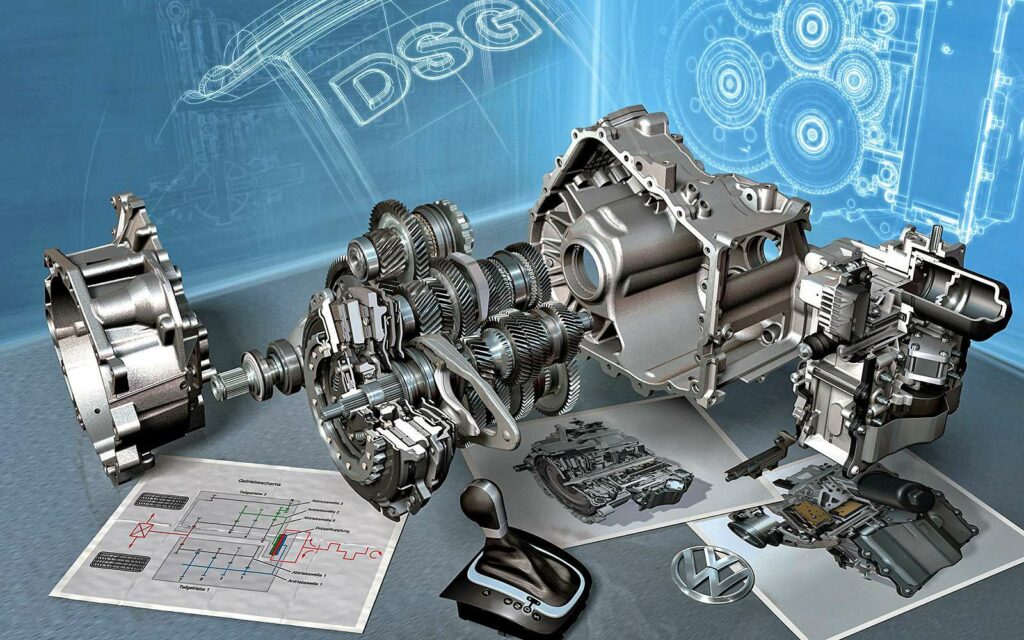
When the shift point arrives, the first clutch opens and the second closes simultaneously. Torque transfers to the external shaft and 2nd gear — almost without interrupting the power flow. The result is staggering: the Golf DSG shifts in just 8 milliseconds, compared to 150 ms on the Ferrari Enzo.
DCT vs. Semi-Automatic: Key Differences
- Speed: DCT shifts in single-digit milliseconds; semi-automatic transmissions take significantly longer
- Smoothness: DCT transitions are nearly seamless due to pre-selected gears; semi-automatics can produce noticeable dips in power
- Efficiency: DCTs are more fuel-efficient than traditional automatics
- Cost: Both technologies carry a price premium, though DCTs have become more accessible over time
- High-torque capability: Early DCTs struggled with high-torque applications — a limitation solved by Ricardo’s DSG fitted to the 1,000 hp Bugatti Veyron
Who Uses DCT Today?
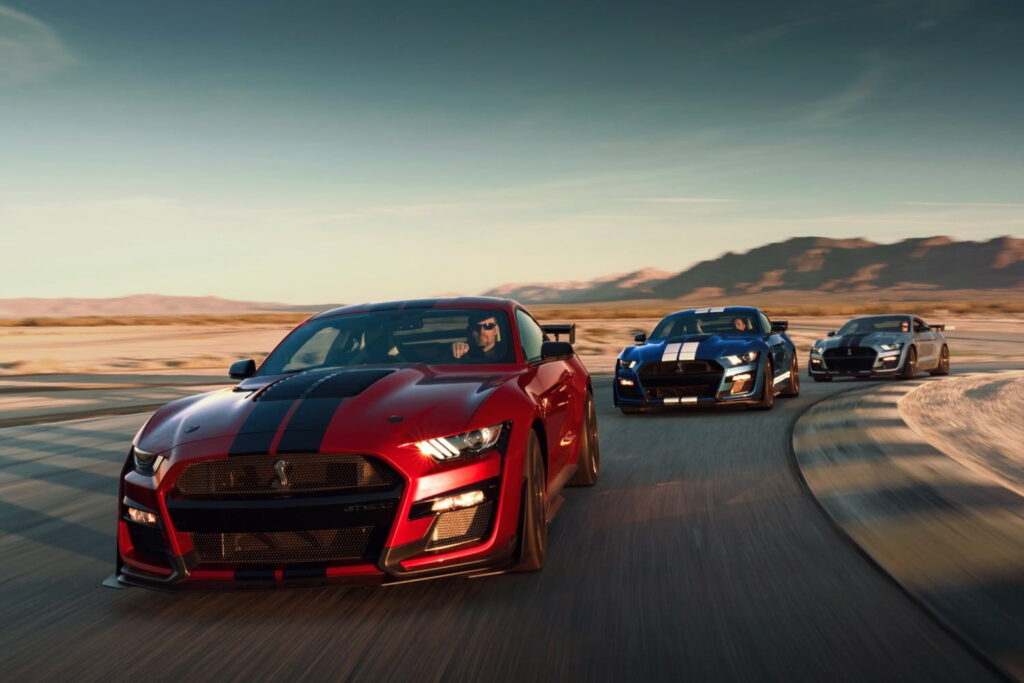
Dual-clutch transmissions are no longer exclusive to Volkswagen Group vehicles. Today, DCT technology is used by:
- BMW
- Ford
- Mitsubishi
- FIAT
- Porsche — a brand known for adopting only time-tested technologies
Meanwhile, semi-automatic gearboxes continue to dominate the supercar segment — though even here the gap is closing. The Ferrari 599 GTB Fiorano’s robotized gearbox, for instance, shifts in just tens of milliseconds, far outpacing more affordable semi-automatic systems like Opel’s Easytronic.
The Future of Automotive Transmissions
Industry analysts predict that DCT and CVT (continuously variable transmission) will become the dominant transmission types in the coming years. The manual gearbox — defined by its clutch pedal — is slowly disappearing, even from performance-oriented sports cars. As driver assistance systems and automation advance, the shift toward convenience is only accelerating.
This is a translation. You can read the original here: https://www.drive.ru/technic/4efb332e00f11713001e3f50.html

Published November 18, 2021 • 5m to read