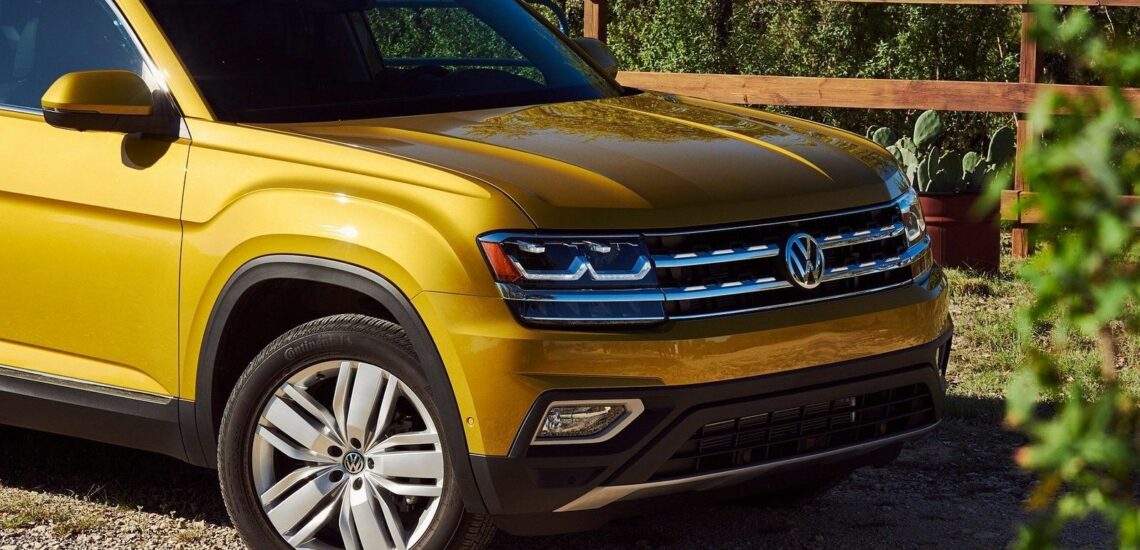

Secrecy prevails at Volkswagen’s research and development center in Wolfsburg: cameras on phones and laptops are taped over, and even the slightest deviation from the designated route is unwelcome. We were given an exclusive look at the latest developments in automotive lighting — cutting-edge headlights, lamps, and beyond. Chief designers took the floor first, all emphasizing how critical it is to have creative freedom when working with the aesthetics of lighting devices. As many as 15 in-house designers are dedicated to this area alone. But what about the engineers?
A Brief History of Automotive Headlights
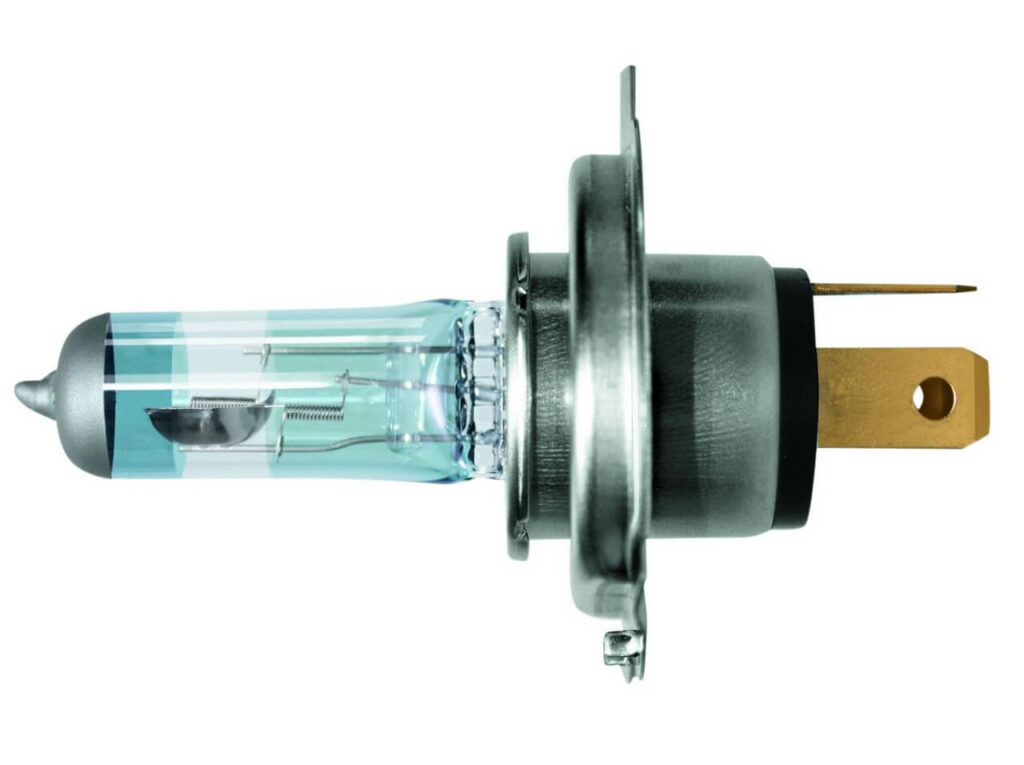
The engineers were anything but a third party. The true breakthrough in automotive lighting came with the introduction of the H4 halogen double-filament lamp in 1971. Its rated low beam of 1,000 lumens was unmatched at the time, and the H4 remains in use in many budget-friendly vehicles to this day, including early versions of the Volkswagen Polo. The total light output from the source is the primary factor in how well a headlight illuminates the road — reflector area, shape, surface quality, and diffuser optics are secondary refinements.
Until the early 1990s, the H4 and similar halogen lamps dominated global markets (with the exception of the United States, which maintained its own standards). By then, engineers had learned to maximize light output through improved reflector shapes and projector modules. New lamps followed, each raising the performance bar:
- H7 (1,500 lumens) — single-filament, widely used in both low-beam and high-beam headlights
- HB3 (1,860 lumens) — found in models like the Kia Rio and Hyundai Solaris
- H9 (2,100 lumens) — the performance record-holder among halogen high-beam lamps
The Xenon Revolution: High-Intensity Discharge Lighting
In 1991, engineers introduced xenon (HID) lamps — a genuine revolution in automotive lighting. These produce light via an electric arc rather than a heated filament and deliver a nominal 3,200 lumens, more than three times the output of the H4. However, xenon technology came with its own set of technical challenges:
- Higher precision requirements for optics and beam alignment
- Complex ignition and ballast units affecting component layout
- Mandatory automatic beam correctors to prevent blinding oncoming drivers
- Required headlight washing systems
- Higher overall cost compared to halogen setups
Despite these hurdles, xenon proved highly effective — especially when combined with beam-turning systems introduced in the 2000s. A lower-power 25 W xenon standard was later developed as an alternative to the classic 35 W variant, bringing luminous flux within the 2,000-lumen threshold that doesn’t require an automatic corrector or washer. However, the real-world output of these lower-wattage units can be rather underwhelming. Rumor has it the 25 W standard was partly driven by lamp manufacturers looking to keep idle production capacity busy. Curiously, the cold, crisp light of a well-tuned halogen lamp often makes a more favorable impression than that of budget 25 W xenon.
The Rise of LED Headlights: Where Design Meets Engineering
Around 15–20 years ago, designers truly stepped into the spotlight. They first experimented with the visual composition of headlight interiors — transparent covers, elegant internal roundels, elongated and predatory silhouettes. As aesthetic ambitions grew, so did the need for a light source that could fit into almost any shape. The answer was LEDs, and not just for Volkswagen.
LED technology appeals to both engineers and designers for several key reasons:
- Lower energy consumption compared to halogen and xenon
- Longer service life — Volkswagen estimates up to 8,000 hours of operation
- Design flexibility — LEDs can be shaped and arranged freely within the headlight housing
- Falling prices — entry-level LED headlights now cost only marginally more than comparable halogen units, while a 25 W xenon unit without a corrector can cost nearly twice as much
Matrix and Pixel LED Technology: The Intelligent Headlight
The next major leap came with matrix LED headlights, which use dozens of individually controlled diodes to enable fully adaptive light distribution. A standout example is the IQ.Light matrix module in the latest Touareg — roughly the size of half a pack of cigarettes — containing:
- A circuit board and heat sink with a cooling fan
- 48 low-beam diodes
- 27 high-beam diodes
- Additional side elements that extend light into unlit sections of the road
This system automatically shades oncoming vehicles when high beams are active and continuously adjusts light distribution based on weather, speed, and driving trajectory. The effective range is approximately 100 meters greater than 35 W xenon.
Even more remarkable is the micropixel LED — a 4×4 mm chip capable of matching the full output of the Touareg’s matrix module. With just three such “pixel” diodes, each producing 1,024 individual mini-beams, a headlight matrix of 3,072 cells becomes possible — compared to the current standard of 75–80. Looking further ahead, intermediate matrix filters with resolutions of up to 30,000 pixels could enable:
- Precisely adaptive, real-time beam shaping
- Projected turn-corridor guides on the road surface ahead
- Road-surface duplication of turn signals and hazard warnings
- Light-based communication between vehicles or with road infrastructure
Whether road-surface projection becomes mainstream is debatable. Roads are already visually cluttered, certification pathways are complex, and any lens contamination would degrade the projected image significantly.
Laser Headlights: Powerful but Niche
High-power LED prototypes — using diodes that draw 3–4 A versus the ~1 A typical today — can, when tightly focused, illuminate up to 550 meters ahead. That range was previously only achievable with laser headlights, where laser beams strike a fluorescent phosphor plate to generate an intense but narrow cone of light.
Laser headlights have been available for around five years, primarily in premium models from BMW and Audi. However, their adoption in mainstream vehicles remains unlikely for several reasons:
- Extremely high cost — the Audi A8’s laser option adds a substantial premium over already expensive matrix units
- Specialist materials and manufacturing, with no clear path to meaningful cost reduction
- Limited application — the narrow beam is only practical for high-beam use
What Drivers Actually Want: Beam Preferences and Customization
Consumer preferences around light patterns vary significantly by region and personal taste. High beams generate the most debate:
- Scandinavian drivers tend to prefer long-range, penetrating beams suited to dark rural roads
- Central and Western European drivers often favor wide beams that create a strong sense of illuminated space
- Low-beam preferences split between sharp light/shadow cutoffs (typical of projector units) and gradual, diffused transitions — both perform equally well in practice
Volkswagen’s goal is to give drivers meaningful control over beam behavior. Default settings are tuned to strike a broad balance — a slightly softened cutoff designed to satisfy the widest range of preferences.
Fog Lights, Headlight Cleaning, and LED Durability
Standalone fog lights are an endangered species — sacrificed to the pursuit of cleaner body lines. To fully compensate for their absence, a vehicle needs expensive adaptive main headlights capable of widening the beam in poor weather and during cornering. On budget models, this adaptive capability is often unavailable, leaving drivers without a meaningful secondary light source in adverse conditions.
Headlight cleaning remains similarly static. Current spray washer systems continue to be the industry standard, and Volkswagen sees no major overhaul on the horizon. One specific challenge with LEDs is thermal: unlike halogen and xenon lamps, they emit very little heat, so snow and ice on the lens don’t melt away naturally. Vehicles with high-power LED headlights that include a cooling fan often redirect that airflow along the lens surface to compensate.
On durability: while LEDs theoretically outlast conventional lamps by a wide margin, there is a significant practical caveat — most LED headlight assemblies are sealed units with non-replaceable diodes. Volkswagen estimates an 8,000-hour lifespan, equivalent to roughly 11 years at two hours of use per day. Under heavier usage, that window shortens considerably. Toyota’s introduction of replaceable LED modules in recent Corolla models is a notable exception, and one worth watching as the industry standard may eventually follow.
The Road Ahead: An All-LED Future for Volkswagen
The transition to LED-only headlights across Volkswagen’s lineup is well underway. For designers, it represents unprecedented creative freedom. For engineers, it opens new frontiers — particularly in the area of vehicle-to-vehicle communication via intelligent lighting. Concepts already in development or nearing production include:
- Projection of active parking guidelines onto the road surface
- Text and visual messaging via taillight LED arrays to communicate with surrounding traffic
- Adaptive light signaling for autonomous and semi-autonomous driving scenarios
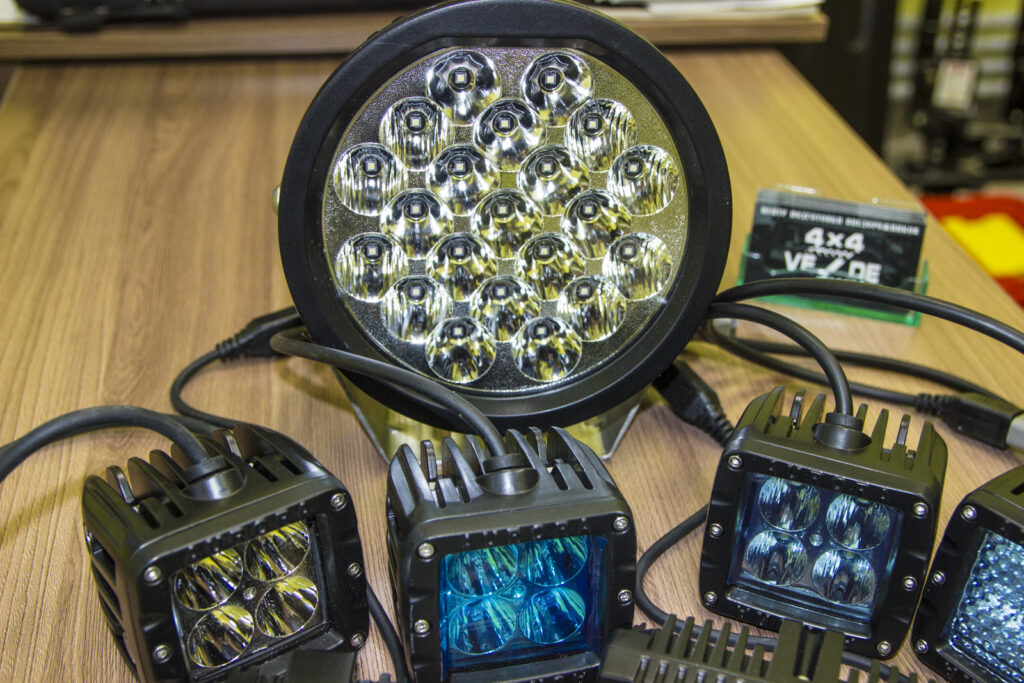
Buyer’s Guide: How to Choose the Right Headlights
The key takeaway for consumers: don’t rely on technology labels alone. The type of headlight is only part of the story — quality varies enormously within each category. Here’s what to keep in mind:
- Halogen ≠ inferior by default — top-spec halogen headlights can outperform basic LED units
- LED ≠ automatically better than xenon — budget LED modules can fall short of well-engineered HID systems
- No washer = under 2,000 lumens — headlights without a cleaning system are guaranteed to produce a reduced low-beam output by regulation
- “LED headlight” is a broad term — it can describe a high-tech adaptive matrix system or a low-cost entry-level unit
- Sealed units mean no bulb replacement — factor in full headlight assembly replacement costs when considering long-term ownership
One thing is certain: automotive headlights are getting smarter, more efficient, and — without question — increasingly beautiful.
This is a translation. You can read the original here: https://www.drive.ru/technic/volkswagen/5be9abb9ec05c4fe3d0000db.html

Published September 09, 2021 • 8m to read