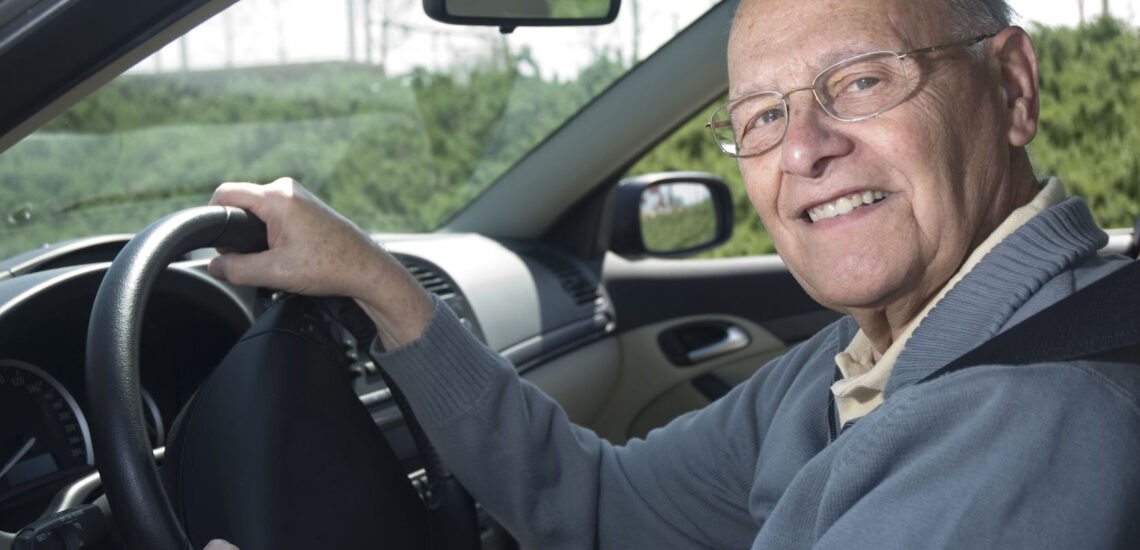

Turning 70 in the UK means your driving licence automatically expires — even if you are in perfect health. In this guide, you will learn exactly how to renew your driving licence at 70, what it costs, how long it takes, and when you should consider giving up your licence altogether. Some of the medical rules covered here also apply to younger drivers with chronic conditions.
Why Does Your Driving Licence Expire at 70?
Whether you drive a car, motorcycle, or another passenger vehicle, your UK driving licence automatically expires on your 70th birthday. It does not matter how fit and healthy you are — without a valid renewed licence, you are not legally allowed to drive.
There are separate, stricter rules for drivers of buses, minibuses, and lorries that apply from a much younger age.
Is There an Upper Age Limit for Driving in the UK?
There is no upper age limit for driving in the UK. You are entitled to keep driving for as long as you are fit and able to do so. However, once you turn 70, your standard 10-year licence is replaced by a 3-year renewable licence. This means the renewal process will need to be repeated at 73, 76, 79, and so on.
It does not matter whether you drive every day, only occasionally, or rarely at all. As long as you want to hold a valid driving licence, you must renew it every three years after you reach 70.
What Vehicles Can You Drive After Renewing Your Licence at 70?
After renewal, you can drive the same categories of vehicle that are listed on your current licence. Here are a few key points to be aware of:
- If you passed a standard car driving test, you can continue to drive a car.
- If your licence restricts you to automatic transmission vehicles, you are still not permitted to drive a manual car after renewal.
- If you have a motorcycle entitlement, you can continue to ride a two-wheeled vehicle.
- Important: If you do not apply to carry over additional vehicle categories from your old licence, you will only be entitled to drive a standard passenger car going forward. Check your current licence categories before applying and make sure to request all the entitlements you wish to keep.
Common Myths About Renewing Your Driving Licence at 70
Myth #1: You have to retake your driving test at 70
False. There is no requirement to retake a practical driving test when you turn 70. The renewal process is based on a medical self-declaration and, where relevant, additional health checks. However, if you want reassurance about your own driving ability, optional assessments are available through organisations such as Driving Mobility (with 20 centres across the UK) and IAM RoadSmart.
Myth #2: You have to pay to renew your driving licence at 70
False. Renewing your driving licence at 70 or over is completely free of charge — whether you do it online or by post. Be cautious of third-party websites that charge fees for this service. The DVLA is clear that you should always use the official GOV.UK website or the DVLA directly. These unofficial services are not affiliated with the DVLA, and you have no obligation to use them. In Northern Ireland, the process is handled free of charge by the DVA.
How Much Does It Cost to Renew a Driving Licence at 70?
Renewing your driving licence at 70 is free. The only potential expenses are:
- A passport-size photo, if you hold a paper licence (rather than a photocard licence).
- A medical certificate from your GP, if your health condition has deteriorated to the point where it may affect your ability to drive safely. As of 2025, the DVLA may request more detailed medical evidence for certain conditions — see the section on medical conditions below.
What Happens When You Renew Your Driving Licence at 70?
The renewal process is straightforward. You will need to self-declare that you are medically fit to drive. If you disclose a relevant health condition, the DVLA may contact your GP or a specialist for further information before issuing your new licence. Once approved, your new licence will be valid for three years.
Before submitting your renewal, we recommend making a note or copy of all vehicle categories listed on your current licence. In some cases, certain categories have been found to be missing from a renewed licence. If this happens, you may need to provide evidence that you passed the relevant tests.
How Early Can You Apply to Renew Your Driving Licence at 70?
You can apply up to 90 days (three months) before your licence expires. The DVLA will automatically send you a D46P application form around 90 days before your 70th birthday. Make sure your address is up to date with the DVLA so this reminder reaches you in time.
If you do not receive the D46P form, you can:
- Collect or download a D1 application form from the Post Office.
- Apply online via the official GOV.UK website.
- Call the DVLA on 0300 790 6801 (or the DVA in Northern Ireland on 0300 200 7861).
If your licence expires and you have not applied for a new one, you are legally not permitted to drive — and your insurance will be invalid.

Can You Renew Your Driving Licence Online?
Yes — and it is the fastest option. You can renew your driving licence online via GOV.UK if you meet all of the following criteria:
- You are 70 or older, or will turn 70 within the next 90 days.
- Your licence has expired or will expire within 90 days.
- You are a resident of Great Britain (England, Scotland, or Wales).
- You meet the minimum eyesight standard for driving.
- You are not currently disqualified from driving.
You will receive step-by-step instructions during the online process. Your new licence should arrive within approximately one week. Online renewal is not currently available for drivers in Northern Ireland, who should contact the DVA instead.
Can You Renew Your Driving Licence by Post?
Yes. If you prefer to apply by post, here is what to do:
- Complete the D46P form sent to you by the DVLA (or obtain a D1 form from the Post Office if you did not receive one).
- If you have a photocard licence, return the D46P form along with your photocard. A new passport-size photo may also be required — the form will state whether this is needed.
- If you have a paper licence, send the completed form along with a recent passport-size photo.
Postal applications typically take up to three weeks to process. If time is short, renewing online is recommended.
Do You Need to Return Your Old Driving Licence?
Yes. Once you receive your new driving licence, you are required to return your old one to the DVLA. Your previous licence becomes invalid when you turn 70, so there is no need to worry — no penalties are applied to those who, for any reason, are unable to return their old licence.
That said, we recommend keeping a photocopy of your old licence before sending it back, as a record of your vehicle categories.
How Do You Confirm Your Identity When Renewing?
Identity verification is only required the first time you renew at 70 — not for subsequent three-yearly renewals. The easiest way to confirm your identity is with a valid British biometric passport.
If you do not have a biometric passport, you can confirm your identity using any of the following:
- Birth, adoption, or naturalisation certificate
- A letter from the Department for Work and Pensions (DWP) showing your National Insurance number
- A recent payslip
- An original benefits award letter from the government
If your name has changed (for example, following marriage or divorce), you will also need to provide the relevant certificate.
Does Your Photo Need to Be Countersigned?
If the photo on your current photocard licence is still a reasonable likeness, it does not need to be countersigned. However, if your appearance has changed significantly or you do not hold a photocard licence, your new photo must be countersigned by someone who knows you well and falls into one of the following categories:
- Librarian
- Qualified professional (solicitor, teacher, or engineer)
- Police officer
- Bank or building society employee
- Civil servant
- Minister of religion
- Local business owner or tradesperson
- Justice of the peace
- Local councillor, MP, Member of the Assembly, or Member of the Scottish Parliament
A fee may sometimes be charged by the countersigning person. The DVLA reserves the right to verify the identity of the countersignatory.
Which Medical Conditions Must You Declare to the DVLA?
When renewing your driving licence at 70, you must self-declare any medical condition that could affect your ability to drive safely. As of 2025, the DVLA has tightened this process and may request detailed supporting evidence from your GP or a specialist for certain conditions before issuing a new licence.
Conditions you are required to declare include:
- Dementia or any condition affecting memory and cognition
- Diabetes mellitus (insulin-dependent)
- Parkinson’s disease
- Epilepsy
- Any chronic neurological condition (such as multiple sclerosis)
- Any condition affecting eyesight, or complete loss of vision
- Heart conditions or other cardiovascular problems that could affect driving
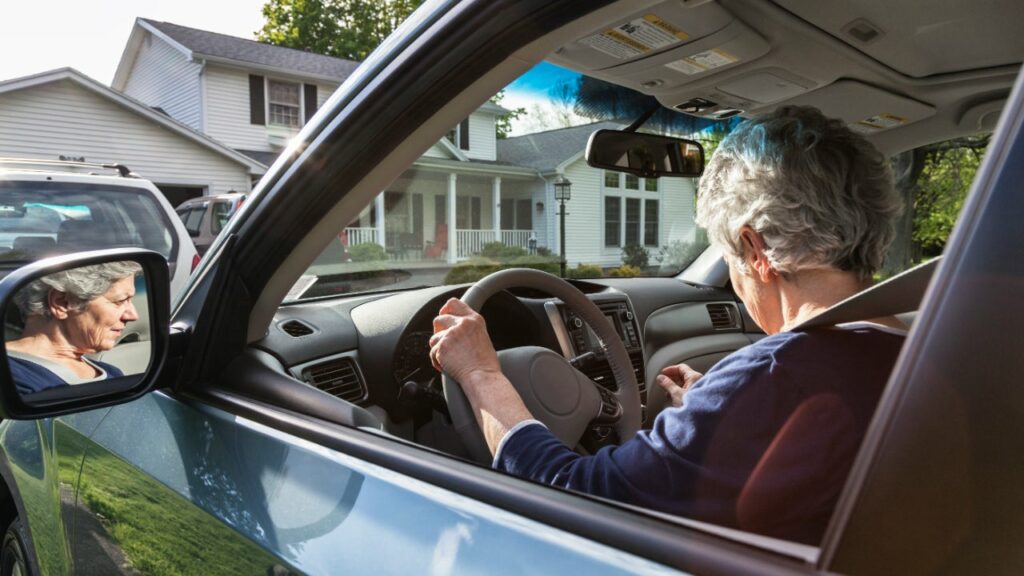
Not every medical condition will result in a licence being refused. The DVLA takes a personalised approach and may issue a shorter-term licence (for example, valid for one or two years rather than three), impose restrictions such as daytime-only driving, or request a follow-up review after treatment. A licence will only be fully revoked if driving poses a clear and serious risk, based on medical evidence.
For conditions affecting mobility or limb function, you may still be able to drive a vehicle that has been specially adapted for your needs.
Country guides

Published April 15, 2021 • 8m to read