


The Wankel engine, the Stirling engine, and various types of turbo-power units never entered the automotive mainstream. A number of well-known companies — from Mazda to GM, from Mercedes to Volvo — worked on them for decades. Small firms and individual inventors persisted too. Yet it turned out that each alternative design harbored far more pitfalls than initially expected. That doesn’t mean development of unconventional power units is impossible. Enthusiasts keep pushing different ideas forward, and here we explore some of the most exotic engine concepts ever built.
Split-Cycle Engines: Two Cylinders, One Power Stroke
Some engine designers concluded that the classic combination of cylinder, piston, connecting rod, and crankshaft has proven itself over more than a century — and that improving internal combustion engines only requires tweaking certain aspects rather than reinventing from scratch. The first example on our list is the engine developed by the American company Scuderi Group, which retains the classic intake, compression, power, and exhaust strokes — but splits them across two separate cylinders:
- Cold (compressor) cylinder — handles intake and compression
- Hot (working) cylinder — handles the power stroke and exhaust
While gas expands in the working cylinder, an intake stroke takes place in the cold, compressor cylinder. When the working cylinder exhausts, the compressor cylinder compresses. At the end of the compression stroke, both pistons approach their upper dead centers, the mixture travels through a bypass channel from the cold cylinder to the hot one and is ignited. This split cycle — essentially a modified Otto cycle — was patented in 2006, and in 2009 Scuderi Group built the pilot Scuderi Split Cycle Engine.
The compressor and working cylinders can have different diameters and piston strokes, making it possible to flexibly tune engine parameters — functioning as an analog of the Miller cycle with additional gas expansion. Add a branch with valves and a high-pressure bottle to the channel between the cylinders, and the engine can recover energy during braking and deploy it during acceleration. However, for a number of years, Scuderi Group’s activities have been limited to prototypes and trade show appearances. Real-world efficiency gains have yet to justify the design’s considerable complexity.
The Croatian company Paut Motor also turned to the split working cycle. Their spaced design attracted attention for several reasons:
- Significantly fewer moving parts than conventional engines
- Lower friction losses
- Reduced operating noise
- Compact dimensions: 500×440×440 mm at 7-liter capacity
- Weight of approximately 135 kg — roughly half that of a traditional engine of the same displacement
The absence of oil in the crankcase does require an external lubrication tank, but the inventors considered this an acceptable trade-off. Several prototypes were built, though the final power output was never officially determined. The last prototype was assembled in 2011, and the project has since stalled.
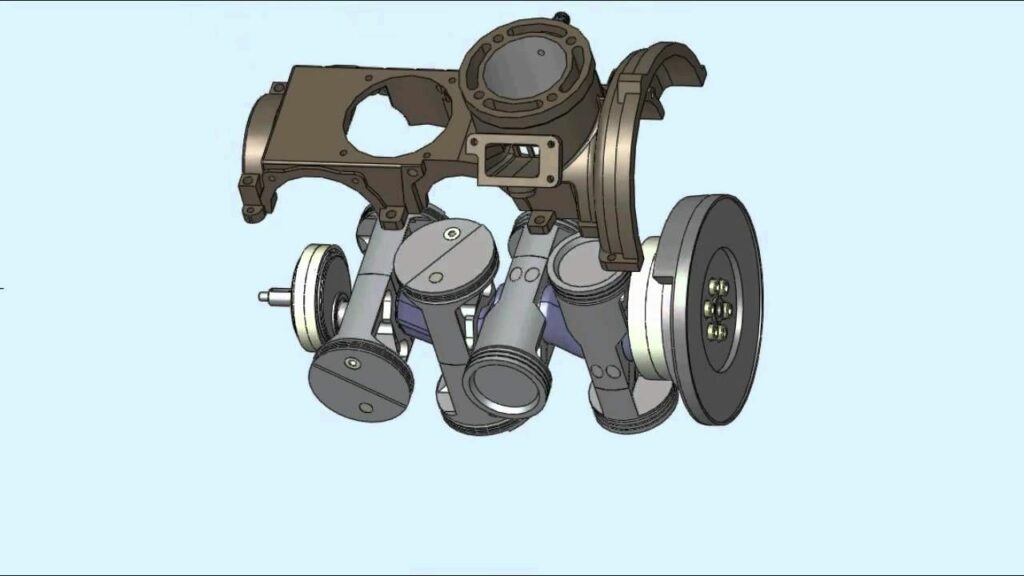
The Bonner Two-Stroke Engine: Maximum Complexity, Ambitious Goals
The Bonner two-stroke engine (named after its sponsor, Bonner Motor) was invented in 2006 in the United States by Walter Schmid and pushes mechanical complexity even further. Like the Paut Motor, its cylinders are arranged in an X-configuration, and the crankshaft performs a planetary motion via a gear system. Key features include:
- Valves in cylinder bottoms and rotating spool valves in the motor body for gas distribution
- External pistons that can shift slightly under oil pressure to provide a variable compression ratio
- High power-to-weight ratio as the primary design target
In theory, the Bonner engine looks compelling. In practice, however, no significant news has emerged from the project in years — apparently, it has not met expectations.
Axial Engines: Cylinders Arranged Like a Revolver
Other inventors kept the working cycles of the internal combustion engine intact but reimagined the physical layout of its components. Axial engines, which have existed for over a century, are a prime example. They vary in detail but share a common principle: cylinders are arranged like cartridges in a revolver drum, coaxial with the output shaft. Various mechanisms — such as inclined pins and taper washers — convert the pistons’ reciprocating motion into shaft rotation.
The Duke Engines project from New Zealand is one notable variety: a five-cylinder, four-stroke axial engine with 3-liter displacement. Compared to a conventional engine of the same capacity, the Duke unit offered:
- 19% lower weight
- 36% more compact packaging
- Versatile application potential across automotive, marine, and aviation sectors
Ambitious promises were made about its widespread adoption — but dreams of conquering the world remained dreams.
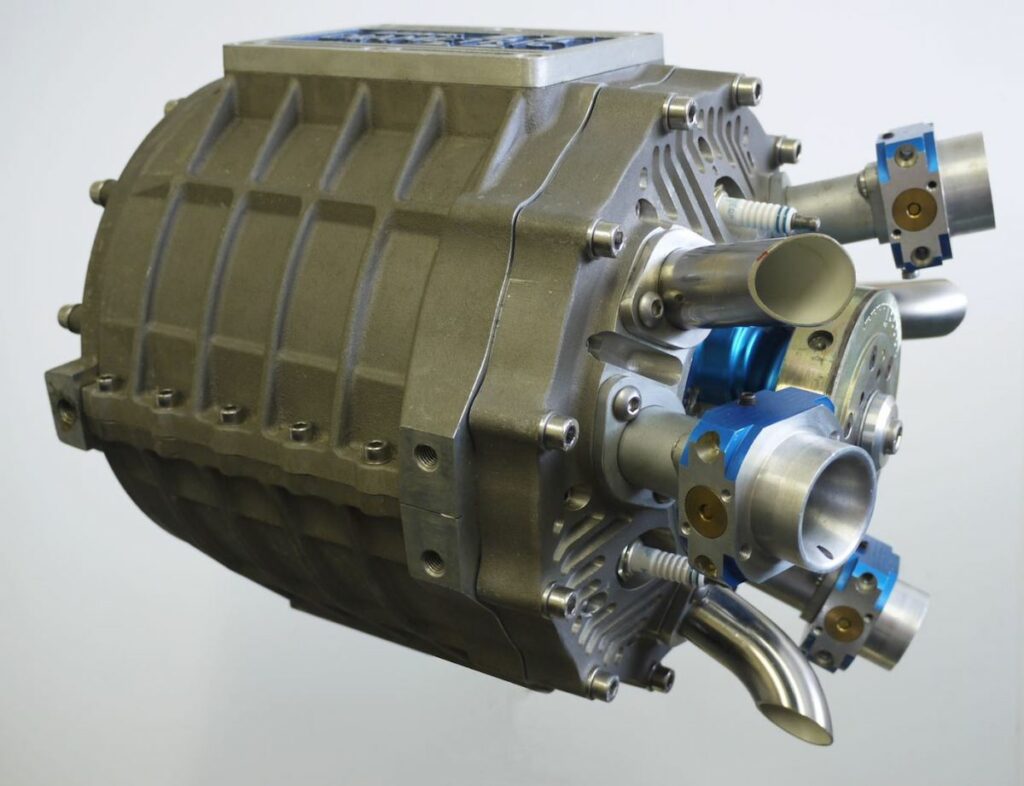
The RadMax engine by Canadian company Reg Technologies takes the axial concept even further. Instead of discrete cylinders, a dozen compartments are formed inside a common drum using thin blades. Plates mounted in rotor slots move along them as the rotor spins, and curved surfaces at the drum ends define blade trajectories and control gas exchange. Notable characteristics:
- Compatible with multiple fuel types, though diesel was the initial focus
- A 2003 prototype measured just 152 mm in both diameter and length yet produced 42 horsepower — far more than a conventional engine of equivalent size
- Later prototypes reportedly reached 127 hp and 380 hp
Despite these promising figures, all RadMax activity appears to remain at the experimental stage.
Toroidal Engines: When the Cylinder Becomes a Donut
The VGT Engine (Variable Geometry Toroidal Engine) from the now-defunct Canadian company VGT Technologies is another case study in theory outperforming practice. First tested in 2005, the engine replaces the conventional cylinder with a toroid — a donut-shaped chamber — inside which a rotor with a pair of attached pistons rotates.
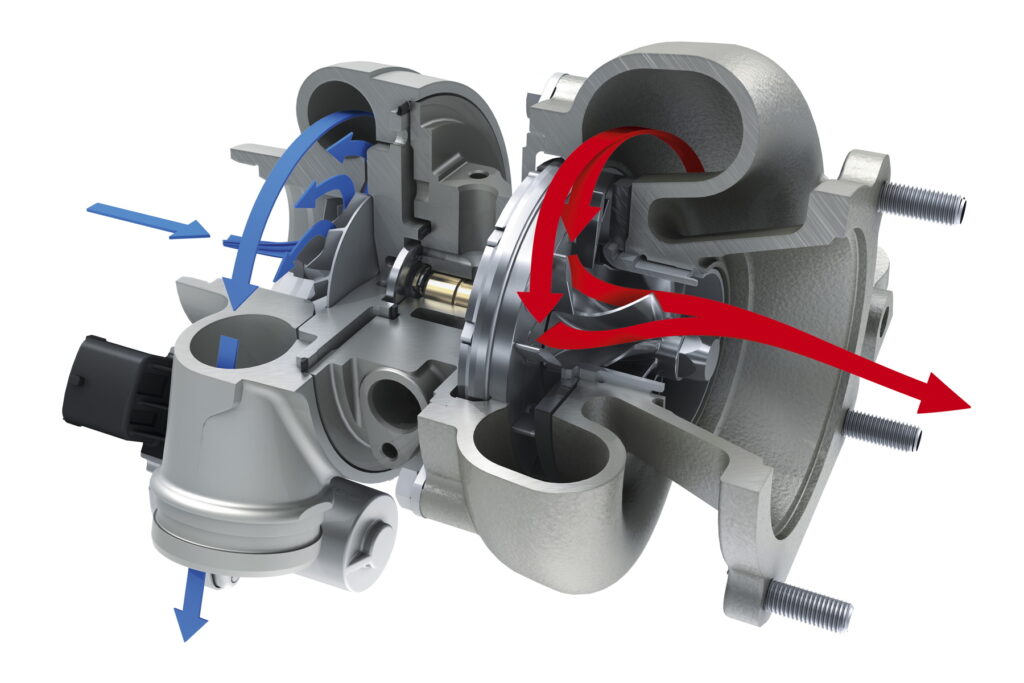
A thin distribution disk with a cutout for the pistons rotates across the toroid via a belt drive, restricting the fuel-air mixture during compression and the power stroke. In 2009, American entrepreneurs Gary Kelley and Rick Ivas independently developed a toroidal engine that closely mirrored the Canadian design. Their estimates suggested that a half-meter diameter toroid would deliver:
- 230 horsepower
- Approximately 1,000 N·m of torque
- All at just 1,050 rpm
Their company, Garric Engines, now displays only a stub message on its website: “Thank you for your interest. The page may be updated in the future.”
The Nutating Engine: Spinning Discs Instead of Pistons
A slightly more promising fate may await the nutating engine invented by American Leonard Meyer in 2006 — at least several working copies have been built. The name derives from the Latin nutatio (nodding or wobbling). Meyer’s design forms four working chambers of variable volume between the motor body and a disk that nutates (wobbles) side to side, functioning as the piston. The disk is cut in half along its diameter and threaded onto a Z-shaped output shaft, with channels and valves in the body managing gas exchange.
Prototypes were built by Baker Engineering and its sister company Kinetic BEI, with impressive results:
- Single 102 mm disk: 7 hp
- Dual 203 mm disks: 120 hp
- Two-disk engine dimensions: 500 mm length, 300 mm diameter, 3.8-liter displacement
- Power-to-weight ratio: 2.5–3 hp/kg vs. 1–2 hp/kg for mass-produced naturally aspirated engines
Liter-specific output is less impressive, but the power density is notable. Baker and Kinetic appear to be refining the design, though activity on their websites remains limited.
LiquidPiston: The Wankel Engine Turned Inside Out
Rotary engine concepts continue to captivate innovators, as if departing from the familiar piston-and-cylinder arrangement inherently promises better performance. Nikolay Shkolnik, a former Soviet engineer who relocated to the United States, and his son Alexander developed an engine that resembles the Wankel engine turned inside out. A peanut-shaped rotor spins inside a triangular chamber — the same basic geometry as the Wankel — but crucially, the seals are fixed to the chamber walls rather than the rotor.
The Shkolniks founded LiquidPiston to develop the concept, attracting co-funding from DARPA for potential use in:
- Light aircraft and drones
- Portable power generators
- Hybrid vehicle powertrains
A 23 cm³ prototype already achieves 20% thermal efficiency — impressive for that displacement class. The team is now targeting a diesel prototype weighing around 13 kg and producing 40 hp, with projected thermal efficiency climbing to 45%.
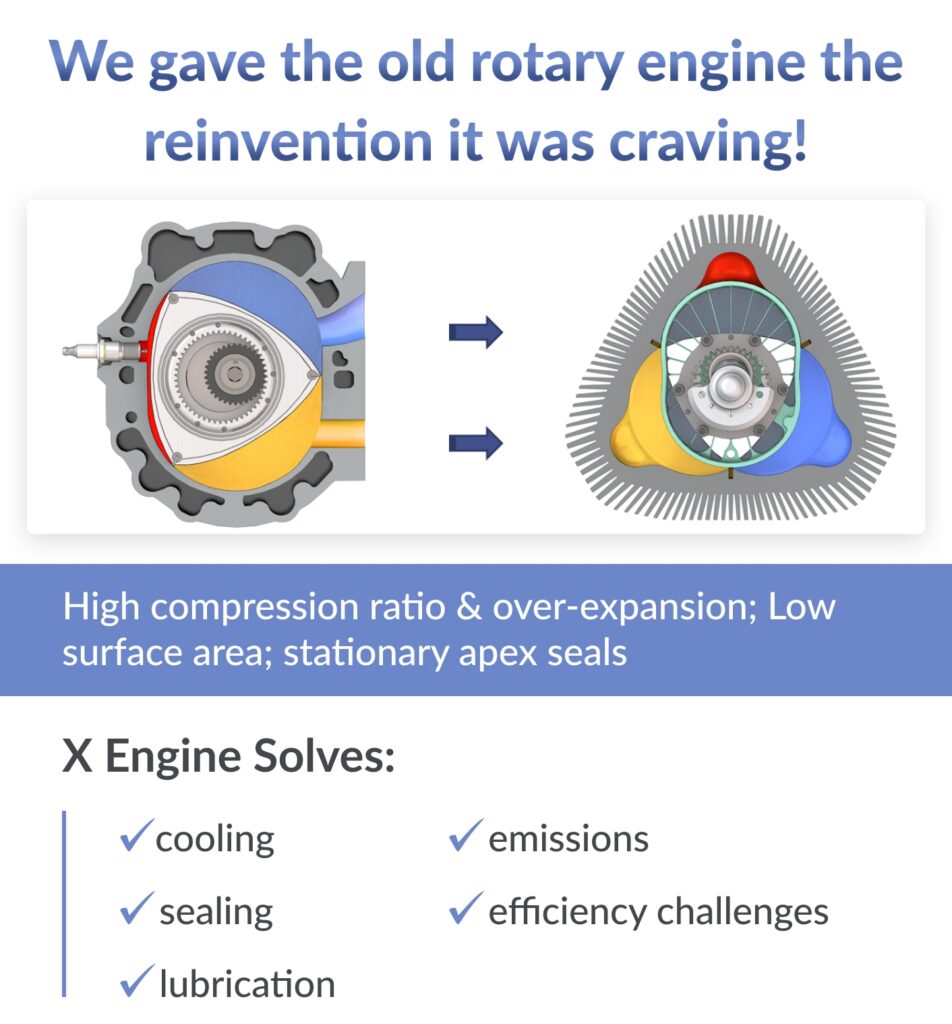
We gave the old rotary engine the reinvention it was craving!
High compression ratio & over-expansion; Low surface area; stationary apex seals
Engine Solves:
– cooling
– emissions
– sealing
– efficiency challenges
– lubrication
The Swinging Piston Engine: Going Square
The last engine in our review proves that the appeal of a flat, compact unit is real — and that rotors aren’t the only path to achieving it. Pivotal Engineering‘s swinging piston engine simply squares the traditional piston, making the cylinder rectangular in top view. This two-stroke design has existed for several years, during which a number of prototypes powered both motorcycles and aircraft.
The company primarily targets aviation applications, and the design offers some genuine advantages:
- High output-to-weight and output-to-size ratios
- Excellent forced-induction potential, enabled by a liquid cooling channel running through the piston’s fixed axis — a difficult feat in conventional engine architectures
- Flat form factor, since the square rotor can be made very thin
Other Exotic Engine Concepts Worth Knowing
There are many remarkable exotic engine designs beyond the ones covered here. A few honorable mentions:
- 12-rotor Wankel engine — taking Mazda’s rotary concept to an extreme
- Knight sleeve-valve engine — a century-old design that briefly rivaled the poppet valve
- Opposed-piston engines — two pistons sharing a single cylinder, with no cylinder head
- Variable compression ratio engines — allowing real-time adjustment of compression to optimize efficiency across load conditions
- Five-stroke engines — adding a dedicated expansion cylinder to extract more work from combustion gases
- Rotary-bladed engines — where rotor components move like converging and diverging scissor blades
Why Don’t Alternative Engines Make It to Mass Production?
Even a brief survey of unconventional internal combustion engine designs reveals a striking pattern: dozens of clever ideas, very few production vehicles. The recurring obstacles are consistent:
- Seal wear — rotary designs frequently fail due to apex seal degradation over time
- Alternating mechanical loads — rotary-bladed concepts suffer from fatigue at the blade-to-shaft connection
- Manufacturing complexity — exotic geometries are expensive and difficult to produce at scale
- Reliability and longevity — unconventional engines rarely match the durability record of traditional piston engines refined over 100+ years

The second reason alternative engines struggle is that conventional internal combustion engine technology hasn’t stood still. The latest gasoline engines using the Miller cycle achieve thermal efficiency of up to 40% even without turbocharging — a remarkable figure, given that most gasoline engines manage only 20–30%, and diesel engines 30–40% (with large marine diesels reaching up to 50%).
Most importantly, the global alternative to the internal combustion engine has already arrived: electric motors and fuel cell power units. If the inventors behind these exotic curiosities don’t resolve their technical challenges very soon, they may find there’s no longer a market waiting for them — electric vehicles will have already taken the road.
This is a translation. You can read the original here: https://www.drive.ru/technic/57769ed4ec05c4745f00009b.html

Published October 07, 2021 • 10m to read