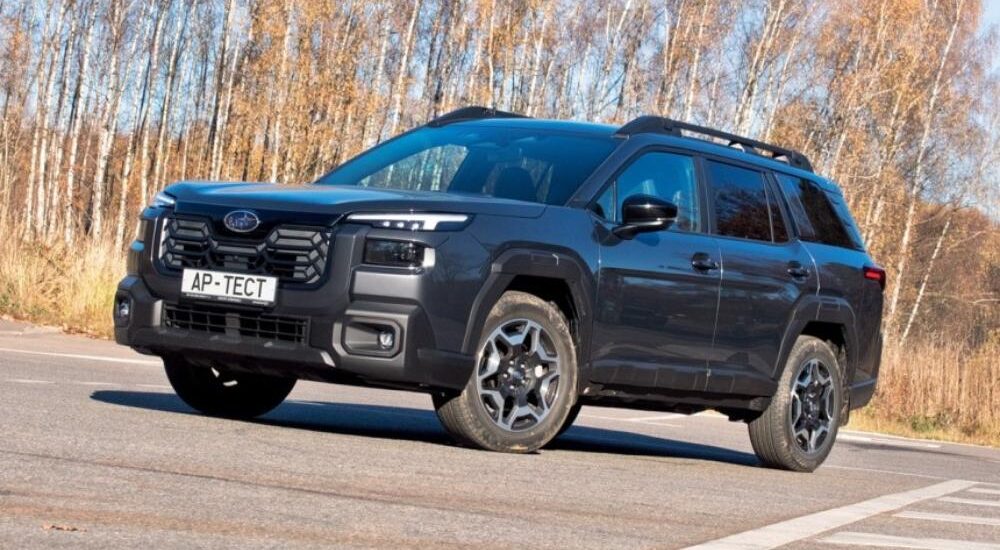

The new Subaru Outback looks more like a traditional SUV than ever. Its taller body, upright proportions and generous protective cladding mark a clear departure from the low-slung wagon shape that defined earlier generations. But has this transformation changed the qualities that made the Outback appealing?
The road-test findings suggest that its strongest attributes remain intact: excellent comfort on rough roads, a spacious cabin, capable all-wheel drive and straightforward everyday controls. The naturally aspirated 2.5-liter engine still delivers modest acceleration, however, and some details in the tested specification feel less sophisticated than the exterior suggests.
How the Subaru Outback Evolved from Wagon to SUV
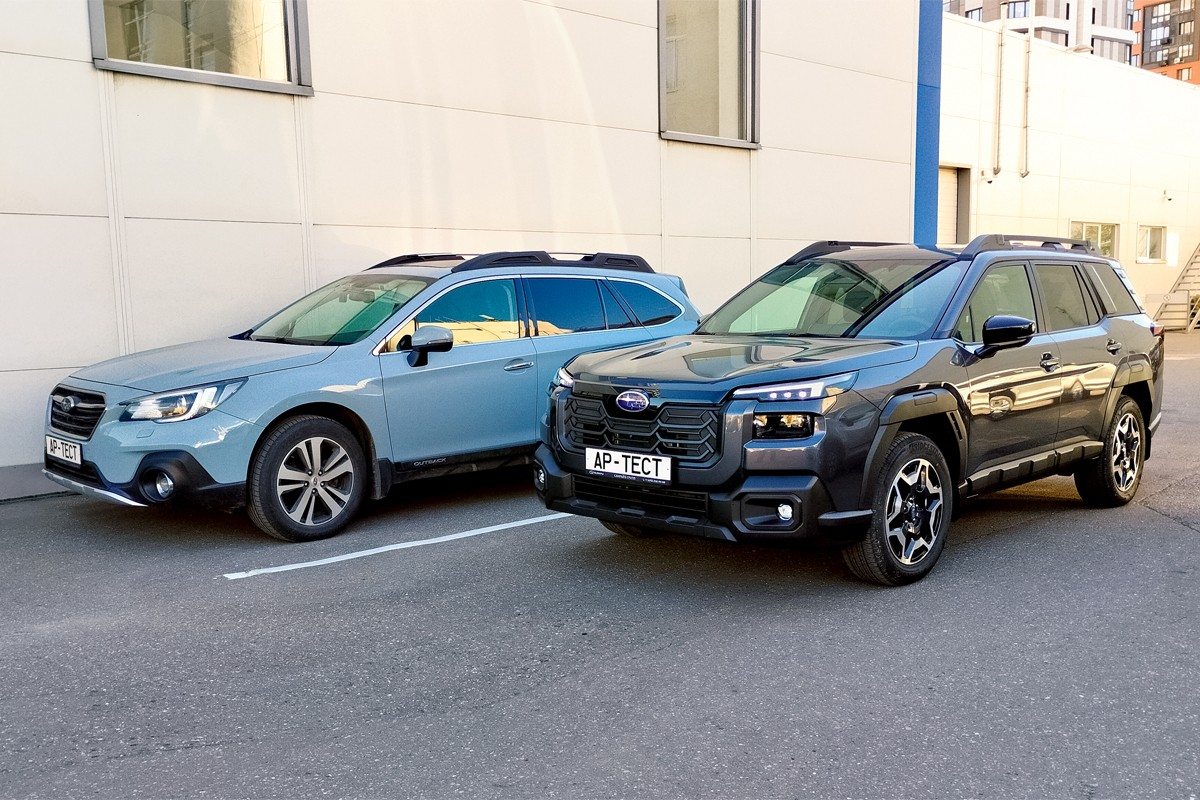
The Outback story began in the mid-1990s with a relatively simple idea: give the second-generation Legacy wagon tougher bumpers, protective body cladding and roof rails. Raised, reinforced suspension followed as the concept developed.
For a relatively small manufacturer, adapting an existing wagon was a practical way to enter the growing market for vehicles with SUV appeal. The formula proved particularly successful in North America and became central to Subaru’s identity.
The sales figures show how far the Outback eventually pulled ahead of its original sibling. In 2024, Subaru sold almost 169,000 Outbacks in the United States, while the Legacy sedan remained below 20,000. The Legacy was discontinued in 2025, the same year Subaru unveiled the seventh-generation Outback.
The latest model makes that separation more visible. Although Subaru has long described the Outback as a crossover SUV, its new body looks noticeably taller, squarer and more substantial than the wagon-like generations that came before it.
Exterior Design, Dimensions and Ground Clearance
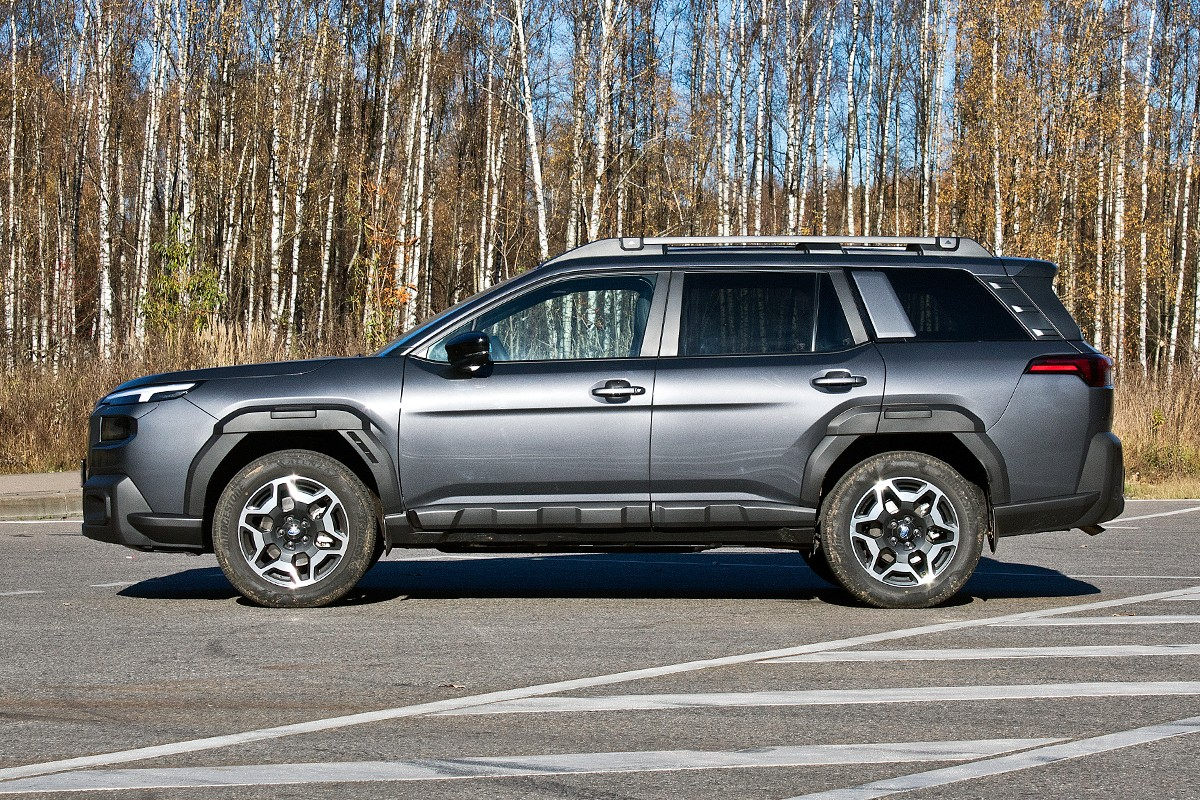
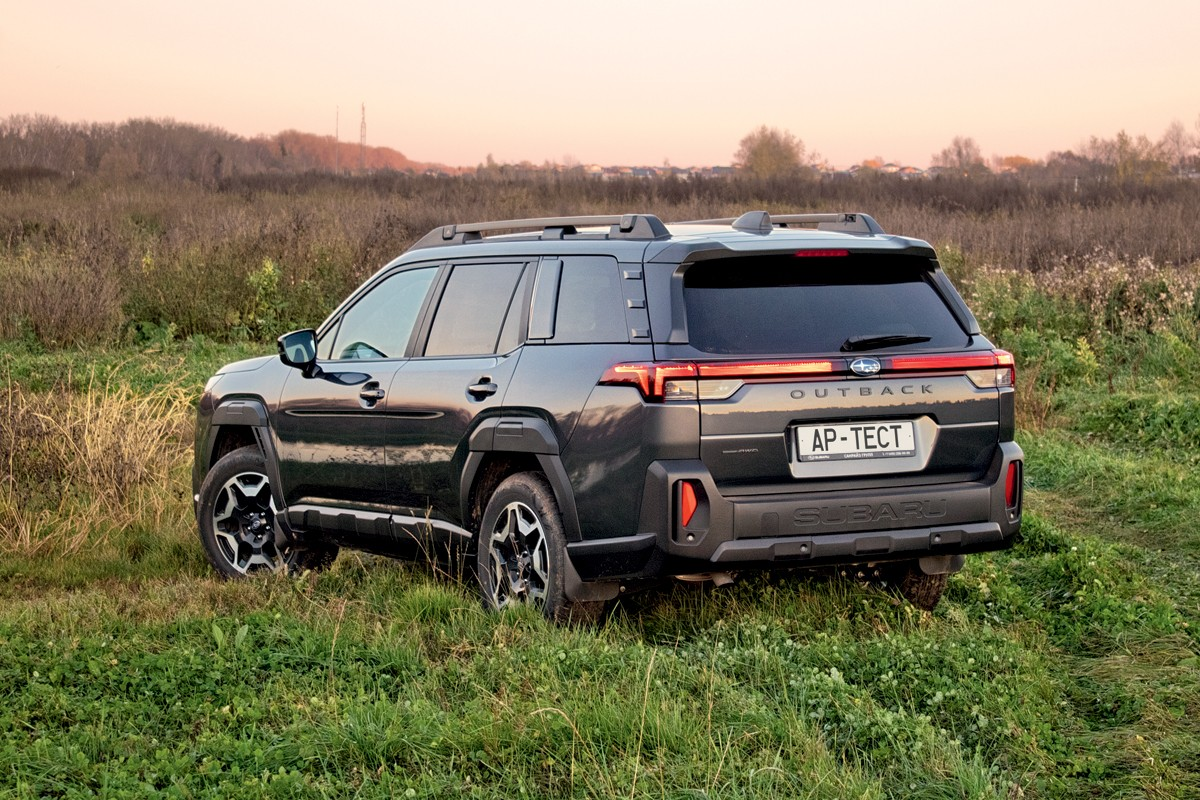
The styling is likely to divide opinion. Long front and rear overhangs, substantial black cladding and squared-off wheel arches create a deliberately rugged appearance. They also make the test car’s 18-inch wheels look relatively small.
That protective trim serves a practical purpose. Its color runs through the plastic rather than sitting only on the surface, making minor scuffs less conspicuous than they would be on painted bodywork.
Despite its bulkier appearance, the new Outback is similar to its predecessor in length and width. The main dimensional changes and reference points are:
- Wheelbase: unchanged at 2,745 mm.
- Height: approximately 40 mm greater than the previous generation in the comparison described.
- Ground clearance: 220 mm, or approximately 8.7 inches, for the reviewed specification.
- Wheels: 18-inch alloys on the test car.
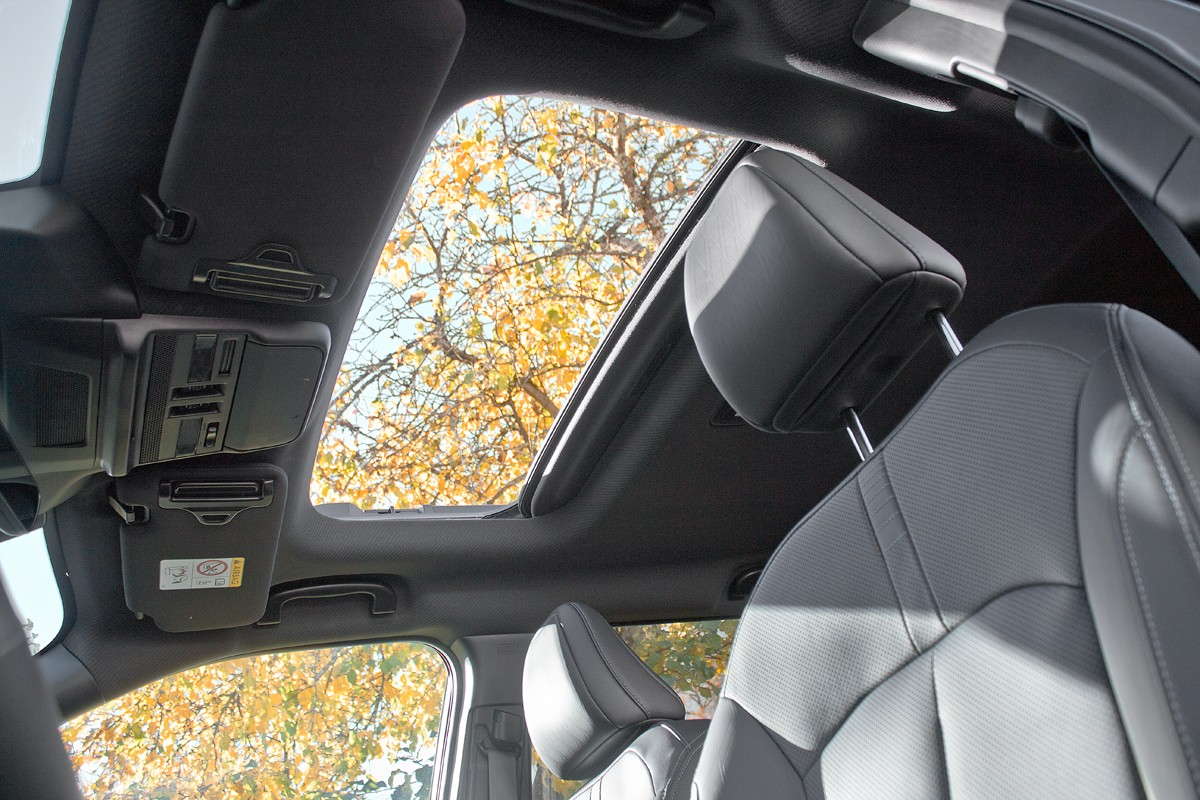
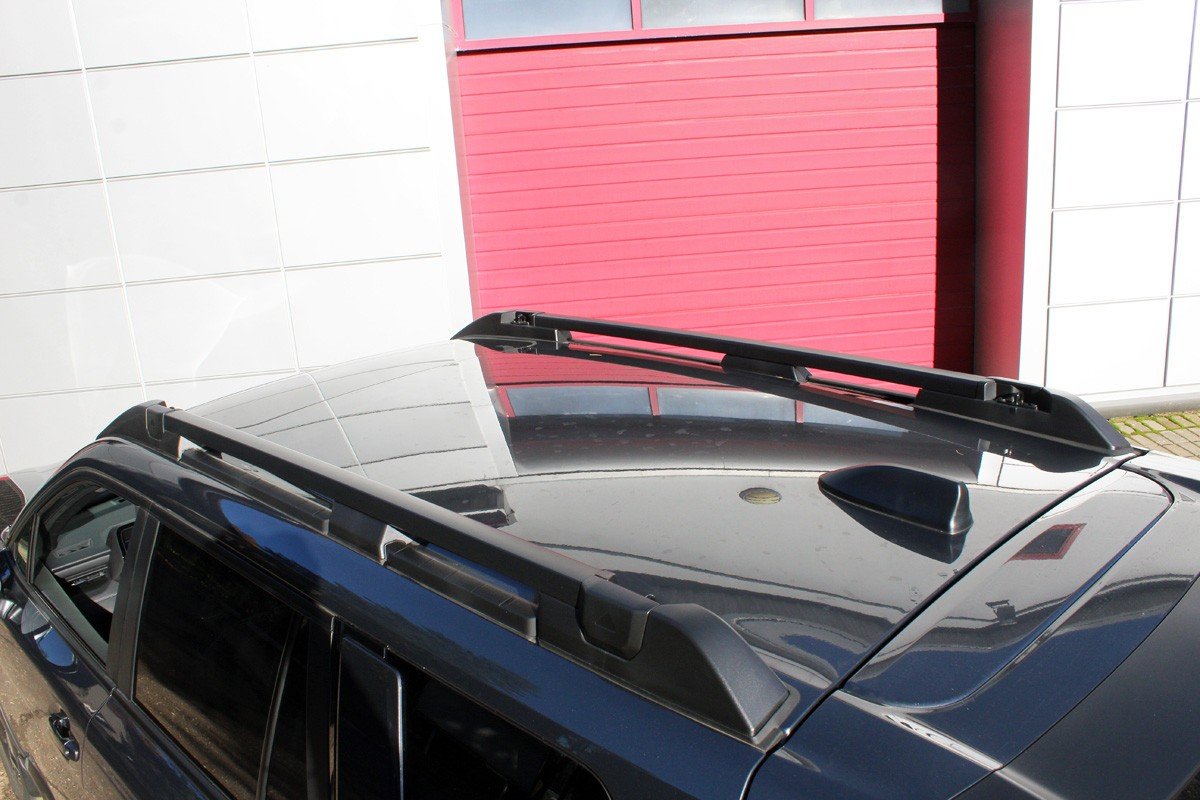
Much of the extra height benefits the cabin, which feels noticeably airier above occupants’ heads. The test car nevertheless retains a relatively small conventional sunroof, with a panel that slides beneath the roof rather than a large panoramic opening.
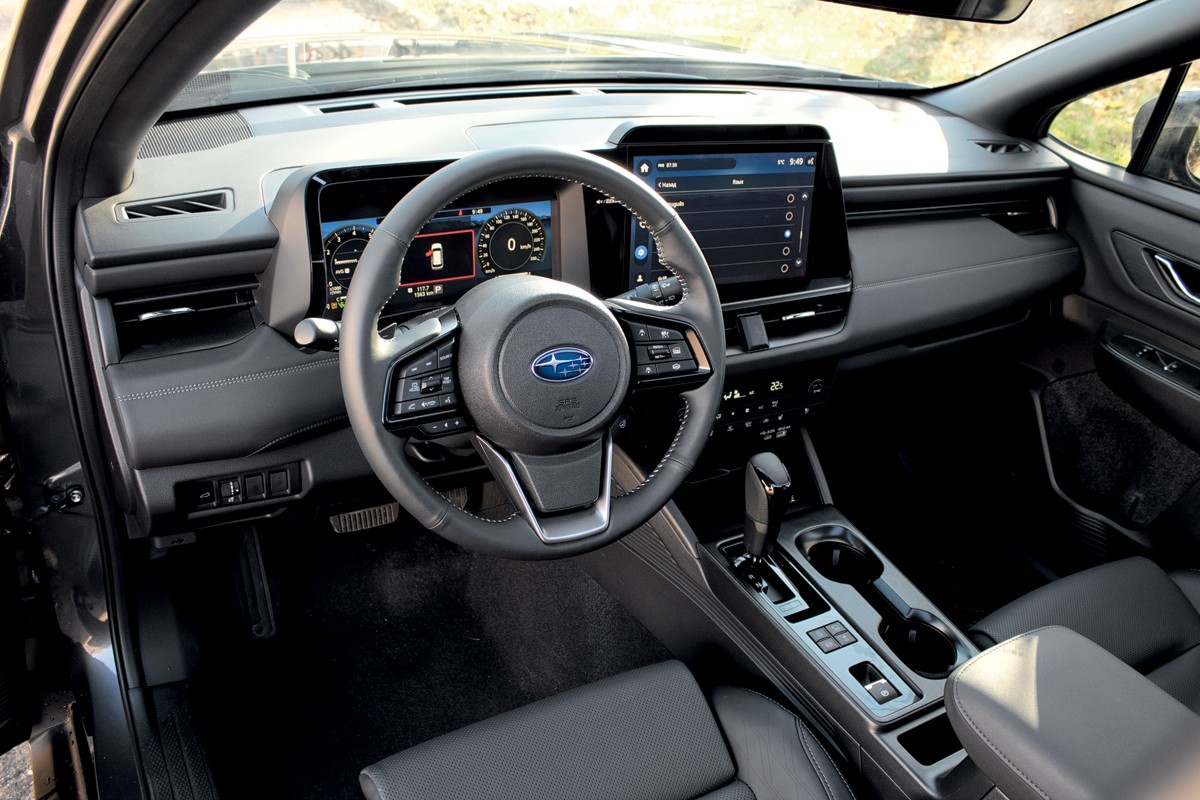
Interior Comfort: Physical Controls Make a Difference
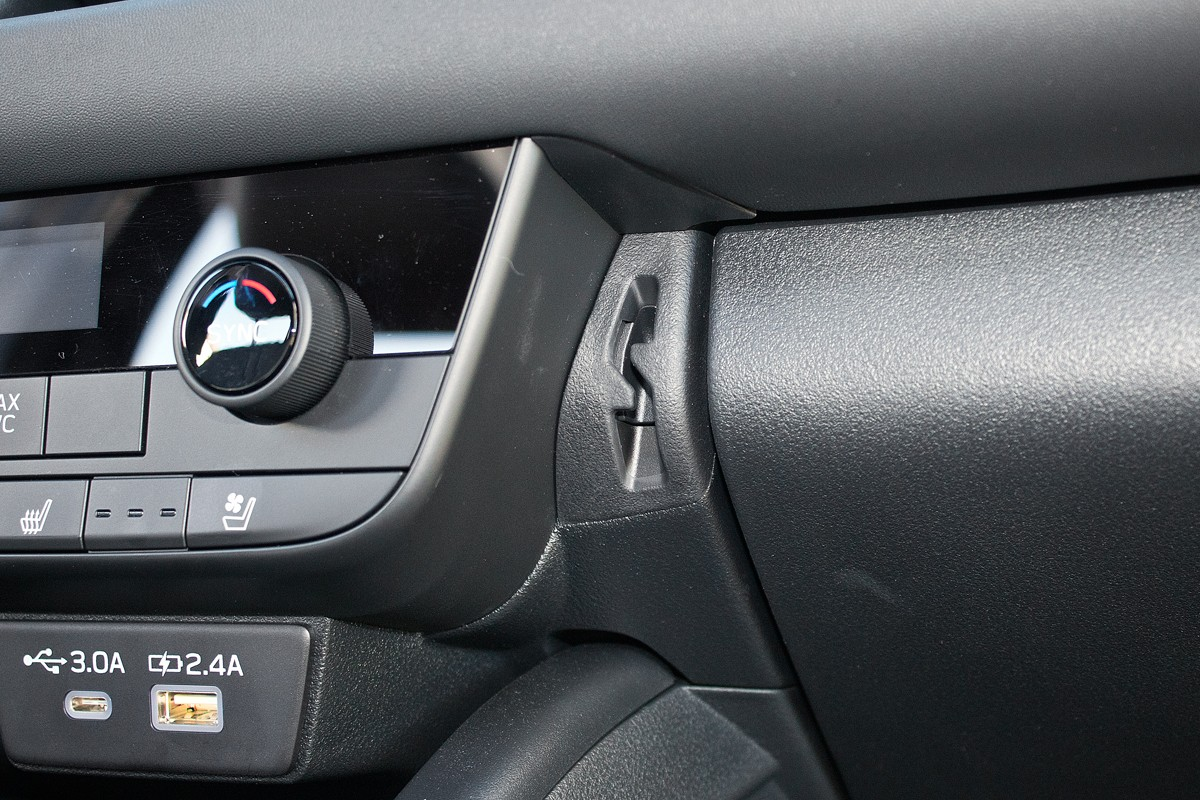
Several of the new Outback’s most welcome changes are refreshingly conventional. The turn-signal stalk once again clicks positively into position, replacing the previous spring-return arrangement.
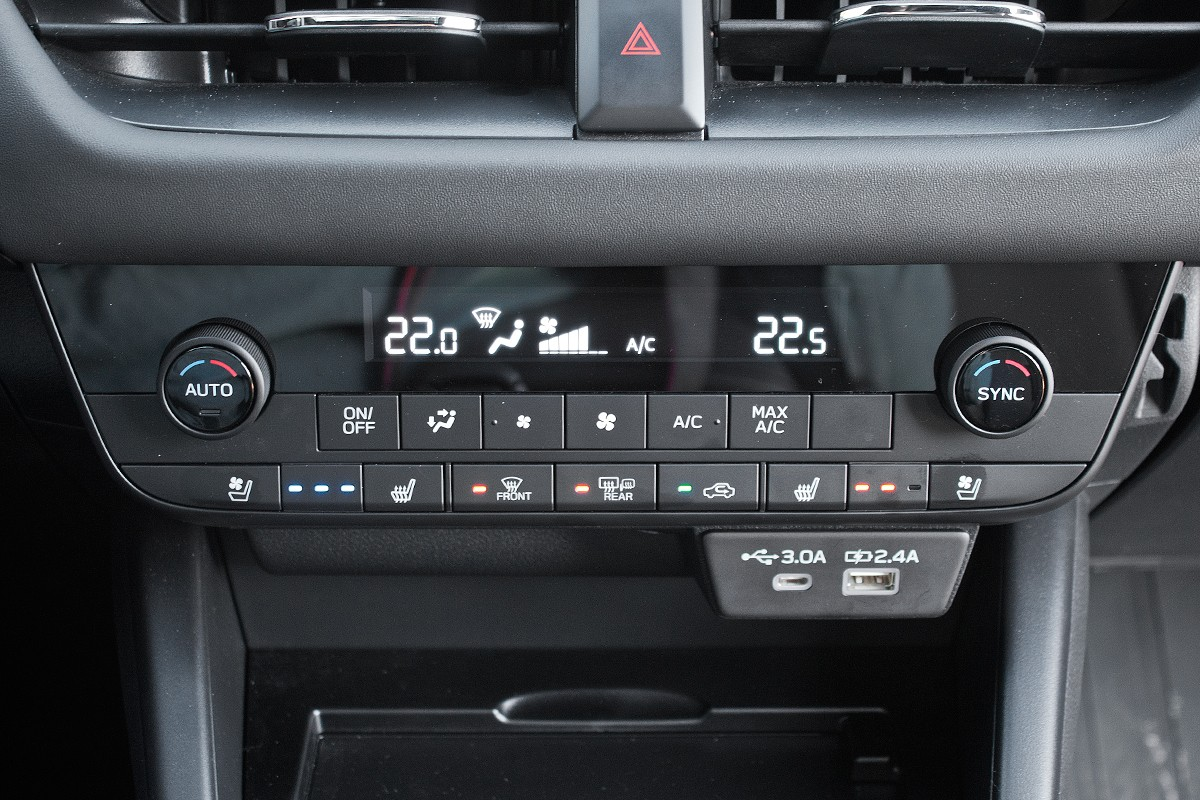
The dual-zone climate control also has a dedicated panel with physical buttons and rotary controls. Adjustments are easier to make by touch than they were through the previous model’s portrait-oriented touchscreen.
There was little need to adjust the settings during the original week-long autumn test. With the temperature set to 22°C, the automatic system maintained a comfortable cabin and distributed airflow effectively without repeated intervention.
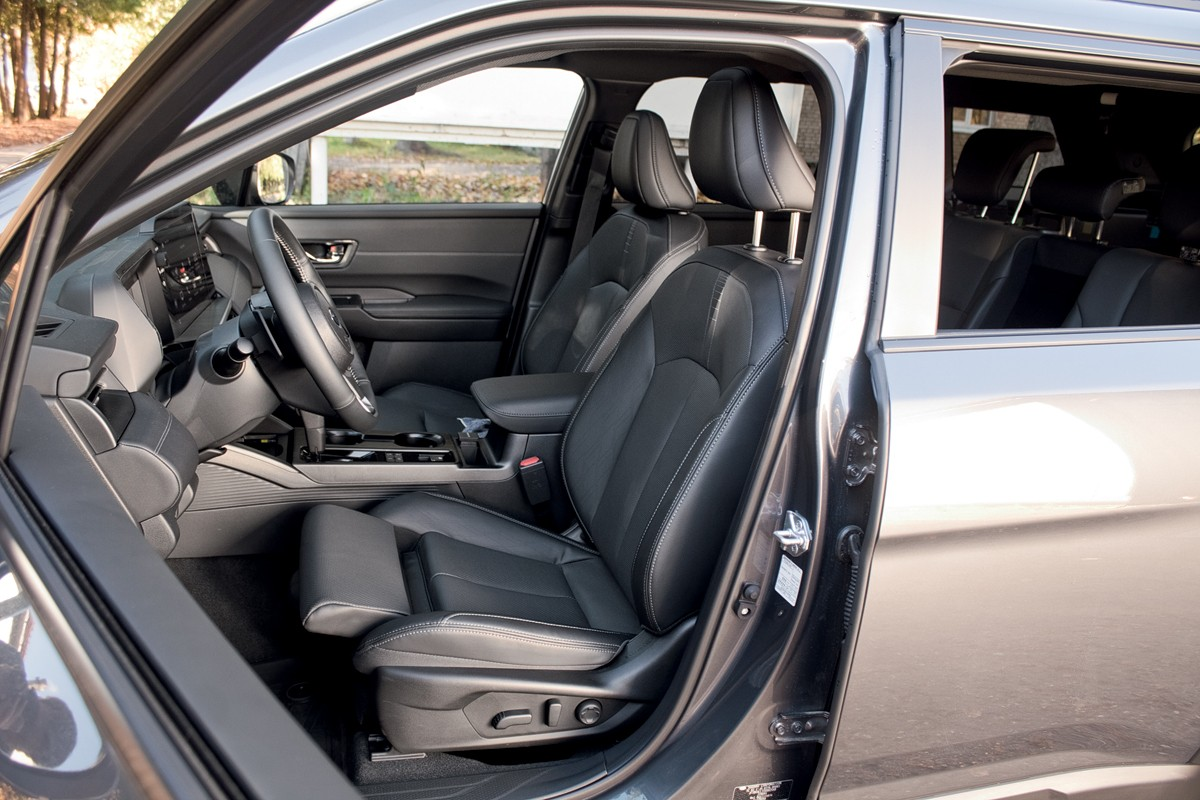
The driving position is equally well resolved. The seat is comfortable and offers extensive adjustment, the steering wheel has a conventional round shape, and frequently used controls are within easy reach.
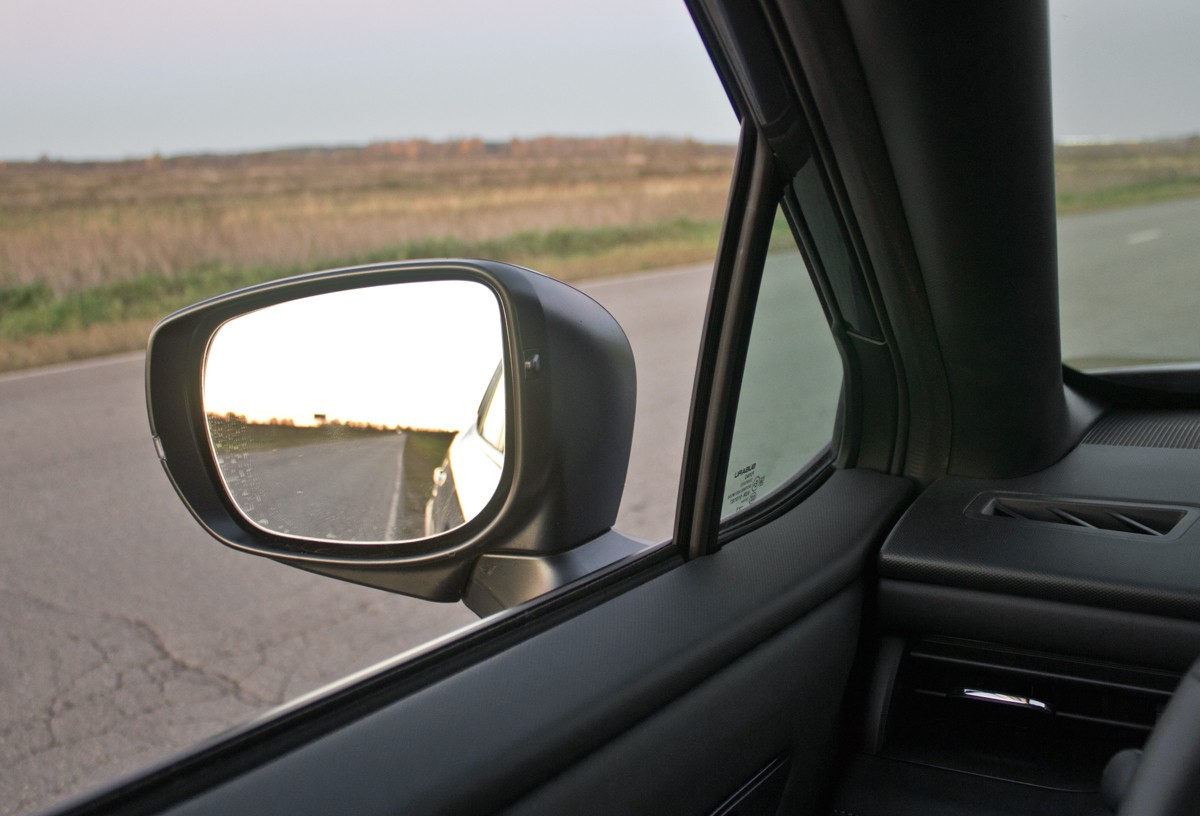
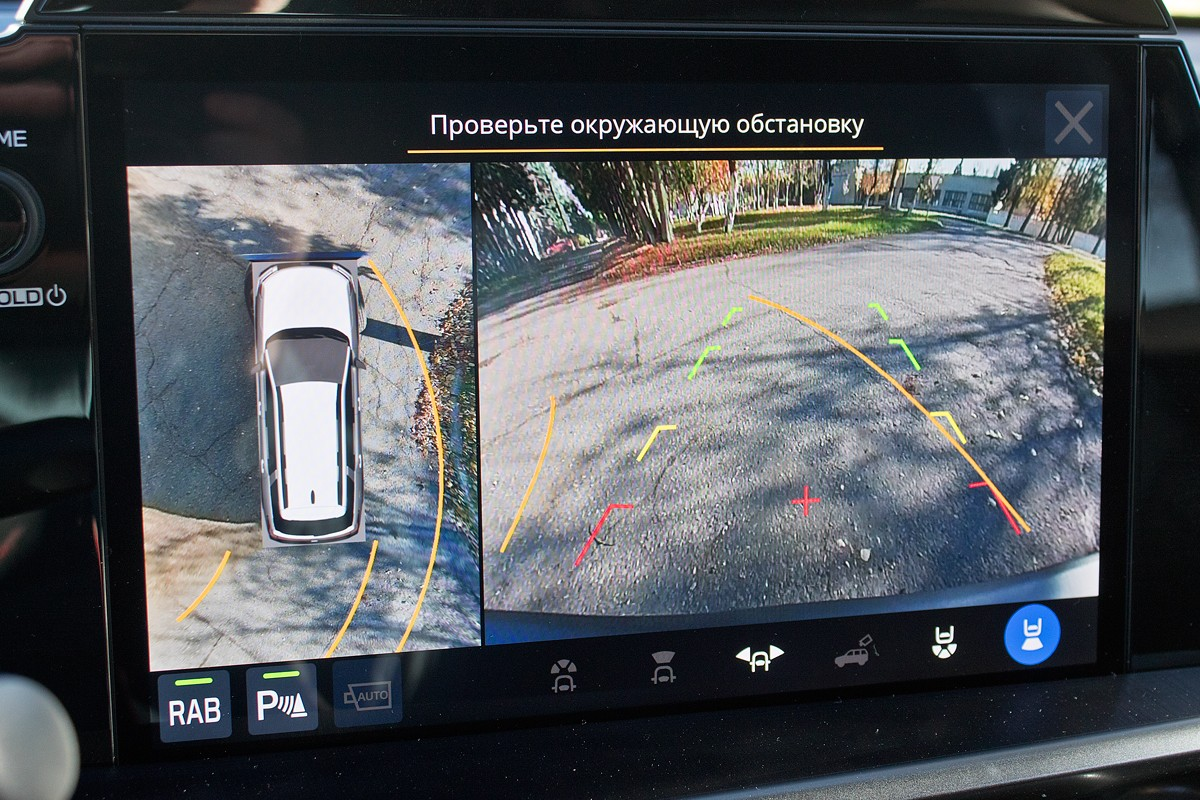
Visibility remains another strength. Relatively slim windshield pillars and thoughtfully positioned mirrors help the driver judge the vehicle’s surroundings, while the test car’s surround-view cameras make maneuvering easier.
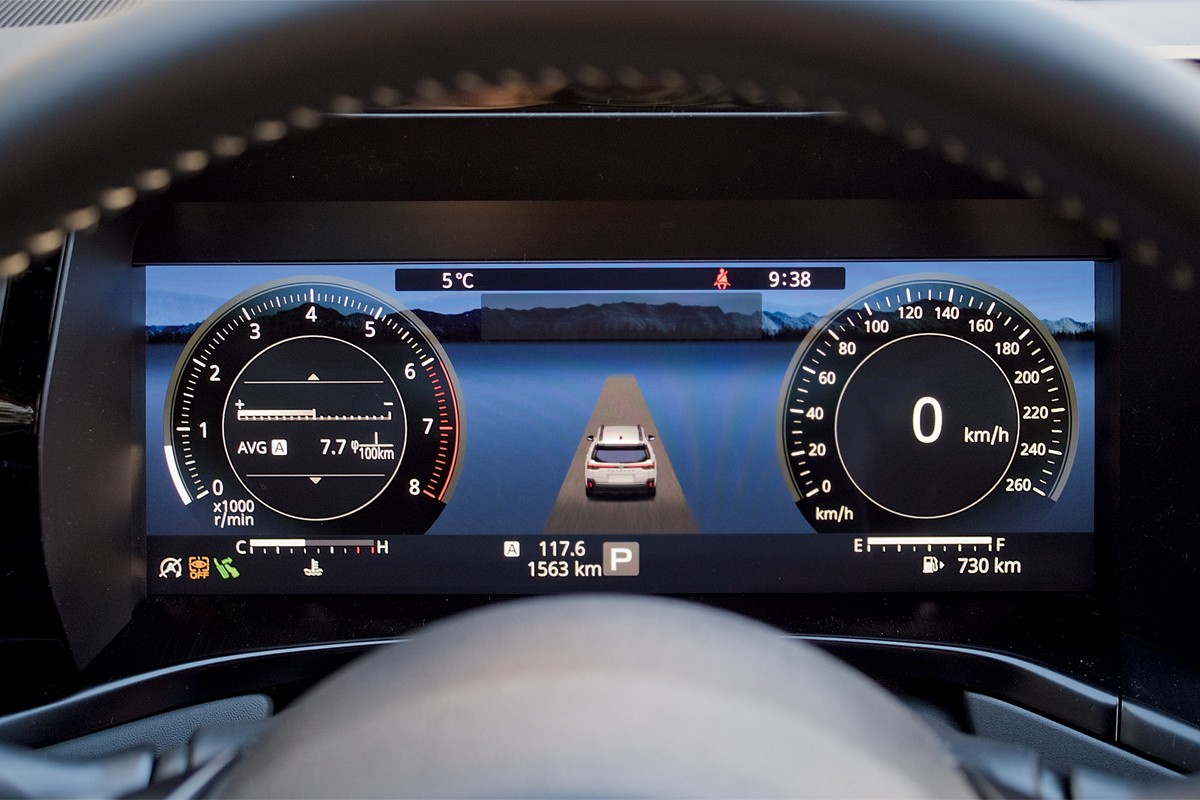
The digital instrument panel is easy to read, with large, clearly presented information. A wireless smartphone charging pad adds a modern convenience, although its transverse layout is less intuitive than a simple lengthwise phone tray.
Infotainment and Smartphone Connectivity
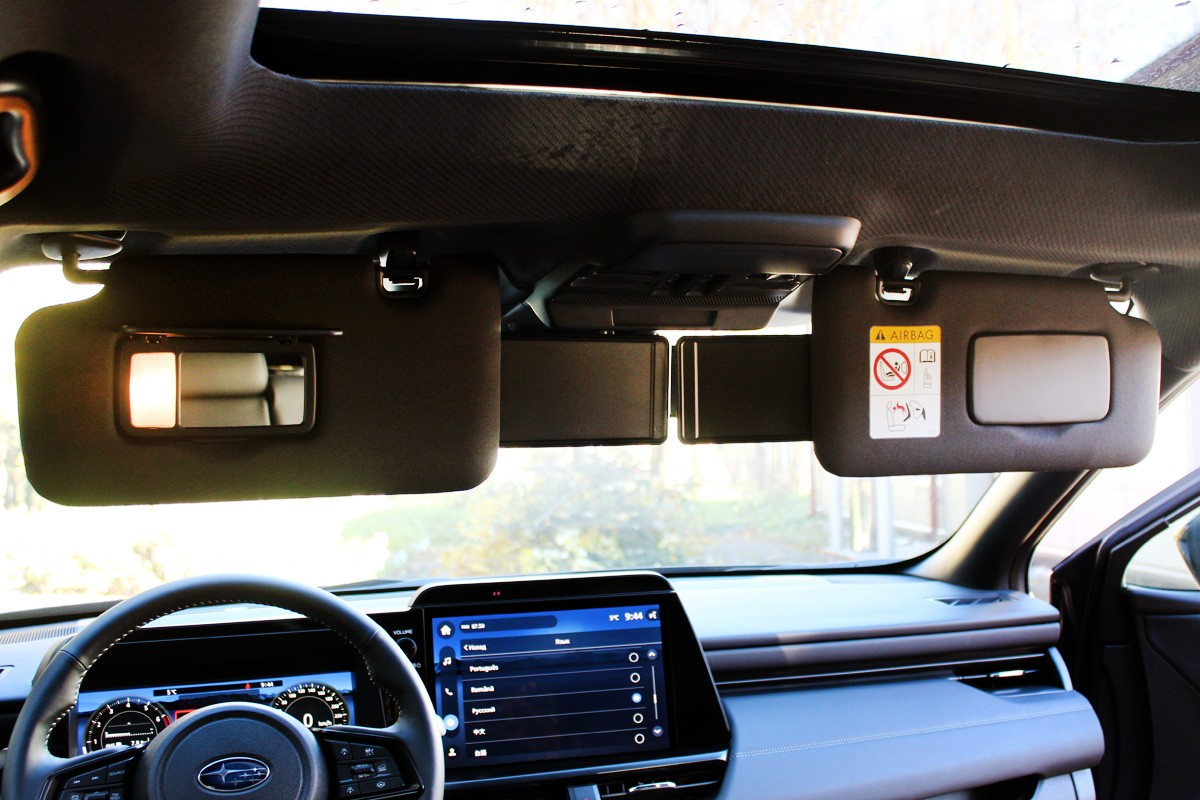
The multimedia system makes a less convincing impression in the tested car. Its basic graphics, limited functionality and unimpressive display clarity give it a dated feel, despite the redesigned dashboard.
Both Android Auto and Apple CarPlay are present. However, when the reviewer selected Android Auto, the system requested a USB connection; wireless operation was unavailable in that test.
This finding should be kept specific to the reviewed vehicle. Subaru’s U.S. specifications for the 2026 Outback list a 12.1-inch touchscreen with wireless Apple CarPlay and Android Auto as standard. Buyers should check the connectivity offered by the exact vehicle they are considering.
The optional Harman Kardon audio system sounds good, even though its sound-adjustment options are limited. The central display can also be switched off when it is not needed, then wakes promptly when the parking cameras are activated.
Rear-Seat Space and Cargo Practicality
The rear seats remain spacious and welcoming, but some smaller details suggest cost cutting. Fabric pull straps now operate the backrest adjustment and folding mechanisms where the previous model used larger, more substantial handles.
The cargo area is still roomy and practical. Two changes in the tested specification are less welcome:
- The earlier hands-free tailgate-opening function is absent. On the previous model, bringing a hand or elbow close to the rear badge could activate the powered tailgate.
- A flexible fabric cover replaces the familiar retractable cargo blind. It conceals luggage, but feels less substantial and is less convenient to move out of the way.
Neither change undermines the Outback’s usefulness as a family vehicle, although both are noticeable in a car that otherwise emphasizes comfort and everyday convenience.
2.5-Liter Boxer Engine and Lineartronic CVT
Under the new body, the mechanical layout remains familiar. The Outback continues to use the Subaru Global Platform, a naturally aspirated 2.5-liter four-cylinder boxer engine with direct injection, a chain-driven Lineartronic continuously variable transmission and all-wheel drive with an electronically controlled transfer clutch.
The regional specification sheet quotes the tested engine at 186 PS, using the metric horsepower convention. That figure should not be confused with the separate 180 hp rating published for the U.S.-market 2026 Outback.
There are relatively few driver-selectable settings in the reviewed version. SI-Drive is absent, while the CVT retains a manual mode with eight simulated ratios, selected using the gear lever or steering-wheel paddles.
For ordinary driving, the default calibration works well. Throttle response is predictable, and the engine and transmission generally respond without frustrating hesitation.
The original test did record a couple of low-speed jolts in creeping traffic when the accelerator was reapplied immediately after being released. It was a small blemish in an otherwise smooth powertrain.
Acceleration Test: How Fast Is the New Outback?
The naturally aspirated Outback still prioritizes smooth progress over outright speed. Even so, the measured results showed a small improvement over its predecessor.
The original test recorded the following 0–100 km/h times, equivalent to approximately 0–62 mph:
- 10.7 seconds with a conventional start, moving the driver’s foot from the brake to the accelerator.
- 10.1 seconds with a two-pedal start, allowing the powertrain to build load before moving away.
- A 0.4-second improvement over the predecessor in both of the reported comparisons.
During the conventional start, the CVT simulated stepped gear changes. In the quicker run, it held the engine at approximately 5,800 rpm, where it could deliver power continuously.
These are measured results from the original road test. They describe the performance of that vehicle under those conditions, rather than a guaranteed acceleration time for every Outback.
Real-World Fuel Consumption
Fuel consumption varied considerably with the type of driving. On a relaxed journey out of town to the test facility, the trip computer showed 7.1 L/100 km. In urban traffic, consumption rose to approximately 12.5 L/100 km.
Subsequent refueling suggested that the trip computer’s readings were reasonably close to actual use. These figures are observations from the review, rather than standardized laboratory ratings.
The automatic stop-start system may reduce fuel use in traffic, but its conventional 12-volt starter did not restart the engine particularly briskly. The delay could interrupt an otherwise smooth getaway from traffic lights.
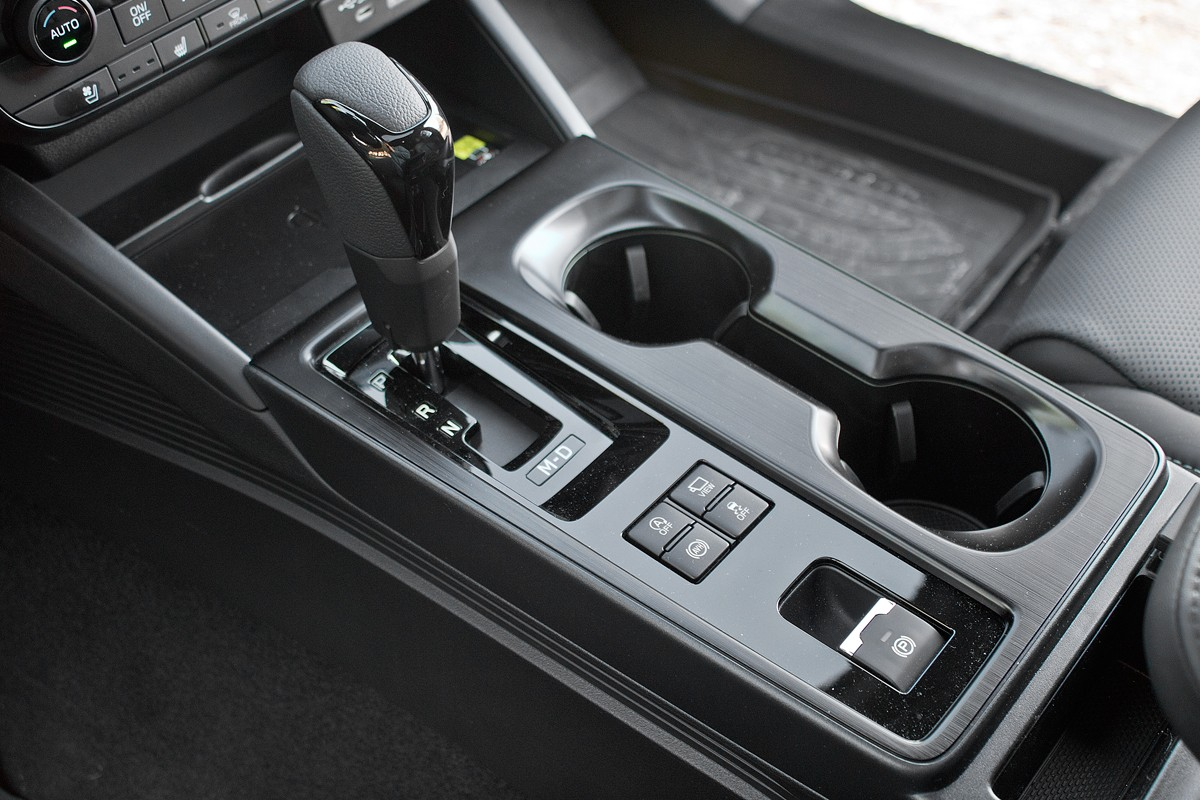
A dedicated button on the center console allows the system to be switched off without navigating through the touchscreen.
Steering, Brakes and Handling
Two mechanical changes make a useful difference from behind the wheel: an electrically powered brake booster replaces the earlier vacuum-assisted arrangement, and the electric power steering assistance moves from the steering column to the rack.
The brakes are easy to modulate and deliver convincing stopping performance. The revised steering, described in the original review as using a mechanism derived from the WRX, provides clearer feedback and more precise responses.
The vague feeling around the straight-ahead position is much reduced. Steering effort cannot be adjusted in the test car, but the standard setup feels well judged.
Through corners, the Outback remains composed, with moderate body roll and a balanced attitude. It does not encourage particularly sporty driving, yet its predictable responses make it reassuring on winding roads.
Ride Comfort and Cabin Noise
Ride comfort remains the Outback’s defining quality. Its suspension absorbs substantial bumps and rough gravel surfaces with impressive control, avoiding sharp impacts, excessive bouncing and the sense that the body is struggling to settle.
The original test found that this composure held up across a wide range of speeds on the gravel section. The body also remained free from distracting squeaks and resonant vibrations. The review cites Subaru’s claim of a 15% increase in torsional rigidity for the new generation.
Speed humps and other large surface disturbances are handled particularly well. Smaller imperfections are more noticeable: the suspension communicates cracks and joints in the asphalt quite faithfully, even when they do not produce uncomfortable impacts.
Noise suppression is another strong point. Additional sound insulation and double-layer front side glass help keep the cabin quiet both in town and at highway speeds. Even the familiar sound of the boxer engine is subdued.
The combination of controlled suspension movement, low noise and comfortable seating makes the Outback particularly appealing for long journeys and routes with inconsistent road surfaces.
EyeSight Driver Assistance in Everyday Driving
The updated EyeSight system supplements its forward-facing stereo cameras with a third wide-angle camera and additional radar sensors. This broadens its view of the road and surrounding traffic.
In the original test, lane centering worked smoothly and did not react excessively to small movements within the lane. Adaptive cruise control also reduced speed progressively when another vehicle moved into the gap ahead.
The escalation of warnings when the driver stopped holding the steering wheel was particularly notable. The reported sequence was:
- After approximately 12 seconds: an initial request to return hands to the wheel appeared.
- As the warning continued: audible alerts and prominent red visual warnings became more insistent.
- At approximately 23 seconds: the vehicle applied two brief braking pulses.
- At approximately 28 seconds: it activated the hazard lights and began slowing more firmly while remaining in its lane.
These timings describe the behavior observed in that particular test. Functions and intervention strategies differ by market, equipment and operating conditions. EyeSight remains a driver-assistance system that requires active supervision.
All-Wheel Drive, X-Mode and Off-Road Ability
The Outback’s main off-road limitation is its body geometry. A genuine 220 mm of ground clearance is useful, but the long front and rear overhangs restrict the approach and departure angles on steeper obstacles.
Where the terrain allows enough clearance for the bumpers, the test car performs well. Its Bridgestone Alenza H/L 33 tires provided useful traction in the mud and wet grass encountered during the review. The all-wheel-drive clutch tolerated wheelspin without apparent difficulty, while brake-based traction control helped limit the effect of individual wheels losing grip.
The reviewed version has a single X-Mode setting rather than the earlier two-mode arrangement. The separate Deep Snow/Mud preset is absent, although traction control can still be switched off using a dedicated button when additional wheelspin is needed.
X-Mode coordinates the engine, transmission and all-wheel-drive system to improve traction on difficult surfaces. In the version described by the original review, the mode disengages when speed exceeds 40 km/h.
The resulting ability is useful for muddy access roads, wet fields and rough tracks. The large overhangs remain the main reason to approach more demanding terrain cautiously.
Subaru Outback Price and Engine Availability
Price was one of the strongest criticisms in the original review. The dealer prices quoted for the two available specifications convert to approximately US$108,500–US$112,100 using the exchange rate on November 13, 2026.
Those figures reflect the particular import market and supply channel covered by the test, including substantial local charges. They are not Subaru’s U.S. manufacturer’s suggested retail prices. A local vehicle recycling levy alone accounted for approximately US$27,700 of the quoted total.
The test car’s Japanese manufacture and well-developed driving manners were part of its appeal, but the high final price made its modest acceleration and less polished multimedia system harder to overlook.
Buyers in markets offering the 2.4-liter turbocharged engine have a more powerful alternative. Subaru rates the U.S. version at 260 hp, while the original article expresses the turbo engine’s output as 264 PS. The turbo model was not available through the supply channel described in the review.
Verdict: A More Comfortable Outback with Familiar Compromises
The new Subaru Outback changes its appearance more dramatically than its underlying character. Its more upright SUV body adds space and visual presence, while the strongest reasons to choose it remain comfort, visibility, predictable handling and useful all-wheel-drive capability.
Main strengths:
- Excellent absorption of large bumps and rough road surfaces.
- A quiet, spacious cabin with comfortable seats.
- Physical climate controls and straightforward everyday ergonomics.
- Improved steering feedback and well-calibrated brakes.
- Effective traction management on slippery and uneven surfaces.
- Smooth operation of the driver-assistance systems during the test.
Main drawbacks of the tested version:
- Modest acceleration from the naturally aspirated 2.5-liter engine.
- A multimedia system that felt dated in the reviewed specification.
- Long overhangs that limit off-road clearance at the bumpers.
- Some less substantial cabin and cargo-area details.
- A high purchase price in the import market covered by the review.
For drivers who regularly cover long distances or encounter poor roads, the Outback’s comfort and composure remain persuasive. The new body makes it look tougher, but its greatest achievement is preserving the qualities that make it easy to live with.
Photo: Igor Vladimirsky
This is a translation. You can read the original article here: Новый Subaru Outback: теперь это кроссовер. Наш тест с замерами

Published November 13, 2026 • 14m to read