
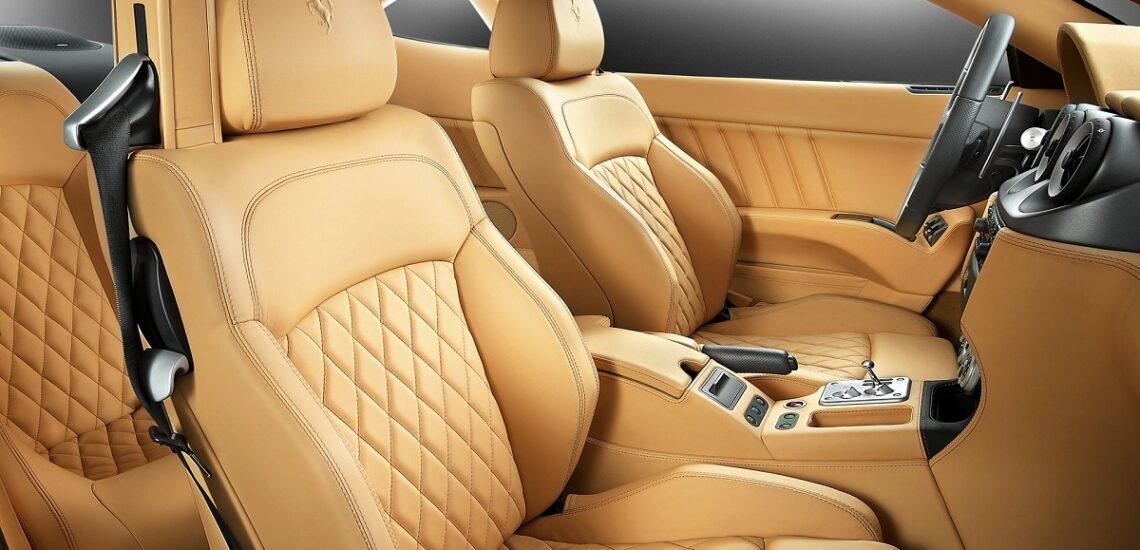

Car seats are arguably the most underrated component of any vehicle. We care about horsepower, fuel economy, and infotainment — yet most of us give little thought to what we actually sit in for thousands of hours of our lives. If drivers truly understood what goes into seat engineering, words like “chair” or “furniture” would feel laughably inadequate. Beneath that upholstery lies one of the most complex intersections of design, biomechanics, materials science, and safety engineering in the entire vehicle.
Why Car Seats Matter More Than You Think
Seats occupy a significant portion of the interior and are critically important — both for designers and for the people who use them every day. For the driver, the seat is the primary channel of physical communication with the car: roughly a third of the body’s surface is in direct contact with it at all times.
Consider these numbers:
- The average European motorist spends approximately 22,000 hours in a car over their lifetime.
- Despite major improvements in seat quality, around 75% of drivers report some degree of back pain related to driving.
- Common complaints also include neck pain, poor circulation, and premature fatigue.
- Loss of concentration due to fatigue is responsible for one third of serious road accidents in Europe.
Since a car seat is both a heavy and expensive component, it receives far more attention in engineering and production than it ever does in advertising or press reviews. And yet, its impact on your health and safety is enormous.
A Brief History of Car Seat Design
Modern car seats have come a long way from their origins in furniture-making. Here’s how the technology evolved over more than a century:
- Early 1900s: The first horseless carriages used spring seats directly borrowed from furniture — twisted metal springs covered with leather and minimal padding.
- 1900s–1920s: Padding improved with the use of natural fibers, including animal hair, coconut threads, and rubberized materials.
- 1930s: Latex foam appeared, making seats significantly cheaper to produce than spring-based designs.
- 1960s onward: Polyurethane foam — more affordable and versatile — became the industry standard and remains widely used today.
- By the early 1990s: Economic considerations effectively ended the classic “sofa” design combining a spring frame and molded foam shell. Springs are still present today but simplified to a basic S-shaped wire as a passive support element.
The Anatomy of a Modern Car Seat
At its core, every modern car seat is built around a structural frame made of metal or composite materials. The strength of these frames has increased dramatically over recent decades, driven by increasingly strict passive safety regulations. Today’s seats must meet rigorous standards, including:
- Integration of seatbelt anchors and, in many cases, side airbags.
- Strength testing across a wide range of impact parameters.
- Compliance with passive safety standards that have effectively standardized seat construction across manufacturers.
These strict requirements have had an unintended consequence: they have nearly eliminated the aftermarket for tuned or custom seats in regular road cars. Even the iconic Recaro brand, which built its reputation on performance seats, stopped manufacturing civilian car seats itself roughly a decade ago, instead licensing its name to third-party producers.
How Car Seats Are Professionally Evaluated
Seat comfort is assessed in two distinct phases:
- Static comfort — the immediate impression formed within the first 10–15 seconds of sitting down, as if you were a customer in a dealership showroom. Key questions include: Does the seat make entry and exit difficult? Is it too hard or too soft? Does it feel cramped? How well does it hold the body? And critically — how are the reactive forces from the body’s pressure distributed across the upholstery? This last point is what automotive journalists refer to as a seat’s “profile.”
- Dynamic comfort — assessed during a drive of at least one to two hours. In motion, all the static factors still apply, but additional parameters come into play, most importantly the seat’s ability to dampen a wide range of vibrations. The ride quality of a car is not just a function of its suspension — it’s a triumvirate of tires, chassis, and seats working together.
The Science Behind Seat Comfort and Ergonomics
Serious scientific research into seat design only began in the 1940s, and it took another two to three decades for those findings to make a meaningful impact on mass production. Today, the data is abundant — though not always consistent. The most debated question remains how body load should be distributed across the seat surface.
Two main schools of thought exist:
- Uniform softness: A minority of researchers argue that an evenly soft surface — similar to older French car seats — is sufficient for comfort.
- Variable stiffness: The majority of scientists support a zoned approach, where seat density varies because different body parts bear different loads. Firmer support under the ischial tuberosities (the “sit bones”) and the lumbar region reduces pressure on more vulnerable soft tissues.
Other key ergonomic principles include:
- The angle between the seat cushion and backrest must prevent the occupant from sliding forward, which would add tissue displacement on top of compression stress.
- Occupants must be able to shift position during long trips without significantly altering their pressure distribution.
- In the ideal seating position, each major joint sits approximately in the middle of its range of motion.
- All ergonomic calculations are made relative to the H-point (hip-point), the center of the hip joint — a universal reference in seat engineering.
From a vibration standpoint, the seat frame, elastic elements, and foam must collectively avoid resonance in the most problematic frequency range of 4 to 8 Hz. Resonance at the lower range of 0.1 to 0.6 Hz causes motion sickness — the lulling sway familiar to anyone who rode in the back of an older large-bodied car. The shift away from coil spring frames has greatly benefited people with a sensitive vestibular system, as modern seat natural frequencies are significantly higher — though not so high as to transmit road vibrations harshly.
On average, seat upholstery compresses by 4–5 cm under body weight, and up to 8 cm in extra-soft designs. Seat height — defined as the position of the H-point above the floor — plays a major role in seating comfort, but manufacturers must accommodate an enormous range of body types. The industry standard design range runs from the 5th female percentile (approximately 1.53 m tall) to the 95th male percentile (approximately 1.87 m), yet even with this range, manufacturers can only fully satisfy around 90% of customers.
Adding to the challenge: people are getting taller. Americans and Europeans grow approximately one centimeter taller every decade on average. As a result, longitudinal seat adjustment ranges — once standardized by DIN at a minimum of 160 mm — now frequently approach 300 mm. Height adjustment typically offers 60–70 mm of travel.
Seat Microclimate and Upholstery Materials
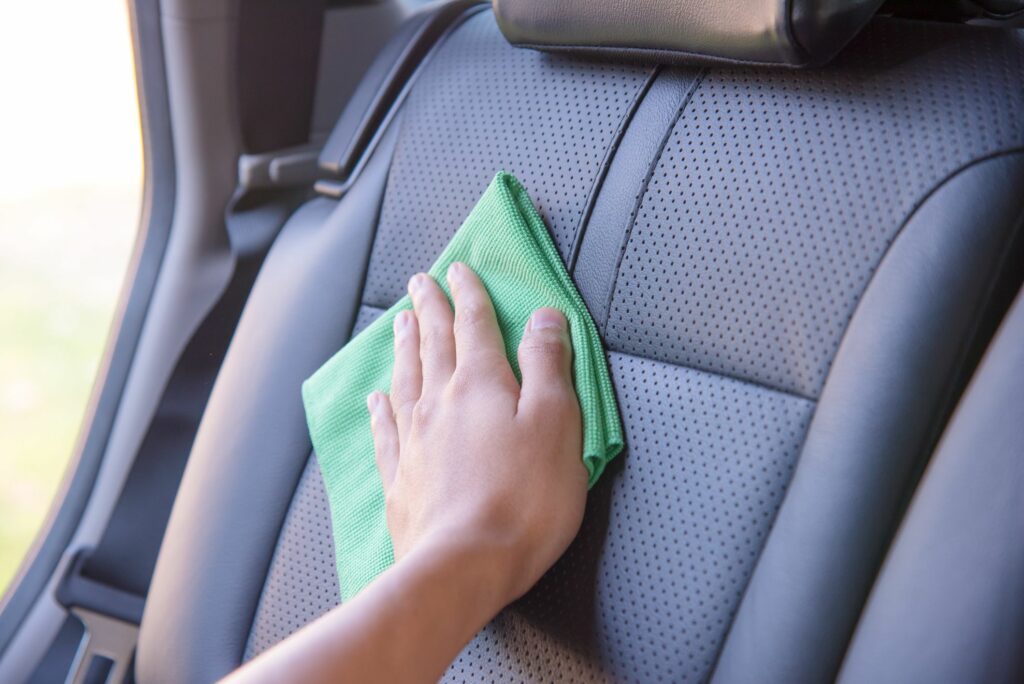
Since roughly a third of the body is in contact with the seat, upholstery plays a major role in thermal comfort. The optimal seat surface temperature is 23°C, regardless of season or time of day. Heated seats have been available since 1966, when Cadillac first offered them as an option — but heat exchange is a two-way process. The seat must also absorb approximately 75 W/m² of thermal energy radiated by the human body, meaning breathability is just as important as warmth.
Here’s how common upholstery materials compare in terms of breathability and thermal management:
- Artificial leather (leatherette): The worst performer for breathability. It traps heat and moisture, making long journeys uncomfortable in warm conditions.
- Natural leather: Slightly better — it “breathes” to a limited degree. A deep surface texture helps with micro-drainage. However, it still becomes nearly impermeable under compression, especially in the foam layer beneath it.
- Fabric (textile): Even the most basic fabric upholstery outperforms both leather types in heat dissipation under normal conditions. It is the most breathable standard option.
- Perforated leather with ventilation: When combined with active ventilation fans (which typically work by drawing air out rather than pushing it in), perforated leather can match or approach fabric in thermal efficiency. This system debuted on the Saab 9-5 in 1997.
Looking ahead, small heat pumps built directly into seats — operating on the same refrigerant-based principle as air conditioning systems — are expected to become the next step in seat climate control technology.
The Future of Car Seat Technology
Car seat innovation is accelerating rapidly, with trends pulling in two directions: deep personalization and smart integration with vehicle systems.
Personalization and adjustability:
- Custom-molded seats — long standard in motorsport and the sports car world — are reaching luxury road cars. Ferrari has offered road cars in three seat sizes for years, while Porsche provides individual molding in three rigidity levels for track variants of the 911 and 718.
- Lincoln set a benchmark for mass-market adjustability in 2017 with seats offering 15 independently adjustable parameters, including individual control over the length and angle of each thigh support — marketed in the US as “30-way” seats (each parameter adjustable in two directions).
- Massage functionality is now mainstream, available on vehicles as accessible as the Ford F-150 pickup.
Smart seat technology:
- Basic biosensors embedded in seats will soon allow real-time monitoring of the driver’s heart rate, with alerts for declining alertness.
- Advanced pressure-mapping sensors will track the “map” of body contact across the upholstery, useful not just for optimizing seat adjustments but also for calibrating active safety systems.
- The same pressure-sensing technology could even feed into biometric anti-theft systems — recognizing the unique pressure signature of the authorized driver’s body.
In the not-too-distant future, a dashboard message reading something like “Ischial tuberosities recognized — have a good trip” may not be science fiction at all.

You can read the original here: https://www.drive.ru/technic/5ed0dcc6ec05c4ac13000157.html

Published August 12, 2021 • 8m to read