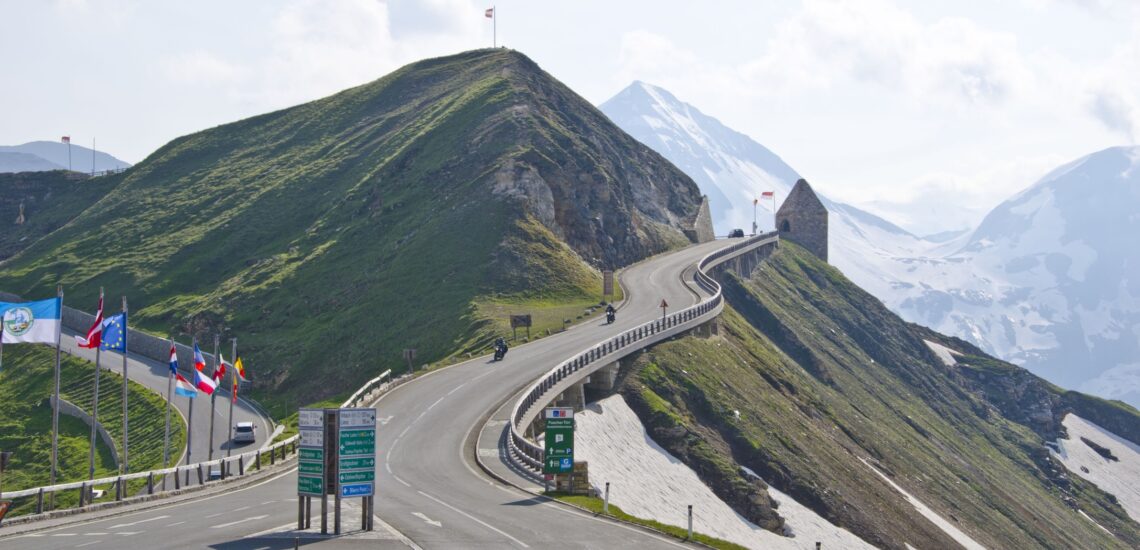

Austria is known for its stunning natural beauty — magnificent mountains, green valleys, and charming lakes. Driving through the country is one of the best ways to experience this scenery up close. Roads wind through picturesque villages, vineyards, and historic towns, letting you explore at your own pace and stop whenever a view catches your eye. Whether you’re marveling at the snowy Alps, cruising along the peaceful Danube Valley, or passing castles and vineyards in the countryside, Austria’s scenic routes offer an unforgettable road trip experience.
Driving in Austria: What to Expect
Austria’s road network offers excellent driving conditions in summer, with well-maintained paved roads throughout the country. Winter driving — particularly from November to April — can be more challenging due to snow-covered roads, especially in mountainous regions. Winter tires or snow chains are mandatory in these conditions, particularly on steep terrain. Austria follows right-hand traffic rules, similar to most of continental Europe, with strict enforcement of road regulations.
Austria has a significant number of registered vehicles, with over 5.5 million registered passenger cars as of the end of 2022 — around 17,054 more than the year before. This steady rise in traffic volume makes it increasingly important for drivers to stay alert and follow safety measures, especially on mountainous roads and during challenging weather conditions.
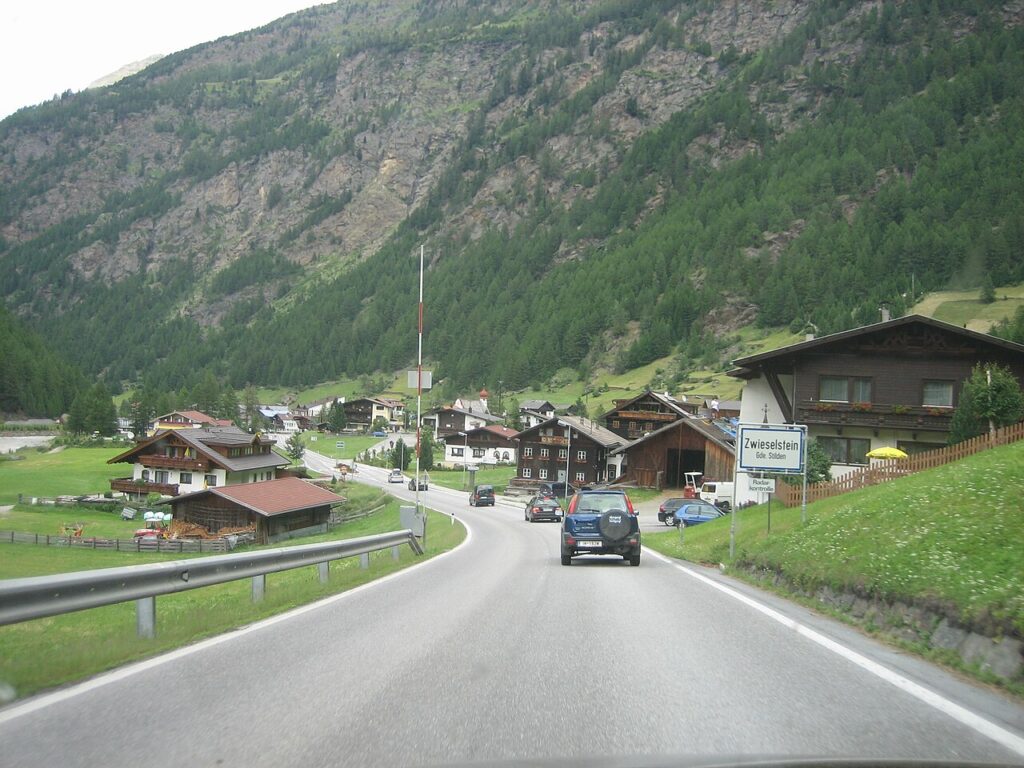
Hullie, CC BY-SA 2.5, via Wikimedia Commons
Speed Limits in Austria
Austria has clearly defined speed limits for different types of roads. These apply under normal traffic conditions unless otherwise signposted:
- Urban areas: 50 km/h (approximately 31 mph)
- Rural roads: 100 km/h (approximately 62 mph)
- Dual carriageways: 100 km/h (approximately 62 mph)
- Motorways: 130 km/h (approximately 80 mph)
Always watch for posted signage, as limits can vary in specific zones, construction areas, or adverse weather conditions.

KrauS, CC BY 3.0, via Wikimedia Commons
Road Rules in Austria
Before hitting the road, familiarize yourself with these key regulations:
- Age requirement: Drivers must be at least 18 years old and hold a valid full driving license. Motorcyclists can ride motorcycles up to 125cc at age 16, while moped riders (up to 50cc) must be at least 15.
- Traffic direction: Austria follows right-hand traffic regulations.
- License acceptance: Driving licenses issued by EU and EEA countries are recognized in Austria. International Driving Permits are accepted but not mandatory.
- Road signs: Austria uses largely the same road signs as the rest of Europe.
- Alcohol limits: Driving under the influence of alcohol (0.5 per mille or more) or drugs is strictly prohibited, with penalties ranging from €300 to €5,900 and possible license suspension.
- Seatbelts: Mandatory for all passengers. Drivers are responsible for ensuring passengers under 14 years old wear their seatbelts.
- Mobile phones: Talking on a handheld phone while driving is prohibited unless using a hands-free kit. Using your phone as a GPS is allowed if it’s securely mounted.
- Headlights: Mandatory at night. Optional during daylight, though non-compliance at night can lead to fines.
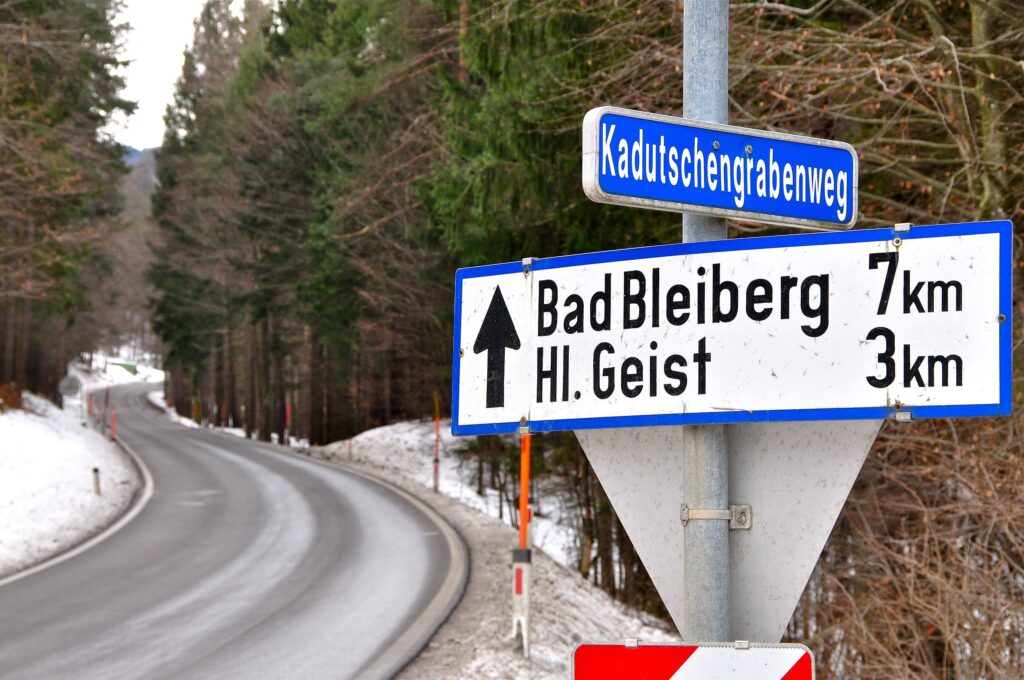
Johann Jaritz, CC BY-SA 3.0 AT, via Wikimedia Commons
Toll Sticker (Vignette) in Austria
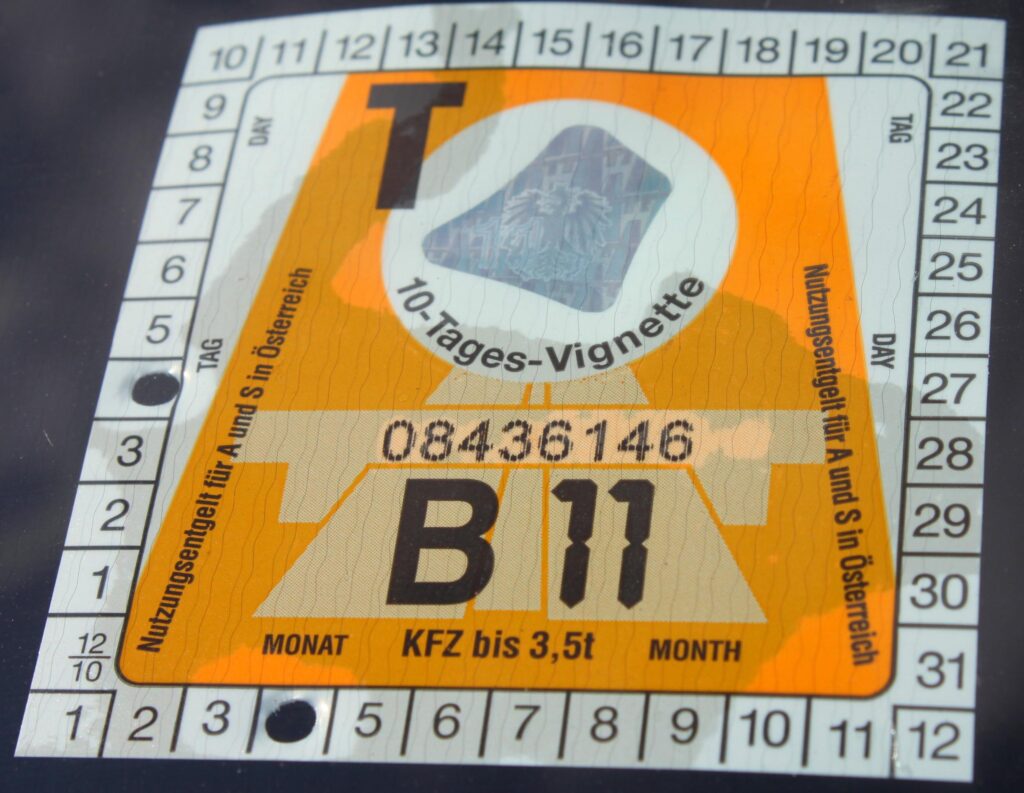
Vehicles using Austria’s highways and motorways must display a toll sticker, known as a vignette. This sticker is affixed to the windshield as proof of payment for road use. Purchasing and displaying it correctly is essential to avoid fines and travel smoothly on Austria’s toll roads.
How to Get the Vignette
There are two ways to obtain a vignette in Austria:
- Physical toll sticker: Available at Austrian Automobile Clubs, post offices, newsagents, and petrol stations. Make sure it’s affixed to your windshield immediately upon entering the country to avoid fines.
- Digital toll sticker: Purchase online via the ASFINAG website or app, or at physical sales points. Note that digital stickers have a delayed activation period from the purchase date.
Toll prices vary depending on vehicle type and vignette duration. For vehicles exceeding 3.5 tons, a “GO-Box” is required for mileage-based toll payment. The GO-Box is available at numerous outlets across Austria, with rates depending on the number of axles, kilometers driven, and EURO emission class. Full details on rates and outlets are available on the official website.
User: Benreis at wikivoyage shared, CC BY-SA 3.0, via Wikimedia Commons
Emergency Corridor in Austria
The “Rettungsgasse,” or emergency corridor, is a lane specifically reserved for emergency vehicles during traffic congestion. On two-lane roads, it’s formed between the two existing lanes. On roads with more than two lanes, it’s created between the far-left lane and the adjacent lane. Drivers must move to the left or right accordingly to keep this corridor clear at all times.
Parking in Austria
Vienna offers several parking options for visitors:
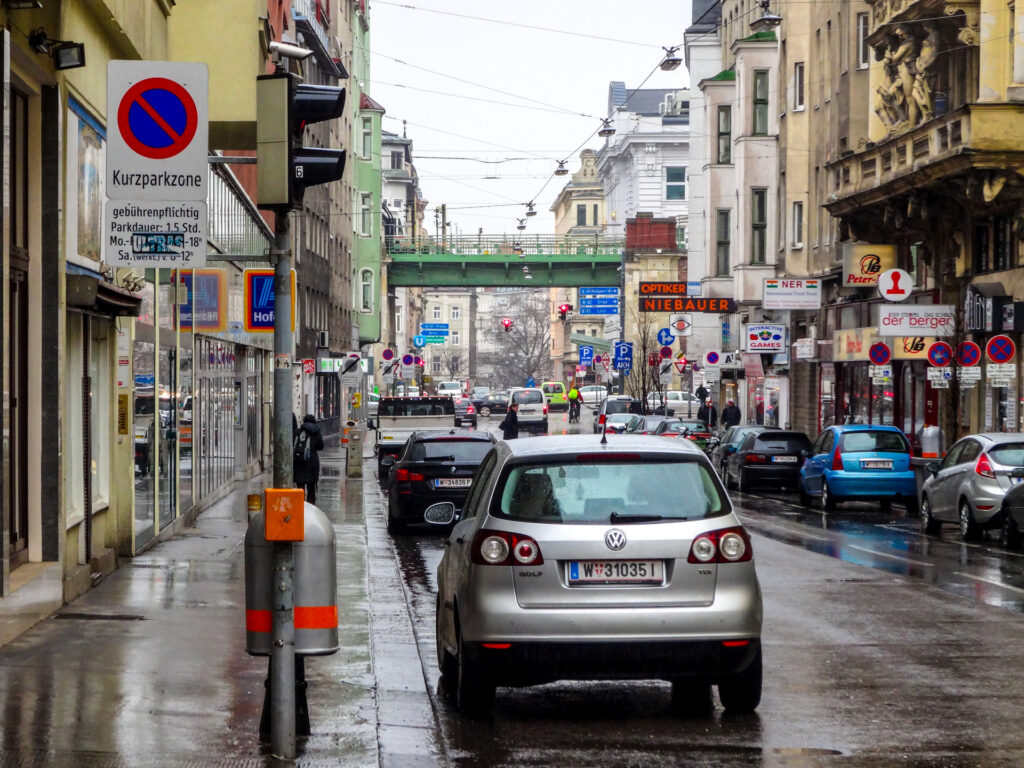
- City center paid zones: Fees apply from 9:00 to 22:00, Monday to Friday, and 18:00 to 22:00 on Saturdays (excluding some holidays).
- Underground parking facilities: Rates vary by location and duration.
- Limited availability: Especially in the historic center, so plan your parking in advance.
For up-to-date rates and locations, check the official resources of the City of Vienna and specialized parking websites.
Outside Vienna, most cities and major towns offer public parking with both paid and free options. Many hotels and shopping centers provide parking for visitors, and rural areas typically have more availability, often free or at minimal cost. It’s worth familiarizing yourself with local parking rules and tariffs in each region before you travel to avoid confusion and simplify trip planning.
Can You Drive in Austria with a US License?
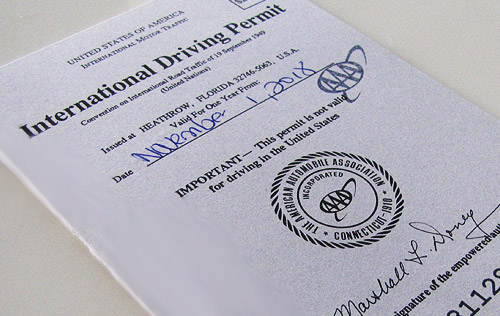
A U.S. driver’s license alone isn’t enough to drive legally in Austria. You’ll also need either an International Driver’s Permit (available through AAA or AATA in the U.S.) or an official translation of your U.S. driver’s license, obtainable through one of the Austrian automobile clubs (ÖAMTC or ARBÖ). This rule applies only for the first six months of driving in Austria — after that, drivers are required to obtain an Austrian license.
Renting a Car in Austria
Renting a car in Austria is a straightforward process, with many international and local rental companies operating in major cities and airports. Keep the following in mind:
- Book in advance, especially during peak tourist seasons, to secure availability and the best rates.
- A valid driver’s license and a credit card for the deposit are required.
- The minimum age requirement is typically 21 years old.
- Familiarize yourself with local traffic rules before setting off for a smoother driving experience.
Best Places in Austria for a Road Trip
Austria offers numerous stunning destinations perfect for exploring by car:
- Salzburg: Renowned for its architecture, culture, and history, along with picturesque surroundings like Lake Fuschlsee and the Tauern Mountains.
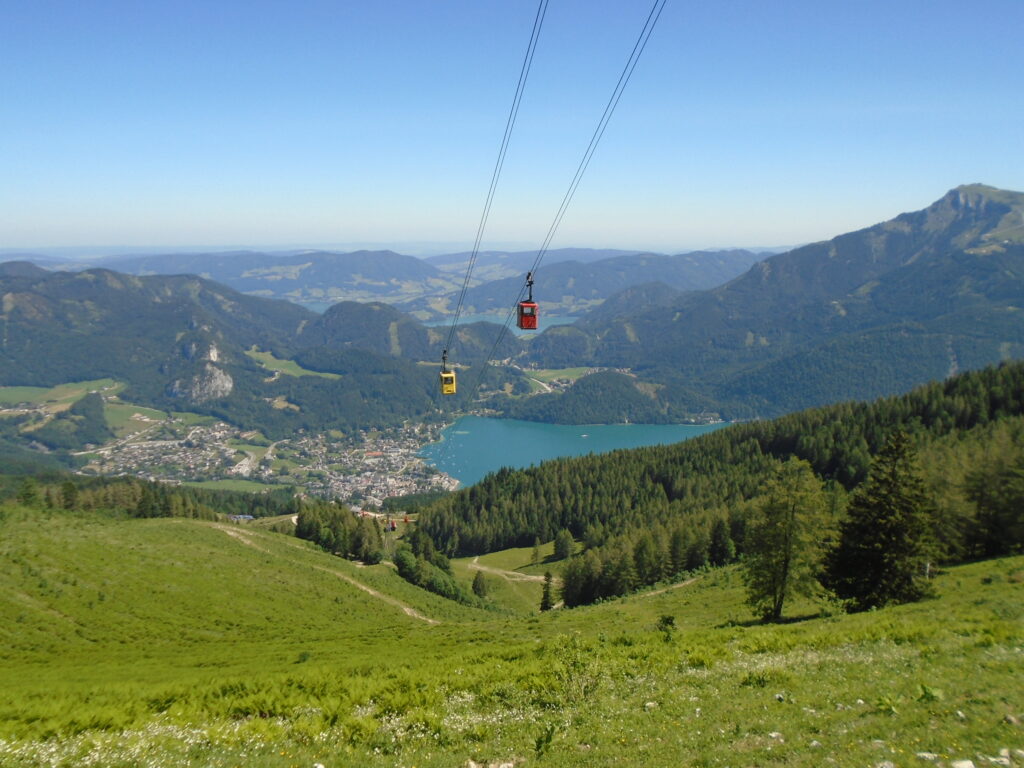
- Salzkammergut: A region of breathtaking lakes and mountains, ideal for outdoor activities like hiking and cycling.
- Innsbruck: Nestled in the Alps, known for its alpine atmosphere, vibrant cultural scene, and excellent skiing.
- Wachau Valley: Famous for vineyards, medieval castles, and stunning landscapes — perfect for a scenic drive with stops for local architecture and wine tasting.
- Grossglockner High Alpine Road: Offers unforgettable views of the Alps and unique natural beauty, making it a top spot for road trips and photography.
Pimlico27, CC BY-SA 4.0, via Wikimedia Commons
Keep weather conditions and seasonal factors in mind when planning your route, especially if you’re traveling through mountainous regions.
Country guides

Published November 04, 2023 • 7m to read


.jpg)


