


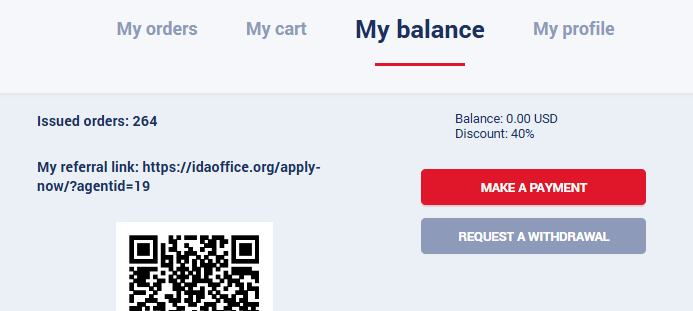
Agent #19 in Kentucky is our lowest-volume case, and that is exactly why it is here. Six and a half years, 264 documents, about three a month — the smallest of the cases on this blog.
If you run a notary office, a translation agency or a multiservice centre, the growth options on offer are mostly unattractive. Hiring is expensive, more space is a headache, and speculative investments are not what you got into this for. What you do have is a counter that people walk up to every day with paperwork in hand.
This is a small case. We are leading with that, because the other cases on this blog run at about eleven to forty-four orders a month and you deserve to see what the bottom of the range looks like too.
Who this is
A neighbourhood multiservice business in Kentucky — money transfers, check cashing, phone top-ups, bill payments, ticket sales, the place you go when you need five unrelated things done without driving across town. At some point they added International Driving Permits to the mix.
They registered in July 2019. Figures are as of 7 December 2025 — six and a half years.
They work as a reseller: they take the client’s details at the counter, submit the application, buy at their discount and charge their own price.
Six and a half years, measured
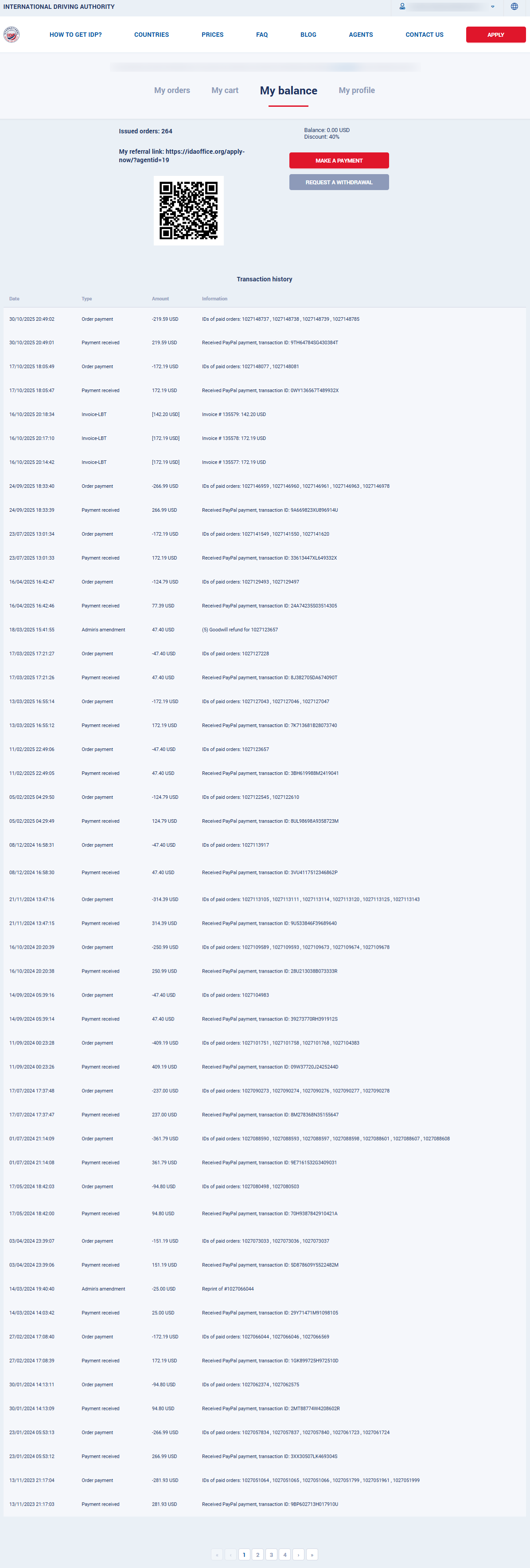
| Documents issued | 264 |
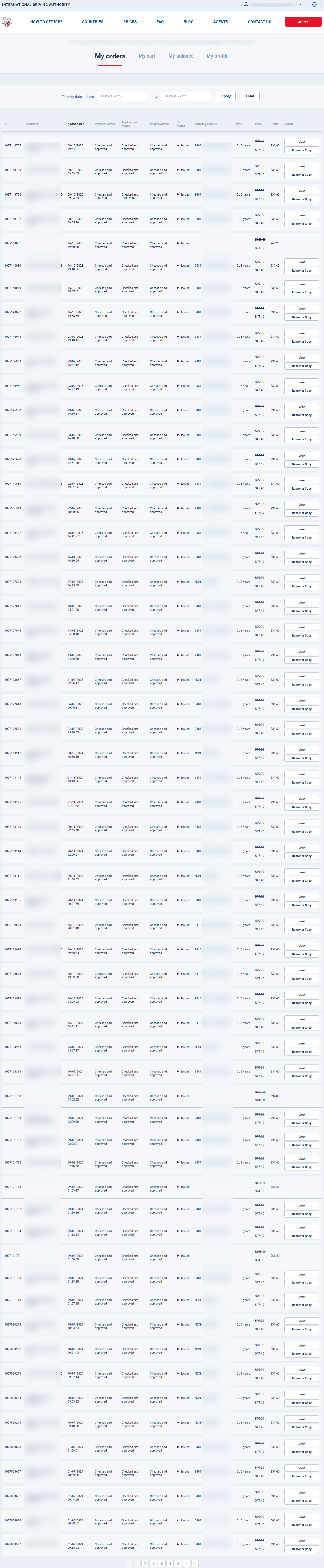
| Orders per month | about 3.4 |
| Their current rate | 40% |
| Order pattern | low, but strikingly consistent |
Nobody here is running campaigns or pushing anything. A client mentions travel, work abroad or renting a car overseas; the document gets offered on the spot; it fits into the flow of services already being provided. Three a month, for six and a half years.
What three orders a month is worth
We do not publish what individual partners charge — that is their business and their market. What we can do is show the arithmetic with their cost filled in and the price left blank for you.
At a $60 base price and their 40% rate, each document costs them $36. Everything above that is margin:
| If you charge | Margin per document | At 3.4 orders a month | Across their 264 orders |
|---|---|---|---|
| $66 | $30 | about $100 a month | $7,920 |
| $86 | $50 | about $170 a month | $13,200 |
| $106 | $70 | about $240 a month | $18,480 |
A hundred dollars a month will not change anyone’s year. Two hundred and forty, arriving every month for six years from a service that occupies a few minutes at the counter, is a different proposition — and it is money that would otherwise simply not exist.
Three things move your number: local pricing and competition, how you position the service, and whether you are the kind of office clients pay a premium to. If you also do certified translation or immigration support, you are already selling trust and speed, and you can price accordingly.
Why these offices fit so well
Step back and look at what a notary, translation or multiservice office already does:
- handles identification documents and sensitive personal data as a matter of routine;
- prepares, translates or notarises official paperwork all day;
- serves exactly the people who need driving documents abroad — immigrants, travellers, international students, cross-border workers;
- has the client’s trust before the conversation starts.
So adding this is not a new line of business. There is no marketing to do, because the clients are already walking in. There is no trust to build, because they are already handing you their passport. There is no space or equipment needed, because documents are prepared on demand. It is one more line on a price list.
What it looks like at the counter
- Spot the moment. A client mentions a trip, relocation, seasonal work abroad or renting a car overseas.
- Make the offer. Tell them you can handle the international driving document too.
- Collect the data. You are already taking IDs and handling paperwork. This is one more form.
- Submit it. Log into your dashboard and fill in the application.
- Deliver. Digital or printed, whichever suits the client.
The client leaves thinking this place handles everything. That impression is worth something beyond the margin on the document.
Two ways to earn, one ladder
Partners work with us in one of two ways. They pay differently, and it is worth knowing which one you are reading about before you compare numbers.
Reselling. You buy the document at your discount and charge your client whatever you decide. The difference is yours. You invoice the client; IDA never pays you anything. Your income depends on the price you set, so two resellers with identical volume can earn very different amounts.
Referral. You share a link, a QR code or an embedded form. Your client orders from IDA directly and pays IDA’s price. We then pay you a share of it. You set no prices and handle no money, so the income per order is fixed — and lower than a reseller’s markup usually is.
Both use the same ladder, and your position on it is set by how many orders you have placed:
| Orders | Your rate |
|---|---|
| 1st | 15% |
| 2nd-10th | 30% |
| 11th-30th | 33% |
| 31st-50th | 35% |
| 51st-100th | 37% |
| 101st-300th | 40% |
| 301st-500th | 43% |
| 501st-1,000th | 47% |
| 1,001st onward | 50% |
For a reseller the rate is a discount off the price you pay us. For a referral partner it is the share of the order we pay you. Same percentage, different direction.
One consequence worth stating plainly: reselling pays more per order than referring. In the one case on this blog where we know the reseller’s price, the margin is close to $99 per document; the referral partner in our Sri Lanka case averages roughly $18 per sale. Referring is far less work per order, so the right choice depends on whether your constraint is time or client flow.
Three ways to put it in front of your clients
At the desk. A QR code on the counter, a link in WhatsApp, a line in your confirmation email. The client orders on their own phone. Least work, and it survives staff turnover because nobody has to learn anything.
On your own website. Either a plain referral link, or our widget — an order form embedded in your own page. The client fills it in and pays on your site at IDA’s prices, and the order arrives tagged to you. You generate the snippet yourself in your agent dashboard; one key is tied to one domain, and you choose the language and currency it displays. Some of our partners run comparison and booking sites and place it exactly this way.
You submit for the client. You fill in the application yourself in your dashboard, using the documents the client has already handed you. This is the most work per order and by a wide margin the most reliable: every partner in these case studies with a near-zero cancellation rate works this way. Clean data in, no refunds out.
Partners who run their own systems and sustained volume can also integrate with our API directly. That runs under a separate agreement rather than as a self-service feature — if your volume is there and you want your own booking or CRM system to create orders, write to us and we will talk it through.
How the money actually reaches you
If you resell, there is nothing to wait for: you have already charged the client, and your cost was settled with us at your discounted rate.
If you refer, the money comes from us, and the timing has rules worth knowing before you start:
- An order is credited to you roughly a month after the client pays — not on the day of the sale. Credits are processed in a daily batch.
- You will see each order move through Not paid → Waiting for credit → Waiting for issued in your dashboard, so nothing is hidden from you.
- A refund reverses the credit. This is why the partners with the lowest cancellation rates earn the most predictable income.
- The cookie lasts 30 days. If your client clicks your link today and orders three weeks later, it still counts as yours.
- Payouts go out by PayPal, by bank transfer in 60+ currencies, or in USDT.
One limitation to know in advance, because it surprises people: you are credited for new clients only. If someone already has an IDA account that is not linked to any partner, their next order does not become yours, even if they reach us through your link. In practice this rarely bites — most of the people you refer have never ordered from us before — but you should hear it from us rather than discover it in your dashboard.
Getting started
Registration is at https://idaoffice.org/agent/register/ and takes a few minutes. There is nothing to buy, nothing to install, and no minimum volume.
Once you are in, you have a dashboard with your orders and balance, your referral link and QR code, the widget generator if you want the form on your own site, and your current rate — which moves up the ladder by itself as your order count grows.
What this needs from you is not effort so much as consistency. Every partner in these case studies does the same unremarkable thing: they mention it every time the moment comes up, not only when they remember to.
Evidence
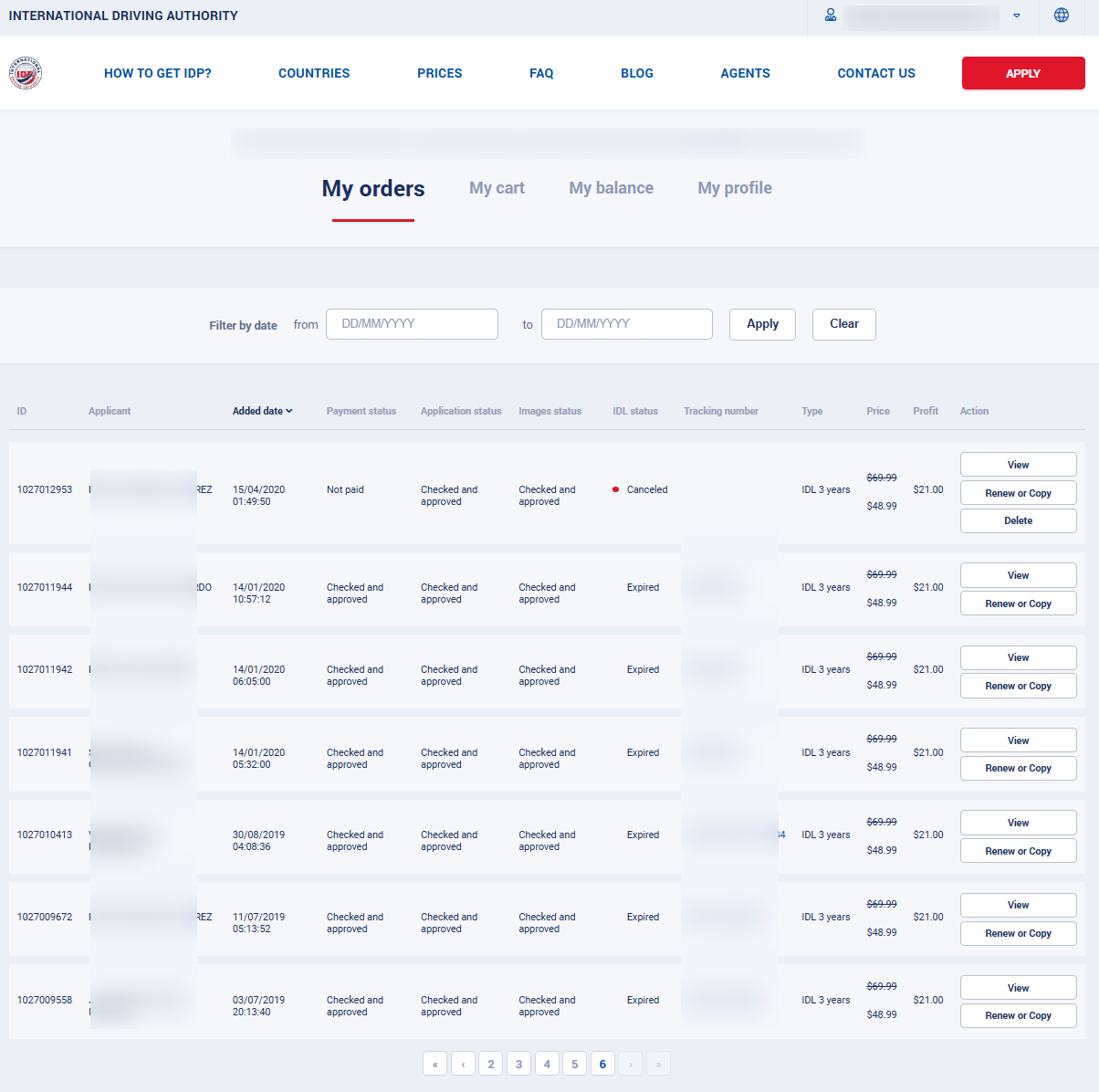
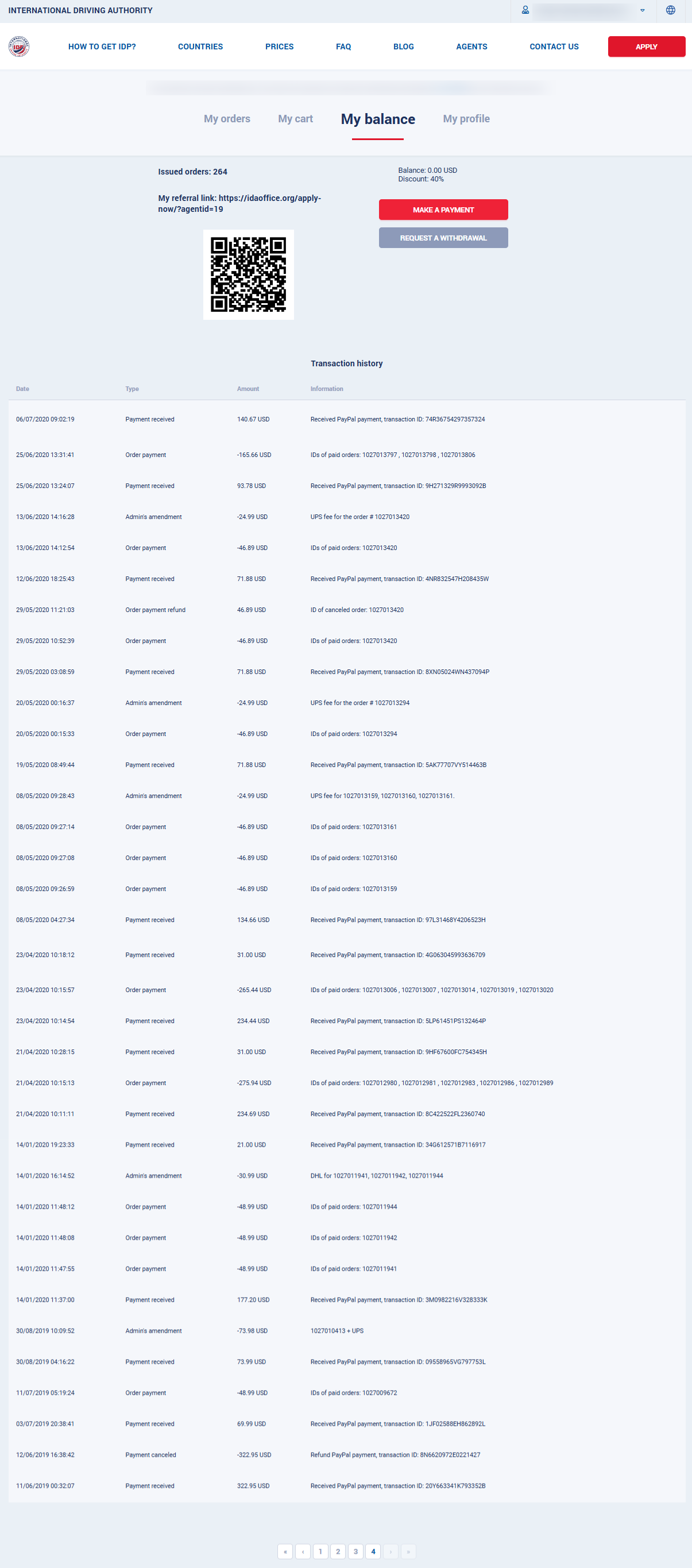
Dashboard screenshots: order list and balance, personal data removed.
More partner case studies
- A one-shop scooter rental in Sri Lanka: 355 sales in eight months, with the payouts shown
- A travel and visa agency in Saudi Arabia: 555 documents in four years, without a single cancellation
- A recruiting office in Malta: 720 documents over five and a half years
FAQ
Is this only worth it for big offices or chains?
No — and this case is the argument. A single storefront in Kentucky, 264 documents, no second location and no extra staff. The volume is modest and so is the income, but the cost of finding out is a few minutes of registration.
Do I need to spend on marketing?
Most partners do not. The cheapest possible start is mentioning it to the clients already coming in for notary or translation work. If that produces nothing over a couple of months, your client mix probably is not right for it — and you will have lost nothing finding out.
How does this fit alongside certified translation and notarisation?
Naturally, which is why these offices do well. Clients dealing with immigration, study abroad or cross-border work are already in front of you for related paperwork. The document complements what you sell rather than competing with it.
Three orders a month is not much. Why should I bother?
Because the cost of carrying it is close to zero. There is no stock, no subscription, no minimum and no commitment — if it produces nothing, it costs nothing. The case above is the smallest on this blog, not a limit; offices with more international clients can run several times this volume.
Do I need a licence or a special legal status to do this?
No. You keep operating as the business you already are, acting as an agent or reseller for IDA documents. Local rules on invoicing and tax are yours to follow as with any other service you sell, so if anything is unclear where you are, check with a local accountant or lawyer.
What exactly is the document my client receives?
An International Driving Permit issued by IDA: a translation of the details on your client’s national driving licence into a standard multilingual format. It is carried together with their national licence, never instead of it, and acceptance differs from country to country. Tell your clients this plainly — partners who set expectations correctly are the ones with no cancellations.
What happens if a client asks for a refund?
The order is reversed and so is your credit. This is the single strongest argument for checking applications before submitting them rather than after.
How much can I realistically make?
Multiply your own numbers rather than ours: how many clients a month plausibly need this, times your margin per document. The cases on this blog range from roughly 3 orders a month to roughly 44. What they have in common is not volume — it is that the offer is made every time, as part of the routine.
I have more questions.
Write to us before you register if you would rather. We would much rather answer them now than have you discover something in month three.

Published December 07, 2025 • 9m to read