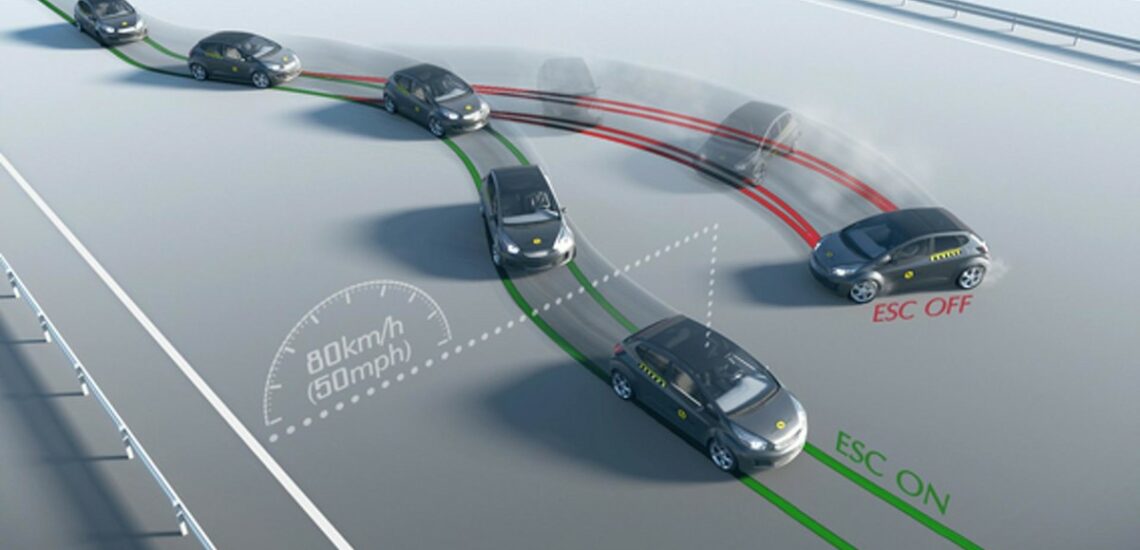

ESP — short for Electronic Stability Program — is the most widely used name for a vehicle’s dynamic stabilization system. Depending on the manufacturer, you may also see it labeled as ESC, VDC, VSC, DSC, or DSTC. The name may differ, but the purpose is always the same: to help you maintain control of your vehicle in dangerous situations.
What Does ESP Actually Do?
ESP monitors the lateral dynamics of your car and steps in during emergency situations to prevent skidding and loss of traction. It works to maintain your intended driving path and stabilize the vehicle during maneuvers — especially at high speeds or on poor road surfaces. You may also hear it referred to as an anti-skid system or yaw control.
A Brief History of ESP
The concept behind ESP dates back further than most people realize. A prototype called the “Control Device” was patented by Daimler-Benz as early as 1959, though a working implementation didn’t arrive until 1994. By 1995, the system was being fitted as standard on the Mercedes-Benz S600 Coupe, and shortly after, it rolled out across the entire S-Class and SL lineup.
Today, electronic stability control is available — at minimum as an option — on virtually every new car on the market, regardless of price point. You’ll find it even in relatively affordable models like the Volkswagen Polo.
How Does ESP Work?
Modern ESP doesn’t operate in isolation — it’s tightly integrated with the ABS, traction control system, and engine control unit (ECU), actively sharing components with all of them. Together, they form a single, complex safety network. At its core, ESP relies on an electronic controller unit that continuously processes data from multiple sensors, including:
- Wheel rotation speed sensors (shared with the ABS system)
- Steering angle sensor
- Brake system pressure sensor
- Vertical axis rotational speed sensor (yaw rate sensor)
- Lateral acceleration sensor (also known as a G-sensor)
The last two are the most critical — they detect sideways slipping around the vertical axis, calculate its severity, and trigger corrective action. At any given moment, the system knows your speed, steering angle, engine output, and whether a skid is developing.
What Happens When ESP Kicks In?
When the system detects a loss of control, it responds automatically and precisely. Here’s what it can do:
- Selectively brake individual wheels — front or rear, inside or outside of a turn — depending on the nature of the skid
- Reduce engine torque by signaling the ECU to cut fuel supply
- Apply hydraulic brake pressure via the ABS modulator
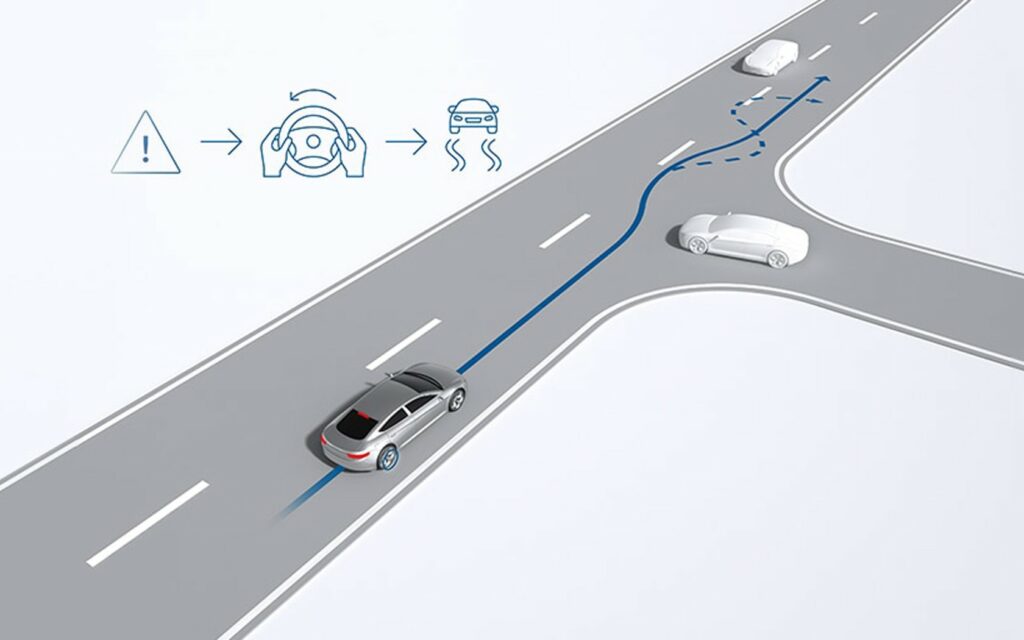
ESP operates across all driving conditions — acceleration, braking, and coasting — and its response algorithm adapts to the specific situation and drive configuration of your vehicle. For example, if the yaw sensor detects the rear axle beginning to slide in a corner, the ECU first reduces engine output. If that’s not enough, ABS brakes are applied to the outer front wheel to bring the car back in line.
Can ESP Be Turned Off?
Some experienced drivers argue that ESP can actually get in the way — for instance, when controlled acceleration is needed to power out of a skid, but the system cuts engine output before the driver can react. These scenarios are rare, but they do exist.
For this reason, many vehicles allow you to manually disable ESP. Some models also offer a middle ground, permitting minor drifts and slips while only intervening when the situation becomes truly critical — giving confident drivers a little more room to play.
The Key Benefits of ESP — and Its Limits
The biggest advantage ESP offers is simple: you don’t need to be an expert driver to stay safe. The system handles the complex physics of vehicle dynamics so you can focus on steering. However, it’s important to understand what ESP can and cannot do:
- ✅ Significantly reduces the risk of skidding and loss of control
- ✅ Reacts faster than any human driver in emergency situations
- ✅ Works across all driving conditions and speeds
- ❌ Cannot override the laws of physics — driving too fast for conditions is still dangerous
- ❌ Does not replace attentive, responsible driving
ESP dramatically lowers the odds of an accident in many difficult situations, but it’s not a substitute for good judgment behind the wheel. Always drive with your head — the system is there to back you up, not to do the thinking for you.
This is a translation. You can read the original here: https://www.drive.ru/technic/4efb330200f11713001e32e4.html

Published February 03, 2022 • 4m to read